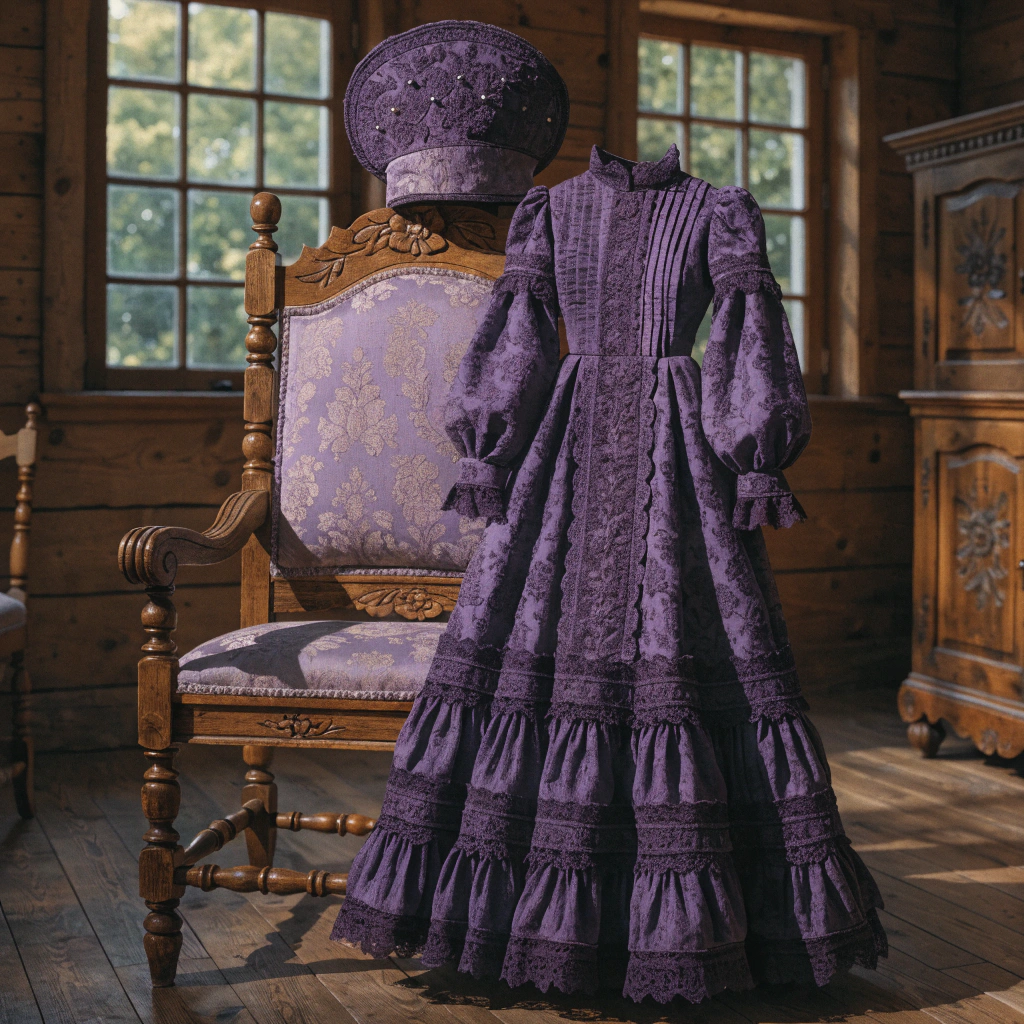
Beautiful Traditional Clothes in Russia
Traditional Russian clothes are very beautiful. The sarafan is a long dress. It does not have sleeves. Women wear a white linen shirt under the dress. Many sarafans are red. In the old Russian language, red means beautiful.
The kokoshnik is a traditional hat. It has many decorations and colors. Women wear this hat on special days and holidays. These clothes show the history of the country. They are symbols of Russia. People like these icons of traditional dress.
Grammar Spotlight
Pattern: Present Simple (Be)
"Traditional Russian clothes are very beautiful."
We use 'are' with plural nouns to describe things. It shows a fact or a state in the present.
Pattern: Present Simple (Negative)
"It does not have sleeves."
To make a negative sentence with 'have', use 'does not' for singular subjects. This describes a permanent feature.
Test Your Understanding
10 questions · A1 Beginner · 1 free preview
Test what you learned from this article. Answer all questions to earn XP!
What is a sarafan?
Want to finish the quiz?
9 more questions are waiting for you. Sign up free to unlock the full quiz and earn XP!
Sign Up FreeAlready have an account? Sign In
Question Breakdown
What is a sarafan?
Your answer:
Correct answer: A long dress
Women wear a black shirt under the sarafan.
Your answer:
Correct answer: False
What does 'special' mean?
Your answer:
Correct answer: Different and important
The kokoshnik is a traditional _____.
Your answer:
Correct answer: hat
Beautiful Traditional Clothes of Russia
In old Russia, women wore beautiful traditional clothes. The most famous pieces were the sarafan and the kokoshnik. The sarafan was a long dress without sleeves. Women always wore it over a white linen shirt. These dresses were very wide and comfortable to wear.
The color of the sarafan was very important. Red was the most popular color because the word 'red' meant 'beautiful' in the old Russian language. Rich women had more expensive sarafans with gold and silver decorations. However, poor women wore simpler dresses made of basic cloth. The dress could show if a woman was married or where she lived.
On their heads, women wore the kokoshnik. It was a tall and decorative headpiece. Some kokoshniks were more beautiful than others. They often had pearls or colorful flowers on them. Today, these clothes are icons of Russian culture. People still wear them for traditional festivals and special dances. These clothes are important because they help people remember the history of their country.
Grammar Spotlight
Pattern: Past Simple
"In old Russia, women wore beautiful traditional clothes."
The past simple is used to talk about finished actions in the past. For irregular verbs like 'wear', we use the past form 'wore' instead of adding '-ed'.
Pattern: Comparatives
"Some kokoshniks were more beautiful than others."
We use comparatives to show the difference between two things. For long adjectives like 'beautiful', we put 'more' before the adjective and 'than' after it.
Test Your Understanding
11 questions · A2 Elementary · 1 free preview
Test what you learned from this article. Answer all questions to earn XP!
What was the sarafan?
Want to finish the quiz?
10 more questions are waiting for you. Sign up free to unlock the full quiz and earn XP!
Sign Up FreeAlready have an account? Sign In
Question Breakdown
What was the sarafan?
Your answer:
Correct answer: A long dress
The word 'red' meant 'beautiful' in the old Russian language.
Your answer:
Correct answer: True
What are decorations?
Your answer:
Correct answer: Things to make something look nice
Women wore the sarafan over a white _____ shirt.
Your answer:
Correct answer: linen
Where did women wear the kokoshnik?
Your answer:
Correct answer: On their heads
The Beauty of Traditional Russian Dress: The Sarafan and Kokoshnik
Traditional Russian clothing has a long and fascinating history. Two of the most famous items are the 'sarafan' and the 'kokoshnik,' which have been symbols of national identity for centuries. These garments tell a story about the people who wore them and the culture they lived in.
The sarafan is a long, sleeveless dress that is worn over a white linen shirt. In the past, this outfit was worn by women of all social classes. However, the materials and decorations were different depending on a woman's status. Rich women wore sarafans made of silk or velvet, while peasant women used simple linen. The color red was particularly popular because the Old Russian word for red, 'krasny,' also meant beautiful. For this reason, red sarafans were often chosen for weddings and festivals.
The outfit was often completed with a 'kokoshnik.' This is a traditional headpiece which is shaped like a crest or a fan. Historically, the kokoshnik was worn by married women to cover their hair in public. It was decorated with pearls, gold thread, and colorful embroidery. Some of these headpieces were so expensive that they were passed down from mothers to daughters for generations as family treasures.
Today, these traditional clothes are not used for daily life, but they have remained important for special occasions. They are frequently seen in folk dance performances and during national festivals. Recently, modern designers have used these traditional patterns to create new fashion styles. These clothes have survived the test of time and continue to represent the rich history that has shaped Russia over the years.
Grammar Spotlight
Pattern: Passive Voice
"The sarafan is a long, sleeveless dress that is worn over a white linen shirt."
The passive voice (is + past participle) is used here because the action (wearing) is more important than who is doing it. It focuses on the garment itself.
Pattern: Present Perfect
"These clothes have survived the test of time."
The present perfect (have + past participle) connects the past to the present. It shows that the survival of these clothes started in the past and is still true today.
Test Your Understanding
11 questions · B1 Intermediate · 1 free preview
Test what you learned from this article. Answer all questions to earn XP!
Why was the color red popular for sarafans?
Want to finish the quiz?
10 more questions are waiting for you. Sign up free to unlock the full quiz and earn XP!
Sign Up FreeAlready have an account? Sign In
Question Breakdown
Why was the color red popular for sarafans?
Your answer:
Correct answer: The word for red also meant beautiful.
The kokoshnik was traditionally worn by unmarried girls to show their status.
Your answer:
Correct answer: False
What does the word 'embroidery' refer to?
Your answer:
Correct answer: Decorative sewing with colored threads.
The sarafan is a long, _____ dress worn over a shirt.
Your answer:
Correct answer: sleeveless
What happened to expensive kokoshniks over time?
Your answer:
Correct answer: They were passed down to daughters.
The Sarafan and Kokoshnik: Icons of Traditional Dress
The visual identity of traditional Russia is perhaps most vividly captured in the iconic 'sarafan' and 'kokoshnik.' These garments are not merely remnants of historical fashion; they serve as complex cultural signifiers that once communicated a wealth of information about the wearer's life. The sarafan, a long, sleeveless pinafore-style dress, was traditionally worn over a white linen shirt. Characterized by its wide, flowing silhouette and intricate ornamentation, the garment was a staple across various social strata, though its materials varied significantly between the peasantry and the nobility.
Historically, the specific style and coloration of a sarafan could reveal a woman’s social status, her region of origin, and even her marital status. For instance, while red was the most prevalent color—deriving from the Old Russian word 'krasny,' which historically denoted beauty as well as the color itself—the specific shades and embroidery patterns were highly localized. It is often argued that the sarafan allowed for a degree of individual expression within the strict confines of traditional societal expectations. The construction of the sarafan was often quite complex, involving multiple panels of fabric that allowed for ease of movement. Depending on the wealth of the family, these could be made from simple homespun linen or expensive imported silks.
Complementing the sarafan was the kokoshnik, a distinctive architectural headpiece that has become synonymous with Russian folklore. The term is derived from the Old Slavic word for 'hen' or 'cockerel,' reflecting the crest-like shape of the garment. Traditionally, the kokoshnik was worn by married women, as it was considered inappropriate for them to show their hair in public. These headpieces were often masterpieces of craftsmanship, adorned with pearls, gold thread, and precious stones, representing the family's wealth and prestige. The process of making a kokoshnik was labor-intensive, often requiring the skills of specialized artisans.
By the 18th century, the introduction of Western European fashion by Peter the Great relegated these traditional garments to the rural population and ceremonial contexts. However, they experienced a resurgence during the 19th century as symbols of national pride. Today, while no longer part of daily attire, the sarafan and kokoshnik continue to inspire contemporary designers and remain central to the visual narrative of Russian heritage. Understanding these garments provides essential insight into the historical social structures and aesthetic values of the Russian people.
Grammar Spotlight
Pattern: Passive Voice
"The sarafan was traditionally worn over a white linen shirt."
The passive voice is used here to focus on the garment rather than the person wearing it. It is formed using the verb 'to be' followed by the past participle.
Pattern: Participle Phrases
"Characterized by its wide, flowing silhouette and intricate ornamentation, the garment was a staple..."
This phrase provides additional descriptive information about the subject. It is used to combine sentences and add formal complexity to the writing.
Pattern: Relative Clauses
"...which historically denoted beauty as well as the color itself..."
The relative pronoun 'which' introduces a non-defining relative clause that adds extra information about the word 'krasny' mentioned previously.
Test Your Understanding
11 questions · B2 Upper Intermediate · 1 free preview
Test what you learned from this article. Answer all questions to earn XP!
What was the primary function of the sarafan and kokoshnik historically?
Want to finish the quiz?
10 more questions are waiting for you. Sign up free to unlock the full quiz and earn XP!
Sign Up FreeAlready have an account? Sign In
Question Breakdown
What was the primary function of the sarafan and kokoshnik historically?
Your answer:
Correct answer: They served as cultural signifiers communicating social and regional information.
Peter the Great encouraged the use of traditional Russian dress in all social circles.
Your answer:
Correct answer: False
What does 'resurgence' mean?
Your answer:
Correct answer: A revival or comeback of something
The term kokoshnik is derived from an Old Slavic word meaning _____.
Your answer:
Correct answer: hen
Why did married women specifically wear the kokoshnik?
Your answer:
Correct answer: Because it was considered inappropriate to show their hair in public.
Sartorial Heritage: The Cultural Semiotics of the Sarafan and Kokoshnik
The visual landscape of traditional Russia is perhaps most vividly encapsulated in the enduring legacy of the sarafan and the kokoshnik. Far from being mere vestiges of a bygone era, these garments represent a complex semiotic system where every stitch and hue articulated a narrative of social standing, regional identity, and marital status. The sarafan, a voluminous, sleeveless pinafore typically layered over a crisp linen chemise, was the cornerstone of the female wardrobe for centuries. Never was its significance more apparent than in its chromatic symbolism. The prevalence of red, derived from the Old Russian 'krasny'—a term synonymous with both the color and the concept of beauty—imbued the garment with an aesthetic and spiritual potency that transcended its utilitarian function. It was through the intricate embroidery of the ensemble that a woman's lineage and province were communicated to the wider community.
The stratification of Russian society was reflected in the materiality of the dress. While the peasantry favored robust, home-spun fabrics like wool and linen, the aristocracy adorned themselves in opulent brocades and silks, often embellished with river pearls, silver lace, or gold thread. Such was the communicative power of the dress that a seasoned observer could discern a wearer's entire biography, from her wealth to her specific village, at a single glance. The sarafan was not a monolithic entity; regional variations meant that a northern 'shushun' differed significantly in cut and weight from the lighter garments of the southern steppes, illustrating a profound adaptation to local climates and textile availability.
Equally paramount to this visual identity was the kokoshnik, a crest-shaped headdress whose architectural complexity varied significantly across the vast Russian landscape. This accessory was not merely decorative; it served as a definitive marker of a woman's transition from maidenhood to matrimony. Only upon marriage would a woman completely conceal her hair beneath the kokoshnik, a practice rooted in both modesty and folk superstition regarding the power of a woman's hair. The craftsmanship involved in forging these pieces was extraordinary, with some kokoshniks requiring months of painstaking labor by specialized artisans known as 'kokoshnitsy.'
However, the trajectory of traditional dress was abruptly altered by the Westernizing reforms of Peter the Great in the 18th century. In his aggressive pursuit of modernization, Peter mandated the adoption of European fashions among the nobility, effectively relegating the sarafan and kokoshnik to the rural provinces and the merchant class. Yet, despite this institutional marginalization, the garments endured as symbols of national resistance and cultural continuity. The resilience of these traditional forms provided a cultural bedrock during periods of national upheaval, serving as a visual touchstone for an authentic Russian identity that refused to be entirely subsumed by Western influence.
In contemporary discourse, the resurgence of these icons reflects a nuanced re-evaluation of heritage. No longer restricted to ethnographic museums or folk performances, elements of the sarafan and kokoshnik are being reinterpreted by modern designers who seek to reconcile historical authenticity with avant-garde sensibilities. What remains constant is the profound symbolic weight these garments carry. They are not merely relics; they are vibrant repositories of a collective memory that continues to inform the Russian visual consciousness, proving that clothing is as much about storytelling as it is about protection from the elements.
Grammar Spotlight
Pattern: Inversion with Negative Adverbials
"Never was its significance more apparent than in its chromatic symbolism."
When a negative or restrictive adverbial (like 'never') starts a sentence, the auxiliary verb comes before the subject. This is used for dramatic emphasis in formal writing.
Pattern: It-Cleft Sentences
"It was through the intricate embroidery of the ensemble that a woman's lineage and province were communicated."
A cleft sentence divides a single clause into two parts to focus on specific information. Here, 'It was... that' emphasizes the method of communication (the embroidery).
Pattern: Nominalization
"The institutional marginalization of traditional attire provided a cultural bedrock."
Nominalization involves turning verbs (marginalize) into nouns (marginalization). This makes the writing more abstract, concise, and academic in tone.
Test Your Understanding
12 questions · C1 Advanced · 1 free preview
Test what you learned from this article. Answer all questions to earn XP!
What does the word 'krasny' suggest about the Russian perception of the color red?
Want to finish the quiz?
11 more questions are waiting for you. Sign up free to unlock the full quiz and earn XP!
Sign Up FreeAlready have an account? Sign In
Question Breakdown
What does the word 'krasny' suggest about the Russian perception of the color red?
Your answer:
Correct answer: It was linguistically linked to the concept of beauty.
The kokoshnik was primarily worn by unmarried women to attract suitors.
Your answer:
Correct answer: False
Which word is synonymous with 'luxurious and wealthy'?
Your answer:
Correct answer: Opulent
The aggressive pursuit of _____ by Peter the Great forced the nobility to abandon traditional dress.
Your answer:
Correct answer: modernization
How did regional differences affect the sarafan?
Your answer:
Correct answer: It led to the creation of entirely different names like the shushun.
Peter the Great's reforms successfully erased the sarafan from all levels of Russian society.
Your answer:
Correct answer: False
Vestiary Semiotics: The Sarafan and Kokoshnik as Archetypes of the Russian Ethos
To traverse the historical landscape of Russian cultural identity is to encounter a visual lexicon so profoundly ingrained in the collective consciousness that it transcends mere fashion. Central to this ethnographic tapestry are the sarafan and the kokoshnik—garments that served not merely as functional attire but as sophisticated instruments of semiotic communication. Rarely has a garment so succinctly encapsulated the socio-political tensions of a nation as the sarafan. This long, sleeveless pinafore-style dress, typically worn over a chemise of white linen, was characterized by its wide, flowing silhouette and meticulous ornamentation. Its structural simplicity belied a complex system of social signaling; the specific weave, the intricacy of the embroidery, and the quality of the fabric were all indices of the wearer’s regional provenance and socio-economic standing.
One cannot analyze the sarafan without addressing the etymological and aesthetic hegemony of the color red. In Old Russian, the word 'krasny' served as a linguistic bridge between 'red' and 'beautiful,' a paradigm that dictated the visual hierarchy of traditional dress. A red sarafan was ostensibly more than a stylistic choice; it was an embodiment of vitality and celebratory grace. Furthermore, the stratification of Russian society was mirrored in the vestiary choices of its women. While the peasantry utilized home-spun wool and natural dyes, the merchant class and nobility adorned themselves in sumptuous brocades and silks, often imported via the Silk Road, thereby transforming the woman’s body into a canvas of familial wealth.
The kokoshnik, the architectural counterpart to the sarafan, represents perhaps the most iconic element of the Russian female silhouette. This headdress, often stiffened with buckram and embellished with pearls or gold thread, functioned as a critical marker of marital status. The transition from the 'povyazka'—a headband worn by maidens that left the crown of the head exposed—to the fully enclosed kokoshnik was a rite of passage. It was through the Petrine reforms that the traditional dress was relegated to the rural classes, as Peter the Great sought to align the Russian nobility with Western European aesthetic standards. He promulgated edicts that mandated the adoption of French and German fashions, viewing the traditional ensemble as an impediment to his vision of a modernized, secular state.
Lest the cultural memory fade into the ether of modernization, these garments were preserved by the peasantry and the merchant classes, who viewed them as bastions of national identity against the encroaching tide of Westernization. The Petrine pivot created a fascinating cultural dichotomy: while the elite moved toward the corsets and wigs of Versailles, the 'narod'—the common people—clung to the sarafan and kokoshnik as symbols of an unadulterated Russian soul. This vestiary resistance ensured that the garments survived not merely as museum pieces, but as living symbols that would eventually be co-opted by the 19th-century Slavophile movement to reassert a unique Russian path.
In contemporary analysis, the sarafan and kokoshnik are viewed through a lens of ontological continuity. They are no longer daily wear, yet their influence permeates modern high fashion and national iconography. The interplay between the rigid geometry of the kokoshnik and the fluid grace of the sarafan continues to inspire designers seeking to evoke a sense of 'Rus.' Ultimately, these garments remain the quintessential signifiers of a heritage that refuses to be eclipsed by the homogenizing forces of global modernity. They stand as a testament to the power of tradition to encode history, status, and beauty within the very threads of a nation's fabric.
Grammar Spotlight
Pattern: Inversion after negative adverbials
"Rarely has a garment so succinctly encapsulated the socio-political tensions of a nation as the sarafan."
When an adverbial with a negative or restrictive meaning (like 'rarely') is placed at the beginning of a sentence for emphasis, the subject and the auxiliary verb are inverted.
Pattern: Subjunctive mood with 'lest'
"Lest the cultural memory fade into the ether of modernization, these garments were preserved by the peasantry."
The word 'lest' is often followed by the subjunctive mood (the base form of the verb) to express a fear or to prevent a negative outcome.
Pattern: Cleft Sentences for emphasis
"It was through the Petrine reforms that the traditional dress was relegated to the rural classes."
A cleft sentence (It + be + subject/phrase + that/who) is used to focus on a specific part of the information, in this case, the cause of the shift in dress.
Test Your Understanding
12 questions · C2 Mastery · 1 free preview
Test what you learned from this article. Answer all questions to earn XP!
What does the etymological link of the word 'krasny' suggest about the color red in Russian culture?
Want to finish the quiz?
11 more questions are waiting for you. Sign up free to unlock the full quiz and earn XP!
Sign Up FreeAlready have an account? Sign In
Question Breakdown
What does the etymological link of the word 'krasny' suggest about the color red in Russian culture?
Your answer:
Correct answer: It was synonymous with the concept of beauty.
Peter the Great encouraged the nobility to maintain traditional Russian dress to preserve national identity.
Your answer:
Correct answer: False
Which word describes the study of signs and symbols within a culture?
Your answer:
Correct answer: Semiotics
The specific weave and embroidery of the sarafan were ______ of the wearer's regional origin.
Your answer:
Correct answer: indices
What was the primary function of the kokoshnik regarding a woman's social status?
Your answer:
Correct answer: It acted as a marker of her marital status.
The sarafan was a sleeveless dress typically worn over a white linen shirt.
Your answer:
Correct answer: True
