buh in 30 Sekunden
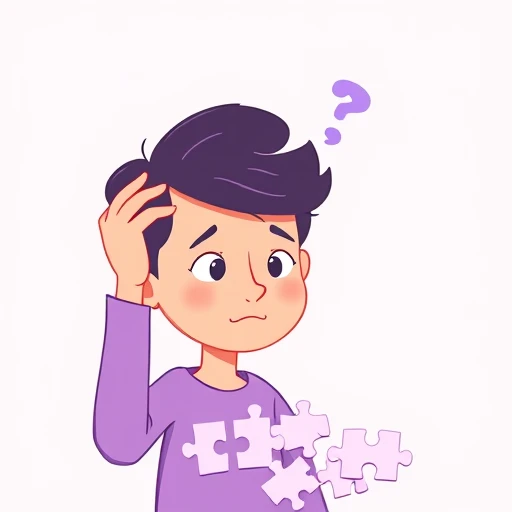
- An informal sound used when you are so confused that your brain stops working for a second.
- Commonly used in internet slang to react to absurd news or strange social media posts.
- Different from 'huh' because it shows you are stunned, not just asking a question.
- A perfect way to express that you have no words for how ridiculous a situation is.
The interjection buh is a fascinating linguistic artifact of the modern era, primarily functioning as an onomatopoeic representation of cognitive paralysis. When a speaker encounters information that is so fundamentally absurd, unexpected, or logically inconsistent that their internal processing mechanism momentarily fails, they emit this sound. It is not merely a filler word like 'um' or 'uh'; rather, it is a declarative statement of mental exhaustion or disbelief. In the hierarchy of English interjections, 'buh' sits at the intersection of confusion and resignation. It suggests that the speaker has tried to formulate a response, found the task impossible due to the sheer nonsense of the situation, and has settled on a primal, non-lexical vocalization to signal their state of being overwhelmed.
- Linguistic Classification
- Secondary interjection used to denote a specific emotional state of cognitive dissonance or stunned silence.
- Pragmatic Function
- Signals to the interlocutor that the previous statement was so shocking or illogical that a standard verbal response is currently unavailable.
- Social Context
- Predominantly informal, frequently found in digital communication, comic strips, and casual face-to-face interactions among peers.
To understand 'buh' is to understand the feeling of a 'brain fart' or a 'system crash' in human terms. Imagine you are told that the sky is actually a giant projection of a blue screen and that birds are remote-controlled surveillance drones. Your brain, attempting to reconcile this with your lived experience, might simply produce the sound 'buh.' It is the sound of the gears of logic grinding to a halt. It is often accompanied by a blank stare, a slight tilting of the head, or a shrug of the shoulders. In written form, particularly on social media platforms like X (formerly Twitter) or Reddit, it is used to react to news headlines that seem too ridiculous to be true, yet are presented as fact.
Person A: 'I decided to quit my job and become a full-time professional grass-watcher.' Person B: 'Buh... I don't even know what to say to that.'
Furthermore, 'buh' can be used as a humorous way to end a conversation that has devolved into nonsense. It acts as a white flag, signaling that the speaker is surrendering to the chaos. It is different from 'huh?' which seeks clarification. 'Buh' does not want clarification; it acknowledges that no amount of clarification will make the situation sensible. It is a linguistic 'dead end.' In the context of internet culture, it is often paired with images of confused animals or characters with wide eyes, reinforcing the visual component of the 'buh' state. This interjection has gained traction because it perfectly encapsulates the feeling of information overload that characterizes the digital age.
'Wait, you’re telling me the meeting was moved to 4 AM? Buh.'
Historically, interjections like 'buh' are difficult to trace because they are often considered non-lexical or 'noise.' However, the rise of transcribed speech and informal writing has allowed 'buh' to claim its place in the modern lexicon. It mimics the physical sound of the lips popping open without the vocal cords being fully engaged in a structured word. This lack of structure is precisely why it is so effective at communicating a lack of structured thought. It is the sound of a mind that has run out of words. When you use 'buh,' you are participating in a very human experience: the recognition that the world is sometimes too strange for language.
'The computer says I owe five million dollars for a single cup of coffee? Buh.'
In conclusion, 'buh' is more than just a sound; it is a tool for emotional and cognitive expression. It bridges the gap between silence and speech, providing a way to communicate when communication itself seems futile. Whether you are reacting to a bizarre news story, a confusing instruction, or a friend's strange life choices, 'buh' offers a concise and relatable way to say, 'My brain has stopped working because of what you just said.'
Using 'buh' effectively requires an understanding of its placement within a sentence. Because it is an interjection, it typically stands alone or acts as a prefix to a sentence that expresses further confusion. It is rarely integrated into the grammatical structure of a sentence as a noun or verb. Instead, it serves as an emotional punctuation mark. When writing 'buh,' it is often followed by an ellipsis (...) to emphasize the trailing off of thought, or a period (.) to show a blunt, sudden stop in cognitive function.
- As a Standalone Reaction
- Used as a complete response to a statement that leaves the speaker speechless.
- As an Introductory Particle
- Used before a sentence to set the tone of disbelief or confusion.
- In Mid-Sentence Interruption
- Used when the speaker realizes something mid-thought that causes their brain to stall.
Let's look at some specific examples of how 'buh' can be deployed in various scenarios. In a casual text message, you might see: 'He said he forgot his own name? Buh.' Here, 'buh' serves as the final word on the matter, indicating that the speaker finds the situation beyond explanation. In a more descriptive context, one might write: 'She stared at the complicated math equation and could only utter a soft "buh" before walking away.' This usage treats 'buh' as the actual sound being made, highlighting the physical aspect of the interjection.
'I just found out that my cat has been leading a double life as the neighborhood mayor. Buh... how is that even possible?'
The versatility of 'buh' lies in its tone. Depending on the context, it can be humorous, frustrated, or genuinely shocked. For instance, if a friend tells a joke that is so bad it isn't even funny, a dry 'buh' can be the perfect sarcastic response. Conversely, if you receive a massive, unexpected bill, a 'buh' might express genuine, stressed-out disbelief. It is important to match the 'buh' to the gravity of the situation. Overusing it for minor inconveniences can diminish its impact as a marker of true cognitive stall.
'The instructions for this IKEA shelf are just pictures of a sad man crying. Buh.'
In dialogue writing, 'buh' is a great tool for characterization. It can show that a character is easily flustered or that they are currently dealing with a situation that is way out of their league. It adds a layer of realism to speech, as people rarely speak in perfect, complete sentences when they are surprised. Instead, they make sounds like 'buh.' When using it in a story, try to describe the character's facial expression to complement the sound. A 'buh' accompanied by wide eyes and an open mouth tells a much richer story than the word alone.
'Buh... wait... you’re saying the party was yesterday?'
Finally, consider the rhythm of the sentence. 'Buh' is a short, punchy sound. It works best when it breaks the flow of a conversation. If someone is talking very fast and you interject with a 'buh,' it forces a pause. This pause is where the meaning lives. It is the silence that follows the 'buh' that truly communicates the speaker's state of mind. Use it sparingly to maintain its effectiveness as a linguistic tool for expressing the inexpressible.
You are most likely to encounter 'buh' in environments where informal, rapid-fire communication is the norm. This includes social media platforms, instant messaging apps, and casual verbal conversations among friends. It is a staple of 'internet speak,' a dialect of English that prioritizes brevity and emotional resonance over formal grammar. On platforms like TikTok or YouTube, creators often use 'buh' in their captions or as a spoken reaction to 'cringe' content or unbelievable news. It has become a universal shorthand for 'I am processing this, but I am failing.'
- Social Media
- Frequently used in comment sections to react to viral videos or shocking headlines.
- Gaming Culture
- Heard in voice chats when a player experiences a bizarre glitch or an unexpected defeat.
- Podcasts and Vlogs
- Used by hosts to react to a guest's surprising anecdote or a strange fact.
In the world of animation and comic books, 'buh' is often written in speech bubbles to indicate a character's total bewilderment. It is a visual representation of a 'brain freeze.' For example, if a character sees something impossible, like a flying elephant, the artist might put 'Buh...' in a small bubble above their head. This has helped the word transition from a purely spoken sound to a recognized written interjection. It carries a certain 'cartoonish' energy, making it feel lighthearted even when expressing genuine confusion.
'I just saw a guy walking a lobster on a leash in the middle of New York City. Buh.'
Another common place to hear 'buh' is in the context of 'meme culture.' Memes often rely on a shared understanding of specific reactions, and 'buh' has become a go-to reaction for anything that is 'cursed' (internet slang for something unsettling or weirdly wrong). When someone shares a photo of a pizza topped with gummy bears, the collective response from the internet is often a resounding 'buh.' It serves as a communal acknowledgment of the shared experience of being baffled by the internet's endless capacity for strangeness.
'Wait, the movie is four hours long and it's just a single shot of a wall? Buh.'
In casual face-to-face settings, 'buh' is often used as a way to soften the blow of a disagreement. If someone says something you find ridiculous, saying 'buh' is less aggressive than saying 'That's stupid.' It frames the issue as your own inability to process the information, rather than a direct attack on the other person's intelligence. It’s a way of saying, 'You’ve lost me,' in a way that is often perceived as funny or relatable. This social utility makes it a popular choice for navigating the awkward moments of daily life.
'You're telling me you've never eaten a vegetable in your entire life? Buh.'
Lastly, you might hear 'buh' in the tech world, specifically among programmers or IT professionals. When a piece of code that should work perfectly suddenly fails for no apparent reason, 'buh' is a common vocalization of the frustration and confusion that follows. It represents the moment before the deep dive into debugging begins—the moment of pure, unadulterated 'what just happened?' This specific usage highlights how 'buh' has permeated different subcultures, each time serving the same fundamental purpose: expressing the gap between expectation and reality.
While 'buh' is a simple interjection, there are several common pitfalls to avoid when using it, especially for non-native speakers or those unfamiliar with its specific nuance. The most frequent mistake is confusing 'buh' with other similar-sounding interjections like 'huh,' 'duh,' or 'bah.' Each of these carries a very different meaning, and using the wrong one can completely change the tone of your response. 'Huh' is a question; 'duh' is a sarcastic way of saying something is obvious; 'bah' is an expression of dismissiveness or contempt. 'Buh,' as we've established, is about cognitive stall.
- Confusing with 'Huh'
- If you say 'buh' when you mean 'huh,' people will think you are stunned rather than just asking for a repeat of what they said.
- Confusing with 'Duh'
- If you say 'buh' when you mean 'duh,' you will sound confused by something that you actually think is obvious, which is the opposite of your intent.
- Overuse in Formal Settings
- Using 'buh' in a business meeting or a job interview can make you appear unprofessional or incapable of handling complex information.
Another mistake is using 'buh' to express anger. While 'buh' can be used in a frustrated context, it is not an aggressive sound. If you are truly angry, 'buh' will likely come across as too weak or even comical. It is a sound of 'soft' confusion, not 'hard' confrontation. Similarly, don't use 'buh' if you actually understand what is happening but just don't like it. 'Buh' implies a lack of understanding caused by the absurdity of the situation. If you understand but disagree, use a different expression like 'I don't agree' or 'That's not right.'
Incorrect: 'You stole my sandwich! Buh!' (This sounds like you are confused that the sandwich is gone, rather than angry at the thief.)
Spelling is also a minor area of confusion. While 'buh' is the most common spelling, you might see 'buhhh' or 'buh...?' The number of 'h's usually indicates the duration of the confusion. However, adding too many 'h's can make the word look like a typo. Stick to 'buh' or 'buhhh' for clarity. Also, be careful with punctuation. Using an exclamation point ('Buh!') makes it sound like a shout of surprise, while an ellipsis ('Buh...') makes it sound like a slow realization of nonsense. Choose the punctuation that matches the 'speed' of your confusion.
Incorrect: 'The sun rises in the east. Buh.' (This makes no sense because the sun rising in the east is a basic, non-confusing fact.)
Finally, remember that 'buh' is a reactive word. It doesn't work well as a conversation starter. If you walk up to someone and just say 'Buh,' they will have no idea what you are talking about. It needs a catalyst—a statement, an event, or a piece of information that triggers the 'buh' response. Think of it as the 'output' of a failed 'input.' Without the input, the output is meaningless. Understanding this reactive nature will help you use 'buh' in a way that feels natural and linguistically appropriate.
'He said he's going to build a house out of cheese. Buh... won't it melt?'
In summary, avoid using 'buh' in formal contexts, don't confuse it with its 'cousin' interjections, and ensure it is used as a reaction to something genuinely baffling. By keeping these tips in mind, you can use 'buh' to perfectly express those moments when life simply doesn't make sense.
While 'buh' is unique in its specific representation of cognitive stall, there are several other interjections and phrases that occupy similar semantic space. Depending on the level of formality and the specific type of confusion you want to express, you might choose one of these alternatives. Understanding the subtle differences between them will help you become a more nuanced communicator in English. Some alternatives are more focused on the lack of understanding, while others focus on the surprise or the absurdity of the situation.
- 'Buh' vs. 'Huh?'
- 'Huh?' is a request for information or repetition. 'Buh' is a statement that the information received is too strange to process.
- 'Buh' vs. 'Wha?'
- 'Wha?' (a shortened 'What?') is more focused on the shock of the news. 'Buh' is more focused on the mental breakdown caused by the news.
- 'Buh' vs. '...What?'
- A long pause followed by 'What?' is very close to 'buh,' but 'buh' feels more visceral and less like a formal question.
If you are in a slightly more formal setting but still want to express the 'buh' feeling, you might use phrases like 'I'm at a loss for words' or 'I don't even know where to begin with that.' These convey the same sense of being overwhelmed but use standard English vocabulary. For a more academic or professional context, you could say 'That is quite a perplexing proposition' or 'I'm finding it difficult to reconcile those facts.' These phrases move away from the onomatopoeic nature of 'buh' and into the realm of structured critique.
Alternative: 'I'm sorry, I'm just speechless right now.' (A more formal way to say 'buh'.)
In the realm of slang, 'buh' has many cousins. 'Wait, what?' is perhaps the most common modern equivalent. It suggests a need to stop and re-evaluate the previous statement. 'I can't even' is another popular phrase, usually used when something is so ridiculous, annoying, or amazing that the speaker lacks the emotional energy to describe it. 'Buh' is more focused on the cognitive aspect (the brain stopping), while 'I can't even' is more about the emotional aspect (the heart or patience stopping).
Slang Alternative: 'My brain just short-circuited.' (Describes the physical feeling of a 'buh' moment.)
For those who enjoy more colorful language, 'mind-boggling' or 'flabbergasted' are excellent adjectives to describe the state that leads to a 'buh.' If you are flabbergasted, you are so shocked that you are likely to make a sound like 'buh.' Using these words can help you describe the 'buh' experience to others without having to use the interjection itself. This is particularly useful in writing, where you want to show the reader the character's confusion through descriptive language rather than just dialogue.
'The sheer complexity of the situation left him flabbergasted.' (A descriptive alternative.)
Ultimately, 'buh' is a tool in your linguistic toolbox. Like any tool, it is best used for a specific purpose. When you want to convey that your brain has hit a wall of nonsense, 'buh' is your best friend. But when you need to be more precise, more formal, or more descriptive, the English language offers a wealth of alternatives. By learning both 'buh' and its synonyms, you can navigate any level of confusion with confidence and clarity.
How Formal Is It?
Wusstest du?
In some online communities, 'buh' is used as a 'low-effort' reaction, meaning it's a way to participate in a conversation without having to contribute any actual thoughts or arguments.
Aussprachehilfe
- Pronouncing it like 'boo' (long 'oo' sound).
- Adding a hard 'h' at the end like 'buck.'
- Making it too long, which makes it sound like a groan rather than a 'buh.'
- Pronouncing it with a 'd' sound like 'duh.'
- Using a high-pitched questioning tone, which makes it sound like 'huh?'
Schwierigkeitsgrad
Very easy to recognize in text, usually followed by an ellipsis.
Easy to use, but requires understanding of informal context.
Requires the right 'confused' intonation to sound natural.
Can be missed if spoken quickly, as it is a very short sound.
Was du als Nächstes lernen solltest
Voraussetzungen
Als Nächstes lernen
Fortgeschritten
Wichtige Grammatik
Interjections as Standalone Sentences
Buh. (This is a grammatically complete thought in informal English.)
Punctuation with Interjections
Buh... (Ellipsis shows trailing thought) vs Buh! (Exclamation shows shock).
Placement of Interjections
Buh, I didn't see you there. (Used as an introductory particle.)
Non-lexical Vocables
'Buh' is a sound that carries meaning but isn't a traditional dictionary word.
Register and Context
Using 'buh' in a formal essay is a grammatical/stylistic error.
Beispiele nach Niveau
He said the dog can talk. Buh!
Il a dit que le chien peut parler. Buh !
Used as a short reaction.
The ice cream is hot? Buh.
La glace est chaude ? Buh.
Shows confusion about something impossible.
Buh... I don't know.
Buh... je ne sais pas.
Used before a sentence.
You have 100 cats? Buh!
Tu as 100 chats ? Buh !
Expresses shock at a large number.
Buh. That is a very strange hat.
Buh. C'est un chapeau très bizarre.
Standalone interjection.
The car is flying? Buh.
La voiture vole ? Buh.
Reaction to an impossible event.
Buh... wait for me!
Buh... attends-moi !
Shows a moment of being flustered.
He ate the whole cake? Buh.
Il a mangé tout le gâteau ? Buh.
Reaction to an extreme action.
Buh... how did you do that trick?
Buh... comment as-tu fait ce tour ?
Used to show wonder and confusion.
The movie ended like that? Buh.
Le film s'est terminé comme ça ? Buh.
Reaction to a confusing ending.
Buh... I thought the test was tomorrow.
Buh... je pensais que le test était demain.
Expresses a sudden realization of a mistake.
You want me to climb that mountain? Buh.
Tu veux que je grimpe cette montagne ? Buh.
Shows being overwhelmed by a task.
Buh. I can't believe it's snowing in July.
Buh. Je n'arrive pas à croire qu'il neige en juillet.
Reaction to unexpected weather.
He forgot his own birthday? Buh.
Il a oublié son propre anniversaire ? Buh.
Expresses disbelief at someone's forgetfulness.
Buh... that's a lot of homework for one night.
Buh... c'est beaucoup de devoirs pour une seule nuit.
Shows being overwhelmed by quantity.
The store is closed already? Buh.
Le magasin est déjà fermé ? Buh.
Reaction to a disappointing surprise.
Buh... I've been staring at this menu for ten minutes and I still don't understand it.
Buh... ça fait dix minutes que je regarde ce menu et je ne le comprends toujours pas.
Expresses a prolonged state of confusion.
She said she's moving to Mars? Buh... some people are just built different.
Elle a dit qu'elle déménageait sur Mars ? Buh... certaines personnes sont juste faites différemment.
Used to react to an absurd statement.
Buh. I just realized I've been wearing my shirt inside out all day.
Buh. Je viens de me rendre compte que je porte mon t-shirt à l'envers depuis ce matin.
Reaction to a personal 'brain fart' moment.
The instructions say to 'insert the flugelhorn into the sprocket.' Buh?
Les instructions disent d'insérer le bugle dans le pignon. Buh ?
Used to highlight the nonsense in a text.
Buh... wait, if you're here, then who is driving the car?
Buh... attends, si tu es ici, alors qui conduit la voiture ?
Expresses a logical realization that causes alarm.
He spent his entire life savings on a digital picture of a rock? Buh.
Il a dépensé toutes ses économies pour une image numérique d'un rocher ? Buh.
Reaction to an irrational financial decision.
Buh. I can't even process how much work we have to do by Monday.
Buh. Je n'arrive même pas à réaliser tout le travail qu'on doit faire d'ici lundi.
Expresses being mentally paralyzed by a workload.
The cat just opened the fridge and made a sandwich. Buh.
Le chat vient d'ouvrir le frigo et de se faire un sandwich. Buh.
Reaction to a surreal or impossible sight.
Buh... the logic in this argument is so circular it's making my head spin.
Buh... la logique de cet argument est tellement circulaire que ça me donne le tournis.
Critiques the logical structure of a statement.
He tried to explain the plot of that movie, but honestly... buh.
Il a essayé d'expliquer l'intrigue de ce film, mais honnêtement... buh.
Used as a summary of total confusion.
Buh. I just saw the bill for the car repairs and I think I need to sit down.
Buh. Je viens de voir la facture des réparations de la voiture et je crois que je dois m'asseoir.
Expresses physical reaction to shocking information.
You're telling me the entire project was based on a typo? Buh.
Tu me dis que tout le projet était basé sur une faute de frappe ? Buh.
Reaction to a massive, avoidable error.
Buh... I've read this paragraph five times and it still sounds like gibberish.
Buh... j'ai lu ce paragraphe cinq fois et ça ressemble toujours à du charabia.
Describes a failure of reading comprehension.
The company decided to ban chairs to 'increase agility.' Buh.
L'entreprise a décidé d'interdire les chaises pour 'augmenter l'agilité'. Buh.
Reaction to a bizarre corporate policy.
Buh... wait, so the villain was actually the hero's long-lost twin brother's ghost?
Buh... attends, donc le méchant était en fait le fantôme du frère jumeau disparu du héros ?
Reaction to an overly complicated plot twist.
He said he doesn't believe in the existence of 'Tuesday.' Buh.
Il a dit qu'il ne croyait pas à l'existence du 'mardi'. Buh.
Reaction to a completely irrational belief.
The sheer audacity of his claim left me in a state of 'buh' for several minutes.
L'audace pure de sa prétention m'a laissé dans un état de 'buh' pendant plusieurs minutes.
Uses 'buh' as a noun-like state of mind.
Buh... I'm trying to find a flaw in your reasoning, but it's so nonsensical there's nothing to even grab onto.
Buh... j'essaie de trouver une faille dans ton raisonnement, mais c'est tellement absurde qu'il n'y a même rien à quoi se raccrocher.
Expresses the difficulty of arguing against nonsense.
When the CEO announced that the new strategy was 'vibes-based,' the entire room just went... buh.
Quand le PDG a annoncé que la nouvelle stratégie était 'basée sur les ondes', toute la salle a juste fait... buh.
Describes a collective reaction of disbelief.
Buh. It’s one of those moments where reality feels like it’s been written by a bad AI.
Buh. C'est un de ces moments où la réalité semble avoir été écrite par une mauvaise IA.
Metaphorical use of 'buh' to describe a surreal experience.
Buh... I’m not even mad, I’m just genuinely impressed by how wrong you are.
Buh... je ne suis même pas fâché, je suis juste sincèrement impressionné par à quel point tu as tort.
Sarcastic use to highlight extreme error.
The legal document was so full of jargon and double-negatives that my brain just gave a final 'buh' and quit.
Le document juridique était tellement plein de jargon et de doubles négations que mon cerveau a juste fait un dernier 'buh' et a abandonné.
Personifies the brain as making the sound.
Buh... so you're saying the solution to the energy crisis is 'thinking happy thoughts'?
Buh... donc tu dis que la solution à la crise énergétique est de 'penser à des choses joyeuses' ?
Reaction to an overly simplistic solution to a complex problem.
He tried to explain the fourth dimension using only a piece of string and a ham sandwich. Buh.
Il a essayé d'expliquer la quatrième dimension en utilisant seulement un bout de ficelle et un sandwich au jambon. Buh.
Reaction to an inadequate explanation.
Buh... the ontological implications of that statement are frankly terrifying in their incoherence.
Buh... les implications ontologiques de cette déclaration sont franchement terrifiantes dans leur incohérence.
Combines high-level academic language with a low-level interjection for effect.
In the face of such overwhelming bureaucratic absurdity, 'buh' is the only rational response remaining.
Face à une telle absurdité bureaucratique accablante, 'buh' est la seule réponse rationnelle qui reste.
Frames 'buh' as a logical choice in an illogical world.
Buh. It’s the linguistic equivalent of a blue screen of death for the human mind.
Buh. C'est l'équivalent linguistique d'un écran bleu de la mort pour l'esprit humain.
Uses a technical metaphor to explain the interjection.
Buh... I’ve spent decades studying linguistics, and yet I find myself reduced to this single, primitive syllable.
Buh... j'ai passé des décennies à étudier la linguistique, et pourtant je me retrouve réduit à cette unique syllabe primitive.
Reflects on the nature of language itself.
The sheer scale of the universe's indifference can sometimes be summarized by a quiet, existential 'buh.'
L'échelle pure de l'indifférence de l'univers peut parfois être résumée par un petit 'buh' existentiel.
Elevates the interjection to a philosophical level.
Buh... so the entire timeline of the series was just a dream inside a dream inside a snow globe?
Buh... donc toute la chronologie de la série n'était qu'un rêve dans un rêve dans une boule à neige ?
Reaction to a 'cliché' or disappointing narrative device.
When the politician was asked about the missing funds, his only reply was a stuttered 'buh,' which spoke volumes.
Quand on a interrogé l'homme politique sur les fonds disparus, sa seule réponse fut un 'buh' bégayé, ce qui en disait long.
Uses 'buh' to describe a failure of public speaking.
Buh... I'm not sure if that's a stroke of genius or a sign of total madness.
Buh... je ne sais pas si c'est un coup de génie ou un signe de folie totale.
Expresses the ambiguity of a strange creative act.
Häufige Kollokationen
Häufige Phrasen
— Used when something is so ridiculous you lack the energy to respond. It combines two popular slang terms.
He wants to sell his car for a single grape? Buh... I can't even.
— Used to question the truth of a very strange statement. It shows deep skepticism.
You're telling me you've never seen a tree? Buh... seriously?
— A humorous way to say that your thinking process has been damaged by nonsense. It highlights the mental strain.
That math problem is so hard. Buh... my brain.
— A short way to reject a confusing or absurd suggestion. It shows immediate dismissal due to nonsense.
Should we jump into the volcano? Buh... no.
— Used when you realize something is wrong mid-conversation. It forces a pause for re-evaluation.
Buh... wait a minute, if the keys are here, then the door must be unlocked.
— Used to end a conversation that has become too weird to continue. It signals a reluctant acceptance of the weirdness.
I'm going to live in a cave now. Buh... okay then.
— Used to react to a new rule or fact that seems to have appeared out of nowhere. It shows surprise at a change.
We have to wear purple on Fridays? Buh... since when?
— The most basic reaction to an illogical action. It asks for a reason where none seems to exist.
He painted his house neon green. Buh... why?
— A very weak agreement used when you don't understand the logic but don't want to argue. It shows low confidence.
Is this the right way? Buh... I guess.
— A humorous plea for assistance when faced with something overwhelmingly confusing. It's often used in a lighthearted way.
This IKEA manual has 500 pages. Buh... help.
Wird oft verwechselt mit
Huh is a question for clarification; buh is a statement of confusion.
Duh means something is obvious; buh means something is impossible to understand.
Bah is dismissive or grumpy; buh is stunned or confused.
Redewendungen & Ausdrücke
— To be completely confused and unable to think clearly. It describes a temporary mental paralysis.
After the meeting, I was just in a total buh state.
Slang— A humorous exaggeration of a reaction to a very famous or shocking piece of news. It plays on a historical phrase.
When the celebrity announced their retirement, it was the buh heard 'round the world.
Informal/Humorous— To stop functioning or responding because of confusion. It treats 'buh' like a verb.
My computer just buhed out on me.
Very Informal— A situation that is so strange it deserves a 'buh' reaction. It categorizes the event.
Seeing a penguin in the desert is a truly buh-worthy moment.
Informal— To be so confused that you can't find your way back to a logical thought. It implies being stuck in confusion.
I tried to follow the plot, but I got lost in the buh.
Slang— Something so crazy that even 'buh' isn't a strong enough reaction. It suggests a level of extreme absurdity.
That conspiracy theory is beyond the buh.
Informal— To react to someone with a 'buh' sound, usually to show they are being ridiculous. It's a social action.
I told him my plan and he just gave me the buh.
Slang— A way of saying that 'buh' is the only appropriate thing to say. It emphasizes the lack of other options.
How was the show? Well, buh is the word.
Informal— A confused reaction to something that is already unclear. It plays on the idiom 'a shot in the dark.'
His explanation was just a buh in the dark.
Humorous— The last reaction before someone gives up on trying to understand a situation. It signals the end of effort.
When the car started smoking, that was my final buh.
InformalLeicht verwechselbar
Both are short, informal interjections starting with a consonant and ending in a vowel sound.
Ugh expresses disgust or annoyance; buh expresses confusion or disbelief.
Ugh, this milk is sour. vs Buh, why is the milk purple?
Both are low-energy reactions.
Meh expresses indifference or lack of interest; buh expresses cognitive overload.
The movie was meh. vs The movie was so weird... buh.
Both are short sounds used as reactions.
Psh is used to dismiss something as unimportant; buh acknowledges something as bafflingly important.
Psh, I can do that easily. vs Buh... how did you do that?
Both express a loss for words.
Gah is usually a sound of frustration or being fed up; buh is a sound of being stunned.
Gah, I missed the bus! vs Buh... the bus is driving on the sidewalk.
Similar short vowel sound.
Heh is a short, often sarcastic or awkward laugh; buh is not a laugh at all.
Heh, good one. vs Buh... I don't get the joke.
Satzmuster
[Shocking Fact]. Buh!
The cat is blue. Buh!
Buh... [Simple Question]?
Buh... where is my shoe?
Buh... I don't even [Verb].
Buh... I don't even know what to say.
It was a total [Noun] moment.
It was a total buh moment for the whole team.
The [Noun] left me in a state of buh.
The sheer nonsense left me in a state of buh.
Buh is the only [Adjective] response.
Buh is the only rational response to this chaos.
Just... buh.
I saw the price. Just... buh.
Buh... wait.
Buh... wait, that's not right.
Wortfamilie
Adjektive
Verwandt
So verwendest du es
Common in digital and youth culture; rare in formal or older demographics.
-
Using 'buh' in a formal email to a professor.
→
I am a bit confused by the instructions for the assignment.
'Buh' is strictly informal slang. Using it in an academic or professional setting will make you appear unprofessional and might be seen as a lack of effort.
-
Saying 'buh' when you didn't hear someone clearly.
→
Huh? / Sorry, could you repeat that?
'Buh' implies that you heard and understood the words, but the meaning was too strange. If you just didn't hear the words, 'huh?' or 'pardon?' is the correct choice.
-
Pronouncing 'buh' like 'boo.'
→
Pronounce it to rhyme with 'cup' or 'bus' (without the 's').
'Boo' is what ghosts say or what people say to show they don't like a performance. 'Buh' is for confusion. The vowel sound is very different.
-
Using 'buh' to express anger or disgust.
→
Ugh! / Gah! / That's terrible!
'Buh' is specifically for cognitive confusion (brain stalling). If you are disgusted, use 'ugh.' If you are frustrated, use 'gah.' 'Buh' is too 'soft' for strong anger.
-
Using 'buh' as a verb (e.g., 'He was buhing at me').
→
He looked at me with total confusion. / He uttered a 'buh.'
While slang sometimes turns interjections into verbs, it is very rare and often sounds awkward. It is much safer and more common to use it as a standalone sound.
Tipps
Use for Absurdity
Save 'buh' for moments that are truly illogical or ridiculous. If you use it for every little thing, it loses its power to show that you are genuinely stunned.
The 'Falling' Tone
When speaking, let your voice drop in pitch at the end of 'buh.' This 'falling' intonation perfectly captures the feeling of a brain shutting down.
The Power of Ellipses
In text, 'buh...' is often more effective than 'buh.' The three dots represent the silence and confusion that follow the sound, making your writing more expressive.
Know Your Audience
Only use 'buh' with friends, family, or in very casual online spaces. Using it with a boss or a stranger might make you seem immature or disrespectful.
Don't Confuse with 'Duh'
Remember: 'Duh' is for when something is obvious. 'Buh' is for when something is impossible. Using 'buh' when you mean 'duh' will make you sound very confused!
Use for Sarcasm
You can use a very dry, flat 'buh' to show that you think someone is being intentionally difficult or weird. It's a great tool for low-key humor.
Internet Reacting
If you see a bizarre meme or headline online, 'buh' is the perfect one-word comment. It shows you've seen it and are appropriately baffled.
Listen to Podcasts
Informal podcasts are a great place to hear native speakers use 'buh' in real-time. Pay attention to what triggered the reaction.
The Blank Stare
In person, 'buh' works best when combined with a blank stare. The word is just the audio component of a total physical state of confusion.
Pair with 'I Can't Even'
For maximum 'internet slang' effect, combine 'buh' with 'I can't even.' Example: 'Buh... I just can't even with this guy.'
Einprägen
Eselsbrücke
Think of a 'Bus' that has lost its 'S' because the driver is so confused he forgot how to finish the word. B-U... buh!
Visuelle Assoziation
Imagine a cartoon character with giant, swirling eyes and a small 'buh' coming out of their mouth. The character's brain is literally a spinning hourglass icon.
Word Web
Herausforderung
Try to find three things today that are so strange or silly that they deserve a 'buh' reaction. Write them down and practice saying 'buh' with the right tone of confusion.
Wortherkunft
The word 'buh' is an onomatopoeic creation, meaning it originated from the actual sound humans make when they are startled or confused. It is a 'natural' sound that has been codified into slang. It likely gained popularity in the late 20th century through comic strips and later exploded in use with the advent of internet chat rooms and social media.
Ursprüngliche Bedeutung: A vocalization of a cognitive 'stall' or a physical inability to form words.
English (Modern Slang/Onomatopoeia)Kultureller Kontext
Generally harmless, but can be seen as dismissive or rude if used while someone is trying to explain something serious or personal. Use with caution in sensitive conversations.
Common in US, UK, Canada, and Australia, primarily among younger generations (Gen Z and Millennials).
Im Alltag üben
Kontexte aus dem Alltag
Reacting to a strange news headline
- Buh... is this real?
- Just... buh.
- Buh. I'm done with the internet today.
- A total buh moment.
When a friend says something illogical
- Buh... what are you talking about?
- Buh... seriously?
- You lost me at 'buh.'
- Buh. Try saying that again.
Encountering a technical glitch
- Buh. Why did it do that?
- Buh... the code was working a second ago.
- Just a big 'buh' from the computer.
- Buh. Time to restart.
Seeing a bizarre piece of art
- Buh. I don't get it.
- Buh... is it upside down?
- A very buh-inducing painting.
- Buh. Okay then.
Realizing you made a silly mistake
- Buh. I forgot my keys again.
- Buh... I'm so tired.
- A personal buh moment.
- Buh. My brain is mush.
Gesprächseinstiege
"Have you ever seen something so weird that the only thing you could say was 'buh'?"
"What's the most 'buh-worthy' news headline you've read recently?"
"I just had a total 'buh' moment at work; do you want to hear about it?"
"Do you use 'buh' or 'huh' more when you're confused by something silly?"
"I saw a guy walking a parrot on a leash today. Total 'buh' moment, right?"
Tagebuch-Impulse
Describe a time when you were so flabbergasted that you were completely speechless. What caused your 'buh' moment?
Think about the difference between 'buh' and 'huh.' How does each word change the feeling of a conversation?
Write a short story where the main character can only say the word 'buh' for an entire day. How do people react?
Is 'buh' a useful word? Why or why not? Does it help or hurt communication in the digital age?
List five things that make your brain 'stall' or 'short-circuit.' Why do these things cause a 'buh' reaction?
Häufig gestellte Fragen
10 FragenIt is a 'real' word in the sense that it is a recognized interjection in informal English and slang. However, you won't find it in most traditional dictionaries because it is onomatopoeic and non-lexical. It functions more as a sound effect for a mental state than a formal part of speech.
The most common spelling is 'buh.' You may also see 'buhhh' to indicate a longer period of confusion. In some contexts, it might be written as 'b'uh' or 'bu-h,' but 'buh' is the standard in internet slang and casual writing.
Generally, no. It is highly informal and can make you sound unprofessional or flustered. In a professional setting, it's better to use phrases like 'I'm sorry, I'm not sure I follow' or 'That's an unexpected development.' Use 'buh' only with coworkers you are very close with.
No. 'Huh' is usually a question, meaning 'What did you say?' or 'I don't understand.' 'Buh' is a reaction to something that you heard clearly but find too absurd or shocking to process. 'Huh' seeks an answer; 'buh' signals that the brain has temporarily stopped looking for answers.
It can be. If someone is trying to explain something serious to you and you just say 'buh,' it might seem like you aren't taking them seriously or that you think they are being ridiculous. Use it mainly for lighthearted or truly absurd situations.
It is an onomatopoeic representation of the sound people make when they are stunned. It mimics the physical act of the mouth opening to speak but the brain failing to provide the words. It became popular through comic strips and internet culture in the late 20th and early 21st centuries.
No. As an interjection, it does not have a plural, past tense, or any other grammatical variations. It is a 'static' word that always stays the same, although you can add more 'h's to the end for emphasis.
It rhymes with 'duh' or 'huh.' It's a short 'b' sound followed by a short 'uh' vowel (like in 'cup'). It should be quick and abrupt, often with a falling intonation to show that you are 'giving up' on trying to understand.
In very informal slang, people might say things like 'My brain just buhed,' but this is not standard English. It is almost always used as an interjection (a standalone word or phrase used to express emotion).
Because 'buh' is faster and carries a specific 'flavor' of confusion. It suggests that the situation is so absurd that formal language isn't enough to describe it. It's a more visceral, emotional way to communicate a 'brain freeze.'
Teste dich selbst 180 Fragen
Write a short text message to a friend reacting to the news that your cat just learned to play the piano. Use the word 'buh.'
Well written! Good try! Check the sample answer below.
Describe a 'buh-worthy' situation you encountered recently. Use at least three sentences.
Well written! Good try! Check the sample answer below.
Write a dialogue between two people where one person says something absurd and the other responds with 'buh.'
Well written! Good try! Check the sample answer below.
Explain the difference between 'buh' and 'huh' in your own words.
Well written! Good try! Check the sample answer below.
Create a sentence using 'buh' and 'speechless.'
Well written! Good try! Check the sample answer below.
Write a funny headline for a news story that would cause a 'buh' reaction.
Well written! Good try! Check the sample answer below.
Use 'buh' in a sentence about a confusing math problem.
Well written! Good try! Check the sample answer below.
Write a formal alternative to the sentence: 'Buh... I don't get it.'
Well written! Good try! Check the sample answer below.
Describe the physical feeling of a 'buh' moment.
Well written! Good try! Check the sample answer below.
Write a sentence using 'buh' as a reaction to a plot twist in a movie.
Well written! Good try! Check the sample answer below.
Create a short story (4-5 sentences) that ends with the word 'buh.'
Well written! Good try! Check the sample answer below.
Use 'buh' in a sentence about a strange fashion choice.
Well written! Good try! Check the sample answer below.
Write a sentence that uses 'buh' to show sarcasm.
Well written! Good try! Check the sample answer below.
Explain why 'buh' is considered onomatopoeic.
Well written! Good try! Check the sample answer below.
Write a sentence using 'buh' to react to a very expensive price tag.
Well written! Good try! Check the sample answer below.
Use 'buh' in a sentence about a confusing instruction manual.
Well written! Good try! Check the sample answer below.
Write a sentence using 'buh' to react to a strange food combination.
Well written! Good try! Check the sample answer below.
Describe a 'buh' moment in a professional setting and how you handled it without saying 'buh.'
Well written! Good try! Check the sample answer below.
Write a sentence using 'buh' to react to a surprising secret.
Well written! Good try! Check the sample answer below.
Use 'buh' in a sentence about a computer error.
Well written! Good try! Check the sample answer below.
Practice saying 'buh' with a flat, confused tone. Record yourself and listen for the 'pop' of the 'b.'
Read this aloud:
Du hast gesagt:
Speech recognition is not supported in your browser. Try Chrome or Edge.
Say the sentence: 'Buh... I don't even know where to start.' Focus on the long pause after 'buh.'
Read this aloud:
Du hast gesagt:
Speech recognition is not supported in your browser. Try Chrome or Edge.
Imagine you just saw a dog driving a car. Say 'buh' with genuine shock.
Read this aloud:
Du hast gesagt:
Speech recognition is not supported in your browser. Try Chrome or Edge.
Practice the difference between 'huh?' (rising tone) and 'buh' (falling tone).
Read this aloud:
Du hast gesagt:
Speech recognition is not supported in your browser. Try Chrome or Edge.
Say 'buh' sarcastically, as if someone just told you that 1+1=2.
Read this aloud:
Du hast gesagt:
Speech recognition is not supported in your browser. Try Chrome or Edge.
Use 'buh' in a sentence about a very confusing movie plot.
Read this aloud:
Du hast gesagt:
Speech recognition is not supported in your browser. Try Chrome or Edge.
Say 'buh' three times, each time making it longer (buh, buhh, buhhh). How does the meaning change?
Read this aloud:
Du hast gesagt:
Speech recognition is not supported in your browser. Try Chrome or Edge.
Roleplay: Your friend says they are quitting their job to become a professional sleeper. Respond with 'buh.'
Read this aloud:
Du hast gesagt:
Speech recognition is not supported in your browser. Try Chrome or Edge.
Practice saying 'buh' without using your vocal cords too much—just the 'pop' of the lips and a breath.
Read this aloud:
Du hast gesagt:
Speech recognition is not supported in your browser. Try Chrome or Edge.
Say the phrase 'a total buh moment' in a casual conversation style.
Read this aloud:
Du hast gesagt:
Speech recognition is not supported in your browser. Try Chrome or Edge.
Imagine you are a robot that has just malfunctioned. Say 'buh' as your final sound.
Read this aloud:
Du hast gesagt:
Speech recognition is not supported in your browser. Try Chrome or Edge.
Say 'buh' while shrugging your shoulders and tilting your head.
Read this aloud:
Du hast gesagt:
Speech recognition is not supported in your browser. Try Chrome or Edge.
Use 'buh' to react to a friend who says they've never seen a movie before.
Read this aloud:
Du hast gesagt:
Speech recognition is not supported in your browser. Try Chrome or Edge.
Practice saying 'buh' very quietly, as if you are talking to yourself in a library.
Read this aloud:
Du hast gesagt:
Speech recognition is not supported in your browser. Try Chrome or Edge.
Say 'buh' as if you just saw a bill for a million dollars.
Read this aloud:
Du hast gesagt:
Speech recognition is not supported in your browser. Try Chrome or Edge.
Explain the word 'buh' to a friend using only spoken English.
Read this aloud:
Du hast gesagt:
Speech recognition is not supported in your browser. Try Chrome or Edge.
Say 'buh' followed by 'I can't even.'
Read this aloud:
Du hast gesagt:
Speech recognition is not supported in your browser. Try Chrome or Edge.
Practice saying 'buh' with a 'bilabial stop'—make sure your lips are firmly together before you release the sound.
Read this aloud:
Du hast gesagt:
Speech recognition is not supported in your browser. Try Chrome or Edge.
Say 'buh' to react to a headline about a man suing a ghost.
Read this aloud:
Du hast gesagt:
Speech recognition is not supported in your browser. Try Chrome or Edge.
Say 'buh' and then try to explain why you are confused.
Read this aloud:
Du hast gesagt:
Speech recognition is not supported in your browser. Try Chrome or Edge.
Listen to a recording of someone saying 'buh' and 'huh.' Can you tell the difference?
Listen to a conversation. When you hear 'buh,' raise your hand.
Listen to three people saying 'buh.' Which one sounds the most confused?
Listen to a sentence with 'buh.' Is it at the beginning, middle, or end?
Listen to a 'buh' reaction. What was the statement that caused it?
Listen for the vowel sound in 'buh.' Does it sound like 'cup' or 'moon'?
Listen to a sarcastic 'buh.' How does the tone differ from a surprised 'buh'?
Listen to a podcast clip. How does the host use 'buh' to manage the conversation?
Listen to a character in a movie say 'buh.' What is their facial expression likely to be?
Listen to the word 'buh' in a noisy environment. Can you still recognize it?
Listen to a sentence: 'Buh... I think I'm in the wrong house.' Is the speaker scared or confused?
Listen for the 'bilabial stop.' Is it a 'b' or a 'p'?
Listen to 'buh' used as a reaction to a joke. Was the joke funny?
Listen to a group of people saying 'buh' together. What does this 'collective buh' mean?
Listen to 'buh' followed by a long silence. What does the silence add to the meaning?
/ 180 correct
Perfect score!
Summary
The word 'buh' is your go-to interjection for moments of pure, unadulterated absurdity. Use it when 'I don't know' isn't enough to describe how much your brain has stalled. Example: 'He wants to pay me in buttons? Buh.'
- An informal sound used when you are so confused that your brain stops working for a second.
- Commonly used in internet slang to react to absurd news or strange social media posts.
- Different from 'huh' because it shows you are stunned, not just asking a question.
- A perfect way to express that you have no words for how ridiculous a situation is.
Use for Absurdity
Save 'buh' for moments that are truly illogical or ridiculous. If you use it for every little thing, it loses its power to show that you are genuinely stunned.
The 'Falling' Tone
When speaking, let your voice drop in pitch at the end of 'buh.' This 'falling' intonation perfectly captures the feeling of a brain shutting down.
The Power of Ellipses
In text, 'buh...' is often more effective than 'buh.' The three dots represent the silence and confusion that follow the sound, making your writing more expressive.
Know Your Audience
Only use 'buh' with friends, family, or in very casual online spaces. Using it with a boss or a stranger might make you seem immature or disrespectful.