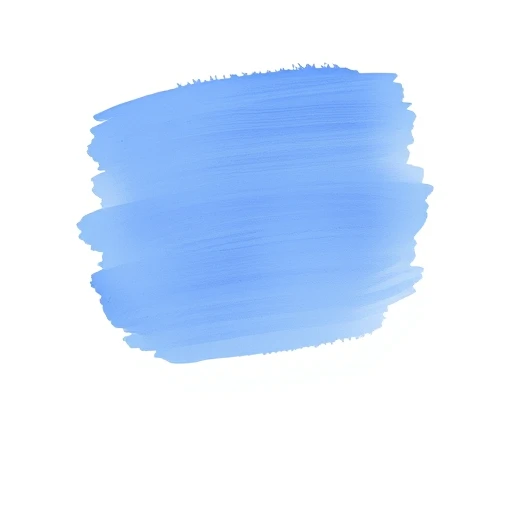
cerulean in 30 Sekunden
- Cerulean is a vivid, deep sky-blue color often associated with clarity and peace.
- It is frequently used in art, fashion, and nature descriptions to provide specific detail.
- The word comes from Latin and is more sophisticated than just saying 'blue'.
- It can be used as both an adjective to describe things and a noun for the color itself.
The word cerulean is a sophisticated and evocative adjective used to describe a specific range of blue colors, typically characterized as a deep, bright, or clear sky-blue. It is a term that bridges the gap between technical artistic precision and poetic imagery. When someone uses the word cerulean, they are rarely just talking about any blue; they are usually referring to a shade that is vibrant, calming, and reminiscent of the atmosphere on a perfectly cloudless day or the shallow, crystal-clear waters of a tropical lagoon. The term carries a certain weight of elegance and specificity that common words like 'blue' or 'light blue' lack. In the world of art and design, cerulean is not just a description but a specific pigment—cerulean blue—which was traditionally made from cobalt stannate. This pigment is prized for its stability and its ability to maintain its hue even when mixed with white, making it indispensable for landscape painters who wish to capture the receding depths of the horizon. In everyday conversation, people use cerulean to add a touch of descriptive flair to their language, whether they are describing the color of a loved one's eyes, the paint on a vintage car, or the shimmering surface of a swimming pool. It is a word that invites the listener to visualize a very particular aesthetic experience, one that is often associated with tranquility, vastness, and purity. Because of its specific associations with the sky and the sea, it is frequently used in travel writing, fashion critiques, and nature descriptions to evoke a sense of serenity and high-end beauty.
- Visual Identity
- Cerulean is often described as a 'true' blue, sitting between azure and sky blue on the color wheel, sometimes possessing a subtle, almost imperceptible hint of green that gives it a refreshing quality.
The artist carefully mixed a dab of cerulean into the white paint to perfectly replicate the morning horizon.
- Emotional Resonance
- Psychologically, cerulean is associated with feelings of peace, confidence, and relaxation, often used in interior design to create a 'sanctuary' feel in bedrooms or bathrooms.
Looking out over the cerulean expanse of the Mediterranean, she felt her anxieties finally begin to ebb away.
Furthermore, the word has gained a permanent place in popular culture, most notably through its inclusion in high-profile fashion monologues that highlight how a single color choice can influence a multi-billion dollar industry. This has elevated cerulean from a mere color name to a symbol of the complexity and interconnectedness of global commerce and aesthetic trends. When you use cerulean, you are tapping into a rich history of pigment production, artistic mastery, and modern cultural relevance. It is a word that suggests the speaker has a discerning eye for detail and an appreciation for the nuances of the natural world. Whether used in a scientific context to describe the plumage of a rare bird or in a romantic context to describe the backdrop of a summer wedding, cerulean remains one of the most evocative and beautiful color terms in the English language. Its three-syllable rhythm—ce-ru-le-an—adds a melodic quality to sentences, making it a favorite among poets and prose stylists alike who wish to elevate their writing beyond the mundane. In essence, cerulean is the color of the infinite sky and the deep, inviting sea, captured in a single, elegant word.
The silk gown shimmered in a vibrant cerulean hue under the runway spotlights.
He painted the ceiling of the nursery a soft cerulean to mimic the open sky.
- Technical Application
- In digital design, cerulean is often represented by hex codes like #007BA7, though variations exist depending on the specific medium and intended emotional impact.
The tropical fish darted through the cerulean reefs, their scales flashing in the sunlight.
Using the word cerulean effectively requires an understanding of its weight as a descriptive adjective. It is most commonly used in an attributive position, directly preceding the noun it modifies, such as 'cerulean sky' or 'cerulean waters.' However, it can also function predicatively, following a linking verb, as in 'The ocean was cerulean.' Because cerulean is such a specific and vivid word, it is best used when you want to create a strong visual image or when the specific shade of blue is important to the context. For instance, in a creative writing piece, instead of saying 'the blue sky,' saying 'the cerulean sky' immediately tells the reader that the sky is bright, clear, and perhaps even intense. It suggests a certain atmosphere—likely one of clarity and beauty. You can also use cerulean to describe man-made objects, particularly those where the color is a deliberate choice, such as fashion, interior decor, or automotive paint. In these cases, cerulean implies a level of sophistication and intentionality. It is also useful in scientific or technical descriptions where 'blue' is too vague. For example, a biologist might describe the 'cerulean plumage' of a bird to distinguish it from other species with darker or more muted blue feathers. When using cerulean, consider the contrast it provides. It pairs beautifully with words that describe light, reflection, and transparency. You might write about 'cerulean depths' to suggest both the color and the clarity of water. It is also worth noting that cerulean can be used as a noun to refer to the color itself, as in 'The room was decorated in shades of cerulean and cream.' This usage is common in design and fashion contexts. To avoid sounding overly flowery, ensure that the use of cerulean is justified by the need for precision or the desire to evoke a specific mood. If every blue object in your story is 'cerulean,' the word loses its impact. Reserve it for moments where the beauty or specificity of the color truly matters to the narrative or description.
- Attributive Usage
- The cerulean waves crashed against the white sand, creating a stunning contrast of colors.
She chose a cerulean ink for her fountain pen to make her letters stand out.
- Predicative Usage
- The horizon was perfectly cerulean, merging seamlessly with the quiet sea below.
The eyes of the husky were a startling cerulean, almost glowing against its white fur.
In professional contexts, such as marketing or product descriptions, cerulean is used to denote luxury and freshness. A 'cerulean cleaning solution' might sound more effective and refreshing than a 'blue' one. A 'cerulean summer collection' in fashion sounds more exclusive and curated. When writing, think about the textures that accompany cerulean. It works well with 'shimmering,' 'translucent,' 'vivid,' and 'limitless.' It is also a great word for setting a scene in historical fiction or fantasy, where the purity of the natural world is often emphasized. By using cerulean, you are not just naming a color; you are painting a picture with words, providing your reader with a specific coordinate on the vast map of visual experience. Remember to balance its use with simpler words to maintain a natural flow in your writing. Overuse can make prose feel pretentious, but the right amount of cerulean can make it shine with clarity and elegance.
The architect specified cerulean tiles for the pool to enhance the water's natural sparkle.
A single cerulean ribbon was tied around the bouquet of white lilies.
- Metaphorical Usage
- While primarily literal, cerulean can metaphorically represent clarity of thought or a 'blue-sky' approach to problem-solving.
The morning light cast a cerulean glow over the sleeping city.
The word cerulean occupies a unique niche in the English language, appearing in contexts ranging from high-brow art criticism to popular cinema. One of the most famous modern instances of the word occurs in the film 'The Devil Wears Prada,' where the character Miranda Priestly delivers a scathing but educational monologue about the history of a cerulean sweater. In this scene, she explains how the color was chosen by designers, filtered down through department stores, and eventually reached the 'bargain bin' where the protagonist purchased it. This monologue cemented cerulean in the public consciousness as a symbol of the fashion industry's power and the meticulous nature of color selection. Beyond Hollywood, you will frequently encounter cerulean in art galleries and museums. Curators and art historians use it to describe the specific pigments used by masters like Monet or Van Gogh. It is a technical term for painters who buy 'Cerulean Blue' paint tubes, knowing it will provide a specific opacity and hue that other blues cannot replicate. In the world of travel and tourism, cerulean is a staple of brochures and websites describing Mediterranean islands, Caribbean beaches, or high-altitude lakes. It is the go-to word for copywriters who want to make a destination sound more exotic and inviting than just 'blue water.' You will also hear it in nature documentaries, where narrators use it to describe the striking colors of tropical birds, insects, or marine life. In literature, particularly in descriptive prose and poetry, cerulean is used to set a mood of serenity or to highlight the beauty of the natural world. It is a word that suggests a certain level of education and aesthetic awareness in the speaker. Even in weather reports, a meteorologist might occasionally use 'cerulean' to describe an exceptionally clear day after a storm has passed, though this is more common in written reports than on-air broadcasts. In summary, you hear cerulean whenever there is a need to move beyond the basic and into the realm of the specific, the beautiful, and the professionally curated.
- Fashion Industry
- Used to describe seasonal trends and specific fabric dyes, often signifying a high-end or 'couture' choice.
'You’re wearing a sweater that was selected for you by the people in this room from a pile of stuff... that is cerulean.'
- Artistic Discourse
- Essential for discussing color theory, pigment history, and the specific palettes of landscape and maritime painters.
The guide pointed out the artist's use of cerulean to create a sense of atmospheric perspective.
In addition to these professional spheres, cerulean is often found in the world of high-end interior design. Designers might suggest a 'cerulean accent wall' to bring a sense of the outdoors inside, or 'cerulean upholstery' to create a focal point in a neutral room. It is a word that carries a sense of calm authority. In the digital age, you might see it in social media captions, especially those related to travel (e.g., #ceruleansky, #ceruleansea). It is a 'Instagrammable' word that matches the aesthetic of high-saturation, beautiful photos. Furthermore, in the realm of luxury goods, from watches with 'cerulean dials' to high-performance cars in 'cerulean metallic,' the word is used to evoke a sense of speed, precision, and premium quality. It is rarely used for cheap or mundane items, which reinforces its status as a 'premium' color term. Whether you are reading a high-fashion magazine, walking through a gallery, or scrolling through a luxury travel blog, cerulean is the word that signals a step up from the ordinary. It tells you that the color you are looking at is not just blue—it is a carefully selected, meaningful, and beautiful shade that deserves its own name.
The luxury yacht featured a cerulean hull that matched the Caribbean waters perfectly.
The poet spoke of the cerulean veil of twilight falling over the valley.
- Travel Marketing
- A favorite adjective for describing exotic coastal regions and pristine natural environments.
The travel brochure promised cerulean vistas and endless sunshine.
One of the most frequent mistakes people make with the word cerulean is using it as a generic synonym for any shade of blue. Cerulean is a very specific color—a bright, deep sky-blue—and using it to describe a navy blue suit or a pale baby-blue blanket is technically incorrect and can be jarring to those who know the word's meaning. Another common error is confusing cerulean with other similar color terms like azure, cyan, or turquoise. While they are all in the blue-green family, they have distinct differences. Azure is typically a more 'pure' sky blue without the slight green or grey undertones often found in cerulean. Cyan is a much brighter, more 'electric' blue-green, often associated with digital screens and printing. Turquoise has a much stronger green component. Using cerulean when you mean turquoise can lead to confusion in design or descriptive contexts. Pronunciation is another area where mistakes occur. The correct pronunciation is 'se-ROO-lee-un,' but it is sometimes mispronounced as 'ser-u-LANE' or 'se-ROOL-yun.' Getting the rhythm and the 'oo' sound right is key to using the word confidently. In writing, a common mistake is overusing the word to the point of pretension. Because it is a 'fancy' word, using it multiple times in a short paragraph can make the prose feel forced or 'purple.' It is best used as a surgical strike—a single, perfect word that captures a specific visual moment. Some writers also mistakenly use it to describe things that cannot be blue, or they use it in metaphors that don't quite land, such as 'cerulean anger.' While creative, such metaphors can be confusing because the color is so strongly associated with peace and clarity. Finally, there is the mistake of spelling. The 'u' and 'e' placement can be tricky; it is 'cerulean,' not 'cerulian' or 'ceruelan.' Keeping the Latin root 'caeruleus' in mind can help with the spelling. By avoiding these common pitfalls, you can use cerulean to truly enhance your vocabulary and descriptive power, ensuring that when you do use it, it carries the full weight of its beautiful, specific meaning.
- Misapplication of Shade
- Using 'cerulean' for dark blues like navy, midnight, or indigo is a common descriptive error.
Incorrect: He wore a cerulean suit to the funeral. (Unless the suit was bright sky-blue, this is likely the wrong word.)
- Confusion with Cyan
- Cyan is a primary color in printing (CMYK) and is much more neon/vibrant than the natural-toned cerulean.
The cerulean sky was a welcome sight after the grey storm. (Correct use: natural and clear.)
Another subtle mistake is failing to account for the 'grey' or 'green' undertones that can exist in cerulean. While it is primarily blue, its beauty often comes from these complex undertones. If you describe something as 'pure, electric cerulean,' you might be contradicting the word's inherent nature, which is slightly more grounded and atmospheric than a neon blue. Additionally, some people use 'cerulean' as a verb, which is not standard English. You cannot 'cerulean' a wall; you paint it cerulean. Understanding the grammatical role of the word as an adjective or noun is crucial. In professional design, failing to specify the exact 'cerulean' (as there are many variations in paint brands) can lead to errors, but in general language, the goal is to evoke the feeling of the color. Lastly, be careful with the context of 'clarity.' Cerulean implies a clear sky, but it doesn't necessarily mean 'transparent.' A cerulean stone like turquoise or a cerulean painted wall is opaque. Using it to mean 'see-through' is a metaphorical stretch that might not always work. By being mindful of these nuances, you can ensure your use of cerulean is both accurate and evocative, adding a layer of professional polish to your communication.
The cerulean bird was easy to spot against the brown branches.
She painted the shutters a bright cerulean to give the house a Mediterranean feel.
- Spelling and Pronunciation
- Ensure you include the 'e' after 'r' and the 'a' before 'n'. Pronounce it with four syllables: ce-ru-le-an.
The cerulean depths of the crater lake were mesmerizing.
While cerulean is a beautiful and specific word, there are many other terms in the blue family that can be used depending on the exact shade and mood you wish to convey. Understanding the differences between these alternatives is key to precise communication. Azure is perhaps the closest relative to cerulean. It also describes a sky-blue, but azure is often perceived as a more 'pure' or 'intense' blue, like the color of the sky at a higher altitude. If cerulean is the sky at noon, azure is the sky just before it starts to darken. Cyan is another alternative, but it is much more technical and vibrant. It is a primary color in the subtractive color model used in printing. Cyan has a distinct 'electric' feel and a stronger green component than cerulean. It is rarely used to describe natural scenes unless they are exceptionally vivid. Turquoise and Teal are further along the green spectrum. Turquoise is a bright, gemstone-like blue-green, while teal is a darker, more sophisticated version of the same mix. Use these when the green undertone is undeniable. Cobalt is a much darker, more saturated blue. It is a 'heavy' color compared to the 'light' feel of cerulean. Sapphire is another deep, rich blue, but it carries the connotation of a gemstone's sparkle and value. Sky-blue is the most common and simple alternative. It is perfectly acceptable in most contexts, but it lacks the poetic and professional weight of cerulean. Beryl is a more obscure term, often used to describe a pale, sea-green blue. Aquamarine is another gemstone-inspired term, describing a very light, clear, and slightly greenish blue, often used for water. When choosing between these words, consider the source of the color (nature vs. pigment), the intensity (vibrant vs. muted), and the emotional impact (calm vs. energetic). Cerulean sits in a 'sweet spot' of being vivid yet natural, sophisticated yet accessible. By mastering these distinctions, you can choose the perfect blue for any occasion, ensuring your descriptions are as accurate as they are beautiful.
- Cerulean vs. Azure
- Cerulean often has a hint of green or grey; Azure is a more 'royal' or 'pure' sky blue.
While the deep ocean was sapphire, the shallow shore was a bright cerulean.
- Cerulean vs. Cyan
- Cyan is a digital/printing primary color; Cerulean is an artistic pigment and natural description.
The cerulean sky provided a peaceful backdrop for the wedding.
Other less common alternatives include 'cornflower blue,' which is a soft, slightly purplish blue, and 'baby blue,' which is much lighter and more 'innocent' than cerulean. 'Electric blue' is much more intense and 'glowing.' In technical fields, you might hear 'stannate blue,' which refers to the chemical composition of the original cerulean pigment. In literature, you might see 'ethereal blue' or 'heavenly blue' to describe the same sky-like quality. When you are writing, try to match the 'register' of your word to the rest of your text. Cerulean fits well in formal, creative, or professional writing. If you are writing a casual text message, 'sky-blue' might be more appropriate. However, if you are describing a beautiful vacation photo, 'cerulean' adds that extra touch of magic. Ultimately, the choice of word depends on the 'flavor' you want to give your sentence. Cerulean is the flavor of a clear, bright, and sophisticated world. It is a word that rewards the careful writer and the observant reader alike.
The cerulean ink flowed smoothly onto the parchment.
He admired the cerulean butterfly as it landed on a daisy.
- Aquamarine Comparison
- Aquamarine is lighter and more 'watery' than cerulean, which has more depth and 'sky' quality.
The cerulean paint on the old door was peeling, revealing layers of history.
How Formal Is It?
Wusstest du?
While the word is old, 'Cerulean Blue' as a specific artist's pigment wasn't perfected until 1805 by Albrecht Höpfner. It became a favorite of the Impressionist painters because it was the first stable, opaque sky-blue pigment available to them.
Aussprachehilfe
- Pronouncing it as 'ser-u-LANE'.
- Missing the 'e' sound: 'se-ROOL-yun'.
- Stressing the first syllable: 'SE-ru-le-an'.
- Confusing the 'u' sound with 'uh': 'se-RUH-le-an'.
- Adding an extra 'i' sound at the end: 'se-ru-le-an-ee'.
Schwierigkeitsgrad
It's a specific vocabulary word but usually clear from context.
Requires correct spelling and an understanding of when it's appropriate to use a 'fancy' word.
Pronunciation can be tricky for non-native speakers.
Easily recognized if the listener knows it's a color.
Was du als Nächstes lernen solltest
Voraussetzungen
Als Nächstes lernen
Fortgeschritten
Wichtige Grammatik
Adjective Order
A beautiful, bright cerulean sky (Opinion, Size/Age/Shape, Color).
Compound Adjectives
A cerulean-blue dress (using a hyphen to join two color words).
Nouns as Adjectives
The cerulean paint (using the color name to describe the substance).
Predicative Adjectives
The water was cerulean (adjective following a linking verb).
Substantive Adjectives
The room was decorated in cerulean (using the adjective as a noun).
Beispiele nach Niveau
The sky is a beautiful cerulean color today.
The sky is a beautiful sky-blue color today.
Adjective modifying the noun 'color'.
I have a cerulean crayon in my box.
I have a sky-blue crayon in my box.
Adjective modifying the noun 'crayon'.
Look at the cerulean water in the pool.
Look at the bright blue water in the pool.
Adjective modifying the noun 'water'.
She is wearing a cerulean shirt.
She is wearing a sky-blue shirt.
Adjective modifying the noun 'shirt'.
The bird has cerulean feathers.
The bird has sky-blue feathers.
Adjective modifying the noun 'feathers'.
My favorite color is cerulean.
My favorite color is sky-blue.
Noun used as a subject complement.
The cerulean sea is very calm.
The sky-blue sea is very calm.
Adjective modifying the noun 'sea'.
We saw a cerulean butterfly in the garden.
We saw a sky-blue butterfly in the garden.
Adjective modifying the noun 'butterfly'.
The travel brochure showed a cerulean ocean and white sand.
The brochure showed a sky-blue ocean.
Adjective modifying 'ocean'.
He painted his bedroom a soft cerulean blue.
He painted his room a soft sky-blue.
Compound adjective 'cerulean blue'.
The flowers in the vase were a vibrant cerulean.
The flowers were a bright sky-blue.
Noun used after 'a'.
She bought a cerulean dress for the summer party.
She bought a sky-blue dress.
Adjective modifying 'dress'.
The mountain lake was a deep cerulean.
The lake was a deep sky-blue.
Noun used as a subject complement.
I love the cerulean tiles in your bathroom.
I love the sky-blue tiles.
Adjective modifying 'tiles'.
The artist used cerulean to paint the sky.
The artist used sky-blue paint.
Noun used as an object.
A cerulean ribbon was tied around the gift.
A sky-blue ribbon was on the gift.
Adjective modifying 'ribbon'.
The cerulean sky stretched endlessly above the desert.
The deep sky-blue sky was very large.
Attributive adjective.
The Mediterranean is famous for its cerulean waters.
The sea is famous for its sky-blue water.
Adjective modifying 'waters'.
She noticed the cerulean tint in the old glass bottle.
She saw the sky-blue color in the glass.
Adjective modifying 'tint'.
The designer chose a cerulean palette for the new collection.
The designer chose sky-blue colors.
Adjective modifying 'palette'.
His eyes were a startling cerulean, clear and bright.
His eyes were a surprising sky-blue.
Noun used as a subject complement.
The cerulean warbler is a small, beautiful songbird.
The sky-blue warbler is a bird.
Proper noun component (bird name).
The morning mist had a faint cerulean glow.
The mist had a light sky-blue light.
Adjective modifying 'glow'.
They sailed across the cerulean expanse of the bay.
They sailed across the sky-blue area of the bay.
Adjective modifying 'expanse'.
The painting's cerulean tones create a sense of profound peace.
The sky-blue colors in the painting make it peaceful.
Adjective modifying 'tones'.
In the famous film, the monologue explains the importance of cerulean.
The speech explains why this blue is important.
Noun used as the object of a preposition.
The cerulean pigment was once very expensive for artists to buy.
The sky-blue paint was very costly.
Adjective modifying 'pigment'.
The horizon was a perfect blend of cerulean and gold.
The sky was sky-blue and gold.
Noun used in a compound subject complement.
She decorated the patio with cerulean cushions and white furniture.
She used sky-blue cushions.
Adjective modifying 'cushions'.
The cerulean depths of the ocean hide many mysteries.
The sky-blue deep parts of the sea.
Adjective modifying 'depths'.
The company's new logo features a sleek cerulean stripe.
The logo has a sky-blue line.
Adjective modifying 'stripe'.
The sky turned from cerulean to a bruised purple as the storm approached.
The sky changed from sky-blue to purple.
Noun used after 'from'.
The author used the word cerulean to evoke a sense of infinite possibility.
The writer used 'sky-blue' to show endless hope.
Noun used as the object of 'used'.
A cerulean haze hung over the valley, softening the jagged peaks.
A sky-blue mist was over the valley.
Adjective modifying 'haze'.
The cerulean silk of her gown caught the light with every movement.
The sky-blue silk of her dress was shiny.
Adjective modifying 'silk'.
The transition from the cerulean of the sky to the indigo of the sea was seamless.
The change from sky-blue to dark blue was perfect.
Noun used after 'the'.
The architect's use of cerulean glass gave the building an ethereal quality.
The sky-blue glass made the building look heavenly.
Adjective modifying 'glass'.
Cerulean blue is often associated with the Virgin Mary in classical art.
This blue is linked to Mary in old paintings.
Compound noun/adjective phrase.
The cerulean plumage of the kingfisher flashed as it dived into the stream.
The sky-blue feathers of the bird were bright.
Adjective modifying 'plumage'.
The poet described the twilight as a 'cerulean veil' falling over the city.
The poet called the evening a 'sky-blue cover'.
Adjective in a metaphorical phrase.
The meticulous application of cerulean glazes gave the pottery a luminous depth.
The careful use of sky-blue coatings made the pots shine.
Adjective modifying 'glazes'.
In the discourse of color theory, cerulean occupies a pivotal position between green and blue.
In color study, this blue is very important.
Noun as the subject.
The cerulean intensity of the high-altitude sky can be disorienting to newcomers.
The very bright sky-blue at high places can be confusing.
Adjective modifying 'intensity'.
He spoke of the 'cerulean nostalgia' he felt when looking at old photographs of the coast.
He felt a 'sky-blue sadness' for the past.
Adjective used in an abstract, metaphorical sense.
The cerulean expanse of the salt flats mirrored the sky with uncanny precision.
The sky-blue area of the salt flats looked exactly like the sky.
Adjective modifying 'expanse'.
The artist’s palette was restricted to shades of cerulean, ochre, and charcoal.
The artist only used sky-blue, yellow-brown, and black.
Noun in a list of colors.
The cerulean light of the pre-dawn hour lent the landscape a ghostly appearance.
The sky-blue light before morning made the land look like a ghost.
Adjective modifying 'light'.
The monograph explores the semiotics of cerulean in 20th-century advertising.
The book looks at what this blue means in ads.
Noun as the object of a preposition.
Synonyme
Gegenteile
Häufige Kollokationen
Häufige Phrasen
— A small amount of the color used to brighten something up.
The grey room needed a splash of cerulean to feel alive.
— A phrase often used in travel or poetry to describe a perfect, blue scene.
Our vacation in Greece was a cerulean dream.
— Doing something during a perfect, clear day.
They played cricket all afternoon under a cerulean sky.
— A wide, beautiful view of the sky or sea.
The hotel room offered a stunning cerulean vista.
— Metaphorically describing something that is completely blue.
The hills looked as if they had been dipped in cerulean.
— A large area of blue, usually the sky or ocean.
The plane flew over the cerulean expanse of the Atlantic.
— Emphasizing the light and intensity of the color.
The bright cerulean paint was hard to miss.
— Describing a lighter, more calming version of the color.
The walls were painted a soft cerulean for a relaxing effect.
— Describing light that has a blue quality.
The computer screen cast a cerulean glow on his face.
Wird oft verwechselt mit
Azure is often a more 'pure' or darker sky blue, while cerulean can have a hint of green or grey.
Cyan is a very bright, electric blue-green used in printing, whereas cerulean is more natural and atmospheric.
Turquoise is much greener than cerulean.
Redewendungen & Ausdrücke
— A variation of 'blue-sky thinking,' meaning creative, open-minded ideas without limits.
We need some cerulean thinking to solve this marketing problem.
business/informal— A poetic variation of 'out of the blue,' meaning completely unexpectedly.
The news came out of the cerulean, shocking everyone.
literary— A play on 'blue blood,' referring to someone of noble or very high-class birth, with an added touch of elegance.
She carried herself with the grace of someone with cerulean blood.
literary/ironic— A variation of 'once in a blue moon,' meaning very rarely.
He visits his hometown only once in a cerulean moon.
literary— A state of feeling calm, clear-headed, and peaceful.
After her meditation, she was in a truly cerulean mood.
informal/creative— A variation of 'paint the town red,' but implying a more sophisticated or calm night out.
Instead of a wild party, they decided to paint the town cerulean with a jazz concert.
informal/ironic— A very intense, clear, and honest look from someone with blue eyes.
He couldn't lie under her steady cerulean gaze.
literary— A poetic way to refer to the sky.
We slept outdoors under the cerulean ceiling.
literary— A state of perfect understanding or a very clear day.
The morning brought a cerulean clarity to the situation.
literary/formal— To feel peaceful and serene (unlike 'feeling blue' which means sad).
Looking at the ocean always makes me feel cerulean.
informal/creativeLeicht verwechselbar
Both mean sky-blue.
Azure is usually a more intense, 'royal' blue, while cerulean is often described as a 'true' sky blue with subtle complexities.
The azure flag waved, but the cerulean sky was even brighter.
Both are blue-green shades.
Cyan is a primary color in the CMYK model and looks very artificial/neon. Cerulean is a natural-looking pigment.
The cyan light on the computer was different from the cerulean sea.
Both are blue pigments.
Cobalt is much darker and more saturated. Cerulean is lighter and more like the sky.
He used cobalt for the deep shadows and cerulean for the light sky.
Both are specific blue names.
Indigo is a very dark, purplish blue. Cerulean is a bright, clear blue.
The jeans were indigo, but the shirt was cerulean.
Both have green undertones.
Teal is much darker and has a much stronger green component. Cerulean is primarily blue.
The teal curtains were dark, but the cerulean walls were bright.
Satzmuster
The [noun] is cerulean.
The sky is cerulean.
I like the cerulean [noun].
I like the cerulean dress.
A [adjective] cerulean [noun] [verb].
A bright cerulean bird sang.
The [noun] was a [adjective] shade of cerulean.
The ocean was a deep shade of cerulean.
[Noun] and cerulean [noun] [verb] together.
White clouds and cerulean sky blended together.
The [noun]'s cerulean [noun] [verb] the [noun].
The painting's cerulean tones anchored the composition.
Everything was [adjective] and cerulean.
Everything was sunny and cerulean.
She chose cerulean for the [noun].
She chose cerulean for the accent wall.
Wortfamilie
Substantive
Adjektive
Verwandt
So verwendest du es
Cerulean is a relatively low-frequency word in general speech but high-frequency in specific domains like art, fashion, and travel.
-
Using cerulean for dark blue.
→
Use navy or indigo for dark blue.
Cerulean specifically refers to a bright, sky-like blue. Using it for dark colors is factually incorrect.
-
Misspelling it as 'cerulian'.
→
Cerulean.
The correct spelling includes an 'e' before the 'a'. Remembering the Latin 'caeruleus' can help.
-
Pronouncing it as 'ser-u-lane'.
→
se-ROO-lee-un.
The ending is 'un', not 'lane'. It has four syllables.
-
Confusing it with turquoise.
→
Use turquoise for green-heavy blues.
Cerulean is primarily blue, while turquoise has a much stronger green component.
-
Overusing it in a single text.
→
Use it once for impact.
Cerulean is a very strong descriptive word. Using it too much can make your writing seem 'purple' or pretentious.
Tipps
Use for Nature
Cerulean is most effective when describing the sky or the sea. It immediately creates a vivid image of a clear, beautiful day.
Elevate Your Writing
Replace 'light blue' with 'cerulean' in your creative writing to make your descriptions sound more professional and poetic.
Specific Shades
In fashion, use cerulean to describe a very specific, high-end blue that is neither navy nor baby blue.
Pigment Knowledge
If you are a painter, remember that cerulean blue is opaque and great for skies because it doesn't disappear when mixed with white.
Stress the 'ROO'
To sound like a native speaker, make sure you put the emphasis on the second syllable: se-ROO-lee-un.
The 'E' and 'A'
Don't forget the 'e' after the 'r' and the 'a' before the 'n'. It's c-e-r-u-l-e-a-n.
Accent Color
Cerulean makes a great accent color in a room with neutral tones like grey or beige.
Clarity
Use cerulean metaphorically to describe things that are clear, pure, or peaceful.
Cerulean vs Azure
Use azure for a darker, more royal sky blue, and cerulean for a lighter, more atmospheric sky blue.
Hex Codes
If you're a web designer, look for hex codes around #007BA7 to get a true cerulean feel.
Einprägen
Eselsbrücke
Think of 'Sky-Rule-Ian'. The Sky Rules the color Cerulean. Or, 'See-Rule-Ocean'—See the blue that rules the ocean.
Visuelle Assoziation
Visualize a perfectly clear sky at noon reflecting in a crystal-clear swimming pool. That intense, bright blue is cerulean.
Word Web
Herausforderung
Try to find three things in your house or outside that are exactly cerulean. Describe them to a friend using the word at least twice.
Wortherkunft
The word cerulean comes from the Latin word 'caeruleus', which means 'dark blue', 'blue', or 'blue-green'. This Latin term was likely derived from 'caelum', meaning 'sky' or 'heaven'. It entered the English language in the late 16th or early 17th century, initially used to describe the color of the sky and the Mediterranean sea.
Ursprüngliche Bedeutung: The original Latin meaning was specifically tied to the color of the sky and the sea, often implying a deep or dark quality.
It belongs to the Indo-European family, through the Italic branch (Latin).Kultureller Kontext
The word is generally neutral and has no negative or sensitive connotations.
In the US and UK, cerulean is often seen as a 'sophisticated' color name, used more by people interested in art, design, or fashion than in general casual speech.
Im Alltag üben
Kontexte aus dem Alltag
Nature Description
- cerulean sky
- cerulean waters
- cerulean horizon
- cerulean plumage
Fashion and Design
- cerulean collection
- cerulean accent
- cerulean silk
- shades of cerulean
Art and Painting
- cerulean blue pigment
- cerulean glaze
- cerulean wash
- dab of cerulean
Travel Writing
- cerulean bay
- cerulean vistas
- cerulean paradise
- clear cerulean
Poetry and Literature
- cerulean veil
- cerulean depths
- cerulean dream
- cerulean light
Gesprächseinstiege
"Have you ever seen a sky so clear it looked almost cerulean?"
"Do you prefer deep navy blues or bright cerulean shades for your clothes?"
"If you were painting a picture of the ocean, would you use cerulean or turquoise?"
"What do you think of when you hear the word cerulean?"
"Did you know that cerulean was the first 'Color of the Millennium'?"
Tagebuch-Impulse
Describe the most beautiful cerulean scene you have ever witnessed in person.
How does the color cerulean make you feel? Write about a memory associated with this color.
If you had to decorate your dream home using only cerulean and one other color, what would it be and why?
Write a short poem about a cerulean bird flying over a cerulean sea.
Reflect on the 'cerulean monologue' from The Devil Wears Prada. Do you think colors have that much power in our lives?
Häufig gestellte Fragen
10 FragenCerulean is primarily a blue color. However, it often has a very subtle hint of green or grey, which gives it its characteristic 'sky' or 'ocean' look. In art, the pigment cerulean blue is definitely a blue, but its unique chemical makeup gives it a slightly different hue than other blues like cobalt or ultramarine.
The correct pronunciation is se-ROO-lee-un. It has four syllables, with the stress on the second syllable 'ROO'. Many people mistakenly try to say it with three syllables or change the 'u' sound, but 'se-ROO-lee-un' is the standard way to say it in both British and American English.
In general conversation, they are very similar. However, 'cerulean' is considered a more sophisticated and specific term. In art, cerulean is a specific pigment (cobalt stannate) that is more opaque and has a different chemical structure than other sky-blue paints. Using 'cerulean' instead of 'sky blue' adds a more professional or poetic touch to your writing.
It is not as common as 'blue' or 'red,' but it is very well-known in certain fields like fashion, art, and design. Most native English speakers will recognize the word, even if they don't use it in their daily lives. It became much more famous after the movie 'The Devil Wears Prada'.
Yes, 'cerulean eyes' is a common and very descriptive way to say someone has bright, clear, sky-blue eyes. It sounds more poetic and intense than just saying 'blue eyes'.
Cerulean pairs beautifully with white, cream, and silver for a clean, fresh look. For a more vibrant contrast, it works well with warm tones like gold, orange, or terracotta. In nature, it is often seen alongside the greens of trees or the browns of sand and earth.
Cerulean is a cool color because it is a shade of blue. Cool colors are often associated with calmness, peace, and distance. However, because it is so bright and vivid, it can sometimes feel more 'energetic' than darker cool colors like navy.
It comes from the Latin word 'caeruleus,' which means 'blue' or 'blue-green.' This word is related to 'caelum,' the Latin word for 'sky.' So, the name itself literally means 'the color of the sky.'
Yes, though they are close. Azure is usually a 'purer' blue, like the sky at a very high altitude. Cerulean is often described as having a slight greenish or greyish undertone, making it look a bit more 'atmospheric' or 'watery.'
Yes, you can use it as a noun to refer to the color itself. For example: 'The room was painted in a vibrant cerulean.' In this sentence, cerulean is the name of the color, acting as a noun.
Teste dich selbst 200 Fragen
Write a sentence describing the sky on a perfect summer day using the word 'cerulean'.
Well written! Good try! Check the sample answer below.
Describe a beautiful ocean scene using 'cerulean' and 'shimmering'.
Well written! Good try! Check the sample answer below.
Write a short paragraph about a character with 'cerulean eyes'.
Well written! Good try! Check the sample answer below.
Use 'cerulean' in a sentence about interior design.
Well written! Good try! Check the sample answer below.
Explain the difference between 'blue' and 'cerulean' in your own words.
Well written! Good try! Check the sample answer below.
Write a sentence using 'cerulean' as a noun.
Well written! Good try! Check the sample answer below.
Describe a piece of clothing using the word 'cerulean'.
Well written! Good try! Check the sample answer below.
Use 'cerulean' in a metaphorical sense.
Well written! Good try! Check the sample answer below.
Write a travel advertisement using the word 'cerulean'.
Well written! Good try! Check the sample answer below.
Describe a bird using 'cerulean' and 'plumage'.
Well written! Good try! Check the sample answer below.
Write a sentence about a painting using 'cerulean'.
Well written! Good try! Check the sample answer below.
Use 'cerulean' in a sentence about a car.
Well written! Good try! Check the sample answer below.
Describe a sunset where the sky is still 'cerulean' at the top.
Well written! Good try! Check the sample answer below.
Write a sentence using 'cerulean' and 'horizon'.
Well written! Good try! Check the sample answer below.
Describe a swimming pool using 'cerulean'.
Well written! Good try! Check the sample answer below.
Use 'cerulean' in a sentence about a flower.
Well written! Good try! Check the sample answer below.
Write a sentence about a clear day using 'cerulean' and 'cloudless'.
Well written! Good try! Check the sample answer below.
Describe a piece of jewelry using 'cerulean'.
Well written! Good try! Check the sample answer below.
Use 'cerulean' in a sentence about a butterfly.
Well written! Good try! Check the sample answer below.
Write a sentence about a clear lake using 'cerulean'.
Well written! Good try! Check the sample answer below.
Pronounce 'cerulean' correctly three times.
Read this aloud:
Du hast gesagt:
Speech recognition is not supported in your browser. Try Chrome or Edge.
Describe your favorite blue object using the word 'cerulean'.
Read this aloud:
Du hast gesagt:
Speech recognition is not supported in your browser. Try Chrome or Edge.
Explain to a friend why a sky is 'cerulean' and not just 'blue'.
Read this aloud:
Du hast gesagt:
Speech recognition is not supported in your browser. Try Chrome or Edge.
Use 'cerulean' in a sentence about a vacation you'd like to take.
Read this aloud:
Du hast gesagt:
Speech recognition is not supported in your browser. Try Chrome or Edge.
Discuss the emotional impact of the color cerulean.
Read this aloud:
Du hast gesagt:
Speech recognition is not supported in your browser. Try Chrome or Edge.
How would you describe a 'cerulean mood'?
Read this aloud:
Du hast gesagt:
Speech recognition is not supported in your browser. Try Chrome or Edge.
Tell a short story about a 'cerulean dream'.
Read this aloud:
Du hast gesagt:
Speech recognition is not supported in your browser. Try Chrome or Edge.
Describe a painting using the word 'cerulean'.
Read this aloud:
Du hast gesagt:
Speech recognition is not supported in your browser. Try Chrome or Edge.
What are some things in nature that are cerulean?
Read this aloud:
Du hast gesagt:
Speech recognition is not supported in your browser. Try Chrome or Edge.
Why is cerulean a good word for a travel brochure?
Read this aloud:
Du hast gesagt:
Speech recognition is not supported in your browser. Try Chrome or Edge.
Practice saying 'cerulean sky' and 'cerulean sea' quickly.
Read this aloud:
Du hast gesagt:
Speech recognition is not supported in your browser. Try Chrome or Edge.
Describe a piece of clothing you own that might be cerulean.
Read this aloud:
Du hast gesagt:
Speech recognition is not supported in your browser. Try Chrome or Edge.
What is the difference between cerulean and navy blue?
Read this aloud:
Du hast gesagt:
Speech recognition is not supported in your browser. Try Chrome or Edge.
How do you spell cerulean? Say it out loud.
Read this aloud:
Du hast gesagt:
Speech recognition is not supported in your browser. Try Chrome or Edge.
Use 'cerulean' to describe a swimming pool.
Read this aloud:
Du hast gesagt:
Speech recognition is not supported in your browser. Try Chrome or Edge.
Describe a bird's feathers using 'cerulean'.
Read this aloud:
Du hast gesagt:
Speech recognition is not supported in your browser. Try Chrome or Edge.
What does the word 'cerulean' remind you of?
Read this aloud:
Du hast gesagt:
Speech recognition is not supported in your browser. Try Chrome or Edge.
Is cerulean a common color for a car? Why or why not?
Read this aloud:
Du hast gesagt:
Speech recognition is not supported in your browser. Try Chrome or Edge.
Use 'cerulean' in a sentence about a flower.
Read this aloud:
Du hast gesagt:
Speech recognition is not supported in your browser. Try Chrome or Edge.
Why do you think Pantone chose cerulean for the year 2000?
Read this aloud:
Du hast gesagt:
Speech recognition is not supported in your browser. Try Chrome or Edge.
Listen to the description: 'A bright, deep sky-blue color.' What is the word?
In a fashion show, the announcer says: 'This season is all about ______.' What color is likely mentioned?
A narrator says: 'The ______ warbler is rare.' What is the bird's name?
Listen for the stress: Is it SE-ru-le-an or se-ROO-lee-un?
If someone says 'The water is cerulean,' is it clear or muddy?
A painter asks for 'cerulean blue.' Is he painting a night scene or a day scene?
Listen to the sentence: 'The cerulean silk shimmered.' What material is being described?
What is the Latin root mentioned in the audio?
Is cerulean described as a 'warm' or 'cool' tone?
The travel guide mentions 'cerulean vistas.' What are you looking at?
How many syllables did you hear in the word 'cerulean'?
Does the word end in an 'un' sound or a 'lane' sound?
In the monologue, is cerulean described as a 'bargain' color or a 'designer' color?
Does the speaker associate cerulean with the sky or the grass?
Is the 'c' in cerulean pronounced like 's' or 'k'?
/ 200 correct
Perfect score!
Summary
Cerulean is the ultimate 'sky-blue' word, offering a blend of artistic precision and poetic beauty. Use it when you want to describe a bright, clear, and high-quality blue, such as 'The cerulean sea sparkled under the midday sun.'
- Cerulean is a vivid, deep sky-blue color often associated with clarity and peace.
- It is frequently used in art, fashion, and nature descriptions to provide specific detail.
- The word comes from Latin and is more sophisticated than just saying 'blue'.
- It can be used as both an adjective to describe things and a noun for the color itself.
Use for Nature
Cerulean is most effective when describing the sky or the sea. It immediately creates a vivid image of a clear, beautiful day.
Elevate Your Writing
Replace 'light blue' with 'cerulean' in your creative writing to make your descriptions sound more professional and poetic.
Specific Shades
In fashion, use cerulean to describe a very specific, high-end blue that is neither navy nor baby blue.
Pigment Knowledge
If you are a painter, remember that cerulean blue is opaque and great for skies because it doesn't disappear when mixed with white.