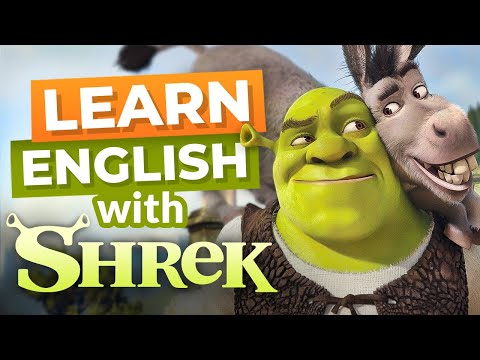
ogre in 30 Sekunden
- A mythical, man-eating monster from folklore.
- A person who is exceptionally cruel or intimidating.
- Often depicted as large, ugly, and physically powerful.
- Popularized by fairy tales and modern films like Shrek.
- Literal Meaning
- A giant, ugly, man-eating monster from fairy tales and folklore.
- Figurative Meaning
- A person who is felt to be particularly cruel, scary, or difficult to deal with.
The children huddled together in the dark, terrified that the ogre would find their hiding spot behind the waterfall.
My first boss was a total ogre who would scream at us for the smallest mistakes.
In the old legend, the ogre guarded a bridge and demanded a heavy toll from every traveler.
- Cultural Nuance
- Modern media often flips the script, showing ogres as misunderstood outcasts rather than pure villains.
Despite his reputation as an ogre, the old man was actually quite fond of the neighborhood cats.
The headmaster was an ogre of a man, standing six and a half feet tall with a permanent scowl.
- Common Adjectives
- Lumbering, hideous, cruel, terrifying, massive, brutish, gluttonous.
The ogre let out a thunderous roar that echoed through the mountain pass.
Don't let the supervisor see you checking your phone; he can be a real ogre about the rules.
- Verb Pairings
- To bellow, to stomp, to terrorize, to devour, to loom.
The giant ogre loomed over the tiny village, casting a shadow of dread.
The author uses the ogre as a symbol of the protagonist's repressed anger.
- Sentence Patterns
- [Subject] + is a/an + [Adjective] + ogre. / The ogre + [Verb] + [Object].
Every fairy tale needs an ogre to provide a challenge for the brave hero.
- In Literature
- Found in fairy tales, fantasy novels (like Tolkien's works), and mythology books.
The librarian recommended a book about an ogre who wanted to become a pastry chef.
The movie completely changed the public's perception of what an ogre could be.
- In the Workplace
- Used to describe a cruel or domineering superior or colleague.
Everyone was afraid to present their ideas to the CEO, who was known to be a bit of an ogre during meetings.
The party encountered a two-headed ogre guarding the entrance to the dungeon.
- Ogre vs. Giant
- Ogres are always monstrous and usually man-eating; giants can be just very large people.
It's a mistake to call the BFG an ogre; he is a Big Friendly Giant.
The student mispronounced ogre as 'o-gray,' which led to some confusion in the literature class.
- Spelling Note
- Always ends in '-re', not '-er'. Do not confuse with 'ochre' (the color).
He wrote 'oger' in his essay, which is a common spelling mistake for the word ogre.
- Mythical Alternatives
- Troll, giant, behemoth, leviathan (for sea monsters), gargoyle.
The hero faced a massive troll under the bridge, which was even scarier than the ogre he met earlier.
The manager was a complete tyrant, demanding that everyone work through the weekend without extra pay.
- Figurative Alternatives
- Tyrant, brute, bully, savage, barbarian, miscreant.
Stop acting like a brute and use your words to explain why you are angry.
- Nuance Comparison
- Ogre: Scary and powerful. Bully: Mean and targets individuals. Brute: Strong and insensitive.
The dictator was described as an ogre by the international press due to his horrific treatment of his people.
How Formal Is It?
Wusstest du?
Some linguists believe the word comes from 'Orcus,' the Roman god of the underworld, who was known for being a punisher and a consumer of the dead. Another theory suggests it comes from 'Hongre' (Hungarian), as medieval Europeans sometimes viewed Hungarians as terrifying invaders.
Aussprachehilfe
- Pronouncing it as 'o-gray'.
- Emphasizing the second syllable.
- Pronouncing the 'g' like a 'j' (ojre).
- Adding an extra syllable (o-ger-ee).
- Confusing it with 'ochre' (pronounced similarly but different).
Schwierigkeitsgrad
Common in children's literature and fantasy, making it easy to encounter.
Spelling the '-re' ending can be tricky for some learners.
Pronunciation is generally straightforward once the 'OH' sound is learned.
Distinctive sound makes it easy to recognize in context.
Was du als Nächstes lernen solltest
Voraussetzungen
Als Nächstes lernen
Fortgeschritten
Wichtige Grammatik
Using 'an' before vowel sounds.
He is **an** ogre.
Noun-Adjective agreement in descriptions.
The **ugly ogre** (not 'The ogre ugly').
Similes with 'like' or 'as'.
He eats **like an ogre**.
Possessive nouns.
The **ogre's** club was heavy.
Pluralization of nouns ending in 'e'.
One ogre, two **ogres**.
Beispiele nach Niveau
The big ogre lives in a cave.
Le grand ogre vit dans une grotte.
Subject (The big ogre) + Verb (lives) + Prepositional Phrase (in a cave).
I am afraid of the scary ogre.
J'ai peur de l'ogre effrayant.
'Afraid of' is the standard prepositional pairing.
The ogre has big teeth.
L'ogre a de grandes dents.
Simple present tense with 'has' for third-person singular.
Is the ogre nice or bad?
L'ogre est-il gentil ou méchant ?
Question form using 'is' at the beginning.
The ogre is very tall.
L'ogre est très grand.
Use 'very' to intensify the adjective 'tall'.
Look at that green ogre!
Regarde cet ogre vert !
Imperative sentence starting with 'Look at'.
The ogre eats a lot.
L'ogre mange beaucoup.
'A lot' is used as an adverbial phrase here.
The ogre sleeps in the forest.
L'ogre dort dans la forêt.
Simple present tense for a habitual action.
Shrek is a famous ogre from a movie.
Shrek est un ogre célèbre d'un film.
Use 'an' before 'ogre' because it starts with a vowel.
The ogre was angry because he was hungry.
L'ogre était en colère parce qu'il avait faim.
Using 'because' to show reason.
In the story, the ogre chases the children.
Dans l'histoire, l'ogre poursuit les enfants.
Present tense used for narrative 'story time'.
He is a mean man; he is like an ogre.
C'est un homme méchant ; il est comme un ogre.
Using 'like' to create a simile.
The ogre's house is very messy.
La maison de l'ogre est très en désordre.
Possessive form 'ogre's'.
The brave knight fought the giant ogre.
Le brave chevalier a combattu l'ogre géant.
Past tense 'fought' is irregular.
Do you think ogres are real?
Penses-tu que les ogres sont réels ?
Plural form 'ogres'.
The ogre shouted at the little cat.
L'ogre a crié après le petit chat.
'Shouted at' is the correct phrasal verb.
The manager was a real ogre who never gave anyone a break.
Le manager était un véritable ogre qui ne laissait jamais de répit à personne.
Metaphorical use of 'ogre' to describe a person.
According to the legend, the ogre lived under the old stone bridge.
Selon la légende, l'ogre vivait sous le vieux pont de pierre.
'According to' is a common way to introduce a source.
The children were terrified of the ogre's deep, booming voice.
Les enfants étaient terrifiés par la voix grave et retentissante de l'ogre.
Adjectives 'deep' and 'booming' describe the voice.
She described her ex-husband as an ogre who controlled everything.
Elle a décrit son ex-mari comme un ogre qui contrôlait tout.
Using 'as' to introduce a description.
The ogre in the fairy tale was easily fooled by the clever boy.
L'ogre du conte de fées a été facilement trompé par le garçon intelligent.
Passive voice 'was easily fooled'.
No one dared to enter the ogre's territory without a weapon.
Personne n'osait entrer sur le territoire de l'ogre sans arme.
'Dared to' followed by an infinitive.
The movie subverts the idea of the ogre as a mindless villain.
Le film détourne l'idée de l'ogre comme un méchant sans cervelle.
'Subverts' is a useful academic verb for B1+.
He has an ogreish temper that flares up at the slightest provocation.
Il a un tempérament d'ogre qui s'emporte à la moindre provocation.
Adjective form 'ogreish'.
The headmaster's reputation as an ogre preceded him, making the students tremble.
La réputation d'ogre du directeur le précédait, faisant trembler les élèves.
The phrase 'reputation preceded him' is a common B2 idiom.
In many myths, the ogre is a personification of human greed and gluttony.
Dans de nombreux mythes, l'ogre est une personnification de l'avidité et de la gourmandise humaines.
'Personification of' is a high-level descriptive phrase.
Despite his ogreish appearance, he possessed a surprisingly gentle soul.
Malgré son apparence d'ogre, il possédait une âme d'une douceur surprenante.
Contrast using 'Despite' and 'surprisingly'.
The critic was known as an ogre who took pleasure in destroying careers.
Le critique était connu comme un ogre qui prenait plaisir à détruire des carrières.
Relative clause 'who took pleasure in...'.
The folklore of the region is filled with tales of ogres and other monsters.
Le folklore de la région est rempli de contes d'ogres et d'autres monstres.
'Filled with' is a common collocated phrase.
The company's CEO was viewed as an ogre by the disgruntled employees.
Le PDG de l'entreprise était considéré comme un ogre par les employés mécontents.
Passive voice 'was viewed as'.
He bellowed like an ogre when he discovered the mistake in the report.
Il a hurlé comme un ogre lorsqu'il a découvert l'erreur dans le rapport.
Simile using 'like an ogre'.
The protagonist must navigate a world inhabited by ogres and giants.
Le protagoniste doit naviguer dans un monde habité par des ogres et des géants.
'Navigate a world' is a common metaphorical phrase.
The protagonist's struggle against the ogre serves as a poignant metaphor for overcoming childhood trauma.
La lutte du protagoniste contre l'ogre sert de métaphore poignante pour surmonter les traumatismes de l'enfance.
Complex sentence with a gerund phrase as the subject.
Perrault's depiction of the ogre reflects the anxieties of the 17th-century French aristocracy.
La description de l'ogre par Perrault reflète les angoisses de l'aristocratie française du XVIIe siècle.
Using 'depiction of' and 'reflects' for literary analysis.
His ogreish behavior at the gala was the talk of the town for weeks.
Son comportement d'ogre lors du gala a fait l'objet de toutes les conversations en ville pendant des semaines.
'Talk of the town' is a C1-level idiom.
The myth of the ogre is deeply intertwined with the concept of the 'uncivilized other'.
Le mythe de l'ogre est profondément lié au concept de 'l'autre non civilisé'.
'Deeply intertwined with' is a sophisticated collocation.
She managed to charm the office ogre into approving her ambitious project.
Elle a réussi à charmer l'ogre du bureau pour qu'il approuve son projet ambitieux.
'Charm someone into doing something' is a complex structure.
The landscape was dominated by ogreish rock formations that seemed to watch the travelers.
Le paysage était dominé par des formations rocheuses ogresques qui semblaient surveiller les voyageurs.
Using 'ogreish' to describe inanimate objects (personification).
The dictator's ogreish reign finally came to an end after the popular uprising.
Le règne d'ogre du dictateur a finalement pris fin après le soulèvement populaire.
Adjective 'ogreish' modifying the noun 'reign'.
In the psychological reading, the ogre represents the devouring aspect of the unconscious.
Dans la lecture psychologique, l'ogre représente l'aspect dévorant de l'inconscient.
Academic phrasing 'In the [type] reading'.
The film's genius lies in its ability to humanize the ogre without stripping away its inherent monstrosity.
Le génie du film réside dans sa capacité à humaniser l'ogre sans le dépouiller de sa monstruosité inhérente.
Use of 'lies in' and 'stripping away' for nuanced analysis.
The critic's review was an ogreish dissection of the author's latest work, leaving no stone unturned.
La critique du critique était une dissection d'ogre du dernier ouvrage de l'auteur, ne laissant rien au hasard.
Metaphorical use of 'dissection' and 'ogreish'.
One might argue that the ogre is a necessary archetype for the construction of the heroic narrative.
On pourrait soutenir que l'ogre est un archétype nécessaire à la construction du récit héroïque.
Subjunctive/Conditional 'One might argue' for academic tone.
The sheer scale of the project was ogreish, demanding resources that the city simply did not possess.
L'ampleur même du projet était ogresque, exigeant des ressources que la ville ne possédait tout simplement pas.
Using 'ogreish' to describe scale and demand.
His ogreish appetite for power eventually led to his spectacular downfall.
Son appétit d'ogre pour le pouvoir a fini par le mener à sa chute spectaculaire.
Metaphorical 'appetite for power'.
The novella explores the thin line between the civilized man and the primitive ogre within.
La nouvelle explore la frontière ténue entre l'homme civilisé et l'ogre primitif qui sommeille en lui.
'Thin line between' is a classic C2 idiom.
The architect's vision was criticized for its ogreish proportions, which dwarfed the surrounding historic buildings.
La vision de l'architecte a été critiquée pour ses proportions ogresques, qui éclipsaient les bâtiments historiques environnants.
Using 'dwarfed' as a verb meaning to make something look small.
To call him an ogre would be an understatement; his cruelty was systematic and profound.
L'appeler un ogre serait un euphémisme ; sa cruauté était systématique et profonde.
Structure 'To call [X] [Y] would be an understatement'.
Häufige Kollokationen
Häufige Phrasen
— To be very mean or cruel to others.
Stop being such an ogre and help me with these bags!
— A very large appetite for food or power.
He has an ogreish appetite for success.
— A terrifying or difficult person who is present.
Everyone ignored the ogre in the room and kept working.
— To be treated as if one is a monster or unwelcome.
He felt like he was being treated like an ogre by his neighbors.
— A messy or scary place where a mean person lives.
His bedroom looked like an ogre's den.
— To use intelligence to defeat a stronger opponent.
The small company managed to outsmart the corporate ogre.
— A monster from hell or a dark place.
The story featured an ogre of the underworld.
Wird oft verwechselt mit
Orcs are usually soldiers in a fantasy army (like Lord of the Rings), while ogres are often solitary monsters.
Ochre is a color or a type of earth used as a pigment. It sounds similar but has a completely different meaning.
Giants are just very large humans; ogres are specifically hideous and often man-eating.
Redewendungen & Ausdrücke
— To be very easily angered and scary when mad.
Watch out, the boss has the temper of an ogre today.
informal— The most terrifying or difficult part of a situation.
Calculus was the ogre of his college years.
literary— A person or obstacle preventing entry or progress.
The strict receptionist was the ogre at the gate.
metaphorical— To act mean or scary, often to get one's way.
He had to play the ogre to get the kids to clean their rooms.
informal— A disproportionately large portion (similar to lion's share, but implies greed).
The big company took the ogre's share of the market.
informal— To look messy, scary, or unattractive.
I just woke up and I look like an ogre.
informal— A cruel person pretending to be nice (variation of wolf in sheep's clothing).
Don't trust his smile; he's an ogre in sheep's clothing.
literary— To shout very loudly and frighteningly.
The sergeant bellowed like an ogre at the recruits.
descriptive— Very difficult, messy, or unpleasant work.
Cleaning the sewers is truly ogre's work.
informalLeicht verwechselbar
Both are large, ugly, mythical creatures.
Trolls are often associated with bridges, stones, or magic. Ogres are more known for their size and appetite.
The troll lived under the bridge, but the ogre lived in the forest.
Both refer to scary, non-human creatures.
Beast is more general and can refer to animals. Ogre is specifically a humanoid monster.
The beast was a wolf, but the ogre was a giant man-like creature.
Ogre is a type of monster.
Monster is the category; ogre is the specific species.
Every ogre is a monster, but not every monster is an ogre.
Both are large mythical humanoids.
A cyclops has only one eye; an ogre usually has two and is from French/European folklore.
The cyclops was blinded by Odysseus, while the ogre was tricked by Puss in Boots.
Both describe cruel people in power.
Tyrant is a political or leadership term. Ogre is a more descriptive, physical metaphor.
The king was a tyrant, and his head guard was a real ogre.
Satzmuster
The [Noun] is [Adjective].
The ogre is big.
The [Noun] has [Noun].
The ogre has a club.
[Subject] is like an ogre.
My boss is like an ogre.
Despite being an ogre, [Clause].
Despite being an ogre, he was kind.
The [Adjective] nature of the ogre [Verb].
The predatory nature of the ogre terrified the villagers.
To label him an ogre would be [Noun].
To label him an ogre would be an understatement.
The [Noun] was known as an ogre.
The teacher was known as an ogre.
Don't be an ogre!
Don't be an ogre, share your toys!
Wortfamilie
Substantive
Adjektive
Verwandt
So verwendest du es
Common in fiction and casual conversation about difficult people.
-
Using 'a ogre' instead of 'an ogre'.
→
He saw an ogre.
Because 'ogre' starts with a vowel sound, you must use 'an'.
-
Spelling it as 'oger'.
→
The ogre was big.
The correct spelling ends in '-re', which is a common pattern for words of French origin.
-
Calling a friendly giant an 'ogre'.
→
The giant was kind.
Traditionally, 'ogre' implies a monster that is cruel or eats people. If the creature is nice, 'giant' is often a better word unless you are referencing Shrek.
-
Pronouncing it 'o-gray'.
→
OH-ger
The 'e' at the end is silent and modifies the sound of the 'r', similar to 'tiger'.
-
Using 'ogre' for a small, mean person.
→
He was a bully.
An 'ogre' usually implies someone who is physically large or has a 'big' and terrifying presence.
Tipps
Metaphorical Strength
Use 'ogre' when you want to describe someone who is not just mean, but also physically or emotionally overwhelming. It's a very strong word.
The -re Ending
Remember that 'ogre' ends in '-re' in both American and British English. Don't spell it 'oger'!
First Syllable
Make sure to emphasize the first syllable: **OH**-gre. The second syllable should be very short.
Adjective Form
Use 'ogreish' to describe things that look or act like an ogre, such as 'ogreish behavior' or 'ogreish features.'
Shrek Reference
If you use 'ogre' in a friendly way, people will likely think of Shrek. If you use it in a mean way, they will think of fairy tale monsters.
An Ogre
Always use 'an' before 'ogre' because it starts with a vowel sound (an ogre, an ogreish man).
Show, Don't Tell
Instead of just saying 'he was an ogre,' describe his booming voice and heavy footsteps to show the reader he is like an ogre.
Identify the Type
When reading, check if the ogre is a literal monster or a person. This will help you understand the tone of the text.
Ogre vs. Giant
Remember: Ogres are scary/ugly; giants are just big. Use the right word for the right feeling.
Word Family
Learn 'ogress' (female) and 'ogreish' (adjective) at the same time to expand your vocabulary quickly.
Einprägen
Eselsbrücke
Think of an **O**ld **G**iant **R**eally **E**ating. The first letters spell OGRE.
Visuelle Assoziation
Imagine a huge green monster with a 'G' shaped club standing in front of a cave.
Word Web
Herausforderung
Try to use 'ogre' in a sentence today to describe a character in a book or a particularly difficult situation you faced.
Wortherkunft
The word entered English from French in the early 18th century. It was popularized by the writer Charles Perrault in his collection of fairy tales.
Ursprüngliche Bedeutung: A man-eating giant.
Indo-European (via Romance/French).Kultureller Kontext
Calling a person an 'ogre' is a strong insult and should be used carefully.
Commonly used in literature and as a metaphor for a bad boss.
Im Alltag üben
Kontexte aus dem Alltag
Fairy Tales
- Once upon a time, there was an ogre...
- The ogre guarded the treasure.
- The hero tricked the ogre.
- A hideous ogre lived in the woods.
Workplace Complaints
- My boss is a real ogre.
- Don't be such an ogre!
- He has an ogreish temper.
- Working for that ogre is a nightmare.
Fantasy Gaming
- We need to kill the ogre.
- The ogre dropped a rare item.
- Watch out for the ogre's club!
- Ogres have high health points.
Movie Reviews
- A misunderstood ogre.
- The animation of the ogre was great.
- A classic ogre villain.
- The ogre character was very funny.
Physical Descriptions
- He was an ogre of a man.
- Ogreish proportions.
- A face like an ogre.
- Lumbering like an ogre.
Gesprächseinstiege
"Do you remember the first time you saw an ogre in a movie or book?"
"If you were an ogre, where would you choose to live: a swamp or a cave?"
"Why do you think the movie Shrek made ogres so popular and liked?"
"Have you ever had a teacher or a boss who was a bit of an ogre?"
"What is the difference between an ogre and a giant in your opinion?"
Tagebuch-Impulse
Write a story from the perspective of an ogre who is actually very kind and gentle.
Describe a time when you had to deal with someone who was acting like an ogre.
Compare and contrast the traditional ogre with the modern version seen in Shrek.
Imagine you find an ogre living in your backyard. What would you do first?
Why do humans create stories about monsters like ogres? What do they represent?
Häufig gestellte Fragen
10 FragenNot exactly. While both are large, a giant is simply a very big human-like being. An ogre is specifically a monster, usually described as hideous, cruel, and often man-eating. In stories, giants can be friendly (like the BFG), but ogres are traditionally villains.
Yes, a female ogre is called an 'ogress.' They appear in some fairy tales, such as 'The Sleeping Beauty' in its original version, where the king's mother is an ogress who wants to eat her grandchildren.
The movie Shrek is a 'subversion' of fairy tales. It takes the traditional idea of the scary, ugly ogre and gives him a kind heart and a relatable personality to show that you shouldn't judge people by how they look.
It is not a 'swear word,' but it is an insult. Calling someone an ogre means you think they are ugly, mean, or scary. You should only use it when you want to be very critical of someone's behavior.
The word comes from French. It was first used by Charles Perrault in 1697. Some people think it comes from 'Orcus,' the Roman god of the underworld, while others think it relates to the word for Hungarians ('Hongre').
In most stories, ogres don't have magic powers like wizards. Their 'power' is their incredible physical strength and their size. However, in some modern games, they might have special abilities like 'berserker rage.'
It is pronounced 'OH-ger.' The 're' at the end sounds like the 'er' in 'teacher' or 'tiger.' The first part sounds like the word 'oh.'
No, ogres are mythical creatures. They only exist in stories, movies, and games. There is no scientific evidence that creatures like ogres ever existed.
In traditional fairy tales, ogres are famous for eating humans, especially children. In modern, friendlier stories, they might eat things like 'rat stew' or 'swamp slugs' (like Shrek does).
It depends on the story, but generally, trolls are smaller and often live under bridges or in caves. Ogres are usually larger and more like 'monstrous humans.' Trolls sometimes turn to stone in sunlight, but ogres usually don't.
Teste dich selbst 200 Fragen
Write a sentence using the word 'ogre' to describe a monster.
Well written! Good try! Check the sample answer below.
Write a sentence using 'ogre' as a metaphor for a mean person.
Well written! Good try! Check the sample answer below.
Describe what an ogre looks like in three sentences.
Well written! Good try! Check the sample answer below.
Write a short story (4-5 sentences) about a friendly ogre.
Well written! Good try! Check the sample answer below.
Explain the difference between an ogre and a giant.
Well written! Good try! Check the sample answer below.
Write a dialogue between two employees talking about their 'ogre' boss.
Well written! Good try! Check the sample answer below.
Use the adjective 'ogreish' in a sentence.
Well written! Good try! Check the sample answer below.
Write a formal sentence about the role of ogres in folklore.
Well written! Good try! Check the sample answer below.
Describe a movie character that is an ogre.
Well written! Good try! Check the sample answer below.
Write a sentence using 'ogre' and 'cave'.
Well written! Good try! Check the sample answer below.
Write a sentence using 'ogre' and 'knight'.
Well written! Good try! Check the sample answer below.
Write a sentence using 'ogre' and 'boss'.
Well written! Good try! Check the sample answer below.
Write a sentence using 'ogre' and 'shout'.
Well written! Good try! Check the sample answer below.
Write a sentence using 'ogre' and 'hungry'.
Well written! Good try! Check the sample answer below.
Write a sentence using 'ogre' and 'ugly'.
Well written! Good try! Check the sample answer below.
Write a sentence using 'ogre' and 'scary'.
Well written! Good try! Check the sample answer below.
Write a sentence using 'ogre' and 'clever'.
Well written! Good try! Check the sample answer below.
Write a sentence using 'ogre' and 'club'.
Well written! Good try! Check the sample answer below.
Write a sentence using 'ogre' and 'swamp'.
Well written! Good try! Check the sample answer below.
Write a sentence using 'ogre' and 'teeth'.
Well written! Good try! Check the sample answer below.
Describe an ogre to a friend who has never heard of one.
Read this aloud:
Du hast gesagt:
Speech recognition is not supported in your browser. Try Chrome or Edge.
Discuss why someone might call their boss an 'ogre'.
Read this aloud:
Du hast gesagt:
Speech recognition is not supported in your browser. Try Chrome or Edge.
Compare the ogre in Shrek to a traditional fairy tale ogre.
Read this aloud:
Du hast gesagt:
Speech recognition is not supported in your browser. Try Chrome or Edge.
Talk about a movie or book you know that has an ogre in it.
Read this aloud:
Du hast gesagt:
Speech recognition is not supported in your browser. Try Chrome or Edge.
Explain the phrase 'ogreish appetite' and give an example.
Read this aloud:
Du hast gesagt:
Speech recognition is not supported in your browser. Try Chrome or Edge.
How would you feel if you met an ogre in real life?
Read this aloud:
Du hast gesagt:
Speech recognition is not supported in your browser. Try Chrome or Edge.
Why do you think ogres are often depicted as green?
Read this aloud:
Du hast gesagt:
Speech recognition is not supported in your browser. Try Chrome or Edge.
Do you think ogres are more like giants or more like trolls? Why?
Read this aloud:
Du hast gesagt:
Speech recognition is not supported in your browser. Try Chrome or Edge.
If you had to play an ogre in a play, how would you change your voice?
Read this aloud:
Du hast gesagt:
Speech recognition is not supported in your browser. Try Chrome or Edge.
What kind of treasure would an ogre guard in a story?
Read this aloud:
Du hast gesagt:
Speech recognition is not supported in your browser. Try Chrome or Edge.
Is it ever okay to call someone an ogre?
Read this aloud:
Du hast gesagt:
Speech recognition is not supported in your browser. Try Chrome or Edge.
What are some adjectives you would use to describe an ogre?
Read this aloud:
Du hast gesagt:
Speech recognition is not supported in your browser. Try Chrome or Edge.
Why are ogres usually the 'bad guys' in stories?
Read this aloud:
Du hast gesagt:
Speech recognition is not supported in your browser. Try Chrome or Edge.
If an ogre lived in a city today, what kind of job would he have?
Read this aloud:
Du hast gesagt:
Speech recognition is not supported in your browser. Try Chrome or Edge.
What is the scariest thing about an ogre?
Read this aloud:
Du hast gesagt:
Speech recognition is not supported in your browser. Try Chrome or Edge.
Do you think ogres can be smart?
Read this aloud:
Du hast gesagt:
Speech recognition is not supported in your browser. Try Chrome or Edge.
How do you think an ogre spends his day?
Read this aloud:
Du hast gesagt:
Speech recognition is not supported in your browser. Try Chrome or Edge.
What would you say to an ogre to convince him not to eat you?
Read this aloud:
Du hast gesagt:
Speech recognition is not supported in your browser. Try Chrome or Edge.
Are there ogre-like creatures in your country's folklore?
Read this aloud:
Du hast gesagt:
Speech recognition is not supported in your browser. Try Chrome or Edge.
Why do children like stories about monsters like ogres?
Read this aloud:
Du hast gesagt:
Speech recognition is not supported in your browser. Try Chrome or Edge.
Listen to the description: 'He was seven feet tall, had a green face, and carried a huge club.' What creature is being described?
Listen to the sentence: 'The office ogre is in a bad mood today.' Is the speaker talking about a real monster?
Listen to the sound: [Deep, loud roar]. What mythical creature might make this sound?
Listen to the sentence: 'The ogre's footsteps sounded like thunder.' What is the comparison?
Listen to the dialogue: 'Watch out for the ogre!' 'Don't worry, I have my sword.' Where are they likely to be?
Listen to the word: 'Ogreish'. What part of speech is this?
Listen to the sentence: 'The ogress protected her children.' Is the creature male or female?
Listen to the description: 'A man-eating giant from French folklore.' What is the word?
Listen to the sentence: 'He has an ogreish appetite.' What does he want to do?
Listen to the sentence: 'The ogre was outsmarted by a cat in boots.' Which story is this?
Listen to the sentence: 'The ogre lived in a swamp.' Who is this likely referring to?
Listen to the sentence: 'The ogre bellowed at the knight.' What did the ogre do?
Listen to the sentence: 'His ogreish grin made me nervous.' Was the person happy or scary?
Listen to the sentence: 'The ogre's den was dark.' What is a den?
Listen to the sentence: 'An ogre is a humanoid monster.' What does humanoid mean?
/ 200 correct
Perfect score!
Summary
The word 'ogre' is a versatile noun used to describe both a literal monster in stories and a person who behaves in a monstrous, cruel, or terrifying way in real life. Example: 'The office ogre yelled at everyone for being five minutes late.'
- A mythical, man-eating monster from folklore.
- A person who is exceptionally cruel or intimidating.
- Often depicted as large, ugly, and physically powerful.
- Popularized by fairy tales and modern films like Shrek.
Metaphorical Strength
Use 'ogre' when you want to describe someone who is not just mean, but also physically or emotionally overwhelming. It's a very strong word.
The -re Ending
Remember that 'ogre' ends in '-re' in both American and British English. Don't spell it 'oger'!
First Syllable
Make sure to emphasize the first syllable: **OH**-gre. The second syllable should be very short.
Adjective Form
Use 'ogreish' to describe things that look or act like an ogre, such as 'ogreish behavior' or 'ogreish features.'