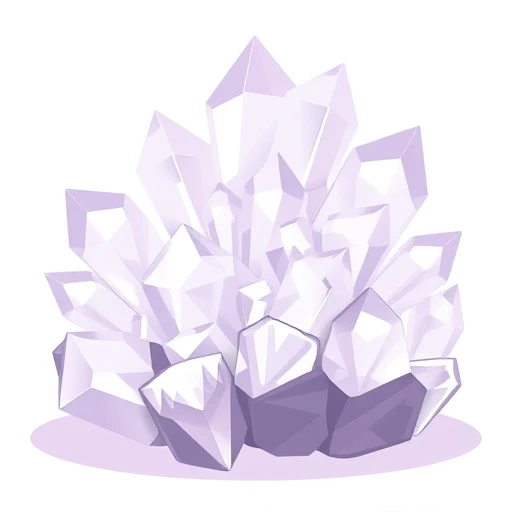
quartz in 30 Sekunden
- Quartz is a highly durable and abundant mineral made of silicon dioxide, found in various geological settings.
- It is famous for its use in 'quartz watches' because it vibrates at a very precise frequency when electrified.
- Available in many colors, quartz varieties like amethyst and citrine are popular choices for gemstones and jewelry.
- In modern homes, quartz is a top choice for durable, non-porous kitchen countertops and bathroom surfaces.
Quartz is one of the most abundant and diverse minerals found on the surface of the Earth. At its most basic chemical level, it is composed of silicon and oxygen atoms in a continuous framework of silicon-oxygen tetrahedra, which is why scientists refer to it as silicon dioxide or silica. Because it is so common, you will encounter quartz in various forms throughout your daily life, ranging from the sand on a beach to the internal components of your digital wristwatch. People use the word quartz when they are discussing geology, jewelry, construction, or technology. It is a term that bridges the gap between the natural world of mountains and the high-tech world of electronics. In a geological context, quartz is a primary component of many types of rocks, including granite and sandstone. In the world of fashion and luxury, specific varieties of quartz like amethyst, citrine, and rose quartz are highly valued as gemstones. The word is also synonymous with precision in timekeeping, as the piezoelectric properties of quartz allow it to vibrate at a very specific frequency when an electric charge is applied, making it the perfect heart for a clock or watch mechanism.
- Scientific Classification
- Quartz belongs to the trigonal crystal system and has a hardness of seven on the Mohs scale, meaning it is quite durable and can scratch glass or steel.
The geologist carefully extracted a large, translucent cluster of quartz from the side of the mountain.
Beyond its physical presence, quartz carries a significant amount of cultural and historical weight. For centuries, various civilizations have attributed mystical properties to quartz crystals, believing them to possess healing powers or the ability to store energy. While these claims are not supported by modern science, they explain why you often hear the word used in contexts related to alternative medicine, meditation, and spirituality. In the industrial sector, quartz is indispensable. It is melted down to create high-quality glass and used as an abrasive in sandblasting. When you hear someone mention a 'quartz countertop' in a home renovation show, they are referring to an engineered stone product made of crushed quartz bound together by resin, which is prized for its resistance to stains and scratches. This versatility is why the word quartz appears in so many different conversations, from the laboratory to the kitchen showroom.
- Industrial Utility
- Due to its high thermal and chemical stability, quartz is used in the manufacturing of semiconductors and optical fibers.
Most modern timepieces rely on a tiny piece of quartz to maintain incredible accuracy.
In summary, quartz is a word that represents both the raw beauty of the earth and the sophisticated precision of human engineering. Whether you are looking at a sparkling geode in a museum or checking the time on your smartphone, you are interacting with quartz. Its physical properties—hardness, transparency, and piezoelectricity—make it a unique material that serves both aesthetic and functional purposes. When using this word, consider whether you are referring to the raw mineral, a specific gemstone variety, or a technological component, as the context will help your audience understand exactly which aspect of this multifaceted mineral you are highlighting.
The white sand on the beach was actually composed of millions of tiny quartz grains.
- Varieties
- Amethyst is the purple variety of quartz, while citrine is the yellow to brownish-orange variety.
Kitchen designers often recommend quartz surfaces because they are non-porous and very easy to clean.
The ancient Greeks believed that quartz was actually ice that had frozen so hard it would never melt.
Using the word quartz correctly requires an understanding of its role as a noun, often acting as a modifier for other nouns. You can use it to describe a material, a specific object, or a scientific phenomenon. When discussing geology, quartz is typically treated as an uncountable noun, referring to the mineral substance itself. For example, you might say, 'The granite is composed of quartz, feldspar, and mica.' However, when referring to individual crystals or specific pieces, it can be used in a countable sense, such as 'She found several beautiful quartzes during her hike.' In the context of technology, 'quartz' is frequently used as an adjective to describe the mechanism inside a clock, as in 'a quartz watch' or 'quartz movement.' This tells the listener that the device is battery-powered and regulated by a vibrating crystal, rather than a mechanical spring.
- Geological Usage
- Quartz is a major constituent of continental crustal rocks and is resistant to both mechanical and chemical weathering.
The hikers noticed veins of white quartz running through the dark slate of the canyon walls.
In descriptive writing, quartz is often used to evoke images of clarity, hardness, or coldness. Because clear quartz looks like ice, writers might use it in metaphors or similes to describe eyes, water, or light. For instance, 'Her eyes were as clear as quartz' suggests a piercing, transparent quality. In technical or industrial writing, the focus shifts to the mineral's properties. You might read about 'quartz glass' in a laboratory setting, which refers to glass made from pure silica that can withstand extreme temperatures. When writing about home design, the term 'quartz' almost always refers to the engineered material used for countertops. In this case, it is important to distinguish it from 'quartzite,' which is a natural metamorphic rock. Using the correct term shows a higher level of precision and expertise in the subject matter.
- Comparative Usage
- Unlike softer minerals like calcite, quartz will not react with weak acids like vinegar.
The laboratory equipment was made of high-purity quartz to ensure it would not melt under the intense heat of the furnace.
Finally, consider the emotional or spiritual register. In the 'New Age' community, quartz is often personified or spoken of as having an 'energy.' Sentences like 'I need to cleanse my quartz' or 'This quartz crystal helps with focus' are common in these circles. While this is a very specific niche, it is one of the most common places you will hear the word used in casual, non-scientific conversation. Whether you are writing a scientific report, a marketing brochure for a jewelry store, or a fantasy novel, understanding these different nuances will help you use 'quartz' effectively and naturally. Always pay attention to whether you are using it as a general material or a specific object, and choose your accompanying adjectives accordingly.
The artisan spent hours polishing the quartz until it shone like a diamond.
- Architectural Context
- The lobby of the new skyscraper featured massive slabs of backlit quartz, creating a warm, ethereal glow.
During the gold rush, miners often looked for quartz veins, as gold is frequently found embedded within them.
The children collected smooth, milky quartz pebbles from the riverbed to keep as treasures.
You are likely to hear the word 'quartz' in several distinct environments, each with its own specific meaning. In a jewelry store, a salesperson might point out a beautiful amethyst ring, and if you ask what kind of stone it is, they might explain that amethyst is a variety of quartz. They might also use the term when discussing watches, explaining the difference between a high-end mechanical watch and a more affordable, highly accurate quartz watch. In this setting, the word is associated with both natural beauty and practical reliability. If you visit a museum of natural history, you will see the word 'quartz' on many labels in the mineral gallery, often accompanied by adjectives like 'rose,' 'smoky,' or 'milky' to describe the different colors and forms the mineral can take.
- In the Jewelry Shop
- Customers often look for quartz-based gemstones because they offer a great balance of beauty and durability for everyday wear.
'Is this watch automatic or quartz?' the customer asked the jeweler.
Another common place to hear the word is in the context of home improvement and interior design. When people are remodeling their kitchens or bathrooms, they often debate between granite, marble, and quartz for their countertops. In this conversation, 'quartz' refers to a specific type of man-made surface that is incredibly popular because it doesn't need to be sealed like natural stone. You'll hear contractors and designers praise its 'durability' and 'uniformity.' In a completely different sphere, if you spend time around people interested in holistic health or spirituality, you'll hear 'quartz' mentioned frequently. They might talk about 'clear quartz' as a 'master healer' or discuss 'charging' their crystals under the full moon. While this usage is very different from the scientific one, it is a very common way the word enters daily life.
- In Home Renovation
- Interior designers often prefer quartz because it can be manufactured in a wide variety of colors and patterns that natural stone cannot provide.
We decided to go with quartz countertops because we didn't want to worry about staining them with red wine.
Finally, in educational settings like a high school science class or a university geology lecture, the word 'quartz' is a fundamental part of the vocabulary. Students learn about its chemical formula (SiO2), its crystal structure, and its role in the rock cycle. You might hear a teacher explain how quartz is the last mineral to crystallize from cooling magma, which is why it often fills the remaining spaces in a rock formation. In the tech industry, engineers might discuss 'quartz oscillators' when designing circuits for computers or radio transmitters. In all these cases, the word 'quartz' signifies a material that is reliable, predictable, and essential to the modern world. Whether you are buying a gift, building a house, or studying for an exam, 'quartz' is a word you are bound to encounter.
The science teacher explained that the sand on the beach is mostly made of weathered quartz particles.
- In the Tech Lab
- Engineers use quartz crystals in electronic oscillators to create signals with very precise frequencies.
The spiritual shop was filled with the scent of incense and the glimmer of various quartz points.
The geologist's report indicated a high concentration of quartz in the surrounding bedrock.
One of the most common mistakes people make with the word 'quartz' is confusing it with other similar-looking materials, most notably glass or calcite. While clear quartz can look identical to glass to the untrained eye, they are very different. Glass is amorphous (it has no organized internal structure), while quartz is crystalline. A common error is calling a piece of glass 'quartz' just because it is clear. Another frequent mistake occurs in the kitchen industry, where people often use 'quartz' and 'quartzite' interchangeably. This is incorrect; quartz countertops are man-made (engineered stone), while quartzite is a natural metamorphic rock that has been quarried from the earth. Confusing the two can lead to misunderstandings about price, maintenance, and durability.
- Quartz vs. Glass
- You can tell the difference by trying to scratch the surface; quartz will scratch glass, but glass cannot scratch quartz.
It is a mistake to assume that every clear stone you find is quartz; it could easily be calcite or even common glass.
Pronunciation and spelling can also be tricky for some learners. The 'qu' is pronounced like a 'kw' sound, and the 'z' at the end is sharp. Some people mistakenly pronounce it as 'quarts' (like the unit of liquid measurement), and while they sound very similar, the context usually makes the meaning clear. However, in writing, confusing 'quartz' (the mineral) with 'quarts' (the plural of a unit of volume) is a common spelling error. Another mistake is assuming that quartz only comes in a clear or white form. Because it is so common, people often fail to realize that beautiful gemstones like amethyst, citrine, and tiger's eye are actually all types of quartz. Not recognizing these as quartz can limit your understanding of mineralogy and jewelry.
- Quartz vs. Quartzite
- Quartzite is a natural stone that is harder than quartz and usually more expensive to install.
The homeowner was disappointed to learn that their 'natural' quartz countertop was actually an engineered product.
In a scientific context, a common error is failing to distinguish between the different crystal habits of quartz. For example, 'cryptocrystalline' quartz (like chalcedony or agate) has crystals so small they can only be seen under a microscope, whereas 'macrocrystalline' quartz (like amethyst) has large, visible crystals. Using the general term 'quartz' when a more specific term is required can sometimes make a description feel imprecise. Finally, in the world of watches, people sometimes think 'quartz' means 'cheap.' While quartz watches are generally more affordable than mechanical ones, there are high-end, luxury quartz watches that are extremely expensive and technologically advanced. Dismissing quartz as a 'low-quality' material is a mistake that overlooks its incredible engineering value.
Many people incorrectly use the word quartz to describe any shiny rock they find on the ground.
- Spelling Note
- Always remember the 'z' at the end of quartz; it is what gives the word its unique, sharp sound.
The student lost points on the exam for spelling the mineral as 'quarts'.
A common misconception is that quartz is a rare mineral, when in fact it is one of the most common on Earth.
Depending on the context, there are several words you might use instead of 'quartz' to be more specific or to vary your language. If you are talking about the clear, colorless variety of quartz, 'rock crystal' is a beautiful and more descriptive alternative. In a scientific or industrial setting, 'silica' or 'silicon dioxide' are often used, especially when referring to the chemical compound rather than the mineral form. For example, you might talk about 'silica sand' used in glassmaking. If you are discussing gemstones, you should use the specific name of the quartz variety whenever possible, such as 'amethyst,' 'citrine,' 'onyx,' or 'jasper.' These words provide much more information to the reader than the general term 'quartz.'
- Quartz vs. Silica
- Silica is the chemical name (SiO2), while quartz is the specific crystalline form that silica takes in nature.
Instead of just saying she wore a quartz necklace, the author described the deep purple amethyst that hung from her neck.
When talking about construction or materials, 'engineered stone' is a synonym for the quartz used in countertops. This term emphasizes that the material is a manufactured product rather than a natural slab. If you are looking for a word that describes the physical appearance of quartz, you might use 'crystalline,' 'translucent,' or 'vitreous' (which means glass-like). In the context of timekeeping, you might hear the term 'electronic movement' used as a broader category that includes quartz watches. For those interested in geology, 'chalcedony' is a useful term for the microcrystalline varieties of quartz, which include things like agate and carnelian. Understanding these distinctions allows you to choose the most precise word for your needs.
- Quartz vs. Crystal
- While all quartz is crystalline, not all crystals are quartz. 'Crystal' is a general term for any solid with an organized atomic structure.
The manufacturer used high-purity silica to produce the lenses for the telescope.
Another set of alternatives comes from the world of mining and minerals. Words like 'spar' or 'flint' are sometimes used to describe specific types of quartz-rich rocks. 'Flint' is a hard, sedimentary form of quartz that was famously used by prehistoric humans to make tools and start fires. In modern English, you might use 'flinty' as an adjective to describe someone's tough or cold personality, a metaphor derived from the hardness of the mineral. By expanding your vocabulary to include these related terms, you can describe the world with much greater detail and nuance. Whether you are talking about a 'smoky quartz' gemstone or a 'silica-based' semiconductor, having the right word at your disposal makes your communication much more effective.
The ancient hunters shaped pieces of flint into sharp arrowheads for their bows.
- Specific Varieties
- Agate, Jasper, and Onyx are all types of chalcedony, which is a form of quartz with a very fine grain.
The vitreous luster of the mineral made it sparkle under the museum lights.
The geologist identified the white vein as milky quartz due to its cloudy appearance.
How Formal Is It?
Wusstest du?
Ancient Greeks called quartz 'krustallos', which means 'ice', because they believed it was water frozen so deeply that it could never melt.
Aussprachehilfe
- Pronouncing it like 'quarts' (the measurement), which is very similar but sometimes has a softer 's'.
- Omitting the 'w' sound after the 'k'.
- Pronouncing the 'z' like a soft 's'.
- Adding an extra vowel sound at the end (e.g., 'quart-zuh').
- Confusing it with the word 'courts'.
Schwierigkeitsgrad
The word itself is short, but the scientific context can be complex.
The 'tz' ending is unusual and can lead to spelling mistakes.
Pronunciation is straightforward once the 'kw' sound is mastered.
Easily recognized in context, though similar to 'quarts'.
Was du als Nächstes lernen solltest
Voraussetzungen
Als Nächstes lernen
Fortgeschritten
Wichtige Grammatik
Nouns as Adjectives
In 'quartz watch', the noun 'quartz' acts as an adjective to describe the watch.
Uncountable Nouns
When referring to the substance, we say 'There is quartz in the rock,' not 'There are quartzes'.
Compound Nouns
'Rose quartz' is a compound noun where both words together name a specific thing.
Scientific Plurals
In technical writing, 'quartzes' may be used to refer to different types or species of the mineral.
Zero Article with Minerals
We often use quartz without an article: 'Quartz is hard,' similar to 'Gold is expensive'.
Beispiele nach Niveau
I found a white quartz stone on the beach.
J'ai trouvé une pierre de quartz blanche sur la plage.
Noun used as an adjective.
My watch has quartz inside.
Ma montre contient du quartz.
Simple noun.
Quartz is a very hard rock.
Le quartz est une roche très dure.
Subject of the sentence.
Is this crystal made of quartz?
Ce cristal est-il fait de quartz ?
Question form.
The sand is made of tiny quartz.
Le sable est fait de minuscules morceaux de quartz.
Uncountable noun.
I like my purple quartz ring.
J'aime ma bague en quartz violet.
Descriptive use.
Quartz can be many colors.
Le quartz peut être de plusieurs couleurs.
Modal verb 'can'.
Look at the shiny quartz!
Regarde le quartz brillant !
Imperative sentence.
You can find quartz in the mountains.
On peut trouver du quartz dans les montagnes.
Prepositional phrase 'in the mountains'.
A quartz watch is very accurate.
Une montre à quartz est très précise.
Adjective use.
The kitchen has new quartz counters.
La cuisine a de nouveaux comptoirs en quartz.
Plural noun 'counters'.
Is quartz harder than glass?
Le quartz est-il plus dur que le verre ?
Comparative adjective 'harder than'.
She collects different types of quartz.
Elle collectionne différents types de quartz.
Present simple tense.
The museum has a giant quartz crystal.
Le musée possède un cristal de quartz géant.
Compound noun.
Quartz does not melt easily.
Le quartz ne fond pas facilement.
Negative sentence.
Many gemstones are actually quartz.
Beaucoup de pierres précieuses sont en fait du quartz.
Adverb 'actually'.
Quartz is widely used in the electronics industry.
Le quartz est largement utilisé dans l'industrie électronique.
Passive voice 'is widely used'.
The durability of quartz makes it ideal for flooring.
La durabilité du quartz le rend idéal pour le revêtement de sol.
Abstract noun 'durability'.
He explained that amethyst is a purple variety of quartz.
Il a expliqué que l'améthyste est une variété violette de quartz.
Reported speech.
Most beach sand consists primarily of quartz grains.
La plupart du sable des plages est principalement composé de grains de quartz.
Verb 'consists of'.
The watchmaker replaced the quartz movement in my clock.
L'horloger a remplacé le mouvement à quartz de ma pendule.
Past simple tense.
Quartz crystals are often used in alternative medicine.
Les cristaux de quartz sont souvent utilisés en médecine alternative.
Frequency adverb 'often'.
Because it is non-porous, quartz is easy to maintain.
Parce qu'il est non poreux, le quartz est facile à entretenir.
Conjunction 'because'.
The geologist identified the vein as milky quartz.
Le géologue a identifié la veine comme étant du quartz laiteux.
Specific terminology.
The piezoelectric properties of quartz are essential for radio transmitters.
Les propriétés piézoélectriques du quartz sont essentielles pour les émetteurs radio.
Technical vocabulary.
Engineered quartz is often preferred over natural granite for its uniformity.
Le quartz transformé est souvent préféré au granit naturel pour son uniformité.
Comparative structure 'preferred over'.
Quartz is resistant to chemical weathering, unlike many other minerals.
Le quartz résiste à l'altération chimique, contrairement à de nombreux autres minéraux.
Preposition 'unlike'.
The discovery of quartz veins often indicates the presence of gold.
La découverte de veines de quartz indique souvent la présence d'or.
Gerund as subject 'The discovery of'.
During the 'Quartz Crisis', traditional watchmaking faced a major threat.
Pendant la « crise du quartz », l'horlogerie traditionnelle a été confrontée à une menace majeure.
Historical reference.
Synthetic quartz is grown in laboratories for industrial applications.
Le quartz synthétique est cultivé en laboratoire pour des applications industrielles.
Present passive voice.
The mineral's hardness is rated at seven on the Mohs scale.
La dureté du minéral est évaluée à sept sur l'échelle de Mohs.
Possessive 'mineral's'.
Quartz occurs in a variety of geological environments, from igneous to sedimentary.
Le quartz est présent dans divers environnements géologiques, de l'ignée au sédimentaire.
Range 'from... to...'.
The intricate lattice of quartz dictates its physical and optical characteristics.
Le réseau complexe du quartz dicte ses caractéristiques physiques et optiques.
Advanced scientific verbs.
Quartz's thermal stability allows it to be used in high-precision laboratory equipment.
La stabilité thermique du quartz lui permet d'être utilisé dans des équipements de laboratoire de haute précision.
Complex sentence structure.
The transition from mechanical to quartz movements revolutionized the horological world.
La transition des mouvements mécaniques aux mouvements à quartz a révolutionné le monde de l'horlogerie.
Nominalization.
Geologists use the presence of quartz to determine the history of rock formations.
Les géologues utilisent la présence de quartz pour déterminer l'histoire des formations rocheuses.
Infinitive of purpose.
The aesthetic appeal of smoky quartz is due to natural irradiation within the earth.
L'attrait esthétique du quartz fumé est dû à une irradiation naturelle au sein de la terre.
Cause and effect 'due to'.
Chalcedony is a cryptocrystalline form of quartz with a fibrous microstructure.
La calcédoine est une forme cryptocristalline de quartz dotée d'une microstructure fibreuse.
Technical descriptors.
The market for quartz surfaces has expanded significantly over the last decade.
Le marché des surfaces en quartz s'est considérablement développé au cours de la dernière décennie.
Present perfect tense.
Quartz remains a primary subject in the study of crystallography.
Le quartz reste un sujet primordial dans l'étude de la cristallographie.
Stative verb 'remains'.
The ubiquity of quartz in the lithosphere underscores its fundamental role in planetary evolution.
L'ubiquité du quartz dans la lithosphère souligne son rôle fondamental dans l'évolution planétaire.
Highly academic register.
Piezoelectric resonators made of quartz are pivotal in maintaining frequency stability in telecommunications.
Les résonateurs piézoélectriques en quartz sont essentiels au maintien de la stabilité de fréquence dans les télécommunications.
Participial phrase.
The paragenetic sequence of quartz crystallization provides insights into the cooling history of magma.
La séquence paragénétique de la cristallisation du quartz donne un aperçu de l'histoire du refroidissement du magma.
Complex noun phrases.
Hydrothermal synthesis of quartz is a meticulously controlled process used to produce high-purity crystals.
La synthèse hydrothermale du quartz est un processus méticuleusement contrôlé utilisé pour produire des cristaux de haute pureté.
Adverbial modification.
The optical anisotropy of quartz is a key feature used in polarized light microscopy.
L'anisotropie optique du quartz est une caractéristique clé utilisée en microscopie à lumière polarisée.
Technical scientific concept.
Quartz's resistance to chemical dissolution ensures its longevity in sedimentary environments.
La résistance du quartz à la dissolution chimique assure sa longévité dans les environnements sédimentaires.
Abstract concept mapping.
The socio-economic impact of the quartz revolution on Swiss manufacturing cannot be overstated.
L'impact socio-économique de la révolution du quartz sur l'industrie manufacturière suisse ne saurait être surestimé.
Passive modal construction.
In the realm of metaphysics, quartz is often conceptualized as a conduit for spiritual energy.
Dans le domaine de la métaphysique, le quartz est souvent conceptualisé comme un conduit pour l'énergie spirituelle.
Passive conceptualization.
Häufige Kollokationen
Häufige Phrasen
— Regulated by a quartz crystal to ensure perfect speed or frequency.
The turntable has a quartz-locked motor for stable playback.
— Quartz that contains no impurities and is perfectly clear.
The lens was crafted from a single piece of pure quartz.
— Sand that is composed mostly of quartz particles, used in industry.
Quartz sand is a key ingredient in the production of glass.
— Quartz grown in a laboratory rather than found in nature.
Most industrial quartz is actually synthetic quartz.
— A hollow rock lined with quartz crystals.
The child was delighted to crack open a quartz geode.
— High-strength fibers made from quartz, used in aerospace.
The heat shield was reinforced with quartz fibers.
— A type of lamp that uses a quartz bulb to withstand high heat.
The studio was lit by powerful quartz halogen lamps.
— Glass made of pure silica, known for its high melting point.
The test tube was made of quartz glass.
— A single, naturally formed crystal of quartz with a pointed end.
She placed a quartz point on her altar.
Wird oft verwechselt mit
A unit of liquid measure. Sounds almost identical but spelled differently.
A natural metamorphic rock, whereas 'quartz' in counters is often man-made.
Often looks like clear quartz but is much softer and lacks a crystal structure.
Redewendungen & Ausdrücke
— Extremely hard or difficult to break; often used metaphorically for a person's resolve.
His determination was as hard as quartz.
informal— Very easy to see through or understand; perfectly transparent.
The instructions were as clear as quartz.
literary— The period in the 1970s when quartz watches replaced mechanical ones.
The quartz revolution changed the watch industry forever.
historical— Extremely precise and reliable, like a quartz clock.
The new navigation system is quartz-accurate.
technical— Having a hard, cold, or stern expression (flint is a type of quartz).
The flinty-eyed detective stared at the suspect.
literary— A variation of 'set in stone,' meaning something is permanent and unchangeable.
The rules for the competition are set in quartz.
creative— To be very energetic or to have a very consistent rhythm.
The band was vibrating like quartz that night.
informal— A heart that is cold, hard, and unfeeling.
She accused him of having a heart of quartz.
poetic— Logic that is flawless and easy to follow.
His argument was built on quartz-clear logic.
formal— To create something exciting or energetic from a difficult situation.
The two rivals managed to strike sparks from quartz during the debate.
literaryLeicht verwechselbar
Both can be clear or white crystals.
Calcite is much softer and will fizz if you put vinegar on it; quartz will not.
He thought he found quartz, but it was actually calcite.
Both are hard, clear crystals used in jewelry.
Diamond is much harder (10 on Mohs scale) and has a different crystal shape.
The 'Herkimer Diamond' is actually a type of quartz.
Quartz is made of silicon and oxygen.
Silicon is a chemical element (a dark metal-like solid); quartz is a mineral compound.
Silicon is extracted from quartz to make computer chips.
Both are used as gemstones and can be similar colors.
Topaz is harder than quartz and has a different chemical composition.
The yellow stone was a topaz, not a citrine quartz.
Both come in many colors and form crystals.
Fluorite is much softer and can be scratched by a knife; quartz cannot.
The purple crystal was fluorite, which is softer than quartz.
Satzmuster
This is [adjective] quartz.
This is white quartz.
I have a quartz [noun].
I have a quartz watch.
Quartz is used for [gerund].
Quartz is used for making glass.
Because of its [property], quartz is [usage].
Because of its hardness, quartz is used in construction.
The [noun] of quartz is [adjective].
The crystal structure of quartz is hexagonal.
Quartz, characterized by [feature], serves as [role].
Quartz, characterized by its piezoelectricity, serves as a frequency standard.
There is a [noun] of quartz in [location].
There is a vein of quartz in the cave.
Quartz is [adverb] [adjective].
Quartz is chemically inert.
Wortfamilie
Substantive
Adjektive
Verwandt
So verwendest du es
Very common in both everyday language and specialized fields.
-
Spelling it as 'quarts'.
→
quartz
Quarts is a unit of measurement (like 4 quarts in a gallon). Quartz is the mineral.
-
Calling all clear stones 'quartz'.
→
Identifying the stone properly.
Many minerals look like quartz. You should check hardness or crystal shape to be sure.
-
Thinking quartz countertops are 100% natural stone.
→
Engineered quartz.
Quartz countertops are made of crushed quartz mixed with resin and pigments.
-
Confusing quartz with quartzite.
→
quartzite (for the natural rock).
Quartzite is a natural metamorphic rock; quartz (in construction) is usually engineered.
-
Pronouncing it as 'korts' without the 'w'.
→
kworts
The 'qu' must produce a 'kw' sound for correct English pronunciation.
Tipps
Be Specific
Instead of just saying 'quartz jewelry,' try using the specific name like 'amethyst' or 'citrine' to sound more descriptive.
The 'Z' Factor
Always remember that quartz ends in 'z'. Think of the 'z' in 'quartz' as being sharp like the edge of a crystal.
The 'W' Sound
Make sure to pronounce the 'w' clearly (kworts). If you miss it, it might sound like 'courts'.
Hardness Test
If you're not sure if a stone is quartz, try to scratch a piece of glass with it. If it scratches, it might be quartz!
Watch Types
When buying a watch, 'quartz' usually means it's battery-powered, while 'automatic' or 'manual' means it's mechanical.
Countertop Care
Even though quartz is heat-resistant, always use a trivet for hot pans on quartz counters to prevent the resin from damaging.
Look for Veins
When hiking, look for white 'stripes' in dark rocks. These are often quartz veins and are a great way to spot the mineral in nature.
Related Words
Learning the word 'silica' will help you understand 'quartz' in more technical or industrial contexts.
The 1970s
Remember the 'Quartz Crisis' to help you associate the word with the transition to modern, digital technology.
Color Meanings
If you're interested in crystals, remember that 'Rose' is for love and 'Amethyst' is for calm—both are types of quartz.
Einprägen
Eselsbrücke
Think of a 'Quartz Watch'—it's 'Quite Accurate' (Q and A). The 'Z' at the end is sharp like a crystal point.
Visuelle Assoziation
Imagine a bright, purple amethyst crystal. Remind yourself that this beautiful gem is just a colorful version of quartz.
Word Web
Herausforderung
Try to find three things in your house that contain quartz or were made using quartz today.
Wortherkunft
The word 'quartz' comes from the German word 'Quarz', which itself likely originated from a Slavic source. It appeared in English in the mid-eighteenth century.
Ursprüngliche Bedeutung: The original Middle High German term 'quarz' referred to the mineral, possibly derived from the West Slavonic 'twardy', meaning 'hard'.
Germanic / SlavicKultureller Kontext
No major sensitivities, but be aware that 'crystal healing' is a belief system and should be discussed respectfully.
In English-speaking countries, quartz is most commonly associated with kitchen renovations and affordable but reliable watches.
Im Alltag üben
Kontexte aus dem Alltag
Geology Class
- What is the hardness of quartz?
- Quartz is made of silica.
- Look for the crystal structure.
- It has no cleavage.
Jewelry Store
- Is this amethyst or quartz?
- I'd like a rose quartz necklace.
- Does this watch have a quartz movement?
- How durable is this stone?
Home Renovation
- We want quartz countertops.
- Is quartz better than granite?
- Show me the quartz samples.
- It's very easy to clean.
Electronics Lab
- The quartz oscillator is failing.
- We need high-frequency quartz.
- Check the crystal's vibration.
- Synthetic quartz is required.
Gift Shop
- Do you have any quartz geodes?
- This clear quartz is beautiful.
- I'm looking for a crystal gift.
- How much is this quartz point?
Gesprächseinstiege
"Did you know that the sand on most beaches is actually made of tiny pieces of quartz?"
"I'm thinking about getting quartz countertops for my kitchen; do you think they're worth it?"
"Do you prefer mechanical watches, or do you think quartz watches are more practical?"
"I found this interesting rock today; do you think it could be a piece of quartz?"
"Have you ever heard about the 'Quartz Crisis' that happened in the watch industry?"
Tagebuch-Impulse
Describe a time you found a beautiful stone or crystal in nature. Was it quartz?
Write about the importance of precision in your life. How does a quartz watch represent this?
If you were to design your dream kitchen, what role would quartz play in the materials you choose?
Research a variety of quartz (like amethyst) and write about its history and uses.
Reflect on how a simple mineral like quartz can be used in both a piece of jewelry and a computer.
Häufig gestellte Fragen
10 FragenYes, quartz is a naturally occurring mineral found in the Earth's crust. However, 'quartz countertops' are usually an engineered product made from crushed natural quartz and resin.
Quartz has piezoelectric properties, meaning it vibrates at a very precise frequency when an electric current is applied. This allows watches to keep time much more accurately than mechanical gears.
Yes, quartz has a hardness of 7 on the Mohs scale, while most glass is around 5.5. This means a piece of quartz will easily leave a scratch on a glass surface.
While clear (rock crystal) and white (milky quartz) are very common, quartz can be found in almost any color due to different impurities, such as purple (amethyst) or pink (rose quartz).
Generally, quartz is very affordable because it is so abundant. However, high-quality gemstone varieties or rare crystal formations can be quite valuable.
Quartz is non-porous, so it is very easy to clean with just mild soap and water. You should avoid harsh chemicals or abrasive pads that could dull the surface.
Quartz is found all over the world in all types of geological environments. It is a major component of granite, sandstone, and many other rocks.
Quartz is a specific mineral. 'Crystal' is a general term for any solid material with an ordered atomic structure. So, all quartz is crystal, but not all crystals are quartz.
Many people in the spiritual community believe quartz can store or direct energy, but there is no scientific evidence to support these claims.
Most sand found on continental beaches and in inland desert settings is composed primarily of quartz that has been broken down into tiny grains over millions of years.
Teste dich selbst 192 Fragen
Describe the physical appearance of a piece of clear quartz.
Well written! Good try! Check the sample answer below.
Explain why quartz is a popular choice for kitchen countertops.
Well written! Good try! Check the sample answer below.
Compare a quartz watch with a mechanical watch. Which do you prefer and why?
Well written! Good try! Check the sample answer below.
Write a short story about a person who finds a mysterious quartz crystal.
Well written! Good try! Check the sample answer below.
Discuss the industrial importance of quartz in modern technology.
Well written! Good try! Check the sample answer below.
Explain the concept of piezoelectricity in quartz.
Well written! Good try! Check the sample answer below.
Describe the geological process of how quartz veins are formed.
Well written! Good try! Check the sample answer below.
Write a marketing blurb for a new line of rose quartz jewelry.
Well written! Good try! Check the sample answer below.
How did the 'Quartz Crisis' affect the global watch market?
Well written! Good try! Check the sample answer below.
Discuss the use of quartz in spiritual and alternative medicine practices.
Well written! Good try! Check the sample answer below.
Describe the difference between quartz and quartzite.
Well written! Good try! Check the sample answer below.
Write a dialogue between a customer and a jeweler discussing quartz gemstones.
Well written! Good try! Check the sample answer below.
Explain why quartz is so abundant in the Earth's crust.
Well written! Good try! Check the sample answer below.
What are the advantages of using quartz glass in a laboratory?
Well written! Good try! Check the sample answer below.
Describe the various colors quartz can take and what causes them.
Well written! Good try! Check the sample answer below.
Write a poem about the beauty of a quartz geode.
Well written! Good try! Check the sample answer below.
How is synthetic quartz produced, and why is it useful?
Well written! Good try! Check the sample answer below.
Discuss the environmental impact of mining quartz.
Well written! Good try! Check the sample answer below.
Explain the role of quartz in the formation of sedimentary rocks.
Well written! Good try! Check the sample answer below.
Write a guide for children on how to identify quartz in their backyard.
Well written! Good try! Check the sample answer below.
Pronounce the word 'quartz' clearly three times.
Read this aloud:
Du hast gesagt:
Speech recognition is not supported in your browser. Try Chrome or Edge.
Describe a piece of quartz jewelry you have seen or would like to own.
Read this aloud:
Du hast gesagt:
Speech recognition is not supported in your browser. Try Chrome or Edge.
Explain to a friend why their watch says 'quartz' on the face.
Read this aloud:
Du hast gesagt:
Speech recognition is not supported in your browser. Try Chrome or Edge.
Give a short presentation on the different colors of quartz.
Read this aloud:
Du hast gesagt:
Speech recognition is not supported in your browser. Try Chrome or Edge.
Discuss the pros and cons of quartz vs. granite countertops.
Read this aloud:
Du hast gesagt:
Speech recognition is not supported in your browser. Try Chrome or Edge.
Explain the scientific importance of quartz in one minute.
Read this aloud:
Du hast gesagt:
Speech recognition is not supported in your browser. Try Chrome or Edge.
Tell a story about finding a crystal while hiking.
Read this aloud:
Du hast gesagt:
Speech recognition is not supported in your browser. Try Chrome or Edge.
Debate whether 'crystal healing' has any place in modern society.
Read this aloud:
Du hast gesagt:
Speech recognition is not supported in your browser. Try Chrome or Edge.
Describe the 'Quartz Crisis' and its impact on the Swiss economy.
Read this aloud:
Du hast gesagt:
Speech recognition is not supported in your browser. Try Chrome or Edge.
Explain the chemical structure of quartz to a non-scientist.
Read this aloud:
Du hast gesagt:
Speech recognition is not supported in your browser. Try Chrome or Edge.
How would you identify quartz in the wild? Describe the steps.
Read this aloud:
Du hast gesagt:
Speech recognition is not supported in your browser. Try Chrome or Edge.
Talk about your favorite gemstone and whether it is a variety of quartz.
Read this aloud:
Du hast gesagt:
Speech recognition is not supported in your browser. Try Chrome or Edge.
Discuss the role of quartz in the industrial revolution of electronics.
Read this aloud:
Du hast gesagt:
Speech recognition is not supported in your browser. Try Chrome or Edge.
Describe the appearance and feel of a quartz geode.
Read this aloud:
Du hast gesagt:
Speech recognition is not supported in your browser. Try Chrome or Edge.
Explain the term 'piezoelectricity' in your own words.
Read this aloud:
Du hast gesagt:
Speech recognition is not supported in your browser. Try Chrome or Edge.
What are the most common mistakes people make when talking about quartz?
Read this aloud:
Du hast gesagt:
Speech recognition is not supported in your browser. Try Chrome or Edge.
Discuss the cultural significance of quartz in ancient civilizations.
Read this aloud:
Du hast gesagt:
Speech recognition is not supported in your browser. Try Chrome or Edge.
How does quartz contribute to the beauty of a beach?
Read this aloud:
Du hast gesagt:
Speech recognition is not supported in your browser. Try Chrome or Edge.
Describe the difference between natural and synthetic quartz.
Read this aloud:
Du hast gesagt:
Speech recognition is not supported in your browser. Try Chrome or Edge.
Why is quartz considered a 'durable' material?
Read this aloud:
Du hast gesagt:
Speech recognition is not supported in your browser. Try Chrome or Edge.
Listen for the word 'quartz' in a video about watchmaking and note how it is used.
Identify the variety of quartz mentioned in a jewelry commercial.
Listen to a geology lecture and write down the chemical formula for quartz.
In a home renovation show, listen for the reasons why the designer chooses quartz.
Listen to a podcast about the history of timekeeping and identify the 'Quartz Crisis'.
Listen to a description of a mineral and decide if it is quartz or calcite.
Identify the pronunciation difference between 'quartz' and 'quarts' in a recording.
Listen to a spiritual guide talk about crystals and note the properties they attribute to quartz.
In a science news report, listen for the role of quartz in new technology.
Listen to a child describing a rock they found and identify if they are talking about quartz.
Listen to an interview with a geologist and note where quartz is found.
Identify the register (formal/informal) of a conversation about quartz.
Listen for collocations like 'quartz movement' or 'rose quartz' in a conversation.
Listen to a tutorial on cleaning countertops and identify the material being discussed.
Listen to a documentary about the Earth's crust and note the abundance of quartz.
/ 192 correct
Perfect score!
Summary
Quartz is a versatile mineral that combines natural beauty with industrial precision. Its most important feature is its piezoelectric property, which revolutionized timekeeping, while its hardness makes it a staple in construction and jewelry. For example, a simple quartz watch is more accurate than many expensive mechanical ones.
- Quartz is a highly durable and abundant mineral made of silicon dioxide, found in various geological settings.
- It is famous for its use in 'quartz watches' because it vibrates at a very precise frequency when electrified.
- Available in many colors, quartz varieties like amethyst and citrine are popular choices for gemstones and jewelry.
- In modern homes, quartz is a top choice for durable, non-porous kitchen countertops and bathroom surfaces.
Be Specific
Instead of just saying 'quartz jewelry,' try using the specific name like 'amethyst' or 'citrine' to sound more descriptive.
The 'Z' Factor
Always remember that quartz ends in 'z'. Think of the 'z' in 'quartz' as being sharp like the edge of a crystal.
The 'W' Sound
Make sure to pronounce the 'w' clearly (kworts). If you miss it, it might sound like 'courts'.
Hardness Test
If you're not sure if a stone is quartz, try to scratch a piece of glass with it. If it scratches, it might be quartz!