rakhine in 30 Sekunden
- Rakhine is an ethnic group, a language, and a state in western Myanmar, known for its rich maritime history and distinct Buddhist traditions.
- The term identifies a Tibeto-Burman people who speak a dialect of Burmese that retains archaic 'r' sounds, setting them apart linguistically.
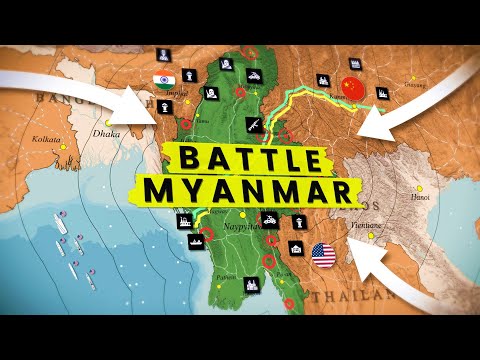
- Geographically, Rakhine State is a coastal region along the Bay of Bengal, separated from central Myanmar by the Arakan Mountains.
- In modern times, the word is frequently used in political and humanitarian contexts regarding the complex social dynamics within Myanmar's western borders.
- Ethnic Identity
- The Rakhine are a Tibeto-Burman ethnic group who predominantly practice Theravada Buddhism, distinguishing them from other groups in the region through their unique customs, dress, and historical narrative.
The Rakhine people have preserved their distinct traditions for centuries despite various political shifts.
Many scholars travel to Mrauk U to study the ancient Rakhine architecture and stone carvings.
- Geopolitical Context
- In modern news, the word is often associated with the complex socio-political issues in the region, including displacement and ethnic tensions, making it a term of significant importance in international relations.
Understanding the Rakhine perspective is essential for any comprehensive analysis of Myanmar's history.
- Historical Continuity
- The continuity of the Rakhine identity is tied to the ancient city-states of Dhanyawadi and Vesali, which predate the more famous Mrauk U period.
The Rakhine calendar and traditional festivals often differ slightly from the central Burmese traditions.
Visiting a Rakhine village provides a unique glimpse into the maritime heritage of Southeast Asia.
- Adjectival Usage
- When describing food, art, or geography, 'Rakhine' precedes the noun to specify its origin. Example: 'The Rakhine coast is known for its beautiful, untouched beaches.'
The Rakhine traditional dance is characterized by its energetic movements and vibrant costumes.
- Collective Noun
- 'The Rakhine' can refer to the people as a whole. Example: 'The Rakhine have a long history of maritime trade with neighboring countries.'
He spent three years studying the Rakhine dialect in the rural villages near Sittwe.
The Rakhine littoral is ecologically diverse, featuring extensive mangrove forests.
- Linguistic Context
- Using the word to describe the language: 'The Rakhine language belongs to the Lolo-Burmese branch of the Sino-Tibetan family.'
During the festival, Rakhine elders recite ancient poems that tell the story of their ancestors.
The Rakhine alphabet is the same as the Burmese alphabet, though some usage differs.
- International News
- 'The UN has expressed concern over the situation in Rakhine State.' This is a common sentence structure in global media.
Reporters often interview Rakhine community leaders to understand local grievances.
- Culinary Context
- 'I would like to try some authentic Rakhine food tonight.' This is a frequent request from food enthusiasts visiting Myanmar.
The Rakhine style of cooking is famous for being much spicier than Bamar cuisine.
Documentaries about the Bay of Bengal often highlight the Rakhine maritime history.
- Travel and Tourism
- 'The Rakhine State offers some of the most stunning sunsets in Southeast Asia, particularly at Ngapali Beach.'
Local guides in Sittwe are proud to show visitors the Rakhine Cultural Museum.
Many Rakhine people work in the fishing industry along the western coast.
- Identity Confusion
- Avoid using 'Rakhine' as a blanket term for everyone living in the Rakhine State. It specifically refers to the Rakhine ethnic group.
It is incorrect to say all residents of the state are Rakhine; the state is home to several diverse communities.
- Historical vs. Modern
- Using 'Arakan' in a modern political report might seem outdated or carry specific colonial connotations.
The transition from Arakan to Rakhine was part of a broader movement to use indigenous names in Myanmar.
- Linguistic Misconception
- Assuming Rakhine is just a 'broken' version of Burmese is a mistake; it is a distinct dialect with its own historical evolution.
One should not assume that a Rakhine speaker will automatically understand every nuance of a Yangon dialect.
Correcting the spelling of Rakhine in the document was the first step in the editing process.
- Arakanese vs. Rakhine
- 'Arakanese' often feels more formal or historical, whereas 'Rakhine' is the contemporary and indigenous choice. Example: 'The Arakanese kings ruled for centuries' vs. 'The Rakhine people today are seeking more autonomy.'
Some older scholars still prefer the term Arakanese when referring to the Rakhine language.
- Dialect vs. Language
- 'Rakhine dialect' emphasizes the relationship to Burmese, while 'Rakhine language' emphasizes its unique identity. Example: 'He speaks the Rakhine dialect fluently.'
The Rakhine culture is often compared to the Bamar culture to highlight regional differences.
- Regional Identity
- 'Westerner' (in the context of Myanmar) can sometimes imply someone from the Rakhine region, but it is much less precise than 'Rakhine.'
The Rakhine coastline is distinct from the delta region of the Irrawaddy.
Many Rakhine traditions are shared with other Theravada Buddhist communities in the region.
How Formal Is It?
Wusstest du?
In the Rakhine language, the 'r' sound is preserved, whereas in standard Burmese, it has changed to a 'y' sound. This is why 'Rakhine' starts with an 'R', while the Burmese word for the same group is pronounced more like 'Yakhine'.
Aussprachehilfe
- Pronouncing it as 'Ray-kine'.
- Pronouncing it as 'Rah-keen'.
- Missing the aspiration on the 'kh' sound.
- Stressing the first syllable instead of the second.
- Pronouncing the 'r' too harshly like a French 'r'.
Schwierigkeitsgrad
The word itself is easy, but the contexts (politics/history) can be complex.
Simple to spell and use as an adjective.
The 'kh' sound and the stress on the second syllable take practice.
Can be confused with other similar-sounding names in fast speech.
Was du als Nächstes lernen solltest
Voraussetzungen
Als Nächstes lernen
Fortgeschritten
Wichtige Grammatik
Capitalization of Proper Adjectives
Always write 'Rakhine culture' with a capital R.
Using 'The' with Ethnic Groups
Use 'The Rakhine' when referring to the group as a whole.
Compound Noun Formation
'Rakhine State' acts as a single proper noun.
Adjective Placement
The adjective 'Rakhine' comes before the noun it describes.
Possessive Proper Nouns
Use 'Rakhine's history' to show possession.
Beispiele nach Niveau
I live in Rakhine.
I live in [the state].
Proper noun used as a place name.
The Rakhine people are kind.
The [ethnic group] people are kind.
Proper adjective modifying 'people'.
Do you speak Rakhine?
Do you speak [the language]?
Proper noun used as a language name.
Rakhine food is very spicy.
[The state's] food is very spicy.
Proper adjective modifying 'food'.
He is from Rakhine State.
He is from [the administrative region].
Compound proper noun.
We saw a Rakhine dance.
We saw a [cultural] dance.
Proper adjective.
Rakhine is in Myanmar.
[The place] is in Myanmar.
Subject of the sentence.
I like Rakhine fish curry.
I like [the style of] fish curry.
Proper adjective.
Rakhine State has many beautiful beaches.
The state has many beaches.
Subject phrase.
Many Rakhine people are fishermen.
Many people from that group catch fish.
Quantifier + Proper Adjective + Noun.
The Rakhine language is different from Burmese.
The language is not the same as Burmese.
Comparison of two proper nouns.
We visited an old Rakhine temple.
We visited a temple from that culture.
Adjective order: Opinion + Age + Proper Adjective.
Rakhine traditions are very interesting.
The customs are interesting.
Plural subject.
She wears a traditional Rakhine dress.
She wears a dress from her culture.
Proper adjective.
The capital of Rakhine State is Sittwe.
The main city of the state is Sittwe.
Possessive structure with 'of'.
I am reading about Rakhine history.
I am reading about the past of that place.
Present continuous verb + prepositional phrase.
The Rakhine people have a distinct cultural identity.
They have a unique way of life.
Definite article with ethnic group.
Mrauk U was the capital of the ancient Rakhine Kingdom.
It was the main city of the old kingdom.
Proper adjective modifying 'Kingdom'.
Rakhine cuisine is famous for its use of fermented fish.
The food is known for fish paste.
Subject of the sentence.
The Rakhine dialect preserves many ancient sounds.
The way they speak keeps old sounds.
Singular subject with 'preserves'.
Political changes have affected the Rakhine region.
Politics changed the area.
Present perfect tense.
The Rakhine mountains separate the state from central Myanmar.
The mountains are a border.
Geographic proper adjective.
Many NGOs are working in Rakhine State.
Help groups are in the state.
Prepositional phrase.
I want to learn more about Rakhine Buddhist art.
I want to study their religious art.
Compound adjective: Proper + Proper + Noun.
The Rakhine maritime history is deeply connected to the Indian Ocean trade.
Their sea history is linked to trade.
Complex subject phrase.
The Rakhine State government is implementing new economic policies.
The local leaders are making new rules.
Compound noun as subject.
Linguists study the Rakhine language to understand Tibeto-Burman evolution.
Scientists study the language for history.
Infinitive of purpose.
The Rakhine ethnic group is one of the eight major national races of Myanmar.
They are a main group in the country.
Defining clause.
Traditional Rakhine wrestling, known as Kyin, is a test of strength.
Their wrestling is about being strong.
Appositive phrase.
The annexation of the Rakhine Kingdom in 1784 was a turning point in history.
When the kingdom was taken, history changed.
Historical event as subject.
Rakhine literature includes many epic poems and historical chronicles.
Their books have poems and history.
Uncountable noun 'literature'.
The Rakhine coastline is vulnerable to seasonal cyclones.
The coast often gets big storms.
Adjective 'vulnerable' with preposition 'to'.
The Rakhine identity is inextricably linked to the Buddhist heritage of the region.
Their identity and religion are tied together.
Adverb 'inextricably' modifying 'linked'.
Scholars debate the extent of Persian influence on the Rakhine court in Mrauk U.
Experts talk about Persian culture in the old court.
Noun clause as object of 'debate'.
The Rakhine language serves as a linguistic bridge between South and Southeast Asia.
The language connects two regions.
Metaphorical usage.
Rakhine nationalism has seen a resurgence in recent decades.
Their pride in their nation has grown again.
Abstract noun as subject.
The socio-economic development of Rakhine State remains a priority for the UN.
Making the state better is important for the UN.
Gerund phrase as subject.
The Rakhine diaspora has established communities in various parts of the world.
People who left the state live in other countries.
Collective noun 'diaspora'.
Archeological excavations in Rakhine have revealed evidence of early urbanism.
Digging has found old cities.
Present perfect tense.
The Rakhine littoral is characterized by its intricate network of rivers and estuaries.
The coast has many rivers.
Passive voice.
The Rakhine polity's historical autonomy is a central pillar of contemporary political discourse.
Their past independence is key to today's politics.
Possessive proper noun.
Linguistic analysis of Rakhine phonology reveals significant archaic retentions.
Studying their sounds shows very old features.
Technical vocabulary.
The Rakhine State's strategic location makes it a focal point for regional connectivity projects.
Its place on the map is important for trade routes.
Causal structure.
The complexities of the Rakhine situation necessitate a multi-faceted diplomatic approach.
The problem needs many different solutions.
Formal academic tone.
Rakhine historiography often emphasizes the kingdom's role as a sovereign maritime power.
The way their history is written shows they were a sea power.
Abstract noun 'historiography'.
The preservation of Rakhine cultural heritage is vital for the region's social cohesion.
Keeping their culture alive helps people stay together.
Gerund phrase as subject.
The Rakhine-Bamar relationship is characterized by a long history of both cooperation and conflict.
The two groups have a complicated past.
Compound proper adjective.
The intricate iconography of Rakhine Buddhist art reflects a synthesis of diverse cultural influences.
Their religious art shows many different styles mixed.
Complex noun phrase.
Häufige Kollokationen
Häufige Phrasen
— Referring to something located within the administrative boundaries of the state.
In Rakhine State, fishing is a major industry.
— Referring to the group of people as a social unit.
The Rakhine community celebrated the New Year.
— Referring to a specific way of doing something, often related to food or art.
The noodles were prepared in the Rakhine style.
— The history, traditions, and artifacts passed down through generations.
We must protect the Rakhine heritage.
— Someone who has spoken the language since childhood.
She is a native Rakhine speaker from Kyaukpyu.
— A place where items of cultural importance are kept.
The Rakhine cultural museum is in Sittwe.
— A dance that is part of the ethnic group's history.
The Rakhine traditional dance was very energetic.
— A popular dish from the region.
Rakhine spicy noodles are famous across Myanmar.
— The coastal area of the Rakhine region.
The Rakhine littoral is rich in biodiversity.
— A formal way to refer to the group within Myanmar's political system.
The Rakhine are a recognized ethnic nationality.
Wird oft verwechselt mit
A different ethnic group living in the same state; they have distinct identities.
The majority ethnic group of Myanmar, whereas Rakhine is a minority group.
Another ethnic group in Myanmar, but they live in the east, not the west.
Redewendungen & Ausdrücke
— A metaphorical way to describe the deep pride and resilience of the people.
He has a true Rakhine heart.
Poetic/Informal— Used to describe something (usually food) that is extremely hot and spicy.
This curry is as spicy as Rakhine food!
Informal— Refers to the independent and strong-willed nature of the people.
The Rakhine spirit is evident in their history.
General— Someone who is very skilled at navigating the sea.
He handles the boat like a Rakhine sailor.
Informal/Descriptive— Doing things in a grand or traditional manner, referring to the ancient capital.
They celebrated in the Mrauk U way.
Literary— The strong sense of identity and history felt by the people.
Rakhine pride is very high during festivals.
General— Something that is essential and authentic to the region.
This tradition is the salt of the Rakhine sea.
Poetic— Being very strong and able to endure difficult conditions.
The fishermen are Rakhine tough.
Slang/Informal— A very warm and hospitable reception, often involving lots of food.
We received a true Rakhine welcome in the village.
General— Referring to something very profound, named after the major river in the state.
Their history is as deep as the Kaladan.
PoeticLeicht verwechselbar
It is the old name for the same place.
Arakan is historical/colonial; Rakhine is modern/indigenous.
He studied the history of Arakan but visited modern Rakhine.
Rakhine is often seen as a part of the broader Burmese culture.
Burmese is the national identity/language; Rakhine is a specific ethnic identity/dialect.
She is Burmese by nationality but Rakhine by ethnicity.
People often use the capital city name to mean the whole state.
Sittwe is a city; Rakhine is the whole state/people.
He lives in Sittwe, the capital of Rakhine.
Famous historical site often synonymous with Rakhine history.
Mrauk U is a specific ancient city; Rakhine is the ethnic group.
Mrauk U is the pride of the Rakhine people.
An old term used by neighbors.
Magh is often considered offensive; Rakhine is the respectful term.
Always use the term Rakhine to be respectful.
Satzmuster
I like [Rakhine] [Noun].
I like Rakhine food.
[Rakhine] is in [Place].
Rakhine is in Myanmar.
The [Rakhine] people are known for [Noun].
The Rakhine people are known for their history.
Although [Rakhine] is [Adjective], it is also [Adjective].
Although Rakhine is beautiful, it is also very hot.
The [Noun] of [Rakhine] reflects [Noun].
The architecture of Rakhine reflects Persian influence.
The [Noun] is central to the [Rakhine] [Noun].
The Mahamuni image is central to the Rakhine identity.
Have you [Verb] [Rakhine]?
Have you visited Rakhine?
He speaks [Rakhine].
He speaks Rakhine fluently.
Wortfamilie
Substantive
Adjektive
Verwandt
So verwendest du es
Common in news and Southeast Asian studies.
-
Using 'rakhine' with a lowercase 'r'.
→
Rakhine
It is a proper noun referring to a specific group and place, so it must be capitalized.
-
Pronouncing it 'Ray-kine'.
→
Ruh-khine
The first syllable is a short 'uh' sound, not a long 'ay' sound.
-
Confusing Rakhine people with Rohingya people.
→
Using the specific names correctly.
These are two distinct groups with different backgrounds. Conflating them is factually incorrect and sensitive.
-
Thinking Rakhine is a separate country.
→
Rakhine State, Myanmar
Rakhine is a state within Myanmar, not an independent nation.
-
Calling the language 'Arakanese' in a modern setting.
→
Rakhine language
While 'Arakanese' is okay for history, 'Rakhine' is the preferred modern term in the country.
Tipps
Always Capitalize
Since Rakhine is a proper noun, always start it with a capital 'R'. This shows respect for the ethnic group and the region.
Prepare for Spice
If you are invited to a Rakhine meal, be prepared for a lot of heat! Their cuisine is among the spiciest in Southeast Asia.
Learn about Mrauk U
To really understand the Rakhine people, read about the Mrauk U Kingdom. It was a very powerful and wealthy empire.
Listen for the 'R'
When listening to people from Myanmar, if you hear a clear 'r' sound instead of a 'y', they might be speaking the Rakhine dialect.
Find it on the West
On a map of Myanmar, look at the long strip of land on the left side by the sea. That is the Rakhine State.
Be Sensitive
The region has some complex political issues. When talking about Rakhine, it's good to be informed and respectful of all groups.
Visit Ngapali
If you want to see the beauty of the Rakhine coast, Ngapali Beach is one of the best places to go.
Stress the End
Don't say 'RAH-kine'. Say 'ruh-KHINE'. Putting the stress at the end makes you sound much more natural.
Use as an Adjective
You can use 'Rakhine' to describe almost anything from the region: Rakhine art, Rakhine music, Rakhine weather.
One of Many
Remember that the Rakhine are one of over 135 recognized ethnic groups in Myanmar, each with their own story.
Einprägen
Eselsbrücke
Remember 'Rakhine' rhymes with 'Fine'. The Rakhine people live by the sea, and the weather is 'Fine' (even when it's rainy!).
Visuelle Assoziation
Imagine a rocky coast (Rakhine starts with 'R' like 'Rock') with ancient stone temples and spicy red chili peppers.
Word Web
Herausforderung
Try to use 'Rakhine' in three different ways today: as a place, a person, and an adjective for food.
Wortherkunft
The word 'Rakhine' is believed to be derived from the Pali word 'Rakkhapura,' which means 'Land of the Rakshasas' or 'Land of the Protectors.' Historically, it refers to the people who protected the western gateway of the Buddhist world. The term has been used for over a thousand years to describe the inhabitants of the coastal region.
Ursprüngliche Bedeutung: Protector of the race or land.
Tibeto-BurmanKultureller Kontext
Be careful to distinguish between the Rakhine ethnic group and other groups in the state to avoid political insensitivity.
In English-speaking media, Rakhine is most often mentioned in the context of human rights and geopolitical news.
Im Alltag üben
Kontexte aus dem Alltag
Geography
- Located in Rakhine State
- The Rakhine coastline
- Western Rakhine
- Rakhine mountains
Culture
- Traditional Rakhine dance
- Rakhine Buddhist art
- Rakhine festivals
- Rakhine customs
Food
- Rakhine spicy food
- Authentic Rakhine cuisine
- Rakhine fish paste
- Rakhine-style noodles
History
- The ancient Rakhine kingdom
- Rakhine historical sites
- The fall of Rakhine
- Rakhine dynasties
News/Politics
- The situation in Rakhine
- Rakhine community leaders
- Rakhine political parties
- Development in Rakhine
Gesprächseinstiege
"Have you ever tried authentic Rakhine food? It's famous for being very spicy!"
"I was reading about the ancient city of Mrauk U in Rakhine State. Have you heard of it?"
"Do you know the difference between the Rakhine language and standard Burmese?"
"I'm planning a trip to Myanmar and I'd love to see the Rakhine coast. Any tips?"
"The history of the Rakhine people is so interesting; they had their own kingdom for centuries!"
Tagebuch-Impulse
Write about a time you tried a very spicy dish. How does it compare to what you know about Rakhine cuisine?
If you could visit any historical site in Rakhine State, like Mrauk U, what would you want to see first?
Reflect on the importance of preserving ethnic languages like Rakhine in a modern, globalized world.
Imagine you are a traveler on the Rakhine coast 400 years ago. What would you see in the busy ports?
How does the geography of a place, like the mountains and sea of Rakhine, shape the identity of the people who live there?
Häufig gestellte Fragen
10 FragenNo, Rakhine is not a country. It is a state within the country of Myanmar. It has its own local government but is part of the larger nation. Many people there wish for more autonomy, but it remains a state.
They speak the Rakhine language. It is very similar to Burmese, the main language of Myanmar, but it has a different accent and some different words. Most Rakhine people can also speak standard Burmese.
Rakhine food is famous for being very spicy! They use a lot of green chilies and fermented fish paste called 'ngapi'. Because they live near the sea, they also eat a lot of fresh fish and shrimp.
It is located on the western coast of Myanmar, along the Bay of Bengal. It is separated from the rest of Myanmar by a mountain range called the Arakan Yoma.
Yes, they refer to the same place and people. 'Arakan' is the older name that was used during the British colonial time. 'Rakhine' is the name used today in Myanmar.
The majority of Rakhine people are Theravada Buddhists. Buddhism is a very important part of their culture, history, and daily life. You can see many beautiful pagodas throughout the state.
Safety can change, so it is important to check travel advisories. Some parts, like Ngapali Beach, are usually very safe for tourists, while other parts might have political tension.
Mrauk U is an ancient city in Rakhine State. It was the capital of a powerful kingdom hundreds of years ago. Today, it is famous for its many beautiful stone temples and ruins.
It is pronounced 'ruh-KHINE'. The 'kh' is like a 'k' with a puff of air, and the 'ine' sounds like the word 'fine'. The stress is on the second syllable.
Yes, they are a different ethnic group. While they share many things, like religion, they have their own unique history, language, and traditions that make them distinct.
Teste dich selbst 191 Fragen
Describe the geography of Rakhine State in three sentences.
Well written! Good try! Check the sample answer below.
What are some differences between Rakhine and standard Burmese?
Well written! Good try! Check the sample answer below.
Write a short paragraph about the history of Mrauk U.
Well written! Good try! Check the sample answer below.
Why is the word 'Rakhine' important in Myanmar's identity?
Well written! Good try! Check the sample answer below.
Describe a traditional Rakhine meal.
Well written! Good try! Check the sample answer below.
How has the sea shaped Rakhine culture?
Well written! Good try! Check the sample answer below.
Write a dialogue between two people discussing a trip to Rakhine.
Well written! Good try! Check the sample answer below.
Explain the significance of the name 'Rakhine'.
Well written! Good try! Check the sample answer below.
What are the challenges facing Rakhine State today?
Well written! Good try! Check the sample answer below.
Describe the traditional Rakhine sport of Kyin.
Well written! Good try! Check the sample answer below.
Write a travel blog post about Ngapali Beach.
Well written! Good try! Check the sample answer below.
Compare the Rakhine and Bamar ethnic groups.
Well written! Good try! Check the sample answer below.
How do you pronounce 'Rakhine'? Explain to a friend.
Well written! Good try! Check the sample answer below.
What would you see at the Rakhine Cultural Museum?
Well written! Good try! Check the sample answer below.
Write a poem about the Rakhine coast.
Well written! Good try! Check the sample answer below.
Describe the architecture of ancient Rakhine temples.
Well written! Good try! Check the sample answer below.
Why is rice farming important in Rakhine?
Well written! Good try! Check the sample answer below.
What is the role of Buddhism in Rakhine life?
Well written! Good try! Check the sample answer below.
Imagine you are a Rakhine fisherman. Describe your day.
Well written! Good try! Check the sample answer below.
Write a formal letter to the Rakhine State government.
Well written! Good try! Check the sample answer below.
Pronounce 'Rakhine' three times.
Read this aloud:
Du hast gesagt:
Speech recognition is not supported in your browser. Try Chrome or Edge.
Tell a partner where Rakhine State is located.
Read this aloud:
Du hast gesagt:
Speech recognition is not supported in your browser. Try Chrome or Edge.
Describe Rakhine food in your own words.
Read this aloud:
Du hast gesagt:
Speech recognition is not supported in your browser. Try Chrome or Edge.
Explain why Mrauk U is important.
Read this aloud:
Du hast gesagt:
Speech recognition is not supported in your browser. Try Chrome or Edge.
Discuss the differences between Rakhine and Burmese sounds.
Read this aloud:
Du hast gesagt:
Speech recognition is not supported in your browser. Try Chrome or Edge.
Talk about the importance of the sea to the Rakhine people.
Read this aloud:
Du hast gesagt:
Speech recognition is not supported in your browser. Try Chrome or Edge.
Describe a Rakhine festival you've heard about.
Read this aloud:
Du hast gesagt:
Speech recognition is not supported in your browser. Try Chrome or Edge.
Explain the meaning of the word 'Rakhine'.
Read this aloud:
Du hast gesagt:
Speech recognition is not supported in your browser. Try Chrome or Edge.
Discuss the political situation in Rakhine State.
Read this aloud:
Du hast gesagt:
Speech recognition is not supported in your browser. Try Chrome or Edge.
Tell a story about a traveler visiting Rakhine.
Read this aloud:
Du hast gesagt:
Speech recognition is not supported in your browser. Try Chrome or Edge.
What would you say to a Rakhine person you just met?
Read this aloud:
Du hast gesagt:
Speech recognition is not supported in your browser. Try Chrome or Edge.
Describe the traditional dress of the Rakhine.
Read this aloud:
Du hast gesagt:
Speech recognition is not supported in your browser. Try Chrome or Edge.
How do you think the mountains affect life in Rakhine?
Read this aloud:
Du hast gesagt:
Speech recognition is not supported in your browser. Try Chrome or Edge.
Discuss the role of Buddhism in Rakhine culture.
Read this aloud:
Du hast gesagt:
Speech recognition is not supported in your browser. Try Chrome or Edge.
Talk about the history of the Kingdom of Arakan.
Read this aloud:
Du hast gesagt:
Speech recognition is not supported in your browser. Try Chrome or Edge.
Explain why 'Rakhine' is a proper noun.
Read this aloud:
Du hast gesagt:
Speech recognition is not supported in your browser. Try Chrome or Edge.
What is your favorite thing about Rakhine culture?
Read this aloud:
Du hast gesagt:
Speech recognition is not supported in your browser. Try Chrome or Edge.
Describe the city of Sittwe.
Read this aloud:
Du hast gesagt:
Speech recognition is not supported in your browser. Try Chrome or Edge.
Discuss the importance of preserving the Rakhine language.
Read this aloud:
Du hast gesagt:
Speech recognition is not supported in your browser. Try Chrome or Edge.
Summarize the key takeaways about Rakhine.
Read this aloud:
Du hast gesagt:
Speech recognition is not supported in your browser. Try Chrome or Edge.
Listen to the word 'Rakhine'. Is the stress on the first or second syllable?
Listen for the 'r' sound in the word 'Rakhine'. Is it clear?
Identify the word 'Rakhine' in a sentence about Myanmar.
Listen to a description of Mrauk U. What state is it in?
Listen to a news report. What is the main topic in Rakhine?
Listen to a person speaking Rakhine. How does it sound compared to Burmese?
Listen for the word 'Arakan'. Is it used in a historical or modern context?
Listen to a recipe for Rakhine noodles. What is the main spice?
Listen to a talk on Rakhine history. Who conquered the kingdom in 1784?
Listen for the name of the capital of Rakhine State.
Listen to a description of Ngapali Beach. What is the sand like?
Listen to a traditional Rakhine song. What instruments do you hear?
Listen for the word 'Rakhine' in a list of ethnic groups.
Listen to a discussion on Rakhine nationalism. What are the key points?
Listen to a child talking about their home in Rakhine.
/ 191 correct
Perfect score!
Summary
The word <span class='font-bold'>Rakhine</span> is essential for understanding the cultural and geographic diversity of Myanmar; it refers to a specific ethnic group with a proud history of independent kingdoms and a unique linguistic heritage. Example: 'The Rakhine people celebrated their traditional festival with great enthusiasm.'
- Rakhine is an ethnic group, a language, and a state in western Myanmar, known for its rich maritime history and distinct Buddhist traditions.
- The term identifies a Tibeto-Burman people who speak a dialect of Burmese that retains archaic 'r' sounds, setting them apart linguistically.
- Geographically, Rakhine State is a coastal region along the Bay of Bengal, separated from central Myanmar by the Arakan Mountains.
- In modern times, the word is frequently used in political and humanitarian contexts regarding the complex social dynamics within Myanmar's western borders.
Always Capitalize
Since Rakhine is a proper noun, always start it with a capital 'R'. This shows respect for the ethnic group and the region.
Prepare for Spice
If you are invited to a Rakhine meal, be prepared for a lot of heat! Their cuisine is among the spiciest in Southeast Asia.
Learn about Mrauk U
To really understand the Rakhine people, read about the Mrauk U Kingdom. It was a very powerful and wealthy empire.
Listen for the 'R'
When listening to people from Myanmar, if you hear a clear 'r' sound instead of a 'y', they might be speaking the Rakhine dialect.