









tradition in 30 Sekunden
- A long-established custom or belief passed down through generations.
- Can be a specific action (countable) or a general concept (uncountable).
- Crucial for maintaining cultural identity and social cohesion.
- In academia, it refers to a recognized lineage of thought or style.
The concept of tradition encompasses a vast array of human behaviors, beliefs, and practices that are passed down from one generation to the next. At its core, a tradition is a mechanism for cultural continuity, ensuring that the values, stories, and customs of the past remain alive in the present and are carried into the future. This transmission can occur within a small family unit, a local community, a religious group, or an entire nation. In an academic context, which aligns with the C2 CEFR level, tradition refers to a cohesive lineage of thought, artistic style, or intellectual framework that scholars, artists, or philosophers build upon over time. For example, one might study the tradition of Western philosophy or the oral tradition of indigenous storytelling.
The university prides itself on its long-standing tradition of academic excellence and rigorous peer review.
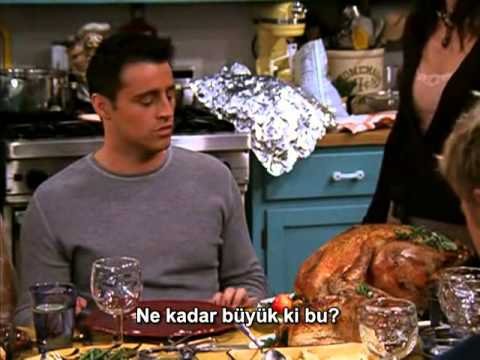
Understanding tradition requires recognizing its dual nature: it is both a noun describing the specific practice itself and a broader abstract concept describing the process of handing down these practices. When we speak of a specific tradition, we might be referring to eating turkey on Thanksgiving or wearing a specific type of academic regalia during graduation ceremonies. When we speak of tradition in the abstract, we are discussing the weight of historical precedent and the authority that the past holds over the present.
- Cultural Tradition
- Practices and beliefs shared by a specific society, often tied to national identity or ethnic heritage.
In sociological terms, traditions are not static; they evolve. While they are defined by their connection to the past, each generation interprets and adapts them to fit contemporary contexts. This process is sometimes referred to as the 'invention of tradition,' a concept popularized by historians who noted that many practices we consider ancient are actually relatively recent creations designed to foster a sense of national unity or institutional legitimacy.
The festival is a beautiful tradition that brings the entire community together every spring.
In the realm of literature and the arts, a tradition provides a foundation upon which new works are built. An author might write within the Gothic tradition, utilizing established tropes and themes while adding their own unique perspective. This creates a dialogue between the past and the present, enriching the artistic landscape. The academic study of tradition often involves analyzing how these lineages of thought are maintained, challenged, or subverted over time.
- Intellectual Tradition
- A continuous stream of philosophical, scientific, or literary thought that develops over centuries.
She challenged the patriarchal tradition that had dominated the institution for decades.
Furthermore, tradition plays a crucial role in shaping individual and collective identities. By participating in traditions, individuals signal their belonging to a particular group and affirm their shared values. This sense of belonging can provide psychological comfort and social cohesion, particularly in times of rapid change or uncertainty. However, tradition can also be a source of conflict when different groups hold competing traditions or when traditional practices clash with modern ethical standards.
- Family Tradition
- Unique customs practiced by a family, creating strong bonds and shared memories across generations.
It is a family tradition to open one small gift on the eve of the holiday.
Ultimately, tradition is a complex and multifaceted concept that is essential for understanding human culture and society. It is the thread that connects us to our ancestors and provides a framework for navigating the present. Whether we are upholding a cherished family custom or engaging with a profound intellectual lineage, tradition shapes our understanding of who we are and where we come from. It is a testament to the enduring power of human connection and the desire to leave a lasting legacy.
The oral tradition of the tribe preserved their history long before written language was introduced.
Using the word tradition correctly requires an understanding of its grammatical flexibility and its typical collocations. As a noun, tradition can function in both countable and uncountable forms, depending on the context. When referring to a specific custom or practice, it is countable. For example, you might say, 'We have many different traditions in our family.' In this case, you are quantifying the specific practices. Conversely, when referring to the abstract concept of passing down beliefs or customs, it is uncountable. For instance, 'The school places a high value on tradition.' Here, tradition represents the overarching ethos rather than individual acts.
By tradition, the youngest member of the family lights the candles.
One of the most common ways to use tradition is in prepositional phrases. The phrase 'by tradition' is frequently used to explain why a certain action is being taken. It indicates that the action is not necessarily mandated by law or logic, but rather by historical precedent. Another common phrase is 'in the tradition of,' which is often used in artistic or academic contexts to draw a comparison between a new work and established works. For example, 'The novel is written in the tradition of magical realism.'
- Countable Usage
- Referring to specific, individual customs (e.g., 'a holiday tradition', 'local traditions').
The composer's new symphony follows in the tradition of the great romantic masters.
When constructing sentences, tradition often pairs with specific verbs. We 'keep,' 'maintain,' 'uphold,' or 'preserve' a tradition when we continue it. Conversely, we 'break with,' 'defy,' or 'abandon' a tradition when we stop following it. These verb collocations are crucial for conveying the exact relationship between the subject and the custom. In academic writing, you might encounter verbs like 'establish,' 'forge,' or 'invent' a tradition, highlighting the active role humans play in creating cultural continuity.
- Uncountable Usage
- Referring to the general concept of historical continuity and inherited practices.
The new headmaster decided to break with tradition and abolish the strict dress code.
Adjectives also play a significant role in modifying tradition. We often speak of 'long-standing,' 'ancient,' 'rich,' or 'proud' traditions to emphasize their age and value. In contrast, one might refer to an 'outdated' or 'obsolete' tradition to criticize a practice that no longer serves a useful purpose. In academic contexts, adjectives like 'intellectual,' 'literary,' 'philosophical,' or 'oral' are used to specify the type of lineage being discussed. These modifiers help to narrow down the broad concept of tradition into a specific, manageable topic.
- Academic Usage
- Used to describe a lineage of thought or methodology, such as 'the empirical tradition'.
She is a scholar firmly rooted in the Marxist intellectual tradition.
It is also important to note the syntactic structures that often surround the word tradition. A common pattern is 'It is a tradition to [verb]...' For example, 'It is a tradition to sing the national anthem before the game.' Another pattern is 'The tradition of [noun/gerund]...' such as 'The tradition of gift-giving.' Mastering these patterns will significantly improve your fluency and accuracy when discussing cultural practices, historical precedents, and academic lineages. By understanding the nuances of its countable and uncountable forms, its typical collocations, and its syntactic patterns, you can use the word tradition with confidence and precision in a wide variety of contexts.
They are dedicated to preserving the rich culinary tradition of their ancestors.
The word tradition is ubiquitous, appearing in a wide spectrum of contexts ranging from casual everyday conversations to dense academic treatises. Its versatility stems from its fundamental connection to human behavior and history. In everyday life, you will frequently hear tradition discussed in the context of family gatherings, holidays, and cultural festivals. People love to share their personal customs, often starting sentences with, 'In my family, it is a tradition to...' These conversations highlight the personal and emotional significance of inherited practices, reinforcing social bonds and shared identities.
During the holidays, you will hear many people talking about their favorite festive tradition.
Moving beyond the personal sphere, tradition is a central theme in media and journalism. News reports often discuss national traditions, especially during significant public events like coronations, inaugurations, or independence day celebrations. Journalists might analyze how a particular event upholds or breaks with tradition, using the concept as a lens to examine societal values and political continuity. Furthermore, travel documentaries and cultural programs frequently explore the traditions of different societies, showcasing the rich diversity of human customs across the globe.
- Everyday Conversations
- Discussions about family habits, holiday plans, and local community events.
The documentary explored the ancient weaving tradition of the indigenous community.
In the academic world, particularly at the C2 level, tradition takes on a more rigorous and analytical meaning. You will encounter it extensively in disciplines such as sociology, anthropology, history, philosophy, and literature. Anthropologists study oral traditions to understand the history and worldview of non-literate societies. Historians debate the 'invention of tradition' to uncover how modern nation-states construct their identities. Philosophers analyze intellectual traditions to trace the evolution of ideas over centuries. In these contexts, tradition is not just a quaint custom; it is a critical framework for understanding human development.
- Academic Discourse
- Lectures and papers discussing lineages of thought, cultural transmission, and historical continuity.
The professor's lecture focused on the rationalist tradition in 17th-century European philosophy.
The corporate and institutional world also relies heavily on the concept of tradition. Schools, universities, and long-standing companies often emphasize their traditions to build a sense of prestige, loyalty, and brand identity. A university might boast about its tradition of academic excellence, while a company might highlight its tradition of innovation. In these settings, tradition is used strategically to project stability and reliability to students, employees, and customers. It serves as a narrative tool to connect the institution's past achievements with its future goals.
- Institutional Branding
- Marketing materials and mission statements emphasizing a history of quality or service.
The law firm has a long and proud tradition of providing pro bono services to the community.
Finally, tradition is a frequent topic in debates about social change and modernization. Political discourse often revolves around the tension between preserving tradition and embracing progress. Conservatives might argue for the protection of traditional values, while progressives might advocate for dismantling traditions that they view as oppressive or outdated. In these debates, tradition is a highly charged word, representing deeply held beliefs about how society should be organized. By paying attention to where and how the word tradition is used, you can gain valuable insights into the values, priorities, and conflicts of different groups and institutions.
The political debate centered on whether to uphold the constitutional tradition or implement radical reforms.
While tradition is a common word, learners frequently make subtle errors in its usage, particularly regarding its grammatical properties and its distinction from similar concepts. One of the most prevalent mistakes is confusing tradition with habit. A habit is a personal, often unconscious behavior repeated regularly by an individual, such as biting one's nails or drinking coffee every morning. A tradition, on the other hand, is a shared practice passed down through generations within a group. Saying 'It is my tradition to wake up at 6 AM' is incorrect; it should be 'It is my habit.' Tradition implies a collective, historical dimension that habit lacks.
Incorrect: It is my personal tradition to go for a run every Tuesday. (Correct: habit or routine)
Another frequent error involves the misuse of prepositions following the word tradition. Learners often say 'a tradition to do something' instead of the more natural and grammatically correct 'a tradition of doing something.' For example, 'They have a tradition of eating fish on Fridays' is correct, whereas 'They have a tradition to eat fish' sounds slightly unnatural to native speakers, although it might be understood. Mastering the 'tradition of + gerund' structure is crucial for achieving fluency and sounding more like a native speaker, especially in formal or academic writing.
- Preposition Error
- Using 'tradition to' instead of the standard 'tradition of + gerund'.
Correct: The village has a long tradition of weaving intricate tapestries.
Pluralization also presents challenges. Because tradition can be both countable and uncountable, learners sometimes use the wrong form. When referring to the abstract concept of historical continuity, it should be uncountable. Saying 'The school values traditions' when you mean the general ethos of the school is less precise than saying 'The school values tradition.' Conversely, when referring to multiple specific customs, the plural form is required. 'We observed many different tradition during our travels' is incorrect; it must be 'many different traditions.' Understanding the context is key to choosing the correct form.
- Countability Confusion
- Failing to distinguish between the abstract concept (uncountable) and specific customs (countable).
Incorrect: He studies the oral tradition of various tribes. (Correct: oral traditions, if referring to multiple distinct sets of customs)
Furthermore, learners sometimes conflate tradition with culture. While traditions are a vital component of culture, the two words are not entirely synonymous. Culture is a much broader term that encompasses language, arts, laws, knowledge, and everyday lifestyles, in addition to traditions. Tradition specifically highlights the transmission of practices over time. Saying 'The tradition of France is very interesting' is too narrow if you mean the entire way of life; 'The culture of France' is more appropriate. Tradition should be reserved for specific inherited practices or intellectual lineages.
- Semantic Overlap
- Using tradition when the broader term 'culture' is more accurate.
Correct: The festival is a vibrant display of local culture and ancient tradition.
Finally, in academic writing (C2 level), a common mistake is failing to define which tradition is being discussed. Simply stating 'According to tradition...' without specifying whether it is a philosophical, religious, or cultural tradition can leave the reader confused. Academic rigor demands precision. It is better to specify, for example, 'According to the empiricist tradition...' or 'Within the tradition of common law...' By avoiding these common pitfalls—distinguishing it from habit, using correct prepositions, managing countability, separating it from culture, and being specific in academic contexts—learners can master the nuanced usage of the word tradition.
The author situates her argument firmly within the feminist literary tradition.
The English language offers several words that share semantic territory with tradition, each carrying its own subtle nuances and specific contexts of use. Understanding these synonyms is crucial for precise communication, especially at advanced proficiency levels. One of the most closely related words is 'custom'. While often used interchangeably with tradition, a custom generally refers to a widely accepted way of behaving or doing something specific to a particular society, place, or time. The key difference is that a tradition explicitly implies the passing down of this behavior over multiple generations, whereas a custom might be a more contemporary, widespread practice that hasn't necessarily acquired historical depth.
It is a local custom to tip the waiter, but it is a tradition to leave an extra coin on New Year's Eve.
Another significant synonym is 'heritage'. Heritage encompasses the traditions, achievements, beliefs, and physical artifacts that are part of the history of a group or nation. While tradition focuses on the active transmission of practices and ideas, heritage is a broader term that includes tangible things like historical buildings and monuments, as well as intangible aspects like language and cultural values. Heritage is often viewed as an inheritance from the past that needs to be preserved for the future. You might speak of a country's 'cultural heritage', which includes its various traditions.
- Heritage
- A broader term including physical artifacts and historical legacy, not just practices.
The ancient castle is an important part of the nation's cultural heritage, reflecting its architectural tradition.
In academic and formal contexts, the word 'convention' is frequently encountered. A convention is a way in which something is usually done, especially within a particular area of activity. It is an agreed-upon norm or rule, often implicit. While traditions are usually revered and carry emotional weight, conventions are more practical and functional. For example, there are conventions in academic writing regarding how to format citations. These are not traditions in the cultural sense, but rather established rules of practice. Breaking a convention might be seen as unprofessional, whereas breaking a tradition might be seen as disrespectful or revolutionary.
- Convention
- An agreed-upon rule or standard practice, often lacking the emotional depth of a tradition.
The artist defied artistic conventions, breaking away from the established classical tradition.
The term 'folklore' is also closely related, particularly when discussing oral traditions. Folklore refers to the traditional beliefs, customs, and stories of a community, passed through the generations by word of mouth. It is a specific subset of tradition that deals primarily with myths, legends, fairy tales, and popular beliefs. While tradition can encompass high culture, academic lineages, and formal institutional practices, folklore is almost exclusively associated with the vernacular, everyday culture of the common people. Studying folklore is a way of understanding the grassroots traditions of a society.
- Folklore
- The traditional stories, beliefs, and customs of ordinary people, usually transmitted orally.
The stories of dragons and heroes are a vital part of the region's folklore and oral tradition.
Lastly, 'practice' and 'ritual' are useful related terms. A practice is simply the actual application or use of an idea, belief, or method. A tradition is composed of repeated practices. A ritual is a religious or solemn ceremony consisting of a series of actions performed according to a prescribed order. Many traditions involve specific rituals. For instance, a graduation ceremony is a tradition, and the handing out of diplomas is a ritual within that tradition. By distinguishing between custom, heritage, convention, folklore, practice, and ritual, you can articulate complex ideas about cultural transmission and historical continuity with remarkable precision.
The daily practice of meditation is a core ritual within this ancient spiritual tradition.
How Formal Is It?
Schwierigkeitsgrad
Wichtige Grammatik
Countable vs. Uncountable Nouns
Prepositions after Nouns (tradition of)
Infinitive vs. Gerund (tradition to do vs. tradition of doing)
Adjective Order (e.g., long-standing cultural tradition)
Definite Article Usage (the tradition of...)
Beispiele nach Niveau
It is a family tradition to eat cake on birthdays.
A special family habit for birthdays.
Used as a countable noun for a specific custom.
Our school has a tradition of singing every morning.
A regular school activity.
'Tradition of + verb-ing' is a common pattern.
This is an old tradition in my country.
A very old national custom.
Adjective 'old' describes the noun 'tradition'.
I like the tradition of giving presents.
The custom of giving gifts.
'Tradition of + noun/gerund'.
We learn our tradition from our parents.
We get our customs from our mother and father.
'Learn a tradition' shows how it is passed down.
It is a good tradition.
It is a positive custom.
Simple subject + verb + adjective + noun.
They keep the tradition alive.
They continue the custom.
'Keep a tradition alive' means to continue doing it.
What is your favorite tradition?
Which custom do you like the most?
Question asking for a specific countable tradition.
Every summer, we follow the tradition of going to the beach.
Our regular summer custom.
'Follow the tradition' means to do what is usually done.
The festival is a local tradition that brings everyone together.
A community event that happens regularly.
'Local tradition' specifies the area.
By tradition, the oldest person speaks first at the dinner.
According to the usual custom.
'By tradition' is used as an adverbial phrase.
They decided to start a new tradition this year.
They began a new regular activity.
'Start a tradition' means to begin a new custom.
It is important to respect the traditions of other cultures.
You must be polite about other people's customs.
Plural form 'traditions' refers to multiple customs.
Wearing white at a wedding is a common tradition here.
A normal custom for marriages.
'Common tradition' means many people do it.
He broke the tradition by wearing jeans to the formal party.
He did not follow the usual rule.
'Broke the tradition' means doing something different.
The recipe is a secret family tradition.
A special cooking method passed down in the family.
Nouns can act as adjectives: 'family tradition'.
The town has a long-standing tradition of hosting a summer fair.
An old and established custom.
'Long-standing' is a strong collocation with tradition.
Many young people feel disconnected from the traditions of their ancestors.
They do not feel close to old customs.
'Traditions of their ancestors' specifies origin.
The company prides itself on its tradition of excellent customer service.
The company is proud of its history of good service.
'Tradition of + noun phrase' used for corporate identity.
They are trying to preserve their cultural traditions in a modern world.
They want to keep their old customs alive today.
'Preserve traditions' means to protect them from disappearing.
According to tradition, it is bad luck to open an umbrella indoors.
Old beliefs say this is bad luck.
'According to tradition' introduces a belief or rule.
The new manager decided to break with tradition and allow flexible working hours.
The manager stopped following the old rules.
'Break with tradition' is a key phrase for change.
Oral tradition was the only way stories were passed down before writing was invented.
Telling stories by speaking.
'Oral tradition' is an uncountable concept here.
We must balance respect for tradition with the need for progress.
We need both old customs and new ideas.
Abstract uncountable use of 'tradition'.
The university is steeped in tradition, with ceremonies dating back centuries.
The university has many deep-rooted customs.
'Steeped in tradition' means heavily influenced by it.
He argued that blindly following tradition can stifle innovation and creativity.
Following old ways without thinking can stop new ideas.
'Blindly following tradition' implies a negative critique.
The novel is written firmly in the tradition of 19th-century realism.
The book uses the style of 19th-century realistic writing.
'In the tradition of' refers to an artistic style.
They held a traditional wedding, adhering strictly to the customs of their faith.
They followed all the religious rules for their wedding.
Adjective form 'traditional' modifying 'wedding'.
The festival serves to reinforce community bonds and uphold local traditions.
The festival makes the community stronger and keeps customs alive.
'Uphold traditions' means to support and maintain them.
There is a rich tradition of folk music in this mountainous region.
The area has a lot of high-quality, historical folk music.
'Rich tradition' emphasizes value and depth.
The controversial policy was seen as a radical departure from established tradition.
The new rule was very different from what was normally done.
'Departure from tradition' means a significant change.
She studies how oral traditions adapt and survive in the digital age.
She researches how spoken stories change with new technology.
Plural 'oral traditions' referring to various storytelling cultures.
The philosopher's work is deeply embedded in the phenomenological tradition.
The work is a core part of this specific philosophical school.
Refers to an academic lineage or school of thought.
Critics argue that the institution uses tradition as a tool to legitimize its authority.
They say the organization uses old customs to keep its power.
'Tradition as a tool' highlights its ideological function.
The artist's latest exhibition is a deliberate subversion of classical portraiture traditions.
The art intentionally challenges old ways of painting portraits.
'Subversion of traditions' means undermining established norms.
We must distinguish between a living tradition that evolves and a dead orthodoxy that merely repeats.
We need to know the difference between changing customs and strict, unchanging rules.
Contrasting 'living tradition' with 'dead orthodoxy'.
The legal system relies on the tradition of precedent to ensure consistency in rulings.
The law uses past decisions to make sure current decisions are fair.
'Tradition of precedent' is a specific legal concept.
His poetry resonates with the melancholic tradition of the Romantic era.
His poems feel like the sad style of Romantic writers.
'Resonates with the tradition' means it shares the feeling or style.
The debate highlighted the inherent tension between secular modernity and religious tradition.
The argument showed the conflict between modern non-religious life and old religious customs.
Juxtaposing 'modernity' and 'tradition'.
She challenges the patriarchal traditions that have historically marginalized women in the field.
She fights against the male-dominated customs that kept women out.
'Patriarchal traditions' specifies the type of oppressive system.
MacIntyre posits that all rational inquiry is inherently tradition-bound, precluding a view from nowhere.
He argues that all thinking is shaped by historical context; objective neutrality is impossible.
'Tradition-bound' as a compound adjective describing epistemology.
The author brilliantly navigates the dialectic between tradition and individual innovation in her prose.
She skillfully balances established literary styles with her own new ideas.
'Dialectic between tradition and innovation' denotes a complex interplay.
Historians often analyze the 'invention of tradition' to understand how modern nation-states construct cohesive identities.
Scholars study how new customs are created to make countries feel unified.
'Invention of tradition' is a specific historiographical concept.
The hermeneutic tradition emphasizes the role of historical context in the interpretation of texts.
This method of study focuses on history to understand writing.
'Hermeneutic tradition' refers to a specific methodological lineage.
He situates his critique firmly within the Marxist intellectual tradition, utilizing its analytical framework.
He bases his arguments on Marxist ideas and methods.
'Situates within a tradition' means aligning with a school of thought.
The uncritical perpetuation of tradition can serve as an insidious mechanism for sustaining hegemonic power structures.
Continuing old ways without thinking can secretly keep powerful people in control.
Highly academic phrasing analyzing the sociology of tradition.
Her choreography is a visceral rejection of the balletic tradition, favoring pedestrian movement over stylized grace.
Her dance style strongly opposes classical ballet, using normal walking instead of elegant poses.
'Rejection of the tradition' in an artistic critique.
To understand the schism, one must trace the divergent theological traditions that emerged in the fourth century.
To know why they split, you must follow the different religious ideas from the 400s.
'Divergent traditions' refers to lineages that split apart.
Gegenteile
Häufige Kollokationen
Häufige Phrasen
Wird oft verwechselt mit
Redewendungen & Ausdrücke
Leicht verwechselbar
Satzmuster
So verwendest du es
Always use 'of' when following tradition with a noun or gerund describing the action.
Use plural 'traditions' for multiple specific acts (e.g., holiday traditions). Use uncountable 'tradition' for the abstract concept of continuity (e.g., respect for tradition).
- Using 'tradition' to describe a personal daily habit (e.g., 'My tradition is to drink coffee').
- Saying 'a tradition to do' instead of the more natural 'a tradition of doing'.
- Pluralizing 'tradition' when referring to the abstract concept of historical continuity.
- Using 'tradition' interchangeably with the broader concept of 'culture'.
- Failing to specify which intellectual tradition is being discussed in academic writing.
Tipps
Use 'of + gerund'
Always try to use 'tradition of [verb-ing]' instead of 'tradition to [verb]'. It sounds much more natural to native speakers. For example, say 'a tradition of singing' not 'a tradition to sing'.
Distinguish from Habit
Never use tradition to describe your own personal daily routines. If you do it alone and it wasn't passed down, it's a habit or a routine, not a tradition.
Strong Verbs
Pair tradition with strong verbs to sound more fluent. Use 'uphold', 'preserve', or 'maintain' for keeping them, and 'break with', 'defy', or 'subvert' for changing them.
Specify the Lineage
In C1/C2 writing, don't just say 'According to tradition'. Specify which one: 'According to the empiricist tradition'. This adds necessary precision to your arguments.
Stress the Middle
The stress is on the second syllable: tra-DI-tion. Make sure the first 'a' is a quick schwa sound (truh), not a hard 'a'.
Countable vs Uncountable
Think about whether you mean a specific event (countable: 'many traditions') or the general idea of history (uncountable: 'respect for tradition').
Use 'Steeped in'
To describe a place with a lot of history, use the phrase 'steeped in tradition'. For example, 'Oxford University is steeped in tradition.'
Tradition vs Culture
Remember that culture is the big picture (food, language, laws), while tradition is specifically the practices passed down through time. Don't use them as exact synonyms.
Time-honored
Use the adjective 'time-honored' to describe a tradition that is respected specifically because it is very old. 'It is a time-honored tradition.'
Oral Tradition
When discussing history or anthropology, 'oral tradition' is a key phrase. It refers specifically to unwritten history passed down by speaking.
Einprägen
Eselsbrücke
Think of TRADITION as 'TRADE IT ON' - you trade or pass on your customs to the next generation.
Wortherkunft
Late Middle English, from Old French tradicion, or from Latin traditio(n-), from tradere 'deliver, betray', from trans- 'across' + dare 'give'.
Kultureller Kontext
Deep respect for traditions honoring ancestors and elders, such as the Lunar New Year or Chuseok.
Rich in local and national traditions, often tied to historical events, monarchy, or religious saints' days.
Strong emphasis on family traditions during holidays like Thanksgiving and Christmas.
Im Alltag üben
Kontexte aus dem Alltag
Gesprächseinstiege
"What is your favorite family tradition?"
"Are there any traditions in your country that you think are outdated?"
"How important is it to preserve cultural traditions in a globalized world?"
"Have you ever started a new tradition with your friends?"
"What role does tradition play in the education system?"
Tagebuch-Impulse
Describe a tradition you loved as a child but no longer practice.
Argue for or against the statement: 'Tradition is the enemy of progress.'
Write about a time you had to break with a tradition. How did it feel?
Invent a new tradition for your community. What would it be and why?
Analyze an intellectual or artistic tradition that influences your work or studies.
Häufig gestellte Fragen
10 FragenA habit is a personal behavior that an individual repeats regularly, often unconsciously. For example, biting your nails is a habit. A tradition is a shared practice passed down through generations within a group. Eating turkey on Thanksgiving is a tradition. Habits are individual; traditions are collective and historical. You can break a habit easily, but breaking a tradition often affects others.
Yes, 'tradition' can be pluralized as 'traditions' when referring to multiple specific customs or practices. For example, 'Every culture has its own unique traditions.' However, when referring to the abstract concept of historical continuity, it is uncountable and remains singular. For example, 'The school places a high value on tradition.'
While people will understand you, it is grammatically more natural and standard to say 'a tradition of doing something'. For example, 'We have a tradition of opening presents on Christmas Eve' is better than 'We have a tradition to open presents.' The 'of + gerund' structure is preferred in formal and academic English.
To 'break with tradition' means to intentionally stop following a long-established custom or rule. It implies doing something new or different from what has always been done in the past. For example, 'The bride broke with tradition and wore a red dress instead of white.' It is often used when discussing progress or modernization.
In academia, 'tradition' often refers to a recognized lineage of thought, methodology, or artistic style. Scholars talk about the 'Marxist tradition' or the 'analytic tradition' in philosophy. It means a cohesive framework of ideas that researchers build upon, debate, or critique. It is less about festive customs and more about intellectual history.
An oral tradition is a method of passing down history, stories, laws, and cultural knowledge by word of mouth, rather than through written texts. It is common in indigenous cultures and historical societies before the invention of writing. Storytellers, elders, and singers play a crucial role in maintaining an oral tradition. It is a vital field of study in anthropology.
No, traditions are not inherently good or bad. While many traditions promote social cohesion, family bonding, and cultural identity, some traditions can be harmful, discriminatory, or outdated. For example, traditions that restrict the rights of certain groups based on gender or race are often challenged. Society constantly evaluates which traditions to keep and which to abandon.
The 'invention of tradition' is a concept developed by historians like Eric Hobsbawm. It suggests that many practices we think are ancient were actually created quite recently. These traditions are often 'invented' by governments or institutions to create a sense of national unity, legitimize authority, or establish a connection to a suitable historical past.
A single person can start a practice or a routine, but it does not truly become a tradition until it is shared with others and passed down over time. If you start baking a specific cake every Sunday, it's a routine. If your children continue baking that same cake every Sunday when they grow up, it has become a family tradition.
Common adjectives include 'long-standing', 'ancient', 'rich', 'proud', and 'time-honored' to emphasize its positive historical weight. In academic contexts, you might see 'intellectual', 'literary', or 'philosophical'. When criticizing a tradition, adjectives like 'outdated', 'obsolete', or 'oppressive' are frequently used.
Teste dich selbst 180 Fragen
/ 180 correct
Perfect score!
Summary
Tradition is the vital mechanism by which societies transmit their values, practices, and intellectual frameworks across time, serving as both a stabilizing foundation for identity and a dynamic baseline for future innovation.
- A long-established custom or belief passed down through generations.
- Can be a specific action (countable) or a general concept (uncountable).
- Crucial for maintaining cultural identity and social cohesion.
- In academia, it refers to a recognized lineage of thought or style.
Use 'of + gerund'
Always try to use 'tradition of [verb-ing]' instead of 'tradition to [verb]'. It sounds much more natural to native speakers. For example, say 'a tradition of singing' not 'a tradition to sing'.
Distinguish from Habit
Never use tradition to describe your own personal daily routines. If you do it alone and it wasn't passed down, it's a habit or a routine, not a tradition.
Strong Verbs
Pair tradition with strong verbs to sound more fluent. Use 'uphold', 'preserve', or 'maintain' for keeping them, and 'break with', 'defy', or 'subvert' for changing them.
Specify the Lineage
In C1/C2 writing, don't just say 'According to tradition'. Specify which one: 'According to the empiricist tradition'. This adds necessary precision to your arguments.
Beispiel
My family has an everyday tradition of taking a long walk together after Sunday dinner.
Verwandte Inhalte
In Videos ansehen

Im Kontext lernen
Dieses Wort in anderen Sprachen
Mehr Culture Wörter
creon
C2Kreon ist der Herrscher von Theben in der griechischen Mythologie, bekannt aus den Tragödien von Sophokles.
ethnic
B2Ein Angehöriger einer ethnischen Gruppe ist eine Person mit einem spezifischen kulturellen Hintergrund.
wukong’s
B1Die Possessivform von Wukong, die sich auf Dinge bezieht, die dem Affenkönig gehören.
germanic
B2Bezieht sich auf die Sprachfamilie, zu der Deutsch und Englisch gehören. Die germanischen Stämme besiedelten Europa.
hercules
C1Herkules ist ein Held der römischen Mythologie, der für seine übermenschliche Kraft bekannt ist.
moroccan
A2Bezieht sich auf das Land Marokko, seine Menschen oder seine Kultur. Ein Marokkaner ist ein Einwohner Marokkos.
daedalus
B2Daedalus war ein legendärer griechischer Erfinder und Baumeister, der das Labyrinth für König Minos entwarf.
oedipus’
C1Oedipus' ist die Possessivform des Namens Ödipus und bezieht sich auf Dinge, die ihm gehören oder mit ihm verbunden sind.
turkish
A1Bezieht sich auf die Türkei, ihre Menschen oder ihre Sprache.
imp
B2Ein Imp ist ein kleiner, schelmischer Teufel oder Kobold in der Folklore.

