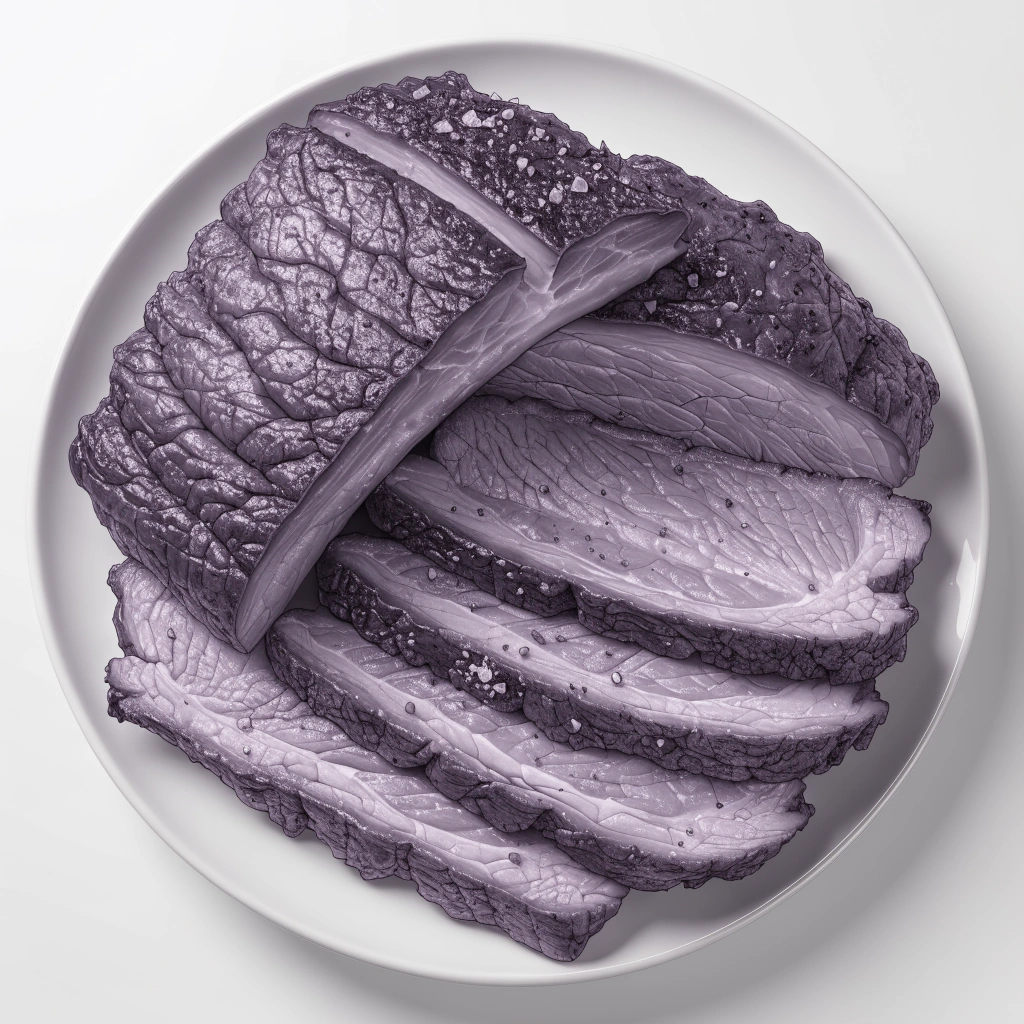
Texas Barbecue: Smoked Beef
Texas is a large state in the United States. People in Texas love barbecue. One special food is smoked brisket. Brisket is a part of the cow. It is a big piece of meat.
Cooking brisket is very slow. It takes many hours. The cook uses wood and smoke. This makes the meat very soft and delicious. People eat it with bread and pickles.
Families go to barbecue restaurants on weekends. They sit at long tables. Everyone eats together. It is a famous tradition in Texas.
Grammar Spotlight
Pattern: Present Simple (Third Person Singular)
"It takes many hours."
We use the present simple for facts. When the subject is 'it', 'he', or 'she', we add an '-s' to the end of the verb.
Pattern: Adjectives before Nouns
"It is a big piece of meat."
In English, we put adjectives (describing words) before the noun. Here, 'big' comes before 'piece'.
Test Your Understanding
10 questions · A1 Beginner · 1 free preview
Test what you learned from this article. Answer all questions to earn XP!
Where is this food very famous?
Want to finish the quiz?
9 more questions are waiting for you. Sign up free to unlock the full quiz and earn XP!
Sign Up FreeAlready have an account? Sign In
Question Breakdown
Where is this food very famous?
Your answer:
Correct answer: Texas
Brisket is a type of fruit.
Your answer:
Correct answer: False
What does 'slow' mean?
Your answer:
Correct answer: Not fast
The cook uses _____ and smoke.
Your answer:
Correct answer: wood
Texas Barbecue: The King of Meat
Texas is a large state in the USA. It is famous for a special food called smoked brisket. Brisket is a piece of beef from the chest of a cow. In the past, this meat was very cheap because it was hard to chew. However, everything changed in the 19th century.
German and Czech people moved to Texas a long time ago. They brought new ways to cook meat. They cooked the brisket very slowly over a small fire for many hours. This is called "low and slow" cooking. Today, Texas brisket is more popular than other types of barbecue.
To make a good brisket, you only need salt, pepper, and wood smoke. The meat becomes very soft and delicious. People wait in long lines to eat it because it is better than regular steak. Families go to barbecue restaurants on weekends to enjoy this special meal together. It is a very important part of Texas culture.
Grammar Spotlight
Pattern: Past Simple
"German and Czech people moved to Texas a long time ago."
We use the past simple to talk about completed actions in the past. For regular verbs like 'move', we add '-d' or '-ed' to the end.
Pattern: Comparatives
"Texas brisket is more popular than other types of barbecue."
We use 'more' + adjective + 'than' to compare two things when the adjective is long. It shows that one thing has more of a quality than another.
Test Your Understanding
11 questions · A2 Elementary · 1 free preview
Test what you learned from this article. Answer all questions to earn XP!
Where is this famous smoked brisket from?
Want to finish the quiz?
10 more questions are waiting for you. Sign up free to unlock the full quiz and earn XP!
Sign Up FreeAlready have an account? Sign In
Question Breakdown
Where is this famous smoked brisket from?
Your answer:
Correct answer: Texas
Brisket was very expensive in the past.
Your answer:
Correct answer: False
What does 'delicious' mean?
Your answer:
Correct answer: Tasting very good
People wait in long _____ to eat the meat.
Your answer:
Correct answer: lines
What do you need to make a good brisket?
Your answer:
Correct answer: Salt, pepper, and smoke
The Art of Texas-Style Smoked Brisket
Texas-style smoked brisket has become a legendary dish in the United States. Many food lovers believe that it is the most important part of American barbecue culture. This tradition has existed for over a hundred years, and it continues to grow in popularity every day.
The history of this dish began with German and Czech immigrants who settled in Texas during the 19th century. These butchers brought traditional European smoking techniques to the region. They realized that brisket, which is a tough cut of beef from the chest, could become soft and delicious if it was cooked very slowly over a fire.
Today, the process of making the perfect brisket is considered an art. First, the meat is seasoned with a simple mix of salt and black pepper. Then, it is placed in a large smoker. The meat is cooked at a low temperature for twelve to sixteen hours. During this time, the wood smoke gives the beef a unique flavor and creates a beautiful pink "smoke ring" inside the meat.
Patience is necessary for the perfect brisket. Because the cooking process takes so long, pitmasters often start working in the middle of the night. People have traveled from all over the world to visit famous Texas barbecue restaurants. They often wait in long lines for several hours just to get a taste of this tender meat.
Texas-style brisket is more than just food; it is a symbol of history and hard work. Whether you eat it with white bread or on its own, it is an experience that every visitor to Texas should try at least once.
Grammar Spotlight
Pattern: Passive Voice
"First, the meat is seasoned with a simple mix of salt and black pepper."
The passive voice is used here because the action (seasoning) is more important than who does it. It is formed using 'is/are' + the past participle of the verb.
Pattern: Relative Clauses
"They realized that brisket, which is a tough cut of beef, could become soft and delicious."
The relative clause 'which is a tough cut of beef' provides extra information about the brisket. We use 'which' for things and 'who' for people.
Test Your Understanding
11 questions · B1 Intermediate · 1 free preview
Test what you learned from this article. Answer all questions to earn XP!
Why did the immigrants choose to smoke brisket?
Want to finish the quiz?
10 more questions are waiting for you. Sign up free to unlock the full quiz and earn XP!
Sign Up FreeAlready have an account? Sign In
Question Breakdown
Why did the immigrants choose to smoke brisket?
Your answer:
Correct answer: It could become soft if cooked slowly.
Brisket is seasoned with many different complicated spices.
Your answer:
Correct answer: False
What does 'tender' mean in the context of meat?
Your answer:
Correct answer: Easy to chew
The meat is _____ in a large smoker for many hours.
Your answer:
Correct answer: placed
Who brought smoking techniques to Texas?
Your answer:
Correct answer: German and Czech immigrants
The Art and Science of Texas-Style Smoked Brisket
The culinary heritage of the United States is frequently defined by its regional diversity, yet few dishes command as much reverence as Texas-style smoked brisket. Often hailed as the 'king of barbecue,' this specific preparation is not merely a method of cooking but a testament to historical migration and technical precision. To understand its prominence, one must examine the intersection of cultural influence and the chemistry of slow-cooking.
The origins of this dish can be traced back to the mid-19th century, when German and Czech immigrants settled in Central Texas. These settlers, many of whom were skilled butchers, introduced European smoking techniques to preserve meat. However, they encountered the brisket—a tough, fibrous cut of beef from the lower chest of the cow. While initially considered undesirable due to its texture, the brisket was transformed through the application of 'low and slow' heat. By subjecting the meat to consistent, low temperatures for extended periods, the tough collagen is gradually broken down, resulting in a tender, succulent delicacy.
Furthermore, the process of smoking brisket requires a meticulous level of fire management. Unlike modern ovens, traditional offset smokers demand constant attention to maintain a steady flow of smoke and heat. Pitmasters often argue that the wood selection is as crucial as the meat itself; post oak is typically preferred for its subtle, smoky flavor. Despite the simplicity of the seasoning—often just salt and black pepper—the complexity of the final product is profound. A successful brisket is characterized by its 'bark,' a dark, flavorful crust, and a 'smoke ring,' a pinkish hue just beneath the surface caused by a chemical reaction between the meat and the burning wood.
In contemporary American culture, the brisket has transcended its humble beginnings to become a symbol of Texas identity. Enthusiasts will wait in line for hours at renowned barbecue joints, highlighting the dish's status as a culinary destination. Ultimately, the enduring popularity of Texas-style brisket lies in its ability to balance tradition with technical mastery, proving that even the most challenging ingredients can be elevated through patience and skill.
Grammar Spotlight
Pattern: Passive Voice
"The culinary heritage of the United States is frequently defined by its regional diversity..."
The passive voice is used when the focus is on the action or the object being acted upon. It is formed using the verb 'to be' followed by the past participle. This is common in formal writing to maintain an objective tone.
Pattern: Non-defining Relative Clauses
"These settlers, many of whom were skilled butchers, introduced European smoking techniques..."
Non-defining relative clauses provide extra information about a noun but are not essential for the sentence to make sense. They are separated by commas and often begin with 'who' or 'whom.' This structure adds descriptive detail to formal texts.
Pattern: Present Participle Phrases for Result
"...resulting in a tender, succulent delicacy."
Present participle phrases (starting with -ing) can be used to show the result of an action mentioned in the previous part of the sentence. This structure helps create more complex, flowing sentences by connecting ideas without using 'and' or 'so'.
Test Your Understanding
11 questions · B2 Upper Intermediate · 1 free preview
Test what you learned from this article. Answer all questions to earn XP!
Which groups of immigrants are credited with bringing smoking techniques to Central Texas?
Want to finish the quiz?
10 more questions are waiting for you. Sign up free to unlock the full quiz and earn XP!
Sign Up FreeAlready have an account? Sign In
Question Breakdown
Which groups of immigrants are credited with bringing smoking techniques to Central Texas?
Your answer:
Correct answer: German and Czech
The brisket was historically considered a premium, tender cut of meat before the 'low and slow' method was used.
Your answer:
Correct answer: False
What is the meaning of 'succulent' in the context of the article?
Your answer:
Correct answer: Juicy and tender
The famous Texas cooking method for brisket is known as low and _____.
Your answer:
Correct answer: slow
What causes the 'smoke ring' to appear in the meat?
Your answer:
Correct answer: A chemical reaction between meat and wood smoke
The Alchemical Art of Texas Smoked Brisket: A Study in Patience and Provenance
Rarely has a culinary tradition commanded such reverence as the Texas-style smoked brisket. To the uninitiated, it might appear to be merely a piece of beef subjected to heat. However, to the connoisseur, it represents a quintessential confluence of historical legacy and chemical mastery. Originating in the Central Texas region during the mid-19th century, the practice was pioneered by German and Czech immigrants whose butcher shops served as the crucible for this technique. These settlers, possessing a meticulous understanding of meat preservation, discovered that the brisket—a notoriously tough, fibrous cut from the lower chest—could be rendered succulent through the application of sustained, indirect heat. The alchemy involved in this transformation is nothing short of extraordinary.
Central to the process is the 'low and slow' philosophy, where temperatures are maintained with unwavering precision. It is the meticulous management of the fire that determines the final texture. As the wood burns, it releases complex aromatic compounds that penetrate the meat, while the subcutaneous fat undergoes a slow rendering, self-basting the muscle from within. Simultaneously, the Maillard reaction and the caramelization of the 'rub'—typically a minimalist blend of salt and black pepper—conspire to create the 'bark,' a dark, flavorful crust that is the hallmark of artisanal barbecue. This crust is not merely a byproduct but a deliberate objective, providing a textural contrast to the tender interior.
Furthermore, the veracity of a true Texas brisket is often judged by the 'smoke ring,' a pinkish hue just beneath the surface caused by the interaction of nitrogen dioxide and myoglobin. While some skeptics argue that the ring is purely aesthetic, purists maintain that its presence signifies a proper combustion environment. The most challenging phase for the pitmaster, however, is the 'stall.' This occurs when the internal temperature of the meat plateaus due to evaporative cooling. Navigating this period requires immense patience; any attempt to rush the process by increasing the heat would have a deleterious effect on the meat's tenderness, resulting in a parched and unpalatable product.
In the contemporary culinary landscape, brisket has moved beyond its humble origins to become a ubiquitous symbol of Texan identity. What distinguishes Central Texas barbecue from its regional counterparts is its minimalist approach. Unlike the sauce-heavy traditions of Kansas City or the vinegar-based styles of the Carolinas, Texas brisket relies solely on the provenance of the beef and the skill of the pitmaster. This reliance on intrinsic quality over extrinsic seasoning reflects a broader cultural appreciation for authenticity. The transformation of a discarded cut of meat into a world-renowned delicacy is a testament to human ingenuity and the enduring power of tradition.
Grammar Spotlight
Pattern: Inversion after negative/restrictive expressions
"Rarely has a culinary tradition commanded such reverence as the Texas-style smoked brisket."
When restrictive words like 'rarely', 'seldom', or 'never' start a sentence, the subject and auxiliary verb are inverted for formal emphasis.
Pattern: Cleft Sentences
"It is the meticulous management of the fire that determines the final texture."
Cleft sentences use the structure 'It is/was + [subject] + that/who' to focus heavily on a specific piece of information within the sentence.
Pattern: Nominalisation
"The transformation of a discarded cut of meat into a world-renowned delicacy is a testament to human ingenuity."
Nominalisation involves turning verbs (transform) into nouns (transformation) to create a more formal, academic, and objective tone.
Test Your Understanding
12 questions · C1 Advanced · 1 free preview
Test what you learned from this article. Answer all questions to earn XP!
What historical factor contributed to the development of Texas-style brisket?
Want to finish the quiz?
11 more questions are waiting for you. Sign up free to unlock the full quiz and earn XP!
Sign Up FreeAlready have an account? Sign In
Question Breakdown
What historical factor contributed to the development of Texas-style brisket?
Your answer:
Correct answer: The migration of German and Czech butchers to Central Texas.
The 'stall' is a phase where the meat's temperature increases rapidly due to fire management.
Your answer:
Correct answer: False
What does 'deleterious' mean in the context of the article?
Your answer:
Correct answer: Harmful or damaging
The pinkish hue found just beneath the surface of the meat is known as the smoke _____.
Your answer:
Correct answer: ring
What is the primary characteristic of the 'bark'?
Your answer:
Correct answer: A dark, flavorful crust formed by the rub and smoke.
Texas-style brisket is known for its heavy use of extrinsic seasonings and sauces.
Your answer:
Correct answer: False
The Ontological Alchemy of the Texas Pit: A Study in Culinary Sovereignty
The ontological status of Texas-style smoked brisket transcends mere sustenance, occupying a hallowed space where history, topography, and thermodynamics converge. To the uninitiated, the brisket—a fibrous pectoral muscle from the lower chest of the bovine—is but a recalcitrant cut of beef, prone to toughness and resistant to conventional culinary interventions. Yet, within the crucible of a central Texas smokehouse, it undergoes a profound metamorphosis, emerging as the quintessential emblem of American barbecue. This transformation is not merely a matter of heat application; rather, it is a sophisticated exercise in connoisseurship and patience, requiring a near-monastic devotion to the management of fire and airflow.
The historical genealogy of this dish is inextricably linked to the mid-19th-century influx of German and Czech immigrants into the Texas Hill Country. These settlers brought with them vestigial smoking techniques rooted in European butchery, which were subsequently adapted to the local topography and available livestock. While their ancestors might have smoked sausages or hams, the abundance of beef in the burgeoning Texas cattle industry necessitated a shift in focus. The brisket, often discarded or relegated to the status of stew meat due to its connective tissue, became the primary subject of experimentation. It was discovered that through prolonged exposure to low-temperature smoke, the collagen within the meat would eventually dissolve, resulting in a texture that is both ethereal and profoundly visceral.
Central to the pitmaster's craft is an understanding of the thermodynamics involved in 'low and slow' cooking. Should the temperature fluctuate by even a few degrees, the delicate balance between tenderness and desiccation would be irrevocably compromised. The process typically spans twelve to sixteen hours, during which the meat is subjected to the 'stall'—a phenomenon where evaporative cooling on the surface of the meat causes the internal temperature to plateau. It is here that the pitmaster’s resolve is tested; resisted must be the urge to increase the heat. Instead, one must wait for the moisture to evaporate, allowing the temperature to rise once more and the Maillard reaction to complete its alchemical work, producing the dark, flavorful crust known as 'bark.'
Not only does the smoke serve as a preservative, but it also imparts a complex chemical signature that defines the dish's flavor profile. The use of post oak, native to the region, provides a subtle, nutty essence that does not overpower the inherent beefiness of the cut. This restraint is a hallmark of the Central Texas style, where the seasoning is often limited to a rudimentary 'Dalmatian rub' of salt and black pepper. Such simplicity underscores the belief that the meat and the smoke should maintain their sovereignty, unmasked by the saccharine sauces prevalent in other barbecue traditions.
Furthermore, the visual allure of the 'smoke ring'—a pinkish hue beneath the bark caused by the reaction of nitrogen dioxide with myoglobin—serves as a non-verbal signifier of quality. While it contributes nothing to the flavor, its presence is a requisite for the discerning eye. This aesthetic dimension further elevates the brisket from a simple meal to a work of art, subject to the rigorous standards of professional competition and amateur critique alike. Ultimately, the sovereignty of Texas-style brisket is maintained through a delicate synthesis of tradition and innovation. It stands as a defiant reminder that some things—perhaps the best things—cannot be rushed. It requires a surrender to the process, an acknowledgment that the fire, the wood, and the meat possess a temporal logic of their own.
Grammar Spotlight
Pattern: Conditional Subjunctive with 'Should'
"Should the temperature fluctuate by even a few degrees, the delicate balance between tenderness and desiccation would be irrevocably compromised."
This formal structure is used to express a hypothetical or unlikely future condition. It replaces 'If the temperature should fluctuate' to add a scholarly, precise tone to the text.
Pattern: Negative Inversion
"Not only does the smoke serve as a preservative, but it also imparts a complex chemical signature that defines the dish's flavor profile."
When a sentence starts with a negative adverbial like 'Not only,' the subject and auxiliary verb are inverted. This is used for emphasis and is typical of high-level academic or rhetorical prose.
Pattern: Passive Fronting/Inversion
"Resisted must be the urge to increase the heat."
This involves moving the past participle to the beginning of the clause for dramatic or stylistic emphasis. It focuses the reader's attention on the action being resisted rather than the person doing the resisting.
Test Your Understanding
12 questions · C2 Mastery · 1 free preview
Test what you learned from this article. Answer all questions to earn XP!
What historical factor primarily contributed to the development of Texas-style brisket?
Want to finish the quiz?
11 more questions are waiting for you. Sign up free to unlock the full quiz and earn XP!
Sign Up FreeAlready have an account? Sign In
Question Breakdown
What historical factor primarily contributed to the development of Texas-style brisket?
Your answer:
Correct answer: The synthesis of European smoking techniques with the local cattle industry
The 'smoke ring' is essential for enhancing the flavor of the brisket.
Your answer:
Correct answer: False
What does 'recalcitrant' mean in the context of the article?
Your answer:
Correct answer: Stubbornly resistant to cooking or control
Within the crucible of a central Texas smokehouse, the meat undergoes a profound _____, emerging as a quintessential emblem.
Your answer:
Correct answer: metamorphosis
What is the 'stall' in the context of brisket cooking?
Your answer:
Correct answer: A plateau in internal temperature caused by evaporative cooling
Central Texas style is known for using complex, sugary sauces to mask the meat's flavor.
Your answer:
Correct answer: False
