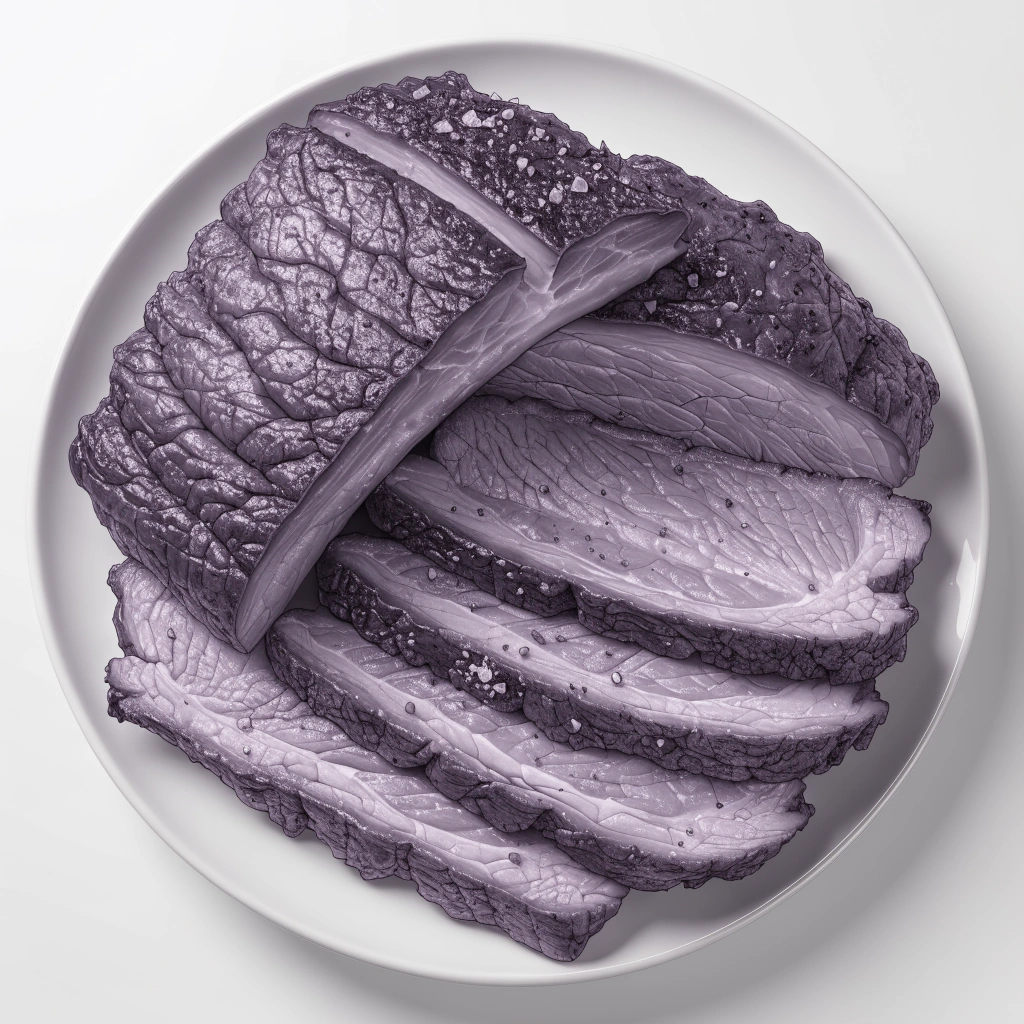
Texas Barbecue: Smoked Beef
Texas is a large state in the United States. People in Texas love barbecue. One special food is smoked brisket. Brisket is a part of the cow. It is a big piece of meat.
Cooking brisket is very slow. It takes many hours. The cook uses wood and smoke. This makes the meat very soft and delicious. People eat it with bread and pickles.
Families go to barbecue restaurants on weekends. They sit at long tables. Everyone eats together. It is a famous tradition in Texas.
Gramática em destaque
Padrão: Present Simple (Third Person Singular)
"It takes many hours."
We use the present simple for facts. When the subject is 'it', 'he', or 'she', we add an '-s' to the end of the verb.
Padrão: Adjectives before Nouns
"It is a big piece of meat."
In English, we put adjectives (describing words) before the noun. Here, 'big' comes before 'piece'.
Teste sua compreensão
10 perguntas · A1 Iniciante · 1 pré-visualização grátis
Teste o que aprendeu neste artigo. Responda todas as perguntas para ganhar XP!
Where is this food very famous?
Quer finalizar o quiz?
9 perguntas a mais estão esperando por você. Cadastre-se grátis para desbloquear o quiz completo e ganhar XP!
Cadastrar grátisJá tem conta? Entrar
Detalhamento das perguntas
Where is this food very famous?
Sua resposta:
Resposta correta: Texas
Brisket is a type of fruit.
Sua resposta:
Resposta correta: Falso
What does 'slow' mean?
Sua resposta:
Resposta correta: Not fast
The cook uses _____ and smoke.
Sua resposta:
Resposta correta: wood
O Brisket Defumado do Texas: Uma História Saborosa
Nos Estados Unidos, a carne defumada é muito famosa, e o "brisket" do Texas é um prato especial. Ele vem do Texas, um estado grande. Este prato é uma carne de boi que precisa de muito tempo para ficar pronta. As pessoas cozinham o brisket devagar, com pouca temperatura, por muitas horas.
A história do brisket começa com imigrantes da Alemanha e da República Tcheca. Eles vieram para o Texas no meio do século XIX. Eles sabiam como defumar carne e trouxeram essas ideias. O brisket é uma parte da carne de boi que é um pouco dura. Mas, quando defumada por muitas horas, ela fica muito macia e cheia de sabor.
Os cozinheiros do Texas usam fumaça de madeira para dar um sabor único à carne. O processo é simples, mas precisa de paciência. Primeiro, eles temperam a carne. Depois, colocam ela no defumador por um tempo longo, às vezes mais de dez horas. O resultado é uma carne escura por fora e muito suculenta por dentro. É mais gostoso que muitas outras carnes! Muitas pessoas viajam para o Texas só para comer este prato. É uma tradição importante e um símbolo da culinária local.
Gramática em destaque
Padrão: Pretérito Perfeito Simples
"Eles vieram para o Texas no meio do século XIX."
Usamos o Pretérito Perfeito Simples para falar de ações que aconteceram e terminaram no passado. É uma ação completa. Por exemplo, "eles vieram" significa que a ação de vir já acabou.
Padrão: Comparativos (mais... que)
"É mais gostoso que muitas outras carnes!"
Usamos "mais... que" para comparar duas coisas, mostrando que uma tem uma qualidade em maior grau que a outra. Significa "more... than" em inglês. Por exemplo, "mais gostoso que" mostra que algo é superior em sabor.
Teste sua compreensão
11 perguntas · A2 Elementar · 1 pré-visualização grátis
Teste o que aprendeu neste artigo. Responda todas as perguntas para ganhar XP!
De onde o brisket defumado é um prato especial?
Quer finalizar o quiz?
10 perguntas a mais estão esperando por você. Cadastre-se grátis para desbloquear o quiz completo e ganhar XP!
Cadastrar grátisJá tem conta? Entrar
Detalhamento das perguntas
De onde o brisket defumado é um prato especial?
Sua resposta:
Resposta correta: Texas
O brisket é uma carne que fica pronta muito rápido.
Sua resposta:
Resposta correta: Falso
O que significa a palavra 'macio'?
Sua resposta:
Resposta correta: Suave ao toque
A história do brisket começa com _______ da Alemanha e da República Tcheca.
Sua resposta:
Resposta correta: imigrantes
O brisket precisa de muita _______ para ficar pronto.
Sua resposta:
Resposta correta: paciência
Descobrindo o Brisket Texano: História e Sabor
Nos Estados Unidos, quando falamos de churrasco, o brisket defumado texano é frequentemente considerado o rei. Este prato, que tem se tornado muito popular, não é apenas uma refeição; é uma celebração da paciência e da técnica. O brisket, uma carne bovina do peito, era tradicionalmente um corte mais fibroso, mas com o método certo, ele se transforma em algo incrivelmente macio e saboroso.
A história do brisket defumado começa no centro do Texas, por volta do século XIX. Imigrantes alemães e tchecos, que se estabeleceram na região, trouxeram consigo técnicas de defumação de carne. Eles descobriram que o peito bovino, um corte que podia ser difícil de cozinhar, ficava delicioso quando preparado lentamente. Assim, o brisket, que antes não era tão valorizado, encontrou seu lugar na culinária local.
O segredo do verdadeiro brisket texano é o cozimento 'baixo e lento'. Isso significa que a carne é defumada por muitas horas, às vezes por mais de doze, em uma temperatura baixa. Durante este longo processo, a gordura da carne derrete e os tecidos conectivos se quebram, deixando o brisket suculento e fácil de fatiar. O fumo, geralmente de madeira de carvalho ou nogueira, dá um sabor único e profundo que é inconfundível.
Hoje, o brisket defumado texano tem sido apreciado em todo o país e até mesmo internacionalmente. Muitas churrascarias são famosas por seus briskets, e as pessoas viajam longas distâncias para provar este prato. Ele representa mais do que apenas comida; é um símbolo da cultura do churrasco texano, que valoriza a tradição e a qualidade.
Gramática em destaque
Padrão: Pretérito Perfeito Composto (Present Perfect)
"Este prato, que tem se tornado muito popular, não é apenas uma refeição."
Usamos o 'Pretérito Perfeito Composto' para falar de ações que começaram no passado e continuam até o presente, ou ações passadas com resultados presentes. É formado com o verbo 'ter' no presente + particípio passado do verbo principal.
Padrão: Voz Passiva (Passive Voice)
"Isso significa que a carne é defumada por muitas horas."
A voz passiva é usada quando o foco está na ação ou no objeto que sofre a ação, e não em quem a realiza. Em português, é geralmente formada com o verbo 'ser' + particípio passado do verbo principal.
Teste sua compreensão
11 perguntas · B1 Intermediário · 1 pré-visualização grátis
Teste o que aprendeu neste artigo. Responda todas as perguntas para ganhar XP!
Qual é a principal característica do brisket defumado texano?
Quer finalizar o quiz?
10 perguntas a mais estão esperando por você. Cadastre-se grátis para desbloquear o quiz completo e ganhar XP!
Cadastrar grátisJá tem conta? Entrar
Detalhamento das perguntas
Qual é a principal característica do brisket defumado texano?
Sua resposta:
Resposta correta: É conhecido pelo cozimento 'baixo e lento'
O brisket era um corte de carne muito valorizado desde o início no Texas.
Sua resposta:
Resposta correta: Falso
O que significa a palavra 'suculento'?
Sua resposta:
Resposta correta: Que tem muito suco e sabor
Imigrantes alemães e tchecos _______ técnicas de defumação para o Texas.
Sua resposta:
Resposta correta: trouxeram
De qual região dos Estados Unidos o brisket defumado texano se originou?
Sua resposta:
Resposta correta: Centro do Texas
The Art and Science of Texas-Style Smoked Brisket
The culinary heritage of the United States is frequently defined by its regional diversity, yet few dishes command as much reverence as Texas-style smoked brisket. Often hailed as the 'king of barbecue,' this specific preparation is not merely a method of cooking but a testament to historical migration and technical precision. To understand its prominence, one must examine the intersection of cultural influence and the chemistry of slow-cooking.
The origins of this dish can be traced back to the mid-19th century, when German and Czech immigrants settled in Central Texas. These settlers, many of whom were skilled butchers, introduced European smoking techniques to preserve meat. However, they encountered the brisket—a tough, fibrous cut of beef from the lower chest of the cow. While initially considered undesirable due to its texture, the brisket was transformed through the application of 'low and slow' heat. By subjecting the meat to consistent, low temperatures for extended periods, the tough collagen is gradually broken down, resulting in a tender, succulent delicacy.
Furthermore, the process of smoking brisket requires a meticulous level of fire management. Unlike modern ovens, traditional offset smokers demand constant attention to maintain a steady flow of smoke and heat. Pitmasters often argue that the wood selection is as crucial as the meat itself; post oak is typically preferred for its subtle, smoky flavor. Despite the simplicity of the seasoning—often just salt and black pepper—the complexity of the final product is profound. A successful brisket is characterized by its 'bark,' a dark, flavorful crust, and a 'smoke ring,' a pinkish hue just beneath the surface caused by a chemical reaction between the meat and the burning wood.
In contemporary American culture, the brisket has transcended its humble beginnings to become a symbol of Texas identity. Enthusiasts will wait in line for hours at renowned barbecue joints, highlighting the dish's status as a culinary destination. Ultimately, the enduring popularity of Texas-style brisket lies in its ability to balance tradition with technical mastery, proving that even the most challenging ingredients can be elevated through patience and skill.
Gramática em destaque
Padrão: Passive Voice
"The culinary heritage of the United States is frequently defined by its regional diversity..."
The passive voice is used when the focus is on the action or the object being acted upon. It is formed using the verb 'to be' followed by the past participle. This is common in formal writing to maintain an objective tone.
Padrão: Non-defining Relative Clauses
"These settlers, many of whom were skilled butchers, introduced European smoking techniques..."
Non-defining relative clauses provide extra information about a noun but are not essential for the sentence to make sense. They are separated by commas and often begin with 'who' or 'whom.' This structure adds descriptive detail to formal texts.
Padrão: Present Participle Phrases for Result
"...resulting in a tender, succulent delicacy."
Present participle phrases (starting with -ing) can be used to show the result of an action mentioned in the previous part of the sentence. This structure helps create more complex, flowing sentences by connecting ideas without using 'and' or 'so'.
Teste sua compreensão
11 perguntas · B2 Intermediário superior · 1 pré-visualização grátis
Teste o que aprendeu neste artigo. Responda todas as perguntas para ganhar XP!
Which groups of immigrants are credited with bringing smoking techniques to Central Texas?
Quer finalizar o quiz?
10 perguntas a mais estão esperando por você. Cadastre-se grátis para desbloquear o quiz completo e ganhar XP!
Cadastrar grátisJá tem conta? Entrar
Detalhamento das perguntas
Which groups of immigrants are credited with bringing smoking techniques to Central Texas?
Sua resposta:
Resposta correta: German and Czech
The brisket was historically considered a premium, tender cut of meat before the 'low and slow' method was used.
Sua resposta:
Resposta correta: Falso
What is the meaning of 'succulent' in the context of the article?
Sua resposta:
Resposta correta: Juicy and tender
The famous Texas cooking method for brisket is known as low and _____.
Sua resposta:
Resposta correta: slow
What causes the 'smoke ring' to appear in the meat?
Sua resposta:
Resposta correta: A chemical reaction between meat and wood smoke
The Alchemical Art of Texas Smoked Brisket: A Study in Patience and Provenance
Rarely has a culinary tradition commanded such reverence as the Texas-style smoked brisket. To the uninitiated, it might appear to be merely a piece of beef subjected to heat. However, to the connoisseur, it represents a quintessential confluence of historical legacy and chemical mastery. Originating in the Central Texas region during the mid-19th century, the practice was pioneered by German and Czech immigrants whose butcher shops served as the crucible for this technique. These settlers, possessing a meticulous understanding of meat preservation, discovered that the brisket—a notoriously tough, fibrous cut from the lower chest—could be rendered succulent through the application of sustained, indirect heat. The alchemy involved in this transformation is nothing short of extraordinary.
Central to the process is the 'low and slow' philosophy, where temperatures are maintained with unwavering precision. It is the meticulous management of the fire that determines the final texture. As the wood burns, it releases complex aromatic compounds that penetrate the meat, while the subcutaneous fat undergoes a slow rendering, self-basting the muscle from within. Simultaneously, the Maillard reaction and the caramelization of the 'rub'—typically a minimalist blend of salt and black pepper—conspire to create the 'bark,' a dark, flavorful crust that is the hallmark of artisanal barbecue. This crust is not merely a byproduct but a deliberate objective, providing a textural contrast to the tender interior.
Furthermore, the veracity of a true Texas brisket is often judged by the 'smoke ring,' a pinkish hue just beneath the surface caused by the interaction of nitrogen dioxide and myoglobin. While some skeptics argue that the ring is purely aesthetic, purists maintain that its presence signifies a proper combustion environment. The most challenging phase for the pitmaster, however, is the 'stall.' This occurs when the internal temperature of the meat plateaus due to evaporative cooling. Navigating this period requires immense patience; any attempt to rush the process by increasing the heat would have a deleterious effect on the meat's tenderness, resulting in a parched and unpalatable product.
In the contemporary culinary landscape, brisket has moved beyond its humble origins to become a ubiquitous symbol of Texan identity. What distinguishes Central Texas barbecue from its regional counterparts is its minimalist approach. Unlike the sauce-heavy traditions of Kansas City or the vinegar-based styles of the Carolinas, Texas brisket relies solely on the provenance of the beef and the skill of the pitmaster. This reliance on intrinsic quality over extrinsic seasoning reflects a broader cultural appreciation for authenticity. The transformation of a discarded cut of meat into a world-renowned delicacy is a testament to human ingenuity and the enduring power of tradition.
Gramática em destaque
Padrão: Inversion after negative/restrictive expressions
"Rarely has a culinary tradition commanded such reverence as the Texas-style smoked brisket."
When restrictive words like 'rarely', 'seldom', or 'never' start a sentence, the subject and auxiliary verb are inverted for formal emphasis.
Padrão: Cleft Sentences
"It is the meticulous management of the fire that determines the final texture."
Cleft sentences use the structure 'It is/was + [subject] + that/who' to focus heavily on a specific piece of information within the sentence.
Padrão: Nominalisation
"The transformation of a discarded cut of meat into a world-renowned delicacy is a testament to human ingenuity."
Nominalisation involves turning verbs (transform) into nouns (transformation) to create a more formal, academic, and objective tone.
Teste sua compreensão
12 perguntas · C1 Avançado · 1 pré-visualização grátis
Teste o que aprendeu neste artigo. Responda todas as perguntas para ganhar XP!
What historical factor contributed to the development of Texas-style brisket?
Quer finalizar o quiz?
11 perguntas a mais estão esperando por você. Cadastre-se grátis para desbloquear o quiz completo e ganhar XP!
Cadastrar grátisJá tem conta? Entrar
Detalhamento das perguntas
What historical factor contributed to the development of Texas-style brisket?
Sua resposta:
Resposta correta: The migration of German and Czech butchers to Central Texas.
The 'stall' is a phase where the meat's temperature increases rapidly due to fire management.
Sua resposta:
Resposta correta: Falso
What does 'deleterious' mean in the context of the article?
Sua resposta:
Resposta correta: Harmful or damaging
The pinkish hue found just beneath the surface of the meat is known as the smoke _____.
Sua resposta:
Resposta correta: ring
What is the primary characteristic of the 'bark'?
Sua resposta:
Resposta correta: A dark, flavorful crust formed by the rub and smoke.
Texas-style brisket is known for its heavy use of extrinsic seasonings and sauces.
Sua resposta:
Resposta correta: Falso
The Ontological Alchemy of the Texas Pit: A Study in Culinary Sovereignty
The ontological status of Texas-style smoked brisket transcends mere sustenance, occupying a hallowed space where history, topography, and thermodynamics converge. To the uninitiated, the brisket—a fibrous pectoral muscle from the lower chest of the bovine—is but a recalcitrant cut of beef, prone to toughness and resistant to conventional culinary interventions. Yet, within the crucible of a central Texas smokehouse, it undergoes a profound metamorphosis, emerging as the quintessential emblem of American barbecue. This transformation is not merely a matter of heat application; rather, it is a sophisticated exercise in connoisseurship and patience, requiring a near-monastic devotion to the management of fire and airflow.
The historical genealogy of this dish is inextricably linked to the mid-19th-century influx of German and Czech immigrants into the Texas Hill Country. These settlers brought with them vestigial smoking techniques rooted in European butchery, which were subsequently adapted to the local topography and available livestock. While their ancestors might have smoked sausages or hams, the abundance of beef in the burgeoning Texas cattle industry necessitated a shift in focus. The brisket, often discarded or relegated to the status of stew meat due to its connective tissue, became the primary subject of experimentation. It was discovered that through prolonged exposure to low-temperature smoke, the collagen within the meat would eventually dissolve, resulting in a texture that is both ethereal and profoundly visceral.
Central to the pitmaster's craft is an understanding of the thermodynamics involved in 'low and slow' cooking. Should the temperature fluctuate by even a few degrees, the delicate balance between tenderness and desiccation would be irrevocably compromised. The process typically spans twelve to sixteen hours, during which the meat is subjected to the 'stall'—a phenomenon where evaporative cooling on the surface of the meat causes the internal temperature to plateau. It is here that the pitmaster’s resolve is tested; resisted must be the urge to increase the heat. Instead, one must wait for the moisture to evaporate, allowing the temperature to rise once more and the Maillard reaction to complete its alchemical work, producing the dark, flavorful crust known as 'bark.'
Not only does the smoke serve as a preservative, but it also imparts a complex chemical signature that defines the dish's flavor profile. The use of post oak, native to the region, provides a subtle, nutty essence that does not overpower the inherent beefiness of the cut. This restraint is a hallmark of the Central Texas style, where the seasoning is often limited to a rudimentary 'Dalmatian rub' of salt and black pepper. Such simplicity underscores the belief that the meat and the smoke should maintain their sovereignty, unmasked by the saccharine sauces prevalent in other barbecue traditions.
Furthermore, the visual allure of the 'smoke ring'—a pinkish hue beneath the bark caused by the reaction of nitrogen dioxide with myoglobin—serves as a non-verbal signifier of quality. While it contributes nothing to the flavor, its presence is a requisite for the discerning eye. This aesthetic dimension further elevates the brisket from a simple meal to a work of art, subject to the rigorous standards of professional competition and amateur critique alike. Ultimately, the sovereignty of Texas-style brisket is maintained through a delicate synthesis of tradition and innovation. It stands as a defiant reminder that some things—perhaps the best things—cannot be rushed. It requires a surrender to the process, an acknowledgment that the fire, the wood, and the meat possess a temporal logic of their own.
Gramática em destaque
Padrão: Conditional Subjunctive with 'Should'
"Should the temperature fluctuate by even a few degrees, the delicate balance between tenderness and desiccation would be irrevocably compromised."
This formal structure is used to express a hypothetical or unlikely future condition. It replaces 'If the temperature should fluctuate' to add a scholarly, precise tone to the text.
Padrão: Negative Inversion
"Not only does the smoke serve as a preservative, but it also imparts a complex chemical signature that defines the dish's flavor profile."
When a sentence starts with a negative adverbial like 'Not only,' the subject and auxiliary verb are inverted. This is used for emphasis and is typical of high-level academic or rhetorical prose.
Padrão: Passive Fronting/Inversion
"Resisted must be the urge to increase the heat."
This involves moving the past participle to the beginning of the clause for dramatic or stylistic emphasis. It focuses the reader's attention on the action being resisted rather than the person doing the resisting.
Teste sua compreensão
12 perguntas · C2 Domínio · 1 pré-visualização grátis
Teste o que aprendeu neste artigo. Responda todas as perguntas para ganhar XP!
What historical factor primarily contributed to the development of Texas-style brisket?
Quer finalizar o quiz?
11 perguntas a mais estão esperando por você. Cadastre-se grátis para desbloquear o quiz completo e ganhar XP!
Cadastrar grátisJá tem conta? Entrar
Detalhamento das perguntas
What historical factor primarily contributed to the development of Texas-style brisket?
Sua resposta:
Resposta correta: The synthesis of European smoking techniques with the local cattle industry
The 'smoke ring' is essential for enhancing the flavor of the brisket.
Sua resposta:
Resposta correta: Falso
What does 'recalcitrant' mean in the context of the article?
Sua resposta:
Resposta correta: Stubbornly resistant to cooking or control
Within the crucible of a central Texas smokehouse, the meat undergoes a profound _____, emerging as a quintessential emblem.
Sua resposta:
Resposta correta: metamorphosis
What is the 'stall' in the context of brisket cooking?
Sua resposta:
Resposta correta: A plateau in internal temperature caused by evaporative cooling
Central Texas style is known for using complex, sugary sauces to mask the meat's flavor.
Sua resposta:
Resposta correta: Falso

