









vikings in 30 Sekunden
- Vikings were Scandinavian seafarers from the 8th to 11th centuries.
- They were skilled explorers, traders, and warriors who reached America.
- Their advanced longships allowed them to navigate both oceans and rivers.
- They left a significant cultural and linguistic legacy across Europe.
The term vikings refers to the seafaring people from late eighth to early eleventh century Scandinavia who established a name for themselves as traders, explorers, and warriors. While the popular image often focuses on the 'raider' aspect, the reality of the vikings is far more complex, involving sophisticated legal systems, intricate art, and a massive network of trade that stretched from the tip of North America to the markets of Baghdad. When people use this word today, they are usually referring to this specific historical group, though it is also frequently used in sports contexts or as a metaphor for rugged, adventurous spirits. The word itself likely comes from the Old Norse word 'víkingr,' which specifically referred to the act of going on an expedition or raid. Therefore, in a historical sense, 'viking' was more of a job description than an ethnic identity, though modern usage treats it as a collective noun for the Norse peoples of that era.
- Historical Context
- The Viking Age began roughly with the raid on Lindisfarne in 793 AD and ended with the Battle of Stamford Bridge in 1066 AD.
- Cultural Impact
- They significantly influenced the English language, contributing words like 'sky', 'window', and 'husband'.
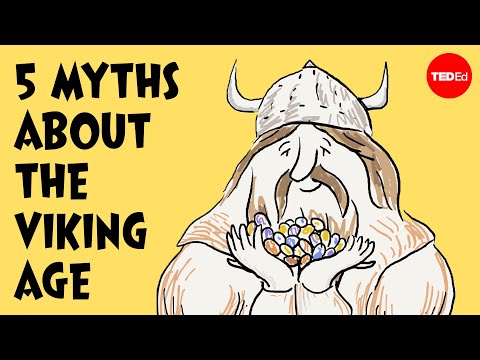
Historians have spent decades debunking the myth that vikings wore horned helmets into battle.
In modern conversation, you might hear the term used to describe someone who is particularly resilient or fond of the cold. It is also a staple of the fantasy and historical fiction genres. When discussing the vikings, it is important to distinguish between their raiding activities and their domestic lives as farmers and craftsmen. Their longships were technological marvels of the time, allowing them to navigate both deep oceans and shallow rivers, which gave them a strategic advantage over the more stationary kingdoms of Europe. This mobility allowed them to settle in places as far-flung as Iceland, Greenland, and even Newfoundland in Canada, long before Columbus reached the Americas.
The museum exhibit showcased the intricate jewelry crafted by vikings during the 10th century.
- Geographic Reach
- From the fjords of Norway to the rivers of Russia, their influence was continental.
Many people are surprised to learn that vikings were actually very clean and groomed themselves regularly.
The expansion of the vikings led to the founding of cities like Dublin and York.
The sagas tell legendary tales of vikings and their gods, like Odin and Thor.
- Legacy
- Their legacy lives on in modern Scandinavian culture and the English language.
Using the word vikings correctly requires an understanding of whether you are speaking historically, metaphorically, or about modern entities like sports teams. Historically, it is almost always a plural noun referring to the group as a whole. You might say, 'The vikings invaded England,' or 'Trade was essential to the vikings.' When using it as an adjective, it often describes things related to them, such as 'viking ships' or 'viking lore.' However, in strict historical academic writing, 'Norse' is often preferred as the adjective. In casual conversation, 'vikings' is the go-to term for anything related to the ancient Scandinavians. It is also important to note the capitalization; while the dictionary often lists it in lowercase, it is standard practice to capitalize it as 'Vikings' when referring to the people as a proper noun, similar to 'Romans' or 'Greeks.'
- Subject of a Sentence
- The vikings were known for their bravery and skill on the high seas.
- Object of a Sentence
- Many Anglo-Saxon kings feared the arrival of the vikings.
During the winter, the vikings would often return home to tend to their farms.
When discussing the vikings in a modern context, you might be referring to the Minnesota Vikings, an NFL team. In this case, the word is always capitalized and usually preceded by 'the'. For example, 'The Vikings won the game last night.' In a metaphorical sense, someone might be called a 'viking' if they are tough, adventurous, or perhaps a bit wild. 'He's a real viking when it comes to cold-water swimming.' This usage leans into the stereotypical imagery of the Norsemen. Another common sentence pattern involves the 'Viking Age,' which describes the era of their dominance. 'The Viking Age changed the map of Europe forever.' Using the word in these varied ways shows a grasp of both historical fact and cultural idiom.
Archaeologists recently discovered a burial site belonging to high-ranking vikings.
- Possessive Form
- The vikings' ships were designed to be light and fast.
We watched a documentary about how vikings navigated using the stars.
The story follows a group of vikings as they explore the unknown western lands.
The vikings were not just warriors; they were also skilled poets and storytellers.
- Comparative Usage
- Unlike the Romans, the vikings did not leave behind many stone buildings.
The word vikings is ubiquitous in modern media, education, and sports. In an educational setting, it is a core part of the history curriculum in many Western countries, where students learn about the medieval period. You will hear it in museums, especially those dedicated to maritime history or Northern European archaeology. In popular culture, the word has seen a massive resurgence due to television shows like 'Vikings' and 'The Last Kingdom,' as well as movies like 'The Northman.' These portrayals often blend historical fact with dramatic fiction, keeping the term at the forefront of the public imagination. Furthermore, the world of gaming frequently utilizes the viking theme, with titles like 'Assassin's Creed Valhalla' or 'God of War' bringing the mythology and lifestyle of the vikings to millions of players worldwide.
- Television and Film
- Shows like 'Vikings' on History Channel have popularized the names Ragnar and Lagertha.
- Sports Commentary
- Commentators often talk about the 'Minnesota Vikings' during the NFL season.
The announcer shouted, 'And the vikings score a touchdown in the final seconds!'
Beyond entertainment, you will hear vikings mentioned in scientific discussions regarding genetics and migration patterns. DNA studies often track 'viking ancestry' across Europe and the British Isles, showing how integrated these people became with the populations they once raided. In the world of business and branding, the name is often used to evoke strength and reliability—think of Viking Cruises or Viking Kitchen Appliances. Even in the tech world, 'Bluetooth' technology is named after a Viking king, Harald Bluetooth, who united disparate tribes, much like the technology unites different devices. This demonstrates that the influence of the vikings is not just a thing of the past but is woven into the fabric of modern life and language.
The travel agent recommended a cruise through the fjords to see where the vikings once lived.
- Scientific Research
- Geneticists use the term to describe specific haplogroups found in Northern Europe.
The professor explained how the vikings established a complex system of law called the 'Thing'.
Many heavy metal bands use imagery of vikings to convey power and rebellion.
Children often dress up as vikings for Halloween, usually with plastic swords and shields.
- Brand Identity
- Companies use the name to suggest durability and a pioneering spirit.
One of the most frequent mistakes people make when talking about vikings is a historical one: the belief that they wore horned helmets. There is absolutely no archaeological evidence for this; the idea was popularized by 19th-century costume designers for Wagnerian operas. Another common error is treating 'viking' as a single ethnic group. In reality, the people we call vikings were a diverse group of Scandinavians (Danes, Norwegians, and Swedes) who shared similar languages and customs but were often politically divided. Linguistically, a common mistake is using the word as a verb in modern English. While 'to go a-viking' was a phrase in Old Norse, saying 'they were vikinging' in modern English is incorrect. Instead, use 'raiding' or 'exploring.' Additionally, people often forget to capitalize the word when it refers to the historical people, which can make writing look unprofessional.
- Myth vs. Fact
- Mistake: Thinking vikings were dirty. Fact: They were actually quite vain and bathed weekly.
- Spelling Error
- Mistake: 'Vikinges' or 'Viking's' (when plural). Correct: 'Vikings'.
Incorrect: The viking's were fierce warriors. Correct: The vikings were fierce warriors.
Another mistake is over-generalizing their behavior. While some vikings were indeed pirates, many were peaceful farmers and traders who never picked up a sword in anger. Using the term to describe everyone in Scandinavia during that period is also technically a mistake; only those who went on overseas expeditions were truly 'vikings.' In academic circles, it is better to use 'Norse' or 'Scandinavian' to describe the population at large. Furthermore, be careful with the possessive form. 'The vikings' ship' refers to one ship belonging to multiple vikings, while 'the viking's ship' refers to a ship belonging to one individual. Mixing these up is a common grammatical pitfall. Finally, don't assume they only lived in Scandinavia; they had significant settlements in Russia, France (Normandy), and the British Isles.
It is a mistake to think that vikings only used brute force; they were master diplomats.
- Capitalization
- Always capitalize 'Vikings' when referring to the people as a proper noun group.
Don't confuse vikings with later medieval knights; their armor and tactics were very different.
Avoid the error of assuming all vikings were men; women played vital roles in their society.
The term vikings should not be used to describe modern Scandinavians unless in a joking way.
- Historical Timeline
- Don't place vikings in the wrong century; they belong to the early Middle Ages.
While vikings is the most common term, there are several alternatives depending on the context. 'Norsemen' or 'Northmen' are excellent synonyms that emphasize their geographic origin. These terms are often used in historical literature to provide a more formal or poetic feel. Another term is 'Varangians,' which specifically refers to the vikings who traveled eastward into Russia and the Byzantine Empire. If you are focusing on their role as warriors, words like 'raiders,' 'marauders,' or 'pirates' might be appropriate, though these only capture one aspect of their lives. Conversely, if you are discussing their domestic side, 'Scandinavian settlers' or 'Norse farmers' are more accurate. Understanding these nuances allows for more precise communication, especially in academic or specialized discussions.
- Norsemen vs. Vikings
- 'Norsemen' is a broader ethnic term, while 'Vikings' often implies those who went on expeditions.
- Varangians
- This term is specific to the eastern-traveling vikings who served as guards in Constantinople.
The chronicler referred to the invaders as Northmen rather than vikings.
In a modern metaphorical sense, you might use words like 'explorers,' 'pioneers,' or 'adventurers' as alternatives to vikings. For example, 'They were the vikings of the tech industry' could be rephrased as 'They were the pioneers of the tech industry.' If you are looking for a more derogatory term (perhaps in a fictional setting from the perspective of their victims), 'heathens' or 'pagans' were often used by Christian chroniclers of the time. However, in modern English, these words have different connotations and should be used carefully. In the context of ship design, you might use 'longship' as a related term. Overall, choosing the right word depends on whether you want to emphasize their ethnicity, their actions, or their historical legacy.
The vikings were also known as the 'Rus' in the eastern territories.
- Danes
- In English history, the term 'Danes' was often used to refer to all vikings, regardless of their specific origin.
Instead of calling them vikings, the professor used the term 'Scandinavian diaspora'.
The term 'Sea-kings' was a poetic way to describe powerful vikings in old literature.
The vikings are often compared to the Phoenicians for their maritime trade networks.
- Raiders
- A more action-oriented term that focuses on their military tactics.
How Formal Is It?
Wusstest du?
The word 'viking' was actually a verb before it was a noun; you didn't *be* a viking, you *went* on a viking.
Aussprachehilfe
- Pronouncing the 'v' as a 'w'.
- Making the 'i' sound too short, like 'vick-ings'.
- Pronouncing the final 's' as a sharp 's' instead of a 'z'.
- Swallowing the 'g' sound.
- Putting the stress on the second syllable.
Schwierigkeitsgrad
The word is common and easy to recognize in text.
Requires correct capitalization and pluralization.
Pronunciation is straightforward for most learners.
Distinctive sound makes it easy to hear.
Was du als Nächstes lernen solltest
Voraussetzungen
Als Nächstes lernen
Fortgeschritten
Wichtige Grammatik
Capitalization of Proper Nouns
We should always capitalize **Vikings** when referring to the people.
Plural Possessives
The **vikings'** ships were very fast.
Collective Nouns
The **vikings** were (plural verb) a seafaring people.
Irregular Plurals (Contrast)
Unlike 'men', 'vikings' follows the regular -s plural rule.
Articles with Groups
**The** vikings (referring to the whole group).
Beispiele nach Niveau
The vikings were from the north.
Les vikings venaient du nord.
Simple past tense with 'were'.
Vikings had big ships.
Les vikings avaient de grands bateaux.
Plural noun 'vikings' as the subject.
I see a viking in the book.
Je vois un viking dans le livre.
Singular 'viking' with the article 'a'.
Were the vikings strong?
Les vikings étaient-ils forts ?
Question form in the past tense.
The vikings like the sea.
Les vikings aiment la mer.
Present tense for a general fact.
Many vikings lived in Norway.
Beaucoup de vikings vivaient en Norvège.
Use of 'many' with a plural noun.
The viking has a sword.
Le viking a une épée.
Singular subject with 'has'.
Vikings are famous today.
Les vikings sont célèbres aujourd'hui.
Present tense with an adjective.
The vikings traveled to many countries.
Les vikings ont voyagé dans de nombreux pays.
Past tense 'traveled' with 'to'.
Vikings were good at building boats.
Les vikings étaient doués pour construire des bateaux.
Gerund 'building' after 'at'.
Did the vikings wear helmets?
Les vikings portaient-ils des casques ?
Past tense question with 'did'.
The vikings lived a long time ago.
Les vikings vivaient il y a longtemps.
Time expression 'a long time ago'.
Some vikings were farmers, not just warriors.
Certains vikings étaient des fermiers, pas seulement des guerriers.
Contrast using 'not just'.
They were called vikings because they went on raids.
Ils étaient appelés vikings parce qu'ils faisaient des raids.
Passive voice 'were called'.
The vikings' clothes were made of wool.
Les vêtements des vikings étaient en laine.
Plural possessive 'vikings''.
I want to learn about the vikings.
Je veux en savoir plus sur les vikings.
Infinitive 'to learn' after 'want'.
The vikings established trade routes across Europe.
Les vikings ont établi des routes commerciales à travers l'Europe.
Transitive verb 'established' with a direct object.
Many English words come from the vikings.
De nombreux mots anglais viennent des vikings.
Present tense for a permanent fact.
The vikings were known for their advanced navigation skills.
Les vikings étaient connus pour leurs compétences avancées en navigation.
Adjective 'advanced' modifying 'skills'.
If the vikings hadn't explored, history would be different.
Si les vikings n'avaient pas exploré, l'histoire serait différente.
Third conditional sentence.
The vikings settled in Iceland during the 9th century.
Les vikings se sont installés en Islande au IXe siècle.
Preposition 'during' with a time period.
Archaeologists have found many artifacts left by the vikings.
Les archéologues ont trouvé de nombreux objets laissés par les vikings.
Present perfect 'have found'.
The vikings were much more than just pirates.
Les vikings étaient bien plus que de simples pirates.
Comparative structure 'much more than'.
We are studying the vikings in our history class this week.
Nous étudions les vikings dans notre cours d'histoire cette semaine.
Present continuous for a current activity.
The vikings' impact on the British Isles was profound and lasting.
L'impact des vikings sur les îles britanniques a été profond et durable.
Compound adjectives 'profound and lasting'.
Despite their reputation, vikings had a very organized society.
Malgré leur réputation, les vikings avaient une société très organisée.
Concession using 'despite'.
The vikings utilized their longships to reach deep inland.
Les vikings utilisaient leurs drakkars pour s'enfoncer profondément dans les terres.
Verb 'utilize' for formal context.
It is widely believed that vikings reached America before Columbus.
On croit généralement que les vikings ont atteint l'Amérique avant Colomb.
Passive construction 'It is widely believed'.
The vikings' legal system was surprisingly democratic for its time.
Le système juridique des vikings était étonnamment démocratique pour son époque.
Adverb 'surprisingly' modifying an adjective.
The vikings were adept at adapting to new environments.
Les vikings étaient habiles à s'adapter à de nouveaux environnements.
Adjective 'adept' followed by 'at' + gerund.
The sagas provide a fascinating glimpse into the lives of the vikings.
Les sagas offrent un aperçu fascinant de la vie des vikings.
Noun 'glimpse' with the preposition 'into'.
The vikings' expansion was driven by a need for better farmland.
L'expansion des vikings était motivée par un besoin de meilleures terres agricoles.
Passive voice 'was driven by'.
The vikings' raids were often motivated by political instability at home.
Les raids des vikings étaient souvent motivés par l'instabilité politique chez eux.
Abstract noun 'instability' as a cause.
The historiography of the vikings has shifted significantly in recent decades.
L'historiographie des vikings a considérablement évolué au cours des dernières décennies.
Specialized term 'historiography'.
The vikings' presence in Normandy led to the rise of the Normans.
La présence des vikings en Normandie a conduit à l'ascension des Normands.
Causal link 'led to the rise of'.
Scholars debate the extent to which vikings integrated with local populations.
Les chercheurs débattent de la mesure dans laquelle les vikings se sont intégrés aux populations locales.
Complex phrase 'the extent to which'.
The vikings' craftsmanship is evident in the intricate detail of their jewelry.
Le savoir-faire des vikings est évident dans les détails complexes de leurs bijoux.
Noun 'craftsmanship' as the subject.
The vikings' mythology continues to permeate modern popular culture.
La mythologie des vikings continue d'imprégner la culture populaire moderne.
Verb 'permeate' for abstract influence.
The vikings' transition to Christianity was a slow and complex process.
La transition des vikings vers le christianisme a été un processus lent et complexe.
Noun 'transition' with the preposition 'to'.
The vikings' legacy is etched into the DNA of many Europeans.
L'héritage des vikings est gravé dans l'ADN de nombreux Européens.
Metaphorical use of 'etched into'.
The vikings' maritime hegemony was unchallenged for nearly three centuries.
L'hégémonie maritime des vikings est restée incontestée pendant près de trois siècles.
Advanced vocabulary 'hegemony' and 'unchallenged'.
The vikings' societal structure was characterized by a nuanced hierarchy.
La structure sociétale des vikings était caractérisée par une hiérarchie nuancée.
Passive voice with 'characterized by'.
The vikings' raids served as a catalyst for the consolidation of European kingdoms.
Les raids des vikings ont servi de catalyseur à la consolidation des royaumes européens.
Metaphorical use of 'catalyst'.
The vikings' poetic tradition, specifically skaldic verse, is notoriously complex.
La tradition poétique des vikings, en particulier les vers skaldiques, est notoirement complexe.
Appositive phrase 'specifically skaldic verse'.
The vikings' expansionism was a multifaceted phenomenon with diverse drivers.
L'expansionnisme des vikings était un phénomène multiforme aux moteurs divers.
Advanced adjectives 'multifaceted' and 'diverse'.
The vikings' syncretism of pagan and Christian beliefs is visible in their art.
Le syncrétisme des croyances païennes et chrétiennes des vikings est visible dans leur art.
Specialized term 'syncretism'.
The vikings' role in the development of early medieval commerce cannot be overstated.
Le rôle des vikings dans le développement du commerce au début du Moyen Âge ne saurait être surestimé.
Idiomatic expression 'cannot be overstated'.
The vikings' legacy remains a focal point of contemporary Scandinavian identity.
L'héritage des vikings reste un point central de l'identité scandinave contemporaine.
Noun phrase 'focal point' for emphasis.
Häufige Kollokationen
Häufige Phrasen
— An old phrase meaning to go on an expedition or raid.
The young men decided to go a-viking to seek their fortune.
— A modern phrase describing a sense of adventure and toughness.
She showed a real viking spirit during the mountain climb.
— A popular (though often inaccurate) image of burning a body on a ship.
The movie ended with a dramatic viking funeral.
— Referring to someone having Scandinavian ancestry.
He claims to have viking blood in his veins.
— The cultural legacy left by the vikings.
The city is proud of its viking heritage.
— The legal codes used by the Norse people.
Viking law was surprisingly complex and fair.
— The extensive commercial networks of the vikings.
Viking trade brought silk from the East to the North.
— The epic stories told by the Norse people.
The viking sagas are full of adventure and tragedy.
— The unique style of decoration used by the vikings.
Viking art often features intricate animal designs.
Wird oft verwechselt mit
Vikings lived earlier (8th-11th century) than the classic age of armored knights (12th-15th century).
While some vikings were pirates, 'pirate' is a general term, while 'viking' refers to a specific historical group.
Vikings had a complex society and laws, unlike the 'uncivilized' stereotype of barbarians.
Redewendungen & Ausdrücke
— To act in a very aggressive or wild manner.
He went full viking when he saw the mess in the kitchen.
Informal— Doing something with great strength or bravery.
She handled the difficult situation like a viking.
Informal— Exceptional physical or mental power.
It took viking strength to move that heavy rock.
Neutral— A very hearty, perhaps slightly rough, greeting.
They gave us a viking's welcome with plenty of food and drink.
Neutral— Very cold, windy, or stormy weather.
It's real viking weather out there today!
Informal— To take things quickly and forcefully.
The kids raided the fridge like a group of vikings.
Informal— Doing things in a traditional, rugged, or direct manner.
They decided to settle the dispute the Viking way.
Neutral— A brave and adventurous soul.
He has a viking heart and loves to travel the world.
Literary— A sign of an impending struggle or battle.
There was viking blood in the water as the two companies competed.
Informal— A strong sense of honor and self-worth.
His viking's pride wouldn't let him admit he was wrong.
NeutralLeicht verwechselbar
They are often used interchangeably.
'Norse' is a broader term for the language and culture, while 'Viking' usually refers to the activity of raiding or exploring.
He studies Norse mythology, but he writes about Viking raids.
Both refer to the same geographic area.
'Scandinavian' is a modern geographic and ethnic term; 'Viking' is a historical and functional term.
Modern Scandinavians are proud of their Viking ancestors.
Both refer to Norse explorers.
'Varangian' specifically refers to those who went east to Russia and Byzantium.
The Varangians were the Vikings of the East.
Normans were descendants of vikings.
Normans lived in France and spoke French, while vikings were the original Norse invaders.
The Normans who invaded England in 1066 were descended from Vikings.
In old English, all vikings were called Danes.
A 'Dane' is specifically from Denmark, while 'Viking' includes Norwegians and Swedes too.
Not all Vikings were Danes; many were from Norway.
Satzmuster
The vikings were [adjective].
The vikings were brave.
Vikings lived in [place].
Vikings lived in Scandinavia.
The vikings are known for [noun/gerund].
The vikings are known for their longships.
Despite [noun], the vikings [verb].
Despite the cold, the vikings explored the north.
The extent of viking [noun] is [adjective].
The extent of viking influence is remarkable.
The vikings' [noun] served as a [noun] for [noun].
The vikings' raids served as a catalyst for change.
Many [noun] come from the vikings.
Many English words come from the vikings.
Have you heard of the vikings?
Have you heard of the vikings?
Wortfamilie
Substantive
Verben
Adjektive
Verwandt
So verwendest du es
High in history, sports, and entertainment contexts.
-
Using 'viking' as a verb.
→
Using 'raiding' or 'exploring'.
In modern English, 'viking' is a noun or adjective, not a verb.
-
Lowercase 'vikings' in formal writing.
→
Capitalized 'Vikings'.
As a proper noun referring to a specific group, it should be capitalized.
-
Thinking all vikings were warriors.
→
Recognizing they were also farmers and traders.
This is a historical inaccuracy that limits your vocabulary and understanding.
-
Confusing 'Viking' with 'Norse'.
→
Using 'Norse' for the broader culture.
'Viking' is more specific to the seafaring activity.
-
Misplacing the apostrophe in possessives.
→
The vikings' ships (plural).
The apostrophe goes after the 's' for a plural group.
Tipps
Capitalize for Clarity
Always use a capital 'V' when you are referring to the historical people to show it is a proper noun.
Beyond the Sword
Remember that vikings were also farmers and traders; using these words makes your descriptions more accurate.
Use 'Norse' for Culture
When talking about their gods or language, the word 'Norse' is often more precise than 'Viking'.
Plural vs. Possessive
Be careful with 'vikings' (many) and 'viking's' (belonging to one). This is a very common mistake.
Global Reach
Don't just think of England; vikings traveled as far as Russia, Africa, and North America.
The 'V' Sound
Practice the 'v' sound by touching your top teeth to your bottom lip to avoid sounding like a 'w'.
Forget the Horns
If you are writing a serious essay, mention that horned helmets are a myth to show your deep knowledge.
Sports Context
If you are in the US, 'The Vikings' almost always refers to the Minnesota football team unless history is being discussed.
English Roots
Look for words starting with 'sk' (like sky or skirt); they often have viking origins!
Visual Aids
Use maps of their trade routes to help you remember how far the vikings actually traveled.
Einprägen
Eselsbrücke
Think of 'V' for 'Voyage' and 'King' for 'Kings of the Sea'. Vikings were the Kings of the Sea Voyages.
Visuelle Assoziation
Imagine a long wooden boat with a dragon's head on the front, sailing through a cold, foggy fjord.
Word Web
Herausforderung
Try to write three sentences about the vikings without using the word 'warrior' or 'fight'.
Wortherkunft
The word comes from the Old Norse 'víkingr', which meant a person who goes on sea expeditions. It entered English in the early 19th century as interest in Norse history grew. Before that, English speakers used terms like 'Danes' or 'heathens'.
Ursprüngliche Bedeutung: A person who participates in a 'víking' (a sea voyage or raid).
Germanic (Old Norse)Kultureller Kontext
Be careful not to use viking symbols in ways that might be associated with modern extremist groups who have sometimes misappropriated them.
In the UK, the vikings are seen as both invaders and ancestors, with many northern towns having viking names.
Im Alltag üben
Kontexte aus dem Alltag
History Class
- The Viking Age
- Viking expansion
- Viking raids
- Primary sources
Sports
- Go Vikings!
- The Vikings defense
- Minnesota Vikings
- Viking stadium
Travel
- Viking museum
- Viking heritage tour
- Viking ruins
- Viking ship burial
Pop Culture
- Viking mythology
- Viking warrior
- Viking costume
- Viking saga
Linguistics
- Old Norse roots
- Viking loanwords
- Runic inscriptions
- Norse influence
Gesprächseinstiege
"Have you ever seen any movies or TV shows about vikings?"
"What do you think was the most impressive thing about the vikings?"
"Would you have liked to be a viking explorer 1,000 years ago?"
"Did you know that many English words actually come from the vikings?"
"What is the first thing that comes to your mind when you hear the word 'vikings'?"
Tagebuch-Impulse
Imagine you are a viking explorer seeing a new land for the first time. Describe what you see and feel.
Write about why the vikings are still so popular in movies and games today.
If you could ask a viking one question about their life, what would it be and why?
Discuss the difference between the 'scary' image of vikings and the reality of them being farmers and traders.
How has the legacy of the vikings influenced the world we live in today?
Häufig gestellte Fragen
10 FragenNo, this is a myth. There is no historical or archaeological evidence that vikings ever wore horned helmets. This image was created by artists in the 19th century.
The vikings came from Scandinavia, which includes the modern-day countries of Denmark, Norway, and Sweden.
They spoke Old Norse, a Germanic language that is the ancestor of modern Icelandic, Norwegian, Danish, and Swedish.
Yes, evidence shows that vikings led by Leif Erikson reached Newfoundland, Canada, around the year 1000 AD, nearly 500 years before Columbus.
A combination of factors led to the end of the Viking Age, including the spread of Christianity, the strengthening of European kingdoms, and the vikings settling down into permanent communities.
Yes, women played important roles in viking society as traders, settlers, and occasionally as warriors, as suggested by some archaeological finds like the Birka female viking warrior.
A longship was a fast, wooden boat with a shallow hull that allowed vikings to sail in both deep oceans and shallow rivers.
No, 'viking' refers to a specific historical period and lifestyle. While modern Scandinavians are their descendants, they do not live as vikings.
Runes are the characters of the ancient alphabets used by the vikings and other Germanic peoples before they adopted the Latin alphabet.
The 'Thing' was an early form of a democratic assembly or parliament where vikings met to make laws and settle disputes.
Teste dich selbst 180 Fragen
Write a short paragraph about who the vikings were.
Well written! Good try! Check the sample answer below.
Describe a viking longship.
Well written! Good try! Check the sample answer below.
Compare vikings to modern explorers.
Well written! Good try! Check the sample answer below.
Explain why the vikings are still famous today.
Well written! Good try! Check the sample answer below.
Write a story about a viking's first trip to a new land.
Well written! Good try! Check the sample answer below.
Discuss the impact of vikings on the English language.
Well written! Good try! Check the sample answer below.
Describe a day in the life of a viking farmer.
Well written! Good try! Check the sample answer below.
Write a dialogue between two vikings planning a raid.
Well written! Good try! Check the sample answer below.
What are some common myths about vikings? Explain why they are wrong.
Well written! Good try! Check the sample answer below.
How did the vikings navigate the seas?
Well written! Good try! Check the sample answer below.
Write about a famous viking leader.
Well written! Good try! Check the sample answer below.
Describe viking art and jewelry.
Well written! Good try! Check the sample answer below.
What was the role of women in viking society?
Well written! Good try! Check the sample answer below.
Explain the importance of trade for the vikings.
Well written! Good try! Check the sample answer below.
Write a poem about the sea from a viking's perspective.
Well written! Good try! Check the sample answer below.
How did the vikings influence the history of Russia?
Well written! Good try! Check the sample answer below.
Discuss the transition of vikings to Christianity.
Well written! Good try! Check the sample answer below.
Write a review of a viking-themed movie or TV show.
Well written! Good try! Check the sample answer below.
What would you pack for a viking expedition?
Well written! Good try! Check the sample answer below.
Explain the concept of the 'Viking Age'.
Well written! Good try! Check the sample answer below.
Tell a partner three facts about vikings.
Read this aloud:
Du hast gesagt:
Speech recognition is not supported in your browser. Try Chrome or Edge.
Describe a viking warrior's equipment.
Read this aloud:
Du hast gesagt:
Speech recognition is not supported in your browser. Try Chrome or Edge.
Discuss if you would like to live in the Viking Age.
Read this aloud:
Du hast gesagt:
Speech recognition is not supported in your browser. Try Chrome or Edge.
Explain the myth of the horned helmet.
Read this aloud:
Du hast gesagt:
Speech recognition is not supported in your browser. Try Chrome or Edge.
Talk about a viking movie you have seen.
Read this aloud:
Du hast gesagt:
Speech recognition is not supported in your browser. Try Chrome or Edge.
Describe how vikings traveled across the ocean.
Read this aloud:
Du hast gesagt:
Speech recognition is not supported in your browser. Try Chrome or Edge.
Discuss the importance of trade for the vikings.
Read this aloud:
Du hast gesagt:
Speech recognition is not supported in your browser. Try Chrome or Edge.
Tell the story of a famous viking god.
Read this aloud:
Du hast gesagt:
Speech recognition is not supported in your browser. Try Chrome or Edge.
Explain why vikings are important in history.
Read this aloud:
Du hast gesagt:
Speech recognition is not supported in your browser. Try Chrome or Edge.
Debate: Were vikings mostly good or bad?
Read this aloud:
Du hast gesagt:
Speech recognition is not supported in your browser. Try Chrome or Edge.
Describe a viking settlement.
Read this aloud:
Du hast gesagt:
Speech recognition is not supported in your browser. Try Chrome or Edge.
Talk about the legacy of vikings in your country.
Read this aloud:
Du hast gesagt:
Speech recognition is not supported in your browser. Try Chrome or Edge.
Explain how vikings used runes.
Read this aloud:
Du hast gesagt:
Speech recognition is not supported in your browser. Try Chrome or Edge.
Discuss the role of women in viking culture.
Read this aloud:
Du hast gesagt:
Speech recognition is not supported in your browser. Try Chrome or Edge.
Tell a story about a viking raid.
Read this aloud:
Du hast gesagt:
Speech recognition is not supported in your browser. Try Chrome or Edge.
Explain the end of the Viking Age.
Read this aloud:
Du hast gesagt:
Speech recognition is not supported in your browser. Try Chrome or Edge.
Describe a viking longship in detail.
Read this aloud:
Du hast gesagt:
Speech recognition is not supported in your browser. Try Chrome or Edge.
Talk about the Minnesota Vikings sports team.
Read this aloud:
Du hast gesagt:
Speech recognition is not supported in your browser. Try Chrome or Edge.
Discuss viking influence on modern fantasy books.
Read this aloud:
Du hast gesagt:
Speech recognition is not supported in your browser. Try Chrome or Edge.
Explain the meaning of the word 'viking'.
Read this aloud:
Du hast gesagt:
Speech recognition is not supported in your browser. Try Chrome or Edge.
Listen to a description of a viking ship and draw it.
Listen to a history lecture and note three dates.
Listen to a story about a viking raid and identify the location.
Listen to a discussion about viking myths and list two.
Listen to a poem in Old Norse and describe the sound.
Listen to an interview with an archaeologist and identify the artifact.
Listen to a news report about a new viking discovery.
Listen to a podcast about viking trade routes.
Listen to a child's story about a friendly viking.
Listen to a song about vikings and identify the theme.
Listen to a guide at a viking museum.
Listen to a debate about viking exploration.
Listen to a weather report for 'viking weather'.
Listen to a sports commentator talking about the Vikings.
Listen to a documentary clip about viking longships.
/ 180 correct
Perfect score!
Summary
The term 'vikings' describes a dynamic and complex group of Norse people whose maritime prowess and adventurous spirit allowed them to influence vast territories, from the Americas to the Middle East, during the early Middle Ages. For example, the city of Dublin was originally founded as a viking settlement.
- Vikings were Scandinavian seafarers from the 8th to 11th centuries.
- They were skilled explorers, traders, and warriors who reached America.
- Their advanced longships allowed them to navigate both oceans and rivers.
- They left a significant cultural and linguistic legacy across Europe.
Capitalize for Clarity
Always use a capital 'V' when you are referring to the historical people to show it is a proper noun.
Beyond the Sword
Remember that vikings were also farmers and traders; using these words makes your descriptions more accurate.
Use 'Norse' for Culture
When talking about their gods or language, the word 'Norse' is often more precise than 'Viking'.
Plural vs. Possessive
Be careful with 'vikings' (many) and 'viking's' (belonging to one). This is a very common mistake.
Beispiel
The Vikings established a large settlement in York, which they called Jorvik.
Verwandte Inhalte
In Videos ansehen
Mehr History Wörter
gladiators
B1Gladiatoren waren Berufskämpfer im antiken Rom, die das Publikum durch Kämpfe in Arenen unterhielten.
shackleton
C1Sir Ernest Shackleton war ein britischer Polarforscher, der für seine außergewöhnliche Führungskraft während der Endurance-Expedition bekannt ist.
shah
B1Schah ist der Titel der ehemaligen Monarchen von Iran, was auf Persisch 'König' bedeutet.
tokugawa
B1Die Tokugawa-Familie regierte Japan über 250 Jahre lang in Frieden. Diese Ära wird als Edo-Zeit bezeichnet.
“viking”
B1Ein Wikinger war ein Angehöriger der skandinavischen Völker, die im Mittelalter als Seefahrer, Händler und Krieger weite Teile Europas bereisten.
slaves
B1Sklaven sind Menschen, die rechtlich im Eigentum anderer stehen und zur unbezahlten Arbeit gezwungen werden.
gutenberg
C1Gutenberg bezieht sich auf Johannes Gutenberg, den Erfinder des modernen Buchdrucks mit beweglichen Metalllettern.
scrolls
B1Alte Schriftrollen sind aus Pergament gemacht. Er scrollt durch die Webseite, um Informationen zu finden.
shoguns
B1Shogune waren erbliche Militärdiktatoren in Japan, die das Land vom 12. Jahrhundert bis 1868 regierten.
history
A1Geschichte ist das Studium vergangener Ereignisse, insbesondere solcher, die mit menschlichen Angelegenheiten zu tun haben.

