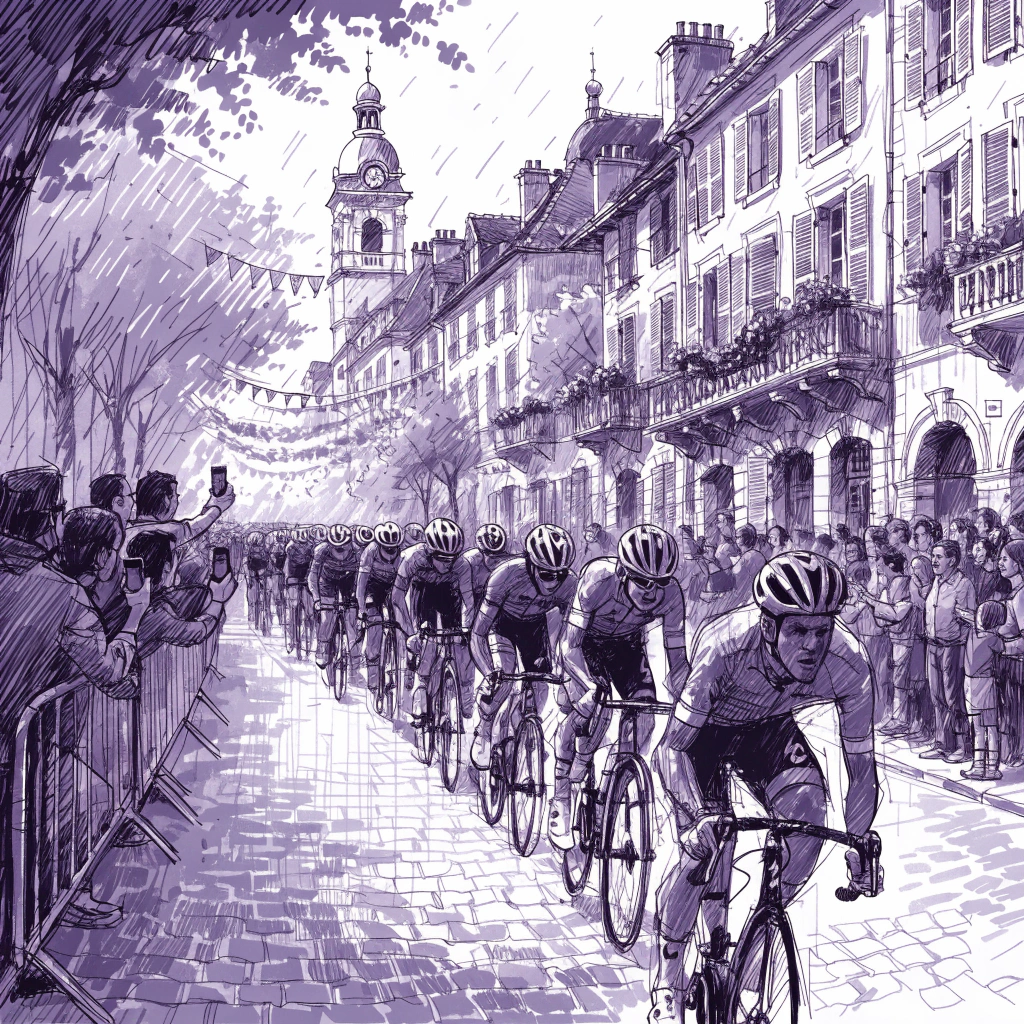
The Big Bicycle Race in France
The Tour de France is a big bicycle race. It is in France every July. Many people watch the race on TV. It is very old and very famous.
The riders travel for three weeks. They go through small towns and big cities. They also climb tall mountains. It is very difficult for the riders.
The winner of the race wears a yellow shirt. This shirt is special. Fans wait on the road to see the riders. Everyone is happy during the race.
Gramática destacada
Patrón: Present Simple: To Be
"The Tour de France is a big bicycle race."
We use 'is' for singular subjects like 'The Tour de France'. It describes a fact or a permanent state.
Patrón: Present Simple: Action Verbs
"The riders travel for three weeks."
We use the base form 'travel' because 'riders' is plural. This shows a regular activity that happens every year.
Pon a prueba tu comprensión
10 preguntas · A1 Principiante · 1 vista previa gratis
Pon a prueba lo que aprendiste en este artículo. ¡Responde todas las preguntas para ganar XP!
Where is the bicycle race?
¿Quieres terminar el quiz?
9 preguntas más te esperan. ¡Regístrate gratis para desbloquear el quiz completo y ganar XP!
Regístrate gratis¿Ya tienes cuenta? Acceder
Desglose de preguntas
Where is the bicycle race?
Tu respuesta:
Respuesta correcta: In France
The race is in December.
Tu respuesta:
Respuesta correcta: Falso
What does 'rider' mean?
Tu respuesta:
Respuesta correcta: A person on a bicycle
The winner of the race wears a _____ shirt.
Tu respuesta:
Respuesta correcta: yellow
The Famous Tour de France
The Tour de France is the most famous bicycle race in the world. It started in 1903 because a newspaper wanted to sell more copies. Now, it happens every July and lasts for three weeks. Millions of people stand on the roads to watch the riders pass.
The race is very long and difficult. Cyclists ride about 3,500 kilometers across France. There are 21 stages in the race. Some stages are flat and fast, but others are in the high mountains. The mountain stages are more difficult than the flat stages because the roads go up very high.
Every day, the leader of the race wears a special yellow jersey. This helps fans see who is winning. At the end, the race always finishes in Paris on the Champs-Élysées. It is a great celebration of sport and French culture. Many people love this race because it is exciting and beautiful.
Gramática destacada
Patrón: Superlative Adjectives
"The Tour de France is the most famous bicycle race in the world."
We use 'the most' + a long adjective to compare one thing to all others in a group. It shows that this thing has the highest quality of that adjective.
Patrón: Comparative Adjectives
"The mountain stages are more difficult than the flat stages."
We use 'more' + adjective + 'than' to compare two things. Use 'more' for adjectives with two or more syllables like 'difficult'.
Pon a prueba tu comprensión
11 preguntas · A2 Básico · 1 vista previa gratis
Pon a prueba lo que aprendiste en este artículo. ¡Responde todas las preguntas para ganar XP!
When did the Tour de France first start?
¿Quieres terminar el quiz?
10 preguntas más te esperan. ¡Regístrate gratis para desbloquear el quiz completo y ganar XP!
Regístrate gratis¿Ya tienes cuenta? Acceder
Desglose de preguntas
When did the Tour de France first start?
Tu respuesta:
Respuesta correcta: 1903
The race lasts for three weeks.
Tu respuesta:
Respuesta correcta: Verdadero
What does 'jersey' mean in this article?
Tu respuesta:
Respuesta correcta: A special sports shirt
The leader of the race wears a _____ jersey.
Tu respuesta:
Respuesta correcta: yellow
Where does the race always finish?
Tu respuesta:
Respuesta correcta: In Paris
El Tour de Francia: Mucho Más que una Carrera
El Tour de Francia es, sin duda, uno de los eventos deportivos más grandes y emocionantes del mundo. Pero es mucho más que una simple carrera de bicicletas; es un verdadero espectáculo cultural que, cada julio, se adentra en el corazón de la identidad francesa. Millones de personas se han reunido en las carreteras a lo largo de los años para animar a los ciclistas.
La carrera fue fundada en 1903 como una estrategia de promoción para el periódico L'Auto. Desde entonces, ha crecido hasta convertirse en el evento más prestigioso del ciclismo profesional. A lo largo de sus más de cien años de historia, ha sido testigo de momentos de gran heroísmo y dramáticos desafíos. Hoy en día, el Tour es esperado con entusiasmo por aficionados de todo el planeta.
Durante tres semanas intensas, los ciclistas de élite del mundo cubren aproximadamente 3.500 kilómetros a través de 21 etapas. Estas etapas incluyen desde emocionantes sprints en terreno llano hasta agotadores ascensos por las montañas de los Alpes y los Pirineos. También hay pruebas de contrarreloj de alta velocidad, donde la habilidad individual es clave. Los paisajes que se atraviesan son tan variados como hermosos, mostrando la diversidad de Francia.
El Tour no solo celebra el deporte, sino también la cultura y las tradiciones francesas. Pueblos y ciudades enteras se visten de fiesta para recibir a la caravana del Tour, creando un ambiente único. Es un evento que ha unido a generaciones y que sigue siendo un símbolo de resistencia y pasión. Los ganadores de esta competición son recordados para siempre en la historia del ciclismo.
Gramática destacada
Patrón: La Voz Pasiva con 'ser'
"La carrera fue fundada en 1903 como una estrategia de promoción."
La voz pasiva se usa para enfocar la atención en la acción y en lo que recibe la acción, no en quién la hace. Se forma con el verbo 'ser' en el tiempo adecuado y el participio pasado del verbo principal. El participio debe concordar en género y número con el sujeto.
Patrón: Oraciones de Relativo con 'que'
"Es un verdadero espectáculo cultural que, cada julio, se adentra en el corazón de la identidad francesa."
Las oraciones de relativo se usan para añadir información sobre un sustantivo mencionado antes, sin repetir el sustantivo. 'Que' es el pronombre relativo más común y se usa para personas o cosas. Introduce una frase que describe o identifica al sustantivo.
Pon a prueba tu comprensión
11 preguntas · B1 Intermedio · 1 vista previa gratis
Pon a prueba lo que aprendiste en este artículo. ¡Responde todas las preguntas para ganar XP!
¿Cuál es el propósito principal del Tour de Francia, además de ser una carrera?
¿Quieres terminar el quiz?
10 preguntas más te esperan. ¡Regístrate gratis para desbloquear el quiz completo y ganar XP!
Regístrate gratis¿Ya tienes cuenta? Acceder
Desglose de preguntas
¿Cuál es el propósito principal del Tour de Francia, además de ser una carrera?
Tu respuesta:
Respuesta correcta: Ser un espectáculo cultural de Francia
El Tour de Francia se celebra cada dos años.
Tu respuesta:
Respuesta correcta: Falso
¿Qué significa la palabra 'agotadores' en el contexto del artículo?
Tu respuesta:
Respuesta correcta: Que causan mucho cansancio
La carrera fue _______ en 1903 para el periódico L'Auto.
Tu respuesta:
Respuesta correcta: fundada
¿Cuántas semanas duran aproximadamente las etapas del Tour de Francia?
Tu respuesta:
Respuesta correcta: Tres semanas
The Tour de France: A Century of Endurance and National Identity
The Tour de France is widely regarded as the most prestigious cycling event in the world, yet it originated from a humble promotional strategy. Conceived in 1903 to boost the circulation of the newspaper L'Auto, the race has since evolved into a grueling three-week spectacle that captures the global imagination every July. While modern technology has transformed the equipment and training methods, the fundamental essence of the race remains a testament to human resilience and strategic ingenuity. Covering approximately 3,500 kilometers, the route is meticulously planned to showcase the diverse landscapes of France. The race is divided into 21 stages, ranging from flat sprints to the daunting ascents of the Alps and the Pyrenees. It is in these mountainous regions where the true drama unfolds; riders must navigate steep gradients while managing their physical limits. The physical toll is immense, requiring athletes to maintain peak performance under extreme weather conditions. Furthermore, the tactical complexity of the race is often underestimated by casual observers. Teams must coordinate their efforts, protecting their lead riders from wind resistance and strategically timing their attacks to gain a competitive advantage. Beyond the athletic competition, the Tour de France serves as a significant cultural phenomenon. Millions of spectators line the roadsides, often camping out for days to catch a glimpse of the peloton as it passes. The 'Caravane Publicitaire,' a festive parade of vehicles that precedes the riders, distributes promotional items and contributes to a carnival-like atmosphere. For many French citizens, the race is an annual pilgrimage that celebrates national heritage and regional diversity. It provides a unique platform for small villages to showcase their history to a worldwide audience. However, the race has not been without controversy. Issues regarding performance-enhancing drugs have occasionally tarnished its reputation, leading to rigorous testing protocols and a renewed commitment to integrity. Despite these challenges, the Tour de France continues to thrive, adapting to the modern era while honoring its historical roots. In conclusion, the event is far more than a mere bicycle race; it is a complex synthesis of sporting excellence, cultural pride, and historical continuity. As long as there are mountains to climb and roads to conquer, the Tour will likely remain the pinnacle of professional cycling.
Gramática destacada
Patrón: Passive Voice
"The Tour de France is widely regarded as the most prestigious cycling event in the world..."
The passive voice is used here to focus on the race itself rather than the people who hold the opinion. It is formed using the verb 'to be' followed by the past participle of the main verb.
Patrón: Present Perfect Simple
"...the race has since evolved into a grueling three-week spectacle..."
This tense connects the past (1903) to the present, showing a process of change over time. It is formed with 'have/has' and the past participle.
Patrón: Zero Conditional / General Truths
"As long as there are mountains to climb and roads to conquer, the Tour will likely remain the pinnacle of professional cycling."
This structure expresses a condition that leads to a predictable result. It uses 'as long as' to set a requirement for a future state to remain true.
Pon a prueba tu comprensión
11 preguntas · B2 Intermedio alto · 1 vista previa gratis
Pon a prueba lo que aprendiste en este artículo. ¡Responde todas las preguntas para ganar XP!
What was the primary reason the Tour de France was originally created?
¿Quieres terminar el quiz?
10 preguntas más te esperan. ¡Regístrate gratis para desbloquear el quiz completo y ganar XP!
Regístrate gratis¿Ya tienes cuenta? Acceder
Desglose de preguntas
What was the primary reason the Tour de France was originally created?
Tu respuesta:
Respuesta correcta: To increase the sales of a newspaper
The route of the race remains the same every year to maintain tradition.
Tu respuesta:
Respuesta correcta: Falso
What does the word 'daunting' mean in the context of the mountain stages?
Tu respuesta:
Respuesta correcta: Intimidatingly difficult
The race is divided into 21 _____, which include different types of terrain.
Tu respuesta:
Respuesta correcta: stages
What is the 'Caravane Publicitaire'?
Tu respuesta:
Respuesta correcta: A promotional parade that travels ahead of the riders
The Tour de France: A Sociocultural Tapestry Woven in Motion
Rarely has a sporting event transcended the boundaries of mere physical competition to become a quintessential pillar of national identity as the Tour de France has. Founded in 1903 as a somewhat desperate promotional ploy to bolster the circulation of the newspaper L'Auto, the race has morphed into a global phenomenon, captivating millions for three grueling weeks every July. It is not merely the athletic prowess of the riders that draws the crowds; rather, it is the symbiotic relationship between the arduous terrain and the collective French psyche that truly defines the race. For the French, the 'Grande Boucle' is a seasonal ritual, a celebration of their diverse landscape that unites the nation through a shared appreciation of suffering and triumph.
The race represents a masterclass in endurance, requiring a level of tenacity that borders on the superhuman. From the mist-shrouded peaks of the Pyrenees to the sun-drenched, rolling vineyards of Provence, the landscape serves as more than just a backdrop. It is an active protagonist, challenging the peloton with punishing gradients, treacherous descents, and unpredictable meteorological shifts. The nominalization of these geographical challenges—the 'ascent of Ventoux' or the 'descent into Alpe d'Huez'—elevates them to the status of legends within the cycling canon. These stages are not merely segments of a race; they are crucibles where the character of a champion is forged under the gaze of a global audience.
It was the vision of Henri Desgrange that catalyzed this evolution, yet the modern iteration of the Tour faces a vastly different set of complexities than those of the early 20th century. The increasing commodification of the spectacle has led some critics to argue that the race’s soul is being sacrificed at the altar of commercial interests and sponsorship deals. The 'caravane publicitaire' that precedes the riders is a testament to this commercial juggernaut. However, others contend that this evolution is necessary for the sport’s survival in an increasingly digital and competitive entertainment age. Underpinning this debate is the persistent scrutiny regarding performance-enhancing substances, a shadow that has historically loomed over the yellow jersey and forced the sport into a continuous state of self-reflection and reform.
Furthermore, the 'Grand Départ'—the race's start, which often takes place outside of France—illustrates the race's expanding global footprint. This internationalization serves as a bridge between French heritage and a worldwide fanbase, yet it also sparks debates about the preservation of the race's local authenticity. Never before has the tension between tradition and modernity been so palpable. While the technology behind the carbon-fiber bicycles reaches its zenith, the core of the race remains an ephemeral pursuit of glory across the open road, vulnerable to the whims of nature and the limits of human physiology.
Ultimately, this duality is what ensures the event's longevity. The Tour de France is not simply a race; it is a living, breathing narrative of human ambition, etched into the very soil of the Hexagon. It remains a testament to the fact that even in an age of high-speed connectivity and data-driven performance, there is still a profound hunger for the raw, unscripted drama of man against the mountain.
Gramática destacada
Patrón: Negative Inversion
"Rarely has a sporting event transcended the boundaries of mere physical competition..."
This pattern is used for emphasis by placing a negative or restrictive adverb at the beginning of the sentence, followed by the auxiliary verb and then the subject.
Patrón: Cleft Sentences
"It was the vision of Henri Desgrange that catalyzed this evolution..."
A cleft sentence is used to focus on a specific part of the sentence (the agent). It typically starts with 'It is/was' + [the thing you want to focus on] + 'that/who' clause.
Patrón: Nominalisation
"The increasing commodification of the spectacle has led some critics to argue..."
Nominalisation involves turning verbs or adjectives into nouns. This creates a more formal, academic tone and allows the writer to focus on concepts rather than actions.
Pon a prueba tu comprensión
12 preguntas · C1 Avanzado · 1 vista previa gratis
Pon a prueba lo que aprendiste en este artículo. ¡Responde todas las preguntas para ganar XP!
What was the original motivation for establishing the Tour de France?
¿Quieres terminar el quiz?
11 preguntas más te esperan. ¡Regístrate gratis para desbloquear el quiz completo y ganar XP!
Regístrate gratis¿Ya tienes cuenta? Acceder
Desglose de preguntas
What was the original motivation for establishing the Tour de France?
Tu respuesta:
Respuesta correcta: To increase the circulation of a newspaper
The 'Grand Départ' always takes place within French borders.
Tu respuesta:
Respuesta correcta: Falso
Which word describes something that lasts for a very short period of time?
Tu respuesta:
Respuesta correcta: Ephemeral
The race is described as a _____ pursuit of glory across the open road.
Tu respuesta:
Respuesta correcta: ephemeral
How does the text characterize the role of the French landscape?
Tu respuesta:
Respuesta correcta: As an active protagonist in the race's narrative
The author suggests that the race faces a conflict between tradition and modern commercialism.
Tu respuesta:
Respuesta correcta: Verdadero
The Tour de France: A Sociocultural Tapestry of Endurance and National Mythos
The Tour de France, an annual peripatetic odyssey through the diverse landscapes of the Hexagon, transcends the mere parameters of a cycling competition. Established in 1903 as a somewhat desperate stratagem to bolster the circulation of the newspaper L’Auto, it has since evolved into a formidable cultural behemoth. To scrutinize the Tour is to examine the very sinews of French identity, where the pastoral and the industrial converge in a three-week-long spectacle of human endurance. Should one observe the peloton as it traverses the jagged peaks of the Pyrenees, one might perceive a metaphor for the Sisyphean struggle inherent in the human condition. The race is not merely a test of physiological capacity but an exercise in psychological fortitude, where riders must contend with the vicissitudes of weather, terrain, and their own internal demons.
Henri Desgrange, the race’s founding father, envisioned a competition so grueling that only one rider would finish. While modern sports science has rendered such an outcome unlikely, the fundamental ethos of suffering remains. The riders, often referred to as 'forçats de la route' (convicts of the road), endure a level of physical depletion that is difficult for the layperson to fathom. This asceticism is central to the race’s mythology. The mountains, in particular, serve as the ultimate arbiter of talent. It is on the slopes of the Mont Ventoux or the Alpe d'Huez that legends are forged and dreams are extinguished. The tactical interplay within the peloton—a high-speed chess match played at 50 kilometers per hour—adds a layer of cognitive complexity to the physical exertion. Drafting, breakaways, and the calculated conservation of energy are all part of a delicate equilibrium that can be shattered in a single moment of mechanical failure or lack of concentration.
Furthermore, the Tour serves as a panegyric to the French landscape. Each stage is meticulously choreographed to showcase the architectural grandeur of medieval châteaus and the idiosyncratic charm of provincial villages. This symbiotic relationship between sport and heritage ensures that the race remains a fixture of the national calendar, regardless of the controversies that have occasionally marred its reputation. It is often contended that the professionalization of the sport has stripped the race of its romanticism; however, the sheer indefatigable spirit of the competitors continues to evoke a sense of awe.
The 'caravane publicitaire'—a gaudy, commercial procession that precedes the riders—represents the modern tension between traditionalism and globalized capitalism. While some purists may decry this commercialization as a vulgar intrusion, others view it as an essential component of the event's longevity. This juxtaposition is quintessential to the Tour's enduring appeal. It is imperative that the observer recognize the race not as a static relic, but as a dynamic entity that adapts to the shifting currents of society. Moreover, the logistical complexity of the event is staggering. Moving thousands of people across 3,500 kilometers requires a level of coordination that borders on the military. The topographical diversity of the 21 stages demands a versatile athleticism that is unparalleled in any other sport. The 'maillot jaune' is not just a garment; it is a symbol of sovereignty, albeit one that is frequently contested with ruthless intensity. In conclusion, the Tour de France is a palimpsest upon which the history of modern France is written, reflecting its triumphs and its unwavering resilience. To dismiss it as a mere race is to overlook the profound sociological undercurrents that sustain it.
Gramática destacada
Patrón: Inverted Conditional
"Should one observe the peloton as it traverses the jagged peaks of the Pyrenees, one might perceive a metaphor for the Sisyphean struggle inherent in the human condition."
This structure replaces 'If one should observe' with an inverted word order for formal, literary effect. It is commonly used in C2 academic writing to present hypothetical scenarios with high register.
Patrón: Subjunctive Mood
"It is imperative that the observer recognize the race not as a static relic, but as a dynamic entity that adapts to the shifting currents of society."
The base form of the verb 'recognize' (without an 's') is used after adjectives of urgency like 'imperative'. This mood expresses necessity, requirement, or importance.
Patrón: Academic Hedging with Passive Voice
"It is often contended that the professionalization of the sport has stripped the race of its romanticism."
This pattern uses a dummy subject 'It' and a passive reporting verb to distance the author from a claim. It allows the writer to present a common viewpoint without taking personal responsibility for its absolute truth.
Pon a prueba tu comprensión
12 preguntas · C2 Dominio · 1 vista previa gratis
Pon a prueba lo que aprendiste en este artículo. ¡Responde todas las preguntas para ganar XP!
What was the primary impetus for the creation of the Tour de France in 1903?
¿Quieres terminar el quiz?
11 preguntas más te esperan. ¡Regístrate gratis para desbloquear el quiz completo y ganar XP!
Regístrate gratis¿Ya tienes cuenta? Acceder
Desglose de preguntas
What was the primary impetus for the creation of the Tour de France in 1903?
Tu respuesta:
Respuesta correcta: A commercial tactic to increase newspaper sales
Henri Desgrange hoped the race would be so difficult that nearly every rider would fail to finish.
Tu respuesta:
Respuesta correcta: Verdadero
Which word describes a task that is seemingly endless and futile?
Tu respuesta:
Respuesta correcta: Sisyphean
The 'maillot jaune' is described by the author as a symbol of _____.
Tu respuesta:
Respuesta correcta: sovereignty
How does the author characterize the 'caravane publicitaire'?
Tu respuesta:
Respuesta correcta: A representation of the conflict between tradition and capitalism
The author suggests that the professionalization of cycling has completely destroyed its romantic appeal.
Tu respuesta:
Respuesta correcta: Falso

