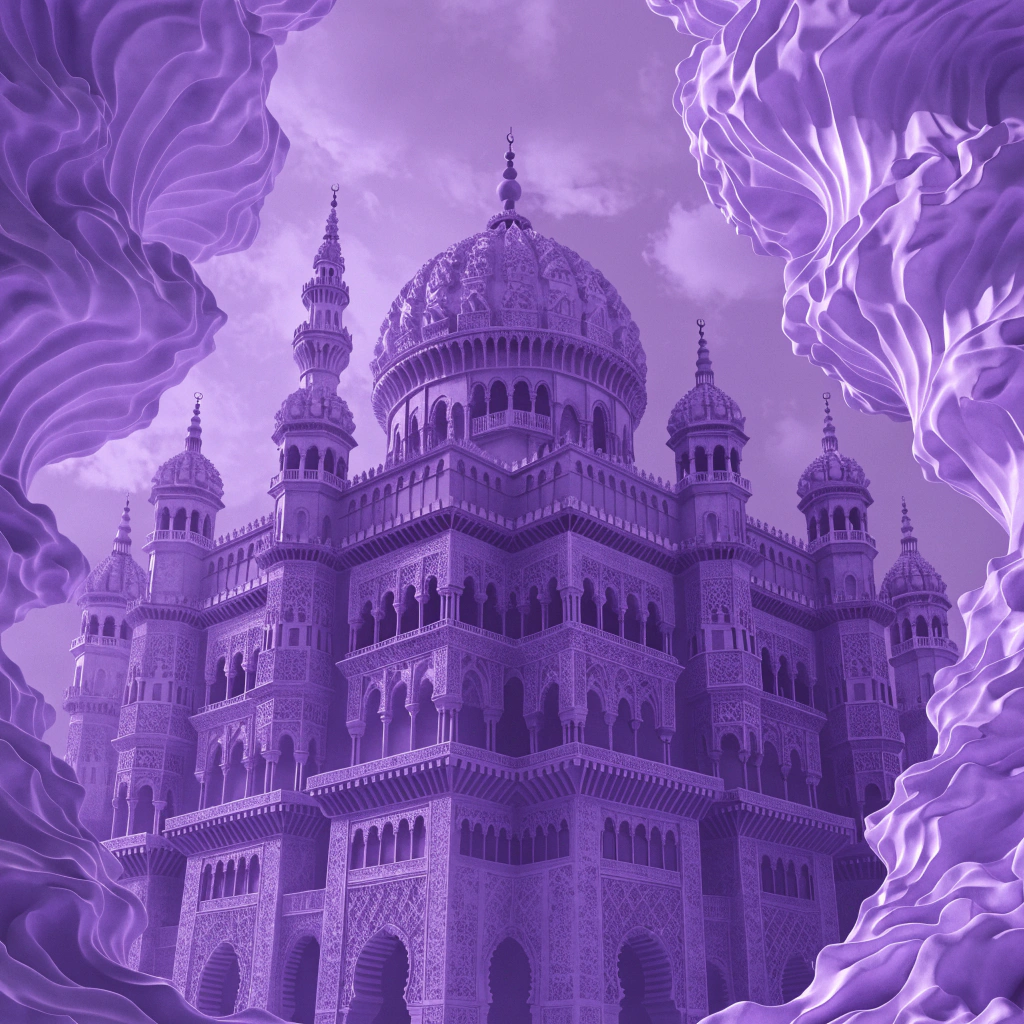
The Beautiful Alhambra
The Alhambra is a famous place in Granada, Spain. It is a very old and beautiful castle. It sits on a high hill. You can see the Sierra Nevada mountains from there.
The castle is red. Many people visit it every year. Inside, there are beautiful rooms and gardens. The water in the fountains is cool.
The Alhambra has a long history. It was a palace for kings. Today, it is a very popular museum. It is a special place for Spain.
Gramática destacada
Patrón: Present Simple (Be verb)
"The Alhambra is a famous place in Granada, Spain."
We use 'is' for singular subjects to state facts. It connects the subject to a description or location.
Patrón: Can for Possibility
"You can see the Sierra Nevada mountains from there."
We use 'can' followed by a verb to talk about what is possible to do in a specific place.
Pon a prueba tu comprensión
10 preguntas · A1 Principiante · 1 vista previa gratis
Pon a prueba lo que aprendiste en este artículo. ¡Responde todas las preguntas para ganar XP!
Where is the Alhambra located?
¿Quieres terminar el quiz?
9 preguntas más te esperan. ¡Regístrate gratis para desbloquear el quiz completo y ganar XP!
Regístrate gratis¿Ya tienes cuenta? Acceder
Desglose de preguntas
Where is the Alhambra located?
Tu respuesta:
Respuesta correcta: Granada
The Alhambra is a blue castle.
Tu respuesta:
Respuesta correcta: Falso
What does 'beautiful' mean?
Tu respuesta:
Respuesta correcta: Very pretty
The Alhambra sits on a high _____.
Tu respuesta:
Respuesta correcta: hill
The Alhambra: The Red Castle of Spain
The Alhambra is a very famous palace in Granada, Spain. It sits on a high hill with a view of the Sierra Nevada mountains. Its name means "The Red Castle" because the walls are a special red color.
Many years ago, the Nasrid kings lived there. They built the palace in the 13th and 14th centuries. At first, it was a small fortress for soldiers, but later it became a beautiful home for the royal family.
Inside the Alhambra, there are many gardens and fountains. The Generalife garden is very peaceful. The rooms have amazing patterns on the walls. People think it is more beautiful than other palaces in Europe because the art is very detailed.
Today, thousands of tourists visit the Alhambra every day. They go there because they want to see the history of Spain. It is one of the most important places to visit in the world.
Gramática destacada
Patrón: Past Simple
"They built the palace in the 13th and 14th centuries."
We use the past simple to talk about finished actions in the past. For irregular verbs like 'build', the form changes to 'built'.
Patrón: Comparatives (more + adjective)
"People think it is more beautiful than other palaces in Europe."
To compare two things with long adjectives (like 'beautiful'), we use 'more' before the adjective and 'than' after it.
Pon a prueba tu comprensión
11 preguntas · A2 Básico · 1 vista previa gratis
Pon a prueba lo que aprendiste en este artículo. ¡Responde todas las preguntas para ganar XP!
Where is the Alhambra located?
¿Quieres terminar el quiz?
10 preguntas más te esperan. ¡Regístrate gratis para desbloquear el quiz completo y ganar XP!
Regístrate gratis¿Ya tienes cuenta? Acceder
Desglose de preguntas
Where is the Alhambra located?
Tu respuesta:
Respuesta correcta: Granada
The Alhambra is located on a high hill.
Tu respuesta:
Respuesta correcta: Verdadero
What does 'palace' mean?
Tu respuesta:
Respuesta correcta: A royal home
The Alhambra is called the Red _____.
Tu respuesta:
Respuesta correcta: Castle
Who lived in the palace many years ago?
Tu respuesta:
Respuesta correcta: Nasrid kings
The Alhambra: The Red Castle of Granada
The Alhambra is a magnificent palace and fortress located in Granada, Spain. It stands on the Sabika Hill, where visitors can see the beautiful snow-capped Sierra Nevada mountains in the background. This historical site has been visited by millions of people who want to experience the rich culture of the Nasrid Dynasty, which was the last Muslim dynasty in Spain.
Originally, the Alhambra was built as a small fortress in the 9th century. However, it was later rebuilt and expanded into a royal palace complex during the 13th and 14th centuries. The name 'Alhambra' comes from the Arabic phrase 'Al-Qal'a al-Hamra,' which means 'The Red Castle.' This name was chosen because of the sun-dried bricks that were made from local gravel and clay, giving the walls a reddish color.
Inside the complex, the architecture is famous for its incredible detail and artistic beauty. One of the most popular areas is the Courtyard of the Lions, which features a stunning fountain supported by twelve marble lions. The builders used complex geometric patterns and beautiful calligraphy to decorate the walls and ceilings. Furthermore, water was used throughout the gardens and courtyards to create a feeling of peace and relaxation. These gardens, known as the Generalife, were designed as a place for the kings to rest.
Today, the Alhambra has been recognized as a UNESCO World Heritage site because of its historical importance. It is carefully preserved so that future generations can learn about the sophisticated culture of the past. Visitors are often amazed by how the buildings have survived for so many centuries despite many wars. If you ever travel to southern Spain, you should definitely explore this breathtaking monument that perfectly connects different cultures and histories.
Gramática destacada
Patrón: Present Perfect (Passive)
"This historical site has been visited by millions of people..."
We use 'has/have been' + past participle to describe an action that happened in the past and is still relevant. The passive voice focuses on the site rather than the visitors.
Patrón: Relative Clauses with 'Which'
"...the Nasrid Dynasty, which was the last Muslim dynasty in Spain."
A relative clause provides extra information about a noun. 'Which' is used here to add a descriptive fact about the Nasrid Dynasty.
Pon a prueba tu comprensión
11 preguntas · B1 Intermedio · 1 vista previa gratis
Pon a prueba lo que aprendiste en este artículo. ¡Responde todas las preguntas para ganar XP!
Why is the Alhambra called 'The Red Castle'?
¿Quieres terminar el quiz?
10 preguntas más te esperan. ¡Regístrate gratis para desbloquear el quiz completo y ganar XP!
Regístrate gratis¿Ya tienes cuenta? Acceder
Desglose de preguntas
Why is the Alhambra called 'The Red Castle'?
Tu respuesta:
Respuesta correcta: The sun-dried bricks made of local gravel gave it a reddish color
The Alhambra was originally built as a royal palace in the 9th century.
Tu respuesta:
Respuesta correcta: Falso
What does 'breathtaking' mean?
Tu respuesta:
Respuesta correcta: Extremely beautiful or amazing
The Alhambra is located on the Sabika _____.
Tu respuesta:
Respuesta correcta: Hill
What was the purpose of the Generalife?
Tu respuesta:
Respuesta correcta: It was a place for the kings to rest
The Alhambra: A Synthesis of Beauty and History
Dominating the skyline of Granada, the Alhambra stands as a testament to the sophisticated culture of the Nasrid Dynasty, the final Muslim rulers of the Iberian Peninsula. Originally conceived as a modest fortress in the 9th century, it was subsequently transformed into a magnificent royal palace complex during the 13th and 14th centuries. Known as 'Al-Qal'a al-Hamra', or the Red Castle, its evocative name derives from the reddish hue of the sun-dried bricks used in its construction. This architectural marvel is not merely a relic of the past; rather, it represents a profound synthesis of military functionality and aesthetic elegance that continues to captivate visitors.
The complex is world-renowned for its intricate geometric patterns and the innovative use of water, which was both a practical necessity and a spiritual symbol. In the Court of the Lions, for instance, the hydraulic system was so advanced for its time that it continues to fascinate modern engineers. The water flows through narrow marble channels, cooling the air while providing a rhythmic auditory backdrop. Furthermore, the Generalife gardens serve as an early example of a leisure retreat, where the sound of flowing water was intended to provide a tranquil atmosphere for the sultans. These features illustrate the Nasrid rulers' desire to create a paradise on earth, reflecting their philosophical and religious values through architecture.
In 1492, the Alhambra underwent a significant transition when Granada fell to the Catholic Monarchs, Isabella I and Ferdinand II. While many Islamic structures across the region were demolished or heavily altered, the Alhambra was largely preserved, albeit with some Renaissance additions, such as the Palace of Charles V. This decision to maintain the site highlights the immense respect even its conquerors had for its unparalleled beauty. However, the site suffered periods of neglect until the 19th century, when Romantic writers and European travelers rediscovered its charm, leading to extensive preservation and restoration efforts.
Today, the Alhambra is recognized as a UNESCO World Heritage site, attracting millions of visitors annually who come to admire its stucco work and tiled mosaics. It serves as a vital bridge between cultures, offering insight into the shared history of the Mediterranean. To visit the Alhambra is to witness the enduring legacy of an era where art, science, and nature were harmoniously integrated. Despite the passage of centuries, the fortress remains an evocative symbol of human ingenuity and cultural resilience, standing firm against the backdrop of the Sierra Nevada mountains.
Gramática destacada
Patrón: Participle Clauses
"Dominating the skyline of Granada, the Alhambra stands as a testament..."
Present participle clauses can be used to describe two things happening at the same time or to provide background information about the subject. They are common in formal and academic writing.
Patrón: Passive Voice
"Originally conceived as a modest fortress in the 9th century, it was subsequently transformed..."
The passive voice is used here to focus on the action and the building rather than the unknown or less important builders. It is formed using 'to be' + past participle.
Patrón: Relative Clauses with 'where'
"The Generalife gardens serve as an early example of a leisure retreat, where the sound of flowing water was intended to provide a tranquil atmosphere."
The relative adverb 'where' is used to provide more information about a place. It helps combine two sentences into one complex sentence, which is a hallmark of B2 level English.
Pon a prueba tu comprensión
11 preguntas · B2 Intermedio alto · 1 vista previa gratis
Pon a prueba lo que aprendiste en este artículo. ¡Responde todas las preguntas para ganar XP!
What does the name 'Alhambra' literally refer to?
¿Quieres terminar el quiz?
10 preguntas más te esperan. ¡Regístrate gratis para desbloquear el quiz completo y ganar XP!
Regístrate gratis¿Ya tienes cuenta? Acceder
Desglose de preguntas
What does the name 'Alhambra' literally refer to?
Tu respuesta:
Respuesta correcta: The Red Castle
The Alhambra was originally built as a royal palace in the 9th century.
Tu respuesta:
Respuesta correcta: Falso
What does 'synthesis' mean in the context of the article?
Tu respuesta:
Respuesta correcta: A combination of different styles or elements
Today, the Alhambra is recognized as a UNESCO World _____ site.
Tu respuesta:
Respuesta correcta: Heritage
According to the text, why was water integrated into the Alhambra's design?
Tu respuesta:
Respuesta correcta: For both practical cooling and spiritual symbolism
The Alhambra: A Palimpsest of Power and Poetics on the Sabika Hill
Perched precariously yet majestically upon the Sabika Hill, against the dramatic, snow-dusted backdrop of the Sierra Nevada, the Alhambra of Granada stands as a definitive symbol of the sophisticated culture of the Nasrid Dynasty. As the final bastion of Muslim rule in the Iberian Peninsula, this complex represents the zenith of Hispano-Islamic art. Originally conceived as a modest fortification in the 9th century, it was not until the 13th and 14th centuries that the Nasrid emirs undertook its transformation into the sprawling royal palace complex we admire today.
Known as 'Al-Qal'a al-Hamra', or the Red Castle, the name is derived from the distinct hue of the sun-dried bricks composed of local gravel and clay. Seldom does one encounter a structure that so harmoniously synthesises defensive austerity with palatial opulence. While the exterior walls present a formidable, almost forbidding facade to the outside world, the interior reveals a world of delicate beauty. It was the intricate interplay of geometry, light, and water that defined the Nasrid aesthetic, creating a space where the boundaries between the terrestrial and the divine seemed to blur.
The architecture of the Alhambra is a masterclass in the use of mathematics to evoke spiritual reflection. The ubiquity of the 'muqarnas'—honeycomb-like vaulting—and the rhythmic repetition of calligraphic inscriptions serve to remind the observer of the transience of human life in contrast to the eternal nature of the divine. This theme of transience is particularly poignant when one considers the historical trajectory of the site. In 1492, the surrender of Boabdil, the last Nasrid ruler, to the Catholic Monarchs marked the end of the Reconquista. However, the preservation of the Alhambra’s architectural integrity serves as a testament to the cultural synthesis of the region; rather than being razed, the site was integrated into the burgeoning Spanish Empire.
Critical analysis of the Alhambra often focuses on this juxtaposition of cultures. Charles V later added his own Renaissance palace within the grounds, creating a stark visual contrast that highlights the multifaceted history of Spain. Today, the site faces the modern challenge of balancing its status as a premier global tourist destination with the rigorous demands of conservation. The sheer volume of visitors necessitates a delicate management of the physical environment to prevent the erosion of the very intricate details that make it unique. Ultimately, the Alhambra remains more than just a relic of the past; it is a living narrative of human ambition, artistic brilliance, and the enduring legacy of a lost civilization.
Gramática destacada
Patrón: Negative Inversion
"Seldom does one encounter a structure that so harmoniously synthesises defensive austerity with palatial opulence."
When a sentence begins with a negative or restrictive adverb like 'seldom', the subject and auxiliary verb are inverted. This is used in formal writing to add emphasis and rhetorical weight.
Patrón: Cleft Sentences
"It was the intricate interplay of geometry, light, and water that defined the Nasrid aesthetic."
A cleft sentence uses 'It + be + [emphasized part] + relative clause' to focus on specific information. Here, it emphasizes that the aesthetic was specifically defined by those three elements.
Patrón: Nominalisation
"The preservation of the Alhambra’s architectural integrity serves as a testament to the cultural synthesis of the region."
This involves turning verbs (preserve, synthesise) into nouns (preservation, synthesis). It is a hallmark of C1 academic writing, making the text more objective and dense.
Pon a prueba tu comprensión
12 preguntas · C1 Avanzado · 1 vista previa gratis
Pon a prueba lo que aprendiste en este artículo. ¡Responde todas las preguntas para ganar XP!
What is the primary origin of the name 'Al-Qal'a al-Hamra'?
¿Quieres terminar el quiz?
11 preguntas más te esperan. ¡Regístrate gratis para desbloquear el quiz completo y ganar XP!
Regístrate gratis¿Ya tienes cuenta? Acceder
Desglose de preguntas
What is the primary origin of the name 'Al-Qal'a al-Hamra'?
Tu respuesta:
Respuesta correcta: The color of the sun-dried bricks used in construction
The Alhambra was originally built as a sprawling palace complex in the 9th century.
Tu respuesta:
Respuesta correcta: Falso
Which word describes the 'zenith' of something?
Tu respuesta:
Respuesta correcta: The highest point or peak of success
The surrender of Boabdil to the Catholic Monarchs marked the end of the _____.
Tu respuesta:
Respuesta correcta: Reconquista
According to the article, what is the symbolic purpose of the 'muqarnas'?
Tu respuesta:
Respuesta correcta: To remind observers of the transience of human life
Charles V's Renaissance palace was built to perfectly match the Nasrid architectural style.
Tu respuesta:
Respuesta correcta: Falso
The Alhambra: An Architectural Palimpsest of Nasrid Grandeur and Ephemeral Beauty
Perched precariously upon the Sabika Hill against the dramatic, snow-capped backdrop of the Sierra Nevada, the Alhambra of Granada stands as an architectural palimpsest, bearing the indelible marks of the Nasrid Dynasty—the final vestige of Islamic hegemony in the Iberian Peninsula. Originally conceived as a modest fortress in the 9th century, the complex underwent a profound metamorphosis during the 13th and 14th centuries, evolving into a palatial citadel that served as both a military bastion and a locus of unparalleled artistic refinement. The nomenclature, 'Al-Qal'a al-Hamra' or 'The Red Castle', is ostensibly derived from the ferruginous clay and gravel of the local terrain, which bestowed upon its ramparts a distinctive crimson hue when baked under the Andalusian sun.
Were one to survey the horizon from the Generalife’s verdant terraces, the strategic brilliance of the site becomes immediately apparent. Yet, the Alhambra is far more than a defensive structure; it is a physical manifestation of the Nasrid philosophical worldview, where the material and the spiritual exist in a state of constant confluence. The architecture utilizes a sophisticated language of aniconism, eschewing figurative representation in favor of intricate geometric patterns and calligraphic inscriptions that praise the divine. It is through the nuanced application of geometric tessellation that the Nasrid architects sought to reflect the infinite nature of the cosmos, creating a sense of rhythmic continuity that transcends the confines of the physical wall.
Inside the Palacios Nazaríes, the sensory experience is one of diaphanous light and the ubiquitous murmur of water. Water, in the Nasrid context, was not merely a utility but a symbol of life, purity, and the Quranic promise of paradise. The Court of the Lions, perhaps the most iconic space within the complex, exemplifies this liminality between the interior and exterior worlds. The slender columns, reminiscent of a forest of palms, support arches decorated with muqarnas—honeycomb-like stalactites that seem to defy the laws of gravity. This architectural legerdemain ensures that the heavy stone takes on a weightless, almost ethereal quality, suggesting that the worldly power of the sultans was as ephemeral as the shadows cast by the afternoon sun.
Seldom has the synthesis of military utility and aesthetic sublimity been achieved with such poise. However, the Alhambra’s history is also one of profound cultural syncretism. Following the Reconquista in 1492, the Catholic Monarchs chose not to raze the complex but to inhabit and adapt it. The subsequent addition of the Palace of Charles V, a Renaissance structure characterized by its stark circular courtyard, serves as a jarring yet fascinating counterpoint to the Nasrid aesthetic. This juxtaposition of Islamic and Christian architectural ideologies provides a scholarly lens through which we may examine the complex layers of Spanish identity.
Ultimately, the Alhambra remains a poignant evocation of a lost era. Its survival is a testament to the enduring power of its beauty, which managed to captivate its conquerors. While the Nasrid Dynasty eventually succumbed to the tides of history, their legacy persists in the intricate stucco and the tranquil pools of the Sabika, inviting the contemporary observer to contemplate the fragile intersection of human ambition and artistic permanence.
Gramática destacada
Patrón: Inverted Conditional (Subjunctive)
"Were one to survey the horizon from the Generalife’s verdant terraces, the strategic brilliance of the site becomes immediately apparent."
This structure replaces 'If one were to...' for a more formal, literary tone. It uses the past subjunctive 'were' in initial position to express a hypothetical condition.
Patrón: Negative Inversion
"Seldom has the synthesis of military utility and aesthetic sublimity been achieved with such poise."
When a negative or restrictive adverb like 'seldom' starts a sentence, the auxiliary verb is placed before the subject. This emphasizes the rarity of the statement.
Patrón: Cleft Sentence for Emphasis
"It is through the nuanced application of geometric tessellation that the Nasrid architects sought to reflect the infinite nature of the cosmos."
An 'It is... that' structure is used to focus on the specific means (geometric tessellation) by which an action was achieved, highlighting the most important information.
Pon a prueba tu comprensión
12 preguntas · C2 Dominio · 1 vista previa gratis
Pon a prueba lo que aprendiste en este artículo. ¡Responde todas las preguntas para ganar XP!
What does the author suggest by calling the Alhambra an 'architectural palimpsest'?
¿Quieres terminar el quiz?
11 preguntas más te esperan. ¡Regístrate gratis para desbloquear el quiz completo y ganar XP!
Regístrate gratis¿Ya tienes cuenta? Acceder
Desglose de preguntas
What does the author suggest by calling the Alhambra an 'architectural palimpsest'?
Tu respuesta:
Respuesta correcta: It is a structure that has been built over and modified while retaining traces of its past.
The name 'The Red Castle' refers to the blood shed during the Reconquista.
Tu respuesta:
Respuesta correcta: Falso
Which word describes the Islamic art principle of avoiding figurative representations?
Tu respuesta:
Respuesta correcta: Aniconism
The author describes the worldly power of the sultans as _____, comparing it to shifting shadows.
Tu respuesta:
Respuesta correcta: ephemeral
What is the function of the 'muqarnas' mentioned in the text?
Tu respuesta:
Respuesta correcta: They create a honeycomb effect that makes heavy stone appear weightless.
The Palace of Charles V was built in the same architectural style as the Nasrid palaces to maintain harmony.
Tu respuesta:
Respuesta correcta: Falso

