watson en 30 segundos
- Watson is a common English surname derived from 'son of Walter.'
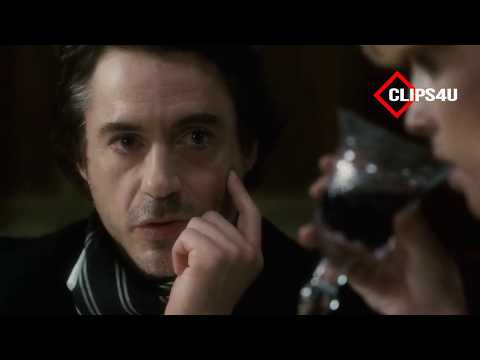
- It is famously associated with Dr. John Watson, Sherlock Holmes's loyal companion.
- IBM Watson is a leading artificial intelligence system used in various industries.
- The name symbolizes loyalty, assistance, and high-level cognitive computing.
The term Watson is a proper noun that functions primarily as a surname of English and Scottish origin. In contemporary English, however, its usage has transcended mere identification to become a symbolic representation of two distinct but related concepts: the ultimate loyal companion and the pinnacle of cognitive computing. When people use the name Watson today, they are often invoking the spirit of Dr. John Watson, the narrator and faithful friend of Sherlock Holmes, created by Sir Arthur Conan Doyle. This literary connection has made the name synonymous with a 'sidekick' who is competent, brave, and serves as the grounding force for a more eccentric genius. Beyond literature, the name has been adopted by IBM for its artificial intelligence platform, which famously won on the game show Jeopardy!. In this context, Watson represents the cutting edge of machine learning and data processing. Therefore, you might hear the name in a library, a hospital using AI for diagnostics, or a tech conference discussing the future of automation.
- Literary Archetype
- The 'Watson' character serves as the audience's surrogate, asking the questions the reader would ask and providing a human perspective to a superhuman intellect.
- Technological Brand
- IBM's Watson is a cognitive system that can analyze vast amounts of unstructured data, named after IBM's first CEO, Thomas J. Watson.
- Genealogical Origin
- Derived from 'Wat,' a diminutive of Walter, meaning 'son of Walter.' It is one of the most common surnames in the English-speaking world.
'Elementary, my dear Watson,' is a phrase often attributed to Holmes, though it never actually appeared in that exact form in the original books.
The researchers decided to implement Watson to help identify patterns in the genomic data that human eyes might miss.
James Watson is a name forever linked to the discovery of the double helix structure of DNA.
Every great leader needs a Watson—someone to keep them grounded and manage the details of the mission.
Emma Watson used her platform to advocate for gender equality through the HeForShe campaign.
Using the word Watson correctly depends heavily on the context—whether you are referring to a person, a character, or a technology. In a literary sense, it often appears in the possessive or as a direct address. For example, 'Watson's observations were crucial to the case.' Here, the name functions as a standard proper noun. When used metaphorically, it can act as a descriptor for a role: 'He is the Watson to my Holmes.' This usage implies a partnership where one person is the visionary and the other is the practical executor. In the realm of science and technology, it is used as a brand name: 'We are integrating Watson into our customer service portal.' Note that because it is a proper noun, it does not typically take an article (the, a, an) unless you are referring to a specific individual among many or using it as a common noun substitute.
- As a Direct Address
- 'Come at once, Watson, if convenient. If inconvenient, come all the same.'
- As a Metaphorical Role
- 'Every brilliant entrepreneur needs a reliable Watson to handle the day-to-day operations.'
- In Technical Branding
- 'IBM Watson is revolutionizing how we approach oncology by analyzing millions of medical papers.'
Without Watson, the stories of Sherlock Holmes would lack their essential human warmth.
The new software update for Watson includes enhanced natural language processing capabilities.
Is there a Watson in this office who can help me find these missing files?
The Watson family has lived in this village for over three generations.
After the lecture, Professor Watson stayed behind to answer students' questions.
The word Watson is ubiquitous in several spheres of modern life. In the world of entertainment, it is heard constantly in discussions about Sherlock Holmes adaptations, from the classic books to modern iterations like the BBC's Sherlock (starring Martin Freeman) or CBS's Elementary (starring Lucy Liu). In these contexts, the name is synonymous with loyalty and the 'everyman' perspective. In the business and technology sectors, 'Watson' is a major brand name. You will hear it in commercials for IBM, in corporate boardrooms discussing data analytics, and in medical journals where IBM Watson Health is mentioned. Furthermore, in the academic world, 'Watson' is a name associated with foundational science, specifically James Watson's work on DNA. Finally, because it is a common surname, you will hear it in everyday introductions, roll calls, and on mailboxes across the English-speaking world.
- Pop Culture
- Discussed in fan forums, book clubs, and film reviews regarding the chemistry between Holmes and his partner.
- Corporate Tech
- Mentioned in the context of cloud computing, cognitive APIs, and enterprise-level AI solutions.
- Scientific History
- Taught in biology classrooms globally when referring to the Watson-Crick model of DNA.
'I'm watching the new series where Watson is actually a woman living in New York.'
'Our company is looking into Watson for our supply chain optimization.'
'Did you read the chapter on Watson and Crick for the biology exam?'
'The keynote speaker today is Dr. Sarah Watson, an expert in marine biology.'
'Is there a Mr. Watson in the waiting room? The doctor is ready to see you.'
The most frequent mistakes involving the word Watson usually stem from capitalization, cultural misattribution, or spelling. As a proper noun, 'Watson' must always be capitalized. Writing 'watson' in a sentence is grammatically incorrect unless it is being used in a very specific, informal, or stylized lowercase brand context (which is rare). Another common error is the misattribution of the famous phrase 'Elementary, my dear Watson.' Many people believe this was a staple of the original Sherlock Holmes novels, but Sir Arthur Conan Doyle never wrote that exact sequence of words; it was popularized by later stage and film adaptations. Additionally, learners sometimes confuse 'Watson' with other similar-sounding names like 'Weston' or 'Walton.' In the context of AI, some might mistakenly use 'Watson' to refer to any generic AI, like ChatGPT, but 'Watson' is a specific trademark of IBM. Finally, when referring to the DNA scientist, it is crucial to mention 'Watson and Crick' together, as omitting Crick is historically inaccurate and often criticized.
- Capitalization Error
- Incorrect: 'I asked watson for help.' Correct: 'I asked Watson for help.'
- Misquotation
- Believing that 'Elementary, my dear Watson' is a direct quote from the original 19th-century literature.
- Genericization
- Using 'Watson' as a synonym for 'computer' or 'AI' in general, rather than the specific IBM product.
Mistake: 'The detective's friend, watson, was a doctor.' (Needs capitalization)
Mistake: 'I'm using Watson to write my essay.' (Watson is for data analysis, not primarily a generative text AI like ChatGPT)
Mistake: 'He's a real Watson.' (This can be ambiguous—does it mean a loyal friend or someone who is a bit slow to catch on?)
Mistake: Confusing James Watson (DNA) with John Watson (Sherlock Holmes).
Mistake: Spelling it as 'Watsen' or 'Wattson' (the latter is a character from the game Apex Legends).
While Watson is a unique proper noun, there are several words and names that can serve as alternatives depending on the intended meaning. If you are using 'Watson' to describe a role, words like 'sidekick,' 'companion,' 'confidant,' or 'right-hand man' are excellent substitutes. In a professional setting, 'assistant' or 'associate' might be more appropriate. If you are referring to the technological aspect, terms like 'AI,' 'cognitive system,' 'neural network,' or 'expert system' can be used, though they lack the specific branding of IBM's Watson. In terms of surnames, names like 'Wilson,' 'Watkins,' or 'Walters' share similar etymological roots but do not carry the same cultural weight. Below is a comparison of how 'Watson' compares to other common terms for partners or assistants.
- Watson vs. Sidekick
- 'Watson' implies a level of professional competence and narrative importance, whereas 'sidekick' can sometimes sound slightly more juvenile or secondary.
- Watson vs. Assistant
- An 'assistant' is a job title; a 'Watson' is a relationship dynamic characterized by deep trust and shared history.
- Watson vs. AI
- 'AI' is the broad category; 'Watson' is a specific, sophisticated implementation focused on data analysis and natural language.
Instead of calling him a sidekick, the author described him as a modern-day Watson.
The project needs a confidant who can keep secrets, much like Dr. Watson did for Holmes.
We are using an expert system to manage the database, similar to how IBM Watson operates.
He acted as my right-hand man during the entire negotiation process.
The companion app helps users track their daily habits with ease.
How Formal Is It?
Dato curioso
The name Walter itself means 'ruler of the army' (wald = rule, heri = army), so Watson indirectly means 'son of the army ruler.'
Guía de pronunciación
- Pronouncing it as 'Wats-on' with two equal stresses.
- Adding a 't' at the end (Watsont).
- Confusing it with 'Weston'.
- Pronouncing the 'a' like 'way' (Way-tson).
- Muffling the 'n' at the end.
Nivel de dificultad
Easy to read as a name, but requires context to understand metaphorical uses.
Simple spelling, just remember the capital letter.
Common pronunciation with no difficult phonemes.
Might be confused with similar names in fast speech.
Qué aprender después
Requisitos previos
Aprende después
Avanzado
Gramática que debes saber
Capitalization of Proper Nouns
Always write 'Watson', never 'watson'.
Possessive Proper Nouns
Use 'Watson's' to show ownership.
Titles with Names
Use 'Dr. Watson' or 'Mr. Watson' in formal settings.
Proper Nouns as Common Nouns
Use an article: 'He is a real Watson.'
Compound Proper Nouns
Watson and Crick (no 'the' usually).
Ejemplos por nivel
Hello, I am Mr. Watson.
Bonjour, je suis M. Watson.
Proper noun, always capitalized.
Is Watson here?
Watson est-il là ?
Subject of the sentence.
Watson is a name.
Watson est un nom.
Simple subject-verb-complement.
I see Dr. Watson.
Je vois le Dr Watson.
Direct object with a title.
This is Watson's book.
C'est le livre de Watson.
Possessive form ('s).
Watson is my friend.
Watson est mon ami.
Proper noun as subject.
Where is Watson?
Où est Watson ?
Interrogative sentence.
Watson lives in London.
Watson habite à Londres.
Present simple tense.
Dr. Watson helps Sherlock Holmes.
Le Dr Watson aide Sherlock Holmes.
Subject-verb-object structure.
Emma Watson is a famous actress.
Emma Watson est une actrice célèbre.
Proper noun with an adjective.
I read a story about Watson.
J'ai lu une histoire sur Watson.
Prepositional phrase 'about Watson'.
Watson was a soldier before.
Watson était un soldat auparavant.
Past tense of 'to be'.
We call him Watson.
Nous l'appelons Watson.
Object complement.
Watson's house is very big.
La maison de Watson est très grande.
Possessive noun.
Do you know Mr. Watson?
Connaissez-vous M. Watson ?
Auxiliary 'do' for questions.
Watson writes in his journal.
Watson écrit dans son journal.
Third person singular 's'.
Watson is known for his loyalty.
Watson est connu pour sa loyauté.
Passive voice 'is known for'.
IBM Watson can process data quickly.
IBM Watson peut traiter les données rapidement.
Modal verb 'can' for ability.
He acted as a Watson to the CEO.
Il a agi comme un Watson pour le PDG.
Metaphorical use as a common noun.
The Watson family moved to the city.
La famille Watson a déménagé en ville.
Noun adjunct (Watson family).
I am interested in Watson's history.
Je m'intéresse à l'histoire de Watson.
Adjective + preposition 'interested in'.
Watson and Crick discovered DNA's structure.
Watson et Crick ont découvert la structure de l'ADN.
Compound subject.
She named her dog Watson.
Elle a appelé son chien Watson.
Object complement after 'named'.
Is Watson compatible with our system?
Watson est-il compatible avec notre système ?
Adjective 'compatible' with preposition 'with'.
The Watsonian perspective provides clarity.
La perspective watsonienne apporte de la clarté.
Adjectival form 'Watsonian'.
Watson has become a symbol of partnership.
Watson est devenu un symbole de partenariat.
Present perfect tense.
They implemented Watson to improve diagnostics.
Ils ont mis en œuvre Watson pour améliorer les diagnostics.
Infinitive of purpose 'to improve'.
Watson's role is often underestimated.
Le rôle de Watson est souvent sous-estimé.
Passive voice with an adverb.
The Watson Fellowship supports global travel.
La bourse Watson soutient les voyages mondiaux.
Proper noun as part of a title.
He is a Watson in a world of Sherlocks.
C'est un Watson dans un monde de Sherlocks.
Indefinite article with a proper noun used as a type.
Watson's narration shapes the entire story.
La narration de Watson façonne toute l'histoire.
Subject-verb-object with possessive.
Could Watson actually replace human doctors?
Watson pourrait-il réellement remplacer les médecins humains ?
Modal 'could' for possibility.
The 'Watson' archetype is essential for exposition.
L'archétype du 'Watson' est essentiel pour l'exposition.
Noun used as a literary term.
Watson's legacy in genetics is controversial.
L'héritage de Watson en génétique est controversé.
Abstract noun 'legacy'.
The integration of Watson into the cloud was seamless.
L'intégration de Watson dans le cloud a été fluide.
Complex noun phrase.
One might argue that Watson is the true hero.
On pourrait soutenir que Watson est le véritable héros.
Subordinate clause starting with 'that'.
The Watsonian method involves keen observation.
La méthode watsonienne implique une observation fine.
Derived adjective 'Watsonian'.
Watson's ubiquity in tech is a testament to IBM.
L'ubiquité de Watson dans la technologie témoigne d'IBM.
Noun 'ubiquity' with possessive.
He played the Watson to her more dominant Holmes.
Il a joué le Watson face à son Holmes plus dominant.
Definite article with proper noun for role-playing.
The Watson-Crick model revolutionized biology.
Le modèle Watson-Crick a révolutionné la biologie.
Hyphenated compound proper noun.
The Watsonian narrative voice bridges the gap.
La voix narrative watsonienne comble le fossé.
Metaphorical use of 'bridge the gap'.
Watson's cognitive architecture mimics human thought.
L'architecture cognitive de Watson imite la pensée humaine.
Technical terminology 'cognitive architecture'.
The dichotomy between Holmes and Watson is profound.
La dichotomie entre Holmes et Watson est profonde.
Advanced noun 'dichotomy'.
Watson's contributions are frequently marginalized.
Les contributions de Watson sont fréquemment marginalisées.
Passive voice with an adverb of frequency.
The Watsonian paradigm shift in AI was unexpected.
Le changement de paradigme watsonien dans l'IA était inattendu.
Noun phrase 'paradigm shift'.
He embodies the Watsonian ideal of steadfastness.
Il incarne l'idéal watsonien de la constance.
Verb 'embodies' with abstract noun.
Watson's name has become a metonym for AI.
Le nom de Watson est devenu un métonyme pour l'IA.
Linguistic term 'metonym'.
The Watsonian subtext in the novels is often debated.
Le sous-texte watsonien dans les romans est souvent débattu.
Literary term 'subtext'.
Colocaciones comunes
Frases Comunes
— Used to say that something is very simple or obvious.
How did you know? Elementary, my dear Watson.
— Acting as a supportive assistant to a more dominant person.
He's tired of playing the Watson in this relationship.
— A person who is exceptionally loyal and dependable.
You're a real Watson for staying late to help me.
— The phenomenon where a secondary character makes the lead look smarter.
The show uses the Watson effect to highlight the detective's genius.
— A phrase used in tech to suggest using IBM's AI for an answer.
If you're stuck, just ask Watson for the data trends.
— Extreme and unwavering faithfulness to a friend or cause.
His Watson-like loyalty is his best quality.
— Describing a perfect partnership of two different roles.
She is the Watson to my Holmes in every project.
— A viewpoint that is grounded and relatable compared to a genius.
We need a Watson's perspective on this complex problem.
— A modern reference to the character's habit of recording events.
I read about the case on Watson's blog.
— A specific way of organizing a partnership or an AI system.
We are following the Watson model for our new AI assistant.
Se confunde a menudo con
A character from the game Apex Legends with an extra 't'.
A common place name and surname that sounds similar.
Another surname, often associated with the Walmart family.
Modismos y expresiones
— Something is obvious and requires no complex explanation.
It's elementary, my dear Watson; the keys are in the door.
Informal— Even the most brilliant person needs a supportive partner.
Don't try to do it all alone; every Holmes needs a Watson.
Neutral— Serving as the reliable, grounding force in a group.
I don't mind being a Watson as long as we win.
Informal— A narrator who is a character in the story but not the protagonist.
The novel uses a Watsonian narrator to build suspense.
Academic— A humorous reference to things being explained simply.
According to Watson's law, the simplest answer is usually right.
Slang— To state the obvious or ask a question that helps others understand.
He pulled a Watson and asked about the budget.
Informal— A reference to someone who is always present but rarely noticed.
He's like Watson's ghost in these meetings.
Informal— Looking at something with wonder and admiration.
She watched the performance with a Watsonian gaze.
Literary— A situation where you must choose to support a difficult friend.
It was Watson's choice to stay with Holmes through the danger.
Neutral— Common sense or practical intelligence.
He lacks genius, but he has plenty of Watson's wit.
NeutralFácil de confundir
Spelling and sound.
Wattson is a fictional character in a video game; Watson is the traditional surname.
I play as Wattson in the game, but I read about Watson in the book.
Common surname ending in -son.
Wilson means 'son of Will'; Watson means 'son of Wat'.
Mr. Wilson and Mr. Watson are neighbors.
Similar root 'Wat'.
Watkins is a different surname, though related to Walter.
The Watkins family is not related to the Watsons.
Similar starting sound.
Walton refers to a 'walled town'; Watson refers to a person.
He lives in Walton, but his name is Watson.
Vowel sound and ending.
Weston means 'west town'.
Drive to Weston to meet Dr. Watson.
Patrones de oraciones
I am [Name].
I am Watson.
[Name] is a [Job].
Watson is a doctor.
[Name] helps [Person].
Watson helps Sherlock.
The [Adjective] Watson [Verb].
The loyal Watson waited.
Watson's [Noun] is [Adjective].
Watson's influence is undeniable.
Embodying the [Noun], Watson [Verb].
Embodying the archetype, Watson narrates.
Using [Name] for [Task].
Using Watson for data analysis.
A [Noun] like Watson.
A partner like Watson.
Familia de palabras
Sustantivos
Adjetivos
Relacionado
Cómo usarlo
Common as a name; high in tech and literary circles.
-
watson
→
Watson
Proper nouns must be capitalized in English.
-
Elementary, my dear Watson.
→
It's elementary!
The full phrase is a popular misquotation, not found in the books.
-
Watson discovered DNA alone.
→
Watson and Crick discovered DNA.
It was a collaborative effort involving several scientists.
-
I am using Watson to chat.
→
I am using Watson for data analysis.
IBM Watson is not a general-purpose chatbot like some other AIs.
-
He is the Holmes to my Watson.
→
He is the Watson to my Holmes.
Usually, the speaker is the 'lead' and the friend is the 'Watson'.
Consejos
Capitalize It
Always capitalize Watson. It is a proper noun, and failing to do so is a basic grammatical error.
Know the Duo
When you mention Watson, people will immediately think of Sherlock Holmes. Use this to your advantage in conversation.
Specific AI
Remember that Watson is a specific brand. Don't call ChatGPT 'Watson' or vice versa; it shows a lack of technical knowledge.
Watson and Crick
In science, always pair Watson with Crick. They are the famous duo of genetics, much like Holmes and Watson are the duo of mystery.
The Loyal Friend
Calling someone a 'Watson' is a high compliment for their loyalty and reliability. Use it to praise a good teammate.
The Narrator
Remember that Watson is the one telling the story. This makes him the most important character for the reader's understanding.
One T
Watson has only one 't' in the middle. 'Wattson' is usually a misspelling or a different character entirely.
Son of Walter
If you know a Walter, you can remember Watson as 'Walter's son.' It helps connect the name to its roots.
Short O
In British English, keep the 'o' short. Don't stretch it out into an 'oh' sound.
Context is King
Always ensure your audience knows if you are talking about a doctor, an actress, or a computer!
Memorízalo
Mnemotecnia
Think of 'Wat' as 'What' and 'son' as 'son.' Dr. Watson is the 'son' who asks 'What?' so the audience understands the mystery.
Asociación visual
Imagine a doctor with a stethoscope (Dr. Watson) standing next to a glowing blue computer screen (IBM Watson).
Word Web
Desafío
Try to use 'Watson' in three different ways today: as a name, as a metaphor for a friend, and as a reference to technology.
Origen de la palabra
Watson is an English and Scottish patronymic surname. It originated in the medieval period as a way to identify someone as the 'son of Wat.'
Significado original: The name 'Wat' was a very common diminutive or nickname for 'Walter.' Therefore, Watson literally means 'Walter's son.'
Germanic (via Old French 'Gualter' to English 'Walter').Contexto cultural
Be aware of the controversies surrounding James Watson (DNA scientist) when discussing him in academic or social justice contexts.
Very common surname in Scotland and Northern England.
Practica en la vida real
Contextos reales
Literature
- The narrator Watson
- Watson's medical background
- Loyal to Holmes
- Watson's perspective
Technology
- IBM Watson AI
- Cognitive computing
- Data analysis
- Watson Health
Science
- Watson and Crick
- DNA structure
- Genetic research
- Double helix
Pop Culture
- Emma Watson movies
- Sherlock and Watson
- Fan fiction
- Red carpet
Daily Life
- Mr. Watson
- The Watson family
- Watson Street
- Meet the Watsons
Inicios de conversación
"Who is your favorite version of Dr. Watson in the movies?"
"Do you think IBM Watson will ever be smarter than a human doctor?"
"Have you ever met someone with the last name Watson?"
"If you were Sherlock Holmes, who would be your Watson?"
"What do you think of Emma Watson's work for women's rights?"
Temas para diario
Describe a person in your life who is a 'Watson' to you. Why are they so dependable?
If you had access to IBM Watson, what big world problem would you ask it to solve?
Write a short story from the perspective of a character named Watson.
How does the role of a 'sidekick' like Watson change the way we see a hero?
Reflect on the discovery of DNA. Why is the name Watson so important in science?
Preguntas frecuentes
10 preguntasNo, Dr. John Watson is a fictional character created by Sir Arthur Conan Doyle. However, he was likely based on real people the author knew, including himself and other doctors.
IBM named the system after their first CEO, Thomas J. Watson. It was not directly named after the Sherlock Holmes character, though the association with 'intelligence' and 'answers' was a helpful coincidence.
Emma Watson is most famous for playing Hermione Granger in the Harry Potter film series. She has since become a prominent activist and actress in other major films like Beauty and the Beast.
No, this exact phrase never appears in the original Sherlock Holmes stories by Arthur Conan Doyle. Holmes says 'Elementary!' and 'My dear Watson' separately, but never together in that way.
James Watson, along with Francis Crick and Rosalind Franklin, discovered the double helix structure of DNA in 1953. This is considered one of the most important discoveries in modern science.
While it is primarily a surname, some people do use Watson as a first name. It is less common but follows the trend of using surnames as given names.
It is a patronymic name meaning 'son of Wat.' 'Wat' is a medieval nickname for Walter, which means 'ruler of the army.'
Yes, it is very common in both Scotland and England. In Scotland, it is often associated with the Lowlands.
You use it to describe someone who is a loyal, helpful, and essential partner to a more prominent or 'genius' figure. 'He's the Watson to my Holmes.'
Yes, IBM Watson continues to be a major platform for enterprise AI, focusing on industries like healthcare, finance, and customer service.
Ponte a prueba 192 preguntas
Write a sentence using 'Watson' as a surname.
Well written! Good try! Check the sample answer below.
Describe the relationship between Holmes and Watson in two sentences.
Well written! Good try! Check the sample answer below.
Explain how IBM Watson is used in technology.
Well written! Good try! Check the sample answer below.
Write a short dialogue where someone says 'Elementary, my dear Watson.'
Well written! Good try! Check the sample answer below.
Discuss the importance of the 'Watson' character in detective fiction.
Well written! Good try! Check the sample answer below.
Write a letter to Dr. Watson asking for medical advice.
Well written! Good try! Check the sample answer below.
Compare Emma Watson and Dr. Watson in one paragraph.
Well written! Good try! Check the sample answer below.
Describe what a 'Watson' means to you in a friendship.
Well written! Good try! Check the sample answer below.
Write a news headline about IBM Watson solving a crime.
Well written! Good try! Check the sample answer below.
Explain the etymology of the name Watson.
Well written! Good try! Check the sample answer below.
Write a story intro from Watson's perspective.
Well written! Good try! Check the sample answer below.
How would you use Watson AI in your school?
Well written! Good try! Check the sample answer below.
List three famous people or things named Watson.
Well written! Good try! Check the sample answer below.
Describe Dr. Watson's personality.
Well written! Good try! Check the sample answer below.
Why is capitalization important for the word Watson?
Well written! Good try! Check the sample answer below.
Write a sentence using 'Watsonian' as an adjective.
Well written! Good try! Check the sample answer below.
If you had a robot named Watson, what would it do?
Well written! Good try! Check the sample answer below.
Explain the 'Watson-Crick' discovery in simple terms.
Well written! Good try! Check the sample answer below.
Write a sentence about Emma Watson's activism.
Well written! Good try! Check the sample answer below.
How does Watson help the reader understand Sherlock Holmes?
Well written! Good try! Check the sample answer below.
Introduce yourself using the surname Watson.
Read this aloud:
Dijiste:
Speech recognition is not supported in your browser. Try Chrome or Edge.
Tell a friend about Dr. Watson.
Read this aloud:
Dijiste:
Speech recognition is not supported in your browser. Try Chrome or Edge.
Explain why IBM Watson is important for the future.
Read this aloud:
Dijiste:
Speech recognition is not supported in your browser. Try Chrome or Edge.
Discuss your favorite Emma Watson movie.
Read this aloud:
Dijiste:
Speech recognition is not supported in your browser. Try Chrome or Edge.
Describe a time you were a 'Watson' to someone else.
Read this aloud:
Dijiste:
Speech recognition is not supported in your browser. Try Chrome or Edge.
Say 'Elementary, my dear Watson' with different emotions.
Read this aloud:
Dijiste:
Speech recognition is not supported in your browser. Try Chrome or Edge.
Talk about the discovery of DNA by Watson and Crick.
Read this aloud:
Dijiste:
Speech recognition is not supported in your browser. Try Chrome or Edge.
Debate if AI like Watson can replace doctors.
Read this aloud:
Dijiste:
Speech recognition is not supported in your browser. Try Chrome or Edge.
Explain the meaning of the name Watson to a child.
Read this aloud:
Dijiste:
Speech recognition is not supported in your browser. Try Chrome or Edge.
Pronounce 'Watson' correctly five times.
Read this aloud:
Dijiste:
Speech recognition is not supported in your browser. Try Chrome or Edge.
Describe Dr. Watson's appearance in your imagination.
Read this aloud:
Dijiste:
Speech recognition is not supported in your browser. Try Chrome or Edge.
Talk about the 'Watson Fellowship' and where you would go.
Read this aloud:
Dijiste:
Speech recognition is not supported in your browser. Try Chrome or Edge.
Explain the difference between Watson and Sherlock.
Read this aloud:
Dijiste:
Speech recognition is not supported in your browser. Try Chrome or Edge.
Tell a short mystery story featuring a character named Watson.
Read this aloud:
Dijiste:
Speech recognition is not supported in your browser. Try Chrome or Edge.
Discuss the impact of Emma Watson on feminism.
Read this aloud:
Dijiste:
Speech recognition is not supported in your browser. Try Chrome or Edge.
How do you spell Watson? Say it aloud.
Read this aloud:
Dijiste:
Speech recognition is not supported in your browser. Try Chrome or Edge.
What does 'loyalty' mean in the context of Watson?
Read this aloud:
Dijiste:
Speech recognition is not supported in your browser. Try Chrome or Edge.
Is Watson a good name for a dog? Why?
Read this aloud:
Dijiste:
Speech recognition is not supported in your browser. Try Chrome or Edge.
Talk about the history of surnames like Watson.
Read this aloud:
Dijiste:
Speech recognition is not supported in your browser. Try Chrome or Edge.
Describe a 'Watson' character in a different book.
Read this aloud:
Dijiste:
Speech recognition is not supported in your browser. Try Chrome or Edge.
Listen to the sentence: 'Dr. Watson is here.' Who is here?
Listen: 'IBM Watson is very fast.' What is fast?
Listen: 'Emma Watson was born in Paris.' Where was she born?
Listen: 'Watson and Crick won the Nobel Prize.' What did they win?
Listen: 'The Watsonian narrator is essential.' What is essential?
Listen: 'Is your name Watson?' What is the question asking?
Listen: 'Elementary, my dear Watson!' Who is being spoken to?
Listen: 'Watson's journals were found.' What was found?
Listen: 'The Watson family lives in London.' Where do they live?
Listen: 'Watson Health is a big project.' What kind of project is it?
Listen: 'James Watson is a scientist.' What is his job?
Listen: 'The Watson Fellowship is for one year.' How long is it?
Listen: 'Watson is a loyal friend.' What is Watson?
Listen: 'Call Watson for help.' Who should you call?
Listen: 'Watson's role is complex.' How is the role described?
/ 192 correct
Perfect score!
Summary
The name Watson represents the perfect blend of human loyalty and machine intelligence; whether as a literary sidekick or a modern AI, it signifies a dependable source of support and information. Example: 'He's the Watson to my Holmes.'
- Watson is a common English surname derived from 'son of Walter.'
- It is famously associated with Dr. John Watson, Sherlock Holmes's loyal companion.
- IBM Watson is a leading artificial intelligence system used in various industries.
- The name symbolizes loyalty, assistance, and high-level cognitive computing.
Capitalize It
Always capitalize Watson. It is a proper noun, and failing to do so is a basic grammatical error.
Know the Duo
When you mention Watson, people will immediately think of Sherlock Holmes. Use this to your advantage in conversation.
Specific AI
Remember that Watson is a specific brand. Don't call ChatGPT 'Watson' or vice versa; it shows a lack of technical knowledge.
Watson and Crick
In science, always pair Watson with Crick. They are the famous duo of genetics, much like Holmes and Watson are the duo of mystery.