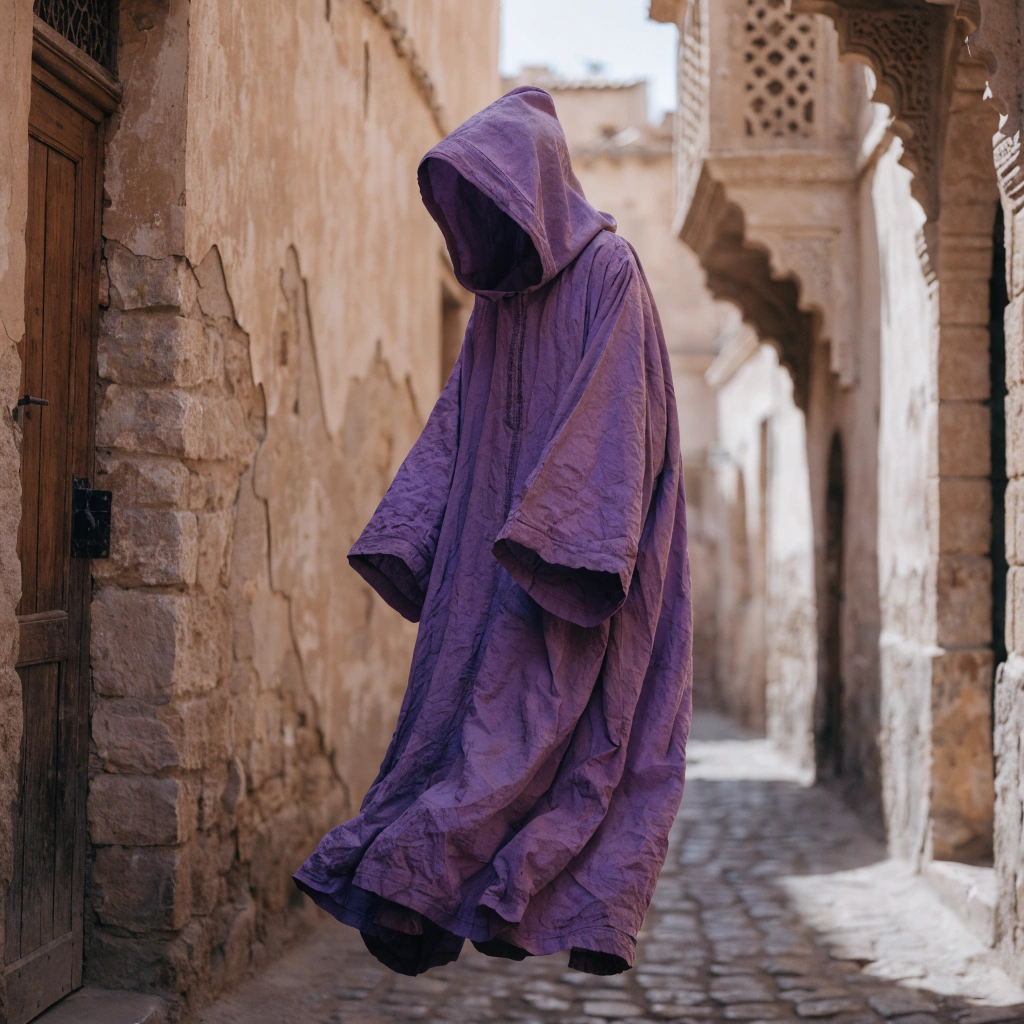
The Moroccan Djellaba
The djellaba is a very special dress in Morocco. It is long and has a hood. The hood is pointed. Men and women wear this dress every day.
The djellaba is comfortable. In the summer, it is cool. In the winter, it is warm. People wear it for work and for festivals.
There are many colors. Some are blue, white, or brown. There are many beautiful decorations on the dress. Everyone in Morocco loves the djellaba. It is a symbol of their culture.
व्याकरण स्पॉटलाइट
पैटर्न: Present Simple (be)
"The djellaba is a very special dress in Morocco."
We use 'is' with singular subjects like 'the djellaba' to describe facts or states. It is the most common verb for descriptions.
पैटर्न: Present Simple (regular verbs)
"Men and women wear this dress every day."
We use the base form of the verb 'wear' for plural subjects like 'men and women' to talk about habits or routines.
अपनी समझ जाँचें
10 सवाल · A1 शुरुआती · 1 मुफ्त प्रीव्यू
इस लेख से आपने जो सीखा उसकी जाँच करें। सभी सवालों के जवाब दें और XP कमाएँ!
What is the djellaba?
क्या आप क्विज़ समाप्त करना चाहते हैं?
9 और सवाल आपका इंतज़ार कर रहे हैं। पूरा क्विज़ अनलॉक करने और XP कमाने के लिए मुफ्त साइन अप करें!
मुफ़्त साइन अप करोपहले से अकाउंट है? साइन इन करो
बहुत बढ़िया!
अभ्यास जारी रखें!
पहले से पूर्ण — कोई अतिरिक्त XP नहीं
XP कमाने के लिए साइन अप करोसवालों का विवरण
What is the djellaba?
आपका जवाब:
सही जवाब: A traditional dress
Only men wear the djellaba in Morocco.
आपका जवाब:
सही जवाब: गलत
What does 'hood' mean?
आपका जवाब:
सही जवाब: A part that covers the head
In the summer, the djellaba is _____.
आपका जवाब:
सही जवाब: cool
मोरक्को की पहचान: जलाबा
मोरक्को में एक बहुत ख़ास और सुंदर कपड़ा है, जिसका नाम 'जलाबा' है। यह मोरक्को की संस्कृति और पहचान का एक महत्वपूर्ण हिस्सा है। जलाबा एक लंबा और ढीला बाहरी कपड़ा होता है, जिसमें पूरी आस्तीनें और एक नुकीला हुड होता है।
यह सिर्फ़ त्योहारों या ख़ास मौकों के लिए नहीं है। मोरक्को के लोग इसे रोज़ाना पहनते हैं। यह वहाँ के रोज़मर्रा के जीवन का एक जीवंत हिस्सा है। पुरुष और महिलाएँ दोनों जलाबा पहनते हैं, लेकिन उनके स्टाइल, रंग और डिज़ाइन अलग-अलग होते हैं। पुरुषों के जलाबा अक्सर सादे रंगों के होते हैं, जबकि महिलाएँ ज़्यादा रंगीन और कढ़ाई वाले जलाबा पहनती हैं।
जलाबा पहनने में बहुत आरामदायक होता है। यह गर्मी में शरीर को ठंडा रखता है और सर्दी में गर्म। यह धूप और धूल से भी बचाता है। इसकी लोकप्रियता का कारण इसका आराम और पारंपरिक सुंदरता है। यह मोरक्को की पुरानी परंपरा और आज के जीवन का एक सुंदर मेल है। इसलिए, जलाबा मोरक्को की पहचान का एक अमर प्रतीक है, जो समय के साथ नहीं बदलता।
व्याकरण स्पॉटलाइट
पैटर्न: संबंध कारक: 'का', 'की', 'के'
"यह मोरक्को **की** संस्कृति और पहचान **का** एक महत्वपूर्ण हिस्सा है।"
'का', 'की', 'के' शब्दों का प्रयोग संज्ञाओं के बीच संबंध दिखाने के लिए होता है। 'का' पुरुष एकवचन के लिए, 'की' स्त्री एकवचन/बहुवचन के लिए और 'के' पुरुष बहुवचन के लिए आता है।
पैटर्न: संयोजक शब्द: 'और' तथा 'लेकिन'
"पुरुष **और** महिलाएँ दोनों जलाबा पहनते हैं, **लेकिन** उनके स्टाइल, रंग और डिज़ाइन अलग-अलग होते हैं।"
'और' दो समान बातों या विचारों को जोड़ता है। 'लेकिन' दो विपरीत विचारों या बातों को जोड़ने के लिए प्रयोग होता है। ये वाक्य को लंबा और स्पष्ट बनाते हैं।
अपनी समझ जाँचें
11 सवाल · A2 बिगिनर · 1 मुफ्त प्रीव्यू
इस लेख से आपने जो सीखा उसकी जाँच करें। सभी सवालों के जवाब दें और XP कमाएँ!
जलाबा कहाँ का पारंपरिक परिधान है?
क्या आप क्विज़ समाप्त करना चाहते हैं?
10 और सवाल आपका इंतज़ार कर रहे हैं। पूरा क्विज़ अनलॉक करने और XP कमाने के लिए मुफ्त साइन अप करें!
मुफ़्त साइन अप करोपहले से अकाउंट है? साइन इन करो
बहुत बढ़िया!
अभ्यास जारी रखें!
पहले से पूर्ण — कोई अतिरिक्त XP नहीं
XP कमाने के लिए साइन अप करोसवालों का विवरण
जलाबा कहाँ का पारंपरिक परिधान है?
आपका जवाब:
सही जवाब: मोरक्को
जलाबा सिर्फ़ त्योहारों के लिए है।
आपका जवाब:
सही जवाब: गलत
'पहचान' का क्या अर्थ है?
आपका जवाब:
सही जवाब: जानने का तरीक़ा
जलाबा एक _____ और ढीला कपड़ा है।
आपका जवाब:
सही जवाब: लंबा
जलाबा पहनने में बहुत _____ होता है।
आपका जवाब:
सही जवाब: आरामदायक
मोरक्को की पहचान: कालातीत जेलाबा
जेलाबा मोरक्को की पारंपरिक पोशाक का एक बहुत ही जाना-पहचाना प्रतीक है। यह एक लंबा, ढीला-ढाला बाहरी वस्त्र है जिसमें पूरी आस्तीनें और एक खास नुकीला हुड होता है। दुनिया के कई पारंपरिक वस्त्रों के विपरीत, जो अब केवल संग्रहालयों या खास अवसरों पर ही देखे जाते हैं, जेलाबा आज भी मोरक्को के रोज़मर्रा के जीवन का एक जीवंत हिस्सा बना हुआ है।
यह एक यूनिसेक्स परिधान है, जिसे पुरुष और महिलाएँ दोनों पहनते हैं। हालाँकि, पुरुषों और महिलाओं की जेलाबा की शैलियाँ, रंग और सजावट में काफी अंतर होता है। इसकी निरंतर लोकप्रियता का मुख्य कारण इसका आराम, सादगी और मोरक्को की गर्म जलवायु के लिए इसका उपयुक्त होना है। यह शरीर को सूरज की तेज़ गर्मी से बचाता है और हवादार होने के कारण ठंडक भी प्रदान करता है।
जेलाबा सिर्फ एक कपड़ा नहीं है; इसे मोरक्को की सांस्कृतिक पहचान का एक महत्वपूर्ण हिस्सा माना जाता है। सदियों से, इसे मोरक्को के लोगों ने पहना है और यह उनकी परंपराओं और इतिहास से जुड़ा हुआ है। आज भी, आप मोरक्को के शहरों और गाँवों में सभी उम्र के लोगों को जेलाबा पहने हुए देख सकते हैं। यह दर्शाता है कि यह पोशाक कितनी गहरी जड़ों तक उनकी संस्कृति में समाई हुई है।
आधुनिकता के बावजूद, जेलाबा ने अपनी जगह बनाए रखी है। यह सिर्फ एक आरामदायक पोशाक ही नहीं, बल्कि सम्मान और परंपरा का भी प्रतीक है। चाहे कोई इसे बाज़ार में पहनकर जाए या किसी धार्मिक समारोह में, जेलाबा हमेशा मोरक्को की आत्मा को दर्शाता है। इसे मोरक्को के लोगों द्वारा गर्व के साथ पहना जाता है, और यह उनकी समृद्ध सांस्कृतिक विरासत को दर्शाता है।
व्याकरण स्पॉटलाइट
पैटर्न: पैसिव वॉइस (Passive Voice) का प्रयोग
"इसे मोरक्को की सांस्कृतिक पहचान का एक महत्वपूर्ण हिस्सा माना जाता है।"
पैसिव वॉइस का प्रयोग तब किया जाता है जब क्रिया करने वाले से ज़्यादा क्रिया या उसके परिणाम पर ज़ोर देना हो। इसमें अक्सर 'जाना' क्रिया का उपयोग सहायक क्रिया के रूप में किया जाता है, जैसे 'माना जाता है' या 'पहना जाता है'।
पैटर्न: रिलेटिव क्लॉज़ (Relative Clause) - 'जो... वह...' संरचना
"दुनिया के कई पारंपरिक वस्त्रों के विपरीत, जो अब केवल संग्रहालयों या खास अवसरों पर ही देखे जाते हैं, जेलाबा आज भी मोरक्को के रोज़मर्रा के जीवन का एक जीवंत हिस्सा बना हुआ है।"
यह संरचना एक संज्ञा या सर्वनाम के बारे में अतिरिक्त जानकारी देने के लिए उपयोग की जाती है। 'जो' शब्द एक क्लॉज़ शुरू करता है जो मुख्य वाक्य में किसी चीज़ का वर्णन करता है, और 'वह' या संबंधित सर्वनाम अक्सर उस चीज़ को दोबारा संदर्भित करता है।
अपनी समझ जाँचें
11 सवाल · B1 मध्यम · 1 मुफ्त प्रीव्यू
इस लेख से आपने जो सीखा उसकी जाँच करें। सभी सवालों के जवाब दें और XP कमाएँ!
जेलाबा मोरक्को में आज भी क्यों लोकप्रिय है?
क्या आप क्विज़ समाप्त करना चाहते हैं?
10 और सवाल आपका इंतज़ार कर रहे हैं। पूरा क्विज़ अनलॉक करने और XP कमाने के लिए मुफ्त साइन अप करें!
मुफ़्त साइन अप करोपहले से अकाउंट है? साइन इन करो
बहुत बढ़िया!
अभ्यास जारी रखें!
पहले से पूर्ण — कोई अतिरिक्त XP नहीं
XP कमाने के लिए साइन अप करोसवालों का विवरण
जेलाबा मोरक्को में आज भी क्यों लोकप्रिय है?
आपका जवाब:
सही जवाब: क्योंकि यह आरामदायक, सादा और जलवायु के अनुकूल है।
जेलाबा को केवल पुरुष ही पहनते हैं।
आपका जवाब:
सही जवाब: गलत
'जीवंत' शब्द का अर्थ क्या है?
आपका जवाब:
सही जवाब: आज भी सक्रिय और महत्वपूर्ण
जेलाबा एक लंबा, _______ बाहरी वस्त्र है।
आपका जवाब:
सही जवाब: ढीला-ढाला
जेलाबा किस देश की सांस्कृतिक पहचान का प्रतीक है?
आपका जवाब:
सही जवाब: मोरक्को
The Djellaba: A Timeless Symbol of Moroccan Identity
While many traditional garments across the globe have been relegated to the archives of history or reserved exclusively for ceremonial occasions, the Moroccan djellaba continues to thrive as a cornerstone of daily life. This long, loose-fitting robe, characterized by its iconic pointed hood known as the 'qob', represents a sophisticated blend of utilitarian design and aesthetic elegance. Historically, the djellaba served as a protective shield against the elements—shielding the wearer from the scorching Saharan sun in summer and the biting cold of the Atlas Mountains in winter. The 'qob' is particularly ingenious, acting as both a head covering and a convenient pocket for carrying small items like bread or personal belongings.
Furthermore, the garment serves as a fascinating case study in gendered fashion evolution. Traditionally, men’s djellabas were constructed from heavy, neutral-toned wool, emphasizing modesty and functionality. Conversely, the female version has undergone a remarkable transformation over recent decades. Modern Moroccan women often opt for vibrant silks and intricate embroidery, known as 'sfifa', transforming the djellaba into a haute couture item that is frequently showcased on international runways. Nevertheless, despite these aesthetic shifts, the fundamental silhouette remains unchanged, preserving a sense of national continuity. The craftsmanship involved in creating a high-quality djellaba is immense, often requiring weeks of meticulous hand-stitching by skilled artisans who have inherited their techniques through generations.
The choice of fabric is dictated by the seasons, reflecting the garment’s deep connection to the Moroccan climate. In the humid coastal regions, lightweight cotton or linen is preferred, whereas the mountainous interior necessitates the use of thick, hand-spun wool. This wool, often sourced from local sheep, is treated with natural oils to provide a degree of water resistance, demonstrating the practical wisdom embedded in traditional attire. Furthermore, the colors chosen for the djellaba often carry social significance; for instance, white is frequently worn during religious festivals to symbolize purity.
The enduring popularity of the djellaba can be attributed to its remarkable versatility and the way it bridges the gap between different social strata. It is not uncommon to see a high-ranking official wearing a refined djellaba over a formal suit, or a young student pairing a casual version with modern sneakers. This juxtaposition of the traditional and the contemporary illustrates the fluid nature of Moroccan identity in an increasingly globalized world. In conclusion, the djellaba is far more than a mere piece of clothing; it is a living testament to Morocco's ability to balance heritage with modernity. By adapting to the shifting demands of fashion while maintaining its core functional attributes, the djellaba has secured its place as an indispensable symbol of the nation's cultural fabric.
व्याकरण स्पॉटलाइट
पैटर्न: Present Perfect Passive
"While many traditional garments across the globe have been relegated to the archives of history..."
This structure is used to describe past actions where the focus is on the object receiving the action rather than the person doing it. It is formed using 'have/has + been + past participle'.
पैटर्न: Reduced Relative Clauses (Past Participle)
"This long, loose-fitting robe, characterized by its iconic pointed hood known as the 'qob'..."
A reduced relative clause provides additional information about a noun without using 'which' or 'that'. The past participle 'characterized' acts as an adjective here.
पैटर्न: Contrastive Adverbs
"Conversely, the female version has undergone a remarkable transformation over recent decades."
Adverbs like 'conversely' are used in formal writing to introduce a statement that contrasts with the previous one. It helps organize complex arguments clearly.
अपनी समझ जाँचें
11 सवाल · B2 अपर इंटरमीडिएट · 1 मुफ्त प्रीव्यू
इस लेख से आपने जो सीखा उसकी जाँच करें। सभी सवालों के जवाब दें और XP कमाएँ!
What is the primary function of the 'qob' as mentioned in the text?
क्या आप क्विज़ समाप्त करना चाहते हैं?
10 और सवाल आपका इंतज़ार कर रहे हैं। पूरा क्विज़ अनलॉक करने और XP कमाने के लिए मुफ्त साइन अप करें!
मुफ़्त साइन अप करोपहले से अकाउंट है? साइन इन करो
बहुत बढ़िया!
अभ्यास जारी रखें!
पहले से पूर्ण — कोई अतिरिक्त XP नहीं
XP कमाने के लिए साइन अप करोसवालों का विवरण
What is the primary function of the 'qob' as mentioned in the text?
आपका जवाब:
सही जवाब: It serves as a hood and a storage pocket.
The basic silhouette of the djellaba has changed drastically to keep up with modern fashion.
आपका जवाब:
सही जवाब: गलत
What does the word 'meticulous' mean in the context of the article?
आपका जवाब:
सही जवाब: Extremely careful and precise
The djellaba remains a _____ of Moroccan identity, surviving even as other traditional garments disappear.
आपका जवाब:
सही जवाब: cornerstone
Why is wool often used for djellabas in the mountainous regions?
आपका जवाब:
सही जवाब: To provide warmth and water resistance.
The Sartorial Resilience of the Djellaba: Navigating Tradition and Modernity
Seldom does a garment transcend the boundary between functional utility and cultural iconography as effortlessly as the Moroccan Djellaba. While the relentless tide of globalization has largely homogenized international fashion, the Djellaba remains an unwavering fixture of the Maghreb’s social fabric. This long, loose-fitting outer robe, characterized by its full sleeves and iconic pointed hood, is not merely a vestige of the past preserved for ceremonial display; rather, it is a living, breathing component of contemporary Moroccan identity. The ubiquity of the garment across all strata of society serves as a testament to its enduring relevance in a rapidly changing world.
The enduring appeal of the Djellaba lies in its remarkable versatility and pragmatic design. Historically, the garment served as a shield against the elements—the thick wool of the 'bziwi' style providing warmth in the Atlas Mountains, while lighter cotton or linen iterations offered respite from the scorching Saharan sun. It is this confluence of climatic necessity and aesthetic grace that has ensured its survival across centuries. Unlike Western silhouettes that often emphasize the contours of the human form, the Djellaba prioritizes a modest, fluid silhouette, reflecting the Islamic values of the region while offering unparalleled comfort.
Furthermore, the nuances of the Djellaba reveal a complex social hierarchy and a rich tapestry of artisanal expertise. For men, the garment is often characterized by its understated elegance, typically rendered in neutral tones and adorned with subtle 'sfifa'—the intricate hand-braided trim. Conversely, the feminine Djellaba has undergone a radical transformation over the past few decades. What was once a relatively plain outdoor cover-up has evolved into a sophisticated fashion statement, featuring vibrant silks, elaborate embroidery, and beadwork that rivals haute couture. This dichotomy between the masculine austerity and feminine opulence highlights the garment's ability to adapt to shifting social paradigms.
Central to the Djellaba’s identity is the 'qob'. Far from being a mere stylistic flourish, the hood serves a dual purpose: it protects the wearer from wind and rain, and traditionally, it functioned as a makeshift pocket for transporting bread or grain. It is the qob that distinguishes the Moroccan Djellaba from similar robes found elsewhere in the Arab world, such as the jellabiya of the Levant or the thobe of the Gulf. The preservation of these traditional elements, despite the influx of fast fashion, underscores a collective commitment to cultural continuity.
However, the continued relevance of the Djellaba is not without its challenges. The painstaking process of hand-stitching a high-quality garment is increasingly threatened by the mass production of cheaper, machine-made alternatives. Yet, there is a growing movement among young Moroccan designers to reinterpret the Djellaba for the 21st century, blending traditional craftsmanship with avant-garde sensibilities. By doing so, they ensure that the garment remains not just a symbol of heritage, but a vibrant, evolving expression of Moroccan modernity. In conclusion, the Djellaba’s resilience is a testament to its profound cultural resonance—a sartorial bridge that connects the ancestral past with an aspirational future.
व्याकरण स्पॉटलाइट
पैटर्न: Negative Inversion
"Seldom does a garment transcend the boundary between functional utility and cultural iconography as effortlessly as the Moroccan Djellaba."
Used for emphasis or dramatic effect at the start of a sentence. When 'Seldom' begins the clause, the auxiliary verb (does) must come before the subject (a garment).
पैटर्न: Cleft Sentence
"It is the qob that distinguishes the Moroccan Djellaba from similar robes found elsewhere in the Arab world."
This structure is used to focus on a specific piece of information. By starting with 'It is...', the writer emphasizes the 'qob' as the defining characteristic.
पैटर्न: Nominalization
"The preservation of these traditional elements, despite the influx of fast fashion, underscores a collective commitment to cultural continuity."
Using a noun phrase (The preservation of...) instead of a verb (Preserving...) creates a more formal, academic tone typical of C1 writing.
अपनी समझ जाँचें
12 सवाल · C1 उन्नत · 1 मुफ्त प्रीव्यू
इस लेख से आपने जो सीखा उसकी जाँच करें। सभी सवालों के जवाब दें और XP कमाएँ!
According to the text, why has the Djellaba survived despite globalization?
क्या आप क्विज़ समाप्त करना चाहते हैं?
11 और सवाल आपका इंतज़ार कर रहे हैं। पूरा क्विज़ अनलॉक करने और XP कमाने के लिए मुफ्त साइन अप करें!
मुफ़्त साइन अप करोपहले से अकाउंट है? साइन इन करो
बहुत बढ़िया!
अभ्यास जारी रखें!
पहले से पूर्ण — कोई अतिरिक्त XP नहीं
XP कमाने के लिए साइन अप करोसवालों का विवरण
According to the text, why has the Djellaba survived despite globalization?
आपका जवाब:
सही जवाब: Due to its balance of practical use and aesthetic value.
The feminine Djellaba has remained largely unchanged and plain over the last few decades.
आपका जवाब:
सही जवाब: गलत
What does 'sartorial' refer to?
आपका जवाब:
सही जवाब: Clothing and tailoring
The pointed hood, known as the _____, distinguishes the Moroccan version from other regional robes.
आपका जवाब:
सही जवाब: qob
What is the 'dichotomy' mentioned in the third paragraph?
आपका जवाब:
सही जवाब: The difference between simple male styles and ornate female styles.
The text suggests that modern Moroccan designers are abandoning tradition for avant-garde styles.
आपका जवाब:
सही जवाब: गलत
मोरक्को की सांस्कृतिक अस्मिता का कालजयी प्रतीक: जे़लाबा
मोरक्को के सामाजिक और सांस्कृतिक परिदृश्य में 'जे़लाबा' केवल एक वस्त्र मात्र नहीं है, अपितु यह उस राष्ट्र की सामूहिक चेतना और ऐतिहासिक निरंतरता का एक जीवंत दस्तावेज़ है। यह लंबा, ढीला-ढाला बाह्य परिधान, जिसमें एक विशिष्ट नुकीली टोपी (जिसे स्थानीय भाषा में 'क़ोब' कहा जाता है) होती है, मोरक्को की पहचान का एक अविभाज्य अंग बन चुका है। जहाँ विश्व के अधिकांश हिस्सों में पारंपरिक वेशभूषा केवल संग्रहालयों या विशेष उत्सवों तक ही सीमित होकर रह गई है, वहीं जे़लाबा मोरक्को के दैनिक जीवन में अपनी प्रासंगिकता को न केवल बनाए हुए है, बल्कि वह आधुनिकता के साथ कदम से कदम मिलाकर विकसित भी हो रहा है।
जे़लाबा की सर्वव्यापकता इसके लैंगिक तटस्थ स्वरूप में निहित है। यद्यपि यह पुरुषों और महिलाओं दोनों द्वारा समान रूप से धारण किया जाता है, तथापि इसके विन्यास, रंग और अलंकरण में सूक्ष्म भिन्नताएँ स्पष्ट रूप से दृष्टिगोचर होती हैं। पुरुषों के लिए जे़लाबा प्रायः सादगी और तटस्थ रंगों का प्रतीक होता है, जो उनकी गरिमा और धार्मिक शुचिता को दर्शाता है। इसके विपरीत, महिलाओं के जे़लाबा में रंगों का जीवंत सम्मिश्रण, रेशमी धागों की कढ़ाई और जटिल हस्तशिल्प की प्रधानता होती है, जो इसे एक कलात्मक अभिव्यक्ति का माध्यम बना देती है। जे़लाबा की लोकप्रियता का एक मुख्य कारण इसकी व्यावहारिक उपयोगिता भी है। मोरक्को की भौगोलिक विविधता, जिसमें एटलस पर्वत की ठिठुरती ठंड से लेकर सहारा मरुस्थल की झुलसाती गर्मी तक शामिल है, इस वस्त्र को एक अपरिहार्य सुरक्षा कवच प्रदान करती है। इसकी ढीली बनावट शरीर के चारों ओर वायु संचार को सुगम बनाती है, जबकि इसका 'क़ोब' सिर को प्रतिकूल मौसम से बचाता है।
ऐतिहासिक दृष्टिकोण से देखें तो जे़लाबा ने मोरक्को के स्वतंत्रता संग्राम में भी एक मौन किंतु सशक्त भूमिका निभाई है। औपनिवेशिक काल के दौरान, यह वस्त्र राष्ट्रीय एकता और प्रतिरोध का प्रतीक बनकर उभरा। मोरक्को के लोगों ने पश्चिमी परिधानों के स्थान पर जे़लाबा को प्राथमिकता देकर अपनी सांस्कृतिक स्वायत्तता की उद्घोषणा की। आज के दौर में, जे़लाबा ने 'हाउट कॉउचर' (उच्च फैशन) की दुनिया में भी अपनी पैठ बना ली है। आधुनिक डिज़ाइनर पारंपरिक बुनाई तकनीकों को समकालीन कट और डिज़ाइनों के साथ जोड़कर इसे वैश्विक मंच पर प्रस्तुत कर रहे हैं। यह इस बात का प्रमाण है कि कोई भी परंपरा तभी जीवित रह सकती है जब वह अपनी जड़ों से जुड़े रहकर परिवर्तन को आत्मसात करने का साहस रखे।
निष्कर्षतः, जे़लाबा केवल धागों और कपड़ों का मेल नहीं है, बल्कि यह मोरक्को के गौरवशाली अतीत और प्रगतिशील भविष्य के बीच एक सेतु है। यह वस्त्र इस तथ्य को रेखांकित करता है कि वैश्वीकरण के इस युग में भी अपनी सांस्कृतिक विशिष्टता को अक्षुण्ण रखना न केवल संभव है, बल्कि यह समाज के मानसिक और आध्यात्मिक स्वास्थ्य के लिए आवश्यक भी है। जे़लाबा की हर तह में मोरक्को का इतिहास सिमटा हुआ है और इसकी हर सिलाई में वहाँ के शिल्पकारों का कौशल झलकता है।
व्याकरण स्पॉटलाइट
पैटर्न: यद्यपि... तथापि (Concessive Clause)
"यद्यपि यह पुरुषों और महिलाओं दोनों द्वारा समान रूप से धारण किया जाता है, तथापि इसके विन्यास, रंग और अलंकरण में सूक्ष्म भिन्नताएँ स्पष्ट रूप से दृष्टिगोचर होती हैं।"
यह संरचना दो विपरीत विचारों को जोड़ने के लिए उपयोग की जाती है। 'यद्यपि' का अर्थ 'हालाँकि' है और 'तथापि' का अर्थ 'फिर भी' है।
पैटर्न: न केवल... अपितु/बल्कि (Not only... but also)
"जे़लाबा मोरक्को के दैनिक जीवन में अपनी प्रासंगिकता को न केवल बनाए हुए है, बल्कि वह आधुनिकता के साथ कदम से कदम मिलाकर विकसित भी हो रहा है।"
यह संरचना दो पूरक तथ्यों पर ज़ोर देने के लिए उपयोग की जाती है। 'अपितु' का प्रयोग औपचारिक और साहित्यिक संदर्भों में अधिक होता है।
पैटर्न: Passive Voice for Scholarly Tone (कर्मवाच्य)
"इस वस्त्र को एक अपरिहार्य सुरक्षा कवच प्रदान करती है।"
लेख में अक्सर कर्ता को गौण रखकर क्रिया और कर्म पर ध्यान केंद्रित किया गया है, जो C2 स्तर के अकादमिक लेखन की विशेषता है।
अपनी समझ जाँचें
12 सवाल · C2 महारत · 1 मुफ्त प्रीव्यू
इस लेख से आपने जो सीखा उसकी जाँच करें। सभी सवालों के जवाब दें और XP कमाएँ!
लेख के अनुसार जे़लाबा की सबसे विशिष्ट पहचान क्या है?
क्या आप क्विज़ समाप्त करना चाहते हैं?
11 और सवाल आपका इंतज़ार कर रहे हैं। पूरा क्विज़ अनलॉक करने और XP कमाने के लिए मुफ्त साइन अप करें!
मुफ़्त साइन अप करोपहले से अकाउंट है? साइन इन करो
बहुत बढ़िया!
अभ्यास जारी रखें!
पहले से पूर्ण — कोई अतिरिक्त XP नहीं
XP कमाने के लिए साइन अप करोसवालों का विवरण
लेख के अनुसार जे़लाबा की सबसे विशिष्ट पहचान क्या है?
आपका जवाब:
सही जवाब: नुकीली टोपी (क़ोब)
औपनिवेशिक काल के दौरान जे़लाबा प्रतिरोध का प्रतीक बन गया था।
आपका जवाब:
सही जवाब: सही
'अक्षुण्ण' शब्द का सही अर्थ क्या है?
आपका जवाब:
सही जवाब: जो सुरक्षित और अखंड हो
जे़लाबा की लोकप्रियता इसके _____ तटस्थ स्वरूप में निहित है।
आपका जवाब:
सही जवाब: लैंगिक
महिलाओं के जे़लाबा की क्या विशेषता बताई गई है?
आपका जवाब:
सही जवाब: जीवंत रंगों और हस्तशिल्प की प्रधानता
लेखक के अनुसार, परंपराओं को जीवित रखने के लिए परिवर्तन को नकारना आवश्यक है।
आपका जवाब:
सही जवाब: गलत

