Describing and Comparing Things
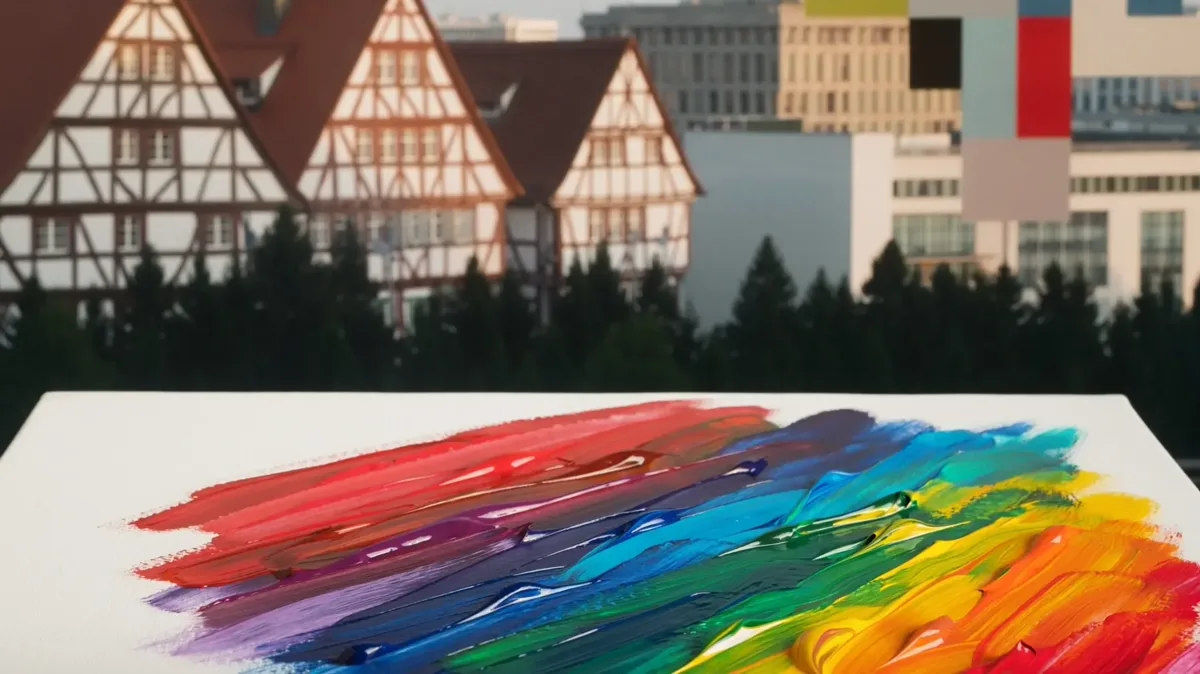
Chapter in 30 Seconds
Transform your German by painting vivid pictures with precise descriptions and comparisons.
- Identify when adjectives need endings.
- Construct comparative sentences with '-er' and 'als'.
- Express equality using 'genauso...wie' structures.
तुम क्या सीखोगे
Hey friend! You've already learned so much German and can build simple sentences. Now it's time to make your German even more exciting! In this chapter, you'll learn how to not just name things, but describe them precisely and beautifully, and even compare them with each other. First, I'll show you when adjectives (those words that describe things) need an ending and when they don't. For example, when you say
This car is beautiful,the adjective comes without change, but when you say
the beautiful car, you need to dress up the adjective with a special ending that matches the noun. Don't worry, it's not hard at all, just a few small rules! You'll also learn how to describe verbs with words like fast or well that don't take endings. After that, we'll dive into comparisons! How do you say something is bigger or faster than something else? By adding -er to the adjective and using 'als'. For instance, if you want to say This book is better than that book,you'll learn exactly how to say it! Plus, for the word
good, we have a special irregular form, besser, which you must use. And if two things are exactly alike, genauso...wie will come to your rescue. Imagine you're at a restaurant and want to say this dish is tastier or just as good as another. Or you're describing your new home to a friend, saying its kitchen is bigger than the old one.After this chapter, you'll be able to speak much more naturally and precisely, express your tastes, describe the world with more detail, and give your opinions on various things. Ready? Let's go!
-
विधेय विशेषण: सरल वर्णन (बिना एंडिंग के)जब कोई विशेषण 'sein' या 'werden' जैसी क्रिया के बाद आता है, तो वह हमेशा अपने «मूल रूप» में रहता है, कोई «एंडिंग» नहीं लगती।
-
जर्मन विशेषण अंत: संज्ञाओं को सजाना (Adjektivdeklination)देखो, संज्ञा से ठीक पहले विशेषण को हमेशा 'एंडिंग' दो, जो 'लिंग', 'कारक' और 'आर्टिकल' से मेल खाए।
-
जर्मन क्रिया विशेषण: बिना अंत वाले शब्द (Adverbien ohne Endungen)देखो, जर्मन में क्रियाविशेषण (adverbs) बहुत सीधे-सादे होते हैं। ये कभी अपना रूप «नहीं बदलते», जैसे विशेषण (adjectives) बदलते हैं। बस इतना याद रखो: ये हमेशा «नंगे» रहते हैं, मतलब बिना किसी
endingके। -
जर्मन तुलना: -er और 'als' जोड़नाजर्मन में तुलनात्मक रूप बनाने के लिए, विशेषण में
-erजोड़ो और तुलना के लिएalsका उपयोग करो। -
"से" के साथ तुलना करना (als)'als' का इस्तेमाल सिर्फ तुलनात्मक विशेषण ('-er' वाले) के बाद ही करना, यह बताने के लिए कि एक चीज़ दूसरी से «ज़्यादा» है।
-
अच्छा से बेहतर: अनियमित तुलना (gut/besser)तुलना करते समय, 'gut' का अनियमित रूप 'besser' ही इस्तेमाल करना। 'guter' या 'mehr gut' कहना गलत है।
-
समानता की तुलना (genauso...wie)तुम्हारे पास एक जादुई तरीका है:
genauso...wieऔर मूल विशेषण का उपयोग करके बताओ कि दो चीज़ें बिल्कुल एक जैसी हैं.
Learning Objectives
By the end of this chapter, you will be able to:
-
1
By the end you will be able to: describe objects accurately using correct adjective endings and comparative forms.
अध्याय गाइड

Overview
dress-up words are needed and when they're not. You'll discover how to use adjectives to paint vivid pictures and how adverbs can add extra punch to your verbs. Beyond just describing, you'll learn the simple yet powerful ways to compare things, saying something is bigger than or just as good assomething else.
How This Grammar Works
dressed up with an ending. This is called German Adjective Endings: Dressing Up Nouns (Adjektivdeklination). The ending depends on the gender, case, and whether there's a definite (der, die, das) or indefinite (ein, eine) article.No-Ending Heroes. Adverbs describe verbs, other adjectives, or other adverbs, telling you *how* something happens. Just like predicative adjectives, they usually don't take endings.Than (als).just as...as. For example, Sie ist genauso groß wie ihr Bruder. (She is just as tall as her brother.)
Common Mistakes
- 1✗ Wrong:
Das Haus ist großes.
Das Haus ist groß.
sein (ist, sind, etc.), it's a predicative adjective and does not take an ending.- 1✗ Wrong:
Mein Auto ist schneller wie deins.
Mein Auto ist schneller als deins.
faster *than*), you *must* use als. Wie is used for equality (as...as).
Real Conversations
A
B
A
B
A
B
Quick FAQ
When do German adjectives *not* need an ending?
Adjectives do not need an ending when they come after a verb like sein (to be) or werden (to become), acting as a predicative adjective. For example, Das Wetter ist schön.
What's the difference between als and wie in comparisons?
Als is used for unequal comparisons (e.g., bigger *than*, faster *than*). Wie is used for equal comparisons (e.g., as big *as*,
just as fast *as*).
Is gut always irregular in comparison?
Yes, gut is always irregular. Its comparative form is besser (better), and its superlative is am besten (best).
How do I say something is
just as X as Yin German?
You use the structure genauso...wie. For example, Er ist genauso intelligent wie sie. (He is just as intelligent as she is.)

Cultural Context
मुख्य उदाहरण (8)
Das WLAN hier ist total langsam.
यहाँ का वाई-फाई बहुत स्लो है।
विधेय विशेषण: सरल वर्णन (बिना एंडिंग के)Deine neuen Fotos auf Instagram sind echt cool!
इंस्टाग्राम पर तुम्हारी नई तस्वीरें वाकई मस्त हैं!
विधेय विशेषण: सरल वर्णन (बिना एंडिंग के)Ich möchte einen starken {Kaffee|m}.
मुझे एक स्ट्रॉंग कॉफी चाहिए।
जर्मन विशेषण अंत: संज्ञाओं को सजाना (Adjektivdeklination)Das ist ein schönes {Foto|n} auf Instagram!
यह इंस्टाग्राम पर एक खूबसूरत फोटो है!
जर्मन विशेषण अंत: संज्ञाओं को सजाना (Adjektivdeklination)Sie tanzt sehr gut.
वह बहुत अच्छा नाचती है।
जर्मन क्रिया विशेषण: बिना अंत वाले शब्द (Adverbien ohne Endungen)Ich komme heute später.
मैं आज बाद में आ रहा हूँ।
जर्मन क्रिया विशेषण: बिना अंत वाले शब्द (Adverbien ohne Endungen)Mein {das|n} Handy ist `schneller` als deins.
मेरा फोन तुम्हारे वाले से तेज़ है।
जर्मन तुलना: -er और 'als' जोड़नाटिप्स और ट्रिक्स (4)
डिक्शनरी वाला नियम
Der Kaffee ist heiß.
डाटिव शॉर्टकट
Ich spreche mit dem netten Mann.कोई अपवाद नहीं!
बिना बदलाव का नियम
Sie tanzt gut.'Than' का नियम
Er ist größer als ich.(वह मुझसे लंबा है)।
मुख्य शब्दावली (6)
Real-World Preview
Restaurant Comparison
Review Summary
- Subject + sein + Adjective
- Adjective + -er + als
सामान्य गलतियाँ
Students often add endings to predicative adjectives. Remember, no ending after 'sein'.
Comparisons require the full noun phrase or pronoun reference.
Never use 'mehr' with irregular adjectives like 'gut'.
इस अध्याय के नियम (7)
Next Steps
You've successfully leveled up your descriptive powers! Keep practicing, and don't be afraid to make mistakes.
Write 5 sentences comparing your favorite fruits.
त्वरित अभ्यास (10)
Mein Handy ist genauso schnell ___ deins.
frontend.learn_grammar.from_rule: समानता की तुलना (genauso...wie)
Der Tee ist ___.
frontend.learn_grammar.from_rule: विधेय विशेषण: सरल वर्णन (बिना एंडिंग के)
Find and fix the mistake:
Er rennt genauso schneller wie sein Freund.
frontend.learn_grammar.from_rule: समानता की तुलना (genauso...wie)
Find and fix the mistake:
Mein neues Fahrrad ist schönes.
frontend.learn_grammar.from_rule: विधेय विशेषण: सरल वर्णन (बिना एंडिंग के)
Dieses Restaurant ist ___ als das andere.
frontend.learn_grammar.from_rule: जर्मन तुलना: -er और 'als' जोड़ना
Find and fix the mistake:
Ich finde dieses Kleid viel guter als das andere.
frontend.learn_grammar.from_rule: अच्छा से बेहतर: अनियमित तुलना (gut/besser)
Choose the grammatically correct comparison:
frontend.learn_grammar.from_rule: अच्छा से बेहतर: अनियमित तुलना (gut/besser)
Ein {der|m} Elefant ist größer ___ eine {die|f} Maus.
frontend.learn_grammar.from_rule: "से" के साथ तुलना करना (als)
Find and fix the mistake:
Mein {der|m} Kaffee ist heißer wie dein {der|m} Tee.
frontend.learn_grammar.from_rule: "से" के साथ तुलना करना (als)
Choose the correct sentence:
frontend.learn_grammar.from_rule: जर्मन विशेषण अंत: संज्ञाओं को सजाना (Adjektivdeklination)
Score: /10
सामान्य प्रश्न (6)
den guten Wein।
