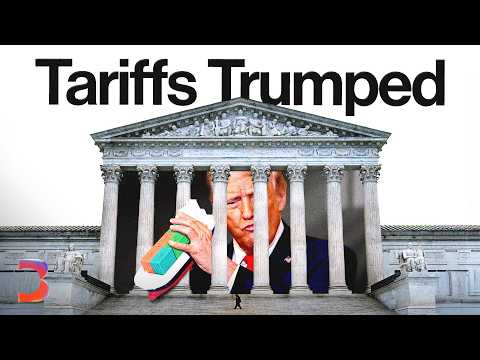
tariffs 30秒で
- A tariff is a tax on imported goods designed to protect domestic industries and raise government revenue by making foreign products more expensive.
- Tariffs act as trade barriers, often leading to higher consumer prices and potential trade conflicts between nations when used aggressively.
- There are two main types: ad valorem (percentage-based) and specific (fixed-fee), both of which impact the global supply chain and pricing.
- While intended to support local jobs, tariffs can reduce overall economic efficiency and provoke retaliatory measures from international trading partners.
At its most fundamental level, a tariff is a financial instrument of statecraft—specifically, a tax or duty imposed by a national government on goods imported from other countries. While the term might sound like dry economic jargon, tariffs are actually powerful tools that shape the global economy, influence international relations, and affect the price of everything from the smartphone in your pocket to the fruit in your refrigerator. Governments use tariffs for three primary reasons: to raise revenue, to protect domestic industries from foreign competition, and to exert political pressure on other nations. In the early history of many nations, including the United States, tariffs were the primary source of government funding before the implementation of income taxes. Today, however, they are more frequently used as a shield for local businesses. By making imported goods more expensive, a tariff encourages consumers to buy locally produced alternatives, which theoretically saves jobs and supports the domestic economy. However, this protection often comes at a cost, as it can lead to higher prices for consumers and retaliatory measures from trading partners.
- Economic Protectionism
- The policy of restraining trade between states through methods such as tariffs on imported goods, restrictive quotas, and a variety of other government regulations designed to allow fair competition between imports and goods and services produced domestically.
- Revenue Generation
- Historically, tariffs served as a vital source of income for governments. In developing nations, tariffs still represent a significant portion of the national budget because they are easier to collect than income or property taxes.
When you hear politicians or economists discussing trade wars, they are almost always talking about tariffs. A trade war typically begins when one country raises tariffs on another country's exports. The second country then responds by raising its own tariffs on the first country's products. This 'tit-for-tat' escalation can lead to a significant reduction in international trade, higher costs for manufacturers who rely on imported raw materials, and ultimately, a slowdown in global economic growth. For example, if a country imposes a tariff on imported aluminum, domestic beer companies that use aluminum cans will see their production costs rise, which might lead to higher beer prices for you at the store. Thus, while tariffs are intended to protect specific sectors like aluminum manufacturing, their ripple effects are felt throughout the entire supply chain.
The administration announced a new round of tariffs on imported solar panels to bolster the domestic renewable energy sector.
Furthermore, tariffs are categorized into two main types: ad valorem and specific. An ad valorem tariff is calculated as a percentage of the value of the imported good, much like a sales tax. For instance, a 10% tariff on a $1,000 machine would be $100. A specific tariff, on the other hand, is a fixed fee based on the quantity of the item, such as $5 per ton of steel. Understanding these distinctions is crucial for businesses engaged in international trade, as they must factor these costs into their pricing strategies and logistics planning. In modern discourse, the word 'tariffs' is often used interchangeably with 'customs duties' or 'import taxes,' though 'tariffs' specifically carries a connotation of official policy and international negotiation.
Economists warn that retaliatory tariffs could hurt agricultural exports significantly.
- Trade Barriers
- Tariffs are the most visible form of trade barriers, which also include quotas, subsidies, and technical regulations that make it harder for foreign goods to enter a market.
Negotiators are working to reduce tariffs to zero under the new free trade agreement.
The historical Smoot-Hawley tariffs are often cited as a factor that worsened the Great Depression.
Using the word 'tariffs' correctly requires an understanding of its grammatical role as a countable noun, though it is most frequently used in its plural form. When discussing the general concept of trade taxes, you might say 'tariff policy,' but when referring to specific taxes on various goods, 'tariffs' is the standard. It is often paired with strong verbs that describe government action. For instance, governments 'impose,' 'levy,' or 'introduce' tariffs when they want to start taxing imports. Conversely, when they want to encourage trade, they 'reduce,' 'lower,' 'slash,' 'suspend,' or 'abolish' tariffs. These verb-noun pairings are essential for sounding natural in a business or political context. If you are writing an essay on economics, you might write, 'The government decided to impose tariffs on foreign steel to protect local mills.' This sentence clearly identifies the actor (the government), the action (imposing), the object (tariffs), and the purpose (protection).
- Impose/Levy
- To officially force a tariff to be paid. Example: 'The US levied tariffs on French wine in response to digital service taxes.'
- Retaliatory Tariffs
- Tariffs imposed by one country in response to tariffs imposed by another. Example: 'The trade war escalated as both nations announced retaliatory tariffs.'
Another common way to use 'tariffs' is in the context of trade agreements. You will often see phrases like 'tariff-free trade' or 'the elimination of tariffs.' In these cases, the word describes a barrier that is being removed. For example, 'The European Single Market allows for the movement of goods without any tariffs between member states.' This highlights the role of tariffs as a hurdle to be cleared. Additionally, you can use 'tariff' as a modifier for other nouns, such as 'tariff barriers,' 'tariff rates,' or 'tariff schedules.' A 'tariff schedule' is a comprehensive list of all the duties a country charges on various imported items. If a business person says, 'We need to check the tariff schedule for electronic components,' they are looking for the specific tax rate for those items.
Small businesses often struggle to navigate the complex tariffs associated with international shipping.
In more advanced usage, you might discuss the 'incidence of tariffs,' which refers to who actually ends up paying the tax. Economists often argue that while a tariff is levied on an importing company, the 'incidence' falls on the consumer in the form of higher prices. You might say, 'The incidence of the new tariffs on washing machines was passed directly to the consumers.' This level of precision shows a deep understanding of both the word and the economic reality it represents. Furthermore, 'tariffs' can be used metaphorically in some contexts, though this is rare. For instance, one might speak of 'social tariffs' or 'environmental tariffs,' referring to costs imposed to account for social or environmental impacts, though these are usually specialized terms within policy circles.
The sudden hike in tariffs disrupted the global supply chain for automotive parts.
- Preferential Tariffs
- Lower tariff rates applied to imports from certain countries, usually as part of a trade agreement or to help developing nations.
By lowering tariffs, the treaty aims to increase the volume of bilateral trade by twenty percent.
The WTO provides a forum for member nations to resolve disputes regarding unfair tariffs.
The word 'tariffs' is a staple of news broadcasts, particularly those focusing on international politics, business, and the economy. If you tune into a program like 'BBC World News' or 'CNN Business,' you are likely to hear it in the context of diplomatic negotiations or market fluctuations. News anchors might report on 'mounting trade tensions' or 'the threat of new tariffs.' This is because tariffs are one of the most direct ways a government can signal its displeasure with another country's policies. For example, during the trade disputes between the United States and China that began in 2018, the word 'tariffs' was mentioned thousands of times daily across global media. It became a shorthand for the broader geopolitical struggle for economic dominance. In this context, hearing the word often signals a period of uncertainty for investors and businesses, as they wait to see how the new costs will affect their bottom line.
- Financial News
- Reporters use 'tariffs' to explain why stock prices for certain industries—like steel, tech, or agriculture—are rising or falling.
- Political Debates
- Politicians use 'tariffs' as a campaign promise to 'protect domestic jobs' or as a criticism of 'rising costs for working families.'
You will also encounter 'tariffs' in academic settings, particularly in economics, political science, and international law classes. Professors use the word to discuss historical events like the Great Depression, where the Smoot-Hawley Tariff Act is often blamed for stifling global trade and worsening the economic downturn. In these settings, the word is used with precision to analyze the 'deadweight loss' or 'consumer surplus' associated with trade barriers. Students are taught to calculate the impact of tariffs using supply and demand curves. If you are reading a textbook on macroeconomics, you will find entire chapters dedicated to 'Tariffs and Non-Tariff Barriers.' This academic usage is more analytical and less emotional than the way the word is used in political speeches, focusing on the mathematical and theoretical outcomes of such policies.
The professor explained how tariffs create a wedge between the price paid by consumers and the price received by producers.
In the corporate world, specifically within logistics, supply chain management, and procurement departments, 'tariffs' is a daily operational term. Logistics managers must constantly monitor 'tariff classifications' (also known as HS codes) to ensure they are paying the correct amount of duty on imported parts. A mistake in classification can lead to heavy fines or delays at the border. When a company is planning its budget for the next fiscal year, the procurement team will ask, 'What are the projected tariffs for our raw materials coming from Southeast Asia?' Here, the word is not a political statement but a concrete line item in a spreadsheet. It represents a cost that must be managed, mitigated, or passed on to the customer. For anyone working in global trade, 'tariffs' is as common a word as 'shipping' or 'inventory.'
Our logistics team is reviewing the new tariffs to determine if we should source our components from a different country.
- Customs and Border Protection
- The government agency responsible for collecting tariffs and enforcing trade laws at the nation's borders.
The news report highlighted the impact of steel tariffs on the local construction industry.
The CEO's speech focused on the challenges posed by fluctuating tariffs in the global market.
One of the most frequent mistakes people make when using the word 'tariffs' is confusing it with 'taxes' in a general sense. While a tariff is a type of tax, not all taxes are tariffs. A tariff is specifically a tax on *imported* or *exported* goods. You would never use 'tariff' to describe the tax on your income, your property, or the sales tax you pay at a local grocery store for domestic goods. Using 'tariff' when you mean 'sales tax' can make a speaker sound uninformed about basic economic terms. For example, saying 'I had to pay a high tariff on my new haircut' is incorrect; you paid a 'service tax' or 'VAT.' To avoid this, remember that 'tariffs' always involve a border crossing. If the product didn't cross an international boundary, the tax associated with it is almost certainly not a tariff.
- Tariff vs. Quota
- A tariff is a tax (money), while a quota is a limit on the quantity (number of items) of a good that can be imported. Don't say 'The government put a tariff of 5,000 cars'—that's a quota.
- Tariff vs. Duty
- While often used interchangeably, 'duty' is the actual money paid, while 'tariff' is the policy or the rate. However, in casual conversation, this distinction is often ignored.
Another common error involves the misunderstanding of who pays the tariff. Many people, including some public figures, mistakenly claim that the exporting country pays the tariff to the importing country. In reality, the tariff is paid by the domestic company that is bringing the goods into the country. If a US company imports shoes from Italy and there is a 20% tariff, the US company pays that 20% to the US government. The Italian shoe manufacturer doesn't pay it. This is a crucial distinction because it explains why tariffs often lead to higher prices for domestic consumers. If you say, 'We are making China pay billions in tariffs,' you are technically incorrect from an accounting perspective; American importers are paying those billions, though the Chinese exporters may lose business as a result. Using the word with this correct understanding is vital for accurate communication in business and policy.
Incorrect: The government increased the tariff on my monthly rent. (Correct: tax or fee)
Grammatically, a minor but frequent mistake is using 'tariff' as a verb. While you can 'tariff a product' in very technical economic writing, it is much more common and natural to use the phrase 'impose a tariff on' or 'levy a tariff on.' Saying 'The president tariffed the imports' sounds slightly awkward and non-standard. Stick to using 'tariff' as a noun. Additionally, ensure you are using the plural 'tariffs' when referring to a broad policy. For example, 'The new tariffs are affecting the tech industry' is better than 'The new tariff is affecting the tech industry,' unless there is literally only one specific tax on one specific item. Lastly, be careful with the spelling; it is 'tariff' with two 'f's at the end, not 'tarif' or 'tarrif.'
Incorrect: The tariff on the number of imported apples was set at 10,000 tons. (Correct: quota)
- Tariff vs. Subsidy
- A tariff is a tax on foreign goods, whereas a subsidy is financial support given by the government to domestic producers to help them compete.
Correct: The importer had to pay a 15% tariff on the shipment of electronics.
Incorrect: China paid the tariffs to the US Treasury. (Correct: US importers paid the tariffs.)
To enrich your vocabulary, it is helpful to know words that are similar to 'tariffs' but carry slightly different nuances. The most common synonym is 'customs duties' (or simply 'duties'). In many contexts, 'duties' and 'tariffs' are used interchangeably. However, 'customs duties' is often the term used by the actual government agencies and on official shipping documents. If you are filling out a form at an airport, you will see 'Customs Declaration,' not 'Tariff Declaration.' Another related term is 'levy.' A levy is a more general term for any tax, fee, or fine imposed by an authority. While you can call a tariff a 'levy,' you wouldn't call a parking fine a 'tariff.' Using 'levy' can add a more formal or authoritative tone to your writing. For example, 'The government announced a new levy on imported luxury vehicles' sounds more official than 'The government put a tax on imported cars.'
- Tariff vs. Customs Duty
- 'Tariff' usually refers to the schedule of rates or the policy, while 'duty' refers to the actual tax paid on a specific item. In practice, they are often synonyms.
- Tariff vs. Excise Tax
- An excise tax is a tax on specific goods produced *within* a country (like alcohol or tobacco), whereas a tariff is on goods produced *outside* and brought in.
Another word you might encounter is 'impost.' This is an archaic or very formal term for a tax or duty, especially one on imports. You are unlikely to hear it in a modern news broadcast, but you might see it in historical documents or classic literature. A more modern alternative is 'trade barrier.' This is a broader term that includes tariffs but also encompasses quotas, embargoes, and restrictive regulations. If you want to talk about the general difficulty of trading with a country without focusing only on the taxes, 'trade barriers' is the better phrase. For instance, 'The new regulations acted as a non-tariff trade barrier, making it nearly impossible for small farmers to export their crops.' This shows that you understand tariffs are just one part of a larger system of trade control.
The government decided to replace the old tariffs with a more modern system of customs duties.
In the context of services rather than physical goods, you might hear the word 'toll.' While a toll is usually a fee for using a road or bridge, it is sometimes used metaphorically to describe a cost for access. However, in international trade, 'tariff' remains the precise term for goods. Another specific term is 'countervailing duties' (CVDs). These are special tariffs imposed to offset the subsidies given by foreign governments to their exporters. If Country A gives its steel makers money so they can sell steel cheaply in Country B, Country B might impose 'countervailing duties' to level the playing field. Knowing these specific terms—duties, levies, trade barriers, and countervailing duties—will allow you to discuss international trade with much greater precision and sophistication.
The elimination of tariffs was the cornerstone of the regional trade agreement.
- Tariff vs. Surcharge
- A surcharge is an extra fee added to an existing tax or cost. A tariff is the primary tax on the import itself.
The new trade agreement aims to remove all non-tariff barriers to facilitate smoother commerce.
The WTO monitors the tariffs applied by member states to ensure they comply with international law.
How Formal Is It?
豆知識
There is a popular but false legend that the word 'tariff' comes from the town of Tarifa in Spain. The story goes that the town's residents charged a fee to every ship passing through the Strait of Gibraltar. While the town is real, the linguistic connection is a myth!
発音ガイド
- Pronouncing it like 'terrific' (te-RIF-ic).
- Adding an extra 'r' sound (tarr-riff).
- Making the 'a' sound too long (TARE-iff).
- Swapping the 'f' for a 'v' sound (tar-iv).
- Misplacing the stress on the second syllable (ta-RIFF).
難易度
The word itself is simple, but it often appears in complex economic texts.
Requires understanding of specific collocations like 'impose' or 'levy'.
Easy to pronounce once the stress is learned, but used in formal contexts.
Can be confused with 'terrific' if the speaker is fast or has a strong accent.
次に学ぶべきこと
前提知識
次に学ぶ
上級
知っておくべき文法
Pluralization of Abstract Nouns
While 'trade' is often uncountable, 'tariffs' is almost always countable because it refers to specific tax rates.
Prepositional Use with 'Impose'
We always impose tariffs *on* something, never *to* or *at* something.
Adjective Order with Economic Terms
We say 'new retaliatory import tariffs,' following the order of age, purpose, and type.
Zero Article for Generalizations
'Tariffs are a tool of trade' (general) vs 'The tariffs on steel' (specific).
Using 'Despite' for Concession
'Despite high tariffs, the company continued to import foreign parts.'
レベル別の例文
The tariff on the toy was two dollars.
The extra money for the toy was $2.
Simple subject-verb-object structure.
Do I have to pay a tariff for this?
Is there a tax for this item?
Question form using 'do'.
The government wants a tariff on fruit.
The government wants a tax on fruit from other places.
Present simple tense.
High tariffs make things cost more.
Big taxes make items expensive.
Plural subject with a base verb.
There is no tariff on books.
Books have no extra tax.
There is/are construction.
He paid the tariff at the border.
He paid the tax when he entered the country.
Past simple tense.
Tariffs are like a tax for trade.
Tariffs are taxes for buying and selling.
Using 'like' for comparison.
We do not like high tariffs.
We don't want big taxes on imports.
Negative present simple.
The country put a new tariff on imported cars.
A new tax was added to cars from abroad.
Use of 'put on' as a phrasal verb.
Tariffs help local farmers sell their food.
These taxes help farmers in the country.
Infinitive without 'to' after 'help'.
Why are tariffs so high this year?
Why is the import tax so expensive now?
Wh- question with 'be'.
The company had to pay a tariff on the steel.
The business paid a tax for the metal.
'Had to' for past necessity.
Lower tariffs mean cheaper electronics for us.
Less tax means cheaper phones and computers.
Subject-verb agreement with 'mean'.
The two countries agreed to remove all tariffs.
They decided to have no more import taxes.
Verb 'agree' followed by an infinitive.
A tariff is different from a normal tax.
A tariff is not the same as other taxes.
Preposition 'from' after 'different'.
She studied tariffs in her business class.
She learned about import taxes at school.
Past simple with a prepositional phrase.
The government decided to impose tariffs on foreign wine.
They officially started taxing wine from other countries.
Collocation: 'impose tariffs on'.
Retaliatory tariffs can lead to a serious trade war.
Taxes given in response can cause a big conflict.
Use of the adjective 'retaliatory'.
Small businesses are struggling with the new tariffs.
Little companies find the new taxes very difficult.
Present continuous for an ongoing situation.
The goal of the tariff is to protect domestic jobs.
The tax is meant to keep jobs in the country.
Noun clause with 'to' infinitive.
Tariffs are often discussed during international summits.
Import taxes are a common topic at big meetings.
Passive voice: 'are discussed'.
We need to check the current tariff rates for electronics.
We must look at the tax percentages for gadgets.
Compound noun: 'tariff rates'.
If they increase tariffs, prices will definitely go up.
Higher taxes will result in higher costs.
First conditional sentence.
The trade agreement reduced tariffs by fifty percent.
The deal cut the import taxes in half.
Preposition 'by' to show the amount of change.
The administration is considering slashing tariffs on essential goods.
The government might greatly reduce taxes on necessary items.
Gerund 'slashing' after the verb 'considering'.
Economists argue that tariffs often hurt the very people they aim to help.
Experts say these taxes can be bad for consumers.
Relative clause 'they aim to help'.
The sudden imposition of tariffs caught many importers off guard.
The quick start of the taxes surprised many businesses.
Noun form 'imposition' of the verb 'impose'.
Tariffs are a primary example of protectionist economic policies.
These taxes show how countries protect their own markets.
Adjective 'protectionist' modifying 'policies'.
The WTO aims to prevent countries from using unfair tariffs.
The trade group stops nations from using bad taxes.
Structure: 'prevent [someone] from [doing something]'.
Despite the tariffs, demand for foreign luxury goods remains high.
Even with the taxes, people still want expensive imports.
Concession clause starting with 'Despite'.
Tariffs can be either specific or ad valorem in nature.
Taxes can be a fixed fee or a percentage of value.
Correlative conjunction 'either... or'.
The manufacturing sector lobbied the government for higher tariffs.
Factories asked the government for more protection.
Verb 'lobby' followed by a prepositional phrase.
The intricate web of tariffs makes global supply chain management a daunting task.
Complex taxes make managing international business very hard.
Metaphorical use of 'web' to describe complexity.
Retaliatory tariffs were met with further escalations in the diplomatic standoff.
The response taxes caused more trouble in the argument.
Passive construction with 'met with'.
The deadweight loss associated with high tariffs is a major concern for free-trade advocates.
The loss of economic efficiency is a big problem for experts.
Technical economic term 'deadweight loss'.
Governments often utilize tariffs as leverage in broader geopolitical negotiations.
Nations use trade taxes to get what they want in politics.
Verb 'utilize' for formal context.
The removal of tariffs is expected to stimulate bilateral trade significantly.
Taking away the taxes should help both countries trade more.
Passive expectation 'is expected to'.
Tariffs can inadvertently foster inefficiencies within protected domestic industries.
Taxes can accidentally make local businesses lazy or slow.
Adverb 'inadvertently' showing unintended consequences.
The historical analysis of the Smoot-Hawley tariffs reveals their catastrophic impact.
Looking at old taxes shows how much damage they did.
Complex subject with multiple modifiers.
The legal framework governing tariffs is primarily defined by WTO agreements.
The rules for these taxes come from international groups.
Participle phrase 'governing tariffs'.
The discourse surrounding tariffs has shifted from revenue generation to strategic decoupling.
Talk about taxes has moved to separating economies.
Sophisticated 'from... to' structure.
Optimal tariff theory suggests that a large nation can improve its terms of trade at the expense of its partners.
A big country might win by taxing others, but others lose.
Academic 'suggests that' clause.
The imposition of tariffs often serves as a populist response to the perceived negative externalities of globalization.
Taxes are used to please people who dislike global trade.
Advanced vocabulary: 'externalities', 'populist'.
Tariffs are frequently criticized for being regressive, as they disproportionately affect lower-income consumers.
These taxes are bad because they hurt poor people more.
Adverb 'disproportionately' for precise impact.
The nuances of tariff classification can lead to protracted legal battles in international courts.
Small details in tax rules cause long court cases.
Adjective 'protracted' meaning long-lasting.
Bilateral trade agreements often feature a gradual phase-out of tariffs to allow industries to adjust.
Deals slowly remove taxes so businesses can get ready.
Compound noun 'phase-out'.
The resurgence of tariffs in recent years signals a retreat from the post-war consensus on liberalized trade.
New taxes show countries are moving away from free trade.
Abstract noun 'consensus'.
Quantitative analysis is essential to determine the net welfare effects of a specific tariff regime.
Math is needed to see if a tax system is good or bad overall.
Technical term 'net welfare effects'.
類義語
反対語
よく使う組み合わせ
よく使うフレーズ
— Describing trade that happens without any import taxes. It is the goal of many free trade agreements.
The two countries enjoy tariff-free trade in most sectors.
— Subject to the rules and costs of a specific trade tax policy. It refers to goods being imported under a specific regime.
These goods were imported under the new tariff introduced last month.
— A metaphorical term for very high tariffs that make it almost impossible for foreign goods to enter a market.
The country built a tariff wall to keep out foreign competition.
— A sudden and significant increase in the rate of import taxes. It is often a political move.
The recent tariff hike on steel has upset many local construction firms.
— Ways of restricting trade that don't involve taxes, such as quotas or complex regulations. It's often used in contrast to tariffs.
Even after tariffs were removed, non-tariff barriers remained a problem.
— A situation where two or more countries keep raising tariffs on each other's goods. It is a synonym for a trade war.
The tariff war between the two giants has slowed global growth.
— The process of determining which category a good belongs to so the correct tax can be applied. It is a technical logistics task.
Correct tariff classification is essential for avoiding legal trouble.
— Giving a specific country a lower tax rate than others. It is often used to help allies or developing nations.
The small island nation receives preferential tariff treatment for its sugar exports.
— The total amount of money a government collects from import taxes. It is a key part of some national budgets.
Tariff revenue has declined as the country moved toward free trade.
— The maximum tariff rate a country has agreed to under WTO rules. It provides stability for international trade.
The country cannot raise its taxes above the bound tariff level.
よく混同される語
They sound similar but 'terrific' means great, while 'tariff' is a tax. Don't say 'That was a tariff movie!'
Both involve movement, but 'traffic' is about cars on a road, and 'tariff' is about taxes on goods.
Both start with 'terr-', but one is about land and the other is about trade taxes.
慣用句と表現
— To be protected from foreign competition by high taxes. It implies a lack of efficiency due to lack of competition.
The domestic car industry grew lazy while living behind a tariff wall.
formal/metaphorical— A series of retaliatory taxes where each country matches the other's actions. It describes an escalating conflict.
The tit-for-tat tariffs have made it impossible for us to plan our budget.
neutral— Using tariffs to make sure domestic and foreign companies have the same costs. It is a common justification for trade taxes.
The new tariffs are meant to level the playing field for our local steel mills.
idiomatic/neutral— The opposite of tariffs; when countries lower standards or taxes to attract trade, though tariffs are often used to prevent this.
Some argue that removing all tariffs will lead to a race to the bottom in labor standards.
political/neutral— To remove tariffs so that a huge amount of foreign goods enters the market. It implies a sudden and overwhelming change.
Removing the tariffs on cheap electronics will open the floodgates for foreign imports.
metaphorical— To be in a position where you are controlled by something, like fluctuating tariffs. It shows a lack of power.
Our export business is at the mercy of international tariff changes.
neutral— To stop or slow down trade through the use of high tariffs. It has a negative connotation of preventing growth.
High tariffs will stifle trade and hurt the global economy.
formal— Using tariffs to protect a domestic industry from having to compete with better or cheaper foreign products.
The government is trying to shield the local textile industry from competition using high tariffs.
neutral— Something that has both good and bad effects, like tariffs which protect jobs but raise prices. It is a very common idiom.
Tariffs are a double-edged sword; they help workers but hurt consumers.
neutral— When a company passes the cost of a tariff on to the consumer. It means shifting the responsibility or cost.
The manufacturers are just passing the buck to the customers by raising prices due to the tariffs.
informal間違えやすい
Both are trade barriers used by governments.
A tariff is a tax (you pay money), while a quota is a limit on quantity (you can only bring in a certain number of items).
The government set a tariff of 10% and a quota of 1,000 cars per year.
Both are used to help domestic industries.
A tariff taxes foreign competitors, while a subsidy gives money to local businesses. One takes money, the other gives it.
Instead of a tariff on foreign corn, the government gave a subsidy to local farmers.
Both are specific taxes on goods.
Tariffs are only on imports/exports. Excise taxes are on specific goods made and sold *inside* the country, like gas or alcohol.
You pay a tariff on imported French wine and an excise tax on local beer.
They are often used as synonyms in trade.
A tariff is the policy or the list of rates. A duty is the actual sum of money you pay at the customs office.
The tariff for electronics is 5%, so I had to pay a $50 duty on my new phone.
Both restrict international trade.
A tariff makes trade more expensive. An embargo makes trade illegal—it's a total ban on trading with a specific country.
The country moved from high tariffs to a full embargo after the conflict started.
文型パターン
The tariff is [price].
The tariff is five dollars.
There is a tariff on [noun].
There is a tariff on imported fruit.
The government imposed tariffs on [noun].
The government imposed tariffs on foreign cars.
[Noun] are struggling because of the tariffs.
Local manufacturers are struggling because of the tariffs.
The imposition of tariffs led to [consequence].
The imposition of tariffs led to a significant market distortion.
Tariffs serve as a populist response to [abstract noun].
Tariffs serve as a populist response to economic globalization.
If we lower tariffs, [result].
If we lower tariffs, trade will increase.
The tariffs were designed to [purpose].
The tariffs were designed to protect the domestic steel industry.
語族
名詞
動詞
形容詞
関連
使い方
The word is very frequent in news and business, but rare in casual daily life unless prices are rising.
-
Using 'tariff' for domestic taxes.
→
The government increased the sales tax on bread.
Tariffs only apply to goods crossing international borders. For local goods, use 'tax.'
-
Saying 'The exporter pays the tariff.'
→
The importer pays the tariff to their own government.
This is a common economic misunderstanding. The tax is paid by the person bringing the goods in.
-
Confusing 'tariff' with 'quota.'
→
The government set a quota of 500 tons of sugar.
A tariff is money; a quota is a number or amount. Don't mix them up.
-
Pronouncing it as 'te-RIFF.'
→
Pronounce it as 'TAR-iff.'
The stress must be on the first syllable. Misplacing the stress makes it hard to understand.
-
Using 'tariff' as a verb in casual speech.
→
The government imposed a tariff on the goods.
While 'to tariff' exists in technical writing, it sounds very awkward in normal conversation.
ヒント
Use the Plural
In 90% of cases, you should use the plural 'tariffs.' It refers to the general policy or the multiple taxes on different items. Use the singular 'tariff' only when referring to one specific tax on one specific product.
Pair with 'Impose'
The most natural verb to use with tariffs is 'impose.' If you want to sound like a native speaker or an expert, say 'The government imposed tariffs' rather than 'The government made a tariff.'
Think Borders
Always remember that a tariff is only for goods crossing an international border. If you are talking about a tax on something inside your own city or state, use the word 'tax' or 'fee' instead.
Stress the Start
The stress is on the first syllable: TAR-iff. Practice saying it like the word 'target' but with an 'if' at the end. This will help you avoid confusing it with 'terrific.'
Check the Schedule
If you work in business, always refer to the 'tariff schedule.' This is the official list of taxes. Using this specific phrase shows that you understand how international trade works.
Countable vs Uncountable
Tariff is a countable noun. You can have 'one tariff,' 'two tariffs,' or 'many tariffs.' This is different from 'trade' or 'commerce,' which are usually uncountable.
Be Precise
Instead of saying 'The tariffs are high,' try saying 'The 25% tariff on imported steel is high.' Adding the percentage and the product makes your writing much more informative.
Watch for 'Duties'
In news reports, the speaker might switch between 'tariffs' and 'duties.' Don't get confused; they are talking about the same thing in almost every context.
Understand Protectionism
Tariffs are the main tool of 'protectionism.' If you hear a politician talking about 'protecting our industries,' they are almost certainly going to mention tariffs next.
The 'Two Fs' Rule
Remember that 'tariff' has two 'f's at the end. Think of it as a 'Fee for Foreign' goods. Two Fs for two words: Fee and Foreign.
暗記しよう
記憶術
Think of a 'Tax on ARRIVals.' The word TARIFF starts with 'T' for Tax and sounds like 'Arrival' if you stretch your imagination. It's the tax you pay when goods arrive at the border.
視覚的連想
Imagine a giant wall at the border made of dollar bills. Every time a truck tries to drive through, a giant hand reaches down and takes some of those bills. That hand is the tariff.
Word Web
チャレンジ
Try to explain the concept of a tariff to a friend using only the words 'border,' 'money,' and 'expensive.' Then, try to write a sentence using 'retaliatory tariffs' correctly.
語源
The word 'tariff' entered the English language in the late 16th century via the Italian word 'tariffa.' The Italian term itself was derived from the Arabic word 'ta'rif,' which means 'notification' or 'inventory.'
元の意味: In Arabic, 'ta'rif' was related to 'arafa,' meaning 'to make known' or 'to notify.' It originally referred to a list of prices or a schedule of charges.
Semitic (Arabic) to Romance (Italian) to Germanic (English).文化的な背景
Be aware that tariffs can be a sensitive topic in political discussions, as they are often linked to nationalism, job losses, and the cost of living.
In the US, tariffs are often a hot-button political issue, linked to the 'rust belt' and manufacturing jobs. In the UK, post-Brexit trade tariffs have been a major topic of public discussion.
実生活で練習する
実際の使用場面
International Trade News
- escalating trade tensions
- threat of new tariffs
- retaliatory measures
- trade war
Business Strategy Meetings
- impact on profit margins
- supply chain disruption
- sourcing alternatives
- tariff classification
Economics Classroom
- domestic producer surplus
- consumer welfare loss
- market distortion
- tariff incidence
Customs and Shipping
- customs declaration
- duty-free
- tariff schedule
- harmonized system code
Political Campaigning
- protecting local jobs
- fair trade
- standing up to foreign competitors
- reducing the trade deficit
会話のきっかけ
“Do you think tariffs are a good way to protect local jobs, or do they just make things too expensive?”
“How have the recent tariffs on electronics affected the prices of gadgets in your country?”
“If you were the leader of a country, would you prefer free trade or using tariffs to help your industries?”
“Can you think of any products that are much more expensive here because of import tariffs?”
“Do you think a trade war caused by tariffs can ever have a winner, or does everyone lose?”
日記のテーマ
Write about a time you noticed the price of something imported went up. Do you think a tariff was the reason?
Imagine you are a small business owner who relies on imported parts. Describe how a new 20% tariff would change your business.
Research a historical tariff, like the Smoot-Hawley Act, and write a summary of its effects on the world economy.
Argue for or against the use of tariffs to protect the environment (e.g., taxing goods from countries with high pollution).
Describe the relationship between two countries currently involved in a trade dispute involving tariffs. What are they fighting about?
よくある質問
10 問Contrary to popular belief, the exporting country does not pay the tariff. The company that imports the goods into the country pays the tax to its own government. For example, if a US company imports a car from Japan, the US company pays the tariff to the US Treasury. Often, this cost is then passed on to the consumer through higher prices.
Governments use tariffs for several reasons. The most common is protectionism—making foreign goods more expensive to help domestic businesses compete. They also use tariffs to raise money for the national budget, especially in developing countries. Additionally, tariffs can be used as a political tool to punish other countries or negotiate better trade deals.
This is a debated topic. In the short term, tariffs can protect local jobs and industries. However, most economists agree that in the long term, they hurt the economy by raising prices for consumers and making industries less efficient. They can also lead to trade wars, which reduce the total amount of global trade and slow down economic growth.
A trade war happens when one country imposes tariffs on another, and the second country responds with its own tariffs. This 'tit-for-tat' cycle continues, leading to higher and higher taxes on many different products. Trade wars can disrupt global supply chains and cause significant economic damage to both countries involved.
A tariff is a tax on each item brought into the country. A quota is a limit on the total number of items that can be brought in. For example, a tariff might be $10 per shirt, while a quota might be 'only 1,000 shirts per year.' Both are used to protect domestic industries, but they work in different ways.
Tariff-free means that goods can be imported and exported between countries without any import taxes. This is usually the result of a Free Trade Agreement (FTA). For example, countries in the European Union trade with each other tariff-free, which makes products cheaper and encourages more business between them.
Tariff rates are decided by a country's government, often based on economic goals or political pressure. However, countries that are members of the World Trade Organization (WTO) agree to 'bound' rates, which are the maximum tariffs they are allowed to charge. These rates are negotiated over many years during international trade meetings.
An 'ad valorem' tariff is a tax calculated as a percentage of the value of the imported good. For example, a 10% ad valorem tariff on a $500 television would be $50. This is the most common type of tariff because it automatically adjusts as the price of the product changes.
Yes, some countries are now considering 'carbon tariffs.' These are taxes on goods imported from countries that do not have strict environmental laws. The goal is to prevent domestic companies from being at a disadvantage because they have to pay to reduce pollution while foreign companies do not.
If a company fails to pay the required tariffs, their goods can be seized by customs officials at the border. The company may also face heavy fines, legal action, and a ban on future importing. Correctly classifying goods and paying the right tariff is a critical part of international business logistics.
自分をテスト 200 問
Explain in your own words why a government might want to impose a tariff on foreign cars.
Well written! Good try! Check the sample answer below.
Describe the potential negative effects of a trade war on a regular family.
Well written! Good try! Check the sample answer below.
Compare and contrast a tariff and a quota. Which one do you think is more effective?
Well written! Good try! Check the sample answer below.
Write a short dialogue between two business owners discussing new import tariffs.
Well written! Good try! Check the sample answer below.
Do you think 'carbon tariffs' are a good idea to fight climate change? Why or why not?
Well written! Good try! Check the sample answer below.
Summarize the historical impact of the Smoot-Hawley Tariff Act.
Well written! Good try! Check the sample answer below.
Imagine you are a politician. Write a short speech explaining why you are lowering tariffs on food.
Well written! Good try! Check the sample answer below.
Explain the concept of 'retaliatory tariffs' using a simple example.
Well written! Good try! Check the sample answer below.
How does a tariff affect the 'supply and demand' of a product? Use economic terms.
Well written! Good try! Check the sample answer below.
Write a formal letter to a customs office asking for the tariff rate on solar panels.
Well written! Good try! Check the sample answer below.
Describe how tariffs can lead to 'strategic decoupling' between two major economies.
Well written! Good try! Check the sample answer below.
What is the difference between an ad valorem tariff and a specific tariff? Give examples.
Well written! Good try! Check the sample answer below.
Argue for the use of tariffs to protect 'infant industries' in a developing nation.
Well written! Good try! Check the sample answer below.
How do tariffs influence international relations between allies?
Well written! Good try! Check the sample answer below.
Write a journal entry about how a recent price increase in your favorite imported good has affected you.
Well written! Good try! Check the sample answer below.
Explain the role of the WTO in managing global tariffs.
Well written! Good try! Check the sample answer below.
What are 'non-tariff barriers' and why are they sometimes harder to remove than tariffs?
Well written! Good try! Check the sample answer below.
Discuss the ethical implications of using tariffs as a political weapon.
Well written! Good try! Check the sample answer below.
Write a simple explanation of a tariff for a ten-year-old child.
Well written! Good try! Check the sample answer below.
How do tariffs affect the global supply chain of a complex product like a smartphone?
Well written! Good try! Check the sample answer below.
Pronounce the word 'tariffs' clearly three times, focusing on the stress on the first syllable.
Read this aloud:
あなたの回答:
Speech recognition is not supported in your browser. Try Chrome or Edge.
Explain to a partner what happens to the price of a phone if a 20% tariff is added.
Read this aloud:
あなたの回答:
Speech recognition is not supported in your browser. Try Chrome or Edge.
Discuss whether you think your country should have higher or lower tariffs on imported food.
Read this aloud:
あなたの回答:
Speech recognition is not supported in your browser. Try Chrome or Edge.
Role-play a news reporter announcing a new trade war between two countries.
Read this aloud:
あなたの回答:
Speech recognition is not supported in your browser. Try Chrome or Edge.
Explain the difference between a tariff and a quota as if you were a teacher.
Read this aloud:
あなたの回答:
Speech recognition is not supported in your browser. Try Chrome or Edge.
Give a 1-minute presentation on the pros and cons of protectionism.
Read this aloud:
あなたの回答:
Speech recognition is not supported in your browser. Try Chrome or Edge.
Debate with a friend: 'Are tariffs a good way to save local jobs?'
Read this aloud:
あなたの回答:
Speech recognition is not supported in your browser. Try Chrome or Edge.
Describe a product you use that might be affected by international tariffs.
Read this aloud:
あなたの回答:
Speech recognition is not supported in your browser. Try Chrome or Edge.
Explain the term 'retaliatory tariffs' and give a real-world example.
Read this aloud:
あなたの回答:
Speech recognition is not supported in your browser. Try Chrome or Edge.
Discuss how tariffs might affect the relationship between two neighboring countries.
Read this aloud:
あなたの回答:
Speech recognition is not supported in your browser. Try Chrome or Edge.
Explain the concept of 'deadweight loss' to someone who hasn't studied economics.
Read this aloud:
あなたの回答:
Speech recognition is not supported in your browser. Try Chrome or Edge.
Role-play a business owner complaining to a politician about high import duties.
Read this aloud:
あなたの回答:
Speech recognition is not supported in your browser. Try Chrome or Edge.
Talk about a historical event where tariffs played a major role.
Read this aloud:
あなたの回答:
Speech recognition is not supported in your browser. Try Chrome or Edge.
Discuss the future of global trade: will tariffs disappear or become more common?
Read this aloud:
あなたの回答:
Speech recognition is not supported in your browser. Try Chrome or Edge.
Explain why 'ad valorem' tariffs are more popular than 'specific' tariffs.
Read this aloud:
あなたの回答:
Speech recognition is not supported in your browser. Try Chrome or Edge.
Describe the process of a product crossing a border and paying a tariff.
Read this aloud:
あなたの回答:
Speech recognition is not supported in your browser. Try Chrome or Edge.
Discuss the impact of tariffs on the global environment.
Read this aloud:
あなたの回答:
Speech recognition is not supported in your browser. Try Chrome or Edge.
Explain the role of the WTO in one minute.
Read this aloud:
あなたの回答:
Speech recognition is not supported in your browser. Try Chrome or Edge.
Talk about how you would feel if your favorite imported snack became twice as expensive.
Read this aloud:
あなたの回答:
Speech recognition is not supported in your browser. Try Chrome or Edge.
Summarize the main points of a recent news article you read about trade.
Read this aloud:
あなたの回答:
Speech recognition is not supported in your browser. Try Chrome or Edge.
Listen to a news clip about trade. How many times did you hear the word 'tariffs'?
Listen to a sentence: 'The government imposed a 15% tariff on all foreign electronics.' What was the percentage?
Listen to a dialogue: 'I can't believe how much this car costs now!' 'Yeah, it's those new tariffs.' Why is the car expensive?
Listen to a lecture snippet: 'Specific tariffs are fixed, while ad valorem tariffs are percentage-based.' Which one is a percentage?
Listen to a news report: 'Retaliatory tariffs on wine and cheese have been lifted.' Are the taxes still there?
Listen to a sentence: 'The tariff schedule is updated every January.' When is it updated?
Listen to a speaker: 'We need to level the playing field with protective tariffs.' What is the speaker's goal?
Listen to a sentence: 'The incidence of the tariff fell on the poor.' Who was most affected?
Listen to a conversation: 'Is that a tariff or a quota?' 'It's a limit on the number of units.' What is it?
Listen to a sentence: 'Tariff revenue increased by 20% this year.' Did the government get more or less money?
Listen to a report: 'The WTO ruled that the new tariffs were illegal.' What did the WTO decide?
Listen to a sentence: 'Slashing tariffs will help boost the economy.' Does 'slashing' mean increasing or decreasing?
Listen to a speaker: 'The tariff wall is finally coming down.' What is happening to the taxes?
Listen to a sentence: 'Preferential tariffs were given to the small island nation.' Why were they given?
Listen to a dialogue: 'Did you pay the duty?' 'Yes, the tariff was only 5%.' What was the tax rate?
/ 200 correct
Perfect score!
Summary
Tariffs are strategic taxes on imports that shield local businesses from foreign competition. For example, a 25% tariff on imported steel makes foreign steel more expensive, encouraging local builders to buy steel produced within their own country.
- A tariff is a tax on imported goods designed to protect domestic industries and raise government revenue by making foreign products more expensive.
- Tariffs act as trade barriers, often leading to higher consumer prices and potential trade conflicts between nations when used aggressively.
- There are two main types: ad valorem (percentage-based) and specific (fixed-fee), both of which impact the global supply chain and pricing.
- While intended to support local jobs, tariffs can reduce overall economic efficiency and provoke retaliatory measures from international trading partners.
Use the Plural
In 90% of cases, you should use the plural 'tariffs.' It refers to the general policy or the multiple taxes on different items. Use the singular 'tariff' only when referring to one specific tax on one specific product.
Pair with 'Impose'
The most natural verb to use with tariffs is 'impose.' If you want to sound like a native speaker or an expert, say 'The government imposed tariffs' rather than 'The government made a tariff.'
Think Borders
Always remember that a tariff is only for goods crossing an international border. If you are talking about a tax on something inside your own city or state, use the word 'tax' or 'fee' instead.
Stress the Start
The stress is on the first syllable: TAR-iff. Practice saying it like the word 'target' but with an 'if' at the end. This will help you avoid confusing it with 'terrific.'