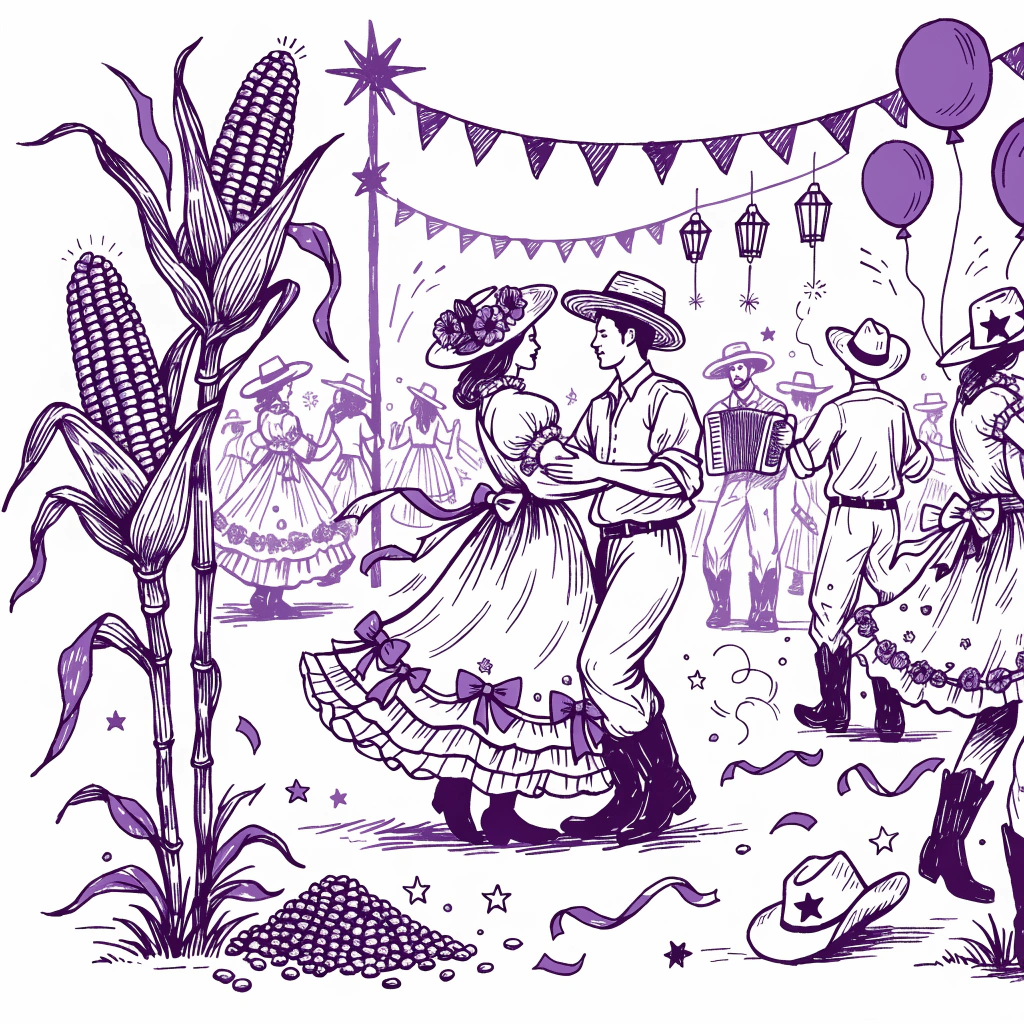
A Big Party in Brazil
In Brazil, June is a special month. People celebrate Festa Junina. It is a big festival in winter. The festival is for families and friends.
People wear colorful clothes. Men wear straw hats. Women wear pretty dresses. They look like people from the country.
There is a lot of food. People eat corn and sweet cake. It is very delicious.
People dance together in a circle. They listen to happy music. There is often a big fire. Festa Junina is a very happy celebration.
문법 스포트라이트
패턴: Present Simple (to be)
"It is a big festival in winter."
We use 'is' with 'it' to describe a fact or a state. It is the most common way to give information about a thing.
패턴: Present Simple (Action Verbs)
"People wear colorful clothes."
We use the base form of the verb (wear) for plural subjects (people). This shows a regular habit or general truth.
이해도를 테스트하세요
10 질문 · A1 초급 · 무료 미리보기 1회
이 기사에서 배운 내용을 테스트하세요. 모든 질문에 답하여 XP를 획득하세요!
What is Festa Junina?
문제별 결과
What is Festa Junina?
내 답변:
정답: A festival
The festival is in the winter.
내 답변:
정답: 참
What does 'delicious' mean?
내 답변:
정답: Tastes very good
Men wear straw _____.
내 답변:
정답: hats
Festa Junina: A Traditional Brazilian Party
Festa Junina is a very famous festival in Brazil. Many people think it is the second most popular celebration after Carnival. It happens every year in June. This festival is older than many other traditions because the Portuguese brought it to Brazil many years ago.
The festival celebrates three important saints. It also celebrates the end of the corn harvest. Because it is winter in Brazil during June, the weather is cooler than in the summer. People build big fires to stay warm and dance around them.
The theme of Festa Junina is country life. People wear colorful clothes and straw hats. They look like "caipiras," which means people from the countryside. They eat many delicious foods made of corn, like corn cake and popcorn. Children play games and win prizes. It is a very happy time for families and friends.
문법 스포트라이트
패턴: Comparative Adjectives
"the weather is cooler than in the summer."
We use comparative adjectives to compare two things. For short adjectives, we add '-er' and then use the word 'than'.
패턴: Past Simple (Irregular)
"the Portuguese brought it to Brazil many years ago."
We use the past simple for actions that finished in the past. 'Brought' is the irregular past form of the verb 'bring'.
이해도를 테스트하세요
11 질문 · A2 초등급 · 무료 미리보기 1회
이 기사에서 배운 내용을 테스트하세요. 모든 질문에 답하여 XP를 획득하세요!
When does Festa Junina happen every year?
문제별 결과
When does Festa Junina happen every year?
내 답변:
정답: In June
Festa Junina is the most popular festival in Brazil.
내 답변:
정답: 거짓
What does 'countryside' mean?
내 답변:
정답: Land outside of towns
People wear _____ hats during the festival.
내 답변:
정답: straw
Why do people build big fires?
내 답변:
정답: To stay warm
Brazil’s Traditional June Festivals: A Celebration of Country Life
While Carnival is famous worldwide, Brazil has another important celebration that is loved by many people. This is called 'Festa Junina', or the June Festival. These festivals have been celebrated in Brazil for centuries, since they were first introduced by the Portuguese during the colonial period.
The festivals are held to honor three Catholic saints: Saint Anthony, Saint John the Baptist, and Saint Peter. However, the celebrations are also connected to the seasons. Because June is the time of the winter solstice in the Southern Hemisphere, the festivals celebrate the end of the rainy season and the beginning of the corn harvest. For this reason, most of the traditional food is made from corn, such as corn cakes and popcorn.
During the 'festas caipiras', people dress in rural clothing to celebrate country life. Men often wear straw hats and checkered shirts, while women wear colorful dresses with ribbons. One of the most important parts of the festival is the 'Quadrilha', which is a traditional folk dance that is performed by large groups of people.
Special bonfires are lit during the cold June nights, which create a warm and cozy atmosphere for families to gather. These festivals are not just about religion; they are a way for Brazilians to celebrate their rural history and spend time with their community. If you visit Brazil in June, you will definitely see these colorful decorations and taste the delicious traditional snacks that have become a symbol of Brazilian culture.
문법 스포트라이트
패턴: Present Perfect Passive
"These festivals have been celebrated in Brazil for centuries..."
This pattern is used to talk about an action that started in the past and continues to the present, where the focus is on the event rather than who did it. It is formed using 'have/has + been + past participle'.
패턴: Passive Voice (Present Simple)
"most of the traditional food is made from corn..."
The passive voice is used when the action is more important than the person performing it. It is formed using 'is/are + past participle'.
이해도를 테스트하세요
11 질문 · B1 중급 · 무료 미리보기 1회
이 기사에서 배운 내용을 테스트하세요. 모든 질문에 답하여 XP를 획득하세요!
Which festival is considered the most popular in Brazil according to the context?
문제별 결과
Which festival is considered the most popular in Brazil according to the context?
내 답변:
정답: Carnival
Festa Junina takes place during the summer season in Brazil.
내 답변:
정답: 거짓
What does 'rural' mean?
내 답변:
정답: Related to the countryside
Special _____ are lit during the cold June nights to create a warm atmosphere.
내 답변:
정답: bonfires
What is the 'Quadrilha'?
내 답변:
정답: A traditional folk dance
Beyond the Carnival: The Cultural Significance of Brazil's Festa Junina
While Carnival is frequently cited as the quintessential Brazilian celebration, Festa Junina—or the June Festival—holds a similarly prominent position in the nation’s cultural calendar. These festivities, which take place throughout the month of June, offer a fascinating insight into the country’s colonial history and its agrarian roots. Originally introduced by the Portuguese during the colonial period, the tradition has evolved from a strictly religious observance into a massive cultural phenomenon that celebrates rural life and the corn harvest.
The festivals primarily commemorate three Catholic saints: Saint Anthony, Saint John the Baptist, and Saint Peter. However, the timing of these celebrations is not purely coincidental. They synchronize perfectly with the winter solstice in the Southern Hemisphere, a period traditionally associated with agricultural cycles. Because the corn harvest occurs during this time, many of the traditional dishes served—such as pamonha and canjica—are corn-based, highlighting the deep connection between the festivities and the land.
One of the most distinctive features of Festa Junina is the rustic aesthetic adopted by participants. Men and women dress in traditional 'caipira' attire, which typically includes checkered shirts, straw hats, and painted-on freckles. This costume serves as a tribute to the rural inhabitants of the Brazilian interior. Central to the celebration is the 'quadrilha', a complex square dance that was originally inspired by 19th-century French court dances. This blend of European influence and local rural culture illustrates how Brazil has historically integrated diverse traditions to create a unique national heritage.
From a socio-economic perspective, Festa Junina is vital. In many regions, particularly the Northeast, these festivals are more significant than Carnival, attracting millions of tourists and providing a substantial boost to local economies. If the Portuguese had not introduced these traditions during the colonial era, the cultural identity of the Brazilian interior might have developed quite differently. Today, the festivals serve as a bridge between the past and the present, ensuring that regional customs are not lost in an increasingly globalized world.
In conclusion, Festa Junina is far more than just a series of parties. It is a sophisticated manifestation of Brazilian identity that honors religious history, agricultural necessity, and the rustic charm of country life. By analyzing its components, one can appreciate how this heritage continues to thrive, adapting to modern times while remaining firmly rooted in its agrarian origins.
문법 스포트라이트
패턴: Relative Clauses
"These festivities, which take place throughout the month of June, offer a fascinating insight into the country’s colonial history."
Non-defining relative clauses provide extra information about a noun. They are separated by commas and use 'which' for things or 'who' for people.
패턴: Passive Voice
"Originally introduced by the Portuguese during the colonial period, the tradition has evolved."
The passive voice is used to focus on the action or the object being acted upon rather than the subject. It is formed using the verb 'to be' and the past participle.
패턴: Third Conditional
"If the Portuguese had not introduced these traditions during the colonial era, the cultural identity of the Brazilian interior might have developed quite differently."
The third conditional describes a hypothetical situation in the past. It uses 'if + past perfect' and 'would/might have + past participle'.
이해도를 테스트하세요
11 질문 · B2 중상급 · 무료 미리보기 1회
이 기사에서 배운 내용을 테스트하세요. 모든 질문에 답하여 XP를 획득하세요!
What is the status of Festa Junina compared to Carnival in Brazil?
문제별 결과
What is the status of Festa Junina compared to Carnival in Brazil?
내 답변:
정답: It is considered the second most prominent celebration.
The timing of Festa Junina is linked to the winter solstice in the Southern Hemisphere.
내 답변:
정답: 참
What does 'rustic' mean in the context of the article?
내 답변:
정답: Relating to a simple, countryside style.
The festivals primarily _____ the lives of three Catholic saints.
내 답변:
정답: commemorate
Why are many traditional Festa Junina dishes corn-based?
내 답변:
정답: The festival coincides with the corn harvest.
The Rural Reimagined: Deciphering the Socio-Cultural Tapestry of Brazil’s Festa Junina
While Rio’s Carnival may dominate the international imagination, it is Festa Junina that arguably captures the authentic pulse of the Brazilian hinterland. Originating from the midsummer celebrations brought by Portuguese colonizers, these festivals have undergone a profound metamorphosis, evolving into a complex socio-cultural phenomenon known as 'festas caipiras.' Celebrated throughout June, the festivities pay homage to three Catholic saints: Anthony, John the Baptist, and Peter. However, to view these events through a purely liturgical lens would be to overlook the intricate syncretism that defines them. Rarely do contemporary urbanites consider the profound theological underpinnings of their revelry, yet the vestiges of European folk traditions remain palpable.
Central to the allure of Festa Junina is the romanticization of the rural archetype. Participants don 'caipira' attire—checkered shirts, straw hats, and painted-on freckles—engaging in a performative nod to the agrarian lifestyle. This pastoral aesthetic is not merely a costume choice; it represents a collective nostalgia for a pre-industrial Brazil. The preservation of these customs serves as a bulwark against the homogenizing forces of globalization. It is through this performative identity that Brazilians reconcile their modern urban lives with a collective agrarian memory. The dichotomy between the sophisticated city-dweller and the humble country person is temporarily dissolved in the heat of the 'quadrilha'—a traditional folk dance derived from the French quadrille.
Furthermore, the culinary landscape of the festival is intrinsically linked to the winter solstice and the corn harvest. Corn, a staple crop of the Americas, is transformed into an array of ubiquitous delicacies such as 'pamonha' and 'canjica.' The propensity for corn-based dishes highlights the historical reliance on seasonal cycles. It is the abundance of corn that dictates the rhythm of the feast, serving as a reminder of the land’s fertility. Even in the concrete jungles of São Paulo or the coastal sprawl of Recife, the scent of parched corn and woodsmoke evokes a sense of shared heritage that transcends geographic boundaries.
However, a critical analysis reveals a tension between authenticity and commercialization. As these festivals become increasingly subsumed by corporate sponsorships and mass tourism, some argue that the rustic charm is being eroded. The question arises: can a tradition rooted in rural hardship maintain its integrity when staged in a high-tech arena? Despite these concerns, the resilience of Festa Junina is undeniable. It remains a testament to Brazil's ability to synthesize disparate cultural elements into a cohesive national narrative. Ultimately, the festival is less about historical accuracy and more about the enduring power of community, warmth, and the celebration of life amidst the Southern Hemisphere’s winter chill.
문법 스포트라이트
패턴: Inversion with Negative/Restrictive Adverbs
"Rarely do contemporary urbanites consider the profound theological underpinnings of their revelry."
Inversion is used here to emphasize the rarity of the action. When 'rarely' starts a sentence, the auxiliary verb 'do' comes before the subject 'urbanites'.
패턴: Cleft Sentences
"It is through this performative identity that Brazilians reconcile their modern urban lives with a collective agrarian memory."
A cleft sentence (It is... that...) is used to focus on a specific part of the sentence—in this case, the 'performative identity' as the means of reconciliation.
패턴: Nominalisation
"The preservation of these customs serves as a bulwark against the homogenizing forces of globalization."
Using 'The preservation' (noun) instead of 'Preserving' (verb) makes the tone more formal and academic, focusing on the concept rather than the action.
이해도를 테스트하세요
12 질문 · C1 고급 · 무료 미리보기 1회
이 기사에서 배운 내용을 테스트하세요. 모든 질문에 답하여 XP를 획득하세요!
According to the article, what is the 'caipira' aesthetic primarily a reflection of?
문제별 결과
According to the article, what is the 'caipira' aesthetic primarily a reflection of?
내 답변:
정답: A collective nostalgia for pre-industrial Brazil
The 'quadrilha' dance originated from a Portuguese court dance.
내 답변:
정답: 거짓
What does the word 'ubiquitous' mean in the context of the text?
내 답변:
정답: Found everywhere throughout the festival
The article suggests that the festival serves as a _____ against globalization.
내 답변:
정답: bulwark
Which crop is described as the primary influencer of the festival's culinary landscape?
내 답변:
정답: Corn
The author argues that Festa Junina is purely about historical accuracy.
내 답변:
정답: 거짓
브라질의 6월 축제, 훼스타 주니나: 전통과 현대가 어우러진 문화적 향연
브라질의 문화적 지형에서 카니발 다음으로 압도적인 존재감을 과시하는 축제가 있다면, 그것은 다름 아닌 훼스타 주니나(Festa Junina)일 것입니다. 포르투갈 식민 통치 시기에 유입되어 브라질 고유의 토속적인 색채와 융합하며 독자적인 형태로 발전한 이 축제는, 단순한 오락을 넘어선 종교적 경건함, 농경 사회의 풍요 기원, 그리고 공동체 의식의 발현이 복합적으로 얽힌 문화적 향연이라 할 수 있습니다. 매년 6월 한 달간 브라질 전역을 들썩이게 하는 훼스타 주니나는, 특히 성 안토니오(6월 13일), 성 요한 세례자(6월 24일), 성 베드로(6월 29일) 세 성인을 기리는 종교적 의미를 내포하고 있으며, 이는 축제의 근간을 이루는 중요한 요소로 작용합니다.
훼스타 주니나의 기원은 16세기 포르투갈인들이 브라질에 상륙하면서 시작된 식민화 과정과 궤를 같이합니다. 유럽의 중세 시대, 특히 이교도적인 여름 태양 숭배 의식과 기독교의 성인 숭배가 결합된 형태가 포르투갈을 통해 브라질로 전파된 것이죠. 브라질에 도착한 이 축제는 그 땅의 원주민 문화와 아프리카 노예들의 문화적 요소와 만나면서 다층적 의미를 획득하게 됩니다. 가톨릭 교회의 영향력 아래, 이 축제는 성 안토니오, 성 요한 세례자, 성 베드로를 기리는 행사로 자리매김하게 되었는데, 이들 성인은 각각 혼인, 세례, 어업 등과 연관되어 브라질인들의 일상생활과 밀접한 관계를 맺고 있습니다. 종교적 헌신은 축제의 본질을 이루는 핵심 가치라 할 수 있으며, 이는 축제 전반에 걸쳐 신성함과 즐거움이 절묘하게 조화되는 양상으로 나타납니다.
남반구에 위치한 브라질에서 6월은 겨울의 시작이자 옥수수 수확기와 맞물리는 시기입니다. 이러한 계절적 특성은 훼스타 주니나의 농경적 성격을 결정짓는 중요한 배경이 됩니다. 축제는 농촌 생활의 소박함과 풍요를 찬미하는 데 중점을 두며, 참가자들은 흔히 '카이피라(caipira)'라고 불리는 시골뜨기 복장을 착용합니다. 이는 체크무늬 셔츠, 짚으로 만든 모자, 가짜 주근깨와 같은 분장으로 대표되며, 농촌 공동체의 순수하고 활기찬 모습을 상징합니다. 옥수수는 축제의 상징적 작물로서, 옥수수를 활용한 다양한 음식들(파모냐, 쿠스쿠스, 볼로 지 푸바 등)이 축제 기간 내내 사람들의 입맛을 돋우며 풍성한 잔치의 분위기를 더합니다. 이처럼 훼스타 주니나는 단순한 종교적 기념을 넘어, 대지의 선물에 대한 감사와 공동체의 안녕을 기원하는 원초적인 제의적 성격을 띠고 있습니다.
훼스타 주니나의 시각적, 청각적, 미각적 요소들은 그 자체로 브라질 문화의 한 단면을 보여줍니다. 다채로운 색상의 종이 깃발(bandeirinhas)로 장식된 거리와 광장은 축제의 활기 넘치는 분위기를 대변하며, 밤하늘을 수놓는 모닥불(fogueiras)은 공동체적 유대감과 축복의 의미를 더합니다. 전통적인 '콰드리랴(quadrilha)' 춤은 유럽의 스퀘어 댄스에서 유래했지만, 브라질 특유의 리듬과 유머가 가미되어 현대에는 축제의 하이라이트 중 하나로 자리 잡았습니다. 아코디언과 기타를 중심으로 한 포호(forró) 음악은 사람들을 춤추게 하고, 세르타네주(sertanejo)와 같은 컨트리 음악은 축제의 정체성을 더욱 공고히 합니다. 또한, 옥수수 음식 외에도 땅콩 과자(pé de moleque), 코코넛 디저트(cocada) 등 달콤한 간식들이 풍성하게 준비되어, 방문객들에게 잊을 수 없는 미식 경험을 선사합니다. 이 모든 요소들이 어우러져 훼스타 주니나는 오감을 만족시키는 종합 예술 축제로 승화됩니다.
초기에는 주로 농촌 지역에서 소규모로 열렸던 훼스타 주니나는 시간이 흐르면서 브라질 전역으로 확산되었고, 도시의 대형 광장에서도 성대하게 개최되기에 이르렀습니다. 이는 축제가 지닌 본연의 매력과 함께, 브라질인들이 자신들의 문화적 정체성을 고수하려는 노력의 결과라고 볼 수 있습니다. 현대에 들어서는 전통적인 요소들을 유지하면서도, 보다 대중적이고 상업적인 형태로 변모하는 경향도 없지 않아 있습니다. 하지만 이러한 변화 속에서도 훼스타 주니나는 여전히 그 근본적인 정신, 즉 종교적 신앙심, 농경 사회의 가치, 그리고 공동체적 단결력을 잃지 않고 있습니다. 오히려 도시와 농촌, 과거와 현재를 아우르는 융합적인 특성을 통해 브라질 문화의 다양성과 포용력을 명실상부하게 보여주는 축제로 진화하고 있는 것입니다.
결론적으로 훼스타 주니나는 단순한 연례행사를 넘어, 브라질의 역사, 종교, 사회, 그리고 예술이 총체적으로 응축된 살아있는 문화유산입니다. 포르투갈의 유산과 브라질 고유의 정서가 융합되어 탄생한 이 축제는, 풍성한 먹거리와 흥겨운 음악, 그리고 다채로운 볼거리를 통해 모든 참가자에게 잊을 수 없는 경험을 선사합니다. 남반구의 겨울 초입에서 맞이하는 이 성대한 축제는 브라질의 정체성을 가장 잘 드러내는 동시에, 전통의 가치를 현대에 계승하려는 의지를 보여주는 상징적인 존재로 그 위상을 공고히 하고 있습니다.
문법 스포트라이트
패턴: ~라 할 수 있습니다
"훼스타 주니나는... 공동체 의식의 발현이 복합적으로 얽힌 문화적 향연이라 할 수 있습니다."
이 문형은 특정 대상이나 현상에 대해 필자의 평가나 결론을 제시할 때 사용됩니다. 'A는 B라고 말할 수 있다'는 의미로, 학술적 글쓰기에서 자신의 주장을 객관적으로 전달하거나 어떤 사실에 대한 해석을 제안할 때 유용하게 활용됩니다.
패턴: ~와 궤를 같이합니다
"훼스타 주니나의 기원은 16세기 포르투갈인들이 브라질에 상륙하면서 시작된 식민화 과정과 궤를 같이합니다."
이 표현은 두 가지 이상의 현상이나 사건이 서로 밀접하게 연결되어 함께 발전하거나 진행되었음을 나타낼 때 쓰입니다. 특히 역사적, 사회적 맥락에서 상호 연관성을 설명할 때 자주 등장하며, 문어체에서 많이 활용됩니다.
패턴: ~는 경향도 없지 않아 있습니다
"현대에 들어서는 전통적인 요소들을 유지하면서도, 보다 대중적이고 상업적인 형태로 변모하는 경향도 없지 않아 있습니다."
이 문형은 '어떤 경향이 완전히 없다고는 말할 수 없다'는 이중 부정을 통해, 특정 경향이 미미하게나마 존재하거나 완전히 부정할 수 없는 점을 완곡하게 인정할 때 사용됩니다. 학술적 글쓰기에서 조심스러운 예측이나 평가를 제시하며 글의 신뢰성을 높이는 역할을 합니다.
이해도를 테스트하세요
12 질문 · C2 마스터 · 무료 미리보기 1회
이 기사에서 배운 내용을 테스트하세요. 모든 질문에 답하여 XP를 획득하세요!
훼스타 주니나에 대한 설명으로 가장 적절한 것은 무엇입니까?
문제별 결과
훼스타 주니나에 대한 설명으로 가장 적절한 것은 무엇입니까?
내 답변:
정답: 카니발 다음으로 큰 규모의 축제이며, 종교적, 농경적, 공동체적 의미를 지닌다.
훼스타 주니나는 브라질 원주민들이 자체적으로 만들어낸 순수한 전통 축제이다.
내 답변:
정답: 거짓
'다층적 의미'는 어떤 뜻입니까?
내 답변:
정답: 하나의 대상이 여러 복합적인 의미를 동시에 가짐
훼스타 주니나는 단순한 오락을 넘어선 종교적 경건함, 농경 사회의 풍요 기원, 그리고 공동체 의식의 ____이 복합적으로 얽힌 문화적 향연이라 할 수 있습니다.
내 답변:
정답: 발현
다음 중 훼스타 주니나에서 흔히 볼 수 있는 전통 음식이 아닌 것은 무엇입니까?
내 답변:
정답: 페이조아다 (콩과 고기 스튜)
훼스타 주니나는 주로 도시의 대형 광장에서 시작되어 농촌으로 확산되었다.
내 답변:
정답: 거짓

