









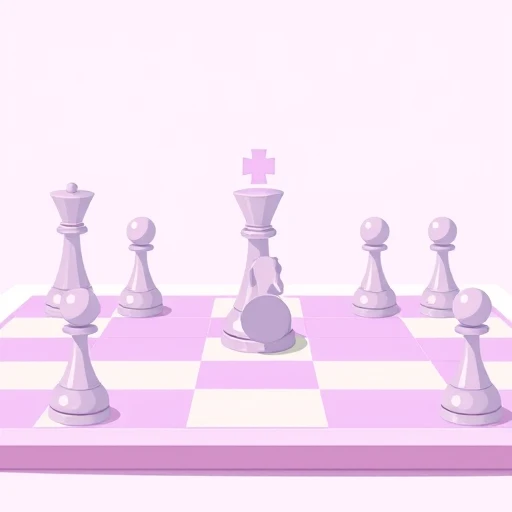
chess in 30 Seconds
- Chess is a two-player strategy board game played on a checkered 8x8 grid with 16 pieces per player, aiming for checkmate.
- Known as the 'Game of Kings,' chess is a global mental sport that improves logic, patience, and strategic planning skills.
- The game features unique pieces like the King, Queen, Rook, Bishop, Knight, and Pawn, each with specific movement rules.
- Chess is used both literally as a hobby and metaphorically to describe complex strategies in business, politics, and daily life.
Chess is a highly sophisticated strategic board game played between two opponents on a checkered board containing sixty-four squares arranged in an eight-by-eight grid. At its core, chess is a battle of wits, requiring players to utilize sixteen pieces each—one king, one queen, two rooks, two knights, two bishops, and eight pawns—to achieve the ultimate goal of 'checkmate,' a situation where the opponent's king is under immediate attack and there is no way to move it to safety or block the threat. The game is celebrated globally not just as a pastime, but as a mental sport that enhances cognitive abilities, spatial reasoning, and critical thinking. People use the word 'chess' in various contexts, ranging from casual mentions of a weekend hobby to metaphorical descriptions of complex geopolitical maneuvers or corporate strategies. When someone says they are 'playing chess while others are playing checkers,' they are implying a superior level of foresight and planning. The game transcends language barriers, with its own universal notation system, and is played in schools, professional tournaments, parks, and digital platforms. It is often associated with intelligence, patience, and the ability to anticipate several moves ahead. In modern parlance, chess is also a significant part of the digital world, with millions of users engaging in online matches and watching grandmasters stream their games. The term is deeply embedded in educational curricula as a tool for developing logic and discipline in young learners.
- Game Components
- The board, the pieces (king, queen, rook, bishop, knight, pawn), and the clock used in competitive play.
Learning to play chess at a young age can significantly improve a child's problem-solving skills and concentration levels.
- Strategic Depth
- Chess involves opening theory, middle-game tactics, and endgame precision, making it a lifelong study for many enthusiasts.
The grandmaster spent hours analyzing the chess match to identify the exact moment the position became losing.
- Cultural Impact
- From 'The Queen's Gambit' to historical matches like Fischer vs. Spassky, chess has a profound influence on literature and film.
He felt like a pawn in a larger game of political chess, where his actions were controlled by others.
The local park is famous for its concrete tables where elderly men gather daily to play chess.
Online chess platforms have revolutionized the game, allowing players from different continents to compete instantly.
Using the word 'chess' correctly involves understanding its grammatical role as an uncountable noun and its common collocations. Most frequently, 'chess' is the direct object of the verb 'play.' For example, 'I play chess every Tuesday.' It can also function as an attributive noun, modifying other nouns to create compound terms like 'chess board,' 'chess piece,' 'chess tournament,' or 'chess club.' In these instances, 'chess' describes the category or type of the following noun. When discussing skill levels, we use adjectives such as 'beginner,' 'intermediate,' 'advanced,' or 'professional' before 'chess player.' It is also common to use 'chess' in the context of competition, such as 'entering a chess competition' or 'winning a chess match.' Beyond the literal game, 'chess' is used in figurative language to describe situations requiring complex strategy. For instance, 'The negotiations were a game of high-stakes chess.' In this metaphorical sense, it implies that every move is calculated and carries significant consequences. It is important to avoid using the indefinite article 'a' directly before 'chess' when referring to the game itself; one does not 'play a chess,' but rather 'plays a game of chess.' The word is also central to many idiomatic expressions and technical jargon, such as 'checkmate,' 'stalemate,' and 'gambit,' which have migrated into general English to describe various social and professional interactions.
- Common Verbs
- Play, study, analyze, master, lose, win, draw, teach.
She decided to join the university chess club to meet people with similar interests.
- Attributive Usage
- Chess set, chess engine, chess grandmaster, chess notation.
After the long day, they relaxed by playing a quiet game of chess by the fireplace.
- Figurative Phrases
- Political chess, corporate chess, a game of chess (metaphor for strategy).
The CEO is known for his ability to play corporate chess, always staying three steps ahead of the competition.
I bought a beautiful wooden chess set as a gift for my grandfather.
The chess clock ticked down, adding pressure to an already intense situation.
The word 'chess' is ubiquitous in environments that value intellectual pursuit and strategic thinking. You will frequently hear it in educational settings, where teachers and students discuss the benefits of the game for brain development. In the world of professional sports and gaming, 'chess' is a primary topic of conversation during international tournaments like the World Chess Championship, where commentators analyze every move with the same intensity as a football match. Digital spaces are perhaps where the word is heard most often today; platforms like Twitch and YouTube have massive communities dedicated to 'chess' streaming, where influencers like Hikaru Nakamura or Magnus Carlsen engage with millions of fans. In popular culture, the word surged in usage following the release of 'The Queen's Gambit,' a television series that brought 'chess' into mainstream living room discussions. You might also hear it in business seminars, where leaders use 'chess' analogies to explain market positioning and competitive advantage. In urban environments, 'chess' is often associated with public parks, such as Washington Square Park in New York City, where 'chess hustlers' challenge passersby to quick games. Even in casual social gatherings, someone might ask, 'Do you play chess?' as a way to gauge a new acquaintance's interests. The word also appears in news headlines concerning artificial intelligence, specifically when discussing how programs like Deep Blue or AlphaZero have mastered 'chess' to a level far beyond human capability. Finally, in literature and philosophy, 'chess' is often invoked as a metaphor for life itself, representing the balance between individual agency and the constraints of the rules.
- Media & Entertainment
- Movies, TV shows, and streaming platforms often feature chess as a central theme or character trait.
The commentator noted that the chess world was stunned by the young prodigy's unexpected victory.
- Public Spaces
- Parks, community centers, and libraries often host chess boards and local clubs.
I saw a group of people gathered around a chess table in the park, watching a very fast game.
- Business & Strategy
- Strategic planning sessions often use chess metaphors to describe market competition.
The documentary explored the history of chess and its origins in ancient India.
During the interview, he compared the diplomatic crisis to a complex chess problem with no easy solution.
Many schools are now integrating chess into their mathematics curriculum.
One of the most frequent mistakes learners make with the word 'chess' is treating it as a countable noun. In English, 'chess' refers to the game as a whole and does not take a plural form, nor is it typically preceded by the indefinite article 'a' when referring to the activity. You should say 'I like playing chess,' not 'I like playing a chess' or 'I like playing chesses.' If you want to refer to a single instance of the game, the correct phrase is 'a game of chess.' Another common error involves confusing the name of the game with the equipment used to play it. While you play 'chess,' you use a 'chess set' or 'chess pieces.' It is incorrect to say 'I lost my chess' when you mean you lost a piece or the entire set. Furthermore, learners often struggle with the verbs associated with chess. While 'play' is the most common, 'do' is never used; you don't 'do chess.' In terms of prepositions, you play chess 'with' someone or 'against' an opponent, but you play 'on' a chess board. There is also frequent confusion between the terms 'check' and 'checkmate.' 'Check' is a temporary threat to the king that can be escaped, while 'checkmate' is the end of the game. Using 'checkmate' when the game is still ongoing is a common terminological slip. Additionally, the word 'chessman' is an older term for a chess piece; while still correct, 'chess piece' is much more common in modern English. Finally, spelling errors sometimes occur, such as 'ches' or 'chesses,' but the standard spelling is always 'chess' with a double 's'. Understanding these nuances ensures that you sound natural and precise when discussing this classic game.
- Countability Errors
- Incorrect: 'We played three chesses.' Correct: 'We played three games of chess.'
He is very good at chess, but he sometimes forgets the rules for castling.
- Verb Misuse
- Incorrect: 'I am doing chess.' Correct: 'I am playing chess' or 'I am studying chess.'
It is a common mistake to think that chess is only for geniuses.
- Terminology Confusion
- Confusing 'check' (threat) with 'checkmate' (victory).
She was disappointed when her opponent called 'checkmate' after only ten moves of chess.
Don't say 'I play a chess'; instead, say 'I play chess' or 'I'm playing a game of chess.'
The word chess is never pluralized when referring to the game.
While 'chess' is a specific game, there are several related terms and alternatives depending on the context. In the broad category of 'board games,' chess is often compared to 'checkers' (or 'draughts' in British English). However, while both are played on the same 8x8 board, checkers is significantly less complex, with all pieces moving in the same way. For those interested in Eastern strategy games, 'Go' (or 'Weiqi') is frequently mentioned alongside chess. Go is often considered even more complex due to the sheer number of possible moves, though its rules are simpler. Another relative is 'Shogi,' often called Japanese chess, which features a similar objective but allows players to reuse captured pieces. 'Xiangqi,' or Chinese chess, is another variant played on a different board with different piece movements. In a metaphorical sense, when 'chess' is used to mean 'strategy,' alternatives include 'maneuvering,' 'tactics,' 'planning,' or 'gamesmanship.' If you are referring to the competitive aspect, you might use 'match,' 'tournament,' or 'competition.' For the pieces themselves, 'chessmen' is a traditional alternative, though 'pieces' is more modern. When describing a person who plays chess, 'player' is standard, but 'enthusiast,' 'aficionado,' or 'grandmaster' (for the highest level) provide more specific nuances. Understanding these alternatives helps in choosing the right word for the right level of intensity or cultural context.
- Chess vs. Checkers
- Chess has multiple piece types with unique moves; checkers has uniform pieces.
If you find chess too difficult, you might enjoy starting with checkers.
- International Variants
- Shogi (Japan), Xiangqi (China), Makruk (Thailand).
Many people who enjoy chess also find the game of Go to be deeply rewarding.
- Metaphorical Synonyms
- Strategy, gambit, tactical play, mental battle.
The politician's latest move was a clever chess gambit designed to distract the public.
While chess is about capturing the king, Go is about surrounding territory.
He preferred the fast pace of blitz chess over the slow, traditional format.
How Formal Is It?
Fun Fact
The phrase 'checkmate' comes from the Persian 'Shāh Māt,' which literally means 'the King is helpless' or 'the King is dead.' It does not mean 'the King is checked' as many people believe.
Pronunciation Guide
- Pronouncing the 'ch' as a 'sh' (like 'shess').
- Making the 'e' sound too long (like 'chees').
- Adding an extra vowel at the end (like 'chess-uh').
- Not pronouncing the final 's' clearly.
- Confusing the spelling with 'ches'.
Difficulty Rating
The word itself is easy to read, but chess literature can be very technical.
Simple spelling, but remember the double 's'.
Very common word, easy to pronounce.
Distinct sound, usually easy to identify in conversation.
What to Learn Next
Prerequisites
Learn Next
Advanced
Grammar to Know
Uncountable Nouns
Chess is (not are) a great game.
Zero Article with Games
I play chess (not the chess).
Compound Nouns
The chess board is on the table.
Prepositions of Activity
He is good at chess.
Verbs of Play
We played a game of chess.
Examples by Level
I play chess.
I play a board game.
Subject + verb + object.
Do you like chess?
Is chess a game you enjoy?
Question form with 'do'.
Chess is a game.
It is an activity.
Simple 'is' sentence.
My dad plays chess.
My father enjoys this game.
Third person singular 's'.
We have a chess board.
We own the equipment.
Possession with 'have'.
Chess is fun.
The game is enjoyable.
Adjective after 'is'.
I want to learn chess.
I want to know how to play.
Infinitive 'to learn'.
He plays chess every day.
He plays it daily.
Adverbial phrase of frequency.
I play chess with my friend.
I have a partner for the game.
Preposition 'with'.
Chess is a difficult game.
It is not easy.
Adjective before noun.
She joined the chess club.
She became a member.
Past tense 'joined'.
Where is your chess set?
I am looking for the pieces.
Question word 'where'.
I am better at chess than him.
My skill is higher.
Comparative 'better than'.
He lost the chess match.
He did not win.
Past tense of 'lose'.
Can you teach me chess?
Will you show me how?
Modal verb 'can'.
I like the white chess pieces.
I prefer the light-colored ones.
Definite article 'the'.
I have been playing chess since I was six.
I started long ago.
Present perfect continuous.
Chess requires a lot of concentration.
You must focus hard.
Verb 'requires' with abstract noun.
If you practice, you will win at chess.
Practice leads to victory.
First conditional.
I find chess very relaxing after work.
It helps me de-stress.
Verb 'find' + object + adjective.
The chess tournament starts tomorrow.
The competition begins soon.
Present simple for future events.
She is the best chess player in our school.
No one is better than her.
Superlative 'the best'.
Chess is played all over the world.
It is a global game.
Passive voice.
I bought a book about chess strategy.
I want to learn tactics.
Compound noun 'chess strategy'.
Chess is often described as a mental sport.
It's like exercise for the brain.
Passive voice with 'often'.
He made a brilliant move in the chess game.
His play was very smart.
Adjective 'brilliant' modifying 'move'.
Despite the pressure, she remained calm during the chess match.
She didn't get nervous.
Concession with 'despite'.
I've never seen such an intense chess competition.
The level of focus was high.
Present perfect with 'never'.
The rules of chess are easy to learn but hard to master.
Becoming an expert takes time.
Parallel structure 'easy to... but hard to...'.
He spent the whole afternoon analyzing his chess losses.
He studied why he failed.
Gerund 'analyzing' after 'spent time'.
Chess helps develop critical thinking skills.
It improves how you think.
Verb 'help' + infinitive.
The chess club is looking for new members.
They want people to join.
Present continuous.
The grandmaster's approach to chess is truly revolutionary.
His way of playing changed everything.
Possessive 'grandmaster's'.
Chess serves as a perfect metaphor for life's strategic challenges.
Life is like a game of chess.
Verb 'serve as'.
In the world of chess, every move has a profound consequence.
Small actions lead to big results.
Prepositional phrase for context.
She possesses an uncanny ability to predict her opponent's chess moves.
She knows what they will do.
Adjective 'uncanny'.
The complexity of chess has fascinated mathematicians for centuries.
Smart people love its math.
Present perfect.
He was accused of using a chess engine to cheat during the tournament.
He used a computer illegally.
Passive voice 'was accused of'.
The psychological warfare in high-level chess is fascinating to observe.
The mental battle is interesting.
Gerund as subject.
Chess notation allows players to record and study every game they play.
They write down the moves.
Verb 'allow' + object + infinitive.
The game of chess is an exquisite dance of logic and intuition.
It is a beautiful mix of thinking and feeling.
Metaphorical use of 'dance'.
He navigated the corporate merger with the precision of a chess grandmaster.
He was very careful and smart in business.
Simile 'with the precision of'.
The nuances of the Sicilian Defense in chess are lost on most casual players.
Regular players don't understand the details.
Passive 'are lost on'.
To master chess is to embark on a lifelong journey of intellectual discovery.
Learning it never ends.
Infinitive phrase as subject.
The geopolitical landscape is often likened to a multi-dimensional chess board.
World politics is like a complex game.
Passive 'is likened to'.
His resignation from the chess tournament was a calculated move to save face.
He quit to avoid embarrassment.
Adjective 'calculated' modifying 'move'.
The sheer depth of chess ensures that no two games are ever truly identical.
Every game is unique.
Noun clause 'that no two games...'.
Chess transcends mere entertainment, embodying the very essence of strategic thought.
It is more than just a game.
Present participle 'embodying'.
Synonyms
Antonyms
Common Collocations
Common Phrases
— A single match or instance of playing the game. Used to make the uncountable 'chess' countable.
Would you like to play a game of chess?
— The figures used to play the game. There are 32 in total.
Be careful not to lose the chess pieces.
— The 8x8 grid where the game is played. It has 64 squares.
The chess board was made of fine marble.
— A device used to time the moves of each player in competitive play.
The player hit the chess clock after making his move.
— A computer program that analyzes chess positions and suggests moves.
He used a chess engine to find the best move.
— The system of recording moves in a chess game (e.g., e4, Nf3).
Learning chess notation is essential for studying old games.
— The initial moves of a game, often following established patterns.
The Sicilian Defense is a popular chess opening.
— The final stage of the game when few pieces remain on the board.
He is a master of the chess endgame.
— A puzzle where the goal is to find a specific winning move or sequence.
I solve a chess problem every morning.
— A highly skilled player, often holding an official title.
The chess master gave a simultaneous exhibition.
Often Confused With
A simpler game played on the same board. Don't call chess 'checkers'.
A food. The pronunciation is different (/tʃiːz/ vs /tʃes/).
A part of the body or a box. The ending sound is different.
Idioms & Expressions
— A person who is used by others for their own purposes. They have little power.
He realized he was just a pawn in the company's game.
informal/neutral— Used to describe a situation where someone has completely won or defeated an opponent.
With that last piece of evidence, it was checkmate for the defense.
neutral— A situation where no progress can be made or no advancement is possible.
The negotiations reached a stalemate after three days.
formal/neutral— To take action in a situation, often strategically. Derived from moving a piece in chess.
It's your turn to make a move in the relationship.
informal— To keep someone under control or prevent them from becoming too powerful.
The new laws are designed to keep large corporations in check.
neutral— A calculated move that involves some risk or sacrifice for a later advantage.
His opening speech was a bold gambit to win over the voters.
formal— The final stage of a process or a long-term strategy.
We are entering the endgame of the election campaign.
neutral— Being very strategic and anticipating future problems or reactions.
A good CEO is always thinking three moves ahead.
informal— Giving up something very valuable to achieve a greater goal.
He had to sacrifice the queen of his collection to pay his debts.
literary— Metaphorically, to switch positions or roles for safety.
The politicians were castling their positions to avoid the scandal.
rare/metaphoricalEasily Confused
Same board, different rules.
Chess has 6 types of pieces; checkers has only 1 type (until promoted). Chess is much more complex.
He prefers chess because it requires more strategy than checkers.
Both are deep strategy games.
Go is about territory; chess is about capturing the king. Go is played on a 19x19 grid.
While chess is popular in the West, Go is very famous in East Asia.
Both are classic board games.
Backgammon uses dice (luck); chess has no luck involved.
I like backgammon, but I prefer the pure skill of chess.
Often called 'Japanese Chess'.
In Shogi, you can use the pieces you capture from your opponent.
Shogi is a fascinating variation of chess played in Japan.
Often called 'Chinese Chess'.
Played on a board with a 'river' and different piece movements.
Xiangqi is one of the most played versions of chess in the world.
Sentence Patterns
I play [game].
I play chess.
I play [game] with [person].
I play chess with my brother.
I have been playing [game] for [time].
I have been playing chess for five years.
[Game] is a way to [benefit].
Chess is a way to improve your mind.
The [noun] of [game] is [adjective].
The strategy of chess is fascinating.
Likening [situation] to [game].
Likening the market to a chess board, he made his move.
A game of [game].
We had a quick game of chess.
Good at [game].
She is very good at chess.
Word Family
Nouns
Verbs
Adjectives
Related
How to Use It
Very common in both literal and metaphorical senses.
-
Saying 'I play a chess'.
→
I play chess.
Chess is an uncountable noun. You don't use 'a' before it unless you say 'a game of chess'.
-
Pluralizing it as 'chesses'.
→
Games of chess.
Since it is uncountable, it has no plural form. Use 'games' to show more than one.
-
Confusing 'Knight' with 'Night'.
→
The Knight moves in an L-shape.
They sound the same, but the chess piece is spelled with a 'K'.
-
Using 'do' instead of 'play'.
→
I play chess.
In English, we 'play' games and sports. We don't 'do' chess.
-
Calling the board a 'chess table'.
→
Chess board.
While you might play on a table, the 8x8 grid itself is always called a 'chess board'.
Tips
Start with the Basics
Don't try to learn complex strategies immediately. First, make sure you perfectly understand how each piece moves and the rules of checkmate.
Play Online
Use websites like Chess.com or Lichess to find opponents at your skill level. Playing regularly is the fastest way to improve your game.
Control the Center
In the beginning of the game, try to place your pawns and pieces in the middle of the board. This gives you more space and options.
Learn the Names
Memorize the names of the pieces in English: King, Queen, Rook, Bishop, Knight, and Pawn. This will help you follow English chess tutorials.
Watch the Pros
Watch grandmasters play on YouTube or Twitch. Listen to the commentators to learn how they describe the moves and the strategy.
Take Your Time
Chess is a game of patience. Before you make a move, always ask yourself: 'What is my opponent planning?' and 'Is my piece safe?'
Review Your Games
After a match, look back at your moves. Try to find where you made a mistake. Most online platforms have tools to help you with this.
Be a Good Sport
Always shake hands (or say 'good game') regardless of whether you win or lose. Chess is a game of respect and honor.
Solve Puzzles
Daily chess puzzles (tactics) are great for training your brain to see patterns and winning moves quickly.
Enjoy the Process
Remember that chess is a game. The goal is to have fun and challenge yourself. Don't worry too much about your rating at first.
Memorize It
Mnemonic
CHESS: Clever Humans Enjoy Strategic Struggles. Think of the two 'S's at the end as two players sitting across from each other.
Visual Association
Imagine a black and white checkered floor with giant people moving around like pieces. The King is wearing a crown and the Queen is the most powerful.
Word Web
Challenge
Try to describe the movement of a knight in English to a friend without using your hands. Use the word 'chess' at least three times.
Word Origin
The word 'chess' comes from the Old French word 'esches,' which is the plural of 'eschac' (check). This, in turn, comes from the Arabic 'shāh' (king), which originated from the Persian word 'shāh.' The game itself originated in India as 'chaturanga' before spreading to Persia and then the Western world.
Original meaning: The original meaning is literally 'kings,' referring to the primary piece of the game.
Indo-European (via Persian, Arabic, and Old French).Cultural Context
Chess is generally a neutral and safe topic, though some historical discussions about gender in chess can be sensitive.
In the UK and US, chess is often seen as a 'nerdy' or 'intellectual' hobby, but this perception is changing with the rise of online streaming.
Practice in Real Life
Real-World Contexts
Hobbies
- I play chess in my free time.
- Chess is my favorite hobby.
- I'm a member of a chess club.
- Do you want to play chess?
Education
- Chess helps with logic.
- We have chess in school.
- The teacher taught us chess.
- Chess improves concentration.
Competition
- He won the chess trophy.
- It was a tough chess match.
- She entered a chess tournament.
- The chess rankings were updated.
Technology
- I play chess online.
- The chess engine is very strong.
- He uses a chess app.
- Computers are better at chess.
Metaphor/Strategy
- It's like a game of chess.
- Think of it as political chess.
- A strategic chess move.
- He's a pawn in their chess game.
Conversation Starters
“Do you know how to play chess, or would you like to learn?”
“What is your favorite chess piece and why do you like it?”
“Have you ever watched a professional chess match on the internet?”
“Do you think chess should be taught as a subject in all schools?”
“Who is the best chess player you have ever played against?”
Journal Prompts
Describe a time you played chess. Who was your opponent and what happened during the game?
Write about why you think chess is often associated with high intelligence and if you agree.
If you were a chess piece, which one would you be and how would you move through life?
Imagine a world where all conflicts were settled by a game of chess. How would the world change?
Reflect on the most important lesson you have learned from playing or watching chess.
Frequently Asked Questions
10 questionsYes, chess is officially recognized as a sport by the International Olympic Committee. It requires high levels of mental stamina, preparation, and competitive spirit. Many people call it a 'mental sport' to distinguish it from physical ones.
There are 32 pieces in total in a standard game of chess. Each player starts with 16 pieces: one king, one queen, two rooks, two bishops, two knights, and eight pawns. One set is usually white or light-colored, and the other is black or dark-colored.
The queen is the most powerful piece in chess. She can move any number of squares vertically, horizontally, or diagonally. However, the king is the most important piece, as the game ends if he is checkmated.
While chess is traditionally a two-player game, you can play against a computer or 'chess engine.' You can also solve chess puzzles or analyze famous games by yourself to improve your skills.
You win by achieving 'checkmate.' This means you have put the opponent's king in a position where it is under attack and cannot escape. You can also win if your opponent resigns or runs out of time on their chess clock.
Many studies suggest that playing chess can improve memory, problem-solving skills, and spatial awareness. It encourages deep thinking and patience, which are beneficial for people of all ages.
A stalemate occurs when the player whose turn it is has no legal moves, but their king is not in check. In this case, the game ends in a draw (a tie), and neither player wins.
A chess game can last anywhere from a few minutes (in 'blitz' or 'bullet' chess) to several hours in professional 'classical' tournaments. Some games can even last for days if they are played via mail or over long time controls.
The Sicilian Defense is one of the most popular and successful chess openings for Black. It begins with the moves 1.e4 c5. It is known for being aggressive and leading to complex, unbalanced positions.
This is a subject of much debate. Common names include Garry Kasparov, Bobby Fischer, and the current champion Magnus Carlsen. Each dominated their era with unique styles and incredible skill.
Test Yourself 200 questions
Describe your favorite chess piece and how it moves.
Well written! Good try! Check the sample answer below.
Write a short story about a child who wins a chess tournament.
Well written! Good try! Check the sample answer below.
Explain the benefits of playing chess for students.
Well written! Good try! Check the sample answer below.
Compare chess to another board game you like.
Well written! Good try! Check the sample answer below.
Write an email to a friend inviting them to join a chess club.
Well written! Good try! Check the sample answer below.
Describe the atmosphere of a professional chess match.
Well written! Good try! Check the sample answer below.
Write a review of a movie or show about chess (e.g., The Queen's Gambit).
Well written! Good try! Check the sample answer below.
How has technology changed the way people play chess?
Well written! Good try! Check the sample answer below.
Describe the rules of chess to someone who has never played.
Well written! Good try! Check the sample answer below.
Is chess a sport? Argue for or against this idea.
Well written! Good try! Check the sample answer below.
Write a dialogue between two people playing a tense game of chess.
Well written! Good try! Check the sample answer below.
Describe a famous chess player and their impact on the game.
Well written! Good try! Check the sample answer below.
What are the qualities of a good chess player?
Well written! Good try! Check the sample answer below.
Write about a time you learned a difficult lesson from a game.
Well written! Good try! Check the sample answer below.
Explain the concept of 'checkmate' in your own words.
Well written! Good try! Check the sample answer below.
How can chess help in business or politics?
Well written! Good try! Check the sample answer below.
Write a poem about a chess board.
Well written! Good try! Check the sample answer below.
Describe the history of chess in 100 words.
Well written! Good try! Check the sample answer below.
What is the most difficult part of learning chess?
Well written! Good try! Check the sample answer below.
If you could change one rule in chess, what would it be?
Well written! Good try! Check the sample answer below.
Talk for one minute about why you like or dislike chess.
Read this aloud:
You said:
Speech recognition is not supported in your browser. Try Chrome or Edge.
Explain how the rook moves to a partner.
Read this aloud:
You said:
Speech recognition is not supported in your browser. Try Chrome or Edge.
Discuss whether chess should be an Olympic sport.
Read this aloud:
You said:
Speech recognition is not supported in your browser. Try Chrome or Edge.
Describe a famous chess game you have seen or heard about.
Read this aloud:
You said:
Speech recognition is not supported in your browser. Try Chrome or Edge.
Tell a story about a time you won or lost a game.
Read this aloud:
You said:
Speech recognition is not supported in your browser. Try Chrome or Edge.
Explain the difference between 'check' and 'checkmate'.
Read this aloud:
You said:
Speech recognition is not supported in your browser. Try Chrome or Edge.
Discuss the impact of AI on the game of chess.
Read this aloud:
You said:
Speech recognition is not supported in your browser. Try Chrome or Edge.
Give a short presentation on the history of chess.
Read this aloud:
You said:
Speech recognition is not supported in your browser. Try Chrome or Edge.
Roleplay: Invite a friend to a chess club and answer their questions.
Read this aloud:
You said:
Speech recognition is not supported in your browser. Try Chrome or Edge.
Debate: Is the Queen too powerful in chess?
Read this aloud:
You said:
Speech recognition is not supported in your browser. Try Chrome or Edge.
Explain the concept of a 'stalemate' to a beginner.
Read this aloud:
You said:
Speech recognition is not supported in your browser. Try Chrome or Edge.
Describe the physical appearance of a chess set.
Read this aloud:
You said:
Speech recognition is not supported in your browser. Try Chrome or Edge.
Talk about a famous chess movie you have watched.
Read this aloud:
You said:
Speech recognition is not supported in your browser. Try Chrome or Edge.
How do you feel when you are playing a difficult game?
Read this aloud:
You said:
Speech recognition is not supported in your browser. Try Chrome or Edge.
Discuss the importance of the 'opening' in chess.
Read this aloud:
You said:
Speech recognition is not supported in your browser. Try Chrome or Edge.
Explain the 'en passant' rule.
Read this aloud:
You said:
Speech recognition is not supported in your browser. Try Chrome or Edge.
What is the best strategy for a beginner?
Read this aloud:
You said:
Speech recognition is not supported in your browser. Try Chrome or Edge.
Talk about the cultural importance of chess in Russia.
Read this aloud:
You said:
Speech recognition is not supported in your browser. Try Chrome or Edge.
How has the internet changed chess?
Read this aloud:
You said:
Speech recognition is not supported in your browser. Try Chrome or Edge.
Describe a chess board using as many adjectives as possible.
Read this aloud:
You said:
Speech recognition is not supported in your browser. Try Chrome or Edge.
Listen to a description of a chess move and identify which piece moved.
Listen to a short interview with a chess player and note their favorite opening.
Listen to the rules of a chess tournament and write down the start time.
Listen to a commentator describing a match and identify the winner.
Listen to a podcast about the history of chess and name three countries mentioned.
Listen to a teacher explaining the 'L-shape' move and identify the piece.
Listen to a story about a chess grandmaster and write down their name.
Listen to a dialogue between two players and identify who is winning.
Listen to a description of a 'gambit' and define it.
Listen to a report on the first computer to beat a human at chess.
Listen to a list of chess pieces and write them in order of value.
Listen to a talk about the benefits of chess for children.
Listen to a description of a 'stalemate' and explain why it happened.
Listen to a poem about chess and identify the main theme.
Listen to a chess puzzle being described and try to solve it.
/ 200 correct
Perfect score!
Summary
Chess is more than just a game; it is a universal language of strategy and intellect. Whether played casually or professionally, it requires deep focus and the ability to anticipate your opponent's moves to achieve checkmate. Example: 'He approached the business negotiation like a game of chess.'
- Chess is a two-player strategy board game played on a checkered 8x8 grid with 16 pieces per player, aiming for checkmate.
- Known as the 'Game of Kings,' chess is a global mental sport that improves logic, patience, and strategic planning skills.
- The game features unique pieces like the King, Queen, Rook, Bishop, Knight, and Pawn, each with specific movement rules.
- Chess is used both literally as a hobby and metaphorically to describe complex strategies in business, politics, and daily life.
Start with the Basics
Don't try to learn complex strategies immediately. First, make sure you perfectly understand how each piece moves and the rules of checkmate.
Play Online
Use websites like Chess.com or Lichess to find opponents at your skill level. Playing regularly is the fastest way to improve your game.
Control the Center
In the beginning of the game, try to place your pawns and pieces in the middle of the board. This gives you more space and options.
Learn the Names
Memorize the names of the pieces in English: King, Queen, Rook, Bishop, Knight, and Pawn. This will help you follow English chess tutorials.
Related Content

Related Phrases
More sports words
swim
A2To move through water by moving your body.
champion
A2A person who has won a competition, especially in sports.
sports centre
A2A building where people can do different sports.
jog
A2To run slowly and steadily as a form of exercise.
swimming pool
A2An artificial pool for swimming.
winner
A2A person or thing that wins something.
sport
A2An activity involving physical exertion and skill in which an individual or team competes.
loser
A2A person or thing that fails to win.
