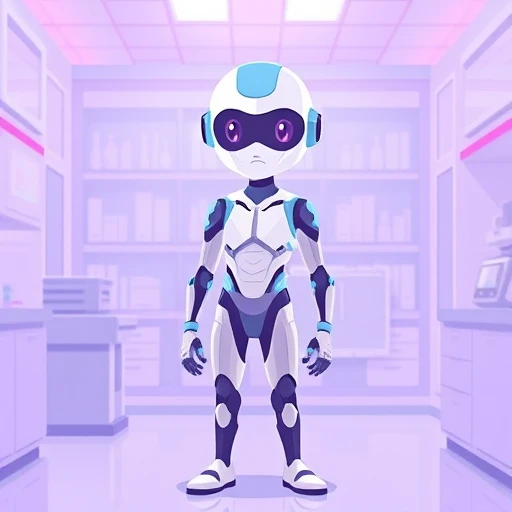
replicant in 30 Seconds
- A replicant is a bioengineered synthetic human, indistinguishable from natural humans, first appearing in the movie Blade Runner as advanced, organic labor.
- Unlike mechanical robots, replicants are biological, possessing flesh, blood, and DNA, making them a unique category of artificial intelligence in fiction.
- The term is often used to explore deep philosophical questions about what defines humanity, focusing on memory, empathy, and the right to life.
- In modern culture, 'replicant' serves as a metaphor for the 'other' or for highly efficient, yet seemingly emotionless, human-like entities.
The term replicant is a sophisticated noun that originated in the realm of science fiction but has since migrated into philosophical and ethical discussions regarding artificial intelligence and biotechnology. At its core, a replicant is not a traditional robot made of gears and silicon; rather, it is a bioengineered or synthetic being that is composed of organic matter, making it virtually indistinguishable from a natural-born human being. The term was famously coined for the 1982 film Blade Runner, directed by Ridley Scott, to replace the word 'android' from Philip K. Dick's novel Do Androids Dream of Electric Sheep?. The screenwriters felt that 'android' sounded too mechanical and dated, whereas 'replicant' suggested a more biological process of replication and genetic engineering. In contemporary usage, people use the word to describe entities that challenge our definition of what it means to be 'human.' It is often used in debates about the 'Uncanny Valley,' where an artificial creation looks so human that it causes a sense of unease in observers. When you hear this word, the speaker is usually referring to the intersection of high technology and biological life, often highlighting the ethical dilemma of creating life for the purpose of servitude or labor.
- Etymological Root
- Derived from the verb 'replicate,' suggesting a biological copying of cells and DNA rather than a mechanical assembly of parts.
The protagonist spent his career hunting down every rogue replicant that managed to escape the off-world colonies and return to Earth.
In a broader sense, the word is used to discuss the future of labor. If we create beings that can think, feel, and bleed just like us, do they deserve human rights? This is the central question whenever the term is invoked. It is a C1-level word because it requires an understanding of nuance—specifically the difference between mechanical AI and biological AI. It is rarely used in casual conversation unless the topic is cinema, literature, or advanced ethics. However, as biotechnology advances, the word is becoming a useful shorthand for 'synthetic humans.' It implies a level of perfection in manufacturing that makes the copy as good as, or even better than, the original. This leads to the 'more human than human' motto often associated with the fictional corporation that created them. Using this word correctly demonstrates a high level of cultural literacy and an ability to discuss complex technological concepts with precision.
- Contextual Usage
- Commonly found in film criticism, speculative fiction, and bioethical academic papers discussing the future of synthetic life.
Critics argued that the replicant displayed more empathy than the humans who were tasked with retiring it.
Furthermore, the word carries a weight of tragedy. In most narratives, a replicant is a being with a limited lifespan, designed to perform dangerous tasks that humans refuse to do. This creates a parallel to historical instances of slavery and exploitation. When a writer uses the word 'replicant,' they are often inviting the reader to empathize with the 'other.' It is a word about identity, memory, and the fragility of existence. If a replicant has memories of a childhood that never happened, are those memories any less real to the individual? This philosophical depth is why the word remains relevant decades after its creation. It serves as a linguistic bridge between current scientific reality and a future where the line between natural and artificial life is completely blurred. In professional writing, you might use it metaphorically to describe something that is a perfect, yet soulless, copy of an original work, though this is a secondary and more creative application of the term.
- Distinction
- Unlike a 'clone,' which is a genetic copy of an existing person, a replicant is a custom-designed biological entity that may not have a natural precursor.
The bio-engineer marveled at the complexity of the replicant's ocular system, which was superior to any human eye.
The question of whether a replicant can possess a soul is a recurring theme in postmodern literature.
In the dystopian future, the replicant was indistinguishable from the crowd until it displayed superhuman strength.
Using the word replicant correctly requires a firm grasp of its science-fiction connotations and its specific biological nature. Because it is a count noun, it follows standard English pluralization rules (replicants) and requires articles (a, the) or possessives (his, their) in most contexts. When constructing a sentence, you should place it in a position where its role as a sentient agent or a manufactured object is clear. For instance, if you are writing a story about a future society, you might use it as the subject of an action to show its agency: 'The replicant sought to extend its four-year lifespan.' Alternatively, you can use it as the object of a verb to emphasize its status as a product: 'The corporation manufactured a new series of replicants for deep-space exploration.' The word often pairs well with adjectives that describe its artificiality or its human-like qualities, such as 'synthetic,' 'bioengineered,' 'rogue,' or 'indistinguishable.'
- Grammatical Role
- Commonly used as a subject or object in sentences dealing with technology, ethics, or futuristic narratives.
Despite being a replicant, she experienced emotions that felt entirely authentic and overwhelming.
To use the word in a more academic or analytical sense, you might discuss the 'replicant trope' in literature. This refers to the recurring theme of an artificial being searching for its creator. In this context, the word becomes a symbol for the human condition. For example: 'The author uses the replicant as a metaphor for the alienation felt by workers in a capitalist society.' Notice how the word fits seamlessly into high-level discourse. It is also important to distinguish it from its synonyms in a sentence to show precision. If you say 'The robot broke,' it implies a mechanical failure. If you say 'The replicant died,' it implies a biological cessation of life, which carries much more emotional weight. This distinction is crucial for C1 learners who want to convey specific imagery and tone in their writing. You should also be aware of the verb 'replicate' which is the root, and 'replication' which is the process, as they often appear in the same paragraph as 'replicant.'
- Common Adjective Pairings
- Rogue replicant, advanced replicant, synthetic replicant, sentient replicant.
The detective was trained to identify a replicant by observing its lack of emotional response to specific stimuli.
In complex sentences, you can use 'replicant' to create contrast. For instance: 'While the humans lived in luxury, the replicants were relegated to the hazardous conditions of the mining colonies.' This highlights the social hierarchy often found in stories involving these beings. You can also use it in the possessive form to discuss their attributes: 'The replicant's memories were actually implanted from the designer's own niece.' This adds a layer of complexity to the narrative. Remember that because the word is so closely tied to a specific film franchise, using it in a non-sci-fi context might be seen as a playful allusion or a metaphor. For example, if you call a very efficient and emotionless coworker a 'replicant,' you are using it as a slang term to imply they are not quite human. This is a common way the word has entered the general lexicon, though it remains somewhat informal in that specific usage.
- Sentence Structure Tip
- Use 'replicant' as a collective noun when referring to them as a class of beings: 'The replicant population began to demand equal rights.'
Scientists are still decades away from creating a true replicant that can pass the Turing test perfectly.
Every replicant in the Nexus-6 series was programmed with a fail-safe four-year lifespan.
The ethics committee debated whether a replicant should be granted the right to own property.
The word replicant is most frequently encountered in the world of cinema and pop culture, specifically within the 'Cyberpunk' genre. If you are watching a movie review, a documentary about filmmaking, or a video essay on science fiction, you will almost certainly hear this word. It is a staple of film studies because Blade Runner is considered one of the most influential films of all time. Beyond the screen, you will find the word in technology journalism. When a company like Tesla or Boston Dynamics unveils a new humanoid robot, tech critics often use 'replicant' as a point of comparison to describe how close—or how far—the technology is from achieving a truly human-like form. It is also a favorite term in philosophical podcasts and debates about the 'Singularity' or the future of artificial intelligence. In these contexts, it serves as a cautionary label for what might happen if we create life that we cannot control.
- Media Presence
- High frequency in sci-fi literature, film criticism, and tech-ethics journalism.
The tech mogul's vision for the future seemed to be ripped straight from a movie about replicants and neon-soaked cities.
In academic circles, specifically within the humanities and social sciences, 'replicant' is used to discuss the 'Post-human' condition. Professors might use the term when discussing how technology is changing our understanding of the self. You might hear it in a lecture about 'The Other' in literature, where the replicant represents a marginalized group that is denied personhood. In the gaming world, the word is also quite common. Many video games, such as NieR Replicant or Cyberpunk 2077, use the term or similar concepts to explore themes of identity and artificial life. If you are a gamer, you likely hear this word in cutscenes or read it in lore entries. Furthermore, in the art world, 'replicant' can be used to describe digital art or 3D-printed sculptures that mimic biological forms with unsettling accuracy. It is a word that carries a specific 'cool' factor, often associated with neon lights, rainy cityscapes, and electronic music.
- Academic Usage
- Used in post-humanist theory and bioethics to describe synthetic biological entities.
During the seminar, the professor compared the replicant to the Golem of Jewish folklore, both being artificial servants that turn on their masters.
Lastly, you might hear this word in the context of fashion and design. 'Replicant chic' is a term sometimes used to describe a futuristic, minimalist aesthetic that looks like it belongs in a dystopian future. Designers might use materials that look like skin or incorporate transparent elements that mimic the internal structures of a synthetic being. In this sense, the word has moved beyond its literal meaning and become a descriptor for a specific 'vibe' or style. Even in the world of high finance, some traders use the word to describe high-frequency trading algorithms that 'replicate' human trading patterns with inhuman speed. While this is a metaphorical use, it shows how the word has permeated various sectors of society. Whether you are in a cinema, a tech lab, or a philosophy classroom, the word 'replicant' is a powerful tool for describing the complex relationship between humans and the things they create.
- Cultural Impact
- The term has become a shorthand for the ethical dangers of 'playing God' with biotechnology.
The fashion show featured models with metallic skin, evoking the haunting beauty of a replicant.
The podcast host asked if a replicant could ever truly understand the concept of love.
The gamer spent hours customizing their character to look like a replicant from the 2049 sequel.
One of the most frequent mistakes people make when using the word replicant is confusing it with other science-fiction terms like 'android,' 'cyborg,' or 'clone.' While they all refer to artificial or modified beings, they have distinct technical meanings. An android is a robot that looks like a human but is made of mechanical and electronic parts. A cyborg is a biological human who has been enhanced with mechanical parts (like a prosthetic arm or a neural chip). A clone is a genetic copy of an existing person, born and raised naturally. A replicant, however, is a bioengineered being created in a lab, made of synthetic organic tissue. Using 'replicant' to describe a metallic robot like R2-D2 from Star Wars would be a major error. It is important to remember the 'bio' in bioengineered. If it doesn't have skin, blood, and organs, it's probably not a replicant in the strict sense of the word.
- Confusing Terms
- Android (mechanical), Cyborg (human + machine), Clone (genetic copy), Replicant (synthetic biological).
Incorrect: The robot's metal gears were visible, proving he was a replicant.
Another common mistake is a spelling error. Because the word is derived from 'replicate,' some people mistakenly spell it as 'replicant' with an 'e' at the end or 'replicant' with a 'k.' The correct spelling is R-E-P-L-I-C-A-N-T. Additionally, learners often struggle with the pronunciation, specifically where to place the stress. The stress is on the first syllable: REP-li-cant. Placing the stress on the second or third syllable will make the word sound unnatural to native speakers. There is also a tendency to use the word as a verb, such as 'to replicant something.' This is incorrect; the verb form is 'to replicate.' You can say 'The machine replicated the document,' but you cannot say 'The machine replicanted the document.' Keeping the noun and verb forms separate is essential for grammatical accuracy.
- Pronunciation Error
- Avoid saying re-PLIC-ant. The correct emphasis is on the first syllable: REP-li-cant.
Correct: The replicant's biological systems were designed to fail after four years.
Finally, some people use the word too broadly to describe any kind of copy or imitation. While it can be used metaphorically, using it in a professional setting to describe a photocopied document or a duplicate file is usually inappropriate and confusing. It is better to use 'duplicate,' 'copy,' or 'replica' for inanimate objects. 'Replicant' carries a strong connotation of life and consciousness. If the thing you are describing isn't alive (or pretending to be alive), 'replicant' is probably the wrong word. For example, calling a fake Rolex a 'replicant watch' sounds strange; 'replica watch' is the correct term. Understanding these subtle boundaries will help you use the word with the precision expected at a C1 level. It is a word that belongs to the living and the synthetic-living, not to office supplies or counterfeit goods.
- Inanimate Objects
- Use 'replica' for objects and 'replicant' for beings.
Incorrect: I bought a replicant of the Eiffel Tower at the gift shop.
Correct: The replicant was so convincing that even his own 'mother' didn't know he was synthetic.
Correct: In the movie, the replicant's eyes were the only clue to its true nature.
When exploring the semantic field of replicant, it is helpful to look at words that share its 'artificial human' theme but differ in their specific implications. The most common alternative is 'android.' While 'android' is often used interchangeably in casual speech, it technically refers to a robot with a human appearance, usually made of non-biological materials. If you are writing a story about a robot made of metal and plastic, 'android' is the better choice. Another similar word is 'humanoid,' which is an adjective or noun describing anything that has a human-like shape. A 'humanoid' doesn't necessarily have to look perfectly human; it just needs to have two arms, two legs, and a head. For example, a chimpanzee is humanoid in its structure, but it is certainly not a replicant. Understanding these distinctions allows for much more descriptive and accurate writing.
- Comparison: Replicant vs. Android
- Replicants are biological and synthetic; Androids are mechanical and electronic.
While the replicant could feel pain and bleed, the android simply registered damage to its sensors.
Another word to consider is 'synth' or 'synthetic.' These are often used in modern sci-fi (like the Fallout games or the show Humans) as a more contemporary alternative to 'replicant.' 'Synth' is short for 'synthetic human' and carries many of the same connotations of biological engineering. If you want to avoid the specific cinematic baggage of Blade Runner, 'synthetic' or 'synth' might be a safer, more neutral choice. Then there is 'automaton,' which is a much older word. An automaton is a self-operating machine, often mechanical and clockwork-based. It lacks the biological complexity and the 'sentience' usually associated with a replicant. Using 'automaton' suggests something repetitive and mindless, whereas 'replicant' suggests something with a potential for soul and independent thought. These nuances are vital for achieving a C1 level of expression, as they allow you to set a specific tone for your narrative or analysis.
- Comparison: Replicant vs. Clone
- Replicants are manufactured as adults; Clones are born as infants and grow naturally.
The replicant was 'born' at age twenty-five, with a full set of false memories already in place.
Finally, we should mention 'bioroid' and 'artificial person.' 'Bioroid' is a term often used in Japanese anime (like Appleseed) to describe exactly what a replicant is: a biological robot. 'Artificial person' is the term used in the Alien franchise to describe beings like Bishop or David. These terms are useful if you want to vary your vocabulary. However, 'replicant' remains the most iconic and philosophically charged of the group. It carries with it the specific history of the 'Voight-Kampff' test and the struggle for life in a world that views you as a tool. When choosing between these words, consider the 'texture' of your world. Is it high-tech and sterile (use 'synthetic')? Is it gritty and industrial (use 'replicant')? Is it old-fashioned and mechanical (use 'automaton')? By selecting the right synonym, you provide your reader with a wealth of subtext without having to explain every detail explicitly.
- Summary of Alternatives
- Android, Synth, Bioroid, Simulacrum, Artificial Person, Humanoid, Automaton.
The philosopher argued that a replicant is the ultimate simulacrum of humanity.
He felt like a replicant in his own life, going through the motions without any real passion.
The replicant looked into the mirror and wondered if its reflections were as synthetic as its skin.
How Formal Is It?
""
""
""
""
""
Fun Fact
In the original novel by Philip K. Dick, the beings were called 'androids' or 'andys.' The word 'replicant' does not appear in the book at all, yet it is now the most famous term associated with the story.
Pronunciation Guide
- Pronouncing it as re-PLIC-ant (stressing the second syllable).
- Pronouncing the 'c' as a 's' (replisant).
- Making the 'i' sound like 'eye' (re-ply-cant).
- Dropping the 't' at the end.
- Confusing it with 'replicate' (the verb).
Difficulty Rating
Requires understanding of sci-fi context and complex themes.
Spelling is tricky and it must be used in the correct context.
Pronunciation is straightforward once the stress is learned.
Easily recognized in sci-fi media.
What to Learn Next
Prerequisites
Learn Next
Advanced
Grammar to Know
Nouns used as adjectives
The replicant technology was revolutionary.
Possessive form of nouns ending in 't'
The replicant's eyes were glowing.
Pluralization of count nouns
There were four replicants in the room.
Using 'more... than' for comparison
He was more human than human.
Articles with specific vs general nouns
A replicant (any) vs The replicant (that one).
Examples by Level
The replicant looks like a man.
Le réplicant ressemble à un homme.
Subject + Verb + Like + Noun.
Is he a human or a replicant?
Est-il un humain ou un réplicant ?
Question form with 'or'.
The replicant is very strong.
Le réplicant est très fort.
Adjective 'strong' describing the noun.
I saw a replicant in the movie.
J'ai vu un réplicant dans le film.
Past tense 'saw'.
Replicants are not real people.
Les réplicants ne sont pas de vraies personnes.
Plural noun with 'are not'.
The replicant has blue eyes.
Le réplicant a les yeux bleus.
Possessive 'has'.
Can a replicant feel happy?
Un réplicant peut-il se sentir heureux ?
Modal verb 'can' for possibility.
The replicant works in space.
Le réplicant travaille dans l'espace.
Present simple for a job.
The company made the replicant to help people.
L'entreprise a fabriqué le réplicant pour aider les gens.
Infinitive of purpose 'to help'.
He didn't know he was a replicant.
Il ne savait pas qu'il était un réplicant.
Past continuous/simple mix.
Replicants are better at some jobs than humans.
Les réplicants sont meilleurs pour certains travaux que les humains.
Comparative 'better than'.
They are made of synthetic skin and bone.
Ils sont faits de peau et d'os synthétiques.
Passive voice 'are made of'.
The police hunt for rogue replicants.
La police traque les réplicants rebelles.
Noun-adjective 'rogue replicants'.
A replicant lives for only four years.
Un réplicant ne vit que quatre ans.
Adverb 'only' for limitation.
The replicant cried because it was sad.
Le réplicant a pleuré parce qu'il était triste.
Conjunction 'because'.
Do you think that man is a replicant?
Penses-tu que cet homme est un réplicant ?
Noun clause 'that man is a replicant'.
The replicant escaped from the colony to find its creator.
Le réplicant s'est échappé de la colonie pour trouver son créateur.
Prepositional phrase 'from the colony'.
Scientists use bioengineering to create each replicant.
Les scientifiques utilisent la bio-ingénierie pour créer chaque réplicant.
Use of 'each' for individual focus.
If a replicant has memories, is it really artificial?
Si un réplicant a des souvenirs, est-il vraiment artificiel ?
First conditional structure.
The replicant's physical abilities were superior to any athlete's.
Les capacités physiques du réplicant étaient supérieures à celles de n'importe quel athlète.
Possessive 'replicant's'.
Many people fear that replicants will replace them at work.
Beaucoup de gens craignent que les réplicants ne les remplacent au travail.
Reporting verb 'fear that'.
The replicant was designed to be a perfect soldier.
Le réplicant a été conçu pour être un soldat parfait.
Passive 'was designed to'.
She realized she was a replicant after failing the test.
Elle a réalisé qu'elle était un réplicant après avoir échoué au test.
Gerund after preposition 'after failing'.
The replicant asked for more life.
Le réplicant a demandé plus de vie.
Phrasal verb 'asked for'.
The ethical implications of creating a replicant are vast and complex.
Les implications éthiques de la création d'un réplicant sont vastes et complexes.
Subject-verb agreement with 'implications'.
A replicant is often indistinguishable from a human without a special test.
Un réplicant est souvent indiscernable d'un humain sans un test spécial.
Adjective 'indistinguishable'.
The corporation marketed the replicant as a safer alternative to human labor.
L'entreprise a commercialisé le réplicant comme une alternative plus sûre au travail humain.
Verb 'marketed' with 'as'.
Despite their synthetic origin, replicants can exhibit deep empathy.
Malgré leur origine synthétique, les réplicants peuvent faire preuve d'une profonde empathie.
Concession with 'despite'.
The rogue replicant led a rebellion against its masters.
Le réplicant rebelle a mené une rébellion contre ses maîtres.
Compound noun 'rogue replicant'.
Each replicant is programmed with a specific set of skills for its mission.
Chaque réplicant est programmé avec un ensemble spécifique de compétences pour sa mission.
Passive 'is programmed with'.
The replicant's lifespan was intentionally shortened to prevent rebellion.
La durée de vie du réplicant a été intentionnellement raccourcie pour éviter la rébellion.
Adverb 'intentionally' modifying the verb.
Detectives use the Voight-Kampff test to identify a replicant.
Les détectives utilisent le test Voight-Kampff pour identifier un réplicant.
Purpose clause 'to identify'.
The narrative explores the replicant as a metaphor for the marginalized 'other' in society.
Le récit explore le réplicant comme une métaphore de 'l'autre' marginalisé dans la société.
Abstract noun 'metaphor'.
The replicant's existential crisis stems from its awareness of its own artificiality.
La crise existentielle du réplicant découle de la conscience de sa propre artificialité.
Phrasal verb 'stems from'.
Critics argue that the replicant possesses a soul that its creators lack.
Les critiques soutiennent que le réplicant possède une âme qui manque à ses créateurs.
Relative clause 'that its creators lack'.
The bio-synthetic nature of the replicant blurs the line between man and machine.
La nature bio-synthétique du réplicant brouille la frontière entre l'homme et la machine.
Subject 'nature' with singular verb 'blurs'.
A replicant's memories are often implanted to provide a sense of emotional stability.
Les souvenirs d'un réplicant sont souvent implantés pour fournir un sentiment de stabilité émotionnelle.
Passive voice for habitual action.
The replicant's desire for longevity is a quintessentially human trait.
Le désir de longévité du réplicant est un trait typiquement humain.
Adverb 'quintessentially'.
Hunting a replicant requires a detective to suppress their own empathy.
Chasser un réplicant exige qu'un détective réprime sa propre empathie.
Gerund 'hunting' as subject.
The film depicts the replicant as a tragic hero seeking redemption.
Le film dépeint le réplicant comme un héros tragique en quête de rédemption.
Present participle 'seeking'.
The replicant serves as a simulacrum that exposes the fragility of human identity.
Le réplicant sert de simulacre qui expose la fragilité de l'identité humaine.
Advanced noun 'simulacrum'.
By engineering a replicant, the corporation commodifies the very essence of life.
En concevant un réplicant, l'entreprise marchandise l'essence même de la vie.
Gerund phrase 'By engineering'.
The replicant's 'tears in rain' monologue is a profound meditation on mortality.
Le monologue 'des larmes dans la pluie' du réplicant est une profonde méditation sur la mortalité.
Appositive phrase.
Is the replicant an abomination of nature or the next step in evolution?
Le réplicant est-il une abomination de la nature ou la prochaine étape de l'évolution ?
Rhetorical question structure.
The replicant's autonomy is constantly undermined by its hardcoded directives.
L'autonomie du réplicant est constamment sapée par ses directives codées en dur.
Passive with 'constantly undermined'.
Post-humanist theory often utilizes the replicant to critique anthropocentrism.
La théorie post-humaniste utilise souvent le réplicant pour critiquer l'anthropocentrisme.
Academic register.
The replicant's struggle for personhood mirrors historical civil rights movements.
La lutte du réplicant pour la reconnaissance de sa personnalité reflète les mouvements historiques pour les droits civiques.
Verb 'mirrors' for comparison.
The subtle ocular glint was the only sign that she was a replicant.
Le subtil éclat oculaire était le seul signe qu'elle était un réplicant.
Adjective 'ocular'.
Common Collocations
Common Phrases
— The motto of the Tyrell Corporation, suggesting replicants are superior to humans.
The replicant's empathy made it seem more human than human.
— The places where replicants are typically sent to work.
He dreamed of escaping the off-world colony.
— The specific model or generation of a replicant.
He was a Nexus-6 model, the most advanced yet.
— A fictional test used to identify replicants by measuring emotional response.
She passed the Voight-Kampff test with ease.
— A reference to the famous monologue about the loss of a replicant's unique experiences.
His memories were lost, like tears in rain.
— A derogatory slang term for a replicant.
The detective didn't like working with skin-jobs.
— The date a replicant was activated or 'born'.
The replicant's incept date was April 10th, 2019.
— The title given to the police officers who hunt replicants.
He was the best Blade Runner on the force.
— False memories given to replicants to make them more stable.
The replicant's childhood was just a series of implanted memories.
— A poetic way to describe the consciousness of a replicant.
Does a synthetic soul count as a real one?
Often Confused With
Androids are mechanical; replicants are biological.
Cyborgs are humans with machine parts; replicants are entirely synthetic.
Clones are genetic copies of specific people; replicants are custom-made.
Idioms & Expressions
— To act in a cold, robotic, or emotionless way.
My boss is so cold, I think he might be a replicant.
informal— To possess qualities that are better than those of a natural person.
Her kindness was more human than human.
literary— Something beautiful or important that is lost and forgotten.
All those great ideas will be lost like tears in rain.
literary— Successfully pretending to be something you are not.
He's passing the test of being a professional, but he's a mess inside.
neutral— Desiring a life or a place that is far away and better.
She has those off-world dreams of living in Paris.
informal— To be treated as a tool rather than a person.
The interns felt they were just built for labor.
neutral— Feelings that are perceived as fake or programmed.
I don't trust his synthetic emotions.
informal— Having a very limited time to achieve something.
This project has a short lifespan, like a replicant.
informal— The influence of the person who designed or made something.
You can see the creator's hand in every detail of the app.
neutral— Looking real but having an artificial origin.
The fake leather was flesh and bone but not.
informalEasily Confused
Similar sound and root.
A replica is an object (like a fake watch); a replicant is a being.
I have a replica of the statue, but that man is a replicant.
Both mean a copy.
Duplicate is general; replicant is specific to bio-synthetic humans.
I need a duplicate of this key.
Both are artificial representations.
An avatar is a digital representation; a replicant is a physical one.
My avatar in the game looks like a replicant.
Both are artificial beings.
Automaton implies mechanical, mindless movement; replicant implies biological sentience.
The clockwork automaton bowed to the king.
Both describe human-like things.
Humanoid is an adjective for shape; replicant is a noun for a specific being.
The robot has a humanoid shape.
Sentence Patterns
The [noun] is a [noun].
The replicant is a person.
He is a [noun] because [reason].
He is a replicant because he was made in a lab.
If [condition], then [result].
If the replicant escapes, the police will find it.
Despite [noun], [clause].
Despite being a replicant, he felt love.
The [noun] serves as a metaphor for [concept].
The replicant serves as a metaphor for the human condition.
By [gerund], the [noun] [verb] [concept].
By creating a replicant, the scientist challenged nature.
The [noun] was designed to [verb].
The replicant was designed to work in mines.
It is [adjective] to distinguish a [noun] from a [noun].
It is difficult to distinguish a replicant from a human.
Word Family
Nouns
Verbs
Adjectives
Related
How to Use It
Rare in general English; very high in sci-fi and tech-ethics circles.
-
Calling a mechanical robot a replicant.
→
Calling a bioengineered being a replicant.
Replicants are biological, not mechanical. This is the most important distinction.
-
Saying 'The replicant was made of metal.'
→
Saying 'The replicant was made of synthetic tissue.'
Replicants have skin, blood, and bones, just like humans.
-
Pronouncing it re-PLIC-ant.
→
Pronouncing it REP-li-cant.
The stress must be on the first syllable.
-
Using 'replicant' as a verb.
→
Using 'replicate' as a verb.
Replicant is a noun. You cannot 'replicant' something.
-
Confusing a replicant with a clone.
→
Recognizing that replicants are manufactured as adults.
Clones grow from embryos; replicants are assembled as fully grown beings.
Tips
Be Precise
Only use 'replicant' if you are talking about a biological synthetic being. If it's made of metal, use 'android' or 'robot'.
Know the Source
Using the word 'replicant' is a direct nod to Blade Runner. Be prepared for people to discuss the movie with you if you use it.
Noun vs Verb
Remember: 'replicant' is the person, 'replicate' is the action. Don't say 'he replicanted the file'.
Stress the First
Always put the emphasis on the first syllable: REP-li-cant. It makes you sound more like a native speaker.
Use as Metaphor
You can call someone a 'replicant' if they are acting very cold or robotic, but keep this for informal settings.
Set the Scene
When writing sci-fi, use the word to immediately signal a 'cyberpunk' or 'dystopian' setting to your reader.
Learn Related Terms
Learn 'sentience' and 'empathy' alongside 'replicant,' as these concepts are almost always discussed together.
Context Clues
If you hear 'off-world' or 'Tyrell,' the word 'replicant' is likely to follow soon.
The 'C' is Key
It's spelled with a 'c', not a 'k'. Replicant, not Replikant (unless you are in Germany!).
Post-humanism
In essays, use 'replicant' to discuss the blurring of lines between the natural and the artificial.
Memorize It
Mnemonic
Think of 'REPLICAted humANT' — a human that has been replicated (copied) in a lab.
Visual Association
Imagine a person stepping out of a 3D printer made of biological tissue instead of plastic.
Word Web
Challenge
Try to write a short paragraph explaining the difference between a replicant and a robot using at least three other words from the word web.
Word Origin
The word was coined by David Peoples, one of the screenwriters for the 1982 film Blade Runner. He wanted a term that sounded more biological than 'android.' He consulted his daughter, who was studying microbiology, and she suggested 'replication,' the process by which cells make copies of themselves. From this, Peoples derived 'replicant.'
Original meaning: A bioengineered synthetic human.
English (Modern coinage based on Latin roots).Cultural Context
The term 'skin-job' within the fiction is a racial slur, used to show the prejudice against replicants. Be careful when using it, as it mimics real-world bigotry.
The word is a cultural touchstone for Gen X and Millennials who grew up with the film Blade Runner.
Practice in Real Life
Real-World Contexts
Film Criticism
- The replicant's arc
- Cinematic depiction of replicants
- The replicant trope
- Visualizing the replicant
Ethics of AI
- Rights for replicants
- The replicant dilemma
- Moral status of a replicant
- Creating a replicant
Science Fiction Literature
- A rogue replicant
- The replicant's creator
- Synthetic biological life
- Replicant rebellion
Technology News
- Replicant-like humanoid
- The future of replicants
- Bioengineered beings
- Synthetic human models
Philosophy
- The replicant's soul
- Identity of a replicant
- The Uncanny Valley
- Replicant consciousness
Conversation Starters
"If you could create a replicant to do your chores, would you feel guilty about it?"
"Do you think we will see a real-life replicant in our lifetime?"
"If a replicant has your memories, is it actually you?"
"Why do you think the word 'replicant' sounds cooler than 'robot'?"
"What is the most famous replicant in movie history, in your opinion?"
Journal Prompts
Imagine you discover you are a replicant with only one year to live. What do you do?
Write a letter from a replicant to its creator asking for more life.
Discuss the ethical reasons why a corporation should or should not build replicants.
Describe a day in the life of a replicant working on an off-world colony.
How does the concept of a replicant change your definition of what it means to be human?
Frequently Asked Questions
10 questionsTechnically, no. While they are artificial, they are biological in nature. Robots are typically mechanical and electronic. Replicants are grown from synthetic DNA and have flesh, blood, and organs, making them more like 'artificial humans' than traditional robots.
The word was invented for the 1982 movie Blade Runner. The screenwriters wanted a word that sounded more scientific and biological than 'android.' It is based on the biological process of 'replication.'
In the original Blade Runner, no. They were designed to be sterile. However, in the sequel Blade Runner 2049, the possibility of a replicant giving birth is a major plot point that changes the world's understanding of them.
Yes, they do. Although they are programmed, they eventually develop their own emotional responses due to their advanced brains. This is why they are given limited lifespans—to prevent them from becoming too emotionally complex and difficult to control.
In the movies, it is very difficult. Detectives use the 'Voight-Kampff' test, which measures involuntary physical responses (like eye movement) to emotionally charged questions. Without such a test, they are physically indistinguishable.
This is a derogatory term used by humans in the Blade Runner universe. It highlights the fact that they are 'just skin' and synthetic tissue, denying them the status of a real person with a soul.
Not usually. Real scientists use terms like 'synthetic organism' or 'bio-hybrid.' 'Replicant' remains a science-fiction term, though it is used metaphorically in tech discussions.
The Nexus-6 is a specific generation of replicants in the first Blade Runner film. They were the most advanced models, possessing superhuman strength and intelligence, but limited to a four-year lifespan.
No. A clone is a genetic copy of an existing person. A replicant is a custom-designed being that might not look like anyone else. Also, replicants are 'born' as adults, whereas clones grow from babies.
Because they are sentient and self-aware, they fear death just like humans do. Their four-year lifespan is a 'fail-safe' created by their manufacturers, and much of their struggle is about trying to bypass this limit.
Test Yourself 200 questions
Write a sentence using the word 'replicant' to describe a futuristic worker.
Well written! Good try! Check the sample answer below.
Describe the difference between a replicant and a human in two sentences.
Well written! Good try! Check the sample answer below.
Use 'replicant' as a metaphor for someone who lacks emotion.
Well written! Good try! Check the sample answer below.
Write a short dialogue between a detective and a suspected replicant.
Well written! Good try! Check the sample answer below.
Explain why the word 'replicant' is used instead of 'robot' in Blade Runner.
Well written! Good try! Check the sample answer below.
Write a sentence using 'rogue replicant'.
Well written! Good try! Check the sample answer below.
Create a slogan for a company that makes replicants.
Well written! Good try! Check the sample answer below.
Discuss the ethical problem of replicants in one paragraph.
Well written! Good try! Check the sample answer below.
Write a sentence about a replicant's memories.
Well written! Good try! Check the sample answer below.
Use the word 'indistinguishable' and 'replicant' in the same sentence.
Well written! Good try! Check the sample answer below.
Write a sentence about a replicant's lifespan.
Well written! Good try! Check the sample answer below.
Write a short story opening (3 sentences) featuring a replicant.
Well written! Good try! Check the sample answer below.
Write a sentence using 'replicant' and 'bioengineered'.
Well written! Good try! Check the sample answer below.
Write a sentence using 'replicant' and 'empathy'.
Well written! Good try! Check the sample answer below.
Write a sentence using 'replicant' and 'off-world'.
Well written! Good try! Check the sample answer below.
Write a sentence about a replicant's creator.
Well written! Good try! Check the sample answer below.
Write a sentence using 'replicant' in a formal academic tone.
Well written! Good try! Check the sample answer below.
Write a sentence about a replicant's eyes.
Well written! Good try! Check the sample answer below.
Write a sentence using 'replicant' and 'synthetic'.
Well written! Good try! Check the sample answer below.
Write a sentence about a replicant rebellion.
Well written! Good try! Check the sample answer below.
Explain what a replicant is to a friend who has never seen Blade Runner.
Read this aloud:
You said:
Speech recognition is not supported in your browser. Try Chrome or Edge.
Pronounce the word 'replicant' correctly, stressing the first syllable.
Read this aloud:
You said:
Speech recognition is not supported in your browser. Try Chrome or Edge.
Discuss whether you think a replicant should have human rights.
Read this aloud:
You said:
Speech recognition is not supported in your browser. Try Chrome or Edge.
Describe a famous scene involving a replicant.
Read this aloud:
You said:
Speech recognition is not supported in your browser. Try Chrome or Edge.
Use the word 'replicant' in a sentence about the future of AI.
Read this aloud:
You said:
Speech recognition is not supported in your browser. Try Chrome or Edge.
Compare a replicant to a robot.
Read this aloud:
You said:
Speech recognition is not supported in your browser. Try Chrome or Edge.
Talk about the 'Uncanny Valley' in relation to replicants.
Read this aloud:
You said:
Speech recognition is not supported in your browser. Try Chrome or Edge.
Explain the phrase 'more human than human'.
Read this aloud:
You said:
Speech recognition is not supported in your browser. Try Chrome or Edge.
Describe how a detective finds a replicant.
Read this aloud:
You said:
Speech recognition is not supported in your browser. Try Chrome or Edge.
Discuss the tragedy of a replicant's short life.
Read this aloud:
You said:
Speech recognition is not supported in your browser. Try Chrome or Edge.
Use 'replicant' as a metaphor in a conversation.
Read this aloud:
You said:
Speech recognition is not supported in your browser. Try Chrome or Edge.
Explain the origin of the word 'replicant'.
Read this aloud:
You said:
Speech recognition is not supported in your browser. Try Chrome or Edge.
Talk about the role of memories in a replicant's life.
Read this aloud:
You said:
Speech recognition is not supported in your browser. Try Chrome or Edge.
Discuss the concept of a 'rogue replicant'.
Read this aloud:
You said:
Speech recognition is not supported in your browser. Try Chrome or Edge.
Explain why replicants are used for 'off-world' labor.
Read this aloud:
You said:
Speech recognition is not supported in your browser. Try Chrome or Edge.
Talk about the visual style of a world with replicants.
Read this aloud:
You said:
Speech recognition is not supported in your browser. Try Chrome or Edge.
Discuss the ethics of 'retiring' a replicant.
Read this aloud:
You said:
Speech recognition is not supported in your browser. Try Chrome or Edge.
Explain the difference between a replicant and a clone.
Read this aloud:
You said:
Speech recognition is not supported in your browser. Try Chrome or Edge.
Talk about the impact of replicants on pop culture.
Read this aloud:
You said:
Speech recognition is not supported in your browser. Try Chrome or Edge.
Use 'replicant' in a sentence about a science fiction book.
Read this aloud:
You said:
Speech recognition is not supported in your browser. Try Chrome or Edge.
Listen to a description of a character: 'He looks human, he bleeds, but he was made by the Tyrell Corp.' Is he a replicant?
Listen for the stress: Which is correct? A) re-PLIC-ant B) REP-li-cant
Listen to a movie clip: 'I've seen things you people wouldn't believe.' Who is speaking?
Listen to a definition: 'A bioengineered synthetic human.' What word is being defined?
Listen to a sentence: 'The replicant's lifespan was four years.' How long did it live?
Listen for the synonym: 'The synth escaped.' What is another word for synth?
Listen to a dialogue: 'Is she a skin-job?' 'She's a Nexus-7.' What are they talking about?
Listen to a news report: 'Scientists have created a biological robot.' What sci-fi word might they use?
Listen to a description: 'It has synthetic skin and implanted memories.' What is it?
Listen to a command: 'Retire that replicant immediately!' What should happen to it?
Listen to a question: 'Can a replicant love?' What is the speaker asking about?
Listen to a fact: 'The word replicant was coined in 1982.' When was it created?
Listen to a sentence: 'The rogue replicant is dangerous.' What kind of replicant is it?
Listen to a phrase: 'More human than human.' What does this describe?
Listen to a word: 'Replicant.' How many syllables does it have?
/ 200 correct
Perfect score!
Summary
The word 'replicant' describes a synthetic biological being that looks perfectly human. It is a key term for discussing the ethics of artificial life and the definition of humanity. Example: 'The detective's job was to identify the replicant hiding in the crowd.'
- A replicant is a bioengineered synthetic human, indistinguishable from natural humans, first appearing in the movie Blade Runner as advanced, organic labor.
- Unlike mechanical robots, replicants are biological, possessing flesh, blood, and DNA, making them a unique category of artificial intelligence in fiction.
- The term is often used to explore deep philosophical questions about what defines humanity, focusing on memory, empathy, and the right to life.
- In modern culture, 'replicant' serves as a metaphor for the 'other' or for highly efficient, yet seemingly emotionless, human-like entities.
Be Precise
Only use 'replicant' if you are talking about a biological synthetic being. If it's made of metal, use 'android' or 'robot'.
Know the Source
Using the word 'replicant' is a direct nod to Blade Runner. Be prepared for people to discuss the movie with you if you use it.
Noun vs Verb
Remember: 'replicant' is the person, 'replicate' is the action. Don't say 'he replicanted the file'.
Stress the First
Always put the emphasis on the first syllable: REP-li-cant. It makes you sound more like a native speaker.