strip in 30 Seconds
- Verb: To remove a covering, layer, or clothing from something or someone, often leaving the surface bare or exposed.
- Verb: To officially take away a person's rank, title, or rights as a punishment or necessary action.
- Noun: A long, narrow piece of material, such as paper, cloth, or wood, or a narrow area of land.
- Noun: A series of drawings that tell a story, commonly found in newspapers or magazines (comic strip).
The word strip is a versatile English term that functions as both a verb and a noun, primarily revolving around the concept of removal or a long, narrow shape. As a verb, it most commonly describes the act of removing a covering, a layer, or clothing. Imagine peeling the bark off a tree or taking the old wallpaper off a wall; these are classic examples of stripping. It implies a thorough removal, often leaving the core or the base layer exposed. In a more abstract sense, it can refer to taking away someone's rank, power, or possessions as a form of punishment or necessity. When used as a noun, a strip refers to a piece of material that is much longer than it is wide. This could be a strip of paper, a strip of land used as a runway, or even a comic strip in a newspaper. The essence of the noun form is the specific geometric proportion: long, thin, and flat.
- Physical Removal
- The most literal use involves taking off layers. Mechanics strip engines to inspect parts, and decorators strip paint to prepare surfaces for a fresh coat. It suggests a process of baring something to its essential state.
- Deprivation of Rights
- In legal or formal contexts, to strip someone of something means to officially take away a privilege or title. For example, an athlete might be stripped of a gold medal if they are found to have cheated, or a soldier might be stripped of their rank for misconduct.
- Geometric Form
- As a noun, it describes the shape of objects. A 'strip mall' is a long row of stores, and a 'landing strip' is a long, narrow piece of ground for aircraft. The shape is the defining characteristic here.
The carpenter had to strip the old varnish from the antique table before he could apply the new stain, ensuring the wood was completely bare.
After the scandal was revealed, the committee decided to strip the executive of his honorary degree and all associated benefits.
She cut a thin strip of blue silk to use as a ribbon for the gift box she had prepared for her mother.
The pilot looked down and finally spotted the narrow strip of asphalt that served as the island's only runway.
The morning newspaper always includes a funny comic strip featuring a sarcastic cat and its long-suffering owner.
Using 'strip' correctly requires understanding its grammatical patterns. As a transitive verb, it requires an object—the thing being uncovered or the person being deprived. For example, 'The workers strip the building' implies they are removing its exterior. When you want to specify what is being removed, you use the 'strip [something] of [something]' or 'strip [something] from [something]' structures. The choice between 'of' and 'from' is often determined by whether the focus is on the person losing something (of) or the material being moved (from). As a noun, it functions like any other countable noun, appearing with articles like 'a' or 'the'.
- Verb Pattern: Strip + Object
- Used when the action of uncovering is the main point. 'We need to strip the bed' means removing the sheets and pillowcases for washing.
- Verb Pattern: Strip [Person] of [Possession]
- Common in formal and legal contexts. 'The court decided to strip the defendant of his assets to pay for the damages caused by his actions.'
- Noun Pattern: A Strip of [Material]
- Used to describe a physical piece. 'He applied a strip of adhesive tape to the broken window to keep the draft out temporarily.'
The storm was so powerful that it managed to strip the leaves from every tree in the orchard within minutes.
The athlete was devastated when the Olympic committee chose to strip her of the record she had worked years to achieve.
Please cut a long strip of bacon and wrap it around the dates before putting them in the oven to bake.
The minimalist designer decided to strip away all the unnecessary decorations to focus on the building's raw structure.
They lived on a narrow strip of land between the high cliffs and the crashing waves of the Atlantic Ocean.
The word 'strip' appears in a surprising variety of everyday contexts, from the mundane to the highly specialized. In a domestic setting, you might hear it during home renovations—'stripping the wallpaper' is a common, if tedious, task. In the world of media, 'comic strips' are a staple of newspapers and digital platforms, providing quick bursts of humor or narrative. In urban planning and commerce, the term 'strip mall' describes those ubiquitous rows of shops with a shared parking lot in front. Aviation professionals frequently use the term 'airstrip' or 'landing strip' to refer to the place where planes touch down. Even in sports, particularly racing, the 'drag strip' is the specialized track where cars compete for speed. Understanding these diverse environments helps you grasp the word's full range.
- Home Improvement
- 'I spent the whole weekend stripping the old layers of paint off the door frames to reveal the beautiful oak wood underneath.'
- Journalism and Art
- 'The political cartoonist released a new comic strip that satirized the latest government policy on environmental protection.'
- Travel and Logistics
- 'The small island is only accessible by a tiny grass airstrip that can only accommodate light, single-engine aircraft.'
The mechanic had to strip down the entire engine to find the source of the mysterious rattling sound that started yesterday.
We stopped at a local strip mall to grab some coffee and a quick snack before continuing our long road trip across the state.
The recipe calls for you to strip the leaves from the rosemary sprigs and chop them finely before adding them to the sauce.
The Las Vegas Strip is world-famous for its massive hotels, bright neon lights, and round-the-clock entertainment options.
After the game, the coach had to strip away the excuses and force the team to look at their actual performance on the field.
One of the most frequent errors learners make with 'strip' is confusing it with similar-sounding words like 'stripe', 'strap', or 'step'. While 'strip' and 'stripe' both involve long shapes, a 'stripe' is a pattern or a line of color (like on a zebra), whereas a 'strip' is a physical piece of material. Another common mistake is using the wrong preposition. Learners often say 'strip from' when they mean 'strip of' in the context of taking away rights. For example, 'He was stripped from his title' is incorrect; it should be 'stripped of his title'. Additionally, because 'strip' can refer to removing clothes, it can sometimes carry an unintended sexual connotation if used carelessly in social situations. It is safer to use 'undress' or 'take off' when referring to general clothing removal unless the context is specific, like medical or athletic preparation.
- Strip vs. Stripe
- A 'strip' is a physical object (a strip of paper). A 'stripe' is a visual mark (a stripe on a shirt). You can cut a strip, but you draw a stripe.
- Preposition Errors
- Remember: Strip [material] FROM [surface], but Strip [person] OF [honor/rank]. Mixing these up can make a sentence sound unnatural to native speakers.
- Contextual Sensitivity
- Avoid saying 'I need to strip' in a public or professional setting if you just mean you want to change your clothes. It sounds too literal and potentially inappropriate.
Incorrect: The zebra has black and white strips. Correct: The zebra has black and white stripes.
Incorrect: He was stripped from his power. Correct: He was stripped of his power.
Incorrect: I need to strip for the gym. Correct: I need to change for the gym.
Incorrect: Use a stripe of tape. Correct: Use a strip of tape.
Incorrect: The screw is striped. Correct: The screw is stripped.
Depending on the context, there are many words you can use instead of 'strip' to be more precise. If you are talking about removing a natural outer layer, 'peel' or 'skin' might be better. If you are talking about taking apart a machine, 'dismantle' is a more technical alternative. For the noun form, words like 'band', 'ribbon', or 'sliver' can offer more descriptive detail about the size and texture of the object. Understanding these nuances allows you to tailor your language to the specific situation, whether you are writing a technical manual, a story, or a casual email.
- Strip vs. Peel
- 'Peel' is usually for thin, flexible layers like fruit skin or stickers. 'Strip' is for more forceful removal or larger layers like wallpaper or bark.
- Strip vs. Dismantle
- 'Dismantle' implies a careful, organized taking apart of a structure. 'Strip' often implies a more destructive or basic removal of components.
- Strip vs. Sliver
- A 'sliver' is a very tiny, thin piece (like a sliver of glass). A 'strip' is generally larger and more uniform in shape.
Instead of saying 'strip the orange', it is more natural to say 'peel the orange' because the skin is thin and easily removed by hand.
The engineers had to dismantle the prototype carefully to preserve the delicate sensors for future testing.
She found a tiny sliver of wood in her finger after handling the rough planks in the workshop.
The tailor used a ribbon of silk to finish the edge of the gown, giving it a luxurious and elegant appearance.
The government decided to divest itself of its interests in the coal industry to meet new green energy targets.
How Formal Is It?
Fun Fact
The use of 'strip' to mean a 'comic strip' only dates back to the early 20th century, specifically around 1920, as newspapers began printing these short, narrow sequences of cartoons.
Pronunciation Guide
- Pronouncing it like 'stripe' (/straɪp/) with a long 'i' sound.
- Adding an extra vowel sound before the 's', making it 'estrip'.
- Confusing the 'p' at the end with a 'b' sound.
- Not clearly pronouncing the 't' in the 'str' cluster.
- Making the 'i' sound too long, like 'streep'.
Difficulty Rating
Easy to recognize in context, but can have multiple meanings.
Requires knowledge of correct prepositions like 'of' and 'from'.
Simple pronunciation, but avoid accidental sexual connotations.
Must distinguish from 'stripe' in fast speech.
What to Learn Next
Prerequisites
Learn Next
Advanced
Grammar to Know
Transitive Verb Usage
You must strip the surface (Object) before painting.
Prepositional Collocation (of)
He was stripped of his honors.
Prepositional Collocation (from)
Strip the bark from the tree.
Noun as a Countable Unit
I need three strips of tape.
Phrasal Verb: Strip Down
We need to strip down the old machine.
Examples by Level
I have a strip of red paper.
Tengo una tira de papel rojo.
Noun: 'a strip of' is a common phrase.
Please strip the bed today.
Por favor, quita las sábanas de la cama hoy.
Verb: 'strip the bed' means removing the sheets.
Look at this comic strip.
Mira esta tira cómica.
Noun: 'comic strip' is a compound noun.
Cut a strip of cloth.
Corta una tira de tela.
Noun: 'strip' describes the shape.
The strip is very long.
La tira es muy larga.
Noun: subject of the sentence.
He has a strip of tape.
Él tiene una tira de cinta.
Noun: object of the verb 'has'.
This is a strip of land.
Esta es una franja de tierra.
Noun: 'strip of land' is a common expression.
Use a strip of wood.
Usa una tira de madera.
Noun: used in an imperative sentence.
The wind stripped the leaves from the tree.
El viento arrancó las hojas del árbol.
Verb: 'strip [something] from [something]'.
We need to strip the old wallpaper.
Necesitamos quitar el papel tapiz viejo.
Verb: 'strip' as an infinitive after 'need to'.
The plane landed on the grass strip.
El avión aterrizó en la franja de césped.
Noun: 'grass strip' refers to a simple runway.
She cut the meat into thin strips.
Ella cortó la carne en tiras finas.
Noun: plural 'strips'.
There is a strip mall near my house.
Hay un centro comercial de tira cerca de mi casa.
Noun: 'strip mall' is a common term in the US.
He stripped the paint off the chair.
Él quitó la pintura de la silla.
Verb: past tense 'stripped'.
The sun stripped the color from the curtains.
El sol quitó el color de las cortinas.
Verb: metaphorical use of physical removal.
Put a strip of glue here.
Pon una tira de pegamento aquí.
Noun: used for a line of substance.
The athlete was stripped of his gold medal.
Al atleta le quitaron su medalla de oro.
Passive voice: 'was stripped of'.
You must strip the wire before connecting it.
Debes pelar el cable antes de conectarlo.
Verb: technical use for electrical work.
The company was stripped of its assets.
La empresa fue despojada de sus activos.
Verb: formal use meaning to take away property.
He decided to strip down the engine.
Él decidió desarmar el motor.
Phrasal verb: 'strip down' means to take apart.
The story was published as a comic strip.
La historia fue publicada como una tira cómica.
Noun: 'as a' indicates the format.
The thief stripped the car in an hour.
El ladrón desmanteló el coche en una hora.
Verb: means removing all valuable parts.
A narrow strip of land connects the islands.
Una estrecha franja de tierra conecta las islas.
Noun: geographical description.
She stripped away the old varnish.
Ella quitó el barniz viejo.
Phrasal verb: 'strip away'.
The dictator was stripped of all his powers.
El dictador fue despojado de todos sus poderes.
Verb: formal/political context.
The minimalist house was stripped of all ornament.
La casa minimalista fue despojada de todo adorno.
Verb: aesthetic context.
Be careful not to strip the screw.
Ten cuidado de no barrer el tornillo.
Verb: technical meaning of damaging threads.
The forest was stripped bare by the fire.
El bosque quedó pelado por el incendio.
Adjective phrase: 'stripped bare'.
The project was stripped of its funding.
El proyecto fue privado de su financiación.
Verb: financial/administrative context.
They walked along the neon-lit strip.
Caminaron por la franja iluminada con neón.
Noun: refers to a famous commercial street.
The lawyer tried to strip the witness of her credibility.
El abogado intentó quitarle credibilidad a la testigo.
Verb: metaphorical use in a legal setting.
The team was stripped of its title after the scandal.
El equipo fue despojado de su título tras el escándalo.
Verb: common in sports news.
The book strips away the myths surrounding the war.
El libro elimina los mitos que rodean la guerra.
Phrasal verb: 'strip away' used for revealing truth.
The prisoner was subjected to a humiliating strip search.
El prisionero fue sometido a un humillante registro corporal.
Noun compound: 'strip search' is a specific term.
The recession stripped many families of their savings.
La recesión privó a muchas familias de sus ahorros.
Verb: describing economic impact.
The artist used a stripped-back style for the album.
El artista usó un estilo minimalista para el álbum.
Adjective: 'stripped-back' means simple/essential.
The treaty stripped the nation of its coastal territories.
El tratado despojó a la nación de sus territorios costeros.
Verb: historical/political context.
The harsh chemicals will strip the protective coating.
Los productos químicos fuertes eliminarán la capa protectora.
Verb: scientific/industrial context.
He was stripped of his dignity by the cruel treatment.
Fue despojado de su dignidad por el trato cruel.
Verb: abstract/emotional context.
The city has a long strip of industrial warehouses.
La ciudad tiene una larga franja de almacenes industriales.
Noun: describing urban landscape.
The play is a stripped-down exploration of grief.
La obra es una exploración austera del duelo.
Adjective: 'stripped-down' in a literary sense.
The court's decision effectively stripped the law of its teeth.
La decisión del tribunal efectivamente dejó a la ley sin fuerza.
Idiomatic: 'strip of its teeth' means to make powerless.
The winter landscape was stripped of all vibrancy.
El paisaje invernal estaba despojado de toda vitalidad.
Verb: poetic/descriptive use.
The process involves stripping electrons from the hydrogen atoms.
El proceso implica arrancar electrones de los átomos de hidrógeno.
Verb: precise scientific terminology.
The CEO was stripped of his golden parachute after the audit.
Al CEO se le retiró su indemnización millonaria tras la auditoría.
Idiomatic: 'golden parachute' combined with 'strip'.
The architecture reflects a desire to strip away artifice.
La arquitectura refleja el deseo de eliminar lo artificial.
Verb: philosophical/aesthetic context.
The scandal stripped the veneer of respectability from the institution.
El escándalo quitó la apariencia de respetabilidad de la institución.
Metaphorical: 'strip the veneer' means revealing the truth.
The land was stripped of its minerals by decades of mining.
La tierra fue despojada de sus minerales por décadas de minería.
Verb: environmental/industrial context.
Synonyms
Antonyms
Common Collocations
Common Phrases
— A long, narrow piece of fabric used for various purposes. It is often used in cleaning or crafting.
He tied a strip of cloth around the wound.
— A thin, elongated piece of timber. Commonly used in construction or furniture making.
The carpenter used a strip of wood to fill the gap.
— A single slice of bacon. This is the standard way to refer to bacon in cooking.
I'll have two strips of bacon with my eggs.
— A piece of adhesive material cut into a long shape. Used for fixing or marking things.
She used a strip of tape to hold the poster.
— A narrow piece of metallic material. Often used in industrial or decorative contexts.
A strip of metal was used to reinforce the edge.
— A narrow beam or area of illumination. Often seen coming through a crack or gap.
A strip of light shone through the curtains.
— A narrow stretch of sand along the ocean. Describes the shape of the coastline.
They walked along a beautiful strip of beach.
— A long piece of processed animal skin. Used for belts, straps, or crafts.
He cut a strip of leather to make a handle.
— A length of photographic or cinematic film. Used in traditional cameras or projectors.
He held the strip of film up to the light.
— A narrow piece of floor covering. Often used in hallways or stairs.
A strip of carpet was laid down the center of the hall.
Often Confused With
A stripe is a line of color; a strip is a physical piece or a narrow area.
A strap is a strip of material used to fasten or carry something, like a bag strap.
A step is an action of moving your foot; 'strip' sounds similar but has a different vowel.
Idioms & Expressions
— To criticize or scold someone very severely. This is primarily a British English idiom.
The boss tore a strip off him for being late again.
informal— To remove all clothing from the upper half of the body. Often used in medical or athletic contexts.
The doctor asked him to strip to the waist for the exam.
neutral— To damage the teeth on a gear so that it no longer works. Used metaphorically for a mental breakdown.
The old car finally stripped a gear on the hill.
technical/informal— To remove everything except the most essential parts. Often used regarding budgets or stories.
The company was stripped to the bone to save it from bankruptcy.
metaphorical— A thorough search of a person that involves removing all their clothes. A very formal and serious term.
Customs officers performed a strip search on the suspect.
formal— A sequence of drawings in boxes that tell an amusing story. A standard term in media.
He has been drawing the same comic strip for twenty years.
neutral— A shopping center consisting of a row of stores with a common parking lot. Common in North America.
The new strip mall has a pharmacy and a bakery.
neutral— A simple runway for aircraft, often without elaborate airport facilities. Used in aviation.
The emergency landing strip was barely visible in the dark.
neutral— A straight track used for drag racing. Used in the context of motorsports.
The cars lined up at the start of the drag strip.
neutral— To reveal the true nature of something by removing its superficial appearance. A sophisticated metaphor.
The investigation stripped away the veneer of honesty from the politician.
formalEasily Confused
Similar spelling and both involve long shapes.
A stripe is a pattern or a mark (2D). A strip is a physical object or a piece (3D). You can have a strip of cloth with a stripe pattern on it.
The shirt has a blue stripe. I cut a strip of the shirt.
Similar sound and both are long and narrow.
A strap is specifically designed to hold, fasten, or carry something. A strip is a general term for the shape.
The bag has a leather strap. I used a strip of leather to fix it.
Both mean to remove a layer.
Peel is used for thin, natural layers (fruit, skin). Strip is used for tougher layers or when removing everything.
Peel the apple. Strip the wallpaper.
Both involve taking things apart.
Dismantle is a careful, piece-by-piece process. Strip often implies a faster or more basic removal of all parts.
Dismantle the clock. Strip the car for parts.
Both mean to take away.
Divest is strictly formal/legal, usually for money or power. Strip can be used for physical or formal things.
The bank divested its shares. The king was stripped of his crown.
Sentence Patterns
A strip of [Noun]
A strip of paper.
Strip the [Noun]
Strip the bed.
Strip [Noun] from [Noun]
Strip the paint from the wall.
Strip [Noun] of [Noun]
Strip him of his title.
Strip down the [Noun]
Strip down the engine.
Strip away the [Abstract Noun]
Strip away the lies.
A stripped-back [Noun]
A stripped-back performance.
Stripped bare
The room was stripped bare.
Word Family
Nouns
Verbs
Adjectives
Related
How to Use It
Common in daily life, especially in DIY, news, and geography.
-
The zebra has white strips.
→
The zebra has white stripes.
A stripe is a line of color. A strip is a physical piece of something.
-
He was stripped from his medal.
→
He was stripped of his medal.
When taking away a title or prize, the correct preposition is 'of'.
-
I need to strip the orange.
→
I need to peel the orange.
For fruit, 'peel' is the much more natural and common verb.
-
The screw is striped.
→
The screw is stripped.
'Striped' means it has lines on it. 'Stripped' means the thread or head is damaged.
-
He stripped away from his clothes.
→
He stripped off his clothes.
The phrasal verb for removing clothes is 'strip off', not 'strip away from'.
Tips
Double the 'P'
When you change 'strip' to 'stripped' or 'stripping', you must double the 'p'. This is because 'strip' has a short vowel sound followed by a single consonant.
Use 'Sliver' for Small Pieces
If a strip is extremely thin and small, like a piece of glass or a tiny bit of wood, use the word 'sliver' instead. It sounds more precise.
Avoid 'Strip' for Getting Dressed
If you are telling someone you are going to change your clothes, say 'I'm going to change' rather than 'I'm going to strip'. The latter can sound too literal or inappropriate.
Stripping Wires
In electronics, 'stripping' is the essential first step of removing the insulation. Always mention what you are stripping (e.g., 'strip the ends of the wires').
Metaphorical Stripping
Use 'strip away' in essays to describe removing complex layers of an argument. It makes your writing sound more analytical and clear.
Strip vs. Stripe
Remember: 'Stripe' has an 'e' at the end, which makes the 'i' sound long. 'Strip' has no 'e', so the 'i' is short. Think: 'A stripe is a type of line'.
Tearing a Strip
If you hear a British person say they 'tore a strip' off someone, don't be confused! It just means they gave them a very angry scolding.
Stripping Herbs
When a recipe says to 'strip the leaves', it means to pull them off the woody stem. This is common for herbs like thyme or rosemary.
The Strip
In many cities, 'The Strip' refers to the main street for nightlife. If you are traveling, ask where 'The Strip' is to find the most active area.
Chemical Strippers
Be careful when using 'paint stripper'. These are strong chemicals. Always use the full term 'paint stripper' so people know you are talking about a product.
Memorize It
Mnemonic
Think of 'STRIP' as 'Surface Tension Removed In Pieces'. When you strip something, you take the surface off piece by piece.
Visual Association
Imagine a long 'strip' of tape being 'stripped' off a wall. This combines both the noun (the tape) and the verb (the action).
Word Web
Challenge
Try to use 'strip' as a noun and a verb in the same sentence. For example: 'I used a strip of cloth to strip the dust from the shelf.'
Word Origin
The word 'strip' comes from Middle English 'strippen', which originated from Old English 'striepan' or 'strypan'. It is related to Middle Dutch 'stropen' and Old High German 'stroufen', both meaning to pull off or to plunder. The root is Germanic in origin.
Original meaning: The original meaning was focused on the act of plundering or robbing someone by taking their clothes or possessions.
GermanicCultural Context
Be careful with 'strip' when referring to people, as it can imply nudity. 'Strip search' is a sensitive legal term.
In the US, 'strip mall' is a neutral term for a common type of shopping center, while in some other countries, these might be called 'retail parks'.
Practice in Real Life
Real-World Contexts
Home Renovation
- strip the wallpaper
- strip the paint
- strip the varnish
- strip the floorboards
Legal/Official
- stripped of rank
- stripped of citizenship
- stripped of assets
- strip search
Cooking
- cut into strips
- strip the leaves
- strips of bacon
- strips of zest
Aviation/Travel
- landing strip
- airstrip
- the Las Vegas Strip
- strip of land
Mechanical/Engineering
- strip the engine
- strip a screw
- strip a gear
- strip the wires
Conversation Starters
"Have you ever had to strip old wallpaper off a wall? It's so much work!"
"What's your favorite comic strip in the Sunday newspaper?"
"Do you think an athlete should be stripped of their medals for using drugs?"
"Is there a famous 'strip' of shops or restaurants in your home city?"
"Have you ever accidentally stripped a screw while trying to fix something?"
Journal Prompts
Describe a time when you had to strip something down to its basics to understand it better.
Write about a narrow strip of land you have visited. What was it like?
If you were to create a comic strip, what would the main characters be like?
How do you feel about the process of stripping someone of their titles as a punishment?
Think of a minimalist room. Describe how stripping away the clutter changes the feeling of the space.
Frequently Asked Questions
10 questionsNo, 'strip' is not a bad word. However, it can refer to removing clothes, so you should use it carefully in social situations. In most contexts, like 'strip of paper' or 'strip the paint', it is perfectly neutral.
A 'strip' is a physical piece (like a strip of bacon). A 'stripe' is a line of color (like on a zebra). If you can pick it up, it's probably a strip.
Use 'stripped of' for abstract things like titles, rights, or honors. Use 'stripped from' for physical things being removed from a surface, like paint from a wall.
It means to take all the sheets, pillowcases, and blankets off the bed so they can be washed.
It is a row of stores that are all connected in one long building, usually with a large parking lot in front. They are very common in the United States.
It means you have damaged the hole in the head of the screw so much that the screwdriver can no longer turn it. This usually happens if you use the wrong size screwdriver or too much force.
It is usually a noun or a verb, but it can act as an adjective in compound nouns like 'strip lighting' or 'strip search'.
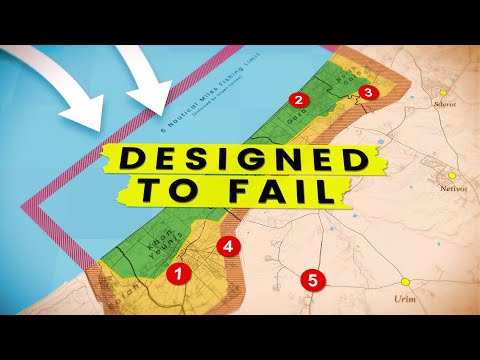
It is a narrow piece of land on the coast of the Mediterranean Sea. It is called a 'strip' because of its long, narrow shape.
It means to remove unnecessary details or lies to reveal the basic truth or the most important part of something.
No, a 'stripper' can also be a tool used to remove paint (paint stripper) or the plastic covering from wires (wire stripper).
Test Yourself 200 questions
Write a sentence using 'strip' as a noun to describe a piece of paper.
Well written! Good try! Check the sample answer below.
Describe a time you had to 'strip' something (like paint or a bed).
Well written! Good try! Check the sample answer below.
Write a formal sentence about someone being 'stripped of' a title.
Well written! Good try! Check the sample answer below.
Use the phrasal verb 'strip away' in a metaphorical sense.
Well written! Good try! Check the sample answer below.
Explain what a 'strip mall' is in your own words.
Well written! Good try! Check the sample answer below.
Write a sentence using 'strip' to describe a geographical feature.
Well written! Good try! Check the sample answer below.
Describe the process of 'stripping an engine'.
Well written! Good try! Check the sample answer below.
Use 'stripped-back' to describe a piece of art or music.
Well written! Good try! Check the sample answer below.
Write a sentence using the idiom 'tear a strip off someone'.
Well written! Good try! Check the sample answer below.
Describe a 'comic strip' you enjoy.
Well written! Good try! Check the sample answer below.
Write a sentence about 'stripping a screw'.
Well written! Good try! Check the sample answer below.
Use 'strip' in a sentence about cooking.
Well written! Good try! Check the sample answer below.
Write a sentence about a 'landing strip'.
Well written! Good try! Check the sample answer below.
Use 'stripped bare' to describe a forest after a fire.
Well written! Good try! Check the sample answer below.
Write a sentence about 'stripping a wire'.
Well written! Good try! Check the sample answer below.
Use 'strip' to describe a beam of light.
Well written! Good try! Check the sample answer below.
Write a sentence about a 'strip search' in a legal context.
Well written! Good try! Check the sample answer below.
Use 'outstrip' in a sentence about business.
Well written! Good try! Check the sample answer below.
Describe a 'strip of bacon' in a breakfast context.
Well written! Good try! Check the sample answer below.
Write a sentence about 'stripping a gear'.
Well written! Good try! Check the sample answer below.
Pronounce the word 'strip' clearly.
Read this aloud:
You said:
Speech recognition is not supported in your browser. Try Chrome or Edge.
Say the phrase 'a strip of paper' three times quickly.
Read this aloud:
You said:
Speech recognition is not supported in your browser. Try Chrome or Edge.
Explain the difference between 'strip' and 'stripe' out loud.
Read this aloud:
You said:
Speech recognition is not supported in your browser. Try Chrome or Edge.
Use 'strip' in a sentence about a bed.
Read this aloud:
You said:
Speech recognition is not supported in your browser. Try Chrome or Edge.
Use 'stripped of' in a sentence about a sports scandal.
Read this aloud:
You said:
Speech recognition is not supported in your browser. Try Chrome or Edge.
Describe a 'strip mall' to a friend.
Read this aloud:
You said:
Speech recognition is not supported in your browser. Try Chrome or Edge.
Tell a short story about 'stripping paint'.
Read this aloud:
You said:
Speech recognition is not supported in your browser. Try Chrome or Edge.
Use 'strip away' to talk about finding the truth.
Read this aloud:
You said:
Speech recognition is not supported in your browser. Try Chrome or Edge.
Say 'The wind stripped the leaves from the trees' with proper emphasis.
Read this aloud:
You said:
Speech recognition is not supported in your browser. Try Chrome or Edge.
Explain what 'stripping a screw' means to someone who doesn't know.
Read this aloud:
You said:
Speech recognition is not supported in your browser. Try Chrome or Edge.
Use 'strip' as a noun to describe a piece of cloth.
Read this aloud:
You said:
Speech recognition is not supported in your browser. Try Chrome or Edge.
Pronounce 'stripped' and 'striped' to show the difference.
Read this aloud:
You said:
Speech recognition is not supported in your browser. Try Chrome or Edge.
Describe a 'comic strip' you saw recently.
Read this aloud:
You said:
Speech recognition is not supported in your browser. Try Chrome or Edge.
Use 'stripped bare' in a sentence about a room.
Read this aloud:
You said:
Speech recognition is not supported in your browser. Try Chrome or Edge.
Talk about a 'landing strip' in a remote area.
Read this aloud:
You said:
Speech recognition is not supported in your browser. Try Chrome or Edge.
Use 'strip' to talk about cooking bacon.
Read this aloud:
You said:
Speech recognition is not supported in your browser. Try Chrome or Edge.
Explain the idiom 'tear a strip off someone'.
Read this aloud:
You said:
Speech recognition is not supported in your browser. Try Chrome or Edge.
Use 'strip down' to talk about fixing a computer.
Read this aloud:
You said:
Speech recognition is not supported in your browser. Try Chrome or Edge.
Talk about a 'strip of land' near your house.
Read this aloud:
You said:
Speech recognition is not supported in your browser. Try Chrome or Edge.
Use 'stripped of dignity' in a serious sentence.
Read this aloud:
You said:
Speech recognition is not supported in your browser. Try Chrome or Edge.
Listen and identify: Did the speaker say 'strip' or 'stripe'? 'The zebra has a black stripe.'
Listen and identify: Did the speaker say 'strip' or 'stripe'? 'Cut a strip of paper.'
Listen and identify the action: 'We need to strip the bed.'
Listen and identify the object: 'He found a landing strip.'
Listen and identify the context: 'He was stripped of his rank.'
Listen and identify the tool: 'Use the wire stripper.'
Listen and identify the problem: 'The screw is stripped.'
Listen and identify the location: 'Meet me at the strip mall.'
Listen and identify the idiom: 'The boss tore a strip off him.'
Listen and identify the food: 'I want two strips of bacon.'
Listen and identify the art form: 'It's a daily comic strip.'
Listen and identify the phrasal verb: 'Strip away the lies.'
Listen and identify the adjective: 'It's a stripped-back version.'
Listen and identify the geographical term: 'The Gaza Strip.'
Listen and identify the action: 'Strip the paint off.'
/ 200 correct
Perfect score!
Summary
The word 'strip' fundamentally describes the removal of layers or the shape of a long, narrow object. Whether you are stripping paint from a wall or reading a comic strip, the core idea is either baring a surface or identifying a specific elongated form. Example: 'The mechanic had to strip the engine to find the fault.'
- Verb: To remove a covering, layer, or clothing from something or someone, often leaving the surface bare or exposed.
- Verb: To officially take away a person's rank, title, or rights as a punishment or necessary action.
- Noun: A long, narrow piece of material, such as paper, cloth, or wood, or a narrow area of land.
- Noun: A series of drawings that tell a story, commonly found in newspapers or magazines (comic strip).
Double the 'P'
When you change 'strip' to 'stripped' or 'stripping', you must double the 'p'. This is because 'strip' has a short vowel sound followed by a single consonant.
Use 'Sliver' for Small Pieces
If a strip is extremely thin and small, like a piece of glass or a tiny bit of wood, use the word 'sliver' instead. It sounds more precise.
Avoid 'Strip' for Getting Dressed
If you are telling someone you are going to change your clothes, say 'I'm going to change' rather than 'I'm going to strip'. The latter can sound too literal or inappropriate.
Stripping Wires
In electronics, 'stripping' is the essential first step of removing the insulation. Always mention what you are stripping (e.g., 'strip the ends of the wires').