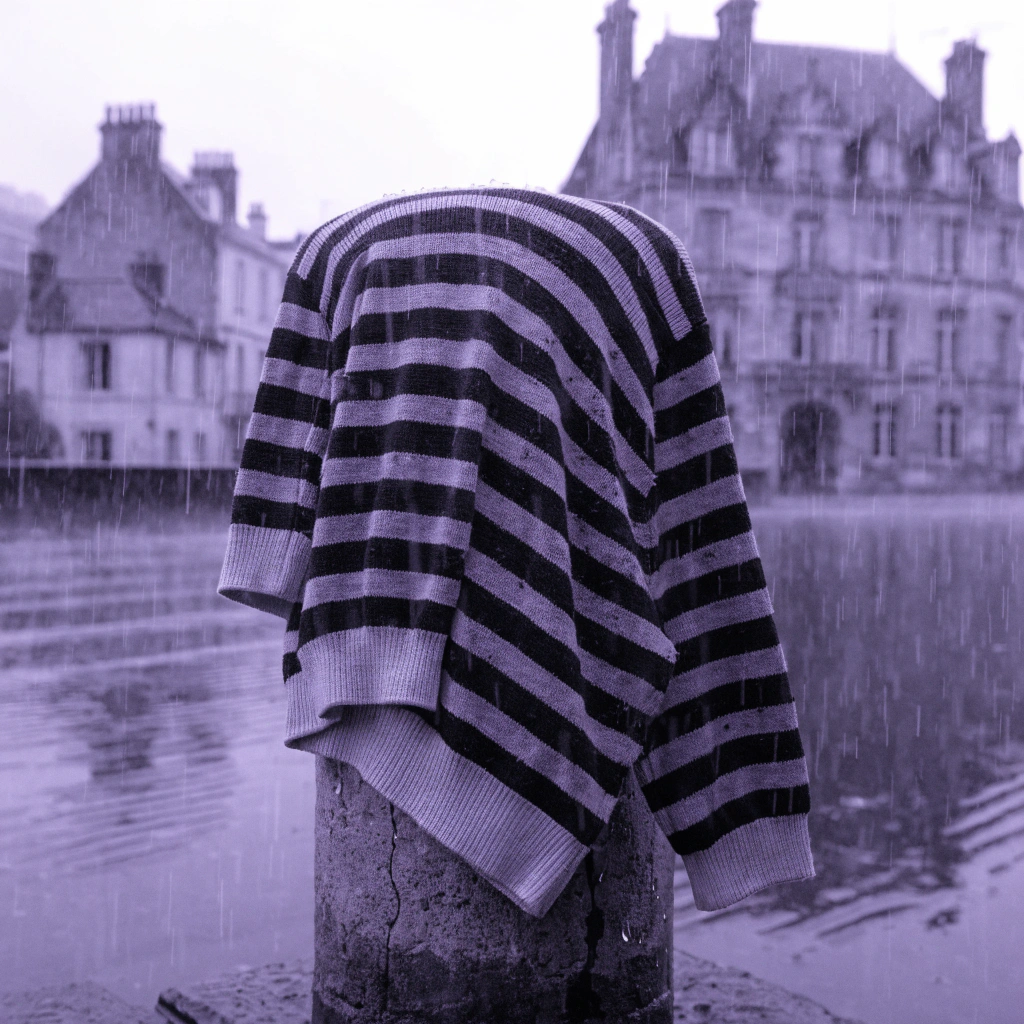
The Famous French Striped Shirt
The Marinière is a famous shirt from France. It is white and blue. It has many stripes. Long ago, sailors in the French Navy wore this shirt. It was their uniform.
Today, many people love the Marinière. It is a classic style. People wear it with jeans or skirts. Famous designers like Coco Chanel made it popular. It is very comfortable and simple.
You can see this shirt in many shops in France. It is a symbol of French fashion. Many tourists buy one when they visit Paris. Do you like blue and white stripes?
Grammar Spotlight
Pattern: Present Simple: 'to be'
"The Marinière is a famous shirt from France."
We use 'is' with singular subjects like 'The Marinière' to describe facts or states. It connects the subject to an adjective or noun.
Pattern: Present Simple: Plural Verbs
"Many people love the Marinière."
When the subject is plural (like 'people'), the verb stays in its base form. We do not add an 's' to the end of the verb.
Test Your Understanding
10 questions · A1 Beginner · 1 free preview
Test what you learned from this article. Answer all questions to earn XP!
What colors are on the Marinière shirt?
Want to finish the quiz?
9 more questions are waiting for you. Sign up free to unlock the full quiz and earn XP!
Sign Up FreeAlready have an account? Sign In
Question Breakdown
What colors are on the Marinière shirt?
Your answer:
Correct answer: White and blue
The Marinière is a type of hat.
Your answer:
Correct answer: False
What does 'famous' mean?
Your answer:
Correct answer: Known by many people
It is a _____ of French fashion.
Your answer:
Correct answer: symbol
The Famous French Striped Shirt
The blue and white striped shirt is a famous symbol of France. People call it "la marinière." Today, many people wear it for fashion, but it has a very interesting history.
The story began in 1858. An official rule said that all sailors in the French Navy had to wear this shirt. The original design had exactly 21 white stripes and 20 or 21 blue stripes. Some people believe the number 21 represents the victories of Napoleon.
Why did they choose stripes? Sailors wore stripes because they were easier to see in the sea. If a sailor fell into the water, the stripes helped other people find him quickly. The shirt was also more comfortable than older uniforms because it was made of soft cotton.
In the past, only sailors wore these shirts. However, famous designers like Coco Chanel changed that. Now, the marinière is more popular than ever. It is simple, elegant, and very French.
Grammar Spotlight
Pattern: Past Simple (Irregular Verbs)
"The story began in 1858."
We use the past simple to talk about finished actions in the past. 'Began' is the irregular past form of the verb 'begin'.
Pattern: Comparatives
"Now, the marinière is more popular than ever."
We use 'more' + adjective + 'than' to compare two things or times. For long adjectives like 'popular', we use 'more' instead of adding '-er'.
Test Your Understanding
11 questions · A2 Elementary · 1 free preview
Test what you learned from this article. Answer all questions to earn XP!
When did the official rule for the striped shirt begin?
Want to finish the quiz?
10 more questions are waiting for you. Sign up free to unlock the full quiz and earn XP!
Sign Up FreeAlready have an account? Sign In
Question Breakdown
When did the official rule for the striped shirt begin?
Your answer:
Correct answer: 1858
The shirt was originally made for fashion designers.
Your answer:
Correct answer: False
What are 'stripes'?
Your answer:
Correct answer: Long lines of color
If a sailor fell into the _____, the stripes helped people find him.
Your answer:
Correct answer: water
Why was the shirt comfortable for sailors?
Your answer:
Correct answer: It was made of soft cotton
The Story of the French Marinière
The blue and white striped shirt, which is known as 'la marinière', is more than just a piece of clothing. It has become a famous symbol of French style around the world. However, its history did not start on a fashion runway, but in the sea.
In March 1858, an official decree was passed to make the striped shirt the official uniform for sailors in the French Navy. The design was very specific. It had to have 21 white stripes and 20 or 21 blue stripes. Some people believe that the 21 stripes represent the number of Napoleon’s victories. Others say the stripes were used because they made it easier to see sailors who had fallen into the water.
For many years, the shirt was only worn by seamen. But in the early 20th century, the famous designer Coco Chanel visited the coast and saw the sailors' uniforms. She was inspired by the simple, functional look. She decided to introduce the style to her fashion collections, and it soon became popular among wealthy women. Since then, the marinière has been worn by many famous artists and celebrities, such as Pablo Picasso and Jean Paul Gaultier.
Today, this classic item is still produced in France by traditional companies. Although it is over 150 years old, the marinière remains a timeless choice. It is loved because it combines comfort with a sense of history. Whether you are walking in Paris or sailing on the ocean, this iconic shirt represents the spirit of French elegance.
Grammar Spotlight
Pattern: Relative Clauses
"The blue and white striped shirt, which is known as 'la marinière', is more than just a piece of clothing."
Relative clauses use 'which', 'who', or 'that' to give more information about a noun. Non-defining relative clauses use commas and 'which' to add extra, non-essential details.
Pattern: Passive Voice
"In March 1858, an official decree was passed to make the striped shirt the official uniform."
The passive voice is formed using 'be' + past participle. It is used here because the action (passing the decree) is more important than who did it.
Test Your Understanding
11 questions · B1 Intermediate · 1 free preview
Test what you learned from this article. Answer all questions to earn XP!
When did the striped shirt become an official naval uniform?
Want to finish the quiz?
10 more questions are waiting for you. Sign up free to unlock the full quiz and earn XP!
Sign Up FreeAlready have an account? Sign In
Question Breakdown
When did the striped shirt become an official naval uniform?
Your answer:
Correct answer: 1858
The original design required exactly 50 blue stripes.
Your answer:
Correct answer: False
What does the word 'functional' mean?
Your answer:
Correct answer: Practical and useful
It has _____ a famous symbol of French style around the world.
Your answer:
Correct answer: become
Which fashion designer first introduced the shirt to wealthy women?
Your answer:
Correct answer: Coco Chanel
The Iconic Stripes: A History of the French Marinière
The blue and white striped shirt, famously known as 'la marinière,' represents much more than a mere fashion statement; it is a profound piece of living history that encapsulates the French spirit of functional elegance. This iconic garment’s journey began on March 27, 1858, when an official decree established the striped knit as the official uniform for all French Navy seamen who were stationed in Brittany. At that time, the garment was not intended for the catwalk but for the harsh conditions of the sea. It was designed primarily to be practical, durable, and easily recognizable in the event of an emergency.
The original design was strictly regulated to ensure standardization across the entire fleet. According to the maritime authorities of the nineteenth century, the shirt had to feature exactly 21 white stripes of 20mm and 20 or 21 indigo blue stripes of 10mm. While these specific measurements might seem arbitrary to a modern observer, they served a vital purpose. Legend suggests that if a sailor fell overboard, the distinctive pattern would make him significantly easier to spot against the churning white foam of the waves. Furthermore, the absence of buttons and the specific tight knit made the garment highly functional, preventing it from getting caught in fishing nets or the complex rigging of sailing ships.
Nevertheless, the marinière’s transition from a military necessity to a global fashion icon was largely facilitated by the visionary Coco Chanel. During a trip to the French coast in the early twentieth century, she observed the local sailors and decided to incorporate the stripes into her 1917 nautical collection. This move was considered revolutionary at the time, as it challenged the rigid class structures of the era by bringing working-class attire into the realm of high society. Consequently, the shirt became a symbol of liberation and effortless sophistication for women across Europe, breaking away from the restrictive corsets of the past.
In the decades that followed, other prominent designers like Jean Paul Gaultier further cemented its status within the fashion industry. Gaultier famously used the stripes as a recurring theme in his haute couture, often reinterpreting the classic look with modern, avant-garde twists. Today, the marinière remains an enduring symbol of French national identity. It is often cited as a manifestation of 'chic'—the unique ability to look polished and stylish without appearing to have put in excessive effort. Despite its humble beginnings as a naval requirement, the shirt continues to encounter new interpretations in contemporary fashion every season. Ultimately, its remarkable longevity lies in its simplicity and the fascinating history that remains woven into every single stripe.
Grammar Spotlight
Pattern: Passive Voice
"The original design was strictly regulated to ensure standardization across the entire fleet."
The passive voice is used here to focus on the design rather than the people who regulated it. It is formed using the verb 'to be' and the past participle of the main verb.
Pattern: Relative Clauses
"...French Navy seamen who were stationed in Brittany."
A defining relative clause starting with 'who' is used to provide essential information about the seamen. This helps identify exactly which group of sailors the text is referring to.
Pattern: Second Conditional
"...if a sailor fell overboard, the distinctive pattern would make him significantly easier to spot..."
This structure is used to talk about a hypothetical situation in the past or a general possibility. It uses 'if' + past simple, followed by 'would' + base verb.
Test Your Understanding
11 questions · B2 Upper Intermediate · 1 free preview
Test what you learned from this article. Answer all questions to earn XP!
What was the primary reason for the specific striped pattern according to naval legend?
Want to finish the quiz?
10 more questions are waiting for you. Sign up free to unlock the full quiz and earn XP!
Sign Up FreeAlready have an account? Sign In
Question Breakdown
What was the primary reason for the specific striped pattern according to naval legend?
Your answer:
Correct answer: To make sailors more visible if they fell into the sea
Coco Chanel introduced the marinière stripes to high fashion in the 19th century.
Your answer:
Correct answer: False
What does 'enduring' mean in the context of the article?
Your answer:
Correct answer: Lasting for a long time
The official use of the striped shirt was established by a government _____ in 1858.
Your answer:
Correct answer: decree
Which designer is mentioned for using stripes as a recurring theme in haute couture?
Your answer:
Correct answer: Jean Paul Gaultier
The Nautical Semiotics of the Marinière: From Naval Utility to Gallic Icon
Rarely has a garment managed to transcend its utilitarian origins with such enduring panache as the marinière. What began as a rigid naval regulation has evolved into a quintessential symbol of French aesthetic identity, weaving together threads of military history and avant-garde fashion. It was on March 27, 1858, that an official decree established the striped knit as the mandatory uniform for French Navy seamen in Brittany. The specifications were nothing if not precise: exactly 21 white stripes of 20mm and 20 or 21 indigo blue stripes of 10mm. Such meticulousness was born not of vanity, but of pragmatic necessity; the stripes facilitated the detection of sailors who had the misfortune of falling overboard into the churning Atlantic.
The symbolism inherent in the twenty-one stripes is often attributed to the number of Napoleon Bonaparte’s major victories. Whether this is historical fact or romanticized folklore remains a subject of scholarly debate, yet the allure of the narrative persists. The transition from the high seas to the high street was spearheaded by Coco Chanel, who, during a sojourn in Deauville, drew inspiration from the local maritime attire. Her subsequent introduction of the jersey striped top to her 1917 collection marked a seismic shift in womenswear, liberating women from the constrictive corsetry of the era and ushering in a new age of functional chic.
The democratization of the marinière continued throughout the 20th century, finding favor among intellectuals, artists, and film stars. From the paint-splattered studio of Pablo Picasso to the cinematic cool of Jean-Luc Godard’s muses, the striped shirt became synonymous with a certain intellectual nonchalance. Jean Paul Gaultier further cemented its status by subverting the garment’s masculine naval associations, transforming it into a cornerstone of provocative haute couture. By reinterpreting the stripes through the lens of queer culture and rebellious luxury, Gaultier ensured the marinière remained relevant in a rapidly changing cultural landscape.
In contemporary discourse, the garment has even permeated the political sphere. The endorsement of the 'Made in France' movement by various public figures underscores its role as a totem of national economic pride. This convergence of fashion and patriotism highlights how a simple striped jersey can encapsulate the collective anxieties and aspirations of a nation. Furthermore, the continued production of these garments by heritage brands represents a commitment to artisanal prowess and local industry in an era of globalized mass production.
The garment’s longevity is a testament to the power of functional design. Not only does it represent a specific historical epoch, but it also embodies the French philosophy of élégance décontractée—an effortless sophistication that defies the transience of modern trends. Ultimately, the marinière is more than a mere article of clothing; it is a semiotic vessel through which the complexities of French social history, gender roles, and aesthetic evolution are articulated. Its persistence in the global wardrobe suggests that while fashions may fade, the appeal of purposeful, well-crafted design remains immutable.
Grammar Spotlight
Pattern: Inversion with negative adverbials
"Rarely has a garment managed to transcend its utilitarian origins with such enduring panache as the marinière."
When using negative or restrictive adverbs like 'Rarely' at the start of a sentence for emphasis, the auxiliary verb is placed before the subject.
Pattern: Cleft Sentences
"It was on March 27, 1858, that an official decree established the striped knit as the mandatory uniform..."
Cleft sentences use the structure 'It is/was... that...' to focus on a specific piece of information, in this case, the specific date.
Pattern: Nominalisation
"The democratization of the marinière continued throughout the 20th century..."
Nominalisation involves turning verbs or adjectives into nouns (democratize -> democratization) to create a more formal, academic, and objective tone.
Test Your Understanding
12 questions · C1 Advanced · 1 free preview
Test what you learned from this article. Answer all questions to earn XP!
What was the primary functional reason for the specific stripe pattern in the 1858 decree?
Want to finish the quiz?
11 more questions are waiting for you. Sign up free to unlock the full quiz and earn XP!
Sign Up FreeAlready have an account? Sign In
Question Breakdown
What was the primary functional reason for the specific stripe pattern in the 1858 decree?
Your answer:
Correct answer: To make sailors more visible if they fell into the sea
Historical evidence definitively proves that the 21 stripes represent Napoleon's 21 victories.
Your answer:
Correct answer: False
Which word describes the 'extreme care about minute details' mentioned regarding the shirt's design?
Your answer:
Correct answer: Meticulousness
The garment's _____ is a testament to the power of functional design.
Your answer:
Correct answer: longevity
How did Coco Chanel influence the history of the marinière?
Your answer:
Correct answer: She incorporated it into high fashion, liberating women from corsets
Jean Paul Gaultier used the marinière to challenge traditional ideas of masculinity.
Your answer:
Correct answer: True
The Sartorial Semiotics of the Marinière: From Naval Utility to Gallic Quintessence
Seldom has a singular garment so thoroughly permeated the collective consciousness of a nation as has 'la marinière.' While ostensibly a mere article of clothing, the blue and white striped shirt represents a profound confluence of historical necessity, rigid utilitarianism, and high-fashion subversion. Its provenance is rooted not in the ateliers of Paris, but in the spray-misted docks of Brittany. On March 27, 1858, an official decree codified the striped knit as the mandatory uniform for French Navy seamen. The specifications were exacting: 21 white stripes of 20mm and 20 or 21 indigo blue stripes of 10mm. Legend suggests that this specific tally commemorated Napoleon’s victories, though a more pragmatic interpretation posits that the pattern served to distinguish sailors who had fallen overboard amidst the tumultuous churn of the Atlantic.
Were the 1858 decree to have remained a mere maritime formality, the marinière might have languished in the archives of vestiary history. However, its trajectory was irrevocably altered in the early 20th century by Coco Chanel. By appropriating the rugged aesthetic of the Breton fisherman, Chanel effectively democratized the garment, stripping it of its purely functional associations and imbuing it with an air of nonchalant elegance. This act of sartorial subversion challenged the rigid class structures of the era, introducing an element of egalitarianism into the wardrobes of the elite. The shirt became a symbol of liberation, a rejection of the restrictive corsetry that had previously defined feminine fashion.
Furthermore, the ubiquity of the marinière in modern culture speaks to its status as a quintessential emblem of 'Frenchness.' From the intellectual circles of Jean-Paul Sartre to the cinematic rebellion of Jean-Luc Godard’s 'Breathless,' the stripes have been adopted by various countercultures as a badge of authenticity and creative autonomy. It is this very tension between its rigid, codified origins and its fluid modern interpretation that defines its lasting appeal. One might argue that the garment’s success lies in its paradoxical nature: it is both anonymous and distinctive, traditional yet perpetually avant-garde.
In contemporary discourse, the marinière is often analyzed through the lens of semiotics. The stripes act as a visual shorthand for a specific brand of effortless Gallic charm. Yet, beneath this veneer of chic simplicity lies a testament to the enduring power of functional design. The marinière illustrates how a utilitarian object, when removed from its original context, can acquire new layers of meaning and cultural capital. It serves as a reminder that fashion is rarely just about aesthetics; it is a reflection of historical shifts, societal values, and the perpetual human desire to reconcile form with function. Whether viewed as a naval necessity or a runway staple, the marinière remains an indelible part of France’s cultural fabric, continuing to inspire designers and thinkers alike as they navigate the complexities of identity and tradition in an increasingly globalized world.
Grammar Spotlight
Pattern: Inversion after Negative/Restrictive Adverbials
"Seldom has a singular garment so thoroughly permeated the collective consciousness of a nation as has 'la marinière.'"
When sentences start with restrictive adverbs like 'seldom', 'rarely', or 'never', the subject and auxiliary verb are inverted. This is used in formal writing to emphasize the rarity or significance of the statement.
Pattern: Inverted Conditionals (Subjunctive)
"Were the 1858 decree to have remained a mere maritime formality, the marinière might have languished in the archives..."
The word 'if' is omitted and 'were' is moved to the beginning to create a formal, hypothetical condition. It expresses a counterfactual situation in the past or present with a scholarly tone.
Pattern: Cleft Sentences
"It is this very tension between its rigid, codified origins and its fluid modern interpretation that defines its lasting appeal."
A cleft sentence (It + is/was + [emphasized part] + that/who) is used to focus on a specific piece of information. Here, it emphasizes the 'tension' as the primary reason for the shirt's popularity.
Test Your Understanding
12 questions · C2 Mastery · 1 free preview
Test what you learned from this article. Answer all questions to earn XP!
What was the primary pragmatic reason for the specific striped pattern according to the text?
Want to finish the quiz?
11 more questions are waiting for you. Sign up free to unlock the full quiz and earn XP!
Sign Up FreeAlready have an account? Sign In
Question Breakdown
What was the primary pragmatic reason for the specific striped pattern according to the text?
Your answer:
Correct answer: To make sailors more visible if they fell into the sea.
Coco Chanel's use of the marinière reinforced the rigid class structures of the early 20th century.
Your answer:
Correct answer: False
What does 'provenance' mean in the context of the article?
Your answer:
Correct answer: The place of origin or history.
The official 1858 decree ______ the striped knit as the mandatory uniform for French Navy seamen.
Your answer:
Correct answer: codified
The author describes the nature of the marinière's success as:
Your answer:
Correct answer: Paradoxical, being both traditional and avant-garde.
The original naval specifications for the shirt were strictly regulated.
Your answer:
Correct answer: True
