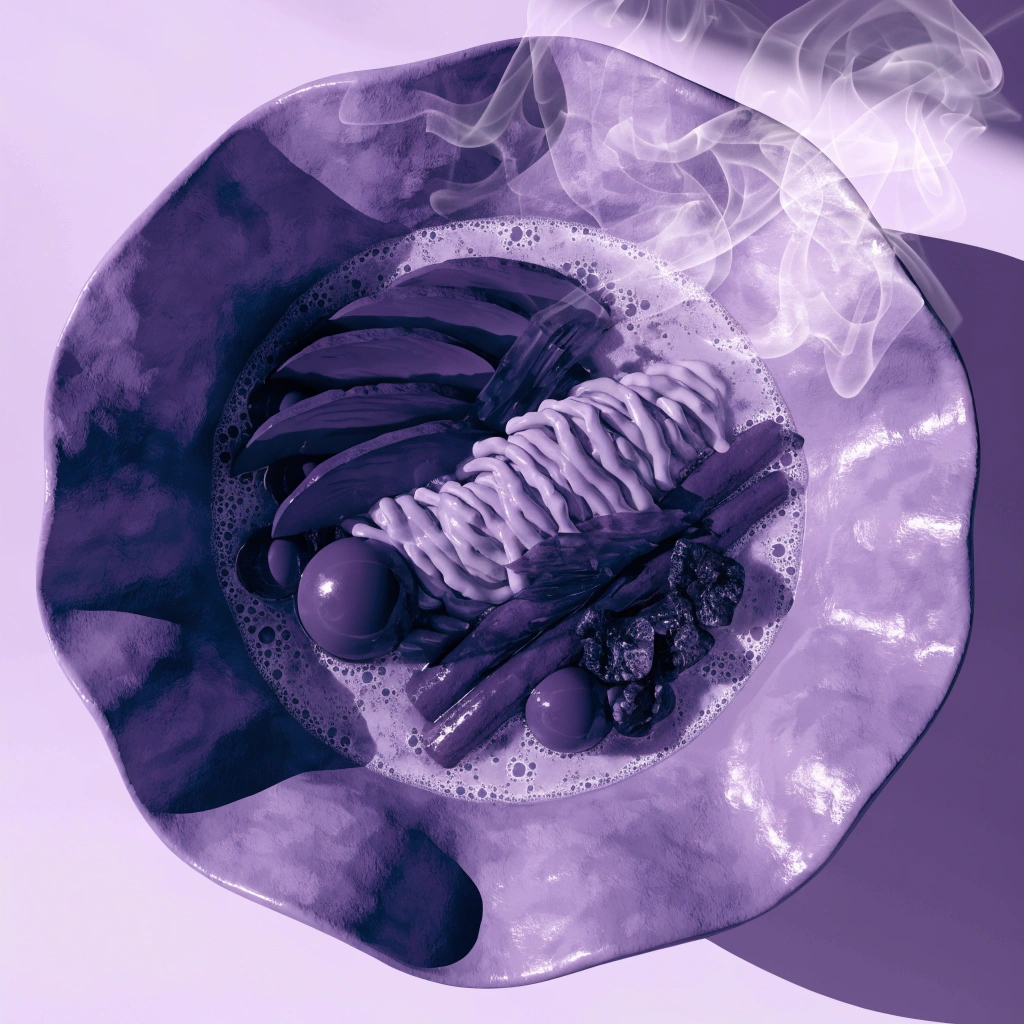
Ramen: Ein leckeres Essen aus Japan
Ramen ist ein beliebtes Essen aus Japan. Viele Leute in Japan essen gerne Ramen. Es ist eine Nudelsuppe. Die Suppe hat lange Nudeln. Oft gibt es auch Fleisch und Gemüse in der Suppe.
Ramen ist sehr lecker und warm. Man kann Ramen in vielen Restaurants in Japan finden. Es ist ein traditionelles Gericht. Nach dem Krieg war Ramen günstig und wurde sehr populär. Heute essen Menschen es auf der ganzen Welt. Es macht satt und glücklich.
Grammatik-Spotlight
Muster: Das Verb 'sein' (ist)
"Ramen ist ein beliebtes Essen aus Japan."
Das Verb 'sein' beschreibt, was etwas ist. 'Ist' ist die Form für 'er, sie, es'. Man nutzt es, um Dinge zu benennen oder zu beschreiben.
Muster: Die Präposition 'in' (Ort)
"Man kann Ramen in vielen Restaurants in Japan finden."
Die Präposition 'in' sagt, wo etwas ist oder wo etwas passiert. Zum Beispiel: 'in Japan' oder 'in der Suppe'. Es beschreibt einen Ort.
Teste dein Verständnis
10 Fragen · A1 Anfänger · 1 kostenlose Vorschau
Teste, was du aus diesem Artikel gelernt hast. Beantworte alle Fragen und sammle XP!
Woher kommt Ramen?
Möchtest du das Quiz beenden?
9 weitere Fragen warten auf dich. Registriere dich kostenlos, um das vollständige Quiz freizuschalten und XP zu sammeln!
Kostenlos registrierenHast du schon ein Konto? Anmelden
Gut gemacht!
Weiter üben!
Bereits abgeschlossen — keine zusätzlichen XP
Registriere dich, um XP zu verdienenFragenübersicht
Woher kommt Ramen?
Deine Antwort:
Richtige Antwort: Japan
Ramen ist eine Nudelsuppe.
Deine Antwort:
Richtige Antwort: Richtig
Was bedeutet 'lecker'?
Deine Antwort:
Richtige Antwort: schmeckt gut
Viele Leute in Japan essen gerne _____.
Deine Antwort:
Richtige Antwort: Ramen
Ramen: Ein beliebtes Gericht aus Japan
Ramen ist ein sehr beliebtes Gericht aus Japan. Aber die Nudeln kommen nicht aus Japan, sie kamen ursprünglich aus China. Im späten 19. Jahrhundert kamen die chinesischen Nudeln nach Japan. Nach dem Zweiten Weltkrieg wurde Ramen in Japan sehr populär. Es gab viel billiges Weizenmehl aus den USA. Viele japanische Soldaten kamen auch aus China zurück und kannten Ramen.
So wurde Ramen schnell ein wichtiges Essen für viele Menschen. Es war günstig und machte satt. Heute ist Ramen viel mehr als nur ein einfaches Gericht. Es gibt viele verschiedene Arten von Ramen. Jede Region in Japan hat oft ihre eigene spezielle Ramen-Suppe mit besonderen Zutaten. Man findet Ramen mit salziger Suppe, mit Sojasauce oder mit Miso. Oft sind Fleisch, Eier und frisches Gemüse dabei. Es ist nicht nur ein Snack, sondern ein komplettes und nahrhaftes Essen. Ramen ist ein echtes „Seelenessen“ für Japaner, weil es so vielfältig und lecker ist.
Grammatik-Spotlight
Muster: Das Präteritum (einfache Vergangenheit)
"Im späten 19. Jahrhundert kamen die chinesischen Nudeln nach Japan."
Das Präteritum benutzt man oft, um über vergangene Ereignisse zu sprechen, besonders in Geschichten oder Berichten. Für regelmäßige Verben hängt man an den Verbstamm -te an (z.B. machen -> machte). Bei unregelmäßigen Verben ändert sich der Stamm (z.B. kommen -> kam).
Muster: Konjunktion "weil" (Grund angeben)
"Ramen ist ein echtes „Seelenessen“ für Japaner, weil es so vielfältig und lecker ist."
Die Konjunktion 'weil' benutzt man, um einen Grund zu nennen. Der Satz mit 'weil' ist ein Nebensatz. Das Verb steht in einem 'weil'-Satz immer am Ende.
Teste dein Verständnis
11 Fragen · A2 Grundkenntnisse · 1 kostenlose Vorschau
Teste, was du aus diesem Artikel gelernt hast. Beantworte alle Fragen und sammle XP!
Woher kamen die Nudeln für Ramen ursprünglich?
Möchtest du das Quiz beenden?
10 weitere Fragen warten auf dich. Registriere dich kostenlos, um das vollständige Quiz freizuschalten und XP zu sammeln!
Kostenlos registrierenHast du schon ein Konto? Anmelden
Gut gemacht!
Weiter üben!
Bereits abgeschlossen — keine zusätzlichen XP
Registriere dich, um XP zu verdienenFragenübersicht
Woher kamen die Nudeln für Ramen ursprünglich?
Deine Antwort:
Richtige Antwort: China
Ramen wurde nach dem Zweiten Weltkrieg in Japan weniger populär.
Deine Antwort:
Richtige Antwort: Falsch
Was bedeutet 'günstig'?
Deine Antwort:
Richtige Antwort: Nicht teuer
Heute gibt es viele ________ Arten von Ramen.
Deine Antwort:
Richtige Antwort: verschiedene
Warum war Ramen nach dem Krieg wichtig für viele Menschen?
Deine Antwort:
Richtige Antwort: Es war günstig und machte satt.
The Magic of Japanese Ramen: More Than Just Noodles
Ramen is a dish that has become famous all over the world. Although it was originally brought from China in the 19th century, it has been changed into a unique Japanese experience. Today, it is known as "soul food" because it offers comfort to millions of people every day. It is a meal that balances intense flavors with simple ingredients.
After the Second World War, ramen became very popular across the country. At that time, cheap wheat flour was imported from the United States, and soldiers who had lived in China returned home with a love for noodle soups. Since then, the dish has evolved into many different regional styles. While it started as a simple street snack, it has been transformed into a culinary phenomenon.
There are four main types of broth which are used in ramen: Shio (salt), Shoyu (soy sauce), Miso (soybean paste), and Tonkotsu (pork bone). Each region in Japan has developed its own special recipe. For example, in Hokkaido, miso ramen is loved because it keeps people warm during the cold winters. Toppings like sliced pork, seaweed, and green onions are added to create a perfect bowl.
Eating ramen is an experience that should be enjoyed quickly. It is often served in small, busy shops where customers sit at a long counter. The noodles are usually eaten while they are still hot so that they do not get too soft. In recent years, ramen has been celebrated in movies and even dedicated museums. This shows that ramen is not just fast food; it is a true part of Japanese culture that has been perfected over many years.
Grammatik-Spotlight
Muster: Passive Voice
"It has been changed into a unique Japanese experience."
The passive voice is used here to focus on the dish (ramen) rather than the people who changed it. It is formed using the verb 'to be' and the past participle.
Muster: Relative Clauses
"There are four main types of broth which are used in ramen."
Relative clauses provide extra information about a noun. In this sentence, 'which are used in ramen' describes the 'types of broth'.
Teste dein Verständnis
11 Fragen · B1 Mittelstufe · 1 kostenlose Vorschau
Teste, was du aus diesem Artikel gelernt hast. Beantworte alle Fragen und sammle XP!
Where did ramen originally come from before it arrived in Japan?
Möchtest du das Quiz beenden?
10 weitere Fragen warten auf dich. Registriere dich kostenlos, um das vollständige Quiz freizuschalten und XP zu sammeln!
Kostenlos registrierenHast du schon ein Konto? Anmelden
Gut gemacht!
Weiter üben!
Bereits abgeschlossen — keine zusätzlichen XP
Registriere dich, um XP zu verdienenFragenübersicht
Where did ramen originally come from before it arrived in Japan?
Deine Antwort:
Richtige Antwort: China
Ramen became very popular in Japan after the Second World War.
Deine Antwort:
Richtige Antwort: Richtig
What does the word 'broth' mean?
Deine Antwort:
Richtige Antwort: A soup made by boiling meat or bones
Ramen is known as _____ food because it provides comfort to many people.
Deine Antwort:
Richtige Antwort: soul
Why is miso ramen popular in Hokkaido?
Deine Antwort:
Richtige Antwort: Because it helps keep people warm in winter
The Culinary Evolution of Ramen: From Street Food to Global Icon
Ramen is often celebrated as the ultimate Japanese soul food, representing a delicate balance of intensity, comfort, and infinite variety. While many modern diners associate the dish exclusively with Japanese culture, its historical roots actually lie in Chinese wheat noodles introduced to Japan during the late 19th century. Initially, it was a simple street-side snack enjoyed by laborers, but over the last century, ramen has undergone a radical transformation to become a sophisticated culinary phenomenon. This evolution was not accidental; it was driven by socio-economic shifts and a relentless pursuit of culinary perfection.
The post-World War II era served as a pivotal moment for the dish’s popularity. During this period, Japan faced severe food shortages, and the arrival of cheap wheat flour from the United States provided a substantial boost to noodle production. Soldiers returning from China also brought back a taste for the hearty wheat-based soups they had encountered abroad. Consequently, ramen stalls began to proliferate across the country, offering an affordable and nutritious meal to a nation in recovery. It was during this time that ramen started to lose its identity as a foreign import and began to be embraced as a uniquely Japanese staple.
Since then, the dish has evolved through a process of regional diversification. In the northern region of Hokkaido, for instance, miso-based broths were developed to provide warmth during harsh winters. Meanwhile, in the southern island of Kyushu, the creamy, pork-bone-based Tonkotsu ramen became the local favorite. This regional versatility is a testament to the creativity of Japanese chefs, who have consistently pushed the boundaries of flavor profiles. Today, ramen is no longer just a quick meal; it is an artisanal craft where every component—from the alkaline noodles to the complex 'tare' seasoning—is meticulously prepared.
Furthermore, the global rise of ramen in the 21st century has seen it transition from humble beginnings to the menus of Michelin-starred restaurants. Food critics and enthusiasts alike now analyze the nuances of broth clarity and noodle texture with the same rigor applied to fine wines. Despite its global success, the core of ramen remains unchanged: it is a dish that provides a sense of belonging and nostalgia. As Japanese cuisine continues to influence international food trends, ramen stands as a symbol of how a simple foreign concept can be reimagined into a national treasure.
Grammatik-Spotlight
Muster: Passive Voice
"Ramen is often celebrated as the ultimate Japanese soul food."
The passive voice is used here to focus on the dish (ramen) rather than the people celebrating it. It is formed using 'to be' + the past participle.
Muster: Relative Clauses
"Soldiers returning from China also brought back a taste for the hearty wheat-based soups they had encountered abroad."
This sentence uses a reduced relative clause ('they had encountered abroad') to provide essential information about the soups. It helps connect ideas smoothly without repeating the noun.
Muster: Present Perfect Passive
"Ramen has undergone a radical transformation to become a sophisticated culinary phenomenon."
The present perfect indicates an action that started in the past and has relevance to the present. Using 'has undergone' emphasizes the process of change over time.
Teste dein Verständnis
11 Fragen · B2 Obere Mittelstufe · 1 kostenlose Vorschau
Teste, was du aus diesem Artikel gelernt hast. Beantworte alle Fragen und sammle XP!
What was the primary reason for the proliferation of ramen in post-war Japan?
Möchtest du das Quiz beenden?
10 weitere Fragen warten auf dich. Registriere dich kostenlos, um das vollständige Quiz freizuschalten und XP zu sammeln!
Kostenlos registrierenHast du schon ein Konto? Anmelden
Gut gemacht!
Weiter üben!
Bereits abgeschlossen — keine zusätzlichen XP
Registriere dich, um XP zu verdienenFragenübersicht
What was the primary reason for the proliferation of ramen in post-war Japan?
Deine Antwort:
Richtige Antwort: The availability of cheap wheat flour and returning soldiers
Ramen was originally a Japanese invention from the 19th century.
Deine Antwort:
Richtige Antwort: Falsch
What does 'meticulously' mean in the context of the article?
Deine Antwort:
Richtige Antwort: With extreme care and attention to detail
The arrival of wheat flour from the United States provided a _____ boost to noodle production.
Deine Antwort:
Richtige Antwort: substantial
Which region is specifically mentioned for developing miso-based broths?
Deine Antwort:
Richtige Antwort: Hokkaido
The Gastronomic Alchemy of Ramen: A Cultural Metamorphosis
Rarely has a dish so humble achieved such a profound level of global reverence as ramen. While the uninitiated might perceive it as a mere bowl of noodles, to the Japanese, it represents an intricate balance of history, regional identity, and artisan craftsmanship. Originally a Chinese import introduced in the late 19th century, it was the post-war socio-economic landscape that catalyzed its evolution into a national icon. The proliferation of wheat-based staples, spurred by the influx of American flour and the return of soldiers from the continent, facilitated a radical shift in the Japanese diet. This transition from a foreign curiosity to a domestic staple was not merely a matter of convenience; it was a response to a nation in search of comfort and sustenance during a period of reconstruction.
It is the alchemical marriage of the 'tare' (seasoning base) and the broth that defines the soul of a particular shop. This complexity is not merely a matter of taste but a reflection of the 'shokunin' spirit—the relentless pursuit of perfection in one's craft. From the rich, emulsified fats of a Hakata tonkotsu to the delicate, translucent shio broths of the north, ramen offers a nuanced spectrum of flavors that defies simple categorization. Not only does the broth require dozens of hours of simmering to extract deep umami, but the noodles themselves must possess the requisite 'koshi' or springiness to withstand the heat without losing their structural integrity. Such meticulous attention to detail is what elevates ramen from street food to a culinary art form.
Furthermore, the rise of ramen reflects a broader narrative of urbanization and the breakdown of traditional social hierarchies in Japan. Once a quick, inexpensive meal for laborers, it has become a subject of intense critical analysis by 'ramen geeks' who document every bowl with academic rigor. What was once a simple street-side snack is now a quintessential symbol of Japanese culinary innovation. This obsession has fostered a competitive environment where chefs constantly push boundaries, incorporating non-traditional ingredients like truffle oil or blue algae to distinguish their creations in a saturated market.
However, the globalization of ramen raises poignant questions regarding authenticity and cultural appropriation. As it transcends borders, the dish undergoes further transformations, adapting to local palates while maintaining its core identity. Whether consumed in a neon-lit Tokyo alleyway or a high-end New York bistro, the experience remains one of sensory intensity. Ultimately, it is the meticulous attention to detail and the profound cultural weight behind every bowl that ensures ramen's enduring legacy in the global culinary pantheon. Through its layers of fat, salt, and wheat, one can trace the history of a nation that successfully reinvented itself, one bowl at a time.
Grammatik-Spotlight
Muster: Inversion with Negative Adverbials
"Rarely has a dish so humble achieved such a profound level of global reverence as ramen."
When using negative or restrictive adverbs like 'rarely' at the start of a sentence for emphasis, the auxiliary verb and subject are inverted. This creates a formal and dramatic tone suitable for advanced writing.
Muster: Cleft Sentences
"It is the alchemical marriage of the 'tare' and the broth that defines the soul of a particular shop."
Cleft sentences use the structure 'It is/was + [emphasized part] + that/who' to focus the reader's attention on a specific element of the sentence. Here, it emphasizes the importance of the 'tare' and broth combination.
Muster: Nominalisation
"The proliferation of wheat-based staples facilitated a radical shift in the Japanese diet."
Nominalisation involves turning verbs or adjectives into nouns (e.g., 'proliferate' to 'proliferation'). This technique is common in academic and formal English to pack more information into a sentence and sound more objective.
Teste dein Verständnis
12 Fragen · C1 Fortgeschritten · 1 kostenlose Vorschau
Teste, was du aus diesem Artikel gelernt hast. Beantworte alle Fragen und sammle XP!
What primary factor contributed to the transformation of ramen into a national staple in post-war Japan?
Möchtest du das Quiz beenden?
11 weitere Fragen warten auf dich. Registriere dich kostenlos, um das vollständige Quiz freizuschalten und XP zu sammeln!
Kostenlos registrierenHast du schon ein Konto? Anmelden
Gut gemacht!
Weiter üben!
Bereits abgeschlossen — keine zusätzlichen XP
Registriere dich, um XP zu verdienenFragenübersicht
What primary factor contributed to the transformation of ramen into a national staple in post-war Japan?
Deine Antwort:
Richtige Antwort: The availability of cheap American wheat flour
The article suggests that ramen is still viewed primarily as a low-status meal for laborers in modern Japan.
Deine Antwort:
Richtige Antwort: Falsch
What does the word 'meticulous' mean in the context of the article?
Deine Antwort:
Richtige Antwort: Showing extreme care and precision
The complexity of ramen is a reflection of the ______ spirit, or the pursuit of perfection.
Deine Antwort:
Richtige Antwort: shokunin
According to the text, how do 'ramen geeks' treat the dish?
Deine Antwort:
Richtige Antwort: With academic-like documentation and analysis
The 'koshi' of the noodles refers to their ability to stay firm in hot broth.
Deine Antwort:
Richtige Antwort: Richtig
The Ontological Evolution of Ramen: A Culinary Syncretism
To describe ramen merely as a noodle soup would be to commit a reductionist fallacy of the highest order. Rather, ramen represents a profound ontological synthesis of historical exigency and meticulous craftsmanship. While its genealogical roots are indisputably Chinese, the metamorphosis it underwent within the Japanese archipelago has rendered it a quintessential cultural artifact. The narrative of ramen is inextricably linked to the post-war era, a period characterized by scarcity and the subsequent influx of American wheat flour. Had the post-war wheat surplus not coincided with the repatriation of soldiers from the Chinese front, the dish might never have achieved its current status as a national staple. This historical convergence facilitated the rise of 'black markets' where wheat-based noodles offered a dense caloric reprieve for a nation in reconstruction.
As the decades progressed, ramen transcended its humble origins. It is no longer a mere pedestrian snack but a subject of rigorous culinary inquiry. The complexity of the dish lies in the delicate equilibrium between its five core components: the tare (seasoning base), the broth, the noodles, the oil, and the toppings. Each element demands a level of precision that borders on the obsessive. For instance, the alkalinity of the noodles, achieved through the addition of kansui, is critical; it is imperative that the chef maintain a specific pH balance to ensure the desired elasticity and chew. This technical rigor is mirrored in the broth, which often requires days of simmering to extract a profile of deep umami, a flavor profile that has achieved a certain hegemony in the global gastronomic discourse. The 'Shokunin' spirit—a relentless pursuit of perfection—is palpable in every steam-filled kitchen, where the chef acts as a curator of flavor.
Regional variations further complicate the ramen landscape, reflecting a geographical syncretism that mirrors Japan's diverse topography. From the robust, miso-laden bowls of Hokkaido’s frigid north to the pungent, pork-bone tonkotsu of Kyushu, ramen serves as a liquid map of local identity. These variations are not merely aesthetic; they are responses to climatic conditions and local ingredient availability. In the coastal regions, one might find broths infused with dried niboshi (sardines), while inland areas might favor heavier, animal-based fats. This regionalism prevents ramen from becoming a monolithic entity, instead fostering a vibrant ecosystem of localized traditions that compete for the title of the most authentic expression of the craft.
Furthermore, the sociological dimension of the ramen shop cannot be overlooked. These establishments often function as 'third spaces'—neither home nor work—where the rigid hierarchies of Japanese society are momentarily suspended in favor of a shared, democratic appreciation for a steaming bowl. The act of consumption itself is steeped in semiotic meaning; the audible slurping of noodles, far from being a breach of etiquette, is a performative signifier of appreciation and a practical method to aerate the noodles, thereby enhancing the olfactory experience. The ephemeral nature of a bowl of ramen—meant to be consumed with haste to prevent the noodles from losing their structural integrity—contrasts sharply with the protracted labor required for its preparation. This tension between the temporal and the permanent is a hallmark of Japanese aesthetic philosophy.
In the contemporary era, ramen has achieved a ubiquitous presence, not just within Japan but as a globalized icon of Japanese soft power. Its palatability transcends cultural boundaries, yet it retains an aura of 'cool' that few other dishes can claim. The transition from a pedestrian street-side snack to an object of culinary veneration, complete with Michelin stars and international cult followings, exemplifies the dynamism of Japanese food culture. Ultimately, ramen is a testament to the power of culinary adaptation. It is a dish that, while constantly evolving, remains anchored in a sense of comfort and intensity, continuing to define the soul of a nation through a simple bowl of noodles. Whether viewed through the lens of history, sociology, or gastronomy, ramen remains an inexhaustible subject of fascination.
Grammatik-Spotlight
Muster: Inverted Conditionals
"Had the post-war wheat surplus not coincided with the repatriation of soldiers from the Chinese front, the dish might never have achieved its current status as a national staple."
This structure replaces 'If the post-war wheat surplus had not...' with an inversion of the auxiliary verb 'had' and the subject. It is used in formal, academic writing to express hypothetical past situations.
Muster: Subjunctive Mood
"it is imperative that the chef maintain a specific pH balance to ensure the desired elasticity and chew."
The subjunctive 'maintain' (not 'maintains') follows the adjective 'imperative'. This mood is used to express necessity, suggestions, or requirements in high-level prose.
Muster: Complex Nominalization
"The transition from a pedestrian street-side snack to an object of culinary veneration... exemplifies the dynamism of Japanese food culture."
This pattern turns complex actions or processes into nouns (transition, veneration, dynamism). It allows for a higher density of information and a more analytical, objective tone.
Teste dein Verständnis
12 Fragen · C2 Meisterschaft · 1 kostenlose Vorschau
Teste, was du aus diesem Artikel gelernt hast. Beantworte alle Fragen und sammle XP!
According to the article, what was a primary historical factor in ramen's post-war popularity?
Möchtest du das Quiz beenden?
11 weitere Fragen warten auf dich. Registriere dich kostenlos, um das vollständige Quiz freizuschalten und XP zu sammeln!
Kostenlos registrierenHast du schon ein Konto? Anmelden
Gut gemacht!
Weiter üben!
Bereits abgeschlossen — keine zusätzlichen XP
Registriere dich, um XP zu verdienenFragenübersicht
According to the article, what was a primary historical factor in ramen's post-war popularity?
Deine Antwort:
Richtige Antwort: The influx of American wheat flour and returning soldiers
The article suggests that slurping noodles is considered a breach of etiquette in Japanese ramen shops.
Deine Antwort:
Richtige Antwort: Falsch
What does the word 'ephemeral' mean in the context of the article?
Deine Antwort:
Richtige Antwort: Lasting for a very short time
Ramen represents a profound _____ synthesis of historical exigency and meticulous craftsmanship.
Deine Antwort:
Richtige Antwort: ontological
What is the function of 'kansui' in the noodle-making process?
Deine Antwort:
Richtige Antwort: To adjust alkalinity for specific texture
The 'Shokunin' spirit refers to a relentless pursuit of perfection in one's craft.
Deine Antwort:
Richtige Antwort: Richtig

