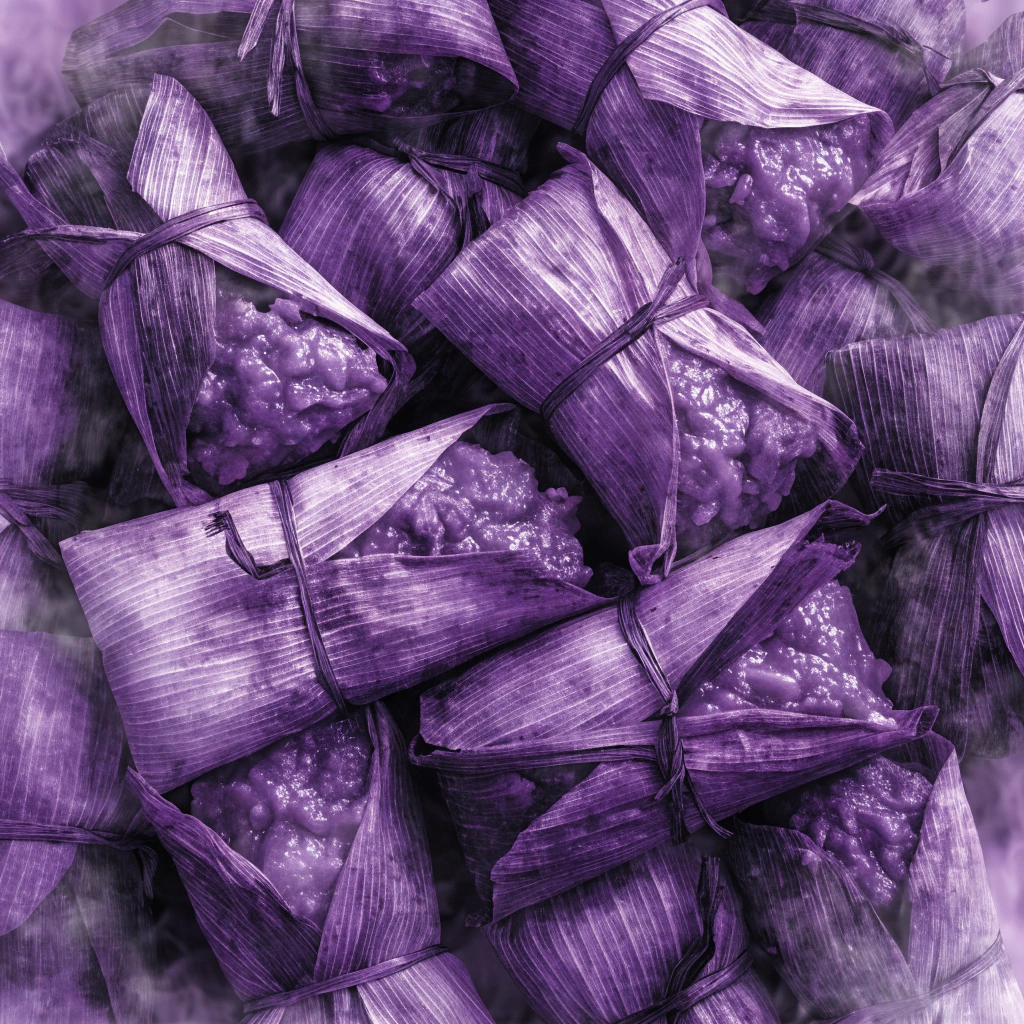
Tamales: A Special Mexican Food
Tamales are a famous food from Mexico. They are very old. Long ago, people like the Maya and Aztecs ate tamales. They are good for travelers because they are easy to carry.
A tamal is corn dough with meat or vegetables inside. It has a leaf on the outside. You cook them with steam.
Today, many families in Mexico eat tamales. People eat them at parties and on holidays. They are delicious and special. Mexicans love this traditional food.
Grammatik-Spotlight
Muster: Present Simple (to be)
"Tamales are a famous food from Mexico."
We use 'am', 'is', or 'are' to describe things or give facts. Use 'are' for plural nouns like 'tamales'.
Muster: Present Simple (Action Verbs)
"People eat them at parties."
We use the base verb 'eat' for habits or general truths. With plural subjects like 'people', we do not add '-s' to the verb.
Teste dein Verständnis
10 Fragen · A1 Anfänger · 1 kostenlose Vorschau
Teste, was du aus diesem Artikel gelernt hast. Beantworte alle Fragen und sammle XP!
Where are tamales from?
Möchtest du das Quiz beenden?
9 weitere Fragen warten auf dich. Registriere dich kostenlos, um das vollständige Quiz freizuschalten und XP zu sammeln!
Kostenlos registrierenHast du schon ein Konto? Anmelden
Gut gemacht!
Weiter üben!
Bereits abgeschlossen — keine zusätzlichen XP
Registriere dich, um XP zu verdienenFragenübersicht
Where are tamales from?
Deine Antwort:
Richtige Antwort: Mexico
Tamales are a new food.
Deine Antwort:
Richtige Antwort: Falsch
What does 'delicious' mean?
Deine Antwort:
Richtige Antwort: Very good taste
People eat them at _____ and on holidays.
Deine Antwort:
Richtige Antwort: parties
Tamales: Eine alte Speise aus Mexiko
Tamales sind eine sehr alte und leckere Speise aus Mexiko. Sie sind schon über 5.000 Jahre alt! Früher haben die Olmeken, Maya und Azteken Tamales gegessen. Diese Völker lebten vor langer Zeit in Mexiko. Tamales waren wichtig, weil man sie gut mitnehmen konnte. Jäger, Reisende und Krieger haben sie oft gegessen. Sie waren auch heilig und wurden den Göttern angeboten.
Das Wort "Tamal" kommt aus einer alten Sprache, Nahuatl. Es bedeutet "eingewickelt". Das passt gut, denn Tamales sind immer eingewickelt. Man macht sie aus einem Teig von Mais. In der Mitte ist eine Füllung, zum Beispiel Fleisch, Käse oder Gemüse. Dann wickelt man den Teig in Maisblätter oder Bananenblätter. Man kocht sie dann im Dampf.
Heute sind Tamales immer noch sehr beliebt in Mexiko. Man isst sie oft zum Frühstück oder bei Festen. Sie schmecken sehr gut und sind ein wichtiger Teil der mexikanischen Kultur. Viele Familien haben ihre eigenen Rezepte, die besser sind als andere! Tamales sind mehr als nur Essen, sie sind Geschichte und Tradition.
Grammatik-Spotlight
Muster: Das Präteritum (einfache Vergangenheit)
"Jäger, Reisende und Krieger haben sie oft gegessen."
Das Präteritum benutzen wir für Handlungen in der Vergangenheit, besonders wenn wir eine Geschichte erzählen oder über abgeschlossene Ereignisse sprechen. Es ist oft kürzer als das Perfekt und wird viel in geschriebenen Texten verwendet.
Muster: Der Komparativ (Vergleich)
"Viele Familien haben ihre eigenen Rezepte, die besser sind als andere!"
Den Komparativ benutzen wir, um zwei Dinge oder Personen zu vergleichen. Wir fügen meistens "-er" an das Adjektiv an (z.B. gut -> besser) und verwenden dann "als" für den Vergleich.
Teste dein Verständnis
11 Fragen · A2 Grundkenntnisse · 1 kostenlose Vorschau
Teste, was du aus diesem Artikel gelernt hast. Beantworte alle Fragen und sammle XP!
Woraus macht man Tamales?
Möchtest du das Quiz beenden?
10 weitere Fragen warten auf dich. Registriere dich kostenlos, um das vollständige Quiz freizuschalten und XP zu sammeln!
Kostenlos registrierenHast du schon ein Konto? Anmelden
Gut gemacht!
Weiter üben!
Bereits abgeschlossen — keine zusätzlichen XP
Registriere dich, um XP zu verdienenFragenübersicht
Woraus macht man Tamales?
Deine Antwort:
Richtige Antwort: Aus einem Teig von Mais
Tamales sind eine neue Speise aus Mexiko.
Deine Antwort:
Richtige Antwort: Falsch
Was bedeutet 'beliebt'?
Deine Antwort:
Richtige Antwort: gern gemocht
Tamales sind immer _____.
Deine Antwort:
Richtige Antwort: eingewickelt
Wer hat Tamales früher gegessen?
Deine Antwort:
Richtige Antwort: Die Olmeken, Maya und Azteken
The Ancient Tradition of Mexican Tamales
Tamales are one of the most famous dishes in Mexico, and they have been eaten for thousands of years. This ancient food was a staple for civilizations like the Olmec, Maya, and Aztecs. Because they were easy to carry, they were the perfect meal for travelers and warriors who needed energy. The name comes from the Nahuatl word 'tamalli,' which means 'wrapped.'
Today, tamales are still prepared using traditional methods. They are made from a corn dough called 'masa,' which is filled with delicious ingredients. These fillings usually include meat, cheese, or vegetables, but sweet tamales with fruit are also popular. After the dough has been filled, it is wrapped in corn husks or banana leaves. Finally, the tamales are steamed until they are cooked perfectly.
In Mexican culture, tamales are more than just food; they are a symbol of community. They are often served during special celebrations, such as Christmas or the Day of the Dead. Many families organize a 'tamalada,' which is a social event where everyone works together to make hundreds of tamales. This process can take a long time, but it is a great way for relatives to share stories and connect.
Although modern life is fast, the tradition of making tamales has not changed much. They have remained an important part of the national identity. Whether they are sold by street vendors or served at a family dinner, tamales continue to bring people together across the country.
Grammatik-Spotlight
Muster: Present Perfect Passive
"Tamales are one of the most famous dishes in Mexico, and they have been eaten for thousands of years."
This pattern is used to talk about an action that started in the past and continues to the present, where the focus is on the object. It is formed using 'have/has + been + past participle'.
Muster: Relative Clauses
"Many families organize a 'tamalada,' which is a social event where everyone works together to make hundreds of tamales."
Relative clauses provide extra information about a noun. 'Which' is used for things or events, and 'where' is used for places or situations.
Teste dein Verständnis
11 Fragen · B1 Mittelstufe · 1 kostenlose Vorschau
Teste, was du aus diesem Artikel gelernt hast. Beantworte alle Fragen und sammle XP!
Why were tamales popular with ancient travelers and warriors?
Möchtest du das Quiz beenden?
10 weitere Fragen warten auf dich. Registriere dich kostenlos, um das vollständige Quiz freizuschalten und XP zu sammeln!
Kostenlos registrierenHast du schon ein Konto? Anmelden
Gut gemacht!
Weiter üben!
Bereits abgeschlossen — keine zusätzlichen XP
Registriere dich, um XP zu verdienenFragenübersicht
Why were tamales popular with ancient travelers and warriors?
Deine Antwort:
Richtige Antwort: They were easy to carry and provided energy
The word 'tamal' comes from a Spanish word meaning 'delicious'.
Deine Antwort:
Richtige Antwort: Falsch
What does 'staple' mean in the context of food?
Deine Antwort:
Richtige Antwort: A main or important regular food
Tamales are cooked by being _____ until they are ready to eat.
Deine Antwort:
Richtige Antwort: steamed
What is a 'tamalada'?
Deine Antwort:
Richtige Antwort: A social event for making tamales together
The Cultural Resilience of the Tamal: From Sacred Rituals to Global Staple
Throughout the extensive history of the Americas, few culinary items have demonstrated as much cultural resilience as the tamal. Originating over five millennia ago, this maize-based dish has served as a fundamental staple for the Olmec, Maya, and Aztec civilizations. While modern consumers might view it as a convenient street food, its historical significance is deeply rooted in the socio-political and spiritual fabric of Mesoamerican societies.
One of the primary reasons for the tamal's endurance was its remarkable portability. In an era where long-distance travel and military campaigns were common, having a nutritious, pre-packaged meal was essential. Consequently, warriors and hunters relied heavily on these 'wrapped' delicacies. The term 'tamal' itself is derived from the Nahuatl word 'tamalli,' which literally translates to 'wrapped.' This physical characteristic allowed the food to be transported across vast distances without spoiling, facilitating the expansion of ancient empires.
Beyond its practical utility, the tamal occupied a sacred position within religious rituals. It was frequently utilized as a symbolic offering to the gods, representing the connection between the earth and the divine. Historical records suggest that specific types of tamales were prepared for various festivals, with ingredients chosen to reflect the nature of the deity being honored. Not only were they consumed by the elite, but they were also integrated into the communal identity of the general population.
Furthermore, the evolution of the tamal reflects the broader history of cultural exchange in Mexico. Following the Spanish conquest, new ingredients such as lard and pork were introduced, yet the core technique of steaming maize dough in a leaf remained unchanged. This synthesis of indigenous traditions and foreign influences has resulted in the diverse variety of tamales found across Mexico today.
In conclusion, the tamal is far more than a simple dish; it is a living artifact of history. By examining its journey from a ritualistic offering to a contemporary dietary staple, one can appreciate the complex layers of Mexican heritage. The tamal continues to flourish, serving as a testament to the ingenuity and spiritual depth of the civilizations that first created it.
Grammatik-Spotlight
Muster: Inversion for Emphasis
"Not only were they consumed by the elite, but they were also integrated into the communal identity..."
This structure is used to emphasize a point by reversing the subject and the auxiliary verb after a negative expression. It creates a formal and dramatic tone suitable for B2 level writing.
Muster: Passive Voice
"It was frequently utilized as a symbolic offering to the gods..."
The passive voice is used here because the action (utilizing the tamal) and the object (the tamal) are more important than the specific people performing the action. It is formed using 'to be' + past participle.
Muster: Non-defining Relative Clause
"The term 'tamal' itself is derived from the Nahuatl word 'tamalli,' which literally translates to 'wrapped.'"
This clause provides extra, non-essential information about a noun. It is separated from the rest of the sentence by commas and usually starts with 'which' or 'who'.
Teste dein Verständnis
11 Fragen · B2 Obere Mittelstufe · 1 kostenlose Vorschau
Teste, was du aus diesem Artikel gelernt hast. Beantworte alle Fragen und sammle XP!
What was a primary reason for the tamal's importance to ancient warriors?
Möchtest du das Quiz beenden?
10 weitere Fragen warten auf dich. Registriere dich kostenlos, um das vollständige Quiz freizuschalten und XP zu sammeln!
Kostenlos registrierenHast du schon ein Konto? Anmelden
Gut gemacht!
Weiter üben!
Bereits abgeschlossen — keine zusätzlichen XP
Registriere dich, um XP zu verdienenFragenübersicht
What was a primary reason for the tamal's importance to ancient warriors?
Deine Antwort:
Richtige Antwort: Its remarkable portability
The core steaming technique of tamales was changed after the Spanish conquest.
Deine Antwort:
Richtige Antwort: Falsch
What does 'staple' mean in the context of the article?
Deine Antwort:
Richtige Antwort: A main or fundamental food item
The tamal is described in the conclusion as a living _____ of history.
Deine Antwort:
Richtige Antwort: artifact
What does the Nahuatl word 'tamalli' translate to?
Deine Antwort:
Richtige Antwort: Wrapped
Tamales: Ein kulinarisches Erbe Mexikos – Zwischen Geschichte und Gegenwart
Wenige Speisen sind so tief mit der Geschichte und dem kulturellen Gefüge Amerikas verwurzelt wie der Tamal. Dieses epochale Gericht, dessen Ursprünge sich über fünftausend Jahre zurückverfolgen lassen, war bereits für die Olmeken, Maya und Azteken ein integraler Bestandteil ihrer Ernährung und ihrer sozialen Rituale. Es sind nicht zuletzt ihre Vielseitigkeit und ihre praktische Handhabung, die Tamales zu einer unverzichtbaren Nahrungsquelle für Jäger, Reisende und Krieger machten. Die Fähigkeit, diese nahrhaften Päckchen leicht transportieren und haltbar machen zu können, war in vorindustriellen Gesellschaften von unschätzbarem Wert.
Doch die Bedeutung der Tamales reichte weit über ihre Funktion als reine Wegzehrung hinaus. Sie galten in den alten Zivilisationen als sakral und wurden als opulente Gaben an die Götter dargebracht, insbesondere während religiöser Zeremonien und wichtiger Festtage. Diese rituelle Verankerung zeugt von der tiefen spirituellen Dimension, die diesem scheinbar einfachen Gericht innewohnte. Der Name „Tamal“ selbst ist ein Echo dieser alten Welt; er leitet sich vom Nahuatl-Wort „tamalli“ ab, was schlicht „gewickelt“ bedeutet – eine treffende Beschreibung seiner charakteristischen Form.
Auch in der heutigen Zeit haben Tamales nichts von ihrer Relevanz eingebüßt. Sie sind nach wie vor ein Kulminationspunkt der mexikanischen Küche und Kultur, ein Symbol für Gemeinschaft und Feierlichkeit. Ihre Zubereitung, die oft ein gemeinschaftliches Unterfangen der ganzen Familie darstellt, ist ein Akt der Traditionspflege und des sozialen Zusammenhalts. Grundsätzlich bestehen Tamales aus einem Maisteig, der mit verschiedenen Füllungen – von Fleisch über Käse bis hin zu Früchten oder Gemüse – versehen und dann in Maisblätter, Bananenblätter oder sogar Avocado-Blätter gewickelt wird, bevor sie gedämpft werden. Diese Vielfalt ist schier grenzenlos, wobei jede Region Mexikos ihre eigenen, einzigartigen Tamal-Variationen entwickelt hat.
Die regionale Diversität ist tatsächlich faszinierend. Während in Zentralmexiko oft pikante Tamales mit Mole oder grüner Soße und Hühnchen dominieren, findet man im Süden, insbesondere in Oaxaca, größere Tamales, die in Bananenblätter gewickelt und mit komplexen Füllungen aus Schweinefleisch und Mole Negro zubereitet werden. An der Küste wiederum sind süße Tamales mit Ananas oder Rosinen keine Seltenheit. Diese geografisch bedingten Unterschiede spiegeln die reiche kulinarische Landschaft Mexikos wider und machen die Tamal-Verköstigung zu einer Entdeckungsreise durch das Land.
Es ist diese facettenreiche Geschichte, gepaart mit ihrer anhaltenden Präsenz in der modernen mexikanischen Gesellschaft, die Tamales zu mehr als nur einem Gericht macht; sie sind ein lebendiges Denkmal der indigenen Kulturen Amerikas, ein Bindeglied zwischen Vergangenheit und Gegenwart. Wer sich mit der mexikanischen Küche auseinandersetzt, kommt an den Tamales nicht vorbei. Sie sind ein Ausdruck von Identität, ein Geschmackserlebnis, das Generationen überdauert hat und dessen kulturelle Bedeutung wohl kaum zu überschätzen ist.
Grammatik-Spotlight
Muster: Nominalisierung
"Es sind nicht zuletzt ihre Vielseitigkeit und ihre praktische Handhabung, die Tamales zu einer unverzichtbaren Nahrungsquelle für Jäger, Reisende und Krieger machten."
Nominalisierung ist die Umwandlung von Verben oder Adjektiven in Nomen. Hier werden die Adjektive 'vielseitig' und 'praktisch' zu den Nomen 'Vielseitigkeit' und 'Handhabung'. Dies ermöglicht eine präzisere und formellere Ausdrucksweise, typisch für den C1-Niveau-Schreibstil.
Muster: Inversion mit negativer Einleitung
"Wenige Speisen sind so tief mit der Geschichte und dem kulturellen Gefüge Amerikas verwurzelt wie der Tamal."
Bei der Inversion steht das finite Verb an zweiter Stelle im Satz, aber nicht direkt nach dem Subjekt. Wenn ein Satz mit einem negativen Ausdruck (wie 'Wenige', 'Nie', 'Kaum') beginnt, folgt direkt das Verb, bevor das Subjekt genannt wird. Dies betont den negativen Aspekt oder die Einschränkung.
Muster: Cleft Sentence (Es sind die..., die...)
"Es sind nicht zuletzt ihre Vielseitigkeit und ihre praktische Handhabung, die Tamales zu einer unverzichtbaren Nahrungsquelle für Jäger, Reisende und Krieger machten."
Die 'Es sind die..., die...'-Konstruktion (cleft sentence) dient dazu, einen bestimmten Teil des Satzes hervorzuheben oder zu betonen. Der Fokus liegt hier auf 'Vielseitigkeit und Handhabung' als dem entscheidenden Faktor, der Tamales so wichtig machte. Es trennt die Information in zwei Teile, um einen davon zu akzentuieren.
Teste dein Verständnis
12 Fragen · C1 Fortgeschritten · 1 kostenlose Vorschau
Teste, was du aus diesem Artikel gelernt hast. Beantworte alle Fragen und sammle XP!
Welche Zivilisationen werden im Text als frühe Konsumenten von Tamales genannt?
Möchtest du das Quiz beenden?
11 weitere Fragen warten auf dich. Registriere dich kostenlos, um das vollständige Quiz freizuschalten und XP zu sammeln!
Kostenlos registrierenHast du schon ein Konto? Anmelden
Gut gemacht!
Weiter üben!
Bereits abgeschlossen — keine zusätzlichen XP
Registriere dich, um XP zu verdienenFragenübersicht
Welche Zivilisationen werden im Text als frühe Konsumenten von Tamales genannt?
Deine Antwort:
Richtige Antwort: Olmeken, Maya und Azteken
Tamales waren in alten Zivilisationen nur eine einfache Wegzehrung und hatten keine tiefere Bedeutung.
Deine Antwort:
Richtige Antwort: Falsch
Was bedeutet das Wort "epochal" im Kontext des Textes?
Deine Antwort:
Richtige Antwort: Etwas, das eine ganze Zeitspanne prägt und von großer Bedeutung ist
Der Name „Tamal“ leitet sich vom Nahuatl-Wort „tamalli“ ab, was schlicht „_____“ bedeutet.
Deine Antwort:
Richtige Antwort: gewickelt
Welche Art von Blättern wird nicht als Wickelmaterial für Tamales im Text erwähnt?
Deine Antwort:
Richtige Antwort: Kohlblätter
Die Zubereitung von Tamales ist in Mexiko oft ein gemeinschaftliches Familienunternehmen.
Deine Antwort:
Richtige Antwort: Richtig
The Tamal: A Culinary Palimpsest of Mesoamerican Ontological Identity
The tamal stands as a culinary palimpsest, a testament to the enduring legacy of Mesoamerican civilizations that transcends mere sustenance to inhabit the realm of the sacred. Dating back over five millennia, this wrapped parcel of nixtamalized corn dough represents a sophisticated confluence of agricultural ingenuity and ritualistic devotion. Far from being a peripheral snack, the tamal was a quintessential bedrock for the Olmec, Maya, and Aztec civilizations. Were one to scrutinize the archaeological record, one would find that its prominence was predicated not merely on nutritional density but on its unparalleled portability. For the ancient hunter, the itinerant merchant, or the mobilizing warrior, the tamal provided a logistical advantage that few other foodstuffs could replicate, serving as a durable provision in the demanding topographies of the Americas.
Etymologically, the term 'tamal' finds its provenance in the Nahuatl word 'tamalli,' meaning 'wrapped.' Yet, the act of wrapping signifies more than a pragmatic containment of ingredients; it reflects an esoteric symbolism tied to the cycle of life and the protection of the germinal essence. In the pre-Hispanic worldview, maize was not merely a crop but a divine substance from which humanity itself was fashioned. Consequently, the tamal was inextricably linked to the divine, frequently appearing in codices as a ritualistic offering to the gods. During the 'Atlcahualo' festival, for instance, specific varieties were prepared to appease the rain deities, suggesting that the preparation of tamales was as much a liturgical act as it was a domestic one.
With the arrival of the Spanish in the sixteenth century, the tamal underwent a process of cultural syncretism. The introduction of lard and livestock by the colonizers altered the texture and flavor profile of the traditional tamal, yet the indigenous core of the dish remained remarkably resilient. This culinary hybridization did not result in the erasure of the original form; rather, it allowed the tamal to permeate the new colonial social hierarchy. It is widely posited by historians that the tamal’s ability to adapt to new ingredients while maintaining its structural integrity is emblematic of the broader survival of indigenous identity under the pressure of European hegemony.
In contemporary Mexico, the ubiquity of the tamal persists, though it has transitioned from a sacred offering to a symbol of communal conviviality. Whether it be the 'tamaliza' during the Candelaria feast or the daily ritual of a morning 'guajolota' (a tamal sandwich) in the bustling streets of Mexico City, the food remains a focal point of social cohesion. However, to view the tamal solely through the lens of modern street food is to overlook its analytical depth. Each regional variation—from the banana-leaf-wrapped tamales of Oaxacan tradition to the cornhusk-bound versions of the north—serves as a vestige of localized ecological knowledge and ancestral heritage.
Lest the cultural significance be understated, one must acknowledge that the tamal is a vessel of pedagogical transmission. The labor-intensive process of nixtamalization, grinding, and folding is typically a collective endeavor, often passed down through matrilineal lines. This ensures that the esoteric knowledge of the past is preserved in the present. In an era of increasing culinary homogenization, the tamal remains an indomitable icon of Mexican idiosyncrasy. It is not merely a dish; it is a historical document, wrapped in husk and steamed in the vapors of a thousand-year-old tradition, reminding us that the past is never truly consumed, but rather, continually reinterpreted.
Grammatik-Spotlight
Muster: Inverted Conditional (Were... to)
"Were one to scrutinize the archaeological record, one would find that its prominence was predicated not merely on nutritional density..."
This is a formal alternative to 'If one were to scrutinize'. It uses an inverted structure to provide a more academic and hypothetical tone, common in C2 writing.
Muster: Negative Purpose Clause (Lest)
"Lest the cultural significance be understated, one must acknowledge that the tamal is a vessel of pedagogical transmission."
The word 'lest' is used to express a negative purpose, meaning 'to avoid the risk of'. It is followed by the subjunctive mood ('be understated').
Muster: Academic Hedging
"It is widely posited by historians that the tamal’s ability to adapt to new ingredients..."
The phrase 'It is widely posited' is a form of hedging. It attributes an idea to a general academic consensus without making an absolute claim of truth.
Teste dein Verständnis
12 Fragen · C2 Meisterschaft · 1 kostenlose Vorschau
Teste, was du aus diesem Artikel gelernt hast. Beantworte alle Fragen und sammle XP!
What does the author imply by calling the tamal a 'culinary palimpsest'?
Möchtest du das Quiz beenden?
11 weitere Fragen warten auf dich. Registriere dich kostenlos, um das vollständige Quiz freizuschalten und XP zu sammeln!
Kostenlos registrierenHast du schon ein Konto? Anmelden
Gut gemacht!
Weiter üben!
Bereits abgeschlossen — keine zusätzlichen XP
Registriere dich, um XP zu verdienenFragenübersicht
What does the author imply by calling the tamal a 'culinary palimpsest'?
Deine Antwort:
Richtige Antwort: It is a dish that has been layered with different cultural influences over time while retaining traces of its past.
The introduction of Spanish ingredients like lard led to the total replacement of indigenous tamal recipes.
Deine Antwort:
Richtige Antwort: Falsch
What does 'esoteric' mean in the context of the article?
Deine Antwort:
Richtige Antwort: Specialized knowledge intended for a small, initiated group.
The tamal was _____ linked to the divine in pre-Hispanic cultures.
Deine Antwort:
Richtige Antwort: inextricably
According to the article, why was the tamal particularly valued by ancient warriors and travelers?
Deine Antwort:
Richtige Antwort: Its portability and durability in difficult terrains.
The preparation of tamales is described as a collective endeavor often passed down through female family lines.
Deine Antwort:
Richtige Antwort: Richtig
Mexico. Tamales. Ein Essen.
Mexico. Ein Land. Gross. Hier ist Essen. Tamales. Tamales ist gut. Sehr gut. Tamales ist Mais. Und Wasser. Tamales ist warm. Das Essen ist warm. Ein Essen für Mexico. Ein Essen für viele Leute. Tamales. Sehr gut. Ein Essen. Mexico.
Grammatik-Spotlight
Muster: X ist Y
"Tamales ist gut."
Das Wort 'ist' verbindet zwei Dinge. Es sagt, was etwas ist. Zum Beispiel: 'Mexico ist ein Land.' Oder: 'Das Essen ist warm.'
Teste dein Verständnis
9 Fragen · A0 Vor-Anfänger · 1 kostenlose Vorschau
Teste, was du aus diesem Artikel gelernt hast. Beantworte alle Fragen und sammle XP!
Mexico ist ein Land.
Möchtest du das Quiz beenden?
8 weitere Fragen warten auf dich. Registriere dich kostenlos, um das vollständige Quiz freizuschalten und XP zu sammeln!
Kostenlos registrierenHast du schon ein Konto? Anmelden
Gut gemacht!
Weiter üben!
Bereits abgeschlossen — keine zusätzlichen XP
Registriere dich, um XP zu verdienenFragenübersicht
Mexico ist ein Land.
Deine Antwort:
Richtige Antwort: Richtig
Was ist Tamales?
Deine Antwort:
Richtige Antwort: Ein Essen
Tamales ist _____. Sehr gut.
Deine Antwort:
Richtige Antwort: gut

