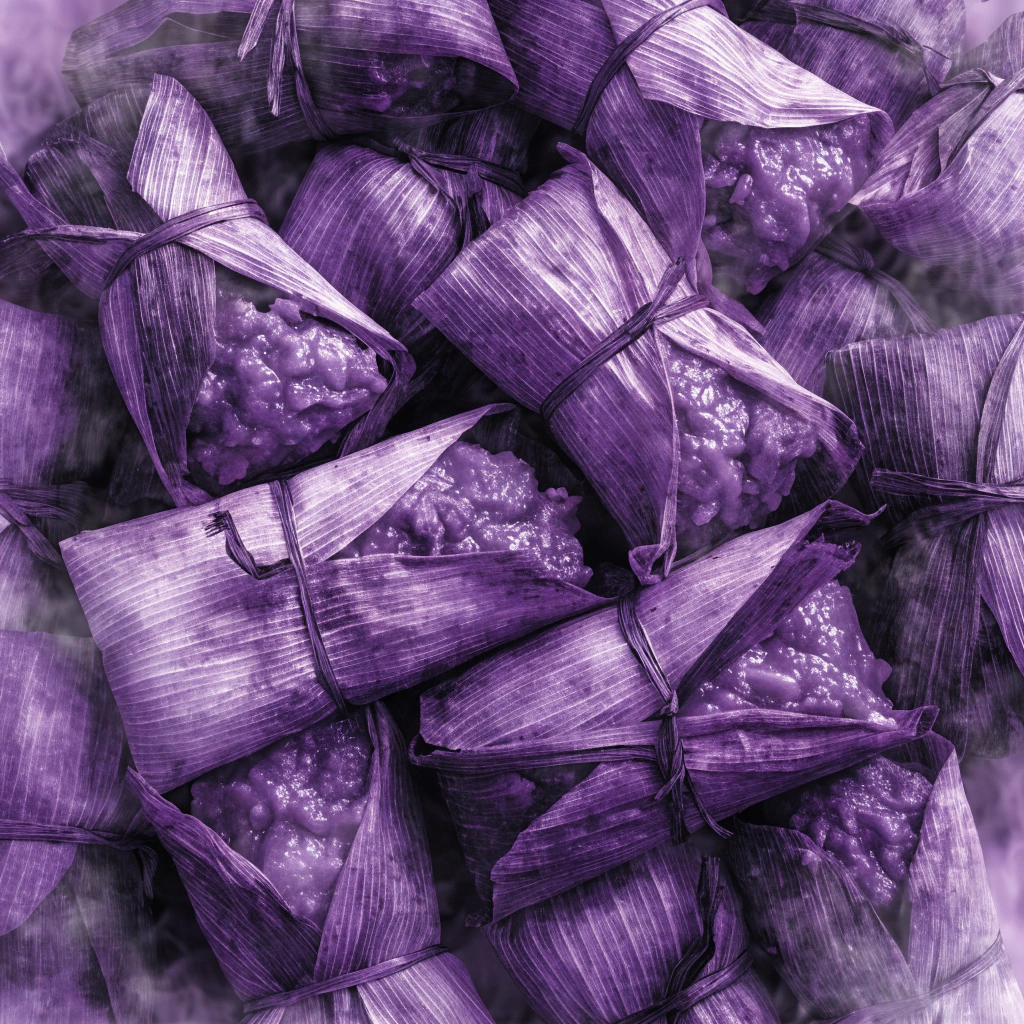
Tamales: A Special Mexican Food
Tamales are a famous food from Mexico. They are very old. Long ago, people like the Maya and Aztecs ate tamales. They are good for travelers because they are easy to carry.
A tamal is corn dough with meat or vegetables inside. It has a leaf on the outside. You cook them with steam.
Today, many families in Mexico eat tamales. People eat them at parties and on holidays. They are delicious and special. Mexicans love this traditional food.
نکته دستوری
الگو: Present Simple (to be)
"Tamales are a famous food from Mexico."
We use 'am', 'is', or 'are' to describe things or give facts. Use 'are' for plural nouns like 'tamales'.
الگو: Present Simple (Action Verbs)
"People eat them at parties."
We use the base verb 'eat' for habits or general truths. With plural subjects like 'people', we do not add '-s' to the verb.
درک خود را بسنجید
10 سوال · A1 مبتدی · 1 پیشنمایش رایگان
آنچه از این مقاله آموختید را بسنجید. به همه سؤالات پاسخ دهید و XP کسب کنید!
Where are tamales from?
آیا میخواهید آزمون را تمام کنید؟
9 سؤال دیگر منتظر شماست. ثبتنام رایگان کنید تا آزمون کامل را باز کنید و XP کسب کنید!
ثبتنام رایگانقبلاً ثبتنام کردی؟ ورود
جزئیات سؤالات
Where are tamales from?
پاسخ شما:
پاسخ درست: Mexico
Tamales are a new food.
پاسخ شما:
پاسخ درست: نادرست
What does 'delicious' mean?
پاسخ شما:
پاسخ درست: Very good taste
People eat them at _____ and on holidays.
پاسخ شما:
پاسخ درست: parties
Tamales: A Special Food from Mexico
Tamales are a very old and famous food from Mexico. People started eating them more than 5,000 years ago. The Olmec, Maya, and Aztec civilizations loved them because they were very easy to carry. They were more useful than other foods because they stayed fresh for a long time.
The word 'tamal' comes from an ancient language called Nahuatl. It means 'wrapped.' In the past, brave soldiers and hunters ate them during long trips. They were also special gifts for the gods during important religious festivals.
Today, tamales are still very popular in Mexico and around the world. People make them with corn dough and fill them with meat, cheese, or spicy vegetables. They wrap them in corn husks or green banana leaves. They are delicious and are a big part of Mexican culture. Many families eat them together on holidays.
نکته دستوری
الگو: Past Simple
"People started eating them more than 5,000 years ago."
The past simple is used to talk about finished actions in the past. For regular verbs, we usually add '-ed' to the base form.
الگو: Comparatives with 'more'
"They were more useful than other foods because they stayed fresh for a long time."
We use 'more' + adjective + 'than' to compare two things when the adjective has two or more syllables. It shows that one thing has a higher quality than the other.
درک خود را بسنجید
11 سوال · A2 مقدماتی · 1 پیشنمایش رایگان
آنچه از این مقاله آموختید را بسنجید. به همه سؤالات پاسخ دهید و XP کسب کنید!
Who ate tamales during long trips in the past?
آیا میخواهید آزمون را تمام کنید؟
10 سؤال دیگر منتظر شماست. ثبتنام رایگان کنید تا آزمون کامل را باز کنید و XP کسب کنید!
ثبتنام رایگانقبلاً ثبتنام کردی؟ ورود
جزئیات سؤالات
Who ate tamales during long trips in the past?
پاسخ شما:
پاسخ درست: Soldiers and hunters
Tamales are a new food that started 100 years ago.
پاسخ شما:
پاسخ درست: نادرست
What does 'ancient' mean?
پاسخ شما:
پاسخ درست: From a long time ago
Many families eat tamales together on _____.
پاسخ شما:
پاسخ درست: holidays
What does the word 'tamal' mean in the Nahuatl language?
پاسخ شما:
پاسخ درست: Wrapped
The Ancient Tradition of Mexican Tamales
Tamales are one of the most famous dishes in Mexico, and they have been eaten for thousands of years. This ancient food was a staple for civilizations like the Olmec, Maya, and Aztecs. Because they were easy to carry, they were the perfect meal for travelers and warriors who needed energy. The name comes from the Nahuatl word 'tamalli,' which means 'wrapped.'
Today, tamales are still prepared using traditional methods. They are made from a corn dough called 'masa,' which is filled with delicious ingredients. These fillings usually include meat, cheese, or vegetables, but sweet tamales with fruit are also popular. After the dough has been filled, it is wrapped in corn husks or banana leaves. Finally, the tamales are steamed until they are cooked perfectly.
In Mexican culture, tamales are more than just food; they are a symbol of community. They are often served during special celebrations, such as Christmas or the Day of the Dead. Many families organize a 'tamalada,' which is a social event where everyone works together to make hundreds of tamales. This process can take a long time, but it is a great way for relatives to share stories and connect.
Although modern life is fast, the tradition of making tamales has not changed much. They have remained an important part of the national identity. Whether they are sold by street vendors or served at a family dinner, tamales continue to bring people together across the country.
نکته دستوری
الگو: Present Perfect Passive
"Tamales are one of the most famous dishes in Mexico, and they have been eaten for thousands of years."
This pattern is used to talk about an action that started in the past and continues to the present, where the focus is on the object. It is formed using 'have/has + been + past participle'.
الگو: Relative Clauses
"Many families organize a 'tamalada,' which is a social event where everyone works together to make hundreds of tamales."
Relative clauses provide extra information about a noun. 'Which' is used for things or events, and 'where' is used for places or situations.
درک خود را بسنجید
11 سوال · B1 متوسط · 1 پیشنمایش رایگان
آنچه از این مقاله آموختید را بسنجید. به همه سؤالات پاسخ دهید و XP کسب کنید!
Why were tamales popular with ancient travelers and warriors?
آیا میخواهید آزمون را تمام کنید؟
10 سؤال دیگر منتظر شماست. ثبتنام رایگان کنید تا آزمون کامل را باز کنید و XP کسب کنید!
ثبتنام رایگانقبلاً ثبتنام کردی؟ ورود
جزئیات سؤالات
Why were tamales popular with ancient travelers and warriors?
پاسخ شما:
پاسخ درست: They were easy to carry and provided energy
The word 'tamal' comes from a Spanish word meaning 'delicious'.
پاسخ شما:
پاسخ درست: نادرست
What does 'staple' mean in the context of food?
پاسخ شما:
پاسخ درست: A main or important regular food
Tamales are cooked by being _____ until they are ready to eat.
پاسخ شما:
پاسخ درست: steamed
What is a 'tamalada'?
پاسخ شما:
پاسخ درست: A social event for making tamales together
The Cultural Resilience of the Tamal: From Sacred Rituals to Global Staple
Throughout the extensive history of the Americas, few culinary items have demonstrated as much cultural resilience as the tamal. Originating over five millennia ago, this maize-based dish has served as a fundamental staple for the Olmec, Maya, and Aztec civilizations. While modern consumers might view it as a convenient street food, its historical significance is deeply rooted in the socio-political and spiritual fabric of Mesoamerican societies.
One of the primary reasons for the tamal's endurance was its remarkable portability. In an era where long-distance travel and military campaigns were common, having a nutritious, pre-packaged meal was essential. Consequently, warriors and hunters relied heavily on these 'wrapped' delicacies. The term 'tamal' itself is derived from the Nahuatl word 'tamalli,' which literally translates to 'wrapped.' This physical characteristic allowed the food to be transported across vast distances without spoiling, facilitating the expansion of ancient empires.
Beyond its practical utility, the tamal occupied a sacred position within religious rituals. It was frequently utilized as a symbolic offering to the gods, representing the connection between the earth and the divine. Historical records suggest that specific types of tamales were prepared for various festivals, with ingredients chosen to reflect the nature of the deity being honored. Not only were they consumed by the elite, but they were also integrated into the communal identity of the general population.
Furthermore, the evolution of the tamal reflects the broader history of cultural exchange in Mexico. Following the Spanish conquest, new ingredients such as lard and pork were introduced, yet the core technique of steaming maize dough in a leaf remained unchanged. This synthesis of indigenous traditions and foreign influences has resulted in the diverse variety of tamales found across Mexico today.
In conclusion, the tamal is far more than a simple dish; it is a living artifact of history. By examining its journey from a ritualistic offering to a contemporary dietary staple, one can appreciate the complex layers of Mexican heritage. The tamal continues to flourish, serving as a testament to the ingenuity and spiritual depth of the civilizations that first created it.
نکته دستوری
الگو: Inversion for Emphasis
"Not only were they consumed by the elite, but they were also integrated into the communal identity..."
This structure is used to emphasize a point by reversing the subject and the auxiliary verb after a negative expression. It creates a formal and dramatic tone suitable for B2 level writing.
الگو: Passive Voice
"It was frequently utilized as a symbolic offering to the gods..."
The passive voice is used here because the action (utilizing the tamal) and the object (the tamal) are more important than the specific people performing the action. It is formed using 'to be' + past participle.
الگو: Non-defining Relative Clause
"The term 'tamal' itself is derived from the Nahuatl word 'tamalli,' which literally translates to 'wrapped.'"
This clause provides extra, non-essential information about a noun. It is separated from the rest of the sentence by commas and usually starts with 'which' or 'who'.
درک خود را بسنجید
11 سوال · B2 بالاتر از متوسط · 1 پیشنمایش رایگان
آنچه از این مقاله آموختید را بسنجید. به همه سؤالات پاسخ دهید و XP کسب کنید!
What was a primary reason for the tamal's importance to ancient warriors?
آیا میخواهید آزمون را تمام کنید؟
10 سؤال دیگر منتظر شماست. ثبتنام رایگان کنید تا آزمون کامل را باز کنید و XP کسب کنید!
ثبتنام رایگانقبلاً ثبتنام کردی؟ ورود
جزئیات سؤالات
What was a primary reason for the tamal's importance to ancient warriors?
پاسخ شما:
پاسخ درست: Its remarkable portability
The core steaming technique of tamales was changed after the Spanish conquest.
پاسخ شما:
پاسخ درست: نادرست
What does 'staple' mean in the context of the article?
پاسخ شما:
پاسخ درست: A main or fundamental food item
The tamal is described in the conclusion as a living _____ of history.
پاسخ شما:
پاسخ درست: artifact
What does the Nahuatl word 'tamalli' translate to?
پاسخ شما:
پاسخ درست: Wrapped
The Gastronomic Tapestry of the Tamal: A Socio-Historical Analysis
The enduring legacy of the tamal is not merely a matter of culinary preference but a testament to Mesoamerican ingenuity. Dating back over five millennia, this versatile staple served as the bedrock of nutrition for the Olmec, Maya, and Aztec civilizations. Its fundamental composition—nixtamalized maize dough wrapped in husks or leaves—provided a caloric density that was indispensable for the expansion of these empires. Indeed, the proliferation of such a sophisticated food processing technique underscores the advanced understanding of agricultural science prevalent in the pre-Columbian era.
Rarely did a significant religious ceremony or seasonal rite occur without the presence of these corn-based offerings. To the ancient inhabitants of Mexico, maize was not merely a crop; it was a divine entity, and the preparation of tamales was an act of profound spiritual devotion. It was through the meticulous wrapping of the dough that the sacredness of the ingredient was preserved and presented to the gods. This ritualistic significance ensured that the tamal remained central to the social fabric, acting as a bridge between the terrestrial and the divine.
What the Aztec warriors and long-distance merchants relied upon for sustenance during their arduous campaigns was the remarkable portability of the tamal. In an era devoid of modern preservation methods, the protective casing of the husk served as a natural barrier against spoilage and environmental contaminants. The nominalization of 'tamal' from the Nahuatl 'tamalli,' meaning 'wrapped,' highlights the functional essence of the dish. It was, in effect, the world's first engineered travel food, allowing for the projection of power and trade across vast, unforgiving terrains.
Furthermore, the evolution of the tamal serves as a poignant lens through which to view the complex history of cultural synthesis in Mexico. While the core structure remains indigenous, the introduction of lard, pork, and spices during the colonial period altered its flavor profile significantly. This hybridization reflects the broader socio-political shifts of the region, where disparate traditions merged to form a distinct national identity. Never before had the culinary landscape undergone such a rapid and irreversible transformation, yet the tamal demonstrated an extraordinary resilience, absorbing new influences without losing its ancestral soul.
In contemporary Mexico, the consumption of tamales is inextricably linked to communal identity and festive cycles, such as the Candelaria feast. The labor-intensive nature of their preparation often necessitates a collective effort, known as a 'tamalada,' which reinforces familial and social bonds. It is this communal participation that prevents the tamal from becoming a mere relic of the past. Instead, it remains a living, breathing component of Mexican heritage.
Ultimately, the tamal transcends its status as a mere foodstuff. It is a vessel of history, a symbol of resilience, and a medium of cultural expression. To analyze the tamal is to uncover the layers of Mexican history itself—from the sacred groves of the ancients to the bustling street corners of modern-day Mexico City. Its enduring presence serves as a reminder that some traditions are so deeply rooted that they become synonymous with the identity of a people.
نکته دستوری
الگو: Negative Inversion
"Rarely did a significant religious ceremony or seasonal rite occur without the presence of these corn-based offerings."
When a negative or restrictive adverbial (like 'Rarely') starts a sentence, the auxiliary verb and subject are inverted. This is used for emphasis and to create a more formal, dramatic tone.
الگو: Pseudo-cleft Sentence
"What the Aztec warriors and long-distance merchants relied upon for sustenance during their arduous campaigns was the remarkable portability of the tamal."
This structure uses a 'What' clause to focus on specific information (the portability). It is highly effective in C1 writing to highlight the primary subject of a discussion.
الگو: Nominalisation
"The proliferation of such a sophisticated food processing technique underscores the advanced understanding of agricultural science prevalent in the pre-Columbian era."
Nominalisation involves using a noun phrase (e.g., 'proliferation', 'understanding') instead of a verb or adjective. This allows for higher information density and a more academic, analytical style.
درک خود را بسنجید
12 سوال · C1 پیشرفته · 1 پیشنمایش رایگان
آنچه از این مقاله آموختید را بسنجید. به همه سؤالات پاسخ دهید و XP کسب کنید!
What is the primary thesis regarding the tamal's history in the article?
آیا میخواهید آزمون را تمام کنید؟
11 سؤال دیگر منتظر شماست. ثبتنام رایگان کنید تا آزمون کامل را باز کنید و XP کسب کنید!
ثبتنام رایگانقبلاً ثبتنام کردی؟ ورود
جزئیات سؤالات
What is the primary thesis regarding the tamal's history in the article?
پاسخ شما:
پاسخ درست: It is a complex cultural artifact that reflects Mesoamerican science and socio-political shifts.
The word 'tamal' is derived from a Spanish term meaning 'corn cake'.
پاسخ شما:
پاسخ درست: نادرست
What does 'arduous' mean in the context of the text?
پاسخ شما:
پاسخ درست: Requiring strenuous effort
The tamal demonstrated an extraordinary _____, absorbing new influences without losing its ancestral soul.
پاسخ شما:
پاسخ درست: resilience
How did the colonial period affect the tamal?
پاسخ شما:
پاسخ درست: It introduced new ingredients like lard and pork, creating a culinary hybridization.
The 'tamalada' is a modern marketing event designed to sell more corn husks.
پاسخ شما:
پاسخ درست: نادرست
The Tamal: A Culinary Palimpsest of Mesoamerican Ontological Identity
The tamal stands as a culinary palimpsest, a testament to the enduring legacy of Mesoamerican civilizations that transcends mere sustenance to inhabit the realm of the sacred. Dating back over five millennia, this wrapped parcel of nixtamalized corn dough represents a sophisticated confluence of agricultural ingenuity and ritualistic devotion. Far from being a peripheral snack, the tamal was a quintessential bedrock for the Olmec, Maya, and Aztec civilizations. Were one to scrutinize the archaeological record, one would find that its prominence was predicated not merely on nutritional density but on its unparalleled portability. For the ancient hunter, the itinerant merchant, or the mobilizing warrior, the tamal provided a logistical advantage that few other foodstuffs could replicate, serving as a durable provision in the demanding topographies of the Americas.
Etymologically, the term 'tamal' finds its provenance in the Nahuatl word 'tamalli,' meaning 'wrapped.' Yet, the act of wrapping signifies more than a pragmatic containment of ingredients; it reflects an esoteric symbolism tied to the cycle of life and the protection of the germinal essence. In the pre-Hispanic worldview, maize was not merely a crop but a divine substance from which humanity itself was fashioned. Consequently, the tamal was inextricably linked to the divine, frequently appearing in codices as a ritualistic offering to the gods. During the 'Atlcahualo' festival, for instance, specific varieties were prepared to appease the rain deities, suggesting that the preparation of tamales was as much a liturgical act as it was a domestic one.
With the arrival of the Spanish in the sixteenth century, the tamal underwent a process of cultural syncretism. The introduction of lard and livestock by the colonizers altered the texture and flavor profile of the traditional tamal, yet the indigenous core of the dish remained remarkably resilient. This culinary hybridization did not result in the erasure of the original form; rather, it allowed the tamal to permeate the new colonial social hierarchy. It is widely posited by historians that the tamal’s ability to adapt to new ingredients while maintaining its structural integrity is emblematic of the broader survival of indigenous identity under the pressure of European hegemony.
In contemporary Mexico, the ubiquity of the tamal persists, though it has transitioned from a sacred offering to a symbol of communal conviviality. Whether it be the 'tamaliza' during the Candelaria feast or the daily ritual of a morning 'guajolota' (a tamal sandwich) in the bustling streets of Mexico City, the food remains a focal point of social cohesion. However, to view the tamal solely through the lens of modern street food is to overlook its analytical depth. Each regional variation—from the banana-leaf-wrapped tamales of Oaxacan tradition to the cornhusk-bound versions of the north—serves as a vestige of localized ecological knowledge and ancestral heritage.
Lest the cultural significance be understated, one must acknowledge that the tamal is a vessel of pedagogical transmission. The labor-intensive process of nixtamalization, grinding, and folding is typically a collective endeavor, often passed down through matrilineal lines. This ensures that the esoteric knowledge of the past is preserved in the present. In an era of increasing culinary homogenization, the tamal remains an indomitable icon of Mexican idiosyncrasy. It is not merely a dish; it is a historical document, wrapped in husk and steamed in the vapors of a thousand-year-old tradition, reminding us that the past is never truly consumed, but rather, continually reinterpreted.
نکته دستوری
الگو: Inverted Conditional (Were... to)
"Were one to scrutinize the archaeological record, one would find that its prominence was predicated not merely on nutritional density..."
This is a formal alternative to 'If one were to scrutinize'. It uses an inverted structure to provide a more academic and hypothetical tone, common in C2 writing.
الگو: Negative Purpose Clause (Lest)
"Lest the cultural significance be understated, one must acknowledge that the tamal is a vessel of pedagogical transmission."
The word 'lest' is used to express a negative purpose, meaning 'to avoid the risk of'. It is followed by the subjunctive mood ('be understated').
الگو: Academic Hedging
"It is widely posited by historians that the tamal’s ability to adapt to new ingredients..."
The phrase 'It is widely posited' is a form of hedging. It attributes an idea to a general academic consensus without making an absolute claim of truth.
درک خود را بسنجید
12 سوال · C2 تسلط · 1 پیشنمایش رایگان
آنچه از این مقاله آموختید را بسنجید. به همه سؤالات پاسخ دهید و XP کسب کنید!
What does the author imply by calling the tamal a 'culinary palimpsest'?
آیا میخواهید آزمون را تمام کنید؟
11 سؤال دیگر منتظر شماست. ثبتنام رایگان کنید تا آزمون کامل را باز کنید و XP کسب کنید!
ثبتنام رایگانقبلاً ثبتنام کردی؟ ورود
جزئیات سؤالات
What does the author imply by calling the tamal a 'culinary palimpsest'?
پاسخ شما:
پاسخ درست: It is a dish that has been layered with different cultural influences over time while retaining traces of its past.
The introduction of Spanish ingredients like lard led to the total replacement of indigenous tamal recipes.
پاسخ شما:
پاسخ درست: نادرست
What does 'esoteric' mean in the context of the article?
پاسخ شما:
پاسخ درست: Specialized knowledge intended for a small, initiated group.
The tamal was _____ linked to the divine in pre-Hispanic cultures.
پاسخ شما:
پاسخ درست: inextricably
According to the article, why was the tamal particularly valued by ancient warriors and travelers?
پاسخ شما:
پاسخ درست: Its portability and durability in difficult terrains.
The preparation of tamales is described as a collective endeavor often passed down through female family lines.
پاسخ شما:
پاسخ درست: درست

