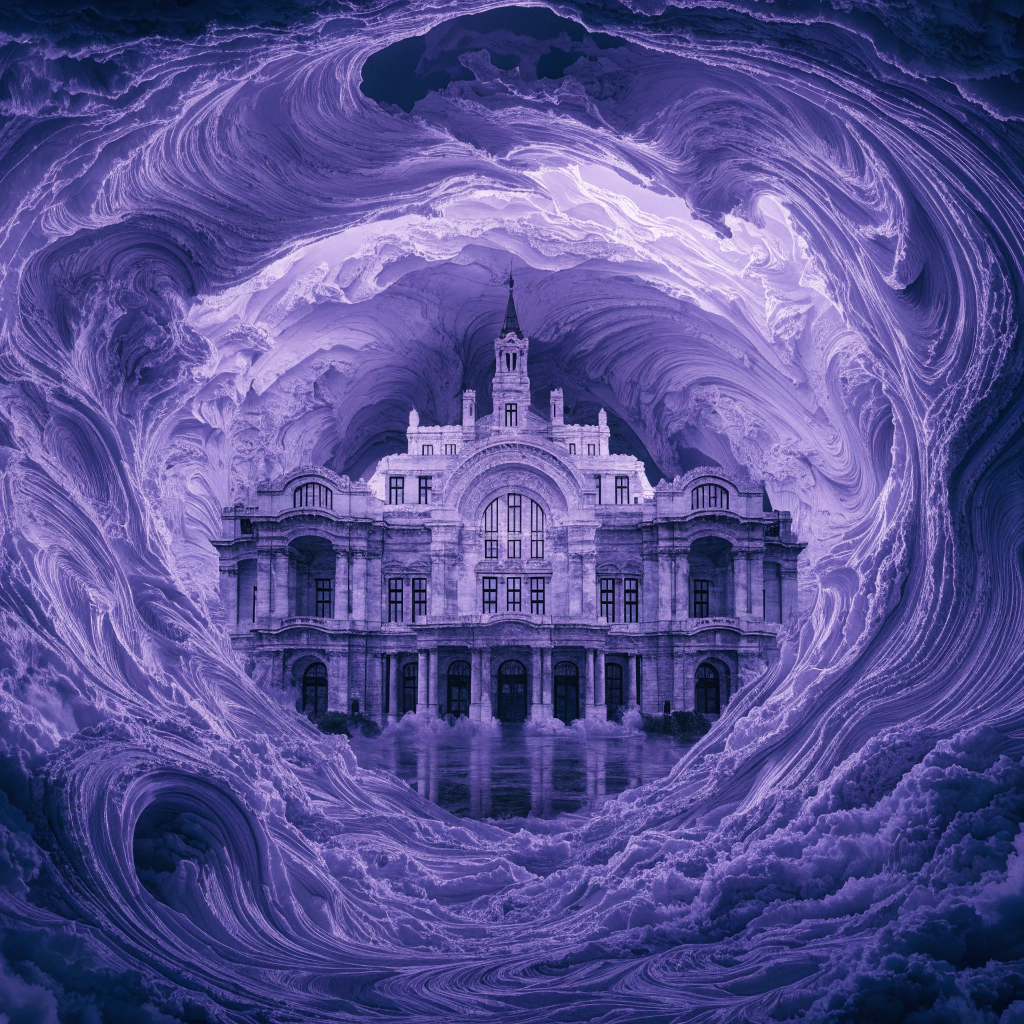
The Beautiful Palace of Art
The Palacio de Bellas Artes is a famous building. It is in the center of Mexico City. The building is very beautiful and big. It has a white roof and orange colors.
Many people visit this place every day. Inside, there are many famous paintings on the walls. You can also see music shows and dance shows. It is a special house for art.
The palace is very old. It is more than 100 years old. People from all over the world come to see it. It is the heart of the city.
Grammatik-Spotlight
Muster: Verb 'To Be' (Present Simple)
"It is in the center of Mexico City."
We use 'is' with singular subjects like 'it' or 'the building'. It helps us describe where something is or what it is like.
Muster: There are (Plural)
"Inside, there are many famous paintings on the walls."
We use 'there are' to say that more than one thing exists. We use it with plural nouns like 'paintings'.
Teste dein Verständnis
10 Fragen · A1 Anfänger · 1 kostenlose Vorschau
Teste, was du aus diesem Artikel gelernt hast. Beantworte alle Fragen und sammle XP!
Where is the Palacio de Bellas Artes?
Möchtest du das Quiz beenden?
9 weitere Fragen warten auf dich. Registriere dich kostenlos, um das vollständige Quiz freizuschalten und XP zu sammeln!
Kostenlos registrierenHast du schon ein Konto? Anmelden
Gut gemacht!
Weiter üben!
Bereits abgeschlossen — keine zusätzlichen XP
Registriere dich, um XP zu verdienenFragenübersicht
Where is the Palacio de Bellas Artes?
Deine Antwort:
Richtige Antwort: In Mexico City
The building is very new.
Deine Antwort:
Richtige Antwort: Falsch
What is a 'building'?
Deine Antwort:
Richtige Antwort: A place with walls and a roof
The palace is very _____.
Deine Antwort:
Richtige Antwort: old
The Beautiful Palace of Fine Arts
The Palacio de Bellas Artes is a very famous building in Mexico City. People call it the 'Cathedral of Art' because it is very beautiful and important. It is in the historic center of the city.
Construction started in 1904. President Porfirio Díaz wanted a grand opera house for a big celebration. However, the work stopped for many years because the ground was too soft. The heavy building started to sink into the earth. It was a difficult problem for the engineers.
Today, the palace is a museum and a theater. Inside, you can see amazing murals by famous artists like Diego Rivera. The outside is white marble, but the roof is colorful. It is more beautiful than many other buildings in the city. Thousands of tourists visit it every year because it is a symbol of Mexican culture.
Grammatik-Spotlight
Muster: Past Simple
"Construction started in 1904."
We use the past simple to talk about finished actions in the past. For regular verbs, we add '-ed' to the end of the base verb.
Muster: Comparatives
"It is more beautiful than many other buildings in the city."
We use comparatives to compare two things. For long adjectives like 'beautiful', we use 'more' before the adjective and 'than' after it.
Teste dein Verständnis
11 Fragen · A2 Grundkenntnisse · 1 kostenlose Vorschau
Teste, was du aus diesem Artikel gelernt hast. Beantworte alle Fragen und sammle XP!
Where is the Palacio de Bellas Artes located?
Möchtest du das Quiz beenden?
10 weitere Fragen warten auf dich. Registriere dich kostenlos, um das vollständige Quiz freizuschalten und XP zu sammeln!
Kostenlos registrierenHast du schon ein Konto? Anmelden
Gut gemacht!
Weiter üben!
Bereits abgeschlossen — keine zusätzlichen XP
Registriere dich, um XP zu verdienenFragenübersicht
Where is the Palacio de Bellas Artes located?
Deine Antwort:
Richtige Antwort: In the historic center of Mexico City
Construction of the building began in 1904.
Deine Antwort:
Richtige Antwort: Richtig
What does the word 'symbol' mean in the text?
Deine Antwort:
Richtige Antwort: A sign that represents an idea or culture
The heavy building started to _____ into the earth.
Deine Antwort:
Richtige Antwort: sink
What can you see inside the palace?
Deine Antwort:
Richtige Antwort: Amazing murals by famous artists
Der Palacio de Bellas Artes: Mexikos prächtige Kunstkathedrale
Der Palacio de Bellas Artes, oft als „Kunstkathedrale Mexikos“ bezeichnet, ist ein sehr wichtiges und beeindruckendes Gebäude in Mexiko-Stadt. Er liegt im historischen Zentrum der Stadt und ist nicht nur ein Wahrzeichen, sondern auch ein kultureller Mittelpunkt. Viele Touristen und Einheimische besuchen ihn jedes Jahr, um seine Schönheit und seine künstlerische Bedeutung zu erleben.
Die Bauarbeiten für diesen prächtigen Palast haben schon 1904 begonnen. Präsident Porfirio Díaz hatte damals die Vision, ein großes Opernhaus zu schaffen, um den 100. Jahrestag der mexikanischen Unabhängigkeit gebührend zu feiern. Der ursprüngliche Plan war sehr ambitioniert, doch das Projekt wurde durch verschiedene Probleme oft verzögert. Ein großes und anhaltendes Problem war der weiche Untergrund der Stadt, auf dem das Gebäude errichtet wurde. Dieser weiche Boden hat dazu geführt, dass das schwere Gebäude langsam im Boden versinkt, was die Konstruktion erheblich erschwert hat. Deshalb musste die Bauweise mehrmals angepasst und verändert werden.
Heute ist der Palacio de Bellas Artes nicht nur ein berühmtes Opernhaus, sondern auch ein wichtiges Kunstmuseum. Hier werden regelmäßig Konzerte, beeindruckende Tanzaufführungen und spannende Theaterstücke gezeigt. Im Inneren des Palastes kann man zudem viele großartige Wandgemälde von weltberühmten mexikanischen Künstlern wie Diego Rivera und José Clemente Orozco bewundern. Diese Kunstwerke erzählen auf beeindruckende Weise viel über die Geschichte und die reiche Kultur Mexikos. Das Gebäude selbst ist eine faszinierende Mischung aus verschiedenen Baustilen, darunter Elemente des Jugendstils und des Art déco, was es architektonisch einzigartig macht.
Der Palacio de Bellas Artes ist also ein Ort, wo Kunst, Geschichte und Architektur auf besondere Weise zusammenkommen. Er ist ein lebendiges Denkmal, das die reiche und vielfältige Kultur Mexikos wunderbar widerspiegelt und jedes Jahr unzählige Besucher aus aller Welt anzieht. Wer Mexiko-Stadt besucht hat, sollte diesen Palast unbedingt gesehen haben. Er ist ein unvergessliches Erlebnis.
Grammatik-Spotlight
Muster: Passiv (Präsens)
"Der Palacio de Bellas Artes, oft als „Kunstkathedrale Mexikos“ bezeichnet, ist ein sehr wichtiges und beeindruckendes Gebäude in Mexiko-Stadt."
Das Passiv wird benutzt, um zu sagen, WAS gemacht wird, ohne zu betonen, WER es macht. Es wird mit dem Hilfsverb „werden“ und dem Partizip II des Hauptverbs gebildet. In diesem Beispiel wird betont, dass das Gebäude so genannt wird.
Muster: Relativsatz mit „das“
"Er ist ein lebendiges Denkmal, das die reiche und vielfältige Kultur Mexikos wunderbar widerspiegelt und jedes Jahr unzählige Besucher aus aller Welt anzieht."
Relativsätze geben zusätzliche Informationen über ein Nomen. Sie beginnen oft mit einem Relativpronomen (wie „der“, „die“, „das“), das sich auf das Nomen im Hauptsatz bezieht. Das konjugierte Verb steht im Relativsatz immer am Ende.
Teste dein Verständnis
11 Fragen · B1 Mittelstufe · 1 kostenlose Vorschau
Teste, was du aus diesem Artikel gelernt hast. Beantworte alle Fragen und sammle XP!
Wann haben die Bauarbeiten für den Palacio de Bellas Artes begonnen?
Möchtest du das Quiz beenden?
10 weitere Fragen warten auf dich. Registriere dich kostenlos, um das vollständige Quiz freizuschalten und XP zu sammeln!
Kostenlos registrierenHast du schon ein Konto? Anmelden
Gut gemacht!
Weiter üben!
Bereits abgeschlossen — keine zusätzlichen XP
Registriere dich, um XP zu verdienenFragenübersicht
Wann haben die Bauarbeiten für den Palacio de Bellas Artes begonnen?
Deine Antwort:
Richtige Antwort: 1904
Der Palacio de Bellas Artes ist nur ein Opernhaus.
Deine Antwort:
Richtige Antwort: Falsch
Was bedeutet 'Wahrzeichen'?
Deine Antwort:
Richtige Antwort: Ein bekanntes Gebäude, das typisch für eine Stadt ist
Präsident Porfirio Díaz hatte die Vision, ein großes ________ zu schaffen.
Deine Antwort:
Richtige Antwort: Opernhaus
Welches Problem hat die Bauarbeiten für den Palacio de Bellas Artes besonders erschwert?
Deine Antwort:
Richtige Antwort: Der weiche Untergrund der Stadt
The Cathedral of Art: Exploring the Palacio de Bellas Artes
The Palacio de Bellas Artes stands as the undisputed crown jewel of Mexico City’s historic center. Often referred to as the 'Cathedral of Art in Mexico,' this magnificent structure serves both as a world-class museum and a prestigious performance venue. Its construction was initiated in 1904 under the presidency of Porfirio Díaz, who had envisioned a grand opera house to celebrate the centenary of Mexican Independence. However, the project was plagued by numerous delays, including the city's notoriously soft subsoil, which caused the building to sink gradually over time.
Architecturally, the palace represents a fascinating fusion of styles. While the exterior boasts a white marble facade in the Art Nouveau and Neoclassical traditions, the interior is a striking example of Art Deco design. This aesthetic shift occurred because construction was halted during the Mexican Revolution and only resumed years later under a different architectural vision. Consequently, visitors are treated to a unique transition as they move from the ornate, floral patterns of the exterior to the geometric, streamlined elegance of the halls inside.
Beyond its structural beauty, the Palacio de Bellas Artes is renowned for housing some of the most significant murals in the world. Masterpieces by Diego Rivera, David Alfaro Siqueiros, and José Clemente Orozco adorn the walls, offering a powerful visual narrative of Mexican history and social struggle. These murals are not merely decorative; they represent a critical analysis of the nation's identity and its revolutionary spirit. If the building had been completed on schedule, it might have lacked these iconic artworks, which were born from the very social changes that delayed its construction.
Today, the palace continues to be a vibrant center for the arts, hosting the National Symphony Orchestra and the Ballet Folklórico de México. Despite the ongoing challenges posed by the unstable ground, the building remains a testament to Mexico's enduring commitment to cultural excellence. For any traveler or student of art history, the Palacio de Bellas Artes is an essential destination that encapsulates the complex, multifaceted history of the Mexican people.
Grammatik-Spotlight
Muster: Past Perfect Tense
"Porfirio Díaz, who had envisioned a grand opera house to celebrate the centenary of Mexican Independence."
The past perfect (had + past participle) is used here to show that the vision occurred before the start of construction in 1904.
Muster: Third Conditional
"If the building had been completed on schedule, it might have lacked these iconic artworks."
This structure (If + past perfect, might have + past participle) describes a hypothetical situation in the past and its imaginary result.
Muster: Passive Voice
"Its construction was initiated in 1904 under the presidency of Porfirio Díaz."
The passive voice is used to emphasize the action (the construction) rather than the person who performed it, maintaining a formal academic tone.
Teste dein Verständnis
11 Fragen · B2 Obere Mittelstufe · 1 kostenlose Vorschau
Teste, was du aus diesem Artikel gelernt hast. Beantworte alle Fragen und sammle XP!
What primary geological issue affected the construction of the palace?
Möchtest du das Quiz beenden?
10 weitere Fragen warten auf dich. Registriere dich kostenlos, um das vollständige Quiz freizuschalten und XP zu sammeln!
Kostenlos registrierenHast du schon ein Konto? Anmelden
Gut gemacht!
Weiter üben!
Bereits abgeschlossen — keine zusätzlichen XP
Registriere dich, um XP zu verdienenFragenübersicht
What primary geological issue affected the construction of the palace?
Deine Antwort:
Richtige Antwort: The city's notoriously soft subsoil
The interior and exterior of the palace are designed in the same architectural style.
Deine Antwort:
Richtige Antwort: Falsch
Which word describes the principal front of a building?
Deine Antwort:
Richtige Antwort: Facade
The Palacio de Bellas Artes stands as the undisputed crown _____ of Mexico City.
Deine Antwort:
Richtige Antwort: jewel
Why did the architectural style change from Art Nouveau to Art Deco?
Deine Antwort:
Richtige Antwort: Construction was halted by the Mexican Revolution
Der Palacio de Bellas Artes: Mexikos Kathedrale der Kunst und ein Meisterwerk der Beharrlichkeit
Im Herzen von Mexiko-Stadt erhebt sich ein Bauwerk von unvergleichlicher Pracht und kultureller Bedeutung: der Palacio de Bellas Artes. Oft als „Kathedrale der Kunst Mexikos“ bezeichnet, ist dieses ikonische Gebäude weit mehr als nur ein Opernhaus; es ist ein lebendiges Zeugnis der nationalen Identität und ein Schmelztiegel künstlerischer Ausdrucksformen. Seine Fassade, ein faszinierendes Zusammenspiel aus europäischem Art Nouveau und dem später hinzugefügten Art-déco-Stil, kündet bereits von der reichen Geschichte, die sich in seinen Mauern verbirgt.
Das ehrgeizige Vorhaben zur Errichtung dieses Kulturpalastes nahm im Jahr 1904 unter der Präsidentschaft von Porfirio Díaz seinen Anfang. Díaz' Vision war es, anlässlich der Hundertjahrfeier der mexikanischen Unabhängigkeit ein grandioses Opernhaus zu schaffen, das Mexikos Fortschritt und seinen Anspruch auf eine führende Rolle in der Welt der Künste demonstrieren sollte. Doch was als Zeichen nationalen Stolzes gedacht war, entwickelte sich zu einem jahrzehntelangen Unterfangen, das von unvorhergesehenen Schwierigkeiten gezeichnet war. Es war insbesondere die weiche Beschaffenheit des Untergrunds der Stadt, die dem Bauherrn und dem italienischen Architekten Adamo Boari, dem die ursprüngliche Planung oblag, Kopfzerbrechen bereitete. Das enorme Gewicht des Marmors führte zu einem allmählichen Absinken des Fundaments, ein Problem, das bis heute eine ständige Herausforderung darstellt und kostspielige Instandhaltungsmaßnahmen erfordert.
Hinzu kamen die Turbulenzen der Mexikanischen Revolution, die ab 1910 das Land erschütterten und das Bauprojekt für viele Jahre zum Erliegen brachten. Erst im Jahr 1934, nach einer Bauzeit von drei Jahrzehnten und unter der Leitung des mexikanischen Architekten Federico Mariscal, konnte das Prachtbauwerk schließlich eingeweiht werden. Mariscal vollendete den Innenbereich im damals modernen Art-déco-Stil, wodurch eine faszinierende stilistische Synthese entstand, die den Palacio einzigartig macht. Die Kombination aus Boaris europäisch inspiriertem Äußeren und Mariscals avantgardistischem Interieur ist es, was dem Gebäude seine unverwechselbare Ästhetik verleiht.
Im Inneren offenbart sich eine Welt voller künstlerischer Schätze. Besonders hervorzuheben sind die monumentalen Wandgemälde, die von den größten Meistern des mexikanischen Muralismus geschaffen wurden. Künstler wie Diego Rivera, José Clemente Orozco und David Alfaro Siqueiros verewigten hier ihre sozialkritischen und geschichtsträchtigen Visionen, welche die Wände des Palacios in eine Leinwand nationaler Erzählungen verwandelten. Der Palacio dient heute als wichtigstes Kulturzentrum des Landes. Er beherbergt nicht nur das Museo del Palacio de Bellas Artes und das Museo Nacional de Arquitectura, sondern ist auch die Hauptspielstätte für die bedeutendsten Opern-, Ballett- und Symphonieproduktionen Mexikos.
Die schiere Größe und die detailreiche Ausführung, kombiniert mit der bewegten Geschichte seiner Entstehung, machen den Palacio de Bellas Artes zu einem unverzichtbaren Bestandteil des kulturellen Erbes Mexikos. Es ist ein Ort, an dem Vergangenheit und Gegenwart in einem harmonischen Dialog verschmelzen, und der Besucher aus aller Welt in seinen Bann zieht. Wer Mexiko-Stadt besucht, sollte es sich keinesfalls entgehen lassen, dieses architektonische Juwel und seine unzähligen Kunstschätze selbst zu erleben.
Grammatik-Spotlight
Muster: Nominalisierung
"Das ehrgeizige Vorhaben zur Errichtung dieses Kulturpalastes nahm im Jahr 1904 unter der Präsidentschaft von Porfirio Díaz seinen Anfang."
Nominalisierung bedeutet, Verben oder Adjektive in Substantive umzuwandeln. Dies führt zu einem formelleren und prägnanteren Stil, der oft in schriftlichen C1-Texten verwendet wird, um Informationen dichter zu präsentieren. Hier wird 'etwas errichten' zu 'zur Errichtung'.
Muster: Erweitertes Attribut
"Es war insbesondere die weiche Beschaffenheit des Untergrunds der Stadt, die dem Bauherrn und dem italienischen Architekten Adamo Boari, dem die ursprüngliche Planung oblag, Kopfzerbrechen bereitete."
Ein erweitertes Attribut ist eine Gruppe von Wörtern, die ein Nomen näher beschreiben und vor diesem Nomen steht. Es kann aus Adjektiven, Partizipien oder präpositionalen Ausdrücken bestehen und ermöglicht eine sehr präzise und komplexe Informationsvermittlung innerhalb eines Satzgliedes.
Muster: Spaltsatz (Cleft Sentence)
"Die Kombination aus Boaris europäisch inspiriertem Äußeren und Mariscals avantgardistischem Interieur ist es, was dem Gebäude seine unverwechselbare Ästhetik verleiht."
Spaltsätze, oft mit „es ist/war… das/der/die…“, dienen dazu, einen bestimmten Satzteil hervorzuheben und zu betonen. Die Information, die nach „es ist/war“ steht, wird als besonders wichtig dargestellt und erhält dadurch eine stärkere Gewichtung.
Teste dein Verständnis
12 Fragen · C1 Fortgeschritten · 1 kostenlose Vorschau
Teste, was du aus diesem Artikel gelernt hast. Beantworte alle Fragen und sammle XP!
Wofür wurde der Palacio de Bellas Artes ursprünglich konzipiert?
Möchtest du das Quiz beenden?
11 weitere Fragen warten auf dich. Registriere dich kostenlos, um das vollständige Quiz freizuschalten und XP zu sammeln!
Kostenlos registrierenHast du schon ein Konto? Anmelden
Gut gemacht!
Weiter üben!
Bereits abgeschlossen — keine zusätzlichen XP
Registriere dich, um XP zu verdienenFragenübersicht
Wofür wurde der Palacio de Bellas Artes ursprünglich konzipiert?
Deine Antwort:
Richtige Antwort: Als grandioses Opernhaus
Die Bauarbeiten am Palacio de Bellas Artes verliefen ohne größere Verzögerungen.
Deine Antwort:
Richtige Antwort: Falsch
Was bedeutet das Wort 'Unterfangen' im Kontext des Artikels?
Deine Antwort:
Richtige Antwort: Ein schwieriges oder komplexes Vorhaben
Die _____ der Mexikanischen Revolution brachte das Bauprojekt für viele Jahre zum Erliegen.
Deine Antwort:
Richtige Antwort: Turbulenzen
Welche beiden architektonischen Stile sind im Palacio de Bellas Artes hauptsächlich vereint?
Deine Antwort:
Richtige Antwort: Art Nouveau und Art déco
Der Palacio de Bellas Artes beherbergt heute nur Museen und keine Veranstaltungsorte für Aufführungen.
Deine Antwort:
Richtige Antwort: Falsch
The Palacio de Bellas Artes: A Palimpsest of Porfirian Ambition and Post-Revolutionary Identity
Standing as a quintessential synecdoche for the multifaceted history of Mexico City, the Palacio de Bellas Artes is far more than a mere repository for high culture; it is an architectural palimpsest that reveals the ideological shifts of a nation in flux. Commissioned at the twilight of the 19th century under the auspices of President Porfirio Díaz, the structure was initially conceived by Italian architect Adamo Boari as a monument to European-inflected Neoclassical and Art Nouveau sensibilities. Seldom has a structure so vividly encapsulated the fractured identity of a nation as the Palacio de Bellas Artes. However, the burgeoning Mexican Revolution of 1910 truncated its progress, leaving the building as a skeletal husk for nearly two decades. This interregnum allowed the lacustrine subsoil—the soft, clay-rich earth of the former Lake Texcoco—to exert its influence, causing the massive marble edifice to sink incrementally into the ground, a physical manifestation of the gravity of the socio-political upheaval surrounding it.
When construction resumed in the 1930s under the stewardship of Federico Mariscal, the aesthetic zeitgeist had shifted irrevocably. The interior, consequently, stands in stark juxtaposition to the ornate exterior, embracing the sleek, geometric lines of Art Deco. It could be argued that this stylistic schism serves as a visual metaphor for the transition from Porfirian Eurocentrism to a burgeoning sense of revolutionary nationalism. Lest the structure be perceived as a mere relic of Porfirian Eurocentrism, the interior underwent a radical transformation. This era saw the integration of monumental murals by the 'Big Three'—Diego Rivera, David Alfaro Siqueiros, and José Clemente Orozco. These works, such as Rivera’s 'Man, Controller of the Universe,' reclaimed the space for the proletariat, transforming a venue once intended for the elite into a pedagogical tool for the masses. The murals represent a move toward indigenismo, a celebration of Mexico’s indigenous roots and its struggle against colonial and capitalist hegemony.
Were the subsoil not so treacherous, the building might have been completed decades earlier, yet its delays allowed for a synthesis of identities that a swifter completion would have precluded. Today, the palace houses the world-renowned Tiffany glass curtain, composed of nearly a million pieces of colored glass, depicting the Valley of Mexico and its twin volcanoes. This curtain, while a feat of engineering and artistry, remains a static witness to the ephemeral performances that grace its stage. To analyze the Palacio is to engage with the ossified ambitions of a bygone era, while simultaneously acknowledging its role as a living, breathing epicenter of Mexican creative expression. The grandiosity of its Carrara marble facade may suggest a static permanence, but the building remains a site of constant negotiation between the ghosts of the past and the vibrant, often discordant, realities of contemporary Mexican life. It stands as a testament to the fact that national identity is never a finished product, but a continuous process of layering, revising, and reclaiming.
Grammatik-Spotlight
Muster: Inversion with Negative Adverbials
"Seldom has a structure so vividly encapsulated the fractured identity of a nation as the Palacio de Bellas Artes."
When using negative or restrictive adverbials like 'seldom', 'never', or 'hardly' at the beginning of a sentence for emphasis, the auxiliary verb is placed before the subject.
Muster: Negative Purpose Clause with 'Lest'
"Lest the structure be perceived as a mere relic of Porfirian Eurocentrism, the interior underwent a radical transformation."
'Lest' is a formal conjunction meaning 'to avoid the risk of'. It is followed by the subjunctive mood (base form of the verb) or 'should'.
Muster: Inverted Conditional (Subjunctive)
"Were the subsoil not so treacherous, the building might have been completed decades earlier."
In formal English, 'if' can be omitted in conditional sentences by inverting the subject and the auxiliary verb (were/had/should). This expresses a hypothetical or counterfactual situation.
Teste dein Verständnis
12 Fragen · C2 Meisterschaft · 1 kostenlose Vorschau
Teste, was du aus diesem Artikel gelernt hast. Beantworte alle Fragen und sammle XP!
What does the author suggest by calling the building a 'palimpsest'?
Möchtest du das Quiz beenden?
11 weitere Fragen warten auf dich. Registriere dich kostenlos, um das vollständige Quiz freizuschalten und XP zu sammeln!
Kostenlos registrierenHast du schon ein Konto? Anmelden
Gut gemacht!
Weiter üben!
Bereits abgeschlossen — keine zusätzlichen XP
Registriere dich, um XP zu verdienenFragenübersicht
What does the author suggest by calling the building a 'palimpsest'?
Deine Antwort:
Richtige Antwort: It contains layers of history that reflect changing national ideologies.
The interior of the building maintains the same Neoclassical style as the exterior.
Deine Antwort:
Richtige Antwort: Falsch
What is the meaning of 'lacustrine' in the context of the article?
Deine Antwort:
Richtige Antwort: Relating to a lake or lake-bed.
The long delay in construction caused by the Revolution is referred to as an _____, allowing the subsoil to affect the structure.
Deine Antwort:
Richtige Antwort: interregnum
How did the murals change the purpose of the Palacio?
Deine Antwort:
Richtige Antwort: They turned an elite space into an educational tool for the general public.
The author argues that the building's identity is static and unchanging due to its marble facade.
Deine Antwort:
Richtige Antwort: Falsch

