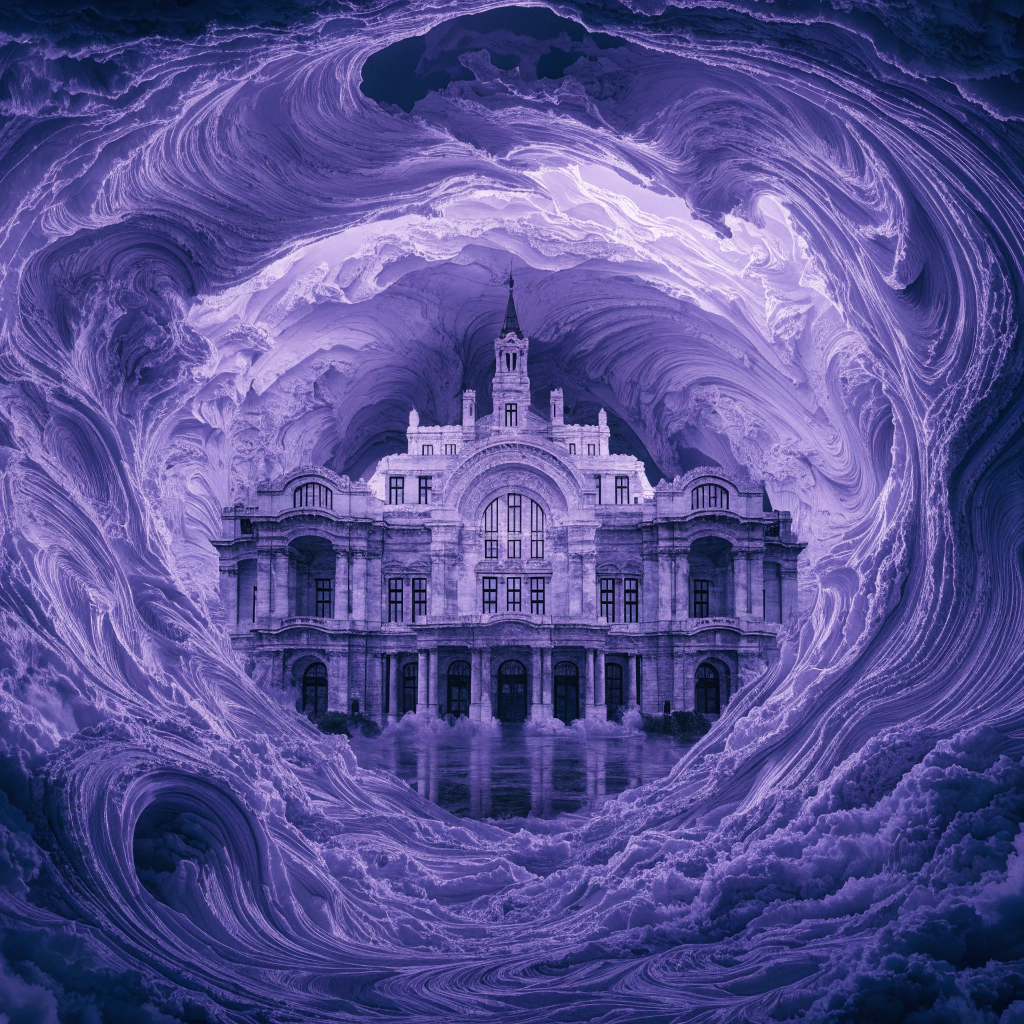
The Beautiful Palace of Art
The Palacio de Bellas Artes is a famous building. It is in the center of Mexico City. The building is very beautiful and big. It has a white roof and orange colors.
Many people visit this place every day. Inside, there are many famous paintings on the walls. You can also see music shows and dance shows. It is a special house for art.
The palace is very old. It is more than 100 years old. People from all over the world come to see it. It is the heart of the city.
文法スポットライト
パターン: Verb 'To Be' (Present Simple)
"It is in the center of Mexico City."
We use 'is' with singular subjects like 'it' or 'the building'. It helps us describe where something is or what it is like.
パターン: There are (Plural)
"Inside, there are many famous paintings on the walls."
We use 'there are' to say that more than one thing exists. We use it with plural nouns like 'paintings'.
理解度をチェック
10 問 · A1 初級 · 無料プレビュー 1回
この記事で学んだことをテストしよう。全問正解してXPを獲得!
Where is the Palacio de Bellas Artes?
問題の内訳
Where is the Palacio de Bellas Artes?
あなたの回答:
正解: In Mexico City
The building is very new.
あなたの回答:
正解: 間違い
What is a 'building'?
あなたの回答:
正解: A place with walls and a roof
The palace is very _____.
あなたの回答:
正解: old
The Beautiful Palace of Fine Arts
The Palacio de Bellas Artes is a very famous building in Mexico City. People call it the 'Cathedral of Art' because it is very beautiful and important. It is in the historic center of the city.
Construction started in 1904. President Porfirio Díaz wanted a grand opera house for a big celebration. However, the work stopped for many years because the ground was too soft. The heavy building started to sink into the earth. It was a difficult problem for the engineers.
Today, the palace is a museum and a theater. Inside, you can see amazing murals by famous artists like Diego Rivera. The outside is white marble, but the roof is colorful. It is more beautiful than many other buildings in the city. Thousands of tourists visit it every year because it is a symbol of Mexican culture.
文法スポットライト
パターン: Past Simple
"Construction started in 1904."
We use the past simple to talk about finished actions in the past. For regular verbs, we add '-ed' to the end of the base verb.
パターン: Comparatives
"It is more beautiful than many other buildings in the city."
We use comparatives to compare two things. For long adjectives like 'beautiful', we use 'more' before the adjective and 'than' after it.
理解度をチェック
11 問 · A2 初級 · 無料プレビュー 1回
この記事で学んだことをテストしよう。全問正解してXPを獲得!
Where is the Palacio de Bellas Artes located?
問題の内訳
Where is the Palacio de Bellas Artes located?
あなたの回答:
正解: In the historic center of Mexico City
Construction of the building began in 1904.
あなたの回答:
正解: 正しい
What does the word 'symbol' mean in the text?
あなたの回答:
正解: A sign that represents an idea or culture
The heavy building started to _____ into the earth.
あなたの回答:
正解: sink
What can you see inside the palace?
あなたの回答:
正解: Amazing murals by famous artists
The Cathedral of Art: Discovering the Palacio de Bellas Artes
The Palacio de Bellas Artes, located in the historic center of Mexico City, is often called the 'Cathedral of Art in Mexico.' This magnificent building is one of the most famous landmarks in the country. It is used as both a museum and a performance venue, hosting some of the most important cultural events in Latin America.
Construction of the palace was started in 1904 by President Porfirio Díaz. He wanted to build a grand opera house to celebrate the centenary of Mexican Independence. However, the project was delayed for many years. One reason was the Mexican Revolution, but another major problem was the city's soft subsoil. Because the building is so heavy, it has actually sunk several meters into the ground since it was built!
The architecture of the palace is very unique. The exterior was designed in the Art Nouveau style, featuring white marble from Italy. In contrast, the interior has been finished in the Art Deco style, which was popular in the 1930s. Inside, visitors can see incredible murals painted by famous Mexican artists, such as Diego Rivera and David Alfaro Siqueiros. These paintings show important moments in Mexican history and society.
Today, the Palacio de Bellas Artes has become a symbol of national pride. It hosts the National Museum of Architecture and a theater where the famous 'Ballet Folklórico de México' performs. Even if you do not go inside for a show, the golden roof and beautiful sculptures make it a place that every traveler should visit. It is truly a masterpiece that connects the history of the past with the art of today.
文法スポットライト
パターン: Passive Voice
"Construction of the palace was started in 1904 by President Porfirio Díaz."
The passive voice is used here because the action (starting construction) is more important than the person who did it. It is formed using 'was/were' + the past participle.
パターン: Relative Clauses
"The interior has been finished in the Art Deco style, which was popular in the 1930s."
A relative clause starting with 'which' provides extra information about the noun 'Art Deco style.' This helps combine two ideas into one complex sentence.
理解度をチェック
11 問 · B1 中級 · 無料プレビュー 1回
この記事で学んだことをテストしよう。全問正解してXPを獲得!
Why did the construction of the palace take so long to finish?
問題の内訳
Why did the construction of the palace take so long to finish?
あなたの回答:
正解: The Mexican Revolution and soft ground caused delays.
The building has stayed at exactly the same height since it was built.
あなたの回答:
正解: 間違い
What is the meaning of 'murals'?
あなたの回答:
正解: Paintings created on walls
The palace is often called the _____ of Art in Mexico.
あなたの回答:
正解: Cathedral
What style is used for the interior of the building?
あなたの回答:
正解: Art Deco
The Cathedral of Art: Exploring the Palacio de Bellas Artes
The Palacio de Bellas Artes stands as the undisputed crown jewel of Mexico City’s historic center. Often referred to as the 'Cathedral of Art in Mexico,' this magnificent structure serves both as a world-class museum and a prestigious performance venue. Its construction was initiated in 1904 under the presidency of Porfirio Díaz, who had envisioned a grand opera house to celebrate the centenary of Mexican Independence. However, the project was plagued by numerous delays, including the city's notoriously soft subsoil, which caused the building to sink gradually over time.
Architecturally, the palace represents a fascinating fusion of styles. While the exterior boasts a white marble facade in the Art Nouveau and Neoclassical traditions, the interior is a striking example of Art Deco design. This aesthetic shift occurred because construction was halted during the Mexican Revolution and only resumed years later under a different architectural vision. Consequently, visitors are treated to a unique transition as they move from the ornate, floral patterns of the exterior to the geometric, streamlined elegance of the halls inside.
Beyond its structural beauty, the Palacio de Bellas Artes is renowned for housing some of the most significant murals in the world. Masterpieces by Diego Rivera, David Alfaro Siqueiros, and José Clemente Orozco adorn the walls, offering a powerful visual narrative of Mexican history and social struggle. These murals are not merely decorative; they represent a critical analysis of the nation's identity and its revolutionary spirit. If the building had been completed on schedule, it might have lacked these iconic artworks, which were born from the very social changes that delayed its construction.
Today, the palace continues to be a vibrant center for the arts, hosting the National Symphony Orchestra and the Ballet Folklórico de México. Despite the ongoing challenges posed by the unstable ground, the building remains a testament to Mexico's enduring commitment to cultural excellence. For any traveler or student of art history, the Palacio de Bellas Artes is an essential destination that encapsulates the complex, multifaceted history of the Mexican people.
文法スポットライト
パターン: Past Perfect Tense
"Porfirio Díaz, who had envisioned a grand opera house to celebrate the centenary of Mexican Independence."
The past perfect (had + past participle) is used here to show that the vision occurred before the start of construction in 1904.
パターン: Third Conditional
"If the building had been completed on schedule, it might have lacked these iconic artworks."
This structure (If + past perfect, might have + past participle) describes a hypothetical situation in the past and its imaginary result.
パターン: Passive Voice
"Its construction was initiated in 1904 under the presidency of Porfirio Díaz."
The passive voice is used to emphasize the action (the construction) rather than the person who performed it, maintaining a formal academic tone.
理解度をチェック
11 問 · B2 中上級 · 無料プレビュー 1回
この記事で学んだことをテストしよう。全問正解してXPを獲得!
What primary geological issue affected the construction of the palace?
問題の内訳
What primary geological issue affected the construction of the palace?
あなたの回答:
正解: The city's notoriously soft subsoil
The interior and exterior of the palace are designed in the same architectural style.
あなたの回答:
正解: 間違い
Which word describes the principal front of a building?
あなたの回答:
正解: Facade
The Palacio de Bellas Artes stands as the undisputed crown _____ of Mexico City.
あなたの回答:
正解: jewel
Why did the architectural style change from Art Nouveau to Art Deco?
あなたの回答:
正解: Construction was halted by the Mexican Revolution
The Palacio de Bellas Artes: A Monumental Confluence of Aesthetics and History
Seldom has a single edifice managed to encapsulate the tumultuous trajectory of a nation’s history as poignantly as the Palacio de Bellas Artes in Mexico City. Often hailed as the 'Cathedral of Art,' this magnificent structure is not merely a performance venue but a living testament to the stylistic evolution and political transitions of early 20th-century Mexico. Its construction, which commenced in 1904 under the ambitious presidency of Porfirio Díaz, was intended to be the crowning achievement of the centenary celebrations of Mexican Independence. However, what began as a neoclassical dream soon faced a series of arduous complications that would delay its completion for three decades.
It was the soft subsoil of the city that presented the first major technical conundrum. The immense weight of the white Italian Carrara marble caused the building to sink gradually into the marshy ground, a process that continues to this day. Furthermore, the outbreak of the Mexican Revolution in 1910 brought the project to a grinding halt. Not until the 1930s, under the guidance of architect Federico Mariscal, did the project regain its momentum. This prolonged hiatus resulted in a fascinating architectural juxtaposition: while the exterior remains a bastion of Neoclassical and Art Nouveau opulence, the interior is a masterclass in the sleek, geometric lines of Art Deco. This stylistic shift reflects the burgeoning modern identity of a post-revolutionary Mexico.
The interior’s idiosyncratic design is further elevated by the presence of world-renowned murals. The integration of indigenous motifs and socialist realism into a European framework serves as a profound narrative of the Mexican struggle. Here, the works of Diego Rivera, David Alfaro Siqueiros, and José Clemente Orozco adorn the walls, challenging viewers with their bold critiques of industrialization and class disparity. One cannot overlook the 'Man at the Crossroads' by Rivera, a recreation of his controversial work originally intended for the Rockefeller Center. The presence of these murals ensures that the building functions as a critical discourse on national identity rather than just a passive museum.
Perhaps the most ethereal feature of the palace is the crystalline stage curtain in the main theater. Composed of nearly a million pieces of iridescent Tiffany glass, the curtain depicts the twin volcanoes of Popocatépetl and Iztaccíhuatl. Such meticulous craftsmanship underscores the dedication to artistic excellence that the palace represents. Today, the building serves as the primary home for the Ballet Folklórico de México and the National Symphony Orchestra, maintaining its status as the cultural heart of the metropolis. The culmination of architectural grandeur and historical weight makes the Palacio de Bellas Artes an indispensable study in the resilience of cultural heritage. Despite the vestiges of its colonial-inspired origins, the palace stands as a definitive symbol of modern Mexican pride.
文法スポットライト
パターン: Negative Inversion
"Seldom has a single edifice managed to encapsulate the tumultuous trajectory of a nation’s history as poignantly as the Palacio de Bellas Artes."
This structure uses a negative or restrictive adverb (Seldom) at the start of the sentence, followed by the auxiliary verb (has) before the subject. It is used in formal English to create emphasis.
パターン: Cleft Sentences
"It was the soft subsoil of the city that presented the first major technical conundrum."
A cleft sentence focuses on a specific piece of information by starting with 'It + be + [focus] + that/who'. Here, it emphasizes the 'soft subsoil' as the primary cause of the problem.
パターン: Nominalization
"The integration of indigenous motifs and socialist realism into a European framework serves as a profound narrative of the Mexican struggle."
Nominalization involves turning verbs or adjectives into nouns (e.g., 'integration' from integrate). This makes the writing more academic and allows for more complex ideas to be packed into a single sentence.
理解度をチェック
12 問 · C1 上級 · 無料プレビュー 1回
この記事で学んだことをテストしよう。全問正解してXPを獲得!
What primary factor caused the initial delay in the construction of the palace?
問題の内訳
What primary factor caused the initial delay in the construction of the palace?
あなたの回答:
正解: The unstable subsoil and the Mexican Revolution
The interior and exterior of the Palacio de Bellas Artes share the same architectural style.
あなたの回答:
正解: 間違い
Which word is a synonym for 'edifice' in the context of the article?
あなたの回答:
正解: Structure
The stage curtain in the main theater is made of iridescent _____ glass.
あなたの回答:
正解: Tiffany
According to the text, what does the presence of murals by Siqueiros and Rivera transform the building into?
あなたの回答:
正解: A critical discourse on national identity
The building is still currently used for performances by the National Symphony Orchestra.
あなたの回答:
正解: 正しい
メキシコ芸術の殿堂:ベジャス・アルテス宮殿の壮麗なる歴史と建築美
メキシコシティの歴史地区において、疑いなくその中心を飾る至宝、それがベジャス・アルテス宮殿、すなわち国立芸術宮殿であります。しばしば「メキシコの芸術の聖堂」と称されるこの壮麗な建築物は、単なるパフォーマンス会場に留まらず、広範な芸術作品を収蔵する博物館としての役割も果たしております。その威容は、メキシコ文化の多様性と深遠さを象徴するかのようです。
この宮殿の建設は、1904年、当時のポルフィリオ・ディアス大統領の統治下において着手されました。彼の脳裏にあったのは、メキシコ独立百周年を祝うにふさわしい、壮大なオペラハウスを建造するという構想であり、国家の威信を内外に示すべく、当時の最先端技術と芸術様式が結集されることとなりました。設計はイタリア人建築家アダモ・ボアリに委ねられ、アール・ヌーヴォー様式と新古典主義が融合した、他に類を見ない意匠が凝らされるはずでした。まさに、メキシコが近代国家として世界にその存在感を示すための国家的プロジェクトであったと言えましょう。
しかしながら、この国家的事業は着工当初から数多の困難に直面することとなります。最も顕著なのが、メキシコシティ特有の軟弱地盤がもたらした建築上の桎梏でした。宮殿の重厚な構造が軟弱な地盤に負荷をかけ、建物が徐々に沈下するという問題が露呈したのです。これに加え、1910年に勃発したメキシコ革命は、建設作業の継続を不可能ならしめ、プロジェクトは長期にわたる中断を余儀なくされました。革命の混沌が終息した後も、資金難や政情不安といった複合的な要因が重なり、竣工は大幅に遅延しました。
最終的に宮殿が完成をみたのは、着工から実に30年近くが経過した1934年のことで、初期の設計者ボアリは既にこの世を去っていました。完成時の建築様式は、初期のアール・ヌーヴォーにアール・デコ様式が加味され、特に内装にはその影響が色濃く反映されています。フェデリコ・マリスカルが後を引き継ぎ、内外装の細部に至るまで、メキシコ芸術の精髄を凝縮したかのような仕上がりとなりました。内部には、ディエゴ・リベラやホセ・クレメンテ・オロスコといったメキシコを代表する壁画家たちの壮大なフレスコ画が飾られ、それ自体が芸術作品として、訪れる者を圧倒します。これらの壁画は、メキシコの歴史、文化、社会的なテーマを雄弁に物語っており、宮殿の芸術的価値を一層高めています。
今日、ベジャス・アルテス宮殿は、その歴史的、建築的価値のみならず、現代メキシコの文化活動の拠点として、不可欠な存在であり続けています。オペラ、バレエ、コンサートといった舞台芸術はもちろんのこと、国立建築博物館や国立美術宮殿博物館を擁し、常設展や企画展を通じて、国内外の多様な芸術表現を社会に提示しています。往時のポルフィリオ・ディアス大統領が夢見た「壮大なオペラハウス」という枠を超え、メキシコ文化の粋を集め、未来へと継承する「芸術の殿堂」として、この宮殿は今後も燦然と輝き続けることでしょう。メキシコの歴史を雄弁に物語り、その文化的アイデンティティを形成する上で、ベジャス・アルテス宮殿が果たしてきた役割は、計り知れないものがあります。
文法スポットライト
パターン: 〜に留まらず (にとどまらず)
"この壮麗な建築物は、単なるパフォーマンス会場に留まらず、広範な芸術作品を収蔵する博物館としての役割も果たしております。"
「〜に留まらず」は、「〜だけでなく、さらに広い範囲に及ぶ」という意味を表す表現です。ある事柄が特定の範囲や状態に限定されず、それ以上の広がりや発展があることを強調する際に用いられます。動詞の連体形、名詞、形容詞などに接続します。
パターン: 〜ならしめ (ならしめる)
"1910年に勃発したメキシコ革命は、建設作業の継続を不可能ならしめ、プロジェクトは長期にわたる中断を余儀なくされました。"
「〜ならしめる」は、「〜の状態にする」「〜させる」という意味の文語的な表現で、特に「可能ならしめる(可能にする)」「不可能ならしめる(不可能にする)」といった形で使われます。現代日本語ではあまり日常的に使われませんが、C2レベルの文章では、ある状況や出来事が、別の事柄に大きな影響を与え、その状態を決定づけたことを表現する際に効果的です。
パターン: 〜に鑑みるに (にかんがみるに)
"メキシコシティ特有の軟弱地盤がもたらした建築上の桎梏を鑑みるに、当時の技術でこれほどの規模の建物を建造すること自体、途方もない挑戦であったと言えましょう。"
「〜に鑑みるに」は、「〜を考慮すると」「〜に照らして判断すると」といった意味で、ある事実や状況を深く考察した結果として、何らかの結論や意見を述べる際に使われる表現です。非常にフォーマルで、論理的な思考や客観的な分析を示す文脈で用いられます。名詞に接続します。
理解度をチェック
12 問 · C2 マスター · 無料プレビュー 1回
この記事で学んだことをテストしよう。全問正解してXPを獲得!
ベジャス・アルテス宮殿の建設が当初の予定より大幅に遅延した主な理由として、記事で言及されているのはどれですか?
問題の内訳
ベジャス・アルテス宮殿の建設が当初の予定より大幅に遅延した主な理由として、記事で言及されているのはどれですか?
あなたの回答:
正解: メキシコシティの軟弱地盤とメキシコ革命
ベジャス・アルテス宮殿は、完成当初から現在に至るまで、オペラハウスとしての機能のみを担っている。
あなたの回答:
正解: 間違い
「桎梏」という言葉が記事中で意味する最も適切なものは何ですか?
あなたの回答:
正解: 自由を束縛するもの
ポルフィリオ・ディアス大統領が宮殿建設を構想した主な動機は、メキシコ独立の_____を祝うためであった。
あなたの回答:
正解: 百周年
記事によれば、ベジャス・アルテス宮殿の内部を飾る主要な芸術作品は何ですか?
あなたの回答:
正解: 壮大なフレスコ画
ベジャス・アルテス宮殿は、当初イタリア人建築家アダモ・ボアリによって設計された。
あなたの回答:
正解: 正しい

