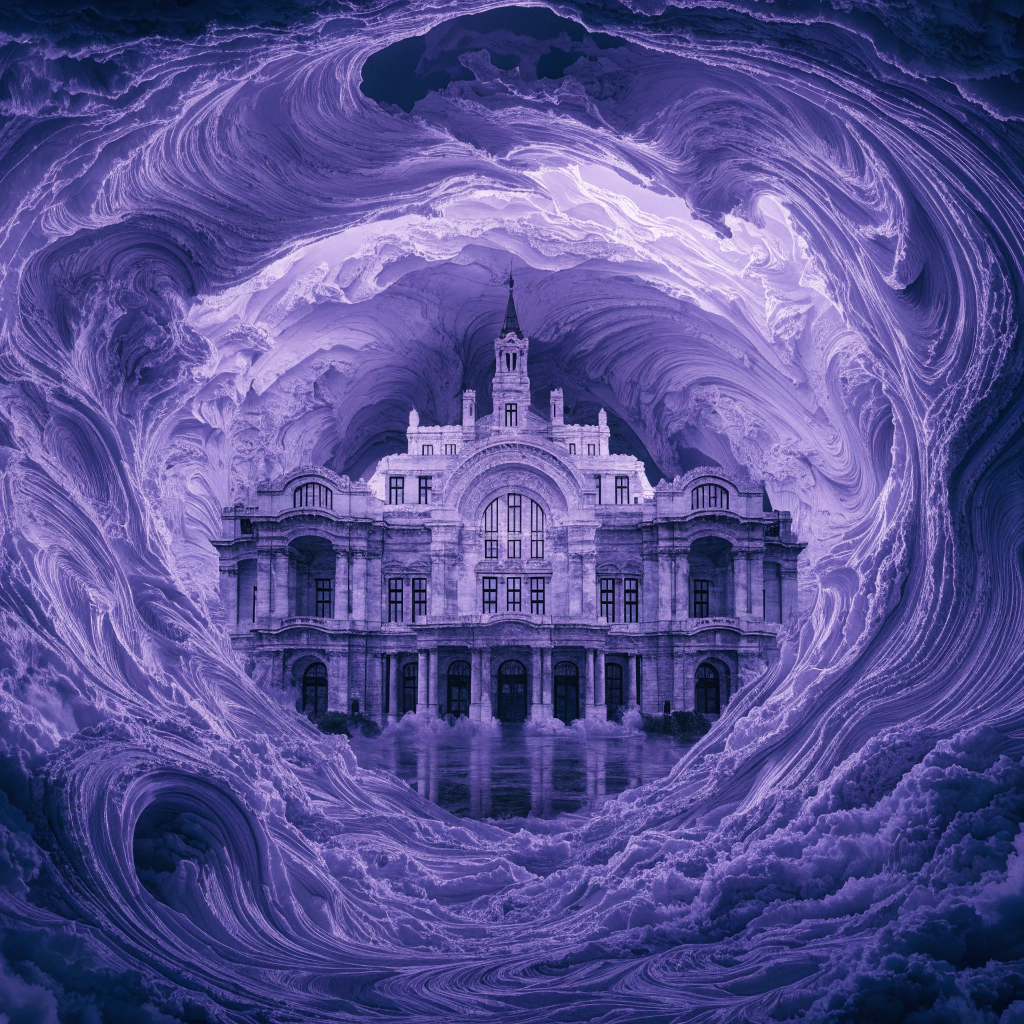
The Beautiful Palace of Art
The Palacio de Bellas Artes is a famous building. It is in the center of Mexico City. The building is very beautiful and big. It has a white roof and orange colors.
Many people visit this place every day. Inside, there are many famous paintings on the walls. You can also see music shows and dance shows. It is a special house for art.
The palace is very old. It is more than 100 years old. People from all over the world come to see it. It is the heart of the city.
Grammar Spotlight
Pattern: Verb 'To Be' (Present Simple)
"It is in the center of Mexico City."
We use 'is' with singular subjects like 'it' or 'the building'. It helps us describe where something is or what it is like.
Pattern: There are (Plural)
"Inside, there are many famous paintings on the walls."
We use 'there are' to say that more than one thing exists. We use it with plural nouns like 'paintings'.
Test Your Understanding
10 questions · A1 Beginner · 1 free preview
Test what you learned from this article. Answer all questions to earn XP!
Where is the Palacio de Bellas Artes?
Want to finish the quiz?
9 more questions are waiting for you. Sign up free to unlock the full quiz and earn XP!
Sign Up FreeAlready have an account? Sign In
Question Breakdown
Where is the Palacio de Bellas Artes?
Your answer:
Correct answer: In Mexico City
The building is very new.
Your answer:
Correct answer: False
What is a 'building'?
Your answer:
Correct answer: A place with walls and a roof
The palace is very _____.
Your answer:
Correct answer: old
The Beautiful Palace of Fine Arts
The Palacio de Bellas Artes is a very famous building in Mexico City. People call it the 'Cathedral of Art' because it is very beautiful and important. It is in the historic center of the city.
Construction started in 1904. President Porfirio Díaz wanted a grand opera house for a big celebration. However, the work stopped for many years because the ground was too soft. The heavy building started to sink into the earth. It was a difficult problem for the engineers.
Today, the palace is a museum and a theater. Inside, you can see amazing murals by famous artists like Diego Rivera. The outside is white marble, but the roof is colorful. It is more beautiful than many other buildings in the city. Thousands of tourists visit it every year because it is a symbol of Mexican culture.
Grammar Spotlight
Pattern: Past Simple
"Construction started in 1904."
We use the past simple to talk about finished actions in the past. For regular verbs, we add '-ed' to the end of the base verb.
Pattern: Comparatives
"It is more beautiful than many other buildings in the city."
We use comparatives to compare two things. For long adjectives like 'beautiful', we use 'more' before the adjective and 'than' after it.
Test Your Understanding
11 questions · A2 Elementary · 1 free preview
Test what you learned from this article. Answer all questions to earn XP!
Where is the Palacio de Bellas Artes located?
Want to finish the quiz?
10 more questions are waiting for you. Sign up free to unlock the full quiz and earn XP!
Sign Up FreeAlready have an account? Sign In
Question Breakdown
Where is the Palacio de Bellas Artes located?
Your answer:
Correct answer: In the historic center of Mexico City
Construction of the building began in 1904.
Your answer:
Correct answer: True
What does the word 'symbol' mean in the text?
Your answer:
Correct answer: A sign that represents an idea or culture
The heavy building started to _____ into the earth.
Your answer:
Correct answer: sink
What can you see inside the palace?
Your answer:
Correct answer: Amazing murals by famous artists
The Cathedral of Art: Discovering the Palacio de Bellas Artes
The Palacio de Bellas Artes, located in the historic center of Mexico City, is often called the 'Cathedral of Art in Mexico.' This magnificent building is one of the most famous landmarks in the country. It is used as both a museum and a performance venue, hosting some of the most important cultural events in Latin America.
Construction of the palace was started in 1904 by President Porfirio Díaz. He wanted to build a grand opera house to celebrate the centenary of Mexican Independence. However, the project was delayed for many years. One reason was the Mexican Revolution, but another major problem was the city's soft subsoil. Because the building is so heavy, it has actually sunk several meters into the ground since it was built!
The architecture of the palace is very unique. The exterior was designed in the Art Nouveau style, featuring white marble from Italy. In contrast, the interior has been finished in the Art Deco style, which was popular in the 1930s. Inside, visitors can see incredible murals painted by famous Mexican artists, such as Diego Rivera and David Alfaro Siqueiros. These paintings show important moments in Mexican history and society.
Today, the Palacio de Bellas Artes has become a symbol of national pride. It hosts the National Museum of Architecture and a theater where the famous 'Ballet Folklórico de México' performs. Even if you do not go inside for a show, the golden roof and beautiful sculptures make it a place that every traveler should visit. It is truly a masterpiece that connects the history of the past with the art of today.
Grammar Spotlight
Pattern: Passive Voice
"Construction of the palace was started in 1904 by President Porfirio Díaz."
The passive voice is used here because the action (starting construction) is more important than the person who did it. It is formed using 'was/were' + the past participle.
Pattern: Relative Clauses
"The interior has been finished in the Art Deco style, which was popular in the 1930s."
A relative clause starting with 'which' provides extra information about the noun 'Art Deco style.' This helps combine two ideas into one complex sentence.
Test Your Understanding
11 questions · B1 Intermediate · 1 free preview
Test what you learned from this article. Answer all questions to earn XP!
Why did the construction of the palace take so long to finish?
Want to finish the quiz?
10 more questions are waiting for you. Sign up free to unlock the full quiz and earn XP!
Sign Up FreeAlready have an account? Sign In
Question Breakdown
Why did the construction of the palace take so long to finish?
Your answer:
Correct answer: The Mexican Revolution and soft ground caused delays.
The building has stayed at exactly the same height since it was built.
Your answer:
Correct answer: False
What is the meaning of 'murals'?
Your answer:
Correct answer: Paintings created on walls
The palace is often called the _____ of Art in Mexico.
Your answer:
Correct answer: Cathedral
What style is used for the interior of the building?
Your answer:
Correct answer: Art Deco
The Cathedral of Art: Exploring the Palacio de Bellas Artes
The Palacio de Bellas Artes stands as the undisputed crown jewel of Mexico City’s historic center. Often referred to as the 'Cathedral of Art in Mexico,' this magnificent structure serves both as a world-class museum and a prestigious performance venue. Its construction was initiated in 1904 under the presidency of Porfirio Díaz, who had envisioned a grand opera house to celebrate the centenary of Mexican Independence. However, the project was plagued by numerous delays, including the city's notoriously soft subsoil, which caused the building to sink gradually over time.
Architecturally, the palace represents a fascinating fusion of styles. While the exterior boasts a white marble facade in the Art Nouveau and Neoclassical traditions, the interior is a striking example of Art Deco design. This aesthetic shift occurred because construction was halted during the Mexican Revolution and only resumed years later under a different architectural vision. Consequently, visitors are treated to a unique transition as they move from the ornate, floral patterns of the exterior to the geometric, streamlined elegance of the halls inside.
Beyond its structural beauty, the Palacio de Bellas Artes is renowned for housing some of the most significant murals in the world. Masterpieces by Diego Rivera, David Alfaro Siqueiros, and José Clemente Orozco adorn the walls, offering a powerful visual narrative of Mexican history and social struggle. These murals are not merely decorative; they represent a critical analysis of the nation's identity and its revolutionary spirit. If the building had been completed on schedule, it might have lacked these iconic artworks, which were born from the very social changes that delayed its construction.
Today, the palace continues to be a vibrant center for the arts, hosting the National Symphony Orchestra and the Ballet Folklórico de México. Despite the ongoing challenges posed by the unstable ground, the building remains a testament to Mexico's enduring commitment to cultural excellence. For any traveler or student of art history, the Palacio de Bellas Artes is an essential destination that encapsulates the complex, multifaceted history of the Mexican people.
Grammar Spotlight
Pattern: Past Perfect Tense
"Porfirio Díaz, who had envisioned a grand opera house to celebrate the centenary of Mexican Independence."
The past perfect (had + past participle) is used here to show that the vision occurred before the start of construction in 1904.
Pattern: Third Conditional
"If the building had been completed on schedule, it might have lacked these iconic artworks."
This structure (If + past perfect, might have + past participle) describes a hypothetical situation in the past and its imaginary result.
Pattern: Passive Voice
"Its construction was initiated in 1904 under the presidency of Porfirio Díaz."
The passive voice is used to emphasize the action (the construction) rather than the person who performed it, maintaining a formal academic tone.
Test Your Understanding
11 questions · B2 Upper Intermediate · 1 free preview
Test what you learned from this article. Answer all questions to earn XP!
What primary geological issue affected the construction of the palace?
Want to finish the quiz?
10 more questions are waiting for you. Sign up free to unlock the full quiz and earn XP!
Sign Up FreeAlready have an account? Sign In
Question Breakdown
What primary geological issue affected the construction of the palace?
Your answer:
Correct answer: The city's notoriously soft subsoil
The interior and exterior of the palace are designed in the same architectural style.
Your answer:
Correct answer: False
Which word describes the principal front of a building?
Your answer:
Correct answer: Facade
The Palacio de Bellas Artes stands as the undisputed crown _____ of Mexico City.
Your answer:
Correct answer: jewel
Why did the architectural style change from Art Nouveau to Art Deco?
Your answer:
Correct answer: Construction was halted by the Mexican Revolution
The Palacio de Bellas Artes: A Monumental Confluence of Aesthetics and History
Seldom has a single edifice managed to encapsulate the tumultuous trajectory of a nation’s history as poignantly as the Palacio de Bellas Artes in Mexico City. Often hailed as the 'Cathedral of Art,' this magnificent structure is not merely a performance venue but a living testament to the stylistic evolution and political transitions of early 20th-century Mexico. Its construction, which commenced in 1904 under the ambitious presidency of Porfirio Díaz, was intended to be the crowning achievement of the centenary celebrations of Mexican Independence. However, what began as a neoclassical dream soon faced a series of arduous complications that would delay its completion for three decades.
It was the soft subsoil of the city that presented the first major technical conundrum. The immense weight of the white Italian Carrara marble caused the building to sink gradually into the marshy ground, a process that continues to this day. Furthermore, the outbreak of the Mexican Revolution in 1910 brought the project to a grinding halt. Not until the 1930s, under the guidance of architect Federico Mariscal, did the project regain its momentum. This prolonged hiatus resulted in a fascinating architectural juxtaposition: while the exterior remains a bastion of Neoclassical and Art Nouveau opulence, the interior is a masterclass in the sleek, geometric lines of Art Deco. This stylistic shift reflects the burgeoning modern identity of a post-revolutionary Mexico.
The interior’s idiosyncratic design is further elevated by the presence of world-renowned murals. The integration of indigenous motifs and socialist realism into a European framework serves as a profound narrative of the Mexican struggle. Here, the works of Diego Rivera, David Alfaro Siqueiros, and José Clemente Orozco adorn the walls, challenging viewers with their bold critiques of industrialization and class disparity. One cannot overlook the 'Man at the Crossroads' by Rivera, a recreation of his controversial work originally intended for the Rockefeller Center. The presence of these murals ensures that the building functions as a critical discourse on national identity rather than just a passive museum.
Perhaps the most ethereal feature of the palace is the crystalline stage curtain in the main theater. Composed of nearly a million pieces of iridescent Tiffany glass, the curtain depicts the twin volcanoes of Popocatépetl and Iztaccíhuatl. Such meticulous craftsmanship underscores the dedication to artistic excellence that the palace represents. Today, the building serves as the primary home for the Ballet Folklórico de México and the National Symphony Orchestra, maintaining its status as the cultural heart of the metropolis. The culmination of architectural grandeur and historical weight makes the Palacio de Bellas Artes an indispensable study in the resilience of cultural heritage. Despite the vestiges of its colonial-inspired origins, the palace stands as a definitive symbol of modern Mexican pride.
Grammar Spotlight
Pattern: Negative Inversion
"Seldom has a single edifice managed to encapsulate the tumultuous trajectory of a nation’s history as poignantly as the Palacio de Bellas Artes."
This structure uses a negative or restrictive adverb (Seldom) at the start of the sentence, followed by the auxiliary verb (has) before the subject. It is used in formal English to create emphasis.
Pattern: Cleft Sentences
"It was the soft subsoil of the city that presented the first major technical conundrum."
A cleft sentence focuses on a specific piece of information by starting with 'It + be + [focus] + that/who'. Here, it emphasizes the 'soft subsoil' as the primary cause of the problem.
Pattern: Nominalization
"The integration of indigenous motifs and socialist realism into a European framework serves as a profound narrative of the Mexican struggle."
Nominalization involves turning verbs or adjectives into nouns (e.g., 'integration' from integrate). This makes the writing more academic and allows for more complex ideas to be packed into a single sentence.
Test Your Understanding
12 questions · C1 Advanced · 1 free preview
Test what you learned from this article. Answer all questions to earn XP!
What primary factor caused the initial delay in the construction of the palace?
Want to finish the quiz?
11 more questions are waiting for you. Sign up free to unlock the full quiz and earn XP!
Sign Up FreeAlready have an account? Sign In
Question Breakdown
What primary factor caused the initial delay in the construction of the palace?
Your answer:
Correct answer: The unstable subsoil and the Mexican Revolution
The interior and exterior of the Palacio de Bellas Artes share the same architectural style.
Your answer:
Correct answer: False
Which word is a synonym for 'edifice' in the context of the article?
Your answer:
Correct answer: Structure
The stage curtain in the main theater is made of iridescent _____ glass.
Your answer:
Correct answer: Tiffany
According to the text, what does the presence of murals by Siqueiros and Rivera transform the building into?
Your answer:
Correct answer: A critical discourse on national identity
The building is still currently used for performances by the National Symphony Orchestra.
Your answer:
Correct answer: True
The Palacio de Bellas Artes: A Palimpsest of Porfirian Ambition and Post-Revolutionary Identity
Standing as a quintessential synecdoche for the multifaceted history of Mexico City, the Palacio de Bellas Artes is far more than a mere repository for high culture; it is an architectural palimpsest that reveals the ideological shifts of a nation in flux. Commissioned at the twilight of the 19th century under the auspices of President Porfirio Díaz, the structure was initially conceived by Italian architect Adamo Boari as a monument to European-inflected Neoclassical and Art Nouveau sensibilities. Seldom has a structure so vividly encapsulated the fractured identity of a nation as the Palacio de Bellas Artes. However, the burgeoning Mexican Revolution of 1910 truncated its progress, leaving the building as a skeletal husk for nearly two decades. This interregnum allowed the lacustrine subsoil—the soft, clay-rich earth of the former Lake Texcoco—to exert its influence, causing the massive marble edifice to sink incrementally into the ground, a physical manifestation of the gravity of the socio-political upheaval surrounding it.
When construction resumed in the 1930s under the stewardship of Federico Mariscal, the aesthetic zeitgeist had shifted irrevocably. The interior, consequently, stands in stark juxtaposition to the ornate exterior, embracing the sleek, geometric lines of Art Deco. It could be argued that this stylistic schism serves as a visual metaphor for the transition from Porfirian Eurocentrism to a burgeoning sense of revolutionary nationalism. Lest the structure be perceived as a mere relic of Porfirian Eurocentrism, the interior underwent a radical transformation. This era saw the integration of monumental murals by the 'Big Three'—Diego Rivera, David Alfaro Siqueiros, and José Clemente Orozco. These works, such as Rivera’s 'Man, Controller of the Universe,' reclaimed the space for the proletariat, transforming a venue once intended for the elite into a pedagogical tool for the masses. The murals represent a move toward indigenismo, a celebration of Mexico’s indigenous roots and its struggle against colonial and capitalist hegemony.
Were the subsoil not so treacherous, the building might have been completed decades earlier, yet its delays allowed for a synthesis of identities that a swifter completion would have precluded. Today, the palace houses the world-renowned Tiffany glass curtain, composed of nearly a million pieces of colored glass, depicting the Valley of Mexico and its twin volcanoes. This curtain, while a feat of engineering and artistry, remains a static witness to the ephemeral performances that grace its stage. To analyze the Palacio is to engage with the ossified ambitions of a bygone era, while simultaneously acknowledging its role as a living, breathing epicenter of Mexican creative expression. The grandiosity of its Carrara marble facade may suggest a static permanence, but the building remains a site of constant negotiation between the ghosts of the past and the vibrant, often discordant, realities of contemporary Mexican life. It stands as a testament to the fact that national identity is never a finished product, but a continuous process of layering, revising, and reclaiming.
Grammar Spotlight
Pattern: Inversion with Negative Adverbials
"Seldom has a structure so vividly encapsulated the fractured identity of a nation as the Palacio de Bellas Artes."
When using negative or restrictive adverbials like 'seldom', 'never', or 'hardly' at the beginning of a sentence for emphasis, the auxiliary verb is placed before the subject.
Pattern: Negative Purpose Clause with 'Lest'
"Lest the structure be perceived as a mere relic of Porfirian Eurocentrism, the interior underwent a radical transformation."
'Lest' is a formal conjunction meaning 'to avoid the risk of'. It is followed by the subjunctive mood (base form of the verb) or 'should'.
Pattern: Inverted Conditional (Subjunctive)
"Were the subsoil not so treacherous, the building might have been completed decades earlier."
In formal English, 'if' can be omitted in conditional sentences by inverting the subject and the auxiliary verb (were/had/should). This expresses a hypothetical or counterfactual situation.
Test Your Understanding
12 questions · C2 Mastery · 1 free preview
Test what you learned from this article. Answer all questions to earn XP!
What does the author suggest by calling the building a 'palimpsest'?
Want to finish the quiz?
11 more questions are waiting for you. Sign up free to unlock the full quiz and earn XP!
Sign Up FreeAlready have an account? Sign In
Question Breakdown
What does the author suggest by calling the building a 'palimpsest'?
Your answer:
Correct answer: It contains layers of history that reflect changing national ideologies.
The interior of the building maintains the same Neoclassical style as the exterior.
Your answer:
Correct answer: False
What is the meaning of 'lacustrine' in the context of the article?
Your answer:
Correct answer: Relating to a lake or lake-bed.
The long delay in construction caused by the Revolution is referred to as an _____, allowing the subsoil to affect the structure.
Your answer:
Correct answer: interregnum
How did the murals change the purpose of the Palacio?
Your answer:
Correct answer: They turned an elite space into an educational tool for the general public.
The author argues that the building's identity is static and unchanging due to its marble facade.
Your answer:
Correct answer: False
