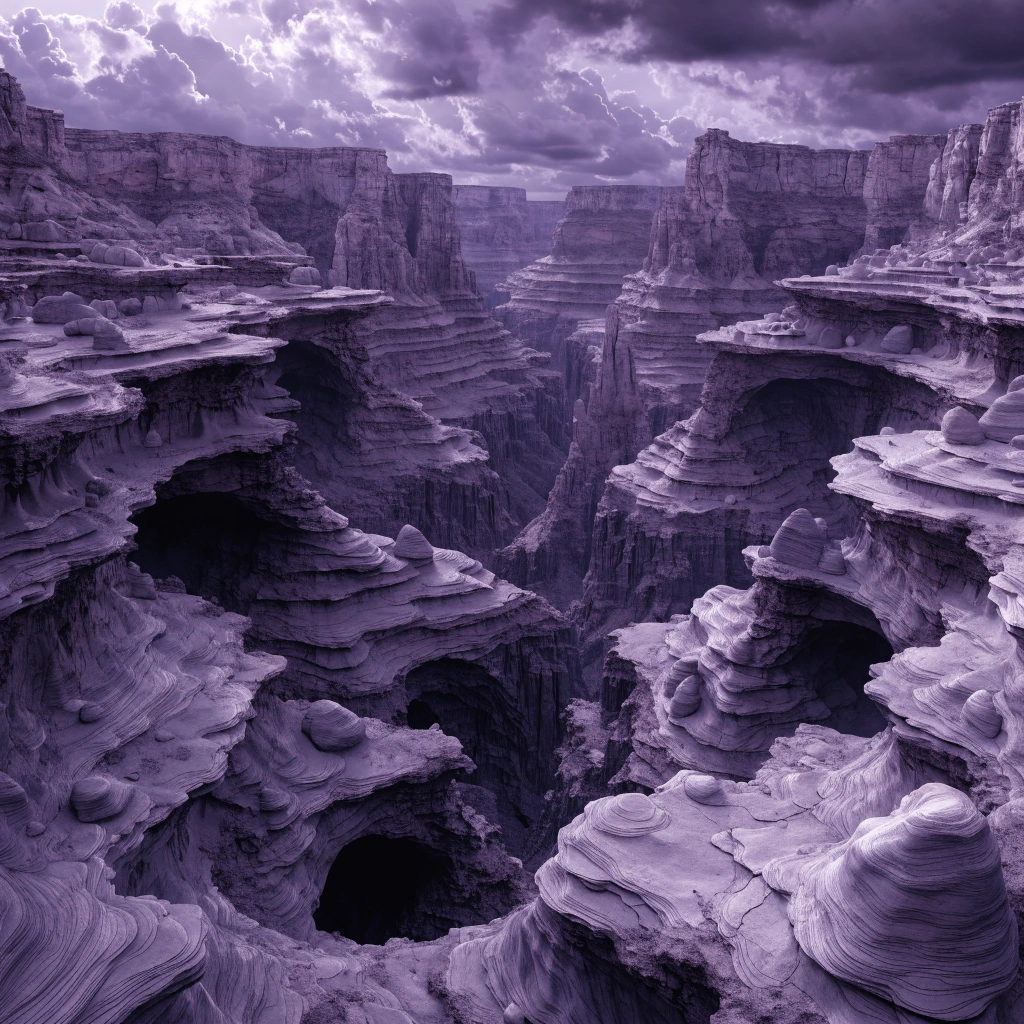
The Big Copper Canyon
Copper Canyon is in Mexico. It is in the mountains. This place is very big. It has six small canyons together. It is bigger and deeper than the Grand Canyon in the USA.
The walls of the canyon are green. The name is Copper Canyon because the walls look like copper. Many people visit this place every year. They take a famous train. The train goes through the high mountains.
The canyon is very beautiful. You can see many green trees and colorful birds. It is a great place for a holiday.
Grammatik-Spotlight
Muster: Present Simple 'to be'
"Copper Canyon is in Mexico."
We use 'is' with singular subjects like names or 'it'. This pattern describes facts and locations.
Muster: Present Simple 'has'
"It has six small canyons together."
Use 'has' with the subject 'it' to show what something contains. It is the singular form of 'have'.
Teste dein Verständnis
10 Fragen · A1 Anfänger · 1 kostenlose Vorschau
Teste, was du aus diesem Artikel gelernt hast. Beantworte alle Fragen und sammle XP!
Where is Copper Canyon?
Möchtest du das Quiz beenden?
9 weitere Fragen warten auf dich. Registriere dich kostenlos, um das vollständige Quiz freizuschalten und XP zu sammeln!
Kostenlos registrierenHast du schon ein Konto? Anmelden
Gut gemacht!
Weiter üben!
Bereits abgeschlossen — keine zusätzlichen XP
Registriere dich, um XP zu verdienenFragenübersicht
Where is Copper Canyon?
Deine Antwort:
Richtige Antwort: In Mexico
Copper Canyon is smaller than the Grand Canyon.
Deine Antwort:
Richtige Antwort: Falsch
What is a 'train'?
Deine Antwort:
Richtige Antwort: A long vehicle on tracks
The walls of the canyon are _____.
Deine Antwort:
Richtige Antwort: green
Die Barrancas del Cobre: Mexikos großes Naturwunder
Im Nordwesten Mexikos liegt ein beeindruckendes Naturwunder: die Barrancas del Cobre. Viele Menschen kennen es als den "Copper Canyon". Es ist kein einzelner Canyon, sondern ein großes System von sechs Canyons. Zusammen sind sie viermal größer und auch viel tiefer als der berühmte Grand Canyon in den USA.
Der Name "Copper" kommt nicht vom Bergbau, wie manche vielleicht denken. Er kommt von der besonderen Farbe der Felsen. Die Wände der Canyons sind oft grünlich und kupferfarben. Diese einzigartige Farbe gab dem Ort seinen Namen.
Die Landschaft dort ist sehr wild und wunderschön. Sie ist ein Zuhause für viele Tiere und Pflanzen. Früher lebten hier auch indigene Völker. Heute besuchen viele Touristen diesen besonderen Ort, um die Natur zu erleben und die weiten Ausblicke zu genießen. Es ist ein unvergessliches Erlebnis.
Grammatik-Spotlight
Muster: Der Komparativ mit „als“
"Zusammen sind sie viermal größer und auch viel tiefer als der berühmte Grand Canyon in den USA."
Wir benutzen den Komparativ, um zwei Dinge zu vergleichen. Für die meisten Adjektive fügen wir ein '-er' an das Adjektiv an (z.B. 'groß' -> 'größer'). Das Wort 'als' kommt danach und leitet den Vergleich ein. Es bedeutet 'than'.
Muster: Das Präteritum (Vergangenheitsform)
"Der Name "Copper" kam nicht vom Bergbau, wie manche vielleicht denken."
Das Präteritum ist eine Zeitform für die Vergangenheit. Wir benutzen es oft in geschriebenen Texten oder wenn wir über Fakten aus der Vergangenheit sprechen. Viele Verben haben im Präteritum eine besondere Form, wie hier 'kam' (von 'kommen').
Teste dein Verständnis
11 Fragen · A2 Grundkenntnisse · 1 kostenlose Vorschau
Teste, was du aus diesem Artikel gelernt hast. Beantworte alle Fragen und sammle XP!
Wo liegen die Barrancas del Cobre?
Möchtest du das Quiz beenden?
10 weitere Fragen warten auf dich. Registriere dich kostenlos, um das vollständige Quiz freizuschalten und XP zu sammeln!
Kostenlos registrierenHast du schon ein Konto? Anmelden
Gut gemacht!
Weiter üben!
Bereits abgeschlossen — keine zusätzlichen XP
Registriere dich, um XP zu verdienenFragenübersicht
Wo liegen die Barrancas del Cobre?
Deine Antwort:
Richtige Antwort: Im Nordwesten Mexikos
Der Copper Canyon ist ein einzelner, sehr großer Canyon.
Deine Antwort:
Richtige Antwort: Falsch
Was bedeutet „Naturwunder“?
Deine Antwort:
Richtige Antwort: Etwas in der Natur, das sehr schön und besonders ist
Die Barrancas del Cobre sind viermal _____ als der Grand Canyon.
Deine Antwort:
Richtige Antwort: größer
Warum heißt der Canyon „Copper Canyon“?
Deine Antwort:
Richtige Antwort: Wegen der grünlich-kupferfarbenen Felsen.
Discovering the Wonders of Copper Canyon
Copper Canyon, which is located in the Sierra Madre mountains of Mexico, has become a popular destination for travelers who love nature. Although many people compare it to the Grand Canyon in the United States, Copper Canyon is actually a system of six different canyons. These canyons have been formed over millions of years by six rivers. Together, they are four times larger than the Grand Canyon and even deeper in some places.
The area was named "Copper Canyon" because of the greenish color of the canyon walls. These walls are covered in moss and trees, which create a beautiful copper-like appearance. This landscape is not just a natural wonder; it is also the home of the Rarámuri people. They are famous for their amazing long-distance running abilities and have lived in these mountains for centuries.
One of the best ways to explore this region is by taking the "El Chepe" train. This famous train journey has been enjoyed by thousands of tourists every year. The train crosses many bridges and goes through deep tunnels, offering views that are absolutely breathtaking. Many stops are made along the route, allowing visitors to meet local people and buy traditional crafts.
In recent years, more eco-tourism projects have been developed to protect the environment. Travelers are encouraged to respect the local culture while they enjoy the hiking trails. If you are looking for an adventure that combines history, culture, and nature, Copper Canyon is a place that should not be missed.
Grammatik-Spotlight
Muster: Present Perfect Passive
"These canyons have been formed over millions of years by six rivers."
We use the present perfect passive (have/has + been + past participle) to talk about past actions that have a result in the present, where the focus is on the object receiving the action.
Muster: Relative Clauses
"Copper Canyon, which is located in the Sierra Madre mountains of Mexico, has become a popular destination."
Relative clauses starting with 'which' or 'who' provide extra information about a noun. In this case, 'which' adds geographic details about the canyon.
Teste dein Verständnis
11 Fragen · B1 Mittelstufe · 1 kostenlose Vorschau
Teste, was du aus diesem Artikel gelernt hast. Beantworte alle Fragen und sammle XP!
How does Copper Canyon compare to the Grand Canyon?
Möchtest du das Quiz beenden?
10 weitere Fragen warten auf dich. Registriere dich kostenlos, um das vollständige Quiz freizuschalten und XP zu sammeln!
Kostenlos registrierenHast du schon ein Konto? Anmelden
Gut gemacht!
Weiter üben!
Bereits abgeschlossen — keine zusätzlichen XP
Registriere dich, um XP zu verdienenFragenübersicht
How does Copper Canyon compare to the Grand Canyon?
Deine Antwort:
Richtige Antwort: It is four times larger and deeper
The canyon was named after the copper mines found in the area.
Deine Antwort:
Richtige Antwort: Falsch
What does 'breathtaking' mean in the text?
Deine Antwort:
Richtige Antwort: Extremely beautiful or impressive
The famous train used to explore the region is called El _____.
Deine Antwort:
Richtige Antwort: Chepe
What are the Rarámuri people famous for?
Deine Antwort:
Richtige Antwort: Long-distance running
Der Barrancas del Cobre: Mexikos verborgenes Naturwunder
Im Herzen der Sierra Madre Occidental, im Nordwesten Mexikos, erstreckt sich eine der beeindruckendsten und majestätischsten Landschaften Nordamerikas: der Barrancas del Cobre, besser bekannt als der Kupfer-Canyon. Oft wird er fälschlicherweise mit dem Grand Canyon in den Vereinigten Staaten verglichen, doch in Wirklichkeit handelt es sich um ein komplexes Schluchtensystem, das aus sechs einzelnen Canyons besteht. Faszinierenderweise ist dieses System, wenn man seine gesamte Ausdehnung betrachtet, nicht nur viermal größer, sondern auch erheblich tiefer als sein nördlicher Nachbar. Die schiere Größe und die geologische Vielfalt machen ihn zu einem unübertroffenen Naturphänomen.
Der Name „Kupfer-Canyon“ mag auf den ersten Blick irreführend erscheinen, da er nicht, wie oft angenommen, seinen Ursprung im Bergbau hat. Stattdessen verdankt der Canyon seinen Namen der einzigartigen grünlich-kupferfarbenen Tönung seiner Felswände, die besonders bei Sonnenauf- oder -untergang in einem spektakulären Licht erstrahlen. Diese Farbgebung ist auf die Mineralien in den Gesteinsschichten zurückzuführen und verleiht der Landschaft eine fast mystische Aura.
Dieses zerklüftete Terrain ist die Heimat der Rarámuri, auch bekannt als Tarahumara, einer indigenen Volksgruppe, die für ihre Ausdauer und ihre traditionelle Lebensweise berühmt ist. Sie leben in den entlegensten Winkeln der Schluchten und haben sich über Jahrhunderte an die herausfordernden Bedingungen dieser rauen Umgebung angepasst. Ihre Kultur und ihre spirituellen Praktiken sind eng mit der Natur des Canyons verbunden, und sie bewahren bis heute ihre angestammten Bräuche. Besucher haben oft die Gelegenheit, ihre Kunsthandwerke zu erwerben und so einen Einblick in ihre reiche Kultur zu gewinnen.
Eine der spektakulärsten Möglichkeiten, den Kupfer-Canyon zu erleben, ist eine Fahrt mit dem berühmten Chepe-Zug (Ferrocarril Chihuahua al Pacífico). Diese Eisenbahnstrecke gilt als ingenieurtechnisches Meisterwerk und schlängelt sich durch 86 Tunnel und über 37 Brücken, die atemberaubende Ausblicke auf die tiefen Schluchten und die üppige Vegetation bieten. Die Reise dauert etwa 16 Stunden und führt von Chihuahua bis zur Pazifikküste, wobei sie durch verschiedene Klimazonen und Ökosysteme führt.
Neben der Zugfahrt locken zahlreiche Outdoor-Aktivitäten Abenteuerlustige an. Wandern, Mountainbiken und Reiten sind beliebte Möglichkeiten, die unberührte Natur hautnah zu erleben. Für Adrenalinjunkies gibt es sogar eine der längsten Seilrutschen der Welt, die über eine der tiefsten Schluchten führt. Es ist jedoch unerlässlich, solche Aktivitäten mit erfahrenen Führern zu unternehmen, da das Terrain anspruchsvoll sein kann und die Sicherheit oberste Priorität hat.
Der Barrancas del Cobre ist zweifellos ein Reiseziel, das sowohl Naturliebhaber als auch Kulturinteressierte in seinen Bann zieht. Die Kombination aus seiner gewaltigen Größe, den einzigartigen Farbschattierungen der Felswände, der reichen indigenen Kultur und den vielfältigen Freizeitmöglichkeiten macht ihn zu einem wahren Juwel Mexikos, das darauf wartet, entdeckt zu werden. Die Erhaltung dieses fragilen Ökosystems und der Kultur der Rarámuri ist von entscheidender Bedeutung, um dieses Naturwunder auch für zukünftige Generationen zu bewahren.
Grammatik-Spotlight
Muster: Passiv (Vorgangspassiv)
"Oft wird er fälschlicherweise mit dem Grand Canyon in den Vereinigten Staaten verglichen..."
Das Vorgangspassiv wird verwendet, um eine Handlung oder einen Vorgang zu beschreiben, bei dem der Handelnde (das Subjekt) unwichtig ist oder nicht genannt werden soll. Es wird mit einer Form von „werden“ und dem Partizip II des Verbs gebildet.
Muster: Relativsatz
"...eine indigenen Volksgruppe, die für ihre Ausdauer und ihre traditionelle Lebensweise berühmt ist."
Relativsätze geben zusätzliche Informationen zu einem Nomen oder Pronomen im Hauptsatz. Sie werden durch ein Relativpronomen (z.B. „der, die, das“) eingeleitet, das sich in Kasus, Genus und Numerus nach dem Bezugswort richtet.
Muster: Genitiv
"Die Erhaltung dieses fragilen Ökosystems und der Kultur der Rarámuri ist von entscheidender Bedeutung..."
Der Genitiv wird verwendet, um eine Zugehörigkeit oder ein Besitzverhältnis auszudrücken. Er antwortet auf die Frage „Wessen?“ und steht oft nach Präpositionen oder als Attribut eines Nomens.
Teste dein Verständnis
11 Fragen · B2 Obere Mittelstufe · 1 kostenlose Vorschau
Teste, was du aus diesem Artikel gelernt hast. Beantworte alle Fragen und sammle XP!
Warum trägt der Barrancas del Cobre seinen Namen?
Möchtest du das Quiz beenden?
10 weitere Fragen warten auf dich. Registriere dich kostenlos, um das vollständige Quiz freizuschalten und XP zu sammeln!
Kostenlos registrierenHast du schon ein Konto? Anmelden
Gut gemacht!
Weiter üben!
Bereits abgeschlossen — keine zusätzlichen XP
Registriere dich, um XP zu verdienenFragenübersicht
Warum trägt der Barrancas del Cobre seinen Namen?
Deine Antwort:
Richtige Antwort: Wegen der grünlich-kupferfarbenen Felswände.
Der Barrancas del Cobre ist ein einziges, großes Tal.
Deine Antwort:
Richtige Antwort: Falsch
Was bedeutet das Wort „unerlässlich“?
Deine Antwort:
Richtige Antwort: Absolut notwendig
Der Chepe-Zug gilt als ingenieurtechnisches _____, das sich durch Tunnel und über Brücken schlängelt.
Deine Antwort:
Richtige Antwort: Meisterwerk
Was ist eine Besonderheit der Rarámuri-Volksgruppe?
Deine Antwort:
Richtige Antwort: Sie sind für ihre Ausdauer und traditionelle Lebensweise bekannt.
The Verdant Abyss: Deciphering the Majesty of Mexico’s Copper Canyon
Rarely has nature sculpted a landscape as intimidating yet inviting as the Barrancas del Cobre. Tucked within the rugged folds of the Sierra Madre Occidental in northwestern Mexico, this labyrinthine network of six distinct canyons represents a geological marvel that significantly dwarfs the more globally renowned Grand Canyon. While the latter is celebrated for its arid, monochromatic grandeur, the Copper Canyon offers a verdant tapestry of biodiversity, ranging from high-altitude alpine forests at its precipitous rims to lush, subtropical climates in its deepest recesses. It is the sheer scale of this geological system—four times the size and significantly deeper than its northern counterpart—that often leaves visitors in a state of existential contemplation.
The nomenclature of the region is frequently misunderstood by the uninitiated; the 'Copper' epithet derives not from the historical extraction of ore, but from the copper-green hue of the lichen-clad canyon walls. This aesthetic sublimity, however, is merely the backdrop to a complex human narrative. For centuries, the indomitable Rarámuri people have inhabited these crags, their culture defined by an extraordinary resilience and a legendary capacity for long-distance running across the rugged terrain. Their presence raises a fundamental question regarding the intersection of modern tourism and indigenous sovereignty. The preservation of indigenous autonomy remains a contentious point within the discourse of regional development, particularly as infrastructure projects seek to capitalize on the area's burgeoning popularity.
One cannot discuss the canyon without acknowledging the Ferrocarril Chihuahua al Pacífico, affectionately known as El Chepe. This monumental engineering feat, which traverses 86 tunnels and 37 bridges, serves as the primary conduit for international travelers. Yet, the railway is a double-edged sword. While it facilitates necessary economic growth and provides a lifeline for remote communities, it also accelerates the potential erosion of traditional lifestyles and the commodification of culture. What defines the current era of the Copper Canyon is this precarious equilibrium between the inevitability of modernization and the conservation of a unique, ancestral heritage.
Furthermore, the environmental integrity of the canyons is under constant scrutiny by global ecologists. Climate change and localized deforestation threaten the delicate ecosystems that have thrived in geographic isolation for millennia. The ingenuity required to navigate these terrains, both by the indigenous inhabitants and the diverse wildlife, is mirrored in the biological adaptations of the local flora. From the endemic pines of the heights to the tropical fruit trees of the depths, the canyon is a biological sanctuary. Ultimately, the Copper Canyon is not merely a destination for the intrepid traveler but a living testament to the endurance of nature and culture alike. Only by acknowledging the multifaceted challenges facing the region can we hope to safeguard its last vestige of true wilderness for future generations. The responsibility lies in a nuanced approach to travel—one that prioritizes ecological stewardship over mere spectacle.
Grammatik-Spotlight
Muster: Negative Inversion
"Rarely has nature sculpted a landscape as intimidating yet inviting as the Barrancas del Cobre."
Inversion is used after negative or restrictive adverbs (like 'rarely') to add emphasis. The auxiliary verb comes before the subject.
Muster: Cleft Sentences
"It is the sheer scale of this geological system that often leaves visitors in a state of existential contemplation."
Cleft sentences use 'It is/was... that' to focus on a specific part of the information. Here, it emphasizes the 'sheer scale' as the primary cause of awe.
Muster: Nominalisation
"The preservation of indigenous autonomy remains a contentious point within the discourse of regional development."
Nominalisation involves turning verbs or adjectives into nouns (e.g., 'preserve' to 'preservation'). This creates a more formal, academic tone suitable for C1 analysis.
Teste dein Verständnis
12 Fragen · C1 Fortgeschritten · 1 kostenlose Vorschau
Teste, was du aus diesem Artikel gelernt hast. Beantworte alle Fragen und sammle XP!
What is the primary reason the canyon system is named 'Copper'?
Möchtest du das Quiz beenden?
11 weitere Fragen warten auf dich. Registriere dich kostenlos, um das vollständige Quiz freizuschalten und XP zu sammeln!
Kostenlos registrierenHast du schon ein Konto? Anmelden
Gut gemacht!
Weiter üben!
Bereits abgeschlossen — keine zusätzlichen XP
Registriere dich, um XP zu verdienenFragenübersicht
What is the primary reason the canyon system is named 'Copper'?
Deine Antwort:
Richtige Antwort: The specific color of the lichen on the walls
The Copper Canyon is geographically smaller but deeper than the Grand Canyon.
Deine Antwort:
Richtige Antwort: Falsch
Which word describes the quality of being awe-inspiringly beautiful?
Deine Antwort:
Richtige Antwort: Sublimity
The culture of the Rarámuri is defined by an extraordinary _____ and a capacity for running.
Deine Antwort:
Richtige Antwort: resilience
How does the author characterize the 'El Chepe' railway?
Deine Antwort:
Richtige Antwort: A complex tool that brings both benefits and challenges
The article suggests that current tourism strategies should prioritize ecological care over spectacle.
Deine Antwort:
Richtige Antwort: Richtig
The Sublime Topography of the Barrancas del Cobre: A Geological and Cultural Synthesis
Were one to contemplate the sheer magnitude of the Sierra Madre Occidental in northwestern Mexico, the Barrancas del Cobre, or Copper Canyon, would emerge not as a singular entity but as a profound geological synthesis. It is a labyrinthine network of six distinct ravines, a topographical masterpiece that arguably dwarfs the Grand Canyon in both verticality and breadth. Should the traveler expect a landscape defined by industrial extraction, they would be quickly disabused of such notions; the nomenclature derives not from the presence of ore, but from the verdant, copper-toned lichen that clings to the basaltic precipices. This rugged landscape, forged through millennia of volcanic activity and subsequent fluvial erosion, presents an environment where the sublime and the precarious coexist in a delicate equilibrium.
Not only is the canyon a geological marvel, but it also serves as the ancestral domain of the Rarámuri people, whose resilience is inextricably linked to the verticality of their surroundings. To observe the Rarámuri navigate these abyssal depths is to witness a form of human endurance that transcends modern athletic paradigms. Their presence underscores a cultural continuity that has withstood the encroachments of colonial and modern influences alike. One might posit that the canyon acts as a natural fortress, preserving a way of life that remains largely opaque to the casual observer. It is imperative that any scholarly analysis of the region acknowledge this symbiotic relationship between the indigenous populace and the chasm’s daunting geography.
Transportation through this formidable terrain was revolutionized by the Ferrocarril Chihuahua al Pacífico, colloquially known as El Chepe. This feat of engineering, which traverses dozens of bridges and tunnels, provides a jarring juxtaposition between industrial ingenuity and the raw, untamed wilderness. As the train ascends toward the alpine heights, the vegetation shifts from subtropical deciduous forests to coniferous woodlands, illustrating the profound ecological diversity contained within a single canyon system. It is through this transit that the ephemeral nature of human infrastructure becomes most apparent when contrasted against the enduring basalt of the Sierra Madre.
Furthermore, the canyon’s depth—plunging over 1,800 meters in certain sectors—creates a unique microclimate. While the rim may be shrouded in snow during the winter months, the floor often retains a tropical warmth, fostering a vestige of flora and fauna that would otherwise perish at such latitudes. This thermal inversion is a testament to the canyon’s complexity as a self-contained biosphere. However, this ecological sanctuary is not without its vulnerabilities. Anthropogenic factors, ranging from climate change to unregulated tourism, threaten the delicate balance of this majestic rift.
In conclusion, the Barrancas del Cobre stands as a testament to the transformative power of natural forces. It is a place where the geological past and the cultural present are woven into a tapestry of staggering complexity. Whether viewed through the lens of geomorphology, anthropology, or mere aesthetic appreciation, the canyon demands a level of intellectual engagement that few other terrestrial features can elicit. To truly comprehend the Copper Canyon is to accept the limitations of human scale and to marvel at the enduring resilience of both the earth and those who have long called its depths home.
Grammatik-Spotlight
Muster: Inverted Conditional (Subjunctive)
"Were one to contemplate the sheer magnitude of the Sierra Madre Occidental in northwestern Mexico, the Barrancas del Cobre, or Copper Canyon, would emerge not as a singular entity but as a profound geological synthesis."
This formal structure replaces 'If one were to...' by inverting the verb and subject. It is used in C2 level prose to express a hypothetical situation with a high degree of formality and elegance.
Muster: Negative Inversion
"Not only is the canyon a geological marvel, but it also serves as the ancestral domain of the Rarámuri people."
When a sentence begins with a negative or restrictive adverbial like 'Not only,' the auxiliary verb and subject must be inverted. This structure emphasizes the dual nature of the subject.
Muster: Subjunctive of Importance
"It is imperative that any scholarly analysis of the region acknowledge this symbiotic relationship between the indigenous populace and the chasm’s daunting geography."
After adjectives of necessity or importance (imperative, crucial, essential), the base form of the verb (acknowledge) is used in a 'that' clause. This is a hallmark of formal, academic English.
Teste dein Verständnis
12 Fragen · C2 Meisterschaft · 1 kostenlose Vorschau
Teste, was du aus diesem Artikel gelernt hast. Beantworte alle Fragen und sammle XP!
What is the primary reason the canyon is referred to as 'Copper'?
Möchtest du das Quiz beenden?
11 weitere Fragen warten auf dich. Registriere dich kostenlos, um das vollständige Quiz freizuschalten und XP zu sammeln!
Kostenlos registrierenHast du schon ein Konto? Anmelden
Gut gemacht!
Weiter üben!
Bereits abgeschlossen — keine zusätzlichen XP
Registriere dich, um XP zu verdienenFragenübersicht
What is the primary reason the canyon is referred to as 'Copper'?
Deine Antwort:
Richtige Antwort: The specific color of the lichen on the canyon walls.
The Copper Canyon is actually a single ravine that is four times larger than the Grand Canyon.
Deine Antwort:
Richtige Antwort: Falsch
Which word best describes the complex, maze-like nature of the canyon system?
Deine Antwort:
Richtige Antwort: Labyrinthine
The canyon floor often retains a _____ warmth, even when the rim is covered in snow.
Deine Antwort:
Richtige Antwort: tropical
How does the author characterize the relationship between the Rarámuri and the canyon?
Deine Antwort:
Richtige Antwort: As an inextricably linked symbiotic relationship.
The El Chepe railway transition showcases ecological shifts from subtropical to coniferous forests.
Deine Antwort:
Richtige Antwort: Richtig

