Maamoul: A Sweet Saudi Treat
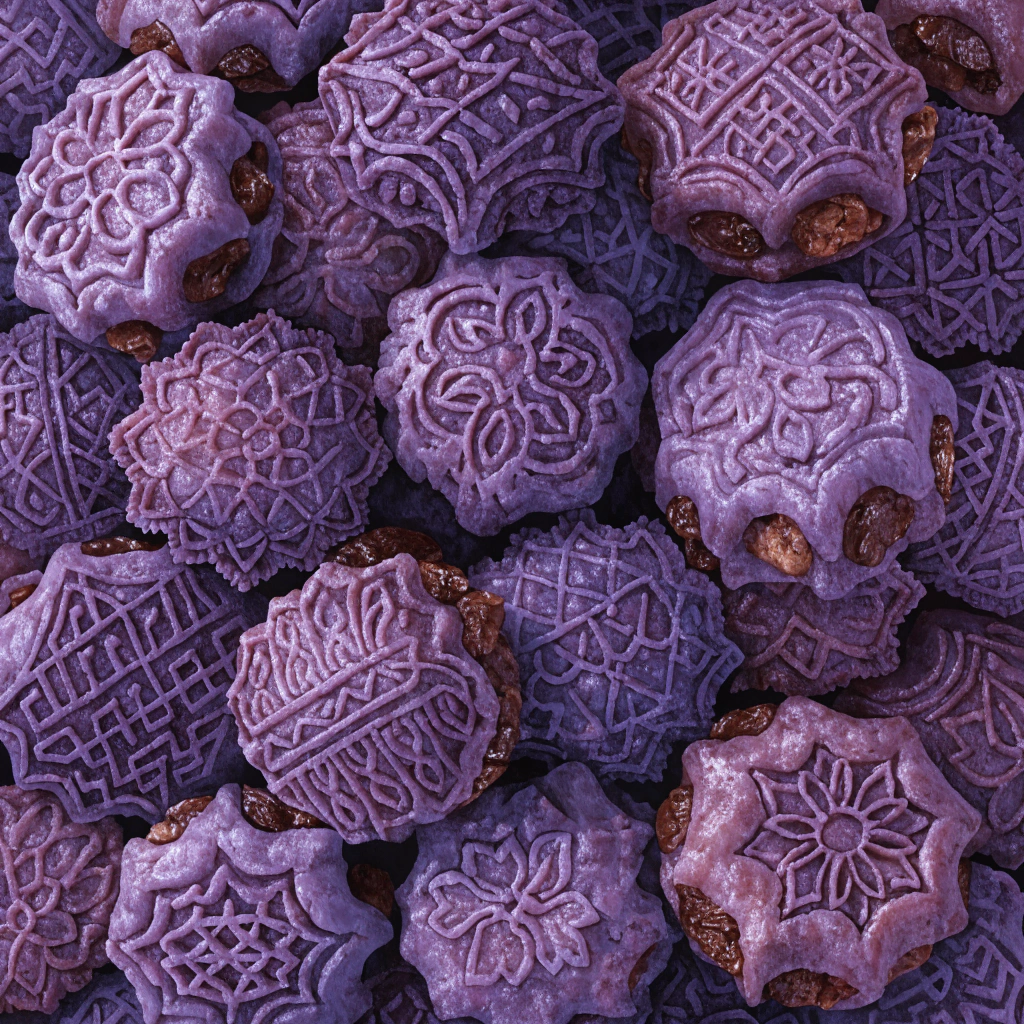
Maamoul is a special cookie from Saudi Arabia. People make these cookies for big holidays. They are small and round.
Inside the cookie, there are sweet dates. Saudi Arabia has very good dates. Some Maamoul have nuts inside too. Families eat these cookies with hot coffee.
Making Maamoul is a tradition. Families work together in the kitchen. They use wooden molds to make beautiful shapes. Maamoul is sweet and delicious. Everyone likes this Saudi treat.
Grammatik-Spotlight
Muster: Present Simple (Be)
"Maamoul is a special cookie from Saudi Arabia."
We use 'is' with singular subjects like Maamoul. It describes a fact or a state.
Muster: Present Simple (Plural Verbs)
"Families eat these cookies with hot coffee."
When the subject is plural (Families), we use the base form of the verb (eat). We do not add an 's'.
Teste dein Verständnis
10 Fragen · A1 Anfänger · 1 kostenlose Vorschau
Teste, was du aus diesem Artikel gelernt hast. Beantworte alle Fragen und sammle XP!
What is inside most Maamoul cookies?
Möchtest du das Quiz beenden?
9 weitere Fragen warten auf dich. Registriere dich kostenlos, um das vollständige Quiz freizuschalten und XP zu sammeln!
Kostenlos registrierenHast du schon ein Konto? Anmelden
Gut gemacht!
Weiter üben!
Bereits abgeschlossen — keine zusätzlichen XP
Registriere dich, um XP zu verdienenFragenübersicht
What is inside most Maamoul cookies?
Deine Antwort:
Richtige Antwort: Dates
Families make Maamoul together in the kitchen.
Deine Antwort:
Richtige Antwort: Richtig
What does 'sweet' mean?
Deine Antwort:
Richtige Antwort: Tastes like sugar
Maamoul is a special _____ from Saudi Arabia.
Deine Antwort:
Richtige Antwort: cookie
Maamoul: Ein süßer Gruß aus Saudi-Arabien
Maamoul sind kleine, süße Kekse. Sie kommen aus Saudi-Arabien und sind dort sehr beliebt. Man isst sie oft zu besonderen Festen und Feiertagen, zum Beispiel zum Ramadan-Fest. Für viele Menschen in Saudi-Arabien sind Maamoul wichtig. Sie zeigen Gastfreundschaft und sind ein Zeichen der Freude.
Diese Kekse haben eine Füllung. Oft ist diese Füllung aus Datteln. In Saudi-Arabien gibt es viele gute Datteln, wie Khalas oder Sukkari. Diese Datteln schmecken sehr süß und machen die Maamoul besonders lecker. Manchmal füllt man die Kekse auch mit Nüssen wie Walnüssen oder Pistazien. Die Kekse sind weich und schmelzen fast im Mund.
Früher backte man Maamoul oft zu Hause. Das war eine schöne Tradition vor den Feiertagen. Die ganze Familie half mit, die Kekse zu formen. Heute kann man sie auch in vielen Bäckereien kaufen. Aber selbstgemachte Maamoul sind für viele immer noch die besten. Sie sind mehr als nur ein Dessert; sie sind ein Teil der Kultur.
Grammatik-Spotlight
Muster: Präteritum (einfache Vergangenheit)
"Früher backte man Maamoul oft zu Hause."
Das Präteritum ist eine Vergangenheitsform. Man benutzt es oft, um über abgeschlossene Handlungen in der Vergangenheit zu sprechen, besonders in Geschichten oder Berichten. Bei regelmäßigen Verben hängt man '-te' an den Stamm an (z.B. 'machen' -> 'machte'). Bei unregelmäßigen Verben ändert sich der Stamm (z.B. 'backen' -> 'backte').
Muster: Nebensatz mit 'weil' (Grundangabe)
"Maamoul sind wichtig, weil sie Gastfreundschaft zeigen."
Der Nebensatz mit 'weil' gibt einen Grund an. Das konjugierte Verb steht im Nebensatz immer am Ende. Der 'weil'-Satz erklärt, warum etwas passiert oder warum etwas so ist.
Teste dein Verständnis
11 Fragen · A2 Grundkenntnisse · 1 kostenlose Vorschau
Teste, was du aus diesem Artikel gelernt hast. Beantworte alle Fragen und sammle XP!
Was sind Maamoul?
Möchtest du das Quiz beenden?
10 weitere Fragen warten auf dich. Registriere dich kostenlos, um das vollständige Quiz freizuschalten und XP zu sammeln!
Kostenlos registrierenHast du schon ein Konto? Anmelden
Gut gemacht!
Weiter üben!
Bereits abgeschlossen — keine zusätzlichen XP
Registriere dich, um XP zu verdienenFragenübersicht
Was sind Maamoul?
Deine Antwort:
Richtige Antwort: Kleine, süße Kekse
Maamoul isst man nur zum Frühstück.
Deine Antwort:
Richtige Antwort: Falsch
Was bedeutet 'Gastfreundschaft'?
Deine Antwort:
Richtige Antwort: Wenn man Gäste freundlich empfängt
Die Füllung der Maamoul ist oft aus _____.
Deine Antwort:
Richtige Antwort: Datteln
Woher kommen Maamoul ursprünglich?
Deine Antwort:
Richtige Antwort: Aus Saudi-Arabien
Maamoul: Ein süßes Symbol der Gastfreundschaft in Saudi-Arabien
In Saudi-Arabien und der gesamten arabischen Welt gibt es eine besondere Süßigkeit, die bei Feierlichkeiten und als Zeichen der Gastfreundschaft nicht fehlen darf: Maamoul. Diese kleinen, gefüllten Kekse sind mehr als nur ein Dessert; sie sind eine kulturelle Institution, die tief in der Tradition verwurzelt ist.
Maamoul wird traditionell in den Tagen vor großen Festen wie Eid al-Fitr oder Eid al-Adha zubereitet. Die Herstellung ist oft ein gemeinschaftliches Ereignis, bei dem Familien zusammenkommen, um den Teig zu kneten und die Kekse zu formen. Der Teig, der hauptsächlich aus Grieß oder Mehl besteht, wird sorgfältig vorbereitet. Besonders wichtig ist die Füllung, die Maamoul seinen einzigartigen Geschmack verleiht. In Saudi-Arabien werden dafür oft hochwertige Datteln verwendet, wie die Sorten Khalas oder Sukkari. Diese Datteln werden zu einer weichen Paste verarbeitet, die dann in den Teig eingewickelt wird.
Nach dem Füllen werden die Kekse in speziellen Holzformen gepresst, die ihnen schöne Muster geben. Diese Muster sind nicht nur dekorativ, sondern können auch anzeigen, welche Füllung der Keks hat. Danach werden die Maamoul gebacken, bis sie goldbraun sind und wunderbar duften. Wenn sie fertig sind, werden sie oft mit Puderzucker bestreut, was ihnen ein noch festlicheres Aussehen verleiht.
Maamoul ist ein Ausdruck der Großzügigkeit und wird Gästen zusammen mit arabischem Kaffee angeboten. Wer einmal diese delikaten, im Mund schmelzenden Kekse probiert hat, versteht schnell, warum sie so beliebt sind. Sie repräsentieren die süße Seite der saudischen Kultur und sind ein Genuss, der Generationen verbindet und Freude bereitet.
Grammatik-Spotlight
Muster: Passiv (Präsens)
"Maamoul wird traditionell in den Tagen vor großen Festen wie Eid al-Fitr oder Eid al-Adha zubereitet."
Das Passiv wird verwendet, um zu betonen, WAS gemacht wird, nicht WER es macht. Es wird mit einer Form von 'werden' und dem Partizip II des Hauptverbs gebildet. In diesem Satz ist 'wird zubereitet' die Passivform.
Muster: Relativsätze mit 'der/die/das'
"Diese kleinen, gefüllten Kekse sind mehr als nur ein Dessert; sie sind eine kulturelle Institution, die tief in der Tradition verwurzelt ist."
Relativsätze geben zusätzliche Informationen zu einem Nomen oder Pronomen im Hauptsatz. Sie werden oft mit den Relativpronomen 'der', 'die' oder 'das' eingeleitet, die sich auf das Bezugswort beziehen und den Kasus des Relativsatzes bestimmen. Hier bezieht sich 'die' auf 'kulturelle Institution'.
Teste dein Verständnis
11 Fragen · B1 Mittelstufe · 1 kostenlose Vorschau
Teste, was du aus diesem Artikel gelernt hast. Beantworte alle Fragen und sammle XP!
Wann wird Maamoul traditionell zubereitet?
Möchtest du das Quiz beenden?
10 weitere Fragen warten auf dich. Registriere dich kostenlos, um das vollständige Quiz freizuschalten und XP zu sammeln!
Kostenlos registrierenHast du schon ein Konto? Anmelden
Gut gemacht!
Weiter üben!
Bereits abgeschlossen — keine zusätzlichen XP
Registriere dich, um XP zu verdienenFragenübersicht
Wann wird Maamoul traditionell zubereitet?
Deine Antwort:
Richtige Antwort: Vor großen Festen wie Eid
Maamoul ist nur in Saudi-Arabien bekannt.
Deine Antwort:
Richtige Antwort: Falsch
Was bedeutet 'Gastfreundschaft'?
Deine Antwort:
Richtige Antwort: Die Freundlichkeit gegenüber Gästen
Die _____ für Maamoul besteht oft aus hochwertigen Datteln.
Deine Antwort:
Richtige Antwort: Füllung
Nach dem Backen wird Maamoul oft mit _____ bestreut.
Deine Antwort:
Richtige Antwort: Puderzucker
Maamoul: The Gastronomic Heart of Saudi Hospitality
In the vast landscape of Saudi Arabian culinary traditions, few items hold as much cultural weight as Maamoul. These shortbread cookies, typically filled with dates or nuts, are far more than a mere confection; they represent a sophisticated intersection of history, geography, and social etiquette. While various iterations of filled pastries can be found across the Levant and the Gulf, the Saudi variant is distinguished by its meticulous preparation and the utilization of premium local ingredients. This dessert is not simply a snack; it is an essential component of the Kingdom’s heritage.
Central to the identity of Saudi Maamoul is the use of indigenous date varieties, such as the succulent Sukkari or the refined Khalas. These are not merely chosen for their sweetness but for their texture and depth of flavor, which provide a stark contrast to the crumbly, buttery exterior of the cookie. The preparation process itself is an exercise in patience and precision. Traditionally, families gather in the days preceding major festivals like Eid al-Fitr to prepare large batches. This communal effort reinforces social bonds, as techniques and secret recipes are passed down through generations.
Furthermore, the aesthetic presentation of Maamoul is as crucial as its taste. Historically, wooden molds, known as 'taba', were carved by hand to imprint intricate geometric patterns onto the dough. These designs often served a practical purpose, indicating the specific filling contained within. For instance, a round shape might signify a date filling, whereas an oval shape could denote pistachios or walnuts. This visual language allowed guests to navigate the dessert tray with ease during social gatherings.
In contemporary Saudi society, despite the influx of international patisseries, Maamoul remains an indispensable component of hospitality. It is almost always served alongside Saudi coffee, the bitterness of the cardamom-infused brew perfectly balancing the richness of the cookie. This pairing is considered a gesture of generosity and respect toward guests. Consequently, Maamoul has transcended its status as a seasonal treat to become a permanent symbol of the Kingdom’s welcoming spirit. As Saudi Arabia continues to modernize, there is a conscious effort to preserve such culinary heritages. Artisanal bakeries are now experimenting with gluten-free versions or contemporary fillings, yet the core essence remains unchanged. The enduring popularity of Maamoul illustrates how traditional practices can adapt to the modern era without losing their historical integrity.
Grammatik-Spotlight
Muster: Passive Voice
"Historically, wooden molds, known as 'taba', were carved by hand to imprint intricate geometric patterns onto the dough."
The passive voice is used here to focus on the action (carving the molds) and the object rather than the specific person performing the action. It is formed using the verb 'to be' (were) plus the past participle (carved).
Muster: Relative Clauses with 'Which'
"These are not merely chosen for their sweetness but for their texture and depth of flavor, which provide a stark contrast to the crumbly, buttery exterior of the cookie."
This non-defining relative clause provides extra information about the 'texture and depth of flavor'. It is used to add descriptive detail and complexity to the sentence structure.
Muster: Discourse Markers for Consequence
"Consequently, Maamoul has transcended its status as a seasonal treat to become a permanent symbol of the Kingdom’s welcoming spirit."
'Consequently' is a formal discourse marker used to show the result or effect of the previous statement. It helps link ideas logically and maintains a formal register.
Teste dein Verständnis
11 Fragen · B2 Obere Mittelstufe · 1 kostenlose Vorschau
Teste, was du aus diesem Artikel gelernt hast. Beantworte alle Fragen und sammle XP!
What is the primary reason the Saudi variant of Maamoul is considered unique according to the text?
Möchtest du das Quiz beenden?
10 weitere Fragen warten auf dich. Registriere dich kostenlos, um das vollständige Quiz freizuschalten und XP zu sammeln!
Kostenlos registrierenHast du schon ein Konto? Anmelden
Gut gemacht!
Weiter üben!
Bereits abgeschlossen — keine zusätzlichen XP
Registriere dich, um XP zu verdienenFragenübersicht
What is the primary reason the Saudi variant of Maamoul is considered unique according to the text?
Deine Antwort:
Richtige Antwort: It uses high-quality local ingredients and careful preparation.
The geometric patterns on Maamoul were historically used only for decoration without any practical function.
Deine Antwort:
Richtige Antwort: Falsch
What does the word 'indispensable' mean in the context of the article?
Deine Antwort:
Richtige Antwort: Absolutely necessary
The preparation process itself is an exercise in _____ and precision.
Deine Antwort:
Richtige Antwort: patience
Why is Maamoul traditionally paired with Saudi coffee?
Deine Antwort:
Richtige Antwort: To balance the bitterness of the coffee with the sweetness of the cookie.
The Ephemeral Art of the Maamoul: A Gastronomic Pillar of Saudi Heritage
Seldom does one encounter a culinary artifact that resonates as deeply within the Saudi consciousness as the Maamoul. While the uninitiated might perceive it as a mere shortbread cookie, to the Saudi populace, it represents the quintessential culmination of festive preparation and cultural identity. These delicate, crumbly pastries are not simply treats; they are vessels of history, carrying the weight of generational secrets and the warmth of Arabian hospitality. The meticulous curation of ingredients—specifically the high-grade Khalas and Sukkari dates—underscores a dedication to regional excellence that transcends modern convenience. Unlike mass-produced alternatives, the traditional Saudi Maamoul relies on the nuanced sweetness of these local varieties, which provide a rich, almost caramel-like interior. This focus on premium raw materials is a paradigm of the broader Saudi approach to guest-welcoming, where nothing but the finest is deemed acceptable.
It is the intricate patterns etched into the Maamoul’s surface that provide its most striking aesthetic quality. Traditionally, these are achieved using hand-carved wooden molds, known as 'tabah'. What defines the Maamoul’s aesthetic appeal is the use of these molds to designate the filling inside; a specific geometric pattern might signify a date filling, while another denotes walnuts or pistachios. This visual language allows guests to navigate the dessert platter with ease, reflecting a sophisticated level of social consideration. Furthermore, the act of making Maamoul is an exercise in communal bonding. In the days preceding Eid, households transform into artisanal workshops. This communal preparation fosters a sense of commensality that is increasingly rare in the digital age. The labor-intensive nature of the process—kneading the semolina dough until it achieves an ephemeral melt-in-the-mouth texture—serves to strengthen familial ties through shared effort.
However, the Maamoul now stands at a crossroads between tradition and commercialization. As the Saudi economy evolves, artisanal bakeries have begun to offer gourmet iterations of this classic, some even incorporating non-traditional ingredients like chocolate or saffron. While some purists argue that such innovations dilute the cookie's heritage, others suggest that this gastronomic evolution is necessary for the Maamoul to remain relevant to younger generations. Regardless of these debates, the core essence of the Maamoul—as a symbol of generosity and celebration—remains unshakable. Ultimately, the Maamoul is a testament to the enduring power of food as a cultural anchor. It is through the consumption of such symbolic delicacies that the nuances of Saudi heritage are preserved and passed down. Whether served alongside a steaming cup of cardamom-infused coffee or shared during a large family gathering, the Maamoul continues to be the gastronomic pillar of the Kingdom’s most cherished celebrations.
Grammatik-Spotlight
Muster: Inversion with Negative Adverbials
"Seldom does one encounter a culinary artifact that resonates as deeply within the Saudi consciousness as the Maamoul."
When we start a sentence with a negative or restrictive adverb like 'seldom', we invert the subject and the auxiliary verb. This is used for emphasis and is typical of formal, C1-level writing.
Muster: Cleft Sentences
"What defines the Maamoul’s aesthetic appeal is the use of these molds to designate the filling inside."
A pseudo-cleft sentence starting with 'What' is used to focus on specific information. It highlights the 'use of molds' as the most important factor in the Maamoul's appearance.
Muster: Nominalisation
"The meticulous curation of ingredients—specifically the high-grade Khalas and Sukkari dates—underscores a dedication to regional excellence."
Using nouns like 'curation' and 'dedication' instead of verbs makes the text more abstract and formal. It allows the writer to pack more information into a single sentence.
Teste dein Verständnis
12 Fragen · C1 Fortgeschritten · 1 kostenlose Vorschau
Teste, was du aus diesem Artikel gelernt hast. Beantworte alle Fragen und sammle XP!
What is the primary significance of Maamoul in Saudi culture according to the text?
Möchtest du das Quiz beenden?
11 weitere Fragen warten auf dich. Registriere dich kostenlos, um das vollständige Quiz freizuschalten und XP zu sammeln!
Kostenlos registrierenHast du schon ein Konto? Anmelden
Gut gemacht!
Weiter üben!
Bereits abgeschlossen — keine zusätzlichen XP
Registriere dich, um XP zu verdienenFragenübersicht
What is the primary significance of Maamoul in Saudi culture according to the text?
Deine Antwort:
Richtige Antwort: It is a cultural institution representing hospitality and identity.
The article suggests that Khalas and Sukkari dates are of average quality.
Deine Antwort:
Richtige Antwort: Falsch
What does the word 'ephemeral' mean in the context of the cookie's texture?
Deine Antwort:
Richtige Antwort: Lasting for a short time / melting quickly.
The _____ of ingredients underscores a dedication to regional excellence.
Deine Antwort:
Richtige Antwort: curation
How do the wooden molds ('tabah') assist guests?
Deine Antwort:
Richtige Antwort: They use patterns to identify different fillings.
The text states that modern innovations like chocolate fillings are universally accepted by all Saudis.
Deine Antwort:
Richtige Antwort: Falsch
The Gastronomic Semiotics of Maamoul: A Study in Saudi Hospitality and Heritage
To traverse the cultural landscape of the Arabian Peninsula is to encounter a hospitality so profound that it transcends mere social obligation, manifesting instead as a meticulously choreographed ritual. At the heart of this ceremonial exchange lies the Maamoul, a shortbread-esque confection that serves as a quintessential emblem of Saudi Arabian heritage. Far from being a pedestrian dessert, the Maamoul acts as a palatable manifestation of historical continuity and communal cohesion. Were one to scrutinize the intricate patterns embossed upon its surface, one would discern a visual language that speaks of regional identity and artisanal pride. Traditionally crafted in the days preceding the festive crescendos of Eid al-Fitr or Eid al-Adha, the preparation of Maamoul is an endeavor that demands both patience and precision. The dough, typically a blend of fine semolina and clarified butter, must achieve a specific friability—a delicate, melt-in-the-mouth quality that distinguishes the superior from the mediocre. It is imperative that the dough be handled with a lightness of touch, lest the gluten develop and compromise the desired crumb. Central to the Saudi iteration of this pastry is the utilization of premium local dates, most notably the Khalas or Sukkari varieties. These dates are not merely sweeteners; they are the soul of the confection, providing a rich, caramel-like depth that contrasts elegantly with the subtle notes of mahlab or rosewater. Seldom has a mere confectionary item carried such a heavy burden of cultural expectation. The use of traditional wooden molds, or 'tabe', ensures that each cookie is a testament to geometric symmetry, often indicating the specific filling contained within—dates, walnuts, or pistachios—thereby facilitating a silent communication between host and guest. In the contemporary era, despite the encroachment of globalized culinary trends, the Maamoul remains a steadfast vestige of antiquity. It might be argued that its continued prevalence is less about caloric sustenance and more about the evocation of nostalgia. The olfactory experience of baking Maamoul—the aroma of toasted semolina and spiced dates permeating the household—serves as a potent mnemonic device, bridging the temporal gap between the ancestral past and the modernized present. Furthermore, the communal aspect of its production, often involving multiple generations of a family, reinforces socio-cultural stratification and the transmission of intangible heritage. Whether served alongside a bitter, cardamom-infused qahwa or presented in ornate tins as a gesture of goodwill, the Maamoul occupies a unique position in the Saudi culinary lexicon. It is a bridge between the ephemeral nature of a meal and the enduring nature of tradition. To understand the Maamoul is to understand the Saudi ethos: a synthesis of generosity, meticulous craftsmanship, and an unwavering reverence for the symbols of the past. As the Kingdom continues its rapid metamorphosis under Vision 2030, the Maamoul stands as a reminder that some traditions are sufficiently robust to withstand the tides of change, provided they are nurtured with the same care as the dough itself.
Grammatik-Spotlight
Muster: Inversion with negative adverbials
"Seldom has a mere confectionary item carried such a heavy burden of cultural expectation."
This structure is used for emphasis in formal writing. When a sentence begins with a negative or restrictive adverbial (like seldom, rarely, or never), the auxiliary verb is placed before the subject.
Muster: The Subjunctive Mood
"It is imperative that the dough be handled with a lightness of touch."
The subjunctive is used here following an adjective of necessity (imperative). The base form of the verb 'be' is used regardless of the subject to express a requirement or desired action.
Muster: Second Conditional with 'Were' (Hypothetical Inversion)
"Were one to scrutinize the intricate patterns embossed upon its surface, one would discern a visual language."
This is a formal alternative to 'If one were to...'. It uses inversion of 'were' and the subject to express a hypothetical situation in the present or future.
Teste dein Verständnis
12 Fragen · C2 Meisterschaft · 1 kostenlose Vorschau
Teste, was du aus diesem Artikel gelernt hast. Beantworte alle Fragen und sammle XP!
According to the text, what does the friability of the Maamoul signify?
Möchtest du das Quiz beenden?
11 weitere Fragen warten auf dich. Registriere dich kostenlos, um das vollständige Quiz freizuschalten und XP zu sammeln!
Kostenlos registrierenHast du schon ein Konto? Anmelden
Gut gemacht!
Weiter üben!
Bereits abgeschlossen — keine zusätzlichen XP
Registriere dich, um XP zu verdienenFragenübersicht
According to the text, what does the friability of the Maamoul signify?
Deine Antwort:
Richtige Antwort: The quality and skill involved in its preparation
The author suggests that Maamoul is primarily consumed for its caloric value in modern times.
Deine Antwort:
Richtige Antwort: Falsch
What does 'ephemeral' mean in the context of the article?
Deine Antwort:
Richtige Antwort: Short-lived
The author describes the Maamoul as a _____ manifestation of historical continuity.
Deine Antwort:
Richtige Antwort: palatable
What role do the 'tabe' or wooden molds play in the tradition of Maamoul?
Deine Antwort:
Richtige Antwort: They help identify the ingredients inside the cookie through geometric patterns.
The preparation of Maamoul is described as a solitary task meant for professional chefs.
Deine Antwort:
Richtige Antwort: Falsch
Maamoul: Ein süßer Keks
Das ist Maamoul. Maamoul ist ein Keks. Es ist süß. Maamoul ist aus Saudi-Arabien. Viele Leute essen Maamoul gern. Es schmeckt gut. Maamoul ist ein besonderes Essen. Es ist klein. Kinder mögen Maamoul. Erwachsene mögen Maamoul auch.
Grammatik-Spotlight
Muster: Das Verb 'sein' (ist)
"Maamoul ist ein Keks."
Das Verb 'sein' bedeutet 'to be'. Wir benutzen 'ist' für 'es', 'er' und 'sie' (Singular). Es beschreibt, was etwas ist oder wie etwas ist.
Teste dein Verständnis
9 Fragen · A0 Vor-Anfänger · 1 kostenlose Vorschau
Teste, was du aus diesem Artikel gelernt hast. Beantworte alle Fragen und sammle XP!
Was ist Maamoul?
Möchtest du das Quiz beenden?
8 weitere Fragen warten auf dich. Registriere dich kostenlos, um das vollständige Quiz freizuschalten und XP zu sammeln!
Kostenlos registrierenHast du schon ein Konto? Anmelden
Gut gemacht!
Weiter üben!
Bereits abgeschlossen — keine zusätzlichen XP
Registriere dich, um XP zu verdienenFragenübersicht
Was ist Maamoul?
Deine Antwort:
Richtige Antwort: Ein Keks
Maamoul ist bitter.
Deine Antwort:
Richtige Antwort: Falsch
Maamoul ist aus Saudi-______.
Deine Antwort:
Richtige Antwort: Arabien

