Maamoul: A Sweet Saudi Treat
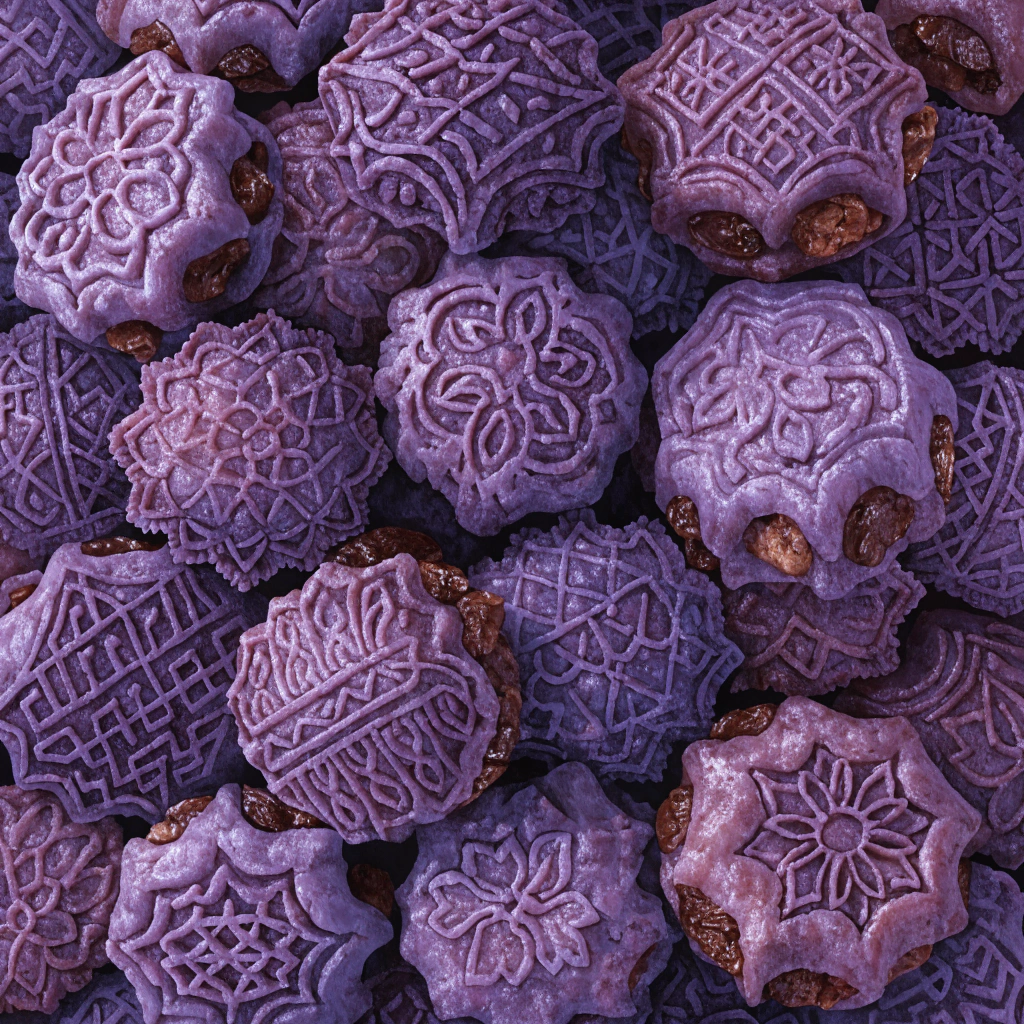
Maamoul is a special cookie from Saudi Arabia. People make these cookies for big holidays. They are small and round.
Inside the cookie, there are sweet dates. Saudi Arabia has very good dates. Some Maamoul have nuts inside too. Families eat these cookies with hot coffee.
Making Maamoul is a tradition. Families work together in the kitchen. They use wooden molds to make beautiful shapes. Maamoul is sweet and delicious. Everyone likes this Saudi treat.
Gramática destacada
Patrón: Present Simple (Be)
"Maamoul is a special cookie from Saudi Arabia."
We use 'is' with singular subjects like Maamoul. It describes a fact or a state.
Patrón: Present Simple (Plural Verbs)
"Families eat these cookies with hot coffee."
When the subject is plural (Families), we use the base form of the verb (eat). We do not add an 's'.
Pon a prueba tu comprensión
10 preguntas · A1 Principiante · 1 vista previa gratis
Pon a prueba lo que aprendiste en este artículo. ¡Responde todas las preguntas para ganar XP!
What is inside most Maamoul cookies?
¿Quieres terminar el quiz?
9 preguntas más te esperan. ¡Regístrate gratis para desbloquear el quiz completo y ganar XP!
Regístrate gratis¿Ya tienes cuenta? Acceder
Desglose de preguntas
What is inside most Maamoul cookies?
Tu respuesta:
Respuesta correcta: Dates
Families make Maamoul together in the kitchen.
Tu respuesta:
Respuesta correcta: Verdadero
What does 'sweet' mean?
Tu respuesta:
Respuesta correcta: Tastes like sugar
Maamoul is a special _____ from Saudi Arabia.
Tu respuesta:
Respuesta correcta: cookie
Maamoul: A Sweet Tradition in Saudi Arabia
Maamoul is a very famous cookie in Saudi Arabia. People usually eat these sweet treats during Eid and other special festivals. These cookies are special because they are filled with delicious ingredients. In Saudi Arabia, the most popular filling is sweet dates.
In the past, families prepared Maamoul together at home. Mothers and grandmothers used special wooden molds to make beautiful patterns on the cookies. Today, many people still make them at home, but you can also buy them in many bakeries. Maamoul is softer than other cookies and it melts in your mouth.
When you visit a Saudi home, the host often gives you Maamoul with Arabic coffee. It is an important part of Saudi hospitality. The cookies are sweeter than bread, but they are not too heavy. Everyone loves them because they are a tradition that brings people together.
Gramática destacada
Patrón: Comparatives (Adjective + -er + than)
"Maamoul is softer than other cookies and it melts in your mouth."
We use the comparative form to compare two things. For short adjectives like 'soft', we add '-er' and use 'than' before the second item.
Patrón: Past Simple
"In the past, families prepared Maamoul together at home."
The Past Simple is used for actions that finished in the past. We add '-ed' to regular verbs like 'prepare' to show the past tense.
Pon a prueba tu comprensión
11 preguntas · A2 Básico · 1 vista previa gratis
Pon a prueba lo que aprendiste en este artículo. ¡Responde todas las preguntas para ganar XP!
What is the most common filling for Maamoul in Saudi Arabia?
¿Quieres terminar el quiz?
10 preguntas más te esperan. ¡Regístrate gratis para desbloquear el quiz completo y ganar XP!
Regístrate gratis¿Ya tienes cuenta? Acceder
Desglose de preguntas
What is the most common filling for Maamoul in Saudi Arabia?
Tu respuesta:
Respuesta correcta: Sweet dates
Maamoul is usually served with tea in Saudi homes.
Tu respuesta:
Respuesta correcta: Falso
What does 'hospitality' mean?
Tu respuesta:
Respuesta correcta: Being kind and friendly to guests
Maamoul is _____ than bread.
Tu respuesta:
Respuesta correcta: sweeter
When do people usually eat Maamoul?
Tu respuesta:
Respuesta correcta: During Eid and special festivals
Maamoul: Un Dulce Tradición en Arabia Saudita
En Arabia Saudita, la hospitalidad es un valor fundamental y se expresa de muchas maneras, especialmente a través de la comida. Entre los dulces más queridos y representativos se encuentran los Maamoul. Estas galletas delicadas, que se deshacen en la boca, son mucho más que un postre; son una verdadera institución cultural en toda la Península Arábiga y, en particular, en Arabia Saudita.
Los Maamoul son famosos por su relleno. Aunque existen diversas formas de pasteles rellenos en Oriente Medio, la versión saudita es muy apreciada por el uso de dátiles locales de alta calidad. Variedades como los dátiles Khalas o Sukkari son esenciales para el sabor auténtico de estas galletas. La masa, que a menudo se prepara con sémola de trigo, se moldea cuidadosamente alrededor del dulce relleno de dátil, creando una textura suave por fuera y un centro jugoso. Además de los dátiles, a veces se usan nueces o pistachos como relleno, aunque el dátil es el más tradicional.
Tradicionalmente, los Maamoul se han preparado en los días previos a las grandes celebraciones, como el Eid al-Fitr y el Eid al-Adha. Es un momento en el que las familias se reúnen para hornear grandes cantidades de estas galletas, a menudo utilizando moldes de madera especiales que les dan formas y diseños únicos. Una vez horneados, se espolvorean con azúcar glas, lo que les da un toque final elegante.
Estos dulces no solo se disfrutan en casa; también se ofrecen a los invitados como un gesto de bienvenida y generosidad. Se han convertido en un símbolo de alegría y unión familiar. La preparación y el consumo de Maamoul es una tradición que se ha transmitido de generación en generación, manteniendo viva la rica cultura culinaria de Arabia Saudita. Cada bocado de Maamoul nos cuenta una historia de tradición y sabor.
Gramática destacada
Patrón: Presente Perfecto
"Los Maamoul se han preparado en los días previos a las grandes celebraciones."
El presente perfecto se usa para hablar de acciones pasadas que tienen una conexión con el presente o que ocurrieron en un período de tiempo no terminado. Se forma con el verbo 'haber' en presente (he, has, ha, hemos, habéis, han) y el participio pasado del verbo principal (-ado, -ido).
Patrón: Voz Pasiva con 'se'
"La masa, que a menudo se prepara con sémola de trigo, se moldea cuidadosamente."
La voz pasiva con 'se' se usa para describir una acción donde el agente (quién realiza la acción) no es importante o se quiere evitar mencionarlo. Se forma con 'se' + el verbo en tercera persona del singular o plural, dependiendo del objeto de la acción.
Pon a prueba tu comprensión
11 preguntas · B1 Intermedio · 1 vista previa gratis
Pon a prueba lo que aprendiste en este artículo. ¡Responde todas las preguntas para ganar XP!
¿Cuál es el relleno más tradicional de los Maamoul en Arabia Saudita?
¿Quieres terminar el quiz?
10 preguntas más te esperan. ¡Regístrate gratis para desbloquear el quiz completo y ganar XP!
Regístrate gratis¿Ya tienes cuenta? Acceder
Desglose de preguntas
¿Cuál es el relleno más tradicional de los Maamoul en Arabia Saudita?
Tu respuesta:
Respuesta correcta: Dátiles
Los Maamoul son solo un postre y no tienen un gran significado cultural.
Tu respuesta:
Respuesta correcta: Falso
¿Qué significa la palabra "esenciales" en el contexto del artículo?
Tu respuesta:
Respuesta correcta: Fundamentales
Los Maamoul se ofrecen a los invitados como un gesto de _____ y generosidad.
Tu respuesta:
Respuesta correcta: bienvenida
La masa de los Maamoul a menudo se prepara con sémola de _____.
Tu respuesta:
Respuesta correcta: trigo
Maamoul: The Gastronomic Heart of Saudi Hospitality
In the vast landscape of Saudi Arabian culinary traditions, few items hold as much cultural weight as Maamoul. These shortbread cookies, typically filled with dates or nuts, are far more than a mere confection; they represent a sophisticated intersection of history, geography, and social etiquette. While various iterations of filled pastries can be found across the Levant and the Gulf, the Saudi variant is distinguished by its meticulous preparation and the utilization of premium local ingredients. This dessert is not simply a snack; it is an essential component of the Kingdom’s heritage.
Central to the identity of Saudi Maamoul is the use of indigenous date varieties, such as the succulent Sukkari or the refined Khalas. These are not merely chosen for their sweetness but for their texture and depth of flavor, which provide a stark contrast to the crumbly, buttery exterior of the cookie. The preparation process itself is an exercise in patience and precision. Traditionally, families gather in the days preceding major festivals like Eid al-Fitr to prepare large batches. This communal effort reinforces social bonds, as techniques and secret recipes are passed down through generations.
Furthermore, the aesthetic presentation of Maamoul is as crucial as its taste. Historically, wooden molds, known as 'taba', were carved by hand to imprint intricate geometric patterns onto the dough. These designs often served a practical purpose, indicating the specific filling contained within. For instance, a round shape might signify a date filling, whereas an oval shape could denote pistachios or walnuts. This visual language allowed guests to navigate the dessert tray with ease during social gatherings.
In contemporary Saudi society, despite the influx of international patisseries, Maamoul remains an indispensable component of hospitality. It is almost always served alongside Saudi coffee, the bitterness of the cardamom-infused brew perfectly balancing the richness of the cookie. This pairing is considered a gesture of generosity and respect toward guests. Consequently, Maamoul has transcended its status as a seasonal treat to become a permanent symbol of the Kingdom’s welcoming spirit. As Saudi Arabia continues to modernize, there is a conscious effort to preserve such culinary heritages. Artisanal bakeries are now experimenting with gluten-free versions or contemporary fillings, yet the core essence remains unchanged. The enduring popularity of Maamoul illustrates how traditional practices can adapt to the modern era without losing their historical integrity.
Gramática destacada
Patrón: Passive Voice
"Historically, wooden molds, known as 'taba', were carved by hand to imprint intricate geometric patterns onto the dough."
The passive voice is used here to focus on the action (carving the molds) and the object rather than the specific person performing the action. It is formed using the verb 'to be' (were) plus the past participle (carved).
Patrón: Relative Clauses with 'Which'
"These are not merely chosen for their sweetness but for their texture and depth of flavor, which provide a stark contrast to the crumbly, buttery exterior of the cookie."
This non-defining relative clause provides extra information about the 'texture and depth of flavor'. It is used to add descriptive detail and complexity to the sentence structure.
Patrón: Discourse Markers for Consequence
"Consequently, Maamoul has transcended its status as a seasonal treat to become a permanent symbol of the Kingdom’s welcoming spirit."
'Consequently' is a formal discourse marker used to show the result or effect of the previous statement. It helps link ideas logically and maintains a formal register.
Pon a prueba tu comprensión
11 preguntas · B2 Intermedio alto · 1 vista previa gratis
Pon a prueba lo que aprendiste en este artículo. ¡Responde todas las preguntas para ganar XP!
What is the primary reason the Saudi variant of Maamoul is considered unique according to the text?
¿Quieres terminar el quiz?
10 preguntas más te esperan. ¡Regístrate gratis para desbloquear el quiz completo y ganar XP!
Regístrate gratis¿Ya tienes cuenta? Acceder
Desglose de preguntas
What is the primary reason the Saudi variant of Maamoul is considered unique according to the text?
Tu respuesta:
Respuesta correcta: It uses high-quality local ingredients and careful preparation.
The geometric patterns on Maamoul were historically used only for decoration without any practical function.
Tu respuesta:
Respuesta correcta: Falso
What does the word 'indispensable' mean in the context of the article?
Tu respuesta:
Respuesta correcta: Absolutely necessary
The preparation process itself is an exercise in _____ and precision.
Tu respuesta:
Respuesta correcta: patience
Why is Maamoul traditionally paired with Saudi coffee?
Tu respuesta:
Respuesta correcta: To balance the bitterness of the coffee with the sweetness of the cookie.
Maamoul: Dulce Embajador de la Hospitalidad Saudí y el Legado Festivo
En el corazón de la península arábiga, donde la hospitalidad es una virtud cardinal y las tradiciones se entrelazan con el devenir diario, se erige una pequeña joya culinaria que trasciende la mera categoría de postre: el Maamoul. Este delicado pastelillo, que se deshace en la boca, no es solo una exquisitez gastronómica; es, de hecho, una institución cultural, un símbolo arraigado de celebración y generosidad que cobra especial protagonismo en Arabia Saudí, particularmente durante las festividades religiosas como el Eid al-Fitr y el Eid al-Adha.
La confección del Maamoul es un arte transmitido de generación en generación, un ritual que antecede a las celebraciones y que imbrica a las familias en un meticuloso proceso de preparación. Aunque diversas formas de pasteles rellenos existen a lo largo y ancho del Medio Oriente, la versión saudí del Maamoul se distingue por su singularidad, ostentando un prestigio particular gracias al empleo de dátiles locales de altísima calidad. Variedades como el Khalas o el Sukkari, célebres por su dulzura natural y su textura melosa, son los predilectos para el relleno, confiriéndole al Maamoul saudí un perfil de sabor inigualable y una autenticidad que lo diferencia de sus homólogos regionales.
El secreto de su textura etérea reside en la masa, tradicionalmente elaborada con sémola de trigo fina o gruesa, mezclada con mantequilla clarificada (ghee) o aceite, y a menudo aromatizada con agua de rosas o azahar, lo que le otorga un aroma embriagador. Una vez amasada y dejada reposar, la masa se moldea cuidadosamente alrededor de una porción generosa de pasta de dátil, a veces enriquecida con cardamomo o canela. Es precisamente el contraste entre la suavidad de la masa y la dulzura concentrada del dátil lo que lo convierte en una delicia tan apreciada.
La forma del Maamoul no es producto del azar; se logra mediante el uso de moldes de madera intrincadamente tallados, conocidos como *tabbi'*, que imprimen patrones decorativos únicos en la superficie del pastelillo. Estos moldes no solo embellecen el Maamoul, sino que también son un testimonio de la rica artesanía local. Cada patrón puede indicar el tipo de relleno, aunque generalmente, tras la cocción, los Maamoul se espolvorean con azúcar glas, añadiendo una capa visual y gustativa que culmina su presentación.
La trascendencia del Maamoul en la cultura saudí va más allá de su sabor. Su preparación en los días previos a las festividades es un acto comunitario, un momento para que las mujeres de la familia se reúnan, compartan historias y fortalezcan lazos. El ofrecimiento de Maamoul a los visitantes durante el Eid no es meramente una cortesía; es una expresión profunda de bienvenida y honor, un gesto que encarna la esencia misma de la hospitalidad árabe. Por ende, no es exagerado afirmar que el Maamoul no es solo un dulce, sino un vehículo para la cultura, la tradición y los valores inherentes a la sociedad saudí, un legado que perdura y se celebra con cada bocado.
En definitiva, lo que hace al Maamoul tan especial no es solo la meticulosa selección de sus ingredientes o la destreza en su confección, sino la profunda carga simbólica que conlleva. Es el dulce colofón de las reuniones familiares, el anfitrión silencioso de las celebraciones y un recordatorio tangible de la riqueza cultural que define a Arabia Saudí. Así pues, más que un simple pastelillo, se trata de una experiencia multisensorial que invita a la reflexión sobre la importancia de las tradiciones en el mundo contemporáneo.
Gramática destacada
Patrón: Nominalización para énfasis y abstracción
"La trascendencia del Maamoul en la cultura saudí va más allá de su sabor."
La nominalización consiste en transformar un verbo o un adjetivo en un sustantivo para expresar ideas de manera más formal o abstracta. En este caso, 'trascender' se convierte en 'trascendencia', lo que permite enfocar la oración en el concepto abstracto de su importancia cultural, no solo en la acción de trascender.
Patrón: Oraciones hendidas (cleft sentences) para focalizar información
"Es precisamente el contraste entre la suavidad de la masa y la dulzura concentrada del dátil lo que lo convierte en una delicia tan apreciada."
Las oraciones hendidas se utilizan para destacar una parte específica de la oración, separándola y enfatizándola. La estructura 'Es + [elemento enfatizado] + lo que/quien + [resto de la oración]' permite dirigir la atención del lector hacia 'el contraste' como la razón principal de su aprecio.
Patrón: Inversión del orden sintáctico para realce
"En el corazón de la península arábiga, donde la hospitalidad es una virtud cardinal y las tradiciones se entrelazan con el devenir diario, se erige una pequeña joya culinaria..."
La inversión del orden sintáctico, como colocar el verbo antes del sujeto ('se erige una joya culinaria'), se emplea para añadir énfasis, solemnidad o un tono más literario. En este contexto, realza la aparición de la 'joya culinaria' después de describir el entorno.
Pon a prueba tu comprensión
12 preguntas · C1 Avanzado · 1 vista previa gratis
Pon a prueba lo que aprendiste en este artículo. ¡Responde todas las preguntas para ganar XP!
¿Cuál es una de las principales razones por las que el Maamoul saudí se distingue de otras versiones regionales?
¿Quieres terminar el quiz?
11 preguntas más te esperan. ¡Regístrate gratis para desbloquear el quiz completo y ganar XP!
Regístrate gratis¿Ya tienes cuenta? Acceder
Desglose de preguntas
¿Cuál es una de las principales razones por las que el Maamoul saudí se distingue de otras versiones regionales?
Tu respuesta:
Respuesta correcta: Utiliza dátiles locales de alta calidad como el Khalas o Sukkari.
Los moldes de madera (*tabbi'*) para el Maamoul tienen una función puramente estética, sin ningún significado adicional.
Tu respuesta:
Respuesta correcta: Falso
¿Qué significa la palabra 'arraigado' en el contexto del artículo?
Tu respuesta:
Respuesta correcta: Que está firmemente establecido en la cultura.
El ______________ del Maamoul no es producto del azar; se logra mediante el uso de moldes de madera.
Tu respuesta:
Respuesta correcta: forma
¿Qué ingredientes son esenciales para la masa del Maamoul, según el artículo?
Tu respuesta:
Respuesta correcta: Sémola de trigo y mantequilla clarificada (ghee) o aceite.
El ofrecimiento de Maamoul a los visitantes durante el Eid es solo una cortesía sin mayor significado cultural.
Tu respuesta:
Respuesta correcta: Falso
The Gastronomic Semiotics of Maamoul: A Study in Saudi Hospitality and Heritage
To traverse the cultural landscape of the Arabian Peninsula is to encounter a hospitality so profound that it transcends mere social obligation, manifesting instead as a meticulously choreographed ritual. At the heart of this ceremonial exchange lies the Maamoul, a shortbread-esque confection that serves as a quintessential emblem of Saudi Arabian heritage. Far from being a pedestrian dessert, the Maamoul acts as a palatable manifestation of historical continuity and communal cohesion. Were one to scrutinize the intricate patterns embossed upon its surface, one would discern a visual language that speaks of regional identity and artisanal pride. Traditionally crafted in the days preceding the festive crescendos of Eid al-Fitr or Eid al-Adha, the preparation of Maamoul is an endeavor that demands both patience and precision. The dough, typically a blend of fine semolina and clarified butter, must achieve a specific friability—a delicate, melt-in-the-mouth quality that distinguishes the superior from the mediocre. It is imperative that the dough be handled with a lightness of touch, lest the gluten develop and compromise the desired crumb. Central to the Saudi iteration of this pastry is the utilization of premium local dates, most notably the Khalas or Sukkari varieties. These dates are not merely sweeteners; they are the soul of the confection, providing a rich, caramel-like depth that contrasts elegantly with the subtle notes of mahlab or rosewater. Seldom has a mere confectionary item carried such a heavy burden of cultural expectation. The use of traditional wooden molds, or 'tabe', ensures that each cookie is a testament to geometric symmetry, often indicating the specific filling contained within—dates, walnuts, or pistachios—thereby facilitating a silent communication between host and guest. In the contemporary era, despite the encroachment of globalized culinary trends, the Maamoul remains a steadfast vestige of antiquity. It might be argued that its continued prevalence is less about caloric sustenance and more about the evocation of nostalgia. The olfactory experience of baking Maamoul—the aroma of toasted semolina and spiced dates permeating the household—serves as a potent mnemonic device, bridging the temporal gap between the ancestral past and the modernized present. Furthermore, the communal aspect of its production, often involving multiple generations of a family, reinforces socio-cultural stratification and the transmission of intangible heritage. Whether served alongside a bitter, cardamom-infused qahwa or presented in ornate tins as a gesture of goodwill, the Maamoul occupies a unique position in the Saudi culinary lexicon. It is a bridge between the ephemeral nature of a meal and the enduring nature of tradition. To understand the Maamoul is to understand the Saudi ethos: a synthesis of generosity, meticulous craftsmanship, and an unwavering reverence for the symbols of the past. As the Kingdom continues its rapid metamorphosis under Vision 2030, the Maamoul stands as a reminder that some traditions are sufficiently robust to withstand the tides of change, provided they are nurtured with the same care as the dough itself.
Gramática destacada
Patrón: Inversion with negative adverbials
"Seldom has a mere confectionary item carried such a heavy burden of cultural expectation."
This structure is used for emphasis in formal writing. When a sentence begins with a negative or restrictive adverbial (like seldom, rarely, or never), the auxiliary verb is placed before the subject.
Patrón: The Subjunctive Mood
"It is imperative that the dough be handled with a lightness of touch."
The subjunctive is used here following an adjective of necessity (imperative). The base form of the verb 'be' is used regardless of the subject to express a requirement or desired action.
Patrón: Second Conditional with 'Were' (Hypothetical Inversion)
"Were one to scrutinize the intricate patterns embossed upon its surface, one would discern a visual language."
This is a formal alternative to 'If one were to...'. It uses inversion of 'were' and the subject to express a hypothetical situation in the present or future.
Pon a prueba tu comprensión
12 preguntas · C2 Dominio · 1 vista previa gratis
Pon a prueba lo que aprendiste en este artículo. ¡Responde todas las preguntas para ganar XP!
According to the text, what does the friability of the Maamoul signify?
¿Quieres terminar el quiz?
11 preguntas más te esperan. ¡Regístrate gratis para desbloquear el quiz completo y ganar XP!
Regístrate gratis¿Ya tienes cuenta? Acceder
Desglose de preguntas
According to the text, what does the friability of the Maamoul signify?
Tu respuesta:
Respuesta correcta: The quality and skill involved in its preparation
The author suggests that Maamoul is primarily consumed for its caloric value in modern times.
Tu respuesta:
Respuesta correcta: Falso
What does 'ephemeral' mean in the context of the article?
Tu respuesta:
Respuesta correcta: Short-lived
The author describes the Maamoul as a _____ manifestation of historical continuity.
Tu respuesta:
Respuesta correcta: palatable
What role do the 'tabe' or wooden molds play in the tradition of Maamoul?
Tu respuesta:
Respuesta correcta: They help identify the ingredients inside the cookie through geometric patterns.
The preparation of Maamoul is described as a solitary task meant for professional chefs.
Tu respuesta:
Respuesta correcta: Falso

