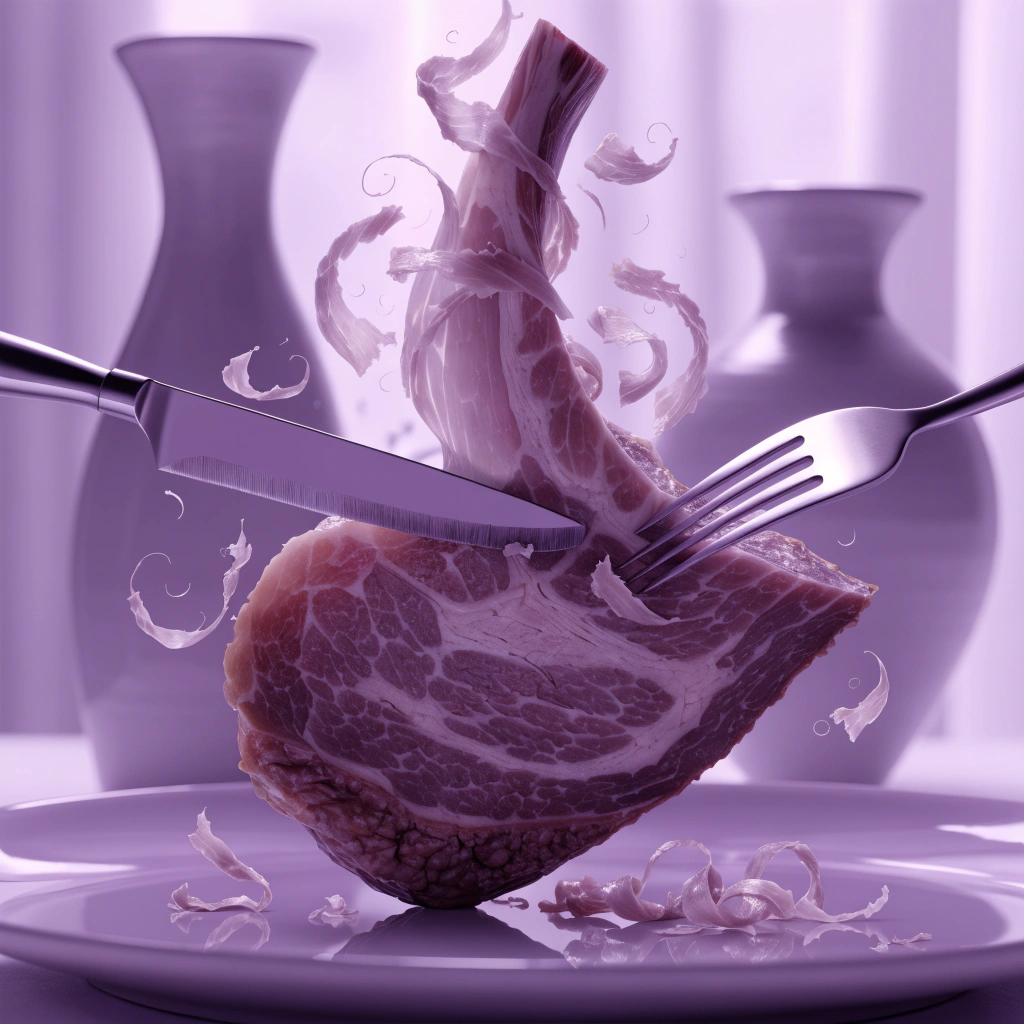
Jamón Ibérico: Ein besonderer Schinken aus Spanien
Jamón Ibérico ist ein sehr besonderer Schinken. Er kommt aus Spanien. Der Schinken ist von einem speziellen Schwein, dem Iberischen Schwein. Diese Schweine leben in einem großen Wald. Dort fressen sie viele Eicheln. Eicheln sind das Lieblingsessen der Schweine. Das macht den Schinken sehr lecker und einzigartig.
Der beste Schinken heißt Jamón Ibérico de Bellota. „Bellota“ bedeutet auf Spanisch „Eichel“. Die Schweine laufen viel im Wald und fressen nur Eicheln. Das ist gut für den Schinken. Er hat eine besondere Qualität und einen tollen Geschmack. Man isst Jamón Ibérico oft in dünnen Scheiben. Es ist ein Genuss und ein wichtiges Essen in Spanien.
Grammatik-Spotlight
Muster: Das Verb 'sein' (to be)
"Jamón Ibérico ist ein sehr besonderer Schinken."
'Sein' ist ein wichtiges Verb und bedeutet 'to be'. Es beschreibt, was oder wie etwas ist. Die Formen für 'ich', 'du', 'er/sie/es' sind 'bin', 'bist', 'ist'.
Muster: Nomen und Artikel (Nouns and Articles)
"Der Schinken ist von einem speziellen Schwein."
Alle Nomen (Sachen, Tiere, Personen) haben einen Artikel: 'der' (maskulin), 'die' (feminin) oder 'das' (neutral). 'Ein' und 'eine' sind unbestimmte Artikel, wenn man etwas zum ersten Mal nennt.
Teste dein Verständnis
10 Fragen · A1 Anfänger · 1 kostenlose Vorschau
Teste, was du aus diesem Artikel gelernt hast. Beantworte alle Fragen und sammle XP!
Woher kommt Jamón Ibérico?
Möchtest du das Quiz beenden?
9 weitere Fragen warten auf dich. Registriere dich kostenlos, um das vollständige Quiz freizuschalten und XP zu sammeln!
Kostenlos registrierenHast du schon ein Konto? Anmelden
Gut gemacht!
Weiter üben!
Bereits abgeschlossen — keine zusätzlichen XP
Registriere dich, um XP zu verdienenFragenübersicht
Woher kommt Jamón Ibérico?
Deine Antwort:
Richtige Antwort: Aus Spanien
Die Schweine fressen nur Gras.
Deine Antwort:
Richtige Antwort: Falsch
Was bedeutet 'Wald'?
Deine Antwort:
Richtige Antwort: Ein Platz mit vielen Bäumen
Die Schweine fressen viele ______.
Deine Antwort:
Richtige Antwort: Eicheln
Der beste Schinken der Welt: Jamón Ibérico
Spanien ist berühmt für sein Essen. Ein besonderes Produkt ist der „Jamón Ibérico de Bellota“. Dieser Schinken kommt von einer speziellen Schweinerasse aus Spanien. Diese Schweine sind meistens schwarz und leben oft draußen in der Natur.
Der wichtigste Ort für diese Tiere ist die „Dehesa“. Das ist ein großer Wald mit vielen Eichen. Im Herbst fressen die Schweine dort viele Eicheln. Diese Eicheln geben dem Schinken seinen besonderen Geschmack und machen das Fleisch sehr weich. Der Schinken ist gesund, weil die Schweine Eicheln fressen. Der Jamón Ibérico hat mehr Fett als normaler Schinken, aber dieses Fett ist gut für das Herz.
Die Produktion dauert lange. Der Schinken muss oft zwei oder drei Jahre trocknen. Deshalb ist er teurer als andere Fleischprodukte. Die Menschen in Spanien essen den Schinken oft in dünnen Scheiben mit Brot. Er schmeckt salzig und ein bisschen nussig. Für viele Spanier ist dieser Schinken nicht nur Essen, sondern ein Teil ihrer Kultur.
Grammatik-Spotlight
Muster: Komparativ
"Deshalb ist er teurer als andere Fleischprodukte."
Man benutzt den Komparativ, um zwei Dinge zu vergleichen. Man hängt meistens „-er“ an das Adjektiv und benutzt danach das Wort „als“.
Muster: Nebensätze mit „weil“
"Der Schinken ist gesund, weil die Schweine Eicheln fressen."
Das Wort „weil“ leitet einen Nebensatz ein, der einen Grund nennt. In diesem Satz steht das konjugierte Verb ganz am Ende.
Teste dein Verständnis
11 Fragen · A2 Grundkenntnisse · 1 kostenlose Vorschau
Teste, was du aus diesem Artikel gelernt hast. Beantworte alle Fragen und sammle XP!
Woher kommt der Jamón Ibérico?
Möchtest du das Quiz beenden?
10 weitere Fragen warten auf dich. Registriere dich kostenlos, um das vollständige Quiz freizuschalten und XP zu sammeln!
Kostenlos registrierenHast du schon ein Konto? Anmelden
Gut gemacht!
Weiter üben!
Bereits abgeschlossen — keine zusätzlichen XP
Registriere dich, um XP zu verdienenFragenübersicht
Woher kommt der Jamón Ibérico?
Deine Antwort:
Richtige Antwort: Aus Spanien
Die Schweine leben oft draußen in der Natur.
Deine Antwort:
Richtige Antwort: Richtig
Was bedeutet das Wort „Geschmack“?
Deine Antwort:
Richtige Antwort: Wie man Essen im Mund fühlt
Der Schinken muss oft zwei oder drei Jahre _____.
Deine Antwort:
Richtige Antwort: trocknen
Was fressen die Schweine in der Dehesa?
Deine Antwort:
Richtige Antwort: Eicheln
The Secrets of Spain's Most Famous Ham
Have you ever heard of Jamón Ibérico de Bellota? In Spain, this special ham is considered a national treasure. It has been produced for centuries using traditional methods that have not changed much over time. It is not just a snack; it is a symbol of Spanish culture.
The story begins with the Iberian pig, which is a unique breed found in the Iberian Peninsula. These pigs are famous because they have the genetic ability to store fat inside their muscle tissue. This creates a marbled texture that is very similar to expensive Wagyu beef. The best quality ham comes from pigs that live in the 'dehesa', which is a protected Mediterranean forest. During the autumn, the pigs roam freely and eat acorns, known as 'bellotas'. These acorns give the meat a nutty flavor and healthy fats.
The production process is long and requires a lot of patience. After the meat is prepared, it is covered in salt and left to dry in special cellars. This process is called curing. Some hams are cured for more than three years before they are ready to be eaten. During this time, the flavor becomes deeper and more complex.
Today, Jamón Ibérico de Bellota is enjoyed by people all over the world. It is usually served in very thin slices that melt in your mouth. Although it can be expensive, many people believe that it is worth the price because of the incredible history and hard work behind every piece. It represents a perfect balance between nature and tradition.
Grammatik-Spotlight
Muster: Present Perfect
"It has been produced for centuries using traditional methods that have not changed much over time."
The present perfect (have/has + past participle) is used here to describe an action that started in the past and continues to the present day.
Muster: Relative Clauses
"The story begins with the Iberian pig, which is a unique breed found in the Iberian Peninsula."
Relative clauses starting with 'which' or 'that' provide extra information about a noun. In this case, 'which' explains more about the Iberian pig.
Teste dein Verständnis
11 Fragen · B1 Mittelstufe · 1 kostenlose Vorschau
Teste, was du aus diesem Artikel gelernt hast. Beantworte alle Fragen und sammle XP!
What gives the meat its unique nutty flavor?
Möchtest du das Quiz beenden?
10 weitere Fragen warten auf dich. Registriere dich kostenlos, um das vollständige Quiz freizuschalten und XP zu sammeln!
Kostenlos registrierenHast du schon ein Konto? Anmelden
Gut gemacht!
Weiter üben!
Bereits abgeschlossen — keine zusätzlichen XP
Registriere dich, um XP zu verdienenFragenübersicht
What gives the meat its unique nutty flavor?
Deine Antwort:
Richtige Antwort: The acorns the pigs eat
The production methods for this ham have changed completely in the last year.
Deine Antwort:
Richtige Antwort: Falsch
What does 'curing' mean in the context of the article?
Deine Antwort:
Richtige Antwort: Preserving meat by salting and drying it
The best quality ham comes from pigs that live in the _____, a type of forest.
Deine Antwort:
Richtige Antwort: dehesa
How long can the curing process last for some hams?
Deine Antwort:
Richtige Antwort: More than three years
The Art and Ecology of Spain's Most Prestigious Delicacy
In the heart of the Iberian Peninsula, a culinary tradition persists that transcends mere food production, entering the realm of high art. Jamón Ibérico de Bellota is frequently hailed as the finest ham in the world, yet its prestigious reputation is built upon a complex foundation of genetics, ecology, and time-honored techniques. To understand its value, one must look beyond the final product to the unique biological heritage of the Iberian pig. Unlike commercial breeds, the 'Cerdo Ibérico' possesses a remarkable genetic trait: the ability to store fat within its muscle tissue. This physiological characteristic results in the exquisite marbling that is often compared to high-grade Wagyu beef. However, genetics alone do not account for the flavor.
The pigs are allowed to spend their final months roaming freely through the 'dehesa', an ancient Mediterranean ecosystem characterized by rolling hills and vast oak forests. During the 'montanera' season, these animals consume vast quantities of acorns (bellotas), which are rich in oleic acid. This specific diet not only influences the fat’s melting point but also imparts a distinctive, nutty aroma to the meat. The environmental significance of this practice cannot be overstated. The dehesa is a protected landscape that relies on sustainable grazing to maintain its biodiversity. By supporting the production of Jamón Ibérico, consumers are indirectly contributing to the preservation of this unique ecosystem. Were the demand for this artisanal product to vanish, the economic incentive to protect these oak forests would likely diminish, potentially leading to environmental degradation.
Furthermore, the transformation from raw meat to a gourmet delicacy involves a lengthy maturation process. Each leg of ham is salted and then hung in natural drying sheds, where it is exposed to the changing seasonal temperatures of the Spanish mountains. This curing period can last up to four years, during which complex chemical reactions occur. The proteins break down, and the fats stabilize, creating a depth of flavor that is both intense and nuanced. Ultimately, Jamón Ibérico de Bellota represents a harmonious balance between human intervention and natural cycles. It is a product that demands patience, requiring years of careful management before it reaches the consumer. For those who appreciate the intersection of culture and biology, it remains an unparalleled gastronomic experience, embodying the very essence of Spanish heritage.
Grammatik-Spotlight
Muster: Passive Voice
"Jamón Ibérico de Bellota is frequently hailed as the finest ham in the world."
The passive voice is used here to focus on the product rather than the people who praise it. It is formed using the verb 'to be' plus the past participle.
Muster: Inverted Conditionals
"Were the demand for this artisanal product to vanish, the economic incentive... would likely diminish."
This is a formal way to express a second conditional ('If the demand were to vanish'). It is used in academic or formal writing to vary sentence structure.
Muster: Relative Clauses
"...the 'dehesa', an ancient Mediterranean ecosystem characterized by rolling hills and vast oak forests."
A reduced relative clause is used here to provide descriptive detail about the 'dehesa' without needing to start a new sentence.
Teste dein Verständnis
11 Fragen · B2 Obere Mittelstufe · 1 kostenlose Vorschau
Teste, was du aus diesem Artikel gelernt hast. Beantworte alle Fragen und sammle XP!
What is unique about the Iberian pig's biology?
Möchtest du das Quiz beenden?
10 weitere Fragen warten auf dich. Registriere dich kostenlos, um das vollständige Quiz freizuschalten und XP zu sammeln!
Kostenlos registrierenHast du schon ein Konto? Anmelden
Gut gemacht!
Weiter üben!
Bereits abgeschlossen — keine zusätzlichen XP
Registriere dich, um XP zu verdienenFragenübersicht
What is unique about the Iberian pig's biology?
Deine Antwort:
Richtige Antwort: It can store fat within its muscle tissue
The curing process for the ham can take as long as four years.
Deine Antwort:
Richtige Antwort: Richtig
What does 'maturation' mean in the context of the article?
Deine Antwort:
Richtige Antwort: The process of the meat developing flavor over time
The dehesa relies on _____ grazing to maintain its biodiversity.
Deine Antwort:
Richtige Antwort: sustainable
According to the text, what is a consequence of the acorn diet?
Deine Antwort:
Richtige Antwort: It imparts a nutty aroma to the meat
The Gastronomic Alchemy of the Dehesa: Beyond the Cured Ham
Rarely does a culinary product achieve such a profound synthesis of biology, ecology, and heritage as Jamón Ibérico de Bellota. Often referred to as the 'Pata Negra' due to the distinctive black hooves of the Iberian pig, this delicacy is far more than a mere cured meat; it is a testament to a centuries-old symbiotic relationship between man and nature. At the heart of this artisanal masterpiece lies the 'dehesa', a protected Mediterranean ecosystem characterized by rolling hills and vast oak forests. It is within this unique landscape that the Iberian pig roams freely during the 'montanera', the final fattening phase where the animals subsist almost exclusively on fallen acorns, or bellotas.
What distinguishes the Iberian breed from its porcine counterparts is its remarkable physiological predisposition to store fat within its muscle tissue. This genetic trait results in the exquisite marbling often compared to Japanese Wagyu beef. However, the true magic occurs through the infiltration of oleic acid from the acorns into the meat. The consumption of these nuts not only alters the chemical composition of the fat, making it chemically similar to olive oil, but also imbues the ham with its signature nutty aroma and buttery texture. Such is the complexity of this process that any attempt to industrialize it invariably leads to a loss of the nuanced flavors that connoisseurs so highly prize.
Furthermore, the maturation process of Jamón Ibérico de Bellota is an exercise in extreme patience. The legs are salted and then hung in 'secaderos' (natural drying rooms) where they undergo a slow transformation over three to five years. During this time, the interplay of temperature and humidity allows for the steady development of umami-rich compounds. The preservation of this tradition, however, faces contemporary challenges. The encroachment of intensive farming and the potential impact of climate change on acorn production threaten the stability of the dehesa.
It is the meticulous adherence to traditional methods that ensures the authenticity of the product in an increasingly globalized market. While some might argue that the high price point of 'Bellota' grade ham is prohibitive, others maintain that it reflects the true cost of environmental stewardship and artisanal labor. Ultimately, the consumption of Jamón Ibérico de Bellota is not merely an act of eating; it is an engagement with a living history. The continued reverence for this product serves as a bulwark against the homogenization of global food culture, reminding us that some things simply cannot be rushed or replicated by modern machinery.
Grammatik-Spotlight
Muster: Inversion
"Rarely does a culinary product achieve such a profound synthesis of biology, ecology, and heritage as Jamón Ibérico de Bellota."
Inversion is used here by placing 'Rarely' at the beginning for emphasis. The auxiliary verb 'does' comes before the subject 'a culinary product' to create a more formal and dramatic tone.
Muster: Cleft Sentence
"It is within this unique landscape that the Iberian pig roams freely during the 'montanera'."
This 'It is... that' structure is a cleft sentence used to focus on the specific location. It emphasizes 'this unique landscape' as the crucial element of the sentence.
Muster: Nominalisation
"The preservation of this tradition, however, faces contemporary challenges."
The verb 'preserve' is turned into the noun 'preservation'. This is a hallmark of C1 writing as it allows for more abstract and concise expression of complex ideas.
Teste dein Verständnis
12 Fragen · C1 Fortgeschritten · 1 kostenlose Vorschau
Teste, was du aus diesem Artikel gelernt hast. Beantworte alle Fragen und sammle XP!
What is the primary factor that makes the fat in Jamón Ibérico de Bellota similar to olive oil?
Möchtest du das Quiz beenden?
11 weitere Fragen warten auf dich. Registriere dich kostenlos, um das vollständige Quiz freizuschalten und XP zu sammeln!
Kostenlos registrierenHast du schon ein Konto? Anmelden
Gut gemacht!
Weiter üben!
Bereits abgeschlossen — keine zusätzlichen XP
Registriere dich, um XP zu verdienenFragenübersicht
What is the primary factor that makes the fat in Jamón Ibérico de Bellota similar to olive oil?
Deine Antwort:
Richtige Antwort: The consumption of acorns rich in oleic acid
The article suggests that industrializing the production of this ham enhances its flavor profile.
Deine Antwort:
Richtige Antwort: Falsch
What does 'stewardship' mean in the context of the article?
Deine Antwort:
Richtige Antwort: Responsible management and care of the environment
The pigs spend their final fattening phase, known as the _____, eating acorns in the forest.
Deine Antwort:
Richtige Antwort: montanera
According to the text, what is a major threat to the 'dehesa' ecosystem?
Deine Antwort:
Richtige Antwort: Intensive farming and climate change
The maturation process can last as long as five years.
Deine Antwort:
Richtige Antwort: Richtig
Die Metaphysik des Geschmacks: Der Jamón Ibérico de Bellota als kulturelles und ökologisches Gesamtkunstwerk
Es wäre eine sträfliche Simplifizierung, den Jamón Ibérico de Bellota lediglich als profanes Lebensmittel zu klassifizieren. Vielmehr stellt er die Kulmination eines jahrhundertealten Prozesses dar, in dem sich Biologie, Ökologie und handwerkliche Tradition zu einer untrennbaren Symbiose vereinen. Man könnte gar konstatieren, dass die Dehesa ohne das iberische Schwein in ihrer jetzigen Form kaum überlebensfähig wäre. Dieser Artikel beleuchtet die komplexen Facetten dieses spanischen Kulturguts, das weit über die Grenzen der Gastronomie hinausreicht.
Das Fundament dieser Delikatesse bildet das 'Cerdo Ibérico', eine autochthone Rasse der Iberischen Halbinsel, die über eine einzigartige genetische Disposition verfügt. Im Gegensatz zu konventionellen Schweinerassen besitzt das iberische Schwein die Fähigkeit, Fett intramuskulär einzulagern. Die durch die intramuskuläre Fetteinlagerung bedingte Marmorierung verleiht dem Fleisch seine charakteristische Textur, die in ihrer Komplexität oft mit dem japanischen Wagyu-Rind verglichen wird. Doch erst die Interaktion mit der Umwelt – der Dehesa – verwandelt dieses genetische Potenzial in ein sensorisches Meisterwerk. Die Dehesa ist ein schützenswertes, parkartiges Ökosystem aus Stein- und Korkeichen, das durch nachhaltige Bewirtschaftung über Generationen hinweg erhalten wurde.
Der entscheidende Wendepunkt in der Genese des Schinkens ist die sogenannte 'Montanera'. Während dieser Phase, die sich von Oktober bis März erstreckt, streifen die Schweine frei durch die Dehesa und ernähren sich fast ausschließlich von Eicheln (Bellotas) und Gräsern. Eine ausgewachsene Eiche kann pro Saison beträchtliche Mengen an Früchten produzieren, die reich an Ölsäure sind – derselben einfach ungesättigten Fettsäure, die auch im Olivenöl dominiert. Durch den massiven Verzehr dieser Eicheln wird das Fett des Schweins chemisch verändert; es wird weicher und erhält ein nussiges Aroma, das später die aromatische Signatur des Schinkens ausmacht.
Nach der Schlachtung beginnt ein langwieriger Reifungsprozess, der bis zu vier oder fünf Jahre andauern kann. In den natürlichen Reifekammern, den 'Secaderos', und den unterirdischen Kellern, den 'Bodegas', vollzieht sich eine stille Metamorphose. Hierbei spielen biochemische Vorgänge wie die Lipolyse und Proteolyse eine zentrale Rolle. Enzyme spalten Fette und Proteine in kleinere, geschmacksintensive Moleküle auf, wodurch jene tiefe Umami-Note entsteht, die Kenner weltweit schätzen. Die Vollendung dieses kulinarischen Meisterwerks ist nur durch die akribische Einhaltung traditioneller Reifungsprozesse zu gewährleisten, bei denen Temperatur und Luftfeuchtigkeit ausschließlich durch das Öffnen und Schließen von Fenstern reguliert werden.
Es ließe sich jedoch einwenden, dass die industrielle Massenproduktion dieses fragile Gleichgewicht bedroht. Der echte 'Pata Negra', erkennbar am schwarzen Etikett, unterliegt strengsten Kontrollen, um die Authentizität und Qualität zu sichern. Nur wenn das Schwein reinrassig ist und die Montanera nachweislich in der Dehesa absolviert hat, darf das Endprodukt diesen prestigeträchtigen Namen tragen. Somit ist der Jamón Ibérico de Bellota nicht nur ein Genussmittel, sondern ein Manifest für den Erhalt von Biodiversität und kultureller Identität. Er verkörpert die Antithese zur modernen Fast-Food-Kultur: Zeit, Geduld und der Respekt vor den Zyklen der Natur sind die Ingredienzen, die ihn zu dem machen, was er ist – ein flüchtiger Moment der Perfektion auf der Zunge.
Grammatik-Spotlight
Muster: Konjunktiv II zur Modalisierung
"Man könnte gar konstatieren, dass die Dehesa ohne das iberische Schwein in ihrer jetzigen Form kaum überlebensfähig wäre."
Der Konjunktiv II wird hier verwendet, um eine vorsichtige Behauptung oder eine hypothetische Schlussfolgerung auszudrücken. Dies ist typisch für den akademischen Stil, um Distanz zu wahren oder Möglichkeiten zu erörtern.
Muster: Erweitertes Partizipialattribut
"Die durch die intramuskuläre Fetteinlagerung bedingte Marmorierung verleiht dem Fleisch seine charakteristische Textur."
Hier fungiert das Partizip II ('bedingte') zusammen mit seinen Ergänzungen als Adjektiv vor dem Nomen. Diese Struktur ermöglicht eine hohe Informationsdichte in einem einzigen Satzglied.
Muster: Gerundivum (sein + zu + Infinitiv)
"Die Vollendung dieses kulinarischen Meisterwerks ist nur durch die akribische Einhaltung traditioneller Reifungsprozesse zu gewährleisten."
Diese Konstruktion drückt eine Notwendigkeit oder Möglichkeit aus und dient als Passiversatz. Es bedeutet hier, dass die Vollendung gewährleistet werden muss oder kann.
Teste dein Verständnis
12 Fragen · C2 Meisterschaft · 1 kostenlose Vorschau
Teste, was du aus diesem Artikel gelernt hast. Beantworte alle Fragen und sammle XP!
Was unterscheidet das iberische Schwein genetisch von anderen Rassen?
Möchtest du das Quiz beenden?
11 weitere Fragen warten auf dich. Registriere dich kostenlos, um das vollständige Quiz freizuschalten und XP zu sammeln!
Kostenlos registrierenHast du schon ein Konto? Anmelden
Gut gemacht!
Weiter üben!
Bereits abgeschlossen — keine zusätzlichen XP
Registriere dich, um XP zu verdienenFragenübersicht
Was unterscheidet das iberische Schwein genetisch von anderen Rassen?
Deine Antwort:
Richtige Antwort: Es hat die Fähigkeit, Fett innerhalb der Muskeln zu speichern.
Die Dehesa ist ein rein natürliches Ökosystem, das ohne menschliche Bewirtschaftung entstanden ist.
Deine Antwort:
Richtige Antwort: Falsch
Was beschreibt der Begriff 'Montanera'?
Deine Antwort:
Richtige Antwort: Die Phase der Eichelmast im Freien.
Die chemische Veränderung des Fettes wird maßgeblich durch die im Olivenöl ebenfalls vorkommende _____ beeinflusst.
Deine Antwort:
Richtige Antwort: Ölsäure
Wie wird die Temperatur in den traditionellen 'Secaderos' reguliert?
Deine Antwort:
Richtige Antwort: Durch das Öffnen und Schließen von Fenstern.
Der echte 'Pata Negra' muss nachweislich von reinrassigen iberischen Schweinen stammen.
Deine Antwort:
Richtige Antwort: Richtig

