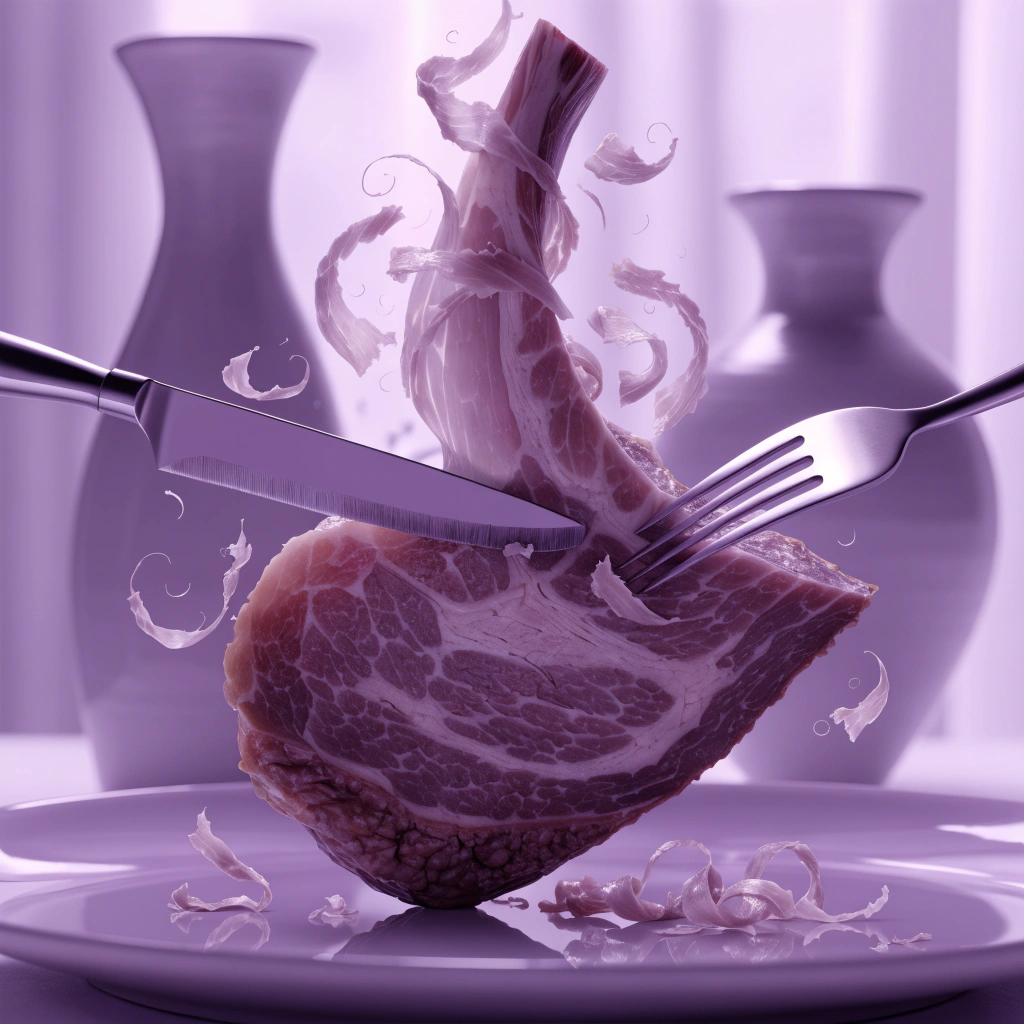
A Special Ham from Spain
Jamón Ibérico is a special ham from Spain. It is very famous and delicious. This ham is not like other ham. It is an important part of Spanish culture.
The pigs live in a big forest called the dehesa. They are free and happy. In the autumn, the pigs eat many acorns. Acorns are small nuts from oak trees. This food makes the meat very tasty and soft.
People in Spain eat this ham at parties and festivals. It is expensive but very good. Many tourists visit Spain to try this special food.
Grammar Spotlight
Pattern: Present Simple with 'be'
"It is very famous and delicious."
We use 'is' for singular things like 'it' or 'the ham'. This describes a fact or a state that is always true.
Pattern: Present Simple Plural
"The pigs live in a big forest."
When the subject is plural (the pigs), the verb does not have an 's'. Use the base form of the verb for facts about groups.
Test Your Understanding
10 questions · A1 Beginner · 1 free preview
Test what you learned from this article. Answer all questions to earn XP!
Where is Jamón Ibérico from?
Want to finish the quiz?
9 more questions are waiting for you. Sign up free to unlock the full quiz and earn XP!
Sign Up FreeAlready have an account? Sign In
Question Breakdown
Where is Jamón Ibérico from?
Your answer:
Correct answer: Spain
The pigs live in small cages.
Your answer:
Correct answer: False
What does 'delicious' mean?
Your answer:
Correct answer: Very good taste
In the autumn, the pigs eat many _____.
Your answer:
Correct answer: acorns
The Special Ham of Spain
Jamón Ibérico is a very special type of ham from Spain. It is not like normal ham because it comes from a unique pig. People call the best type 'Jamón Ibérico de Bellota.'
These pigs live in a beautiful place called the 'dehesa.' This is a large forest with many trees. The pigs are very happy because they can walk and run freely. They are healthier than other pigs. In the autumn, the pigs eat acorns. In Spanish, these are called 'bellotas.' The acorns give the meat a wonderful taste.
The process of making this ham is very slow. Farmers dry the meat for many months or even years. This tradition is very old and important in Spain. Many people think it is an artisanal masterpiece. It is more expensive than regular ham, but the flavor is amazing. Families often eat it during festivals and special holidays.
Grammar Spotlight
Pattern: Comparatives
"They are healthier than other pigs."
We use the comparative form (adjective + 'er') followed by 'than' to compare two things. For short adjectives like 'healthy', we change the 'y' to 'i' and add 'er'.
Pattern: Connectors: Because
"The pigs are very happy because they can walk and run freely."
We use 'because' to introduce a reason or an explanation. It connects two parts of a sentence to show why something happens.
Test Your Understanding
11 questions · A2 Elementary · 1 free preview
Test what you learned from this article. Answer all questions to earn XP!
Where does Jamón Ibérico come from?
Want to finish the quiz?
10 more questions are waiting for you. Sign up free to unlock the full quiz and earn XP!
Sign Up FreeAlready have an account? Sign In
Question Breakdown
Where does Jamón Ibérico come from?
Your answer:
Correct answer: Spain
The pigs live in a large forest called the dehesa.
Your answer:
Correct answer: True
What is a 'tradition'?
Your answer:
Correct answer: An old custom or way of doing things
In the autumn, the pigs eat _____.
Your answer:
Correct answer: acorns
How long do farmers dry the meat?
Your answer:
Correct answer: Many months or years
The Secrets of Spain's Most Famous Ham
Have you ever heard of Jamón Ibérico de Bellota? In Spain, this special ham is considered a national treasure. It has been produced for centuries using traditional methods that have not changed much over time. It is not just a snack; it is a symbol of Spanish culture.
The story begins with the Iberian pig, which is a unique breed found in the Iberian Peninsula. These pigs are famous because they have the genetic ability to store fat inside their muscle tissue. This creates a marbled texture that is very similar to expensive Wagyu beef. The best quality ham comes from pigs that live in the 'dehesa', which is a protected Mediterranean forest. During the autumn, the pigs roam freely and eat acorns, known as 'bellotas'. These acorns give the meat a nutty flavor and healthy fats.
The production process is long and requires a lot of patience. After the meat is prepared, it is covered in salt and left to dry in special cellars. This process is called curing. Some hams are cured for more than three years before they are ready to be eaten. During this time, the flavor becomes deeper and more complex.
Today, Jamón Ibérico de Bellota is enjoyed by people all over the world. It is usually served in very thin slices that melt in your mouth. Although it can be expensive, many people believe that it is worth the price because of the incredible history and hard work behind every piece. It represents a perfect balance between nature and tradition.
Grammar Spotlight
Pattern: Present Perfect
"It has been produced for centuries using traditional methods that have not changed much over time."
The present perfect (have/has + past participle) is used here to describe an action that started in the past and continues to the present day.
Pattern: Relative Clauses
"The story begins with the Iberian pig, which is a unique breed found in the Iberian Peninsula."
Relative clauses starting with 'which' or 'that' provide extra information about a noun. In this case, 'which' explains more about the Iberian pig.
Test Your Understanding
11 questions · B1 Intermediate · 1 free preview
Test what you learned from this article. Answer all questions to earn XP!
What gives the meat its unique nutty flavor?
Want to finish the quiz?
10 more questions are waiting for you. Sign up free to unlock the full quiz and earn XP!
Sign Up FreeAlready have an account? Sign In
Question Breakdown
What gives the meat its unique nutty flavor?
Your answer:
Correct answer: The acorns the pigs eat
The production methods for this ham have changed completely in the last year.
Your answer:
Correct answer: False
What does 'curing' mean in the context of the article?
Your answer:
Correct answer: Preserving meat by salting and drying it
The best quality ham comes from pigs that live in the _____, a type of forest.
Your answer:
Correct answer: dehesa
How long can the curing process last for some hams?
Your answer:
Correct answer: More than three years
The Art and Ecology of Spain's Most Prestigious Delicacy
In the heart of the Iberian Peninsula, a culinary tradition persists that transcends mere food production, entering the realm of high art. Jamón Ibérico de Bellota is frequently hailed as the finest ham in the world, yet its prestigious reputation is built upon a complex foundation of genetics, ecology, and time-honored techniques. To understand its value, one must look beyond the final product to the unique biological heritage of the Iberian pig. Unlike commercial breeds, the 'Cerdo Ibérico' possesses a remarkable genetic trait: the ability to store fat within its muscle tissue. This physiological characteristic results in the exquisite marbling that is often compared to high-grade Wagyu beef. However, genetics alone do not account for the flavor.
The pigs are allowed to spend their final months roaming freely through the 'dehesa', an ancient Mediterranean ecosystem characterized by rolling hills and vast oak forests. During the 'montanera' season, these animals consume vast quantities of acorns (bellotas), which are rich in oleic acid. This specific diet not only influences the fat’s melting point but also imparts a distinctive, nutty aroma to the meat. The environmental significance of this practice cannot be overstated. The dehesa is a protected landscape that relies on sustainable grazing to maintain its biodiversity. By supporting the production of Jamón Ibérico, consumers are indirectly contributing to the preservation of this unique ecosystem. Were the demand for this artisanal product to vanish, the economic incentive to protect these oak forests would likely diminish, potentially leading to environmental degradation.
Furthermore, the transformation from raw meat to a gourmet delicacy involves a lengthy maturation process. Each leg of ham is salted and then hung in natural drying sheds, where it is exposed to the changing seasonal temperatures of the Spanish mountains. This curing period can last up to four years, during which complex chemical reactions occur. The proteins break down, and the fats stabilize, creating a depth of flavor that is both intense and nuanced. Ultimately, Jamón Ibérico de Bellota represents a harmonious balance between human intervention and natural cycles. It is a product that demands patience, requiring years of careful management before it reaches the consumer. For those who appreciate the intersection of culture and biology, it remains an unparalleled gastronomic experience, embodying the very essence of Spanish heritage.
Grammar Spotlight
Pattern: Passive Voice
"Jamón Ibérico de Bellota is frequently hailed as the finest ham in the world."
The passive voice is used here to focus on the product rather than the people who praise it. It is formed using the verb 'to be' plus the past participle.
Pattern: Inverted Conditionals
"Were the demand for this artisanal product to vanish, the economic incentive... would likely diminish."
This is a formal way to express a second conditional ('If the demand were to vanish'). It is used in academic or formal writing to vary sentence structure.
Pattern: Relative Clauses
"...the 'dehesa', an ancient Mediterranean ecosystem characterized by rolling hills and vast oak forests."
A reduced relative clause is used here to provide descriptive detail about the 'dehesa' without needing to start a new sentence.
Test Your Understanding
11 questions · B2 Upper Intermediate · 1 free preview
Test what you learned from this article. Answer all questions to earn XP!
What is unique about the Iberian pig's biology?
Want to finish the quiz?
10 more questions are waiting for you. Sign up free to unlock the full quiz and earn XP!
Sign Up FreeAlready have an account? Sign In
Question Breakdown
What is unique about the Iberian pig's biology?
Your answer:
Correct answer: It can store fat within its muscle tissue
The curing process for the ham can take as long as four years.
Your answer:
Correct answer: True
What does 'maturation' mean in the context of the article?
Your answer:
Correct answer: The process of the meat developing flavor over time
The dehesa relies on _____ grazing to maintain its biodiversity.
Your answer:
Correct answer: sustainable
According to the text, what is a consequence of the acorn diet?
Your answer:
Correct answer: It imparts a nutty aroma to the meat
The Gastronomic Alchemy of the Dehesa: Beyond the Cured Ham
Rarely does a culinary product achieve such a profound synthesis of biology, ecology, and heritage as Jamón Ibérico de Bellota. Often referred to as the 'Pata Negra' due to the distinctive black hooves of the Iberian pig, this delicacy is far more than a mere cured meat; it is a testament to a centuries-old symbiotic relationship between man and nature. At the heart of this artisanal masterpiece lies the 'dehesa', a protected Mediterranean ecosystem characterized by rolling hills and vast oak forests. It is within this unique landscape that the Iberian pig roams freely during the 'montanera', the final fattening phase where the animals subsist almost exclusively on fallen acorns, or bellotas.
What distinguishes the Iberian breed from its porcine counterparts is its remarkable physiological predisposition to store fat within its muscle tissue. This genetic trait results in the exquisite marbling often compared to Japanese Wagyu beef. However, the true magic occurs through the infiltration of oleic acid from the acorns into the meat. The consumption of these nuts not only alters the chemical composition of the fat, making it chemically similar to olive oil, but also imbues the ham with its signature nutty aroma and buttery texture. Such is the complexity of this process that any attempt to industrialize it invariably leads to a loss of the nuanced flavors that connoisseurs so highly prize.
Furthermore, the maturation process of Jamón Ibérico de Bellota is an exercise in extreme patience. The legs are salted and then hung in 'secaderos' (natural drying rooms) where they undergo a slow transformation over three to five years. During this time, the interplay of temperature and humidity allows for the steady development of umami-rich compounds. The preservation of this tradition, however, faces contemporary challenges. The encroachment of intensive farming and the potential impact of climate change on acorn production threaten the stability of the dehesa.
It is the meticulous adherence to traditional methods that ensures the authenticity of the product in an increasingly globalized market. While some might argue that the high price point of 'Bellota' grade ham is prohibitive, others maintain that it reflects the true cost of environmental stewardship and artisanal labor. Ultimately, the consumption of Jamón Ibérico de Bellota is not merely an act of eating; it is an engagement with a living history. The continued reverence for this product serves as a bulwark against the homogenization of global food culture, reminding us that some things simply cannot be rushed or replicated by modern machinery.
Grammar Spotlight
Pattern: Inversion
"Rarely does a culinary product achieve such a profound synthesis of biology, ecology, and heritage as Jamón Ibérico de Bellota."
Inversion is used here by placing 'Rarely' at the beginning for emphasis. The auxiliary verb 'does' comes before the subject 'a culinary product' to create a more formal and dramatic tone.
Pattern: Cleft Sentence
"It is within this unique landscape that the Iberian pig roams freely during the 'montanera'."
This 'It is... that' structure is a cleft sentence used to focus on the specific location. It emphasizes 'this unique landscape' as the crucial element of the sentence.
Pattern: Nominalisation
"The preservation of this tradition, however, faces contemporary challenges."
The verb 'preserve' is turned into the noun 'preservation'. This is a hallmark of C1 writing as it allows for more abstract and concise expression of complex ideas.
Test Your Understanding
12 questions · C1 Advanced · 1 free preview
Test what you learned from this article. Answer all questions to earn XP!
What is the primary factor that makes the fat in Jamón Ibérico de Bellota similar to olive oil?
Want to finish the quiz?
11 more questions are waiting for you. Sign up free to unlock the full quiz and earn XP!
Sign Up FreeAlready have an account? Sign In
Question Breakdown
What is the primary factor that makes the fat in Jamón Ibérico de Bellota similar to olive oil?
Your answer:
Correct answer: The consumption of acorns rich in oleic acid
The article suggests that industrializing the production of this ham enhances its flavor profile.
Your answer:
Correct answer: False
What does 'stewardship' mean in the context of the article?
Your answer:
Correct answer: Responsible management and care of the environment
The pigs spend their final fattening phase, known as the _____, eating acorns in the forest.
Your answer:
Correct answer: montanera
According to the text, what is a major threat to the 'dehesa' ecosystem?
Your answer:
Correct answer: Intensive farming and climate change
The maturation process can last as long as five years.
Your answer:
Correct answer: True
The Gastronomic Alchemy of the Dehesa: An Ontological Analysis of Jamón Ibérico de Bellota
To contemplate the Jamón Ibérico de Bellota is to engage with a profound intersection of evolutionary biology, anthropogenic landscape management, and ancestral tradition. Central to this discourse is the dehesa, a meticulously managed Mediterranean ecosystem where the holm oak reigns supreme, providing the essential sustenance for the Iberian pig. Were one to traverse these undulating plains during the montanera—the final fattening phase—the significance of this ecological symbiosis would become immediately apparent. The Iberian pig, an inimitable breed native to the peninsula, possesses a singular genetic predisposition for interstitial fat infiltration. This physiological anomaly, characterized by the storage of lipids within the muscle tissue rather than merely beneath the dermis, renders its musculature a canvas of marbled excellence, reminiscent of the finest Wagyu beef.
This genetic blueprint is further augmented by the porcine diet, which is predominantly comprised of acorns (bellotas) rich in oleic acid. As the pigs forage across the dehesa, they ingest vast quantities of these nuts, the chemical constituents of which are integrated into their cellular structure. It is imperative that the specimen be allowed to roam freely; the physical exertion of foraging ensures that the fat is distributed evenly throughout the muscle, preventing the accumulation of undesirable adipose deposits. This interaction between breed and environment creates a product that is, quite literally, the physical manifestation of the landscape itself.
However, the creation of Jamón Ibérico de Bellota is not solely a biological feat; it is a temporal one. The curing process must be viewed not merely as a method of preservation, but as an alchemical transformation. Once the haunches are harvested, they are buried in sea salt before being moved to 'secaderos' (natural drying houses). Over a period of three to five years, the hams are subjected to the fluctuating temperatures and humidity of the Spanish mountain ranges. During this time, the fats undergo a complex process of proteolysis and lipolysis. Not only does this process elicit a myriad of complex volatile compounds, but it also creates a texture so evanescent that it dissolves upon the palate, releasing a spectrum of flavors ranging from nutty sweetness to earthy umami.
The provenance of the ham is sacrosanct, protected by stringent 'Denominación de Origen' regulations that ensure its status as a paragon of Spanish heritage. These legal frameworks dictate everything from the purity of the porcine lineage to the exact number of trees required per animal. Should any element of this delicate balance be disturbed—be it through intensive farming practices or environmental degradation—the resultant product would fail to achieve the sensory depth required of a true Bellota. One might even posit that the ham serves as a biological archive, preserving the environmental conditions of a specific time and place within its fibers.
Furthermore, the cultural sovereignty of this delicacy cannot be overstated. It represents a vestige of a pre-industrial era, where the rhythm of production was dictated by the seasons rather than the exigencies of the global market. In an age of mass production and hyper-processed foods, the Jamón Ibérico de Bellota stands as a testament to the enduring value of patience, craftsmanship, and ecological stewardship. It is a sensory experience that demands a corresponding level of intellectual engagement, inviting the epicurean to reflect upon the intricate web of relationships that sustain such a masterpiece. To consume it is to participate in a form of temporal communion, a way for the modern individual to reconnect with the slow, deliberate pulse of the natural world, mediated by the hand of the artisan.
Grammar Spotlight
Pattern: Inverted Conditional
"Were one to traverse these undulating plains during the montanera—the final fattening phase—the significance of this ecological symbiosis would become immediately apparent."
This structure replaces 'If one were to...' with 'Were one to...'. It is a formal, high-level way to express a hypothetical situation in the present or future, typical of academic and literary C2 prose.
Pattern: Subjunctive Mood
"It is imperative that the specimen be allowed to roam freely."
The subjunctive 'be allowed' follows the adjective 'imperative'. This mood is used to express necessity, urgency, or requirements, and is a hallmark of formal English proficiency.
Pattern: Negative Inversion
"Not only does this process elicit a myriad of complex volatile compounds, but it also creates a texture so evanescent that it dissolves upon the palate."
Starting a sentence with a negative or restrictive phrase ('Not only') requires inverting the subject and the auxiliary verb ('does this process elicit'). It adds rhetorical emphasis and sophistication.
Test Your Understanding
12 questions · C2 Mastery · 1 free preview
Test what you learned from this article. Answer all questions to earn XP!
What is the primary biological advantage mentioned regarding the Iberian pig?
Want to finish the quiz?
11 more questions are waiting for you. Sign up free to unlock the full quiz and earn XP!
Sign Up FreeAlready have an account? Sign In
Question Breakdown
What is the primary biological advantage mentioned regarding the Iberian pig?
Your answer:
Correct answer: The ability to store fat within the muscle tissue
The curing process is described as a simple method of preventing decay.
Your answer:
Correct answer: False
Which word describes something that is impossible to copy or unique?
Your answer:
Correct answer: Inimitable
The dehesa is a meticulously managed _____ ecosystem.
Your answer:
Correct answer: Mediterranean
According to the text, why is the physical movement of the pigs essential?
Your answer:
Correct answer: To ensure the fat is distributed evenly through the muscle
The text suggests that modern industrial practices could potentially improve the quality of the ham.
Your answer:
Correct answer: False
