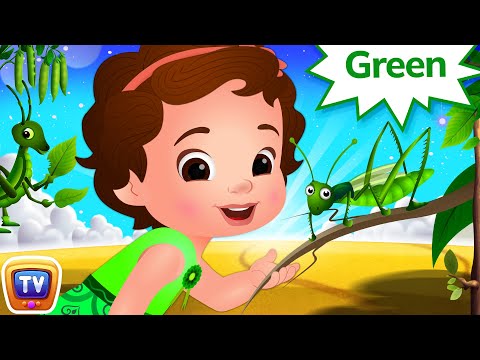
grasshopper in 30 Sekunden
- A grasshopper is a jumping insect with powerful hind legs and short antennae.
- They are primarily green or brown and are active during the daylight hours.
- Grasshoppers are herbivores that can sometimes become agricultural pests in large numbers.
- They are famous for their jumping ability and the 'chirping' sound they make.
The word grasshopper refers to a diverse group of insects belonging to the suborder Caelifera. These creatures are most famously recognized for their extraordinary ability to leap great distances relative to their body size, a feat made possible by their powerful, oversized hind legs. In a biological sense, grasshoppers are hemimetabolous insects, meaning they do not undergo a complete metamorphosis like butterflies; instead, they hatch from eggs into nymphs that closely resemble miniature adults. They are primarily herbivorous, consuming a wide variety of plant matter, which occasionally positions them as significant pests in agricultural settings when their populations swell. Beyond their physical capabilities, grasshoppers are cultural icons, often symbolizing the carefree nature of summer or, in some traditions, the folly of failing to prepare for the future. People use this word most frequently when describing nature, gardening, or when observing the rhythmic sounds of a summer meadow. The sound they produce, known as stridulation, is created by rubbing their hind legs against their forewings, a behavior often confused with the chirping of crickets. In conversational English, the term is straightforward, but it carries a weight of nostalgia for many, evoking memories of childhood exploration in tall grass. Scientists use the term specifically to distinguish these diurnal (active during the day) insects from their nocturnal relatives. Understanding the grasshopper requires looking at its role in the food chain, where it serves as a vital protein source for birds, rodents, and even other insects. When you see a grasshopper, you are looking at a master of camouflage; many species have evolved to blend perfectly with the green leaves or brown stalks of their environment, making them invisible until they suddenly propel themselves into the air.
- Biological Classification
- Grasshoppers belong to the kingdom Animalia, phylum Arthropoda, and class Insecta. They are specifically categorized under the order Orthoptera.
- Primary Habitat
- They are found globally, except in the coldest polar regions, thriving in grasslands, forests, and even urban gardens where vegetation is plentiful.
- Dietary Habits
- Most species are polyphagous, meaning they eat a variety of plants, though some specialize in specific grasses or leafy greens.
As the sun began to set, a lone grasshopper perched on a blade of wheat, its vibrant green body almost invisible against the stalk.
The children spent the afternoon trying to catch a grasshopper in a glass jar, marveling at its powerful legs.
Farmers often worry when they see too many grasshoppers in the spring, as it might signal a coming plague of locusts.
In the famous fable, the grasshopper sang all summer while the ant worked hard to store food.
The macro lens captured the intricate details of the grasshopper's compound eyes and delicate wings.
Using the word grasshopper effectively requires an understanding of its literal and metaphorical applications. Literally, it is a noun used to identify the insect. When writing about it, you might focus on its actions—jumping, leaping, chirping, or eating. For example, 'The grasshopper leaped from the stone to the flower.' Here, the verb 'leaped' emphasizes the insect's primary mode of movement. Metaphorically, 'grasshopper' is sometimes used to refer to a student or a novice, particularly in the context of martial arts or spiritual mentorship, popularized by the television show 'Kung Fu'. In this sense, an elder might say, 'Patience, young grasshopper,' implying that the student has much to learn before they can 'leap' to the level of the master. When describing the insect, adjectives like 'vibrant', 'camouflaged', 'spry', and 'voracious' are common. You might also use it in collective terms; while a group of grasshoppers is generally just called a group, when they swarm, they become a 'cloud' or a 'plague'. In scientific writing, you would use the term to discuss ecological balance or entomology. In creative writing, the grasshopper often serves as a symbol of the fleeting nature of time or the beauty of the natural world. It is important to distinguish it from other insects in your writing to provide clarity. For instance, if you mention a 'chirping sound at night', you are likely referring to a cricket, not a grasshopper, as grasshoppers are primarily active during the day. Using the word in a sentence often involves setting a scene of a field, a garden, or a hot summer day, as these are the environments most closely associated with the creature.
- Action Verbs
- Common verbs include: leap, jump, spring, chirp, stridulate, munch, and flutter.
- Descriptive Adjectives
- Typical adjectives: emerald, long-legged, skittish, herbivorous, and ubiquitous.
- Contextual Phrases
- Phrases like 'knee-high to a grasshopper' or 'the song of the grasshopper' add flavor to your prose.
The grasshopper's sudden movement startled the cat, which had been stalking it through the tall weeds.
With a powerful kick of its hind legs, the grasshopper launched itself into the safety of the oak tree.
You will encounter the word grasshopper in a variety of real-world settings, ranging from the educational to the culinary. In classrooms and educational documentaries, the word is used to teach children about the insect world, life cycles, and the food chain. Teachers often use the grasshopper as a primary example of an insect because of its visible body parts and interesting behaviors. In the world of agriculture and gardening, the word is frequently heard in discussions about pest control. Farmers might talk about 'grasshopper pressure' on their crops, referring to the potential damage these insects can cause. Interestingly, in many parts of the world, including Mexico, Thailand, and parts of Africa, 'grasshopper' is a word you might hear at a food market. Known as 'chapulines' in Mexico, they are a popular, protein-rich snack, often toasted with chili and lime. In literature and folklore, the word is a staple. You'll hear it in Aesop's Fables, where the grasshopper's lack of foresight is contrasted with the ant's diligence. In modern pop culture, the word appears in movies and television, sometimes as a character name or a nickname. Musicians also use the word in lyrics to evoke a sense of nature or summertime. Furthermore, in the cocktail world, a 'Grasshopper' is a famous mint-flavored, cream-based drink, named for its bright green color. Whether you are in a science lab, a cornfield, a traditional market, or a high-end bar, the word 'grasshopper' carries distinct meanings that are easily understood within their specific contexts.
- In Education
- 'Today we will dissect a grasshopper to study the respiratory system of insects.'
- In Culinary Arts
- 'Would you like to try the toasted grasshoppers? They are a local delicacy and very crunchy.'
- In Mixology
- 'The bartender served a classic Grasshopper, garnished with a sprig of fresh mint.'
The nature guide pointed out a grasshopper and explained how it uses its ears, located on its abdomen, to hear.
One of the most frequent mistakes learners make is confusing the grasshopper with other similar-looking insects, most notably the cricket and the locust. While they all belong to the same order (Orthoptera), they have distinct differences. A common error is assuming that any jumping, chirping insect is a grasshopper. However, crickets are usually nocturnal, have longer antennae, and are often brown or black, whereas grasshoppers are diurnal, have shorter antennae, and are frequently green. Another significant point of confusion is the relationship between grasshoppers and locusts. Many people do not realize that a locust is actually a type of grasshopper that has entered a 'gregarious' phase, where it changes color and behavior to swarm. In writing, a common mistake is the spelling; learners sometimes forget the double 's' or the 'h', resulting in 'grashopper' or 'grassoper'. Pronunciation can also be tricky, particularly the 'ss' sound followed by the 'h'. It should be a smooth transition, not a stuttered one. Furthermore, using the term 'grasshopper' to describe a very small person (like 'knee-high to a grasshopper') is an idiom that can be misused if the context isn't right—it's an informal, somewhat old-fashioned way of speaking. Finally, in scientific contexts, calling a 'katydid' a grasshopper is technically incorrect, as katydids belong to a different family (Tettigoniidae) and are often called 'long-horned grasshoppers', though they are more closely related to crickets. Being precise with these terms will greatly improve your descriptive accuracy in English.
- Grasshopper vs. Cricket
- Grasshoppers are active by day; crickets are active by night. Grasshoppers have short antennae; crickets have long ones.
- Grasshopper vs. Locust
- All locusts are grasshoppers, but they are the swarming, migratory version of specific species.
Incorrect: 'I heard the grasshopper chirping in my bedroom at midnight.' (Likely a cricket).
When you want to avoid repeating the word grasshopper or when you need to be more specific, there are several alternatives you can use. The most common related terms are 'cricket', 'locust', and 'katydid'. While not perfect synonyms, they are often used in similar contexts. If you are looking for a more general term, 'insect' or 'bug' works, though they lack the specificity of the grasshopper's unique jumping ability. In a more poetic or literary context, you might use 'leaper' or 'meadow-dweller'. For scientific purposes, the suborder name 'Caelifera' is the most accurate. If you are describing the sound they make, you might focus on the 'stridulator'. Comparing the grasshopper to other insects can also help clarify your meaning. For instance, a 'mantis' is also a large, green insect, but it is a predator, unlike the herbivorous grasshopper. A 'cicada' is also known for its loud summer song, but it lives in trees and has a very different physical appearance. Using these alternatives correctly depends on the level of detail you wish to provide. If you are writing a children's story, 'grasshopper' is perfect. If you are writing a report on crop destruction, 'locust' might be the more impactful choice. Understanding the nuances between these similar words allows you to paint a clearer picture for your audience and demonstrates a higher level of English proficiency.
- Locust
- Use this when referring to the swarming, destructive phase of certain grasshopper species.
- Cricket
- Use this for the nocturnal, long-antennaed insect known for its loud chirping.
- Katydid
- Also called 'bush crickets', these are often leaf-shaped and very green.
While the grasshopper is a solitary feeder, the locust is a social, swarming threat to agriculture.
How Formal Is It?
Wusstest du?
The term 'locust' comes from the Latin 'locusta', which originally meant both 'grasshopper' and 'lobster'!
Aussprachehilfe
- Pronouncing it as 'grash-opper' (merging the s and h).
- Forgetting the 'h' sound entirely.
- Putting stress on the second syllable.
- Confusing the 'a' sound with 'o'.
- Making the 'p' sound too soft.
Schwierigkeitsgrad
Easy to recognize in text due to its descriptive name.
Spelling can be tricky with the double 's' and the 'h'.
The 'ss-h' transition requires some practice for non-native speakers.
Clear pronunciation usually makes it easy to identify.
Was du als Nächstes lernen solltest
Voraussetzungen
Als Nächstes lernen
Fortgeschritten
Wichtige Grammatik
Compound Nouns
Grass + Hopper = Grasshopper.
Irregular Plurals (Not this one)
Grasshopper follows the regular plural rule: add -s.
Articles with Insects
Use 'a' before grasshopper, 'an' before insect.
Adverb Placement
The grasshopper jumped *quickly*.
Similes
He jumps *like a grasshopper*.
Beispiele nach Niveau
The grasshopper is green.
Le criquet est vert.
Subject + Verb + Adjective.
I see a grasshopper in the garden.
Je vois un criquet dans le jardin.
Simple present tense.
The grasshopper can jump.
Le criquet peut sauter.
Modal verb 'can' for ability.
It has long legs.
Il a de longues pattes.
Possessive 'has'.
Grasshoppers eat grass.
Les criquets mangent de l'herbe.
Plural noun + base verb.
Look at that big grasshopper!
Regarde ce gros criquet !
Imperative sentence.
A grasshopper is an insect.
Un criquet est un insecte.
Article 'an' before a vowel sound.
The grasshopper is small.
Le criquet est petit.
Simple descriptive sentence.
The grasshopper jumped over the small rock.
Le criquet a sauté par-dessus le petit rocher.
Past tense 'jumped'.
We heard the grasshoppers in the field all day.
Nous avons entendu les criquets dans le champ toute la journée.
Past tense 'heard'.
Is that a grasshopper or a cricket?
Est-ce un criquet ou un grillon ?
Interrogative sentence.
The grasshopper is hiding under the leaf.
Le criquet se cache sous la feuille.
Present continuous tense.
I tried to catch the grasshopper, but it was too fast.
J'ai essayé d'attraper le criquet, mais il était trop rapide.
Compound sentence with 'but'.
There are many grasshoppers in the summer.
Il y a beaucoup de criquets en été.
'There are' for plural existence.
The grasshopper has two wings for flying.
Le criquet a deux ailes pour voler.
Preposition 'for' + gerund.
My cat likes to watch the grasshoppers jump.
Mon chat aime regarder les criquets sauter.
Infinitive 'to watch'.
The grasshopper's camouflage makes it difficult to see in the grass.
Le camouflage du criquet le rend difficile à voir dans l'herbe.
Possessive noun + noun.
If you touch the grasshopper, it will probably leap away.
Si tu touches le criquet, il s'échappera probablement en sautant.
First conditional.
Grasshoppers are known for the clicking sound they produce.
Les criquets sont connus pour le cliquetis qu'ils produisent.
Passive voice 'are known for'.
While ants work hard, the grasshopper in the story just sings.
Alors que les fourmis travaillent dur, le criquet dans l'histoire ne fait que chanter.
Contrast using 'while'.
The farmer was worried about the number of grasshoppers in his wheat field.
Le fermier s'inquiétait du nombre de criquets dans son champ de blé.
Adjective + preposition 'worried about'.
A grasshopper can leap up to twenty times its own body length.
Un criquet peut sauter jusqu'à vingt fois la longueur de son propre corps.
Comparison of distance.
During the drought, the grasshopper population increased significantly.
Pendant la sécheresse, la population de criquets a augmenté de manière significative.
Adverb 'significantly' modifying a verb.
The biology student carefully examined the grasshopper's anatomy.
L'étudiant en biologie a examiné attentivement l'anatomie du criquet.
Adverb placement.
The distinction between a grasshopper and a locust is primarily behavioral.
La distinction entre un criquet et un criquet pèlerin est principalement comportementale.
Noun phrase as subject.
In certain cultures, grasshoppers are considered a sustainable source of protein.
Dans certaines cultures, les criquets sont considérés comme une source durable de protéines.
Passive voice with 'are considered'.
The grasshopper's powerful hind legs are a marvel of biological engineering.
Les puissantes pattes postérieures du criquet sont une merveille d'ingénierie biologique.
Metaphorical use of 'marvel'.
Having spent the whole summer singing, the grasshopper found itself hungry in winter.
Ayant passé tout l'été à chanter, le criquet s'est retrouvé affamé en hiver.
Perfect participle phrase.
The rhythmic stridulation of the grasshopper is a staple sound of the countryside.
La stridulation rythmique du criquet est un son emblématique de la campagne.
Complex noun phrase.
Environmental changes can trigger a grasshopper species to become migratory.
Les changements environnementaux peuvent inciter une espèce de criquet à devenir migratrice.
Verb + object + infinitive.
Despite their small size, grasshoppers can have a massive impact on agriculture.
Malgré leur petite taille, les criquets peuvent avoir un impact massif sur l'agriculture.
Concession with 'despite'.
The documentary detailed how the grasshopper uses its exoskeleton for protection.
Le documentaire détaillait comment le criquet utilise son exosquelette pour se protéger.
Noun clause as object.
The poet used the grasshopper as a metaphor for the fleeting joys of youth.
Le poète a utilisé le criquet comme métaphore des joies éphémères de la jeunesse.
Metaphorical usage.
The intricate mechanics of the grasshopper's leap involve a specialized protein called resilin.
La mécanique complexe du saut du criquet implique une protéine spécialisée appelée résiline.
Technical vocabulary.
Vast swarms of grasshoppers, now transformed into locusts, darkened the midday sky.
De vastes nuées de criquets, désormais transformés en criquets pèlerins, ont assombri le ciel de midi.
Appositive phrase.
The grasshopper's auditory organs are curiously located on its first abdominal segment.
Les organes auditifs du criquet sont curieusement situés sur son premier segment abdominal.
Adverbial modification of 'located'.
In the mentorship of the old master, the student was often addressed as 'young grasshopper'.
Sous la tutelle du vieux maître, l'élève était souvent appelé 'jeune sauterelle'.
Idiomatic reference.
The sudden eruption of grasshoppers in the region prompted an immediate ecological study.
L'éruption soudaine de criquets dans la région a suscité une étude écologique immédiate.
Formal vocabulary 'eruption', 'prompted'.
The grasshopper's ability to blend into its environment is a classic example of crypsis.
La capacité du criquet à se fondre dans son environnement est un exemple classique de crypsis.
Scientific term 'crypsis'.
Few things evoke the essence of a sweltering August afternoon like the dry buzz of a grasshopper.
Peu de choses évoquent l'essence d'un après-midi d'août étouffant comme le bourdonnement sec d'un criquet.
Evocative literary style.
The evolutionary divergence of the grasshopper from its ensiferan cousins occurred millions of years ago.
La divergence évolutive du criquet par rapport à ses cousins ensifères s'est produite il y a des millions d'années.
Highly technical subject.
The grasshopper's saltatorial locomotion is achieved through a sophisticated energy-storage mechanism.
La locomotion saltatoire du criquet est réalisée grâce à un mécanisme sophistiqué de stockage d'énergie.
Academic terminology 'saltatorial locomotion'.
One must account for the density-dependent phase polyphenism that characterizes certain grasshopper species.
Il faut tenir compte du polyphénisme de phase dépendant de la densité qui caractérise certaines espèces de criquets.
Complex scientific concept.
The grasshopper's role as a primary consumer is pivotal in the nutrient cycling of grassland biomes.
Le rôle du criquet en tant que consommateur primaire est pivot dans le cycle des nutriments des biomes de prairie.
Ecological terminology.
The stridulatory apparatus of the grasshopper exhibits remarkable inter-species variation.
L'appareil stridulatoire du criquet présente une variation interspécifique remarquable.
Precise anatomical description.
The historical narrative of the grasshopper as a harbinger of famine is deeply ingrained in agrarian societies.
Le récit historique du criquet comme annonciateur de famine est profondément enraciné dans les sociétés agraires.
Sociological/Historical context.
The grasshopper's hemolymph serves as a medium for nutrient transport and immune response.
L'hémolymphe du criquet sert de milieu pour le transport des nutriments et la réponse immunitaire.
Advanced physiological terms.
The ephemeral presence of the grasshopper in the winter landscape underscores the cyclical nature of life.
La présence éphémère du criquet dans le paysage hivernal souligne la nature cyclique de la vie.
Philosophical/Literary depth.
Häufige Kollokationen
Häufige Phrasen
— Very young or very short. Usually used when reminiscing.
I haven't seen you since you were knee-high to a grasshopper!
— A playful way to address a student or someone less experienced.
You'll learn the trick soon, young grasshopper.
— A reference to the fable about hard work versus play.
Don't be the grasshopper; save your money for winter.
— A mind that jumps from one subject to another quickly.
He has a bit of a grasshopper mind; he can't focus on one task.
— Moving in a jumping or erratic fashion.
The ball bounced around like a grasshopper.
— A specific shade of bright, vibrant green.
She painted her room grasshopper green.
— When too many grasshoppers are in one place.
The garden is suffering from a grasshopper infestation.
— The sound made by grasshoppers in the summer.
The song of the grasshopper is a sign of hot weather.
— A common childhood activity.
We used to try to catch a grasshopper in the fields.
Wird oft verwechselt mit
Crickets are nocturnal and have long antennae; grasshoppers are diurnal and have short ones.
A locust is a swarming phase of certain grasshopper species.
Katydids have very long antennae and are often leaf-shaped.
Redewendungen & Ausdrücke
— Extremely young or small.
Last time I saw him, he was knee-high to a grasshopper.
informal/folksy— A novice or apprentice.
Listen closely, young grasshopper, and you will learn.
playful/pop-culture— To move quickly from one place or idea to another.
She tends to grasshopper around from job to job.
informal— A life of leisure and play without regard for the future.
He's living a grasshopper's life, but winter is coming.
literary— Ironically used to mean not busy at all, or busy with trivial things.
He claims to be working, but he's as busy as a grasshopper.
sarcastic— To jump very high or suddenly.
The athlete can jump like a grasshopper.
descriptive— A large, overwhelming number of something troublesome.
The office was hit by a plague of grasshoppers (problems).
metaphorical— Something that is pleasant but ultimately meaningless or fleeting.
His promises were just a grasshopper's song.
poetic— Very inexperienced or new to a situation.
He's green as a grasshopper when it comes to management.
informal— The conflict between immediate pleasure and long-term planning.
It's the classic story of the grasshopper and the ant.
literaryLeicht verwechselbar
Both jump and make noise.
Crickets are active at night and are usually brown/black.
The cricket chirped under my bed at night.
They look almost identical.
Locusts swarm and migrate; grasshoppers are usually solitary.
A locust swarm can cover miles.
Both are loud summer insects.
Cicadas live in trees and don't jump like grasshoppers.
The cicadas are buzzing in the oak trees.
Both are large green insects.
A mantis is a predator with 'praying' front legs.
The praying mantis caught a fly.
General insect confusion.
Beetles have hard wing covers and don't usually jump.
A shiny beetle crawled across the path.
Satzmuster
The [noun] is [adjective].
The grasshopper is green.
The [noun] [verb] over the [object].
The grasshopper jumped over the leaf.
I saw a [noun] while I was [verb-ing].
I saw a grasshopper while I was walking.
Because of the [noun], the [result].
Because of the grasshoppers, the crops were ruined.
The [noun] serves as a [metaphor/symbol].
The grasshopper serves as a symbol of summer.
The [adjective] nature of the [noun] [verb].
The ephemeral nature of the grasshopper fascinates me.
Not only [noun], but also [noun].
Not only grasshoppers, but also crickets live here.
As [adjective] as a [noun].
As jumpy as a grasshopper.
Wortfamilie
Substantive
Verben
Adjektive
Verwandt
So verwendest du es
Common in nature, children's literature, and agricultural discussions.
-
grashopper
→
grasshopper
Missing the second 's' from 'grass'.
-
grass hoper
→
grasshopper
Writing it as two words or missing a 'p'.
-
Calling a cricket a grasshopper.
→
Using 'cricket' for nocturnal insects.
Grasshoppers are day-active; crickets are night-active.
-
grassoper
→
grasshopper
Forgetting the 'h' in the middle.
-
Using 'locust' for every grasshopper.
→
Only using 'locust' for swarming types.
Not all grasshoppers are locusts.
Tipps
Word Association
Associate 'grasshopper' with 'summer' and 'green' to remember it easily.
Double S
Always remember the double 's' in 'grass'. It's a common mistake to leave one out.
Short Antennae
Remember that grasshoppers have short antennae. This helps you distinguish them from crickets.
The Fable
Read Aesop's 'The Ant and the Grasshopper' to see how the word is used in a classic story.
Compound Noun
Treat it as one word, not two. 'Grass hopper' is incorrect.
The 'H' Sound
Make sure to breathe out slightly for the 'h' in 'hopper'. Don't let it disappear.
Locust vs Grasshopper
Use 'locust' when you want to sound more dramatic or describe a large group.
Watch them jump
If you see one, watch how it uses its back legs. This visual will lock the word in your memory.
Vivid Adjectives
Use words like 'emerald' or 'spring-loaded' to make your descriptions of grasshoppers more interesting.
Sound Recognition
Listen for the clicking sound in nature documentaries; they will almost always name the grasshopper.
Einprägen
Eselsbrücke
Think of 'Grass' + 'Hopper'. It's an insect that hops in the grass. Visualize a green bug jumping over a blade of grass.
Visuelle Assoziation
Imagine a pair of giant, spring-loaded green legs. That's the most important part of a grasshopper.
Word Web
Herausforderung
Try to find a video of a grasshopper jumping in slow motion and describe the movement using the word five times.
Wortherkunft
The word comes from the Middle English 'grashoppe', which is a combination of 'gras' (grass) and 'hoppe' (to hop). It literally means an animal that hops in the grass. This structure is common in Germanic languages.
Ursprüngliche Bedeutung: A creature that leaps through the grass.
Germanic (Old English)Kultureller Kontext
Generally a neutral word, but be aware that in some agricultural contexts, it can be a very negative term associated with destruction.
Commonly associated with summer childhood memories and the fable of the Ant and the Grasshopper.
Im Alltag üben
Kontexte aus dem Alltag
Nature Walk
- Look at the grasshopper!
- It jumped so far.
- What a bright green color.
- Can you hear it?
Gardening
- The grasshoppers are eating my plants.
- How do I get rid of grasshoppers?
- I found a grasshopper on the roses.
- They are everywhere this year.
Science Class
- Observe the grasshopper's legs.
- The grasshopper is a herbivore.
- Note the three body segments.
- How does the grasshopper breathe?
Literature
- The grasshopper sang all summer.
- A metaphor for laziness.
- The grasshopper's wisdom.
- Fables about insects.
Cooking (in some cultures)
- Fried grasshoppers are crunchy.
- Seasoned with lime and chili.
- A good source of protein.
- Traditional insect snacks.
Gesprächseinstiege
"Have you ever tried to catch a grasshopper when you were a kid?"
"Do you think grasshoppers are cool or scary?"
"What's the biggest grasshopper you've ever seen?"
"Did you know that some people eat grasshoppers as a snack?"
"Can you hear the grasshoppers chirping in the field today?"
Tagebuch-Impulse
Describe the movement of a grasshopper in as much detail as possible.
Write a short story where a grasshopper is the main character.
Compare the life of a grasshopper to the life of an ant.
How would the world be different if grasshoppers were the size of dogs?
Reflect on the 'young grasshopper' idiom. Have you ever been a 'grasshopper' to a master?
Häufig gestellte Fragen
10 FragenGrasshoppers generally do not bite humans. They are herbivores and prefer plants. However, if handled roughly, a large grasshopper might pinch with its mandibles, but it is not dangerous.
Yes, most adult grasshoppers have wings and are capable of flight. They use their powerful legs to launch into the air and then use their wings to travel longer distances.
A locust is a type of grasshopper. Under certain conditions (like high population density), some grasshopper species change their behavior and color to become swarming locusts.
Most grasshoppers live for about a year. They spend the winter as eggs, hatch in the spring, grow during the summer, and die after laying eggs in the autumn.
Male grasshoppers make noise to attract females or to defend their territory. They do this by rubbing their legs against their wings, a process called stridulation.
They are herbivores and eat a wide variety of plants, including grasses, leaves, and cereal crops.
Most adult grasshoppers die in the winter. Their eggs, however, survive underground and hatch when the weather warms up in the spring.
In small numbers, they are part of the ecosystem. However, in large numbers, they can be very destructive as they eat many types of garden plants.
A grasshopper can jump about 10 to 20 times its body length. For a human, that would be like jumping over a five-story building!
Yes, grasshoppers are eaten in many cultures around the world. They are high in protein and can be fried, toasted, or dried.
Teste dich selbst 200 Fragen
Describe a grasshopper you might find in your garden.
Well written! Good try! Check the sample answer below.
Write a short paragraph about why grasshoppers are good at jumping.
Well written! Good try! Check the sample answer below.
Compare and contrast a grasshopper and a cricket.
Well written! Good try! Check the sample answer below.
Explain the ecological role of the grasshopper in a meadow.
Well written! Good try! Check the sample answer below.
Write a story about a grasshopper that wanted to be an ant.
Well written! Good try! Check the sample answer below.
Discuss the impact of a locust swarm on a local community.
Well written! Good try! Check the sample answer below.
Describe the sound of a grasshopper using creative adjectives.
Well written! Good try! Check the sample answer below.
Explain the idiom 'knee-high to a grasshopper' in a sentence.
Well written! Good try! Check the sample answer below.
What are the physical characteristics of a grasshopper?
Well written! Good try! Check the sample answer below.
Write a dialogue between a master and a 'young grasshopper'.
Well written! Good try! Check the sample answer below.
How does a grasshopper protect itself from predators?
Well written! Good try! Check the sample answer below.
Describe the life cycle of a grasshopper.
Well written! Good try! Check the sample answer below.
Why do you think grasshoppers are often green?
Well written! Good try! Check the sample answer below.
Write a poem about a grasshopper's summer day.
Well written! Good try! Check the sample answer below.
Explain why farmers might dislike grasshoppers.
Well written! Good try! Check the sample answer below.
Describe a grasshopper using all five senses.
Well written! Good try! Check the sample answer below.
What is the difference between a grasshopper and a locust?
Well written! Good try! Check the sample answer below.
Write a scientific description of a grasshopper's leg.
Well written! Good try! Check the sample answer below.
How has the grasshopper been used in literature?
Well written! Good try! Check the sample answer below.
Describe a grasshopper cocktail.
Well written! Good try! Check the sample answer below.
Pronounce 'grasshopper' clearly three times.
Read this aloud:
Du hast gesagt:
Speech recognition is not supported in your browser. Try Chrome or Edge.
Describe a grasshopper's appearance out loud.
Read this aloud:
Du hast gesagt:
Speech recognition is not supported in your browser. Try Chrome or Edge.
Explain the difference between a grasshopper and a cricket to a friend.
Read this aloud:
Du hast gesagt:
Speech recognition is not supported in your browser. Try Chrome or Edge.
Tell the story of 'The Ant and the Grasshopper' in your own words.
Read this aloud:
Du hast gesagt:
Speech recognition is not supported in your browser. Try Chrome or Edge.
Discuss the pros and cons of eating grasshoppers as a food source.
Read this aloud:
Du hast gesagt:
Speech recognition is not supported in your browser. Try Chrome or Edge.
Explain the idiom 'knee-high to a grasshopper' and give an example.
Read this aloud:
Du hast gesagt:
Speech recognition is not supported in your browser. Try Chrome or Edge.
Describe the sound of a grasshopper using onomatopoeia.
Read this aloud:
Du hast gesagt:
Speech recognition is not supported in your browser. Try Chrome or Edge.
Discuss the environmental impact of locust swarms.
Read this aloud:
Du hast gesagt:
Speech recognition is not supported in your browser. Try Chrome or Edge.
Explain the biological mechanism of a grasshopper's jump.
Read this aloud:
Du hast gesagt:
Speech recognition is not supported in your browser. Try Chrome or Edge.
Talk about a time you saw a grasshopper in the wild.
Read this aloud:
Du hast gesagt:
Speech recognition is not supported in your browser. Try Chrome or Edge.
How would you describe a grasshopper to someone who has never seen one?
Read this aloud:
Du hast gesagt:
Speech recognition is not supported in your browser. Try Chrome or Edge.
What is the cultural significance of the grasshopper in your country?
Read this aloud:
Du hast gesagt:
Speech recognition is not supported in your browser. Try Chrome or Edge.
Discuss the use of 'grasshopper' as a nickname for a student.
Read this aloud:
Du hast gesagt:
Speech recognition is not supported in your browser. Try Chrome or Edge.
Explain the term 'stridulation' and how it works.
Read this aloud:
Du hast gesagt:
Speech recognition is not supported in your browser. Try Chrome or Edge.
Describe the habitat where you are most likely to find a grasshopper.
Read this aloud:
Du hast gesagt:
Speech recognition is not supported in your browser. Try Chrome or Edge.
Talk about the colors and patterns found on different grasshopper species.
Read this aloud:
Du hast gesagt:
Speech recognition is not supported in your browser. Try Chrome or Edge.
How do grasshoppers contribute to the food chain?
Read this aloud:
Du hast gesagt:
Speech recognition is not supported in your browser. Try Chrome or Edge.
What are the common misconceptions about grasshoppers?
Read this aloud:
Du hast gesagt:
Speech recognition is not supported in your browser. Try Chrome or Edge.
Discuss the anatomy of a grasshopper in detail.
Read this aloud:
Du hast gesagt:
Speech recognition is not supported in your browser. Try Chrome or Edge.
Why is the grasshopper a symbol of summer?
Read this aloud:
Du hast gesagt:
Speech recognition is not supported in your browser. Try Chrome or Edge.
Listen to a recording of a grasshopper and describe the sound.
Listen to a short story about a grasshopper and answer: What did it eat?
Listen to a nature documentary clip and identify the word 'grasshopper'.
Listen to a scientific explanation of stridulation and summarize it.
Listen to a chef describe how to cook grasshoppers and list the ingredients.
Listen to a fable and identify the moral of the story.
Listen to a description of a locust swarm and describe the impact.
Listen to a child talking about catching a grasshopper and describe their feelings.
Listen to a poem about a grasshopper and identify the main theme.
Listen to an interview with an entomologist and identify the grasshopper's scientific name.
Listen to a weather report mentioning grasshopper activity and identify the season.
Listen to a conversation about gardening and identify the problem with grasshoppers.
Listen to a song about a grasshopper and identify the repetitive lyrics.
Listen to a lecture on insect anatomy and identify the function of the hind legs.
Listen to a news report on a grasshopper plague and identify the location.
/ 200 correct
Perfect score!
Summary
The grasshopper is a diurnal, plant-eating insect celebrated for its incredible leaping ability and rhythmic summer sounds, though it can pose a threat to crops when populations grow too large. Example: 'The grasshopper leaped from the leaf to escape the bird.'
- A grasshopper is a jumping insect with powerful hind legs and short antennae.
- They are primarily green or brown and are active during the daylight hours.
- Grasshoppers are herbivores that can sometimes become agricultural pests in large numbers.
- They are famous for their jumping ability and the 'chirping' sound they make.
Word Association
Associate 'grasshopper' with 'summer' and 'green' to remember it easily.
Double S
Always remember the double 's' in 'grass'. It's a common mistake to leave one out.
Short Antennae
Remember that grasshoppers have short antennae. This helps you distinguish them from crickets.
The Fable
Read Aesop's 'The Ant and the Grasshopper' to see how the word is used in a classic story.