sudan in 30 Sekunden
- Sudan is a major country in Northeast Africa, known for its strategic location and the Nile River.
- It has a rich history, including the ancient Kingdom of Kush and more pyramids than Egypt.
- The capital is Khartoum, where the Blue and White Nile rivers meet to form the main Nile.
- Since 2011, it has been separate from South Sudan and is currently the third-largest country in Africa.
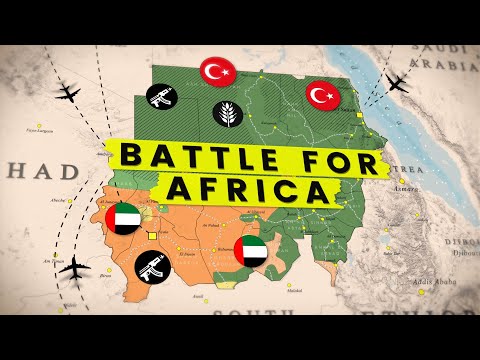
Sudan, officially known as the Republic of the Sudan, is a country of immense geographical and historical significance located in Northeast Africa. When people use the word Sudan, they are typically referring to the sovereign state that shares borders with Egypt to the north, the Red Sea to the northeast, Eritrea and Ethiopia to the east, South Sudan to the south, the Central African Republic to the southwest, Chad to the west, and Libya to the northwest. Historically, Sudan was the largest country in Africa and the Arab world until the secession of South Sudan in 2011. Today, it remains the third-largest country on the continent. The term itself is derived from the Arabic expression 'Bilad as-Sudan', which translates to 'Land of the Blacks', a name historically applied to the vast region south of the Sahara Desert. In contemporary usage, Sudan is discussed in various contexts ranging from international geopolitics and humanitarian efforts to archaeology and environmental science. For instance, historians often use the word when discussing the ancient Kingdom of Kush or the Nubian civilizations that rivaled the pharaohs of Egypt. In a modern context, you might hear the word Sudan in news reports concerning political transitions, economic developments, or the vital role of the Nile River, which flows through the heart of the country.
- Geopolitical Context
- Sudan is a key player in the Horn of Africa and the Middle East, often serving as a bridge between the Arab world and Sub-Saharan Africa. Its strategic location along the Red Sea makes it vital for global maritime trade.
The archaeological sites in Sudan, particularly the pyramids of Meroë, offer a fascinating glimpse into the ancient Nubian empire.
Beyond its political boundaries, Sudan is characterized by its diverse landscapes. From the arid reaches of the Nubian Desert in the north to the fertile floodplains of the Nile and the savanna regions in the south and west, the geography of Sudan is as varied as its people. The confluence of the White Nile and the Blue Nile in the capital city, Khartoum, is one of the most iconic natural features of the country. This meeting point is not just a geographical landmark but a symbol of the country's identity as a place where different paths and cultures converge. When discussing environmental issues, Sudan is often mentioned in relation to the Great Green Wall initiative or the challenges of desertification. Furthermore, the word Sudan is frequently used in cultural discussions regarding its rich musical heritage, which blends African rhythms with Arabic melodies, and its unique culinary traditions. Whether you are reading a travel guide about the pristine diving spots in the Red Sea or a scholarly article about the Meroitic script, the word Sudan serves as a gateway to understanding a complex and resilient nation.
- Historical Significance
- Sudan was home to the 25th Dynasty of Egypt, often called the 'Black Pharaohs'. This period highlights the deep historical ties between Sudan and its northern neighbor.
Many international organizations provide humanitarian aid to displaced populations within Sudan to ensure they have access to food and medicine.
In everyday conversation, Sudan might come up when talking about international travel, especially for those interested in off-the-beaten-path destinations. Travelers might discuss the hospitality of the Sudanese people, which is legendary throughout the region. In academic circles, Sudan is a frequent subject of study in fields like political science, sociology, and linguistics. The country's transition from a long-standing authoritarian regime to a transitional government in 2019 sparked global interest and hope for democratic reform. However, the word is also sadly associated with conflict, such as the Darfur crisis or the more recent internal military struggles, which are often the focus of international news coverage. Understanding Sudan requires looking past the headlines to appreciate its deep-rooted traditions, such as the Sufi ceremonies in Omdurman or the bustling markets of Port Sudan. By using the word Sudan, one invokes a history that spans millennia, a geography that defines a continent, and a people whose resilience continues to shape the future of Northeast Africa.
The agricultural potential of Sudan is often described as the 'breadbasket of the Arab world' due to its vast arable land.
- Natural Resources
- Sudan possesses significant reserves of gold, oil, and gum arabic, the latter of which is a crucial ingredient in many global food and pharmaceutical products.
The Blue Nile and the White Nile meet in Sudan to form the main Nile River that flows north into Egypt.
Sudanese coffee, often flavored with ginger, is a staple of social gatherings across Sudan.
Using the word 'Sudan' correctly in a sentence requires an understanding of its role as a proper noun representing a specific nation. Because it is a country name, it should always be capitalized. In modern English, we typically do not use the definite article 'the' before Sudan, unlike 'the United States' or 'the Netherlands'. For example, you would say, 'I am traveling to Sudan,' rather than 'I am traveling to the Sudan.' This shift occurred largely after the country gained independence in 1956, moving away from the colonial-era designation. When constructing sentences, Sudan often functions as the subject or the object of a preposition. For instance, 'Sudan faces many economic challenges' (subject) or 'The Nile River flows through Sudan' (object of preposition). You can also use it in possessive form to describe things belonging to or originating from the country, such as 'Sudan's cultural heritage' or 'Sudan's borders'.
- Subject Usage
- Sudan is known for its incredible hospitality and diverse ethnic groups. (Here, Sudan is the main focus of the sentence.)
The export of gum arabic from Sudan is vital for the global confectionery industry.
In more complex sentences, Sudan might be part of a compound subject or used in a comparative context. For example, 'Both Egypt and Sudan rely heavily on the waters of the Nile.' This sentence highlights a shared geographical dependency. When discussing history, you might use Sudan in a temporal context: 'Ancient Sudan was home to the powerful Kingdom of Kush.' Here, the adjective 'ancient' modifies the noun to specify a time period. It is also important to distinguish between 'Sudan' and 'South Sudan' in modern contexts. Since 2011, they have been two separate sovereign entities. A sentence like 'The border between Sudan and South Sudan remains a point of diplomatic discussion' correctly identifies both nations. Using the word in a variety of sentence structures—simple, compound, and complex—allows for a nuanced discussion of the country's various facets.
- Prepositional Phrases
- Many refugees have fled from the conflict in Sudan to neighboring countries like Chad. (Using 'in' to denote location.)
The history of Sudan is deeply intertwined with the history of the Nile Valley.
Furthermore, Sudan can be used in passive voice constructions, though this is less common in casual speech. 'Sudan was once the largest country in Africa before the split in 2011.' This emphasizes the state of the country rather than an action. In academic writing, you might see Sudan used in a more abstract sense: 'The case of Sudan illustrates the complexities of post-colonial nation-building.' Here, the word represents a specific example within a broader theoretical framework. Whether you are writing a news report, a history essay, or a personal travel blog, maintaining clarity about which 'Sudan' you are referring to (the modern Republic of Sudan) and using the correct grammatical forms will ensure your message is professional and accurate. Always remember to check the context to see if 'Sudanese' (adjective/noun for people) or 'Sudan' (noun for the country) is more appropriate for your specific sentence.
If you visit Sudan, you must see the confluence of the Blue and White Nile in Khartoum.
- Possessive Form
- Sudan's economy is heavily dependent on agriculture and the export of natural resources.
Researchers are studying the unique flora and fauna found only in Sudan's Red Sea hills.
The peace talks regarding Sudan were held in various international capitals over the years.
The word 'Sudan' is most frequently encountered in international news broadcasts and digital journalism. Because of its complex political history and strategic importance, Sudan is often a focal point for global media outlets like the BBC, Al Jazeera, and CNN. You will hear it in reports discussing diplomatic negotiations, humanitarian crises, or shifts in regional power dynamics. For example, a news anchor might say, 'Tensions continue to rise in Sudan as the transitional government faces new challenges.' In these contexts, the word is associated with serious global issues and the efforts of the international community to provide support or mediate conflicts. Additionally, Sudan is a common topic in documentaries focused on history and archaeology. Programs on the National Geographic or Discovery Channel often feature the ancient pyramids of Meroë or the history of the Kingdom of Kush, using 'Sudan' to locate these wonders for a global audience.
- In the News
- 'The UN has called for an immediate ceasefire in Sudan to allow for the delivery of essential aid to civilians.'
I watched a fascinating documentary last night about the ancient kings of Sudan.
In educational settings, you will hear 'Sudan' in geography, history, and political science classes. Students learn about the Nile River's path through Sudan, the country's diverse climate zones, and its role in the history of the African continent. Professors might discuss the impact of the 2011 split between Sudan and South Sudan as a case study in modern political geography. In the business world, Sudan is mentioned in discussions regarding emerging markets, natural resources, and international trade. Specifically, the global supply chain for gum arabic—a product used in everything from soda to paint—frequently brings up Sudan, as it is the world's leading producer. You might hear a business analyst say, 'Fluctuations in Sudan's political stability can have a direct impact on the global price of gum arabic.' This highlights the country's economic interconnectedness with the rest of the world.
- Academic Lectures
- 'Today we will examine the socio-political factors that led to the independence of South Sudan from Sudan in 2011.'
The professor explained that Sudan has more pyramids than Egypt, which surprised many students.
Culturally, you might hear the word Sudan in the context of world music festivals or culinary events. Sudanese music, with its distinctive 'haqiiba' style and use of the oud, is celebrated globally. At a food festival, someone might describe a dish as 'a traditional stew from Sudan,' introducing people to flavors like peanut sauce and okra. In sports, particularly football (soccer), Sudan is mentioned during the Africa Cup of Nations or World Cup qualifiers. Fans might discuss the performance of the Sudanese national team, known as the 'Falcons of Jediane.' Finally, in the context of international development and NGOs, Sudan is a frequent topic. Workers for organizations like the Red Cross or Doctors Without Borders often speak about their missions in Sudan, focusing on healthcare, education, and water sanitation projects. Whether it's in a high-level diplomatic meeting or a casual conversation about world travel, the word Sudan carries a weight of history, culture, and global importance.
The Sudanese national football team has a dedicated following across Sudan and the diaspora.
- Business Context
- 'Investors are closely monitoring the mining sector in Sudan for new opportunities in gold extraction.'
At the world music festival, the band from Sudan received a standing ovation for their performance.
The humanitarian coordinator reported on the current situation in Sudan during the press briefing.
One of the most frequent mistakes people make when using the word 'Sudan' is including the definite article 'the' before it. While 'The Sudan' was common during the Anglo-Egyptian Condominium (the colonial period), modern English usage has shifted to simply 'Sudan'. Using 'the' can make your writing sound dated or overly formal in a way that is no longer standard. For example, you should write 'I am studying the history of Sudan' instead of 'I am studying the history of the Sudan.' Another common error is confusing 'Sudan' with 'South Sudan'. Since July 2011, these have been two distinct, independent countries. Referring to one when you mean the other can lead to significant geographical and political inaccuracies. It is crucial to be specific, especially in academic or professional writing, to ensure you are providing the correct information about the specific region or government you are discussing.
- The 'The' Mistake
- Incorrect: He spent three years living in the Sudan.
Correct: He spent three years living in Sudan.
It is a mistake to think that Sudan and South Sudan are still the same country; they separated in 2011.
Spelling and pronunciation can also be areas where mistakes occur. While 'Sudan' is relatively straightforward to spell, people sometimes confuse it with similar-sounding words like 'sedan' (a type of car) or 'Sultan' (a title for a ruler). In terms of pronunciation, the stress should be on the second syllable: su-DAN (/suːˈdæn/). Placing the stress on the first syllable is a common error for non-native speakers. Additionally, using 'Sudan' as an adjective is a frequent grammatical slip. The correct adjective form is 'Sudanese'. For instance, you should say 'Sudanese culture' or 'the Sudanese people,' not 'Sudan culture' or 'the Sudan people.' Using the noun form as an adjective can sound clunky and non-idiomatic. Another mistake is over-generalizing the geography of the country, such as assuming all of Sudan is a desert. While the north is largely arid, the central and southern parts of the country have significant savanna and fertile land along the Nile.
- Adjective Usage
- Incorrect: I love Sudan food.
Correct: I love Sudanese food.
Don't confuse the word Sudan with 'sedan' when you are writing, as they have very different meanings.
Finally, a more subtle mistake involves the political and social sensitivity of the word. Sudan has a complex history of internal conflict, and using the word in a way that ignores this complexity or relies on stereotypes can be problematic. For example, referring to Sudan only in the context of war or poverty overlooks its rich history, vibrant culture, and the resilience of its people. When writing or speaking about Sudan, it is best to provide context and avoid broad generalizations that might be offensive or inaccurate. Also, be careful with the capitalization; as a proper noun, 'Sudan' must always start with a capital 'S'. Failing to capitalize it is a basic but common error in informal writing like text messages or social media posts. By being mindful of these common pitfalls, you can use the word Sudan more accurately and respectfully in any context.
Always capitalize Sudan because it is the name of a specific country.
- Pronunciation Error
- Incorrect: SOO-dan (stress on first syllable)
Correct: soo-DAN (stress on second syllable)
When writing about the Nile, specify that it flows through Sudan before entering Egypt.
Using 'the' before Sudan is an old-fashioned habit that most modern writers avoid.
While 'Sudan' is a unique proper noun, there are several related terms and alternatives that can be used depending on the context. If you are looking for a more formal or official way to refer to the country, you can use its full name: 'The Republic of the Sudan'. This is particularly appropriate in diplomatic documents, official news releases, or academic papers. In a broader geographical sense, you might refer to Sudan as a 'Northeast African nation' or a 'Nilotic country,' emphasizing its location or its connection to the Nile River. When discussing the region historically, terms like 'Nubia' or 'Kush' are often used. These refer to the ancient civilizations that occupied the territory of modern-day Sudan and southern Egypt. While they are not direct synonyms for the modern state, they are essential for discussing the area's deep history and cultural heritage.
- Sudan vs. South Sudan
- Sudan refers to the northern Republic with Khartoum as its capital, while South Sudan refers to the nation that gained independence in 2011 with Juba as its capital.
The Republic of the Sudan is the official name used in international treaties.
In political or economic discussions, Sudan is sometimes grouped with other regions. For example, it is often included in the 'Horn of Africa' or the 'Sahel' region. Using these terms can provide a broader context for the challenges or opportunities Sudan faces. For instance, 'Sudan is a key player in the stability of the Horn of Africa.' Another alternative is to use the adjective 'Sudanese' to refer to the people, culture, or products of the country. Instead of saying 'the music of Sudan,' you could say 'Sudanese music.' This is often more concise and natural in English. It's also important to distinguish Sudan from other countries with similar names or characteristics. For example, while both Sudan and Egypt are Nile-valley countries, they have distinct political systems and cultural identities. Similarly, Sudan should not be confused with Chad or Ethiopia, its neighbors, despite sharing some geographical features like the savanna or the highlands.
- Sudan vs. Nubia
- Sudan is the modern political state, whereas Nubia is a historical and cultural region that spans the border of modern Sudan and Egypt.
Many scholars refer to the region as ancient Nubia when discussing the history of Sudan.
In terms of register, 'Sudan' is the standard term for all levels of formality. However, in very informal or poetic contexts, one might hear references to 'the land of the two Niles,' referring to the confluence of the Blue and White Nile. This is a more descriptive and evocative way to refer to the country. In the context of international organizations, you might see Sudan referred to by its ISO country codes, 'SD' or 'SDN'. While these are not used in speech, they are common in data, shipping, and technical documents. Understanding these various terms—from the official 'Republic of the Sudan' to the historical 'Kush' and the regional 'Horn of Africa'—allows for a more precise and varied use of language when discussing this complex and fascinating country. Always choose the term that best fits your audience and the specific point you are trying to make.
The 'Land of the Two Niles' is a poetic way to describe the heart of Sudan.
- Sudan vs. The Sahel
- Sudan is a specific country, while the Sahel is a vast semi-arid zone that stretches across Africa, including parts of Sudan.
The Sahel region, which includes parts of Sudan, is facing significant environmental challenges.
In official documents, you will see the name 'Republic of the Sudan' used to refer to the state.
How Formal Is It?
Wusstest du?
Sudan was the largest country in Africa for over 50 years until South Sudan became independent in 2011. Despite the split, it remains the third-largest country on the continent and is home to more pyramids than Egypt!
Aussprachehilfe
- Stressing the first syllable (SOO-dan).
- Pronouncing it like 'sedan' (the car).
- Confusing the vowel sound in the second syllable with 'sun'.
- Failing to pronounce the 'n' clearly at the end.
- Pronouncing the 'u' too short, like in 'put'.
Schwierigkeitsgrad
The word itself is easy, but texts about it can be complex.
Easy to spell, but remember to capitalize it.
Stress on the second syllable can be tricky for some.
Clearly pronounced in most international news.
Was du als Nächstes lernen solltest
Voraussetzungen
Als Nächstes lernen
Fortgeschritten
Wichtige Grammatik
Proper Nouns
Sudan is always capitalized.
Zero Article with Countries
We say 'in Sudan', not 'in the Sudan'.
Adjective Formation
The adjective for Sudan is Sudanese.
Prepositions of Place
Use 'in' for countries: 'I live in Sudan'.
Possessive S
Sudan's capital is Khartoum.
Beispiele nach Niveau
Sudan is a big country in Africa.
Sudan est un grand pays en Afrique.
Sudan is a proper noun and starts with a capital letter.
The Nile River flows through Sudan.
Le Nil traverse le Soudan.
Use 'through' to show movement from one side to the other.
Khartoum is the capital of Sudan.
Khartoum est la capitale du Soudan.
Capital cities are also proper nouns.
It is very hot in Sudan.
Il fait très chaud au Soudan.
Use 'in' for countries.
I want to learn about Sudan.
Je veux en savoir plus sur le Soudan.
'About' is used to indicate the subject.
Sudan has many old pyramids.
Le Soudan a beaucoup de vieilles pyramides.
'Has' is the third-person singular of 'have'.
People in Sudan are very kind.
Les gens au Soudan sont très gentils.
'People' is a plural noun, so use 'are'.
My friend is from Sudan.
Mon ami vient du Soudan.
'From' indicates origin.
Sudan is located in Northeast Africa.
Le Soudan est situé en Afrique du Nord-Est.
'Is located' is a common passive structure for geography.
Many people in Sudan speak Arabic.
Beaucoup de gens au Soudan parlent arabe.
Languages are capitalized in English.
Sudan shares a border with Egypt.
Le Soudan partage une frontière avec l'Égypte.
'Shares a border with' is a standard phrase.
The Blue Nile and White Nile meet in Sudan.
Le Nil Bleu et le Nil Blanc se rejoignent au Soudan.
Use 'and' to connect two subjects.
Sudanese food is very delicious.
La cuisine soudanaise est très délicieuse.
'Sudanese' is the adjective form of Sudan.
There are more pyramids in Sudan than in Egypt.
Il y a plus de pyramides au Soudan qu'en Égypte.
Use 'more... than' for comparisons.
Sudan became independent in 1956.
Le Soudan est devenu indépendant en 1956.
'Independent' is an adjective.
Have you ever been to Sudan?
Es-tu déjà allé au Soudan ?
Use 'been to' for visiting a place.
Sudan is known for its rich cultural heritage and history.
Le Soudan est connu pour son riche patrimoine culturel et son histoire.
'Is known for' is followed by a reason or characteristic.
The economy of Sudan relies heavily on agriculture.
L'économie du Soudan repose largement sur l'agriculture.
'Relies on' means to depend on something.
Khartoum, the capital of Sudan, is situated at the confluence of two rivers.
Khartoum, la capitale du Soudan, est située au confluent de deux rivières.
Appositives (like 'the capital of Sudan') provide extra info.
Sudan has faced significant political changes in recent years.
Le Soudan a connu d'importants changements politiques ces dernières années.
Present perfect 'has faced' shows action over time.
The Red Sea coast of Sudan offers beautiful diving spots.
La côte de la mer Rouge au Soudan offre de magnifiques sites de plongée.
'Coast of Sudan' uses 'of' to show possession.
Sudan is the world's largest producer of gum arabic.
Le Soudan est le plus grand producteur mondial de gomme arabique.
Superlative 'largest' compares Sudan to all others.
Many international organizations are working to help people in Sudan.
De nombreuses organisations internationales travaillent pour aider les gens au Soudan.
Present continuous 'are working' for ongoing actions.
The history of ancient Sudan is linked to the Kingdom of Kush.
L'histoire du Soudan ancien est liée au royaume de Koush.
'Is linked to' shows a connection.
Sudan's strategic location makes it a key player in regional politics.
La position stratégique du Soudan en fait un acteur clé de la politique régionale.
Possessive 'Sudan's' indicates something belonging to the country.
The secession of South Sudan in 2011 was a major event for Sudan.
La sécession du Soudan du Sud en 2011 a été un événement majeur pour le Soudan.
'Secession' is a formal noun for breaking away.
Sudan possesses vast natural resources, including gold and oil.
Le Soudan possède de vastes ressources naturelles, notamment de l'or et du pétrole.
'Including' introduces examples.
The diverse ethnic groups in Sudan contribute to its vibrant culture.
Les divers groupes ethniques du Soudan contribuent à sa culture vibrante.
'Contribute to' means to help cause something.
Archaeologists are still discovering new sites in northern Sudan.
Les archéologues découvrent encore de nouveaux sites dans le nord du Soudan.
'Still' indicates an action that continues.
Sudan has a long tradition of Sufism, which influences its religious life.
Le Soudan a une longue tradition de soufisme, qui influence sa vie religieuse.
Relative clause 'which influences...' adds detail.
The transition to a civilian-led government in Sudan has been difficult.
La transition vers un gouvernement dirigé par des civils au Soudan a été difficile.
'Civilian-led' is a compound adjective.
Sudan's climate varies from desert in the north to savanna in the south.
Le climat du Soudan varie du désert au nord à la savane au sud.
'Varies from... to...' shows a range.
The complex socio-political landscape of Sudan requires careful analysis.
Le paysage socio-politique complexe du Soudan nécessite une analyse minutieuse.
'Socio-political' is a sophisticated compound adjective.
Sudan's role in the Nile Basin Initiative is crucial for regional water management.
Le rôle du Soudan dans l'Initiative du bassin du Nil est crucial pour la gestion régionale de l'eau.
'Crucial for' indicates high importance.
The internal conflicts in Sudan have led to significant humanitarian challenges.
Les conflits internes au Soudan ont entraîné d'importants défis humanitaires.
'Have led to' indicates a result or consequence.
Sudanese literature often explores themes of identity and displacement.
La littérature soudanaise explore souvent les thèmes de l'identité et du déplacement.
'Sudanese' functions as an adjective here.
The archaeological significance of Sudan is often overshadowed by its political issues.
L'importance archéologique du Soudan est souvent éclipsée par ses problèmes politiques.
'Overshadowed by' is a metaphorical passive structure.
Sudan's economy has struggled with high inflation and external debt.
L'économie du Soudan a lutté contre une inflation élevée et une dette extérieure.
'Struggled with' indicates difficulty.
The 2019 revolution in Sudan marked a turning point in its modern history.
La révolution de 2019 au Soudan a marqué un tournant dans son histoire moderne.
'Turning point' is an idiomatic expression for a major change.
Efforts to achieve lasting peace in Sudan involve multiple international stakeholders.
Les efforts pour parvenir à une paix durable au Soudan impliquent de multiples parties prenantes internationales.
'Stakeholders' refers to people or groups with an interest.
Sudan's historical trajectory is deeply intertwined with the fluctuating fortunes of the Nile.
La trajectoire historique du Soudan est profondément liée aux fortunes fluctuantes du Nil.
'Intertwined with' suggests a complex connection.
The precarious nature of Sudan's democratic transition remains a concern for global observers.
La nature précaire de la transition démocratique au Soudan reste une préoccupation pour les observateurs mondiaux.
'Precarious' is a high-level adjective for unstable.
Sudan's multifaceted identity is a product of centuries of migration and cultural synthesis.
L'identité multiforme du Soudan est le produit de siècles de migration et de synthèse culturelle.
'Multifaceted' means having many aspects.
The hydro-politics of the Blue Nile present a formidable challenge for Sudan's diplomacy.
L'hydro-politique du Nil Bleu représente un défi redoutable pour la diplomatie du Soudan.
'Formidable' means inspiring respect through being large or powerful.
Sudanese intellectuals have long debated the nation's orientation between Africa and the Arab world.
Les intellectuels soudanais débattent depuis longtemps de l'orientation de la nation entre l'Afrique et le monde arabe.
'Long debated' indicates a persistent discussion.
The systemic issues within Sudan's infrastructure hinder its agricultural potential.
Les problèmes systémiques au sein de l'infrastructure du Soudan entravent son potentiel agricole.
'Hinder' means to create difficulties for something.
Sudan's ancient Meroitic script remains one of the great unsolved mysteries of archaeology.
L'ancienne écriture méroïtique du Soudan reste l'un des grands mystères non résolus de l'archéologie.
'Unsolved mysteries' is a common collocation.
The resilience of the Sudanese people in the face of protracted conflict is truly remarkable.
La résilience du peuple soudanais face à un conflit prolongé est vraiment remarquable.
'In the face of' means despite or when dealing with.
Häufige Kollokationen
Häufige Phrasen
— The official, formal name of the country used in legal and international contexts.
The Republic of the Sudan is a member of the African Union.
— A collective term referring to both Sudan and South Sudan.
Relations between the two Sudans have been complex since 2011.
— The specific dialect of Arabic spoken in Sudan.
He is learning Sudanese Arabic to communicate better in Khartoum.
— The two major tributaries that meet in Sudan to form the Nile.
The Blue and White Nile converge in the heart of Sudan.
— The ancient empire that was centered in what is now Sudan.
The Kingdom of Kush once ruled over all of Egypt.
— The main seaport of the country located on the Red Sea.
Most of the country's exports go through Port Sudan.
— A large area in western Sudan known for its history and recent conflicts.
The Darfur region has faced many challenges in the past two decades.
— A major export product that Sudan is famous for producing.
Sudan provides the majority of the world's gum arabic.
— The ancient structures found in northern Sudan.
The Nubian pyramids are a UNESCO World Heritage site.
— The official currency used in the country.
The value of the Sudanese pound has fluctuated recently.
Wird oft verwechselt mit
A separate country that gained independence from Sudan in 2011.
A type of car with four doors and a separate trunk.
A title for a ruler in some Muslim countries.
Redewendungen & Ausdrücke
— A term used to describe Sudan's potential to provide food for the entire region due to its fertile land.
Many hope that Sudan will one day become the breadbasket of the Arab world.
Economic/Political— The literal translation of 'Bilad as-Sudan', referring to the historical region.
Ancient geographers called the region south of the Sahara the Land of the Blacks.
Historical— A poetic way to refer to Khartoum or Sudan as a whole.
He grew up in the city where the Niles meet.
Literary— Refers to Sudan's unique position connecting two major cultural and geographical regions.
Sudan has always been a bridge between Africa and the Middle East.
Geopolitical— A phrase used to describe the exceptional kindness and generosity shown to guests in Sudan.
He was overwhelmed by the legendary Sudanese hospitality during his trip.
Cultural— Refers to Sudan's central role in the Nile river system.
Sudan is often called the heart of the Nile because of the confluence in Khartoum.
Descriptive— Historically referred to the wealth of the region; now used metaphorically for its value.
The history of Sudan is as rich as the legendary Nubian gold.
Historical/Metaphorical— A term of endearment for the people of Sudan and Egypt who live along the river.
The sons of the Nile have shared this water for thousands of years.
Poetic— Refers to Sudan's role as an entry point to the continent from the north and east.
For many traders, Sudan was the gateway to Africa.
Historical/Economic— A historical reference to the powerful ancient civilization in Sudan.
The land of Kush was once a rival to the Egyptian Empire.
HistoricalLeicht verwechselbar
They were once the same country.
Sudan is the northern Republic with Khartoum as its capital; South Sudan is the southern nation with Juba as its capital.
He traveled from Sudan to South Sudan.
Similar spelling and sound.
Sudan is a country; a sedan is a type of car.
He drove his sedan through the streets of Sudan.
Similar sound and both relate to the Arab world.
Sudan is a place; a Sultan is a person (a ruler).
The Sultan visited Sudan on an official trip.
Both start with 'S' and have two syllables.
Sudan is in Africa and hot; Sweden is in Europe and cold.
Sudan is much hotter than Sweden.
Sudan is part of the Sahel region.
Sudan is a country; the Sahel is a vast geographical region across Africa.
Sudan is one of the many countries in the Sahel.
Satzmuster
[Country] is in [Continent].
Sudan is in Africa.
The [River] flows through [Country].
The Nile flows through Sudan.
[Country] is known for [Noun].
Sudan is known for its pyramids.
The [Event] in [Country] had a major impact.
The revolution in Sudan had a major impact.
[Country]'s [Noun] is deeply intertwined with [Noun].
Sudan's history is deeply intertwined with the Nile.
The [Adjective] nature of [Country]'s [Noun] remains [Adjective].
The precarious nature of Sudan's transition remains concerning.
People from [Country] are called [Adjective].
People from Sudan are called Sudanese.
[City] is the capital of [Country].
Khartoum is the capital of Sudan.
Wortfamilie
Substantive
Adjektive
Verwandt
So verwendest du es
Common in news, geography, and history contexts.
-
Using 'the Sudan'.
→
Using just 'Sudan'.
Modern English usage has dropped the definite article for this country name.
-
Confusing Sudan with South Sudan.
→
Specifying which country you mean.
They have been two separate nations since 2011.
-
Saying 'Sudan food' instead of 'Sudanese food'.
→
Using the adjective 'Sudanese'.
Proper adjectives should be used to describe things from a country.
-
Stressing the first syllable (SOO-dan).
→
Stressing the second syllable (su-DAN).
The standard pronunciation puts the emphasis on the second part of the word.
-
Forgetting to capitalize Sudan.
→
Always writing it as 'Sudan'.
As a proper noun (name of a country), it must always be capitalized.
Tipps
Capitalization
Always capitalize the 'S' in Sudan because it is a proper noun.
No Article
Do not use 'the' before Sudan in modern writing or speech.
Adjective Form
Use 'Sudanese' to describe things or people from Sudan.
Distinction
Be careful to distinguish between Sudan and South Sudan.
Stress
Place the stress on the second syllable: su-DAN.
Ancient Names
Remember that 'Nubia' and 'Kush' are historical terms for the region.
Hospitality
Sudanese hospitality is a famous cultural trait; keep this in mind when discussing the people.
Common Mix-ups
Don't confuse 'Sudan' with 'sedan' (the car).
News Context
When you hear Sudan in the news, it often refers to political or humanitarian issues.
Pyramids
Use the fact that Sudan has more pyramids than Egypt as a great conversation starter!
Einprägen
Eselsbrücke
S-U-D-A-N: Sandy Upper Desert Along Nile. This helps you remember its geography (sand, desert) and its location (upper/northeast) along the Nile.
Visuelle Assoziation
Imagine two blue and white ribbons (the Niles) tying together in a knot (Khartoum) in the middle of a golden desert map.
Word Web
Herausforderung
Try to write three sentences about Sudan using the words 'Nile', 'history', and 'hospitality' without looking at the definitions.
Wortherkunft
The name 'Sudan' comes from the Arabic phrase 'Bilad as-Sudan', which means 'Land of the Blacks'. This term was used by medieval Arab geographers to describe the region south of the Sahara Desert. Over time, the name became specifically associated with the territory of the modern state. It reflects the historical and cultural interactions between the Arab world and Sub-Saharan Africa.
Ursprüngliche Bedeutung: Land of the Blacks
Arabic (Semitic)Kultureller Kontext
When discussing Sudan, be sensitive to the history of conflict and the 2011 split with South Sudan. Avoid stereotypes and focus on the diversity and resilience of the people.
In English-speaking countries, Sudan is often in the news for its politics, but there is growing interest in its ancient history and archaeological sites.
Im Alltag üben
Kontexte aus dem Alltag
Geography Class
- Where is Sudan located?
- The Nile flows through Sudan.
- Sudan borders seven countries.
- The capital of Sudan is Khartoum.
International News
- The situation in Sudan...
- Peace talks in Sudan...
- Humanitarian aid for Sudan...
- Sudan's transitional government...
History Discussion
- Ancient Sudan was home to Kush.
- The pyramids of Sudan are very old.
- Sudan gained independence in 1956.
- The history of the Nile in Sudan...
Travel Planning
- Is it safe to travel to Sudan?
- I want to see the pyramids in Sudan.
- The people in Sudan are very friendly.
- How do I get a visa for Sudan?
Business/Economics
- Sudan's export of gum arabic...
- Investing in Sudan's mining sector...
- The Sudanese pound exchange rate...
- Trade agreements with Sudan...
Gesprächseinstiege
"Have you ever heard about the ancient pyramids in Sudan?"
"What do you know about the history of Sudan and the Nile?"
"Did you know that Sudan used to be the largest country in Africa?"
"I saw a documentary about Sudan's culture; have you seen it?"
"What are your thoughts on the recent political changes in Sudan?"
Tagebuch-Impulse
Imagine you are traveling through Sudan. Describe the landscapes you see along the Nile.
Write about why it is important to learn about the history of countries like Sudan.
How does the geography of Sudan (deserts and rivers) affect the lives of the people there?
Research one aspect of Sudanese culture (music, food, or art) and write a summary.
Discuss the impact of the 2011 split between Sudan and South Sudan on the region.
Häufig gestellte Fragen
10 FragenIn modern English, it is simply 'Sudan'. 'The Sudan' was common in the past but is now considered old-fashioned.
The capital of Sudan is Khartoum, which is located where the Blue and White Nile rivers meet.
The official languages are Arabic and English, but many indigenous languages are also spoken.
No, they are two separate countries. South Sudan became independent from Sudan in 2011.
Yes, Sudan has over 200 pyramids, which is more than the number of pyramids in Egypt.
The currency used in Sudan is the Sudanese pound (SDG).
Sudan is located in Northeast Africa, bordering the Red Sea and several other countries like Egypt and Ethiopia.
Sudan is famous for its ancient history, the Nile River, and being a major producer of gum arabic.
The people of Sudan are called Sudanese.
Yes, Sudan is the third-largest country in Africa by land area.
Teste dich selbst 200 Fragen
Write three sentences about the geography of Sudan.
Well written! Good try! Check the sample answer below.
Describe the historical significance of the pyramids in Sudan.
Well written! Good try! Check the sample answer below.
Explain the importance of the Nile River to Sudan's economy.
Well written! Good try! Check the sample answer below.
Discuss the impact of the 2011 secession of South Sudan on Sudan.
Well written! Good try! Check the sample answer below.
Write a short paragraph about Sudanese culture and hospitality.
Well written! Good try! Check the sample answer below.
Compare the climate of northern Sudan with that of central Sudan.
Well written! Good try! Check the sample answer below.
Research and write about the 'haqiiba' style of Sudanese music.
Well written! Good try! Check the sample answer below.
Imagine you are a journalist reporting on a new archaeological discovery in Sudan. Write a short news snippet.
Well written! Good try! Check the sample answer below.
Discuss the role of gum arabic in Sudan's international trade.
Well written! Good try! Check the sample answer below.
Write a letter to a friend describing your imaginary trip to Khartoum.
Well written! Good try! Check the sample answer below.
Analyze the significance of the 2019 Sudanese revolution.
Well written! Good try! Check the sample answer below.
Describe the traditional dress of people in Sudan.
Well written! Good try! Check the sample answer below.
What are some of the environmental challenges facing Sudan today?
Well written! Good try! Check the sample answer below.
Write a short essay on the history of the Kingdom of Kush.
Well written! Good try! Check the sample answer below.
How does the Red Sea contribute to Sudan's economy and tourism?
Well written! Good try! Check the sample answer below.
Describe a traditional Sudanese meal.
Well written! Good try! Check the sample answer below.
Discuss the importance of education in Sudan's future development.
Well written! Good try! Check the sample answer below.
Write a summary of the 'Great Green Wall' initiative in the context of Sudan.
Well written! Good try! Check the sample answer below.
Analyze the role of Sufism in Sudanese social and religious life.
Well written! Good try! Check the sample answer below.
Describe the confluence of the Blue and White Nile in your own words.
Well written! Good try! Check the sample answer below.
Talk about the importance of the Nile to Sudan for one minute.
Read this aloud:
Du hast gesagt:
Speech recognition is not supported in your browser. Try Chrome or Edge.
Describe the location of Sudan and its neighbors.
Read this aloud:
Du hast gesagt:
Speech recognition is not supported in your browser. Try Chrome or Edge.
What do you know about the pyramids in Sudan?
Read this aloud:
Du hast gesagt:
Speech recognition is not supported in your browser. Try Chrome or Edge.
Explain the difference between Sudan and South Sudan.
Read this aloud:
Du hast gesagt:
Speech recognition is not supported in your browser. Try Chrome or Edge.
Discuss Sudanese hospitality based on what you've learned.
Read this aloud:
Du hast gesagt:
Speech recognition is not supported in your browser. Try Chrome or Edge.
Why is gum arabic important for Sudan's economy?
Read this aloud:
Du hast gesagt:
Speech recognition is not supported in your browser. Try Chrome or Edge.
Talk about the 2019 revolution in Sudan.
Read this aloud:
Du hast gesagt:
Speech recognition is not supported in your browser. Try Chrome or Edge.
Describe a traditional Sudanese dish.
Read this aloud:
Du hast gesagt:
Speech recognition is not supported in your browser. Try Chrome or Edge.
What are the challenges of the desert climate in Sudan?
Read this aloud:
Du hast gesagt:
Speech recognition is not supported in your browser. Try Chrome or Edge.
How does the Red Sea benefit Sudan?
Read this aloud:
Du hast gesagt:
Speech recognition is not supported in your browser. Try Chrome or Edge.
Discuss the historical Kingdom of Kush.
Read this aloud:
Du hast gesagt:
Speech recognition is not supported in your browser. Try Chrome or Edge.
What is the significance of Khartoum's location?
Read this aloud:
Du hast gesagt:
Speech recognition is not supported in your browser. Try Chrome or Edge.
Talk about the diversity of ethnic groups in Sudan.
Read this aloud:
Du hast gesagt:
Speech recognition is not supported in your browser. Try Chrome or Edge.
Why is Sufism important in Sudan?
Read this aloud:
Du hast gesagt:
Speech recognition is not supported in your browser. Try Chrome or Edge.
What would you like to see if you visited Sudan?
Read this aloud:
Du hast gesagt:
Speech recognition is not supported in your browser. Try Chrome or Edge.
How has Sudan's size changed over time?
Read this aloud:
Du hast gesagt:
Speech recognition is not supported in your browser. Try Chrome or Edge.
Discuss the role of women in the 2019 revolution.
Read this aloud:
Du hast gesagt:
Speech recognition is not supported in your browser. Try Chrome or Edge.
What is the Gezira Scheme and why is it famous?
Read this aloud:
Du hast gesagt:
Speech recognition is not supported in your browser. Try Chrome or Edge.
Talk about the Sudanese national football team.
Read this aloud:
Du hast gesagt:
Speech recognition is not supported in your browser. Try Chrome or Edge.
How does Sudan connect Africa and the Arab world?
Read this aloud:
Du hast gesagt:
Speech recognition is not supported in your browser. Try Chrome or Edge.
Listen to the description: 'Sudan is in Northeast Africa.' Where is Sudan?
Listen: 'The capital of Sudan is Khartoum.' What is the capital?
Listen: 'Sudan has more pyramids than Egypt.' Which country has more pyramids?
Listen: 'People in Sudan speak Arabic and English.' What are the official languages?
Listen: 'The Nile River is very important for Sudan.' Why is the Nile important?
Listen: 'Sudan gained independence in 1956.' What year did it become independent?
Listen: 'South Sudan seceded from Sudan in 2011.' What happened in 2011?
Listen: 'Port Sudan is on the Red Sea.' Where is Port Sudan?
Listen: 'Sudanese hospitality is famous worldwide.' What is famous about Sudan?
Listen: 'Gum arabic is a key export for Sudan.' What does Sudan export?
Listen: 'The Blue and White Nile meet in Khartoum.' Where do the rivers meet?
Listen: 'Ancient Sudan was home to the Kingdom of Kush.' What ancient kingdom was there?
Listen: 'The 2019 revolution brought change to Sudan.' What brought change?
Listen: 'Sudanese music uses the oud.' What instrument is used?
Listen: 'Sudan is the third-largest country in Africa.' How big is Sudan?
/ 200 correct
Perfect score!
Summary
Sudan is a culturally and historically rich nation in Northeast Africa, defined by the Nile River and its ancient Nubian heritage. Example: 'The pyramids of Meroë are a testament to Sudan's ancient power.'
- Sudan is a major country in Northeast Africa, known for its strategic location and the Nile River.
- It has a rich history, including the ancient Kingdom of Kush and more pyramids than Egypt.
- The capital is Khartoum, where the Blue and White Nile rivers meet to form the main Nile.
- Since 2011, it has been separate from South Sudan and is currently the third-largest country in Africa.
Capitalization
Always capitalize the 'S' in Sudan because it is a proper noun.
No Article
Do not use 'the' before Sudan in modern writing or speech.
Adjective Form
Use 'Sudanese' to describe things or people from Sudan.
Distinction
Be careful to distinguish between Sudan and South Sudan.