The video owner has disabled playback on external websites.
This video is no longer available on YouTube.
This video cannot be played right now.
Watch on YouTube
KI-gestützte Lerntools freischalten
Registriere dich, um leistungsstarke Tools zu nutzen, die dir helfen, schneller aus jedem Video zu lernen.
PASSIVE VOICE - English Grammar step-by-step
Lernstatistiken
GER-Niveau
Schwierigkeit
Untertitel (91 Segmente)
What is the passive voice? When do we use the passive voice? And how can I easily
change the active voice, to the passive voice? I'm Arnel from Arnel's
Everyday English, and today I'm going to answer these three questions step by
step. Today's lesson plan is: What is the passive voice? The grammatical structure.
When to use the passive voice. Plus an important study tip: Transforming from
the active to the passive. Some sentences cannot be transformed into the passive.
I'll tell you why. So, there's going to be a lot of information in this lesson. Get
ready to take notes! Let's begin. What is the passive voice? The passive
voice is the opposite of the active voice. Active: Everybody loves chocolate.
Passive: Chocolate is loved by everybody. Active: The lifeguard saved a man. Passive:
A man was saved by the lifeguard. Active: Decorators are painting my house. Passive:
My house is being painted. Okay, here are three examples of the passive. Now let's
look at this grammar in more detail. Step two: The grammatical structure. When you
form the passive you need BE plus a past participle. Here are the forms of BE.
There's a lot. AM/ARE/IS in the present, WAS/WERE in the past. You can use BEEN with
perfect tenses, and BEING in continuous tenses. You need a form of this plus that
past participle which is verb number three: EAT/ATE/EATEN, eaten is my past
participle. PLAY/PLAYED/PLAYED, played is my past participle.
The three sentences from earlier they all have BE and that past participle. So,
Vollständige Untertitel im Videoplayer verfügbar
Mit Übungen trainieren
Erstelle Vokabel-, Grammatik- und Verständnisübungen aus diesem Video
Kommentare (0)
Zum Kommentieren AnmeldenRegistriere dich, um alle Features freizuschalten
Verfolge deinen Fortschritt, speichere Vokabeln und übe mit Übungen
Interaktiver Modus
Quiz
Richtige Antwort:
Ähnliche Videos

Ali Wong: Baby Cobra - Vows and Racism | Netflix Is A Joke
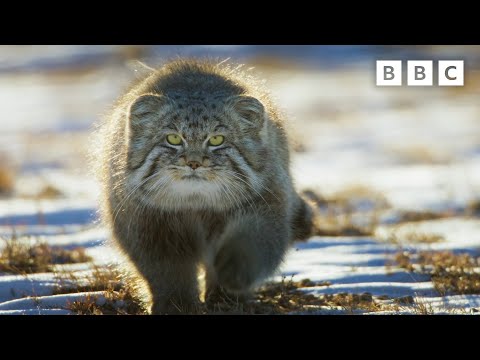
World’s Grumpiest Cat I Frozen Planet II I BBC

House of the Dragon Season 1 Recap | House of the Dragon | Max

Homelander and Queen Maeve DON'T save people | THE BOYS (S1E4)

Ali Wong: Breastfeeding Is Like Parallel Parking

Arnel's Everyday English
Quiz
Richtige Antwort:
Quizfragen erscheinen beim Anschauen des Videos
Merkhilfe
Aus diesem Video
Kostenlos Sprachen lernen

