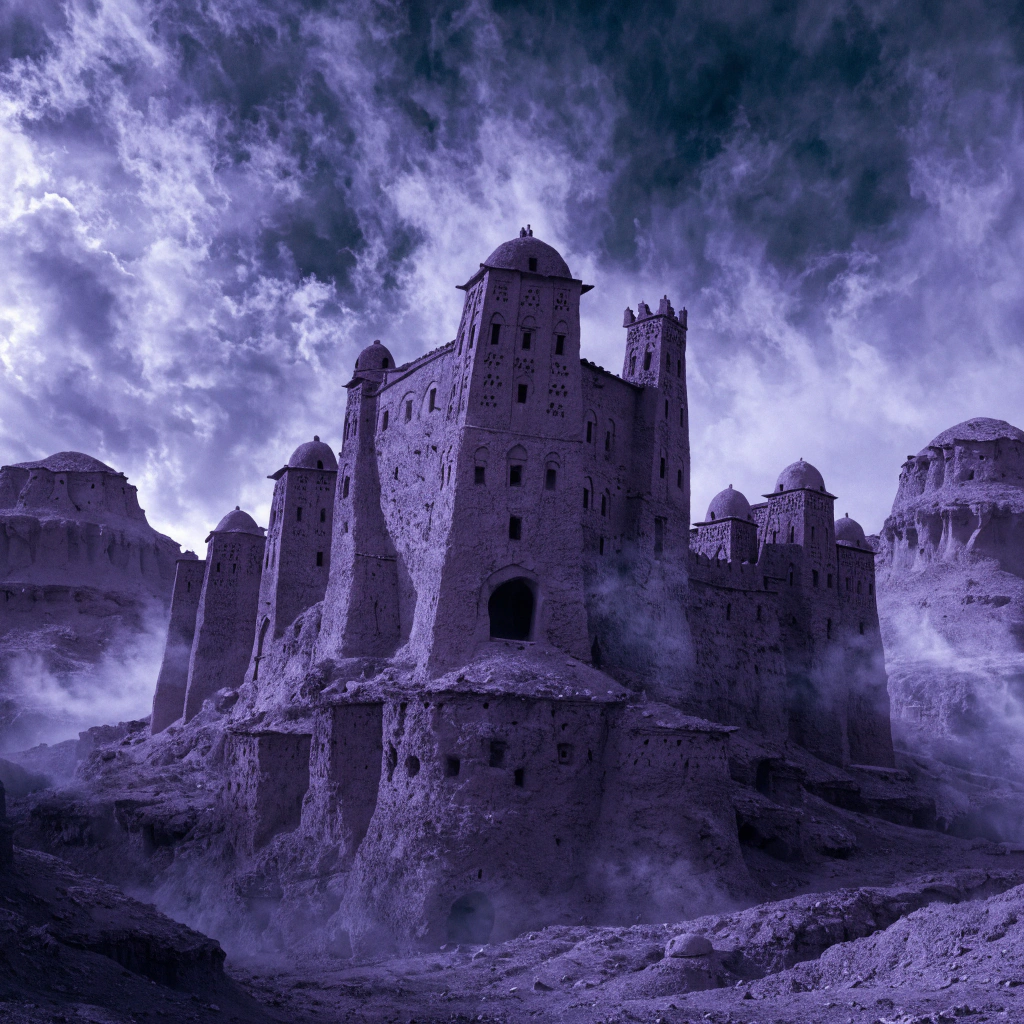
A Famous Village in Morocco
Ait Benhaddou is a very old village in Morocco. It is near the city of Ouarzazate. The village is famous and beautiful. It is a UNESCO World Heritage site.
The houses are made of red mud and wood. There are tall walls around the village. People use these walls for protection. The buildings have many patterns.
Many movies are filmed here. You can see the village in famous films. Today, some families still live there. It is a special place to visit. Many tourists go there every year.
Gramática destacada
Patrón: Present Simple of 'To Be'
"Ait Benhaddou is a very old village in Morocco."
We use 'is' for singular subjects to describe facts or states. It connects the subject to a description.
Patrón: There are
"There are tall walls around the village."
We use 'There are' to say that multiple things exist in a place. It is followed by a plural noun like 'walls'.
Pon a prueba tu comprensión
10 preguntas · A1 Principiante · 1 vista previa gratis
Pon a prueba lo que aprendiste en este artículo. ¡Responde todas las preguntas para ganar XP!
Where is Ait Benhaddou?
¿Quieres terminar el quiz?
9 preguntas más te esperan. ¡Regístrate gratis para desbloquear el quiz completo y ganar XP!
Regístrate gratis¿Ya tienes cuenta? Acceder
Desglose de preguntas
Where is Ait Benhaddou?
Tu respuesta:
Respuesta correcta: Morocco
The houses are made of blue stone.
Tu respuesta:
Respuesta correcta: Falso
What is a 'village'?
Tu respuesta:
Respuesta correcta: A small town
Many _____ are filmed here.
Tu respuesta:
Respuesta correcta: movies
A Visit to the Ancient Village of Ait Benhaddou
Ait Benhaddou is a very famous village in Morocco. It is near the city of Ouarzazate. This place is special because it is an ancient 'ksar', which means a fortified village. It is one of the most beautiful sites in North Africa.
In the past, people built the houses with mud, straw, and palm wood. These materials are good because they keep the houses cool in the summer. The village has high walls and towers to protect the people. Today, only a few families live inside the old buildings, but many tourists visit every day.
Ait Benhaddou was important because it was on a famous trade route. Travelers moved between the Sahara Desert and the city of Marrakech. They stopped here to rest and trade goods.
Now, the village is a UNESCO World Heritage site. It is also famous for movies. Many directors filmed movies like 'Gladiator' here because the buildings look more traditional than modern houses. It is a wonderful place to learn about Moroccan history.
Gramática destacada
Patrón: Past Simple (Irregular Verbs)
"In the past, people built the houses with mud, straw, and palm wood."
We use the past simple to talk about finished actions. Some verbs like 'built' (from build) are irregular and have special forms.
Patrón: Comparatives with 'more'
"Many directors filmed movies like 'Gladiator' here because the buildings look more traditional than modern houses."
For long adjectives like 'traditional', we use 'more + adjective + than' to compare two things.
Pon a prueba tu comprensión
11 preguntas · A2 Básico · 1 vista previa gratis
Pon a prueba lo que aprendiste en este artículo. ¡Responde todas las preguntas para ganar XP!
Where is Ait Benhaddou located?
¿Quieres terminar el quiz?
10 preguntas más te esperan. ¡Regístrate gratis para desbloquear el quiz completo y ganar XP!
Regístrate gratis¿Ya tienes cuenta? Acceder
Desglose de preguntas
Where is Ait Benhaddou located?
Tu respuesta:
Respuesta correcta: Near the city of Ouarzazate
People used mud and straw to build the houses.
Tu respuesta:
Respuesta correcta: Verdadero
What does 'ancient' mean?
Tu respuesta:
Respuesta correcta: Very old
Ait Benhaddou is a very famous _____ in Morocco.
Tu respuesta:
Respuesta correcta: village
Why do movie directors like this place?
Tu respuesta:
Respuesta correcta: Because the buildings look traditional
The Ancient Wonders of Ait Benhaddou
Ait Benhaddou is one of the most famous historical sites in Morocco. Located in the province of Ouarzazate, this ancient village has been recognized as a UNESCO World Heritage site since 1987. It was built along an old trade route that connected the Sahara Desert with the city of Marrakech. For centuries, traders who traveled across the desert stopped here to rest and exchange their goods.
The village is a "ksar," which is a group of earthen buildings surrounded by high walls. These walls were designed to protect the families and the valuable goods that were kept inside. The houses are constructed from a mix of mud, straw, and palm wood. This traditional method, which is called "pisé," helps the buildings stay cool during the hot Moroccan summers. Many of the buildings are decorated with geometric patterns that have been carved into the walls.
Many people have visited Ait Benhaddou because of its incredible beauty. In fact, it has been used as a location for many famous Hollywood movies, such as Gladiator and The Mummy. Because of this, the site has become very popular with tourists from all over the world. Even though it is very old, the village still looks spectacular against the desert landscape.
Although most families have moved to modern houses on the other side of the river, a few people still live within the ancient walls. These residents work hard to maintain the buildings so they do not fall apart. The site is carefully preserved because it shows how people lived in the desert centuries ago. If you travel to Morocco, you should not miss the chance to see this majestic place. It is a wonderful example of how humans have adapted to their environment using natural materials.
Gramática destacada
Patrón: Present Perfect Passive
"this ancient village has been recognized as a UNESCO World Heritage site"
This pattern is used to talk about an action that happened in the past when the result is still important now. It is formed with 'have/has been' followed by the past participle.
Patrón: Relative Clauses with 'that'
"It was built along an old trade route that connected the Sahara Desert with the city of Marrakech."
Relative clauses give more information about a noun. In this case, 'that' introduces more information about the 'trade route'.
Pon a prueba tu comprensión
11 preguntas · B1 Intermedio · 1 vista previa gratis
Pon a prueba lo que aprendiste en este artículo. ¡Responde todas las preguntas para ganar XP!
Where is Ait Benhaddou located?
¿Quieres terminar el quiz?
10 preguntas más te esperan. ¡Regístrate gratis para desbloquear el quiz completo y ganar XP!
Regístrate gratis¿Ya tienes cuenta? Acceder
Desglose de preguntas
Where is Ait Benhaddou located?
Tu respuesta:
Respuesta correcta: Ouarzazate
Most families still live inside the ancient walls of the ksar.
Tu respuesta:
Respuesta correcta: Falso
What does 'ancient' mean?
Tu respuesta:
Respuesta correcta: Very old
The houses are _____ from a mix of mud, straw, and palm wood.
Tu respuesta:
Respuesta correcta: constructed
Why has the site become popular with tourists?
Tu respuesta:
Respuesta correcta: Its beauty and movie history
Ait Benhaddou: Un Vestigio Arquitectónico en el Corazón de Marruecos
Ait Benhaddou, una joya arquitectónica situada en la provincia de Ouarzazate, Marruecos, representa uno de los ejemplos más impresionantes y mejor conservados de un ksar, o pueblo fortificado, en el país. Este enclave histórico, declarado Patrimonio de la Humanidad por la UNESCO en 1987, es un testimonio elocuente de la ingeniosidad constructiva de las comunidades pre-saharianas y un símbolo perdurable de la cultura marroquí.
Construido predominantemente con pisé (tierra apisonada), adobe y madera de palma, el ksar se alza majestuosamente a orillas del río Ounila, en la antigua ruta caravanera que conectaba el Sáhara con Marrakech. Sus edificaciones, que incluyen viviendas, graneros y mezquitas, se agrupan dentro de altas murallas defensivas, formando un conjunto urbano orgánico y visualmente impactante. La técnica de construcción con tierra, adaptada a las condiciones climáticas extremas de la región, no solo es sostenible sino que también otorga a las estructuras una belleza singular, con sus tonos ocres que cambian con la luz del sol.
El diseño intrincado de Ait Benhaddou revela un profundo conocimiento de la planificación urbana y la defensa. Sus estrechas callejuelas, pasadizos cubiertos y patios internos reflejan una vida comunitaria cohesionada y una estrategia defensiva eficaz contra posibles invasores. Además de su valor histórico y arquitectónico, Ait Benhaddou ha adquirido fama mundial como escenario natural para numerosas producciones cinematográficas y televisivas, atrayendo a directores y espectadores por igual con su atmósfera casi mística.
Sin embargo, la preservación de este legado milenario enfrenta desafíos significativos. La erosión natural, el mantenimiento de las estructuras de tierra y el impacto del turismo requieren un esfuerzo constante y coordinado. A pesar de que muchas familias se han trasladado a asentamientos más modernos en las cercanías, algunas todavía residen dentro del ksar, contribuyendo a mantener viva su esencia y sus tradiciones. Es fundamental que se sigan implementando estrategias de conservación que equilibren la modernidad con la salvaguarda de este patrimonio cultural inestimable.
Ait Benhaddou no es solo un destino turístico; es una ventana al pasado, un recordatorio de la resiliencia humana y la armonía con el entorno. Su contemplación invita a reflexionar sobre la riqueza de las civilizaciones que han florecido en estas tierras áridas y la importancia de proteger estos tesoros para las generaciones futuras.
Gramática destacada
Patrón: Voz Pasiva con "ser" + participio
"Este enclave histórico, declarado Patrimonio de la Humanidad por la UNESCO en 1987, es un testimonio elocuente de la ingeniosidad constructiva."
La voz pasiva se usa para enfocar la atención en la acción recibida y no en quien la realiza. Se forma con el verbo "ser" conjugado y el participio pasado del verbo principal (que concuerda en género y número con el sujeto).
Patrón: Uso del Subjuntivo para expresar necesidad o recomendación
"Es fundamental que se sigan implementando estrategias de conservación que equilibren la modernidad con la salvaguarda de este patrimonio cultural inestimable."
El subjuntivo se utiliza aquí después de expresiones impersonales que denotan necesidad o importancia ("Es fundamental que..."). Indica una acción deseada, una recomendación o una obligación que debe realizarse.
Patrón: Uso de "se" impersonal
"Es fundamental que se sigan implementando estrategias de conservación..."
El "se" impersonal se usa para hablar de acciones sin especificar quién las realiza, dando un carácter general o colectivo. Es común en contextos formales o cuando el agente de la acción no es relevante o se desconoce.
Pon a prueba tu comprensión
11 preguntas · B2 Intermedio alto · 1 vista previa gratis
Pon a prueba lo que aprendiste en este artículo. ¡Responde todas las preguntas para ganar XP!
¿Cuál es la principal razón por la que Ait Benhaddou fue declarado Patrimonio de la Humanidad por la UNESCO?
¿Quieres terminar el quiz?
10 preguntas más te esperan. ¡Regístrate gratis para desbloquear el quiz completo y ganar XP!
Regístrate gratis¿Ya tienes cuenta? Acceder
Desglose de preguntas
¿Cuál es la principal razón por la que Ait Benhaddou fue declarado Patrimonio de la Humanidad por la UNESCO?
Tu respuesta:
Respuesta correcta: Por su ingeniosidad constructiva y ser un ejemplo bien conservado de ksar.
Ait Benhaddou se encuentra en la costa de Marruecos, cerca de Casablanca.
Tu respuesta:
Respuesta correcta: Falso
¿Qué significa la palabra "pisé" en el contexto del artículo?
Tu respuesta:
Respuesta correcta: Una técnica de construcción con tierra apisonada.
El ksar se alza majestuosamente a orillas del río _____.
Tu respuesta:
Respuesta correcta: Ounila
¿Qué desafío importante enfrenta la preservación de Ait Benhaddou según el texto?
Tu respuesta:
Respuesta correcta: La erosión natural y el mantenimiento de las estructuras de tierra.
The Earthen Citadel: Deciphering the Stratified History of Ait Benhaddou
Nestled within the foothills of the High Atlas mountains lies Ait Benhaddou, a site where history is not merely recorded but etched into the very clay of its ramparts. This ksar, or fortified village, represents a pinnacle of Moroccan earthen architecture, a style that has endured for centuries despite the ephemeral nature of its constituent materials. It is the convergence of strategic location and architectural ingenuity that allowed this settlement to flourish as a vital node on the trans-Saharan trade route, bridging the gap between the scorched expanses of the desert and the bustling markets of Marrakech.
Seldom has the marriage of functionality and aesthetic appeal been so seamlessly executed as in the construction of these pisé dwellings. Utilizing a mixture of rammed earth, straw, and clay, the inhabitants crafted a citadel that offered both thermal insulation against the Saharan heat and a formidable defense against marauders. The nominalization of defensive strategies into physical form is evident in the towering walls and the singular entrance, a design intended to funnel visitors and maintain surveillance. Furthermore, the facades are adorned with intricate geometric patterns, which, while seemingly decorative, often bear deep-seated symbolic meanings rooted in the stratified cultural history of the region.
The designation of Ait Benhaddou as a UNESCO World Heritage site in 1987 marked a pivotal moment in its modern history. This recognition underscored the universal value of the ksar’s architectural ensemble, highlighting it as a masterpiece of human creative genius. The communal living spaces, known as 'ghorfas' or granaries, situated at the highest point of the village, exemplify the collective social structure that once underpinned life here. These structures were not merely for storage; they were the heart of a community built on mutual reliance and shared defense. The meticulous restoration of these areas reflects a broader commitment to cultural preservation, ensuring that the nuances of pre-colonial Moroccan life are not lost to the sands of time.
However, the ksar is not a fossilized relic of the past; rather, it exists in a state of delicate equilibrium between preservation and contemporary relevance. It was the site’s cinematic allure that propelled it onto the global stage, serving as a backdrop for numerous Hollywood epics. While this international recognition has bolstered tourism and funded conservation efforts, it simultaneously poses a threat to the site’s authenticity. The tension between maintaining the structural integrity of the pisé and accommodating the influx of global visitors is a central theme in the ongoing stewardship of the village.
Not only does Ait Benhaddou stand as a testament to the resilience of mud-brick construction, but it also serves as a poignant reminder of the transience of human endeavors. As modern materials increasingly replace traditional methods elsewhere, the ksar remains a vital vestige of a bygone era. The interplay between the golden hues of the sun-baked earth and the stark shadows cast by the battlements creates a visual narrative that transcends mere tourism. To walk through its narrow, winding alleys is to engage in a profound dialogue with the past, recognizing that the true value of heritage lies not in its permanence, but in the stories it continues to tell.
Gramática destacada
Patrón: Negative Inversion
"Seldom has the marriage of functionality and aesthetic appeal been so seamlessly executed as in the construction of these pisé dwellings."
Inversion is used after negative or restrictive adverbs (like 'seldom') to create a formal or literary emphasis. The auxiliary verb 'has' moves before the subject 'the marriage'.
Patrón: Cleft Sentences
"It is the convergence of strategic location and architectural ingenuity that allowed this settlement to flourish."
A cleft sentence is used to focus on a specific part of the information. By starting with 'It is...', the writer emphasizes the 'convergence' as the primary reason for the village's success.
Patrón: Nominalization
"The nominalization of defensive strategies into physical form is evident in the towering walls."
Nominalization involves turning verbs or adjectives into nouns (e.g., 'defensive strategies' from 'defend'). This makes the writing more abstract, concise, and academic, typical of C1 level texts.
Pon a prueba tu comprensión
12 preguntas · C1 Avanzado · 1 vista previa gratis
Pon a prueba lo que aprendiste en este artículo. ¡Responde todas las preguntas para ganar XP!
What is the primary material used in the construction of Ait Benhaddou?
¿Quieres terminar el quiz?
11 preguntas más te esperan. ¡Regístrate gratis para desbloquear el quiz completo y ganar XP!
Regístrate gratis¿Ya tienes cuenta? Acceder
Desglose de preguntas
What is the primary material used in the construction of Ait Benhaddou?
Tu respuesta:
Respuesta correcta: Rammed earth, straw, and clay
Ait Benhaddou was primarily a religious site rather than a defensive or commercial one.
Tu respuesta:
Respuesta correcta: Falso
What does 'ephemeral' mean in the context of the article?
Tu respuesta:
Respuesta correcta: Short-lived or fleeting
The ghorfas, or granaries, exemplify the collective social _____ that once underpinned life in the village.
Tu respuesta:
Respuesta correcta: structure
According to the text, what is a potential downside of the ksar's cinematic fame?
Tu respuesta:
Respuesta correcta: It poses a threat to the site's historical authenticity.
The geometric patterns on the facades are purely decorative and carry no symbolic meaning.
Tu respuesta:
Respuesta correcta: Falso
The Earthen Palimpsest: A Socio-Architectural Inquiry into Ait Benhaddou
Nestled within the undulating foothills of the High Atlas Mountains, the ksar of Ait Benhaddou stands not merely as a relic of a bygone era but as a living palimpsest of North African history. This fortified village, a UNESCO World Heritage site since 1987, represents the quintessential manifestation of Moroccan earthen architecture. Were one to scrutinize the intricate geometric motifs carved into the upper reaches of its towers, one would discern a profound dialogue between aesthetic aspiration and functional necessity. Constructed primarily from pisé—a technique involving rammed earth, mud brick, and palm wood—the site is a testament to the ingenuity of the Berber people who adapted their habitat to the exigencies of a pre-Saharan climate.
Historically, Ait Benhaddou served as a critical nexus along the Trans-Saharan trade route, linking the depths of the Sahara with the commercial hubs of Marrakech and beyond. It was here that caravans laden with salt, gold, and ivory would find sanctuary, their presence contributing to the socio-economic stratification visible in the village’s layout. The juxtaposition of the humble dwellings of the commonality with the more opulent, multi-story 'tighermt' (fortified granaries) of the ruling elite provides a silent commentary on the medieval social hierarchy. Indeed, it is the interplay between the harsh Saharan climate and the malleability of the earth that defines the site’s precarious existence. Unlike the stone-built fortresses of Europe, a ksar is an ephemeral entity; without constant maintenance, the very soil from which it emanates threatens to reclaim it through erosion.
In the contemporary era, the ksar has undergone a curious process of cinematic commodification. Its striking visual profile has rendered it a venerable backdrop for international film productions, ranging from 'Lawrence of Arabia' to 'Game of Thrones.' While this has undoubtedly bolstered the local economy, it has also sparked a scholarly debate regarding the preservation of authenticity versus the demands of aestheticization. Critics argue that the site risks becoming an ossified museum piece, stripped of its original domestic vitality as the local population migrates to more modern dwellings across the Ounila River. Lest the site succumb to the erosive forces of time or the diluting effects of mass tourism, conservation efforts remain paramount, balancing the need for structural integrity with the preservation of its intangible cultural heritage.
To wander through the labyrinthine interstices of the ksar is to engage with a vernacular architecture that is both humble and heroic. The thermal mass of the thick earthen walls ensures a temperate interior, a sophisticated bioclimatic solution that modern architects are only now beginning to re-evaluate. Furthermore, the communal nature of the ksar—with its collective granary crowning the hill—symbolizes a societal cohesion that was essential for survival in such an unforgiving landscape. Ultimately, Ait Benhaddou is more than a mere topographical landmark; it is a profound synthesis of human agency and environmental constraint. Its enduring presence serves as a reminder that even the most fragile materials, when guided by collective wisdom and architectural ingenuity, can withstand the vicissitudes of centuries.
Gramática destacada
Patrón: Inverted Conditional (C2 level)
"Were one to scrutinize the intricate geometric motifs carved into the upper reaches of its towers, one would discern a profound dialogue..."
This is a formal alternative to 'If one were to scrutinize'. By inverting the subject and the verb 'were', the writer achieves a more scholarly and hypothetical tone, typical of C2 academic prose.
Patrón: Cleft Sentence for Emphasis
"It is the interplay between the harsh Saharan climate and the malleability of the earth that defines the site’s precarious existence."
A cleft sentence (It + is/was + [focus] + that/who) is used to emphasize a specific element of the sentence—in this case, the 'interplay'—rather than the action itself.
Patrón: Negative Purpose Clause with 'Lest'
"Lest the site succumb to the erosive forces of time or the diluting effects of mass tourism, conservation efforts remain paramount."
The conjunction 'lest' means 'for fear that' or 'to avoid the risk of'. It is followed by the base form of the verb (subjunctive) or 'should', and is used to express a formal warning or preventive action.
Pon a prueba tu comprensión
12 preguntas · C2 Dominio · 1 vista previa gratis
Pon a prueba lo que aprendiste en este artículo. ¡Responde todas las preguntas para ganar XP!
What is the primary architectural challenge mentioned regarding the earthen construction of the ksar?
¿Quieres terminar el quiz?
11 preguntas más te esperan. ¡Regístrate gratis para desbloquear el quiz completo y ganar XP!
Regístrate gratis¿Ya tienes cuenta? Acceder
Desglose de preguntas
What is the primary architectural challenge mentioned regarding the earthen construction of the ksar?
Tu respuesta:
Respuesta correcta: The constant need for maintenance to prevent the soil from eroding.
The article suggests that the social hierarchy of the medieval period is reflected in the village's architectural layout.
Tu respuesta:
Respuesta correcta: Verdadero
Which word describes the process of turning a cultural site into a commercial product for profit?
Tu respuesta:
Respuesta correcta: Commodification
The ksar is described as a living _____, meaning it is a site that has been built upon and changed over time while retaining traces of the past.
Tu respuesta:
Respuesta correcta: palimpsest
According to the text, what is a potential downside of the ksar's use in film productions?
Tu respuesta:
Respuesta correcta: It sparks debate over the loss of domestic vitality and authenticity.
Modern architects are largely ignoring the bioclimatic features of the ksar's earthen walls.
Tu respuesta:
Respuesta correcta: Falso

