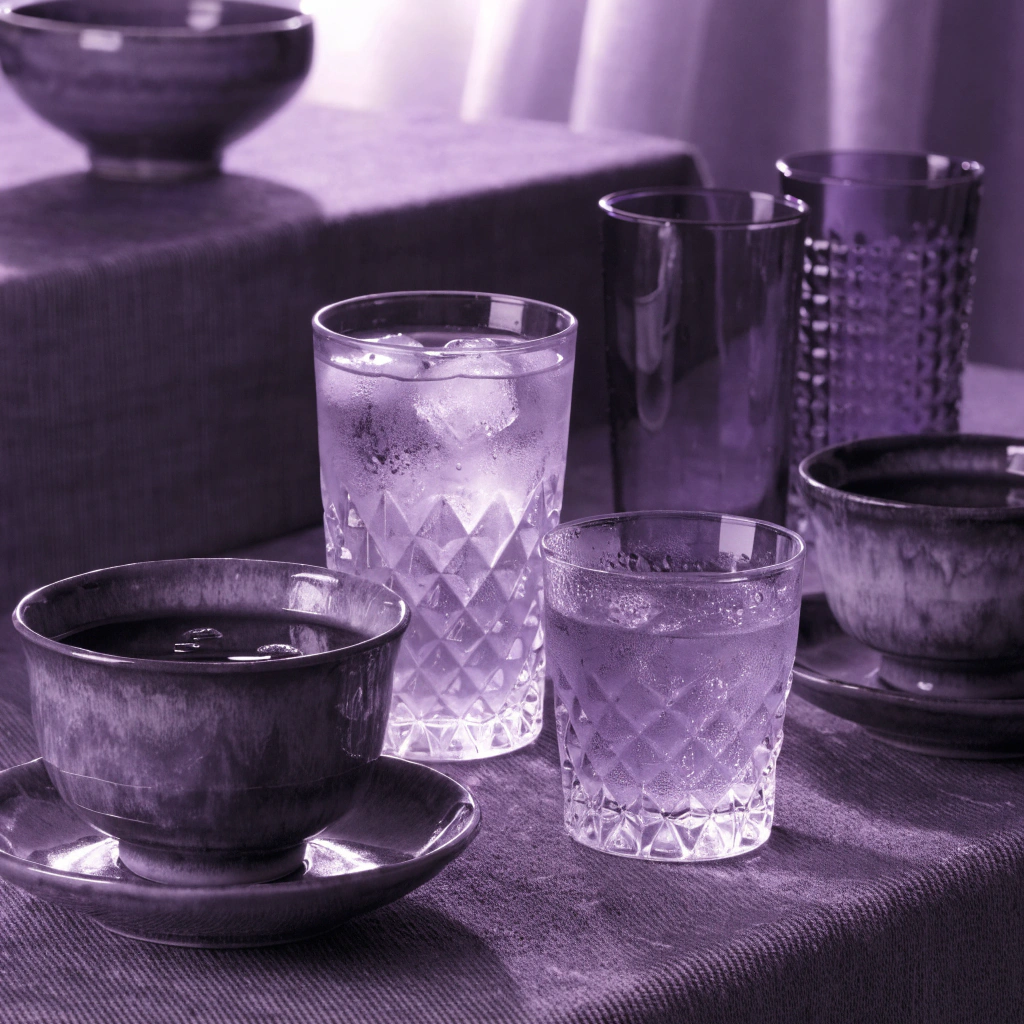
Eating and Drinking in South Korea
South Korea has many rules for food and drinks. People show respect at the table. It is important to wait for old people. They eat first. Younger people wait. Do not hold your rice bowl. Use two hands for a drink. This is polite. Many people drink with friends after work. This is a hoesik. You never pour your own drink. Your friend pours it for you. You pour for them. You also use two hands for the bottle. Food and drinks bring people together. It is a special time for everyone.
Gramática destacada
Patrón: Present Simple (to be)
"This is polite."
We use 'is' with singular subjects like 'it' or 'this' to describe a fact or state. It is the most common verb in English for descriptions.
Patrón: Negative Imperative
"Do not hold your rice bowl."
To tell someone not to do something, use 'Do not' followed by the base verb. This is common for rules and instructions.
Pon a prueba tu comprensión
10 preguntas · A1 Principiante · 1 vista previa gratis
Pon a prueba lo que aprendiste en este artículo. ¡Responde todas las preguntas para ganar XP!
Who eats first in South Korea?
¿Quieres terminar el quiz?
9 preguntas más te esperan. ¡Regístrate gratis para desbloquear el quiz completo y ganar XP!
Regístrate gratis¿Ya tienes cuenta? Acceder
Desglose de preguntas
Who eats first in South Korea?
Tu respuesta:
Respuesta correcta: Old people
You should use one hand for a drink.
Tu respuesta:
Respuesta correcta: Falso
What does 'polite' mean?
Tu respuesta:
Respuesta correcta: Having good manners
You never ____ your own drink.
Tu respuesta:
Respuesta correcta: pour
Eating and Drinking in South Korea
Eating and drinking in South Korea are very important. People do not just eat food; they show respect to others. These traditions are very old because they come from family history. At the table, age is important. You must wait for the oldest person to start eating first. It is more polite than starting alone. When you drink with others, you should use both hands to hold your glass. This shows that you are a polite person. After work, many people go to 'hoesik'. This is a social dinner with colleagues. In the past, these meetings were longer than they are today. Now, they are shorter but still popular. If an older person gives you a drink, you should take it with two hands and turn your head away to drink. It is a special way to be respectful. Korean food is delicious, but the rules are more important for social life.
Gramática destacada
Patrón: Comparatives (More ... than)
"It is more polite than starting alone."
We use 'more' + long adjective + 'than' to compare two things. It shows that one thing has a higher quality than the other.
Patrón: Past Simple (To Be)
"In the past, these meetings were longer than they are today."
We use 'were' as the past form of 'are' for plural subjects. It describes a state or condition that finished in the past.
Pon a prueba tu comprensión
11 preguntas · A2 Básico · 1 vista previa gratis
Pon a prueba lo que aprendiste en este artículo. ¡Responde todas las preguntas para ganar XP!
Who should start eating first in South Korea?
¿Quieres terminar el quiz?
10 preguntas más te esperan. ¡Regístrate gratis para desbloquear el quiz completo y ganar XP!
Regístrate gratis¿Ya tienes cuenta? Acceder
Desglose de preguntas
Who should start eating first in South Korea?
Tu respuesta:
Respuesta correcta: The oldest person
You should use only one hand to hold your glass when drinking with others.
Tu respuesta:
Respuesta correcta: Falso
What does 'colleagues' mean?
Tu respuesta:
Respuesta correcta: People you work with
In the past, hoesik meetings _____ longer than today.
Tu respuesta:
Respuesta correcta: were
What is 'hoesik'?
Tu respuesta:
Respuesta correcta: A social dinner with work friends
The Art of Dining and Drinking in South Korea
In South Korea, sharing a meal or a drink is much more than just a way to satisfy hunger; it is a vital social ritual that is based on deep respect. These customs have been practiced for centuries, and they are still the backbone of society today. Whether you are at a family home or at a 'hoesik', which is a traditional after-work gathering, you must follow specific rules of etiquette.
One of the most important rules is related to social hierarchy. In Korean culture, the oldest or most senior person at the table is always given the highest level of respect. For example, younger people have to wait until the oldest person has started their meal before they are allowed to begin eating. Additionally, when you receive a drink from an older person, you should hold your glass with both hands to show your appreciation.
The drinking culture is also very unique and follows strict patterns. During a company dinner, drinks are often shared to help colleagues build stronger relationships. However, a person should never pour their own drink because it is considered impolite. Instead, your glass will be filled by a friend or a colleague, and you are expected to return the favor. This tradition is used to create social cohesion and trust among the group.
Even though South Korea has become a hyper-modern country with advanced technology, these traditional values have remained very strong. Many people believe that eating together is the most effective way to maintain social bonds. If you visit Korea, understanding these simple customs will help you make a positive impression and show that you truly value their cultural history.
Gramática destacada
Patrón: Relative Clauses with 'which'
"Whether you are at a family home or at a 'hoesik', which is a traditional after-work gathering, you must follow specific rules."
A relative clause provides extra information about a noun. In this case, 'which' is used after a comma to add a non-defining description of 'hoesik'.
Patrón: Passive Voice
"Instead, your glass will be filled by a friend or a colleague."
The passive voice is used when the focus is on the action or the object receiving the action. It is formed using 'be' + the past participle.
Pon a prueba tu comprensión
11 preguntas · B1 Intermedio · 1 vista previa gratis
Pon a prueba lo que aprendiste en este artículo. ¡Responde todas las preguntas para ganar XP!
What determines the order of eating in South Korea?
¿Quieres terminar el quiz?
10 preguntas más te esperan. ¡Regístrate gratis para desbloquear el quiz completo y ganar XP!
Regístrate gratis¿Ya tienes cuenta? Acceder
Desglose de preguntas
What determines the order of eating in South Korea?
Tu respuesta:
Respuesta correcta: Social hierarchy and age
In Korea, it is polite to pour your own drink during a social gathering.
Tu respuesta:
Respuesta correcta: Falso
What does 'cohesion' mean?
Tu respuesta:
Respuesta correcta: The act of sticking together as a group
A 'hoesik' is a traditional after-work _____.
Tu respuesta:
Respuesta correcta: gathering
How should you hold your glass when receiving a drink from an older person?
Tu respuesta:
Respuesta correcta: With both hands
Respect at the Table: Understanding South Korean Dining Etiquette
In South Korea, sharing a meal is far more than a simple act of nourishment; it is a sophisticated social ritual deeply rooted in the nation's history. This culture, which is heavily influenced by ancient Confucian values, emphasizes respect, hierarchy, and communal harmony. To an outsider, the intricate rules governing the dinner table might initially seem overwhelming, yet they are considered integral for maintaining social order and showing genuine respect to others. These customs serve as a bridge between the past and the present, ensuring that traditional virtues are preserved despite the pressures of a fast-paced, modern world.
One of the most fundamental aspects of Korean dining etiquette is the recognition of seniority and social status. It is expected that the eldest person at the table begins the meal. Until they have taken their first bite, others are required to wait patiently. Furthermore, when receiving a dish or a drink from an elder, it is customary to use both hands as a sign of humility. This specific gesture signifies that the recipient acknowledges the status of the giver and accepts the offering with gratitude. Neglecting these subtle protocols can be perceived as a significant lack of upbringing or personal respect, potentially damaging social relationships.
The drinking culture, particularly the 'hoesik' or company dinner, plays a pivotal role in professional life and corporate cohesion. These gatherings are designed to strengthen the bond between colleagues outside the formal and often stressful office environment. This practice reflects the collective nature of the society, where the needs and comfort of the group are prioritized over the individual. During these events, specific rules apply to the pouring of traditional beverages like 'soju' or beer. For instance, one should never pour their own drink; instead, it is a reciprocal act where colleagues fill each other's glasses to foster a sense of community. When drinking in the presence of a superior, it is polite to turn one's head away to the side, ensuring that the act of swallowing is not done directly in front of them.
Although South Korea has undergone rapid modernization and technological advancement, these traditional customs remain incredibly resilient. While younger generations may adopt a slightly more relaxed approach in casual settings with friends, the core principles of etiquette continue to dictate formal, family, and professional interactions. Understanding these nuances is not merely about following a set of rigid rules; it is about appreciating the underlying values of a society that prizes collective well-being over individual preference. In conclusion, whether it is a quiet family gathering or a loud corporate event, the South Korean table remains a sacred space where history and modern life coexist through the shared language of respect.
Gramática destacada
Patrón: Passive Voice
"This culture, which is heavily influenced by ancient Confucian values, emphasizes respect..."
The passive voice is used to focus on the person or thing affected by an action. It is formed using the verb 'to be' followed by the past participle of the main verb.
Patrón: Non-defining Relative Clauses
"The drinking culture, particularly the 'hoesik' or company dinner, plays a pivotal role in professional life."
These clauses add extra information about a noun that is already identified. They are always separated from the rest of the sentence by commas.
Patrón: Modal Verbs for Possibility
"Neglecting these subtle protocols can be perceived as a significant lack of upbringing."
The modal verb 'can' is used here to express a general possibility or a potential outcome. It is followed by the base form of the verb.
Pon a prueba tu comprensión
11 preguntas · B2 Intermedio alto · 1 vista previa gratis
Pon a prueba lo que aprendiste en este artículo. ¡Responde todas las preguntas para ganar XP!
What is the primary philosophical influence on South Korean dining etiquette?
¿Quieres terminar el quiz?
10 preguntas más te esperan. ¡Regístrate gratis para desbloquear el quiz completo y ganar XP!
Regístrate gratis¿Ya tienes cuenta? Acceder
Desglose de preguntas
What is the primary philosophical influence on South Korean dining etiquette?
Tu respuesta:
Respuesta correcta: Confucian values
In South Korea, it is considered polite to pour your own drink during a company dinner.
Tu respuesta:
Respuesta correcta: Falso
What does the word 'protocol' refer to in the context of the article?
Tu respuesta:
Respuesta correcta: A system of formal rules and behavior
It is expected that the _____ person at the table begins the meal before anyone else.
Tu respuesta:
Respuesta correcta: eldest
When receiving a dish from an elder, you should use both _____ as a sign of humility.
Tu respuesta:
Respuesta correcta: hands
The Nuanced Choreography of Korean Gastronomy and Social Cohesion
In the contemporary landscape of South Korea, dining is far from a mere biological necessity; rather, it constitutes a complex social performance rooted in centuries of Confucian philosophy. Central to this experience is the concept of 'nunchi'—the subtle art of gauging another's mood and status to maintain social equilibrium. Seldom does a social gathering occur without a meticulous observation of hierarchy, where age and professional standing dictate the flow of conversation, the seating arrangement, and even the sequence of consumption. To ignore these subtleties is to risk social ostracization in a society where collective harmony is paramount.
The preservation of social harmony through dining etiquette remains a cornerstone of the culture, even as the nation hurtles toward a hyper-modern future. This is most evident during the 'hoesik', or company dinner, where the boundaries between professional duty and social leisure blur. It is the intricate interplay between age-old traditions and modern corporate dynamics that defines the South Korean table. At these gatherings, the act of pouring drinks is laden with symbolic meaning. One must never pour their own drink; instead, it is the act of reciprocal pouring that reinforces communal bonds and acknowledges the presence of the other.
When receiving a drink from a superior, a deferential posture is mandatory. This involves holding the glass with two hands—a pervasive gesture of respect that extends beyond the table into various facets of Korean life, such as the exchange of business cards. Furthermore, should one find themselves drinking with an elder, the protocol dictates turning one's head away while sipping. This ritualistic avoidance of direct eye contact during consumption prevents any perception of challenge to the elder’s authority. To neglect such a gesture would be to signal a profound lack of 'ye-ui', or manners.
The ingrained nature of these customs ensures that the hierarchical structure of society is mirrored in every meal. Nominalisation of these behaviors often simplifies them into 'rules', yet they are more akin to a fluid language of respect. For the uninitiated, the sheer volume of unspoken rules might seem daunting, yet for Koreans, they provide a reliable framework for social cohesion. Despite the increasing influence of Western individualism and the rise of the 'honbap' (eating alone) trend among the youth, the collective identity forged through shared meals remains remarkably resilient.
Critical analysis suggests that while these practices foster unity, they also exert significant social pressure on younger generations. The expectation of participation in 'hoesik' can sometimes be viewed as an unwanted extension of the workday. Nevertheless, the underlying sentiment remains one of belonging and mutual support. Ultimately, South Korean dining culture is a testament to the enduring power of tradition in a rapidly changing world, where the simple act of sharing rice and soju continues to bind the social fabric together through a shared understanding of respect.
Gramática destacada
Patrón: Negative Inversion
"Seldom does a social gathering occur without a meticulous observation of hierarchy..."
When a sentence starts with a negative or restrictive adverb like 'seldom', the subject and auxiliary verb are inverted. This is used in formal writing to add emphasis or a sense of gravity.
Patrón: Cleft Sentences
"It is the intricate interplay between age-old traditions and modern corporate dynamics that defines the South Korean table."
Cleft sentences use the 'It is/was + [noun phrase] + that/who' structure to focus on specific information. Here, it emphasizes exactly what defines the dining experience.
Patrón: Nominalisation
"The preservation of social harmony through dining etiquette remains a cornerstone of the culture..."
Nominalisation turns verbs or adjectives into nouns (e.g., 'preserve' becomes 'preservation'). This creates a more formal, objective, and academic tone common at the C1 level.
Pon a prueba tu comprensión
12 preguntas · C1 Avanzado · 1 vista previa gratis
Pon a prueba lo que aprendiste en este artículo. ¡Responde todas las preguntas para ganar XP!
What is the primary function of South Korean dining as described in the text?
¿Quieres terminar el quiz?
11 preguntas más te esperan. ¡Regístrate gratis para desbloquear el quiz completo y ganar XP!
Regístrate gratis¿Ya tienes cuenta? Acceder
Desglose de preguntas
What is the primary function of South Korean dining as described in the text?
Tu respuesta:
Respuesta correcta: A complex social performance of respect
In Korean culture, it is considered polite to pour your own drink during a social gathering.
Tu respuesta:
Respuesta correcta: Falso
Which word describes a behavior that is 'firmly fixed and difficult to change'?
Tu respuesta:
Respuesta correcta: Ingrained
The subtle art of gauging another's mood and status is known as _____.
Tu respuesta:
Respuesta correcta: nunchi
Why do Koreans turn their heads away when drinking with an elder?
Tu respuesta:
Respuesta correcta: To avoid challenging the elder's authority
The 'hoesik' is a company dinner where professional and social boundaries often overlap.
Tu respuesta:
Respuesta correcta: Verdadero
The Choreography of Commensality: Navigating the Hierarchical Tapestry of Korean Gastronomy
To the uninitiated observer, the Korean dining table might appear a mere tableau of culinary delight; however, it is, in reality, a meticulously choreographed theater of social hierarchy and communal belonging. This gastronomic landscape is governed by an intricate web of traditions that trace their lineage back to the Neo-Confucian ideologies of the Joseon Dynasty. In this context, the act of sharing a meal—commensality—is elevated from a biological necessity to a profound social ritual. Central to this experience is the 'hoesik', a corporate gathering that functions as a crucible for professional bonding. It is here that the nuances of hierarchical standing are most visible, as colleagues navigate a labyrinth of unspoken rules that dictate everything from seating arrangements to the precise angle at which one pours a libation.
The bedrock of these customs is the principle of filial piety and respect for seniority. It is imperative that the junior member of any group remain hyper-aware of their surroundings, a trait known as 'nunchi'. This emotional intelligence allows an individual to anticipate the needs of their superiors without the need for explicit communication. For instance, should a senior’s glass become empty, the junior must immediately offer a refill, utilizing both hands to signify veneration. To neglect such a protocol would be considered not merely a lapse in etiquette, but a significant affront to the social order. This reverence is further exemplified in the physical act of drinking; a subordinate must turn their head away from the elder when sipping, a gesture that acknowledges the disparity in their social status while maintaining the propriety of the occasion.
Historically, these practices were designed to ensure social cohesion in a society where the collective always took precedence over the individual. Even in contemporary, hyper-modern South Korea, where Western influences are pervasive, these traditional mores remain antithetical to the more egalitarian dining habits of the West. The persistence of these rituals suggests that they serve a vital psychological function, providing a sense of stability and continuity in a rapidly evolving world. One might argue that the 'hoesik', despite its potential for social pressure, offers a unique space for 'jeong'—a deep-seated sense of attachment and collective affection—to flourish. Through the shared consumption of 'soju' and the rhythmic exchange of dishes, the barriers between individuals are momentarily softened, yet the underlying structure of the hierarchy remains the scaffolding upon which the entire interaction is built.
Furthermore, the linguistic dimensions of the meal cannot be overlooked. The use of honorifics is inextricably linked to the dining experience, as the language used to offer food or express gratitude must be calibrated to the status of the interlocutor. Not only does the hierarchy dictate the order of consumption, but it also shapes the very vocabulary employed at the table. Lest a participant inadvertently cause offense, they must master the delicate balance between formal deference and the warmth of communal dining. The meal is thus a linguistic and behavioral performance, where the successful execution of ritual is as important as the quality of the cuisine itself.
In conclusion, the dining and drinking culture of South Korea is a testament to the enduring power of Confucian thought. It is a sophisticated system of social management that balances the needs of the individual with the requirements of the group. While the rigors of these traditions may seem daunting to outsiders, they provide the essential framework for harmony and mutual respect. As Korea continues to navigate its path between ancient tradition and global modernity, the table remains a sacred space where the values of the past are continually reaffirmed and reinterpreted for the present generation.
Gramática destacada
Patrón: Negative Inversion for Emphasis
"Not only does the hierarchy dictate the order of consumption, but it also shapes the very vocabulary employed at the table."
When a sentence starts with a negative or restrictive phrase like 'not only', the auxiliary verb comes before the subject. This structure is used in formal English to add rhetorical emphasis to the statement.
Patrón: The Subjunctive Mood after Adjectives of Urgency
"It is imperative that the junior member of any group remain hyper-aware of their surroundings..."
After adjectives like 'imperative', 'essential', or 'vital', the base form of the verb (remain, not remains) is used in a 'that' clause. This expresses necessity or a requirement rather than a factual statement.
Patrón: Negative Purpose with 'Lest'
"Lest a participant inadvertently cause offense, they must master the delicate balance..."
'Lest' is a formal conjunction meaning 'to avoid the risk of'. It is followed by the subjunctive (base form) or 'should' to indicate a negative purpose or something that must be prevented.
Pon a prueba tu comprensión
12 preguntas · C2 Dominio · 1 vista previa gratis
Pon a prueba lo que aprendiste en este artículo. ¡Responde todas las preguntas para ganar XP!
According to the text, what is the primary function of 'nunchi' in a dining context?
¿Quieres terminar el quiz?
11 preguntas más te esperan. ¡Regístrate gratis para desbloquear el quiz completo y ganar XP!
Regístrate gratis¿Ya tienes cuenta? Acceder
Desglose de preguntas
According to the text, what is the primary function of 'nunchi' in a dining context?
Tu respuesta:
Respuesta correcta: To anticipate and fulfill the needs of superiors without being told.
The article suggests that traditional Korean dining rituals have been completely replaced by Western egalitarian habits.
Tu respuesta:
Respuesta correcta: Falso
What does the term 'commensality' refer to in the context of the article?
Tu respuesta:
Respuesta correcta: The act of eating together as a social ritual.
The concept of 'jeong' in Korean culture refers to a deep-seated sense of collective _____.
Tu respuesta:
Respuesta correcta: affection
What historical ideology forms the basis of South Korean dining etiquette?
Tu respuesta:
Respuesta correcta: Neo-Confucianism
A junior member is expected to use both hands when pouring or receiving a drink for a senior.
Tu respuesta:
Respuesta correcta: Verdadero

