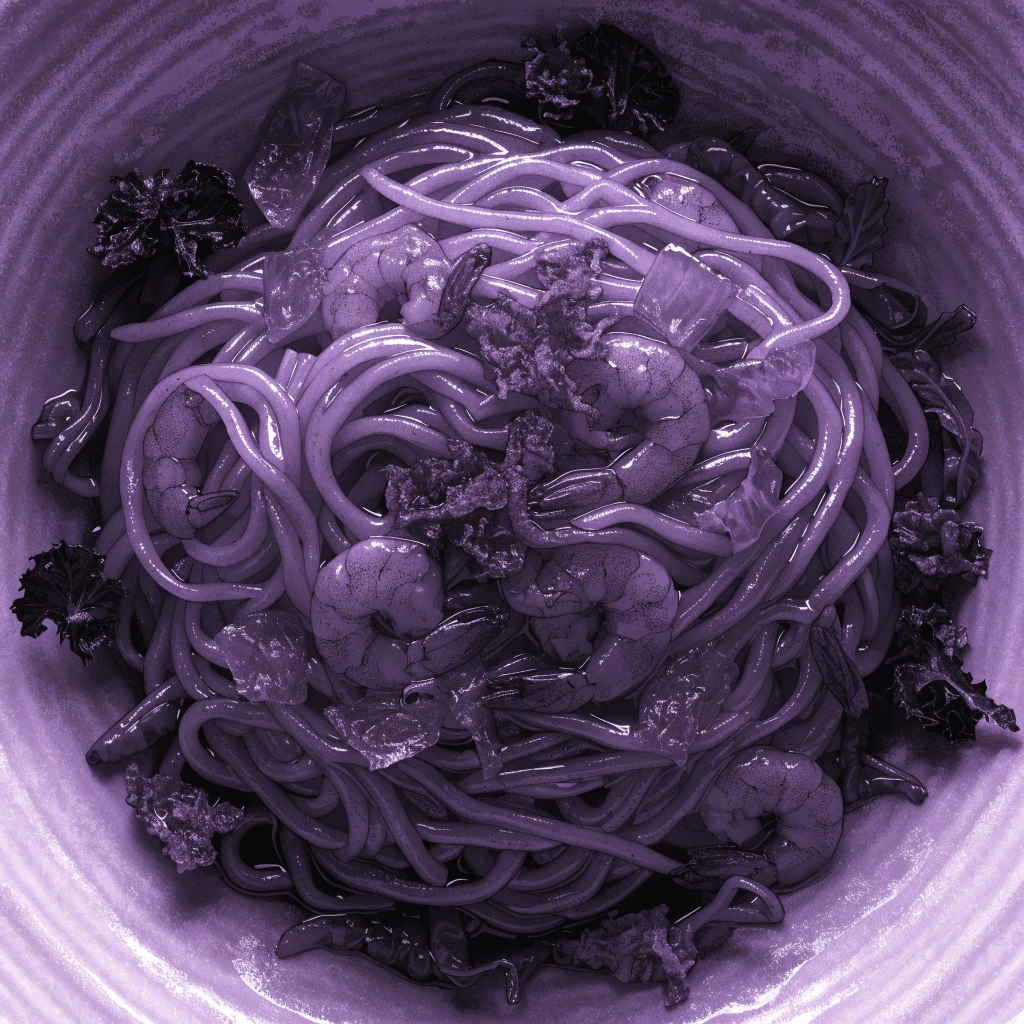
Pad Thai: A Famous Food
Pad Thai is a very famous food from Thailand. It is a delicious noodle dish. People in Thailand eat it every day. It is popular with tourists too.
The dish has many ingredients. It has rice noodles, eggs, and tofu. Some people add shrimp or chicken. It also has bean sprouts and peanuts. It tastes sweet and salty.
Pad Thai is special for Thailand. Many years ago, the government wanted a national dish. They chose Pad Thai. Now, you can find it in many restaurants and on the street. It is the most famous Thai food in the world.
Gramática destacada
Patrón: Present Simple (Be)
"Pad Thai is a very famous food from Thailand."
We use 'is' with singular subjects like 'Pad Thai' to describe facts. It tells us what something is or how it looks.
Patrón: Present Simple (Action)
"People in Thailand eat it every day."
We use the base verb 'eat' because 'people' is plural. This pattern describes things that happen regularly.
Pon a prueba tu comprensión
10 preguntas · A1 Principiante · 1 vista previa gratis
Pon a prueba lo que aprendiste en este artículo. ¡Responde todas las preguntas para ganar XP!
Where is Pad Thai from?
¿Quieres terminar el quiz?
9 preguntas más te esperan. ¡Regístrate gratis para desbloquear el quiz completo y ganar XP!
Regístrate gratis¿Ya tienes cuenta? Acceder
Desglose de preguntas
Where is Pad Thai from?
Tu respuesta:
Respuesta correcta: Thailand
Pad Thai has rice noodles.
Tu respuesta:
Respuesta correcta: Verdadero
What does 'famous' mean?
Tu respuesta:
Respuesta correcta: Many people know it
Pad Thai is a delicious _____ dish.
Tu respuesta:
Respuesta correcta: noodle
Pad Thai: Un Plato con Historia en Tailandia
El Pad Thai es un plato muy famoso de Tailandia. Muchas personas en el mundo lo conocen y les gusta. Pero, ¿sabes su historia? Su origen es más interesante de lo que parece. No es un plato muy antiguo, sino que fue creado por una razón especial.
En la década de 1930 y 1940, Tailandia tenía un primer ministro llamado Plaek Phibunsongkhram. Él quería que Tailandia tuviera una fuerte identidad nacional. También, en ese tiempo, había una escasez de arroz. Las personas comían mucho arroz y no había suficiente para todos.
El primer ministro tuvo una idea. Él promovió el Pad Thai. Este plato usa fideos de arroz en lugar de mucho arroz. También tiene ingredientes locales como tofu, camarones secos y brotes de soja. Con esta idea, el gobierno ayudó a las personas a comer diferente y a usar otros productos.
Así, el Pad Thai se convirtió en un plato nacional. Ayudó a las personas a sentir más orgullo por su país y a superar la escasez de alimentos. Hoy, es un símbolo de la comida tailandesa en todo el mundo.
Gramática destacada
Patrón: El Pretérito Indefinido (Pasado Simple)
"fue creado"
Usamos el pretérito indefinido para hablar de acciones que comenzaron y terminaron en un momento específico del pasado. Por ejemplo, 'fue creado' indica que la acción de crear terminó en un momento dado.
Patrón: Comparativos de Superioridad (más... que)
"Su origen es más interesante de lo que parece."
Usamos 'más... que' para comparar dos cosas y decir que una tiene una cualidad en mayor grado que la otra. 'Más interesante que' significa que una cosa tiene más interés que otra.
Pon a prueba tu comprensión
11 preguntas · A2 Básico · 1 vista previa gratis
Pon a prueba lo que aprendiste en este artículo. ¡Responde todas las preguntas para ganar XP!
¿Qué es el Pad Thai?
¿Quieres terminar el quiz?
10 preguntas más te esperan. ¡Regístrate gratis para desbloquear el quiz completo y ganar XP!
Regístrate gratis¿Ya tienes cuenta? Acceder
Desglose de preguntas
¿Qué es el Pad Thai?
Tu respuesta:
Respuesta correcta: Un plato muy famoso de Tailandia
El Pad Thai es un plato muy antiguo de Tailandia.
Tu respuesta:
Respuesta correcta: Falso
¿Qué significa 'escasez'?
Tu respuesta:
Respuesta correcta: Falta de algo necesario
El _____ promovió el Pad Thai en Tailandia.
Tu respuesta:
Respuesta correcta: primer ministro
¿Por qué el gobierno promovió el Pad Thai?
Tu respuesta:
Respuesta correcta: Para fomentar la identidad nacional y por la escasez de arroz
The Story Behind Pad Thai: More Than Just Noodles
Pad Thai has become one of the most famous dishes in the world. You can find it in almost every international city, from London to New York. However, many people do not realize that this delicious meal has a very interesting political history. It was not just created for flavor, but it was also designed to build a strong sense of national pride and identity.
In the late 1930s, Thailand was going through many significant changes. The Prime Minister, Plaek Phibunsongkhram, was a leader who wanted to modernize the country quickly. At that time, there was a serious shortage of rice because of the war and bad weather. To solve this problem, the government encouraged people to eat rice noodles instead of whole grains. Noodles use less rice, which helped the country save its valuable resources during a difficult time.
Pad Thai was promoted as part of a national campaign to create a unique Thai culture. The government distributed recipes and encouraged street vendors to sell the dish everywhere. It was made with local ingredients like tofu, dried shrimp, and bean sprouts. These ingredients were cheap and easy to find, making the dish accessible to everyone in the population.
The dish, which combines sweet, sour, and salty flavors, has been adapted in many different ways over the years. Some chefs add extra chili for heat, while others use fresh prawns instead of dried ones. These variations show how the dish has changed while keeping its traditional roots.
Today, Pad Thai is recognized globally as a symbol of Thailand. Although it was originally a political tool, it has evolved into a beloved meal that represents Thai culture. Whether it is served on a busy street corner in Bangkok or in a fancy restaurant, it remains a favorite for locals and tourists alike.
Gramática destacada
Patrón: Passive Voice
"Pad Thai was promoted as part of a national campaign to create a unique Thai culture."
The passive voice is used when the action is more important than the person doing it. It is formed using the verb 'to be' followed by the past participle of the main verb.
Patrón: Relative Clauses
"The dish, which combines sweet, sour, and salty flavors, has been adapted in many different ways over the years."
Relative clauses give extra information about a noun. We use 'which' to provide more detail about objects or ideas without starting a new sentence.
Pon a prueba tu comprensión
11 preguntas · B1 Intermedio · 1 vista previa gratis
Pon a prueba lo que aprendiste en este artículo. ¡Responde todas las preguntas para ganar XP!
Why did the Thai government encourage people to eat noodles in the 1930s?
¿Quieres terminar el quiz?
10 preguntas más te esperan. ¡Regístrate gratis para desbloquear el quiz completo y ganar XP!
Regístrate gratis¿Ya tienes cuenta? Acceder
Desglose de preguntas
Why did the Thai government encourage people to eat noodles in the 1930s?
Tu respuesta:
Respuesta correcta: There was a serious shortage of whole rice grains
Pad Thai was originally created to help build a sense of national pride.
Tu respuesta:
Respuesta correcta: Verdadero
What is an 'ingredient'?
Tu respuesta:
Respuesta correcta: One of the foods used to make a specific dish
Pad Thai was _____ as part of a national campaign to create a Thai identity.
Tu respuesta:
Respuesta correcta: promoted
Which combination of flavors is mentioned as being part of Pad Thai?
Tu respuesta:
Respuesta correcta: Sweet, sour, and salty
The Political Plate: The Surprising Origins of Pad Thai
While Pad Thai is celebrated globally as the quintessential Thai dish, its origins are rooted in a deliberate nation-building strategy rather than ancient tradition. During the late 1930s and early 1940s, Thailand underwent a significant cultural transformation under the leadership of Prime Minister Plaek Phibunsongkhram. This era was characterized by a push for modernization and the consolidation of a unified national identity. Consequently, Pad Thai was not merely a culinary innovation but a political tool designed to foster a sense of 'Thai-ness' among the populace.
Economic factors played a crucial role in the dish's rise to prominence. At the time, Thailand faced a severe rice shortage due to floods and the ongoing global conflict. To mitigate this crisis, the government promoted the consumption of rice noodles, which used broken rice grains and required less grain overall than traditional steamed rice. By encouraging citizens to consume noodles, the administration effectively managed the domestic food supply while simultaneously distancing the nation from Chinese culinary influences. Although the technique of stir-frying noodles originated in China, the government insisted on incorporating local ingredients such as tofu, dried shrimp, tamarind, and palm sugar to ensure the dish felt uniquely Thai.
The promotion of Pad Thai was part of a broader series of 'Cultural Mandates' aimed at westernizing the country and strengthening its sovereignty. For instance, the government mandated that citizens wear hats in public and change the way they dressed. In this context, Pad Thai represented a modern, hygienic, and efficient way of eating that aligned with Phibunsongkhram’s vision of a 'new' Thailand. Furthermore, the government launched a public health campaign that emphasized the nutritional benefits of the dish. It was marketed as a balanced meal, providing protein, carbohydrates, and vegetables in a single serving. Street vendors were encouraged to sell the dish, and it quickly became a staple of the urban landscape.
In retrospect, the story of Pad Thai illustrates how food can be utilized to shape national narratives. Had the government not intervened during a period of economic instability, the culinary landscape of Thailand might look remarkably different today. Today, the dish serves as a testament to the power of cultural engineering, proving that even the most 'authentic' traditions can be the result of careful planning and political necessity.
Gramática destacada
Patrón: Passive Voice
"Pad Thai was not merely a culinary innovation but a political tool designed to foster a sense of 'Thai-ness'."
The passive voice is used here to focus on the dish (the object) rather than the specific person who created it. It is formed using the verb 'to be' plus the past participle.
Patrón: Mixed Conditional (Inversion)
"Had the government not intervened during a period of economic instability, the culinary landscape of Thailand might look remarkably different today."
This structure uses 'Had' at the beginning to replace 'If'. It describes a hypothetical past action (not intervening) and its hypothetical present result (looking different).
Patrón: Non-defining Relative Clauses
"...the government promoted the consumption of rice noodles, which used broken rice grains and required less grain overall..."
This clause adds extra information about 'rice noodles' and is separated by commas. It provides context without being essential to identify the noun.
Pon a prueba tu comprensión
11 preguntas · B2 Intermedio alto · 1 vista previa gratis
Pon a prueba lo que aprendiste en este artículo. ¡Responde todas las preguntas para ganar XP!
What was the primary political motivation behind promoting Pad Thai?
¿Quieres terminar el quiz?
10 preguntas más te esperan. ¡Regístrate gratis para desbloquear el quiz completo y ganar XP!
Regístrate gratis¿Ya tienes cuenta? Acceder
Desglose de preguntas
What was the primary political motivation behind promoting Pad Thai?
Tu respuesta:
Respuesta correcta: To create a unified national identity and manage food shortages
Pad Thai originated as an ancient recipe passed down through generations.
Tu respuesta:
Respuesta correcta: Falso
What does the word 'mitigate' mean in the context of the article?
Tu respuesta:
Respuesta correcta: To make a situation less severe
The government promoted noodles because they used broken rice grains to solve a rice _____.
Tu respuesta:
Respuesta correcta: shortage
Which of these was NOT a reason Pad Thai was considered modern?
Tu respuesta:
Respuesta correcta: It was only eaten by royalty
The Gastronomic Architect: Unravelling the Political Tapestry of Pad Thai
While modern gourmands might perceive Pad Thai as an ancient relic of Siamese heritage, its genesis is, in fact, a masterclass in state-sponsored nation-building. Seldom does a culinary staple owe its existence so explicitly to the machinations of a geopolitical agenda. In the late 1930s and early 1940s, Thailand found itself at a pivotal crossroads. Under the authoritarian leadership of Prime Minister Plaek Phibunsongkhram, the nation embarked on a radical transformation aimed at modernizing the state and distancing it from its colonial neighbors. It was this fervent desire for cultural sovereignty that served as the primary catalyst for the creation of what we now recognize as the quintessential Thai dish.
The implementation of this culinary directive was born out of economic necessity as much as nationalist pride. During the early 1940s, Thailand faced a severe grain shortage, exacerbated by the global upheaval of World War II. By discouraging the consumption of whole rice—the country’s primary export and economic lifeblood—the government sought to stabilize the domestic economy and ensure food security. Noodle production, which utilized broken rice grains that were otherwise less profitable for export, emerged as a pragmatic alternative. However, the challenge lay in the fact that noodles were traditionally viewed as an imported Chinese influence. To circumvent this cultural hurdle, Phibunsongkhram’s administration mandated a specific recipe that incorporated local ingredients, effectively rebranding the noodle as a symbol of Thai identity.
Never before had a government so effectively utilized the dinner table as a tool for social engineering. The campaign was relentless; public competitions were held to find the most 'Thai' flavor profile, and street vendors were actively encouraged, sometimes even coerced, to sell the new national dish. By blending tofu, dried shrimp, palm sugar, and tamarind with rice noodles, they engineered a flavor profile that reflected the nuanced complexity of Thai cuisine. What we witness in the global ubiquity of Pad Thai today is the successful homogenization of Thai identity. The dish functioned as a vessel for unity, intended to supersede regional differences and foster a singular national consciousness among the populace.
Furthermore, the synthesis of sweet, sour, and salty notes was not merely an aesthetic choice but a calculated effort to appeal to a broad demographic. The scarcity of ingredients during wartime necessitated a dish that was both nutritious and cost-effective, yet palatable enough to be embraced by the masses. Despite its manufactured origins, Pad Thai has transcended its political vestiges to become a beloved global phenomenon. It serves as a poignant reminder that national identity is often a curated narrative, constructed through the very food we consume. Only through an analysis of these historical undercurrents can we truly appreciate the complexity of Thailand's most famous export.
Gramática destacada
Patrón: Negative Inversion
"Seldom does a culinary staple owe its existence so explicitly to the machinations of a geopolitical agenda."
Inversion occurs when the auxiliary verb is placed before the subject after certain negative or restrictive adverbs (like 'seldom', 'never', 'hardly') to add emphasis or a formal tone.
Patrón: It-Cleft Sentence
"It was this fervent desire for cultural sovereignty that served as the primary catalyst..."
A cleft sentence focuses on a specific part of the information by starting with 'It is/was' + the focal point + 'that/who'. It is used here to emphasize the specific reason for the dish's creation.
Patrón: Nominalisation
"The implementation of this culinary directive was born out of economic necessity..."
Nominalisation involves turning verbs or adjectives into nouns (e.g., 'implement' to 'implementation'). This makes the writing more abstract, formal, and concise, which is characteristic of C1 level academic English.
Pon a prueba tu comprensión
12 preguntas · C1 Avanzado · 1 vista previa gratis
Pon a prueba lo que aprendiste en este artículo. ¡Responde todas las preguntas para ganar XP!
What was the primary political motivation behind the promotion of Pad Thai?
¿Quieres terminar el quiz?
11 preguntas más te esperan. ¡Regístrate gratis para desbloquear el quiz completo y ganar XP!
Regístrate gratis¿Ya tienes cuenta? Acceder
Desglose de preguntas
What was the primary political motivation behind the promotion of Pad Thai?
Tu respuesta:
Respuesta correcta: To foster a unified national identity and modernize the state
The decision to use rice noodles was partly based on the need to export whole rice grains for economic stability.
Tu respuesta:
Respuesta correcta: Verdadero
Which word describes the devious political schemes mentioned in the text?
Tu respuesta:
Respuesta correcta: Machinations
The government sought to _____ the domestic economy by discouraging whole rice consumption.
Tu respuesta:
Respuesta correcta: stabilize
Why were noodles originally a challenge for the nationalist agenda?
Tu respuesta:
Respuesta correcta: They were perceived as having a foreign Chinese origin
The author argues that Pad Thai is an ancient dish dating back several centuries.
Tu respuesta:
Respuesta correcta: Falso
The Gastronomic Construct: Pad Thai and the Orchestration of National Identity
In the annals of culinary history, few dishes possess a pedigree as paradoxical as Pad Thai. While it is often perceived by the uninitiated as an ancient vestige of Siamese heritage, its genesis is, in fact, a masterclass in socio-political expediency. Emerging during the mid-20th century under the auspices of Prime Minister Plaek Phibunsongkhram, Pad Thai was less a product of organic evolution and more a strategic instrument of statecraft. Were it not for the calculated intervention of the state, this ubiquitous noodle dish might never have transcended the status of a localized curiosity. The late 1930s and early 1940s marked a period of profound transformation for Thailand. Phibunsongkhram, a figure synonymous with the 'Thai-ification' of the nation, sought to forge a unified national identity that could withstand the pressures of Western imperialism and internal fragmentation. Central to this endeavor was the homogenization of cultural practices, ranging from dress codes to linguistic norms. It was within this climate of rigorous nationalism that the government sought to introduce a national dish.
The objective was twofold: to bolster a sense of collective belonging and to address a pragmatic economic crisis. During World War II, Thailand faced a severe shortage of rice—the nation’s primary export and dietary staple. By promoting rice noodles, which used broken rice grains more efficiently, the state could mitigate the grain shortage while simultaneously weaning the populace off Chinese culinary hegemony. Paradoxically, the components of Pad Thai are largely of Chinese origin. The very act of stir-frying and the use of noodles were techniques introduced by Chinese immigrants. However, through a clever process of amalgamation, the government rebranded these elements by incorporating quintessentially Thai ingredients such as palm sugar, tamarind, and dried shrimp. This culinary subterfuge allowed the state to present a palatable version of modernity that felt authentically indigenous. Seldom has a culinary staple been so meticulously engineered to serve the exigencies of nation-building.
The proliferation of Pad Thai was not merely a domestic success; it served as the vanguard for Thailand's subsequent foray into 'gastro-diplomacy.' In the early 21st century, the Thai government launched the 'Global Thai' program, an initiative designed to increase the number of Thai restaurants worldwide. This state-sponsored expansion used Pad Thai as its primary ambassador, leveraging the dish's accessibility to project soft power and stimulate tourism. It is through this prism of cultural homogenization that we must analyze the dish's global dominance. One might argue that the 'authenticity' of Pad Thai is a moot point. While it may be a modern construct, its role in defining the Thai experience—both for citizens and the global community—is undeniable. The dish represents a confluence of necessity, political maneuvering, and cultural synthesis. It serves as a reminder that national identity is often a curated narrative, meticulously assembled from diverse threads to create a cohesive whole. Today, as one navigates the bustling streets of Bangkok or the cosmopolitan hubs of the West, the aroma of tamarind and toasted peanuts stands as a testament to the enduring power of state-sponsored culinary innovation. Pad Thai, therefore, remains not just a meal, but a profound symbol of Thailand’s sovereignty and its astute navigation of the global cultural landscape.
Gramática destacada
Patrón: Inverted Conditional (Subjunctive)
"Were it not for the calculated intervention of the state, this ubiquitous noodle dish might never have transcended the status of a localized curiosity."
This formal structure replaces 'If it were not for...' by inverting the verb and subject. It is used in C2 level prose to express a hypothetical situation in the past that had a direct impact on the present.
Patrón: Negative Inversion
"Seldom has a culinary staple been so meticulously engineered to serve the exigencies of nation-building."
When a sentence begins with a negative or restrictive adverb like 'seldom', the auxiliary verb comes before the subject. This adds rhetorical emphasis and a scholarly tone.
Patrón: Cleft Sentence for Focus
"It is through this prism of cultural homogenization that we must analyze the dish's global dominance."
A cleft sentence (It + is/was + [focused part] + that/who) is used to emphasize a specific piece of information, in this case, the method of analysis.
Pon a prueba tu comprensión
12 preguntas · C2 Dominio · 1 vista previa gratis
Pon a prueba lo que aprendiste en este artículo. ¡Responde todas las preguntas para ganar XP!
What was the primary political motivation behind the creation of Pad Thai?
¿Quieres terminar el quiz?
11 preguntas más te esperan. ¡Regístrate gratis para desbloquear el quiz completo y ganar XP!
Regístrate gratis¿Ya tienes cuenta? Acceder
Desglose de preguntas
What was the primary political motivation behind the creation of Pad Thai?
Tu respuesta:
Respuesta correcta: To foster a unified national identity and manage a grain shortage.
The article suggests that Pad Thai is an ancient dish passed down through generations of Thai families.
Tu respuesta:
Respuesta correcta: Falso
Which word is a synonym for 'deceit used to achieve a goal' as used in the text?
Tu respuesta:
Respuesta correcta: Subterfuge
The Thai government used Pad Thai as a primary _____ to project soft power globally.
Tu respuesta:
Respuesta correcta: ambassador
According to the text, why were rice noodles promoted over whole rice grains?
Tu respuesta:
Respuesta correcta: Rice noodles utilized broken rice grains more efficiently during a shortage.
The 'Global Thai' program was a state-sponsored initiative to expand Thai culinary influence.
Tu respuesta:
Respuesta correcta: Verdadero

