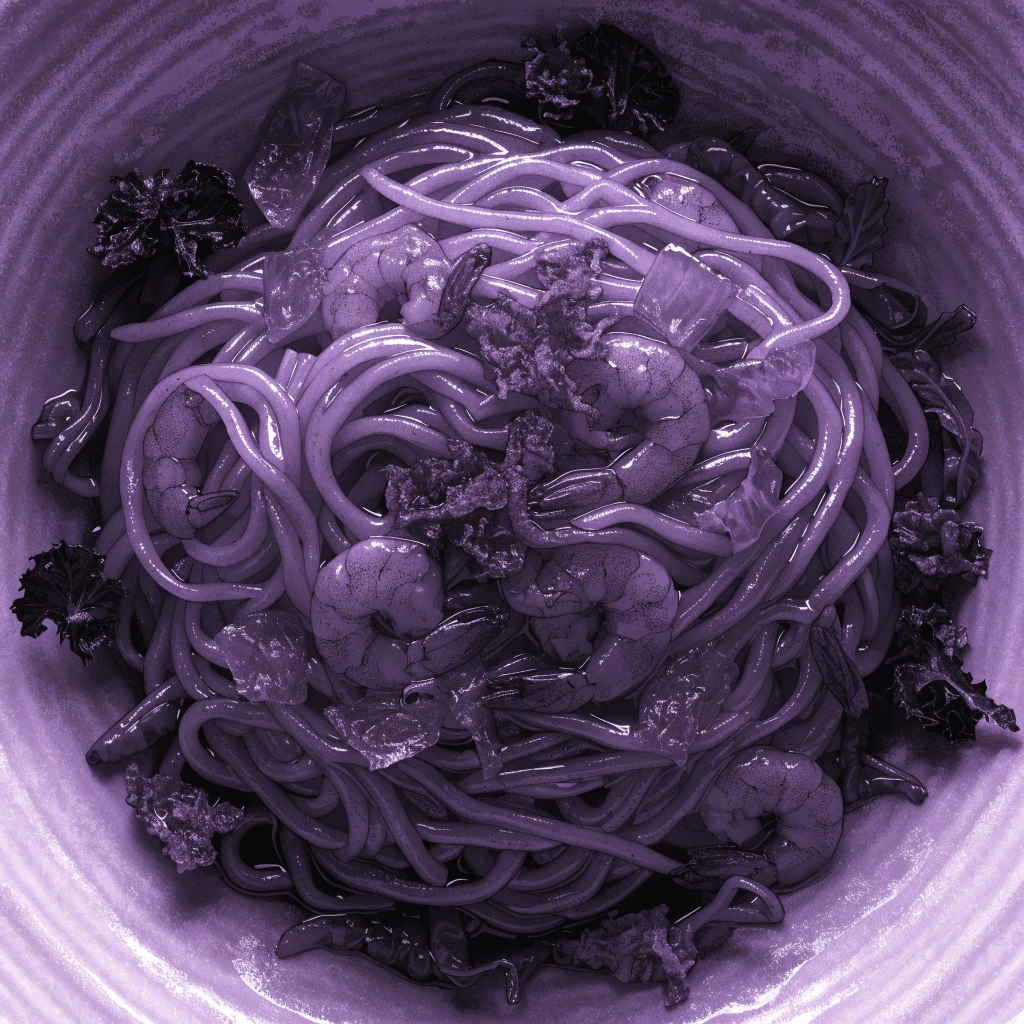
Pad Thai: A Famous Food
Pad Thai is a very famous food from Thailand. It is a delicious noodle dish. People in Thailand eat it every day. It is popular with tourists too.
The dish has many ingredients. It has rice noodles, eggs, and tofu. Some people add shrimp or chicken. It also has bean sprouts and peanuts. It tastes sweet and salty.
Pad Thai is special for Thailand. Many years ago, the government wanted a national dish. They chose Pad Thai. Now, you can find it in many restaurants and on the street. It is the most famous Thai food in the world.
Grammatik-Spotlight
Muster: Present Simple (Be)
"Pad Thai is a very famous food from Thailand."
We use 'is' with singular subjects like 'Pad Thai' to describe facts. It tells us what something is or how it looks.
Muster: Present Simple (Action)
"People in Thailand eat it every day."
We use the base verb 'eat' because 'people' is plural. This pattern describes things that happen regularly.
Teste dein Verständnis
10 Fragen · A1 Anfänger · 1 kostenlose Vorschau
Teste, was du aus diesem Artikel gelernt hast. Beantworte alle Fragen und sammle XP!
Where is Pad Thai from?
Möchtest du das Quiz beenden?
9 weitere Fragen warten auf dich. Registriere dich kostenlos, um das vollständige Quiz freizuschalten und XP zu sammeln!
Kostenlos registrierenHast du schon ein Konto? Anmelden
Gut gemacht!
Weiter üben!
Bereits abgeschlossen — keine zusätzlichen XP
Registriere dich, um XP zu verdienenFragenübersicht
Where is Pad Thai from?
Deine Antwort:
Richtige Antwort: Thailand
Pad Thai has rice noodles.
Deine Antwort:
Richtige Antwort: Richtig
What does 'famous' mean?
Deine Antwort:
Richtige Antwort: Many people know it
Pad Thai is a delicious _____ dish.
Deine Antwort:
Richtige Antwort: noodle
The Story of Pad Thai
Pad Thai is the most famous food from Thailand. Today, people eat it in many countries, but it has an interesting history. In the late 1930s, the Prime Minister of Thailand wanted to create a national identity. He also wanted to help the country because there was not enough rice.
The government encouraged people to eat rice noodles instead of rice grains. Rice noodles were cheaper and easier to make during that time. They added local ingredients like tofu, dried shrimp, and bean sprouts to the noodles. This new dish became very popular because it was delicious and healthy.
Now, Pad Thai is more famous than many older Thai dishes. It represents the culture of Thailand. Tourists always try it when they visit Bangkok. It is a simple meal, but it tells a great story about the past. People love it because it is sweet, sour, and salty at the same time. It is truly a special part of Thai life.
Grammatik-Spotlight
Muster: Past Simple
"The government encouraged people to eat rice noodles."
We use the past simple to talk about actions that finished in the past. To form regular verbs, we add '-ed' to the end of the base verb.
Muster: Comparatives
"Pad Thai is more famous than many older Thai dishes."
We use 'more' + adjective + 'than' to compare two things when the adjective has two or more syllables. It shows which thing has more of a specific quality.
Teste dein Verständnis
11 Fragen · A2 Grundkenntnisse · 1 kostenlose Vorschau
Teste, was du aus diesem Artikel gelernt hast. Beantworte alle Fragen und sammle XP!
Why did the Prime Minister promote Pad Thai?
Möchtest du das Quiz beenden?
10 weitere Fragen warten auf dich. Registriere dich kostenlos, um das vollständige Quiz freizuschalten und XP zu sammeln!
Kostenlos registrierenHast du schon ein Konto? Anmelden
Gut gemacht!
Weiter üben!
Bereits abgeschlossen — keine zusätzlichen XP
Registriere dich, um XP zu verdienenFragenübersicht
Why did the Prime Minister promote Pad Thai?
Deine Antwort:
Richtige Antwort: To create a national identity
Pad Thai was created in the 1930s.
Deine Antwort:
Richtige Antwort: Richtig
What does 'ingredients' mean?
Deine Antwort:
Richtige Antwort: The items used to make a dish
Pad Thai is the most _____ food from Thailand.
Deine Antwort:
Richtige Antwort: famous
Which ingredients are mentioned in the article?
Deine Antwort:
Richtige Antwort: Tofu and bean sprouts
The Story Behind Pad Thai: More Than Just Noodles
Pad Thai has become one of the most famous dishes in the world. You can find it in almost every international city, from London to New York. However, many people do not realize that this delicious meal has a very interesting political history. It was not just created for flavor, but it was also designed to build a strong sense of national pride and identity.
In the late 1930s, Thailand was going through many significant changes. The Prime Minister, Plaek Phibunsongkhram, was a leader who wanted to modernize the country quickly. At that time, there was a serious shortage of rice because of the war and bad weather. To solve this problem, the government encouraged people to eat rice noodles instead of whole grains. Noodles use less rice, which helped the country save its valuable resources during a difficult time.
Pad Thai was promoted as part of a national campaign to create a unique Thai culture. The government distributed recipes and encouraged street vendors to sell the dish everywhere. It was made with local ingredients like tofu, dried shrimp, and bean sprouts. These ingredients were cheap and easy to find, making the dish accessible to everyone in the population.
The dish, which combines sweet, sour, and salty flavors, has been adapted in many different ways over the years. Some chefs add extra chili for heat, while others use fresh prawns instead of dried ones. These variations show how the dish has changed while keeping its traditional roots.
Today, Pad Thai is recognized globally as a symbol of Thailand. Although it was originally a political tool, it has evolved into a beloved meal that represents Thai culture. Whether it is served on a busy street corner in Bangkok or in a fancy restaurant, it remains a favorite for locals and tourists alike.
Grammatik-Spotlight
Muster: Passive Voice
"Pad Thai was promoted as part of a national campaign to create a unique Thai culture."
The passive voice is used when the action is more important than the person doing it. It is formed using the verb 'to be' followed by the past participle of the main verb.
Muster: Relative Clauses
"The dish, which combines sweet, sour, and salty flavors, has been adapted in many different ways over the years."
Relative clauses give extra information about a noun. We use 'which' to provide more detail about objects or ideas without starting a new sentence.
Teste dein Verständnis
11 Fragen · B1 Mittelstufe · 1 kostenlose Vorschau
Teste, was du aus diesem Artikel gelernt hast. Beantworte alle Fragen und sammle XP!
Why did the Thai government encourage people to eat noodles in the 1930s?
Möchtest du das Quiz beenden?
10 weitere Fragen warten auf dich. Registriere dich kostenlos, um das vollständige Quiz freizuschalten und XP zu sammeln!
Kostenlos registrierenHast du schon ein Konto? Anmelden
Gut gemacht!
Weiter üben!
Bereits abgeschlossen — keine zusätzlichen XP
Registriere dich, um XP zu verdienenFragenübersicht
Why did the Thai government encourage people to eat noodles in the 1930s?
Deine Antwort:
Richtige Antwort: There was a serious shortage of whole rice grains
Pad Thai was originally created to help build a sense of national pride.
Deine Antwort:
Richtige Antwort: Richtig
What is an 'ingredient'?
Deine Antwort:
Richtige Antwort: One of the foods used to make a specific dish
Pad Thai was _____ as part of a national campaign to create a Thai identity.
Deine Antwort:
Richtige Antwort: promoted
Which combination of flavors is mentioned as being part of Pad Thai?
Deine Antwort:
Richtige Antwort: Sweet, sour, and salty
The Political Plate: The Surprising Origins of Pad Thai
While Pad Thai is celebrated globally as the quintessential Thai dish, its origins are rooted in a deliberate nation-building strategy rather than ancient tradition. During the late 1930s and early 1940s, Thailand underwent a significant cultural transformation under the leadership of Prime Minister Plaek Phibunsongkhram. This era was characterized by a push for modernization and the consolidation of a unified national identity. Consequently, Pad Thai was not merely a culinary innovation but a political tool designed to foster a sense of 'Thai-ness' among the populace.
Economic factors played a crucial role in the dish's rise to prominence. At the time, Thailand faced a severe rice shortage due to floods and the ongoing global conflict. To mitigate this crisis, the government promoted the consumption of rice noodles, which used broken rice grains and required less grain overall than traditional steamed rice. By encouraging citizens to consume noodles, the administration effectively managed the domestic food supply while simultaneously distancing the nation from Chinese culinary influences. Although the technique of stir-frying noodles originated in China, the government insisted on incorporating local ingredients such as tofu, dried shrimp, tamarind, and palm sugar to ensure the dish felt uniquely Thai.
The promotion of Pad Thai was part of a broader series of 'Cultural Mandates' aimed at westernizing the country and strengthening its sovereignty. For instance, the government mandated that citizens wear hats in public and change the way they dressed. In this context, Pad Thai represented a modern, hygienic, and efficient way of eating that aligned with Phibunsongkhram’s vision of a 'new' Thailand. Furthermore, the government launched a public health campaign that emphasized the nutritional benefits of the dish. It was marketed as a balanced meal, providing protein, carbohydrates, and vegetables in a single serving. Street vendors were encouraged to sell the dish, and it quickly became a staple of the urban landscape.
In retrospect, the story of Pad Thai illustrates how food can be utilized to shape national narratives. Had the government not intervened during a period of economic instability, the culinary landscape of Thailand might look remarkably different today. Today, the dish serves as a testament to the power of cultural engineering, proving that even the most 'authentic' traditions can be the result of careful planning and political necessity.
Grammatik-Spotlight
Muster: Passive Voice
"Pad Thai was not merely a culinary innovation but a political tool designed to foster a sense of 'Thai-ness'."
The passive voice is used here to focus on the dish (the object) rather than the specific person who created it. It is formed using the verb 'to be' plus the past participle.
Muster: Mixed Conditional (Inversion)
"Had the government not intervened during a period of economic instability, the culinary landscape of Thailand might look remarkably different today."
This structure uses 'Had' at the beginning to replace 'If'. It describes a hypothetical past action (not intervening) and its hypothetical present result (looking different).
Muster: Non-defining Relative Clauses
"...the government promoted the consumption of rice noodles, which used broken rice grains and required less grain overall..."
This clause adds extra information about 'rice noodles' and is separated by commas. It provides context without being essential to identify the noun.
Teste dein Verständnis
11 Fragen · B2 Obere Mittelstufe · 1 kostenlose Vorschau
Teste, was du aus diesem Artikel gelernt hast. Beantworte alle Fragen und sammle XP!
What was the primary political motivation behind promoting Pad Thai?
Möchtest du das Quiz beenden?
10 weitere Fragen warten auf dich. Registriere dich kostenlos, um das vollständige Quiz freizuschalten und XP zu sammeln!
Kostenlos registrierenHast du schon ein Konto? Anmelden
Gut gemacht!
Weiter üben!
Bereits abgeschlossen — keine zusätzlichen XP
Registriere dich, um XP zu verdienenFragenübersicht
What was the primary political motivation behind promoting Pad Thai?
Deine Antwort:
Richtige Antwort: To create a unified national identity and manage food shortages
Pad Thai originated as an ancient recipe passed down through generations.
Deine Antwort:
Richtige Antwort: Falsch
What does the word 'mitigate' mean in the context of the article?
Deine Antwort:
Richtige Antwort: To make a situation less severe
The government promoted noodles because they used broken rice grains to solve a rice _____.
Deine Antwort:
Richtige Antwort: shortage
Which of these was NOT a reason Pad Thai was considered modern?
Deine Antwort:
Richtige Antwort: It was only eaten by royalty
The Gastronomic Architect: Unravelling the Political Tapestry of Pad Thai
While modern gourmands might perceive Pad Thai as an ancient relic of Siamese heritage, its genesis is, in fact, a masterclass in state-sponsored nation-building. Seldom does a culinary staple owe its existence so explicitly to the machinations of a geopolitical agenda. In the late 1930s and early 1940s, Thailand found itself at a pivotal crossroads. Under the authoritarian leadership of Prime Minister Plaek Phibunsongkhram, the nation embarked on a radical transformation aimed at modernizing the state and distancing it from its colonial neighbors. It was this fervent desire for cultural sovereignty that served as the primary catalyst for the creation of what we now recognize as the quintessential Thai dish.
The implementation of this culinary directive was born out of economic necessity as much as nationalist pride. During the early 1940s, Thailand faced a severe grain shortage, exacerbated by the global upheaval of World War II. By discouraging the consumption of whole rice—the country’s primary export and economic lifeblood—the government sought to stabilize the domestic economy and ensure food security. Noodle production, which utilized broken rice grains that were otherwise less profitable for export, emerged as a pragmatic alternative. However, the challenge lay in the fact that noodles were traditionally viewed as an imported Chinese influence. To circumvent this cultural hurdle, Phibunsongkhram’s administration mandated a specific recipe that incorporated local ingredients, effectively rebranding the noodle as a symbol of Thai identity.
Never before had a government so effectively utilized the dinner table as a tool for social engineering. The campaign was relentless; public competitions were held to find the most 'Thai' flavor profile, and street vendors were actively encouraged, sometimes even coerced, to sell the new national dish. By blending tofu, dried shrimp, palm sugar, and tamarind with rice noodles, they engineered a flavor profile that reflected the nuanced complexity of Thai cuisine. What we witness in the global ubiquity of Pad Thai today is the successful homogenization of Thai identity. The dish functioned as a vessel for unity, intended to supersede regional differences and foster a singular national consciousness among the populace.
Furthermore, the synthesis of sweet, sour, and salty notes was not merely an aesthetic choice but a calculated effort to appeal to a broad demographic. The scarcity of ingredients during wartime necessitated a dish that was both nutritious and cost-effective, yet palatable enough to be embraced by the masses. Despite its manufactured origins, Pad Thai has transcended its political vestiges to become a beloved global phenomenon. It serves as a poignant reminder that national identity is often a curated narrative, constructed through the very food we consume. Only through an analysis of these historical undercurrents can we truly appreciate the complexity of Thailand's most famous export.
Grammatik-Spotlight
Muster: Negative Inversion
"Seldom does a culinary staple owe its existence so explicitly to the machinations of a geopolitical agenda."
Inversion occurs when the auxiliary verb is placed before the subject after certain negative or restrictive adverbs (like 'seldom', 'never', 'hardly') to add emphasis or a formal tone.
Muster: It-Cleft Sentence
"It was this fervent desire for cultural sovereignty that served as the primary catalyst..."
A cleft sentence focuses on a specific part of the information by starting with 'It is/was' + the focal point + 'that/who'. It is used here to emphasize the specific reason for the dish's creation.
Muster: Nominalisation
"The implementation of this culinary directive was born out of economic necessity..."
Nominalisation involves turning verbs or adjectives into nouns (e.g., 'implement' to 'implementation'). This makes the writing more abstract, formal, and concise, which is characteristic of C1 level academic English.
Teste dein Verständnis
12 Fragen · C1 Fortgeschritten · 1 kostenlose Vorschau
Teste, was du aus diesem Artikel gelernt hast. Beantworte alle Fragen und sammle XP!
What was the primary political motivation behind the promotion of Pad Thai?
Möchtest du das Quiz beenden?
11 weitere Fragen warten auf dich. Registriere dich kostenlos, um das vollständige Quiz freizuschalten und XP zu sammeln!
Kostenlos registrierenHast du schon ein Konto? Anmelden
Gut gemacht!
Weiter üben!
Bereits abgeschlossen — keine zusätzlichen XP
Registriere dich, um XP zu verdienenFragenübersicht
What was the primary political motivation behind the promotion of Pad Thai?
Deine Antwort:
Richtige Antwort: To foster a unified national identity and modernize the state
The decision to use rice noodles was partly based on the need to export whole rice grains for economic stability.
Deine Antwort:
Richtige Antwort: Richtig
Which word describes the devious political schemes mentioned in the text?
Deine Antwort:
Richtige Antwort: Machinations
The government sought to _____ the domestic economy by discouraging whole rice consumption.
Deine Antwort:
Richtige Antwort: stabilize
Why were noodles originally a challenge for the nationalist agenda?
Deine Antwort:
Richtige Antwort: They were perceived as having a foreign Chinese origin
The author argues that Pad Thai is an ancient dish dating back several centuries.
Deine Antwort:
Richtige Antwort: Falsch
Pad Thai: Eine kulinarische Proklamation nationaler Identität in Thailand
Wenige Gerichte verkörpern die kulinarische Seele einer Nation so markant wie Pad Thai für Thailand. Obgleich es heute weltweit als ikonisches Symbol thailändischer Gastronomie gilt, ist seine Entstehung weit weniger organisch und vielmehr das Resultat einer bewussten staatlichen Intervention, die im Kontext tiefgreifender politischer und wirtschaftlicher Umbrüche der späten 1930er und frühen 1940er Jahre zu verorten ist. Die Geschichte des Pad Thai ist somit untrennbar mit dem Bestreben nach nationaler Kohäsion und der Formung einer modernen thailändischen Identität verknüpft.
Unter der Ägide von Premierminister Plaek Phibunsongkhram, einer prägenden Figur der thailändischen Geschichte, die das Land durch die Wirren des Zweiten Weltkriegs führte, wurde Pad Thai als integraler Bestandteil einer umfassenden Kampagne zur Stärkung des Nationalgefühls propagiert. Phibunsongkhram, der Thailand von Siam in den heutigen Namen umbenannte, verfolgte eine Politik des kulturellen Nationalismus, die darauf abzielte, eine distinkte thailändische Identität zu schmieden, die sich von den kolonialen Einflüssen der westlichen Mächte und der Dominanz chinesischer Kultur abgrenzen sollte. In diesem Bestreben wurden nicht nur Kleidungsvorschriften und patriotische Lieder eingeführt, sondern auch die Essgewohnheiten der Bevölkerung gezielt beeinflusst.
Ein entscheidender Anstoß zur Popularisierung des Pad Thai war die damalige Reisknappheit, die durch wirtschaftliche Schwierigkeiten und die Auswirkungen des Krieges verschärft wurde. Reis, das Grundnahrungsmittel schlechthin, war rar und teuer. In dieser prekären Situation erkannte die Regierung das Potenzial von Reisnudeln, die aus Reismehl hergestellt werden und somit eine effizientere Nutzung der knappen Ressourcen ermöglichten, als Alternative zum traditionellen gekochten Reis. Die Förderung von Gerichten auf Nudelbasis sollte den Reiskonsum reduzieren und gleichzeitig die nationale Ernährungssicherheit gewährleisten. Die Exekutive beabsichtigte, ein Gericht zu etablieren, das sowohl nahrhaft als auch wirtschaftlich war und zudem eine breite Akzeptanz in der Bevölkerung finden würde.
Das Pad Thai, wie wir es heute kennen, wurde als quasi „nationales Gericht“ konzeptualisiert und aktiv beworben. Es sollte nicht nur die Ernährungsbedürfnisse decken, sondern auch eine Brücke zwischen den verschiedenen ethnischen Gruppen Thailands schlagen und ein Gefühl der Einheit vermitteln. Die Rezeptur, obgleich sie auf chinesische Nudelgerichte zurückzuführen ist, wurde bewusst mit lokalen Zutaten angereichert, um ihre „thailändische“ Authentizität zu unterstreichen: Tofu, getrocknete Garnelen, Erdnüsse, Sojasprossen und Tamarindenpaste sind Ingredienzien, die in der thailändischen Landwirtschaft leicht verfügbar waren und dem Gericht seinen unverwechselbaren süß-sauer-salzig-scharfen Geschmack verleihen. Die Regierung stellte sogar mobile Garküchen zur Verfügung und verbreitete Kochrezepte, um die landesweite Verbreitung zu forcieren.
Die ambivalente Genese des Pad Thai, die zwischen pragmatischer Krisenbewältigung und ideologischer Staatsdoktrin oszilliert, schmälert keineswegs seine kulinarische Brillanz oder seine heutige kulturelle Signifikanz. Vielmehr zeugt sie von der außerordentlichen Fähigkeit der thailändischen Gesellschaft, aus einer politischen Notwendigkeit heraus ein Gericht zu kreieren, das nicht nur den Gaumen erfreut, sondern auch eine tiefere Bedeutung als Manifestation nationalen Stolzes trägt. Dieses Gericht, ursprünglich ein Instrument staatlicher Politik, hat sich längst vom diktierten Menüpunkt emanzipiert und ist zu einem selbstverständlichen und überaus beliebten Bestandteil der thailändischen und globalen Esskultur avanciert, dessen geschichtliche Wurzeln vielen seiner Liebhaber indes verborgen bleiben mögen.
Grammatik-Spotlight
Muster: Subjonktiv II (Konjunktiv II) für irreale Bedingungen und indirekte Rede
"Die Regierung beabsichtigte, ein Gericht zu etablieren, das sowohl nahrhaft als auch wirtschaftlich *wäre* und zudem eine breite Akzeptanz in der Bevölkerung finden *würde*."
Der Konjunktiv II wird hier verwendet, um eine Absicht oder ein Ziel in der Vergangenheit auszudrücken, das hypothetisch oder nicht realisiert war ('wäre', 'würde finden'). Er dient auch dazu, indirekte Rede oder irreale Bedingungen zu kennzeichnen und verleiht dem Satz eine formellere, distanziertere Nuance, typisch für akademische Texte.
Muster: Nominalisierung von Verben
"Die Geschichte des Pad Thai ist somit untrennbar mit dem Bestreben nach nationaler Kohäsion und der Formung einer modernen thailändischen Identität verknüpft."
Nominalisierungen, wie 'das Bestreben' (von 'streben') und 'die Formung' (von 'formen'), sind in der deutschen Fach- und Schriftsprache sehr häufig. Sie ermöglichen eine prägnantere und abstraktere Ausdrucksweise, indem sie Handlungen oder Prozesse in Substantive umwandeln, oft begleitet von Präpositionen wie 'nach' oder 'von'.
Muster: Erweitertes Partizipialattribut
"Unter der Ägide von Premierminister Plaek Phibunsongkhram, einer prägenden Figur der thailändischen Geschichte, *die das Land durch die Wirren des Zweiten Weltkriegs führte*..."
Erweiterte Partizipialattribute sind komplexe Satzteile, die ein Nomen näher beschreiben. Sie bestehen oft aus einem Partizip (Partizip I oder II) mit begleitenden Satzteilen, hier 'die das Land durch die Wirren des Zweiten Weltkriegs führte'. Diese Konstruktion ermöglicht es, Informationen konzise und elegant in den Satz einzufügen, ohne einen neuen Hauptsatz bilden zu müssen, was den Text dichter und informativer macht.
Teste dein Verständnis
12 Fragen · C2 Meisterschaft · 1 kostenlose Vorschau
Teste, was du aus diesem Artikel gelernt hast. Beantworte alle Fragen und sammle XP!
Welche der folgenden Aussagen beschreibt die Hauptmotivation für die Förderung von Pad Thai durch die Regierung am besten?
Möchtest du das Quiz beenden?
11 weitere Fragen warten auf dich. Registriere dich kostenlos, um das vollständige Quiz freizuschalten und XP zu sammeln!
Kostenlos registrierenHast du schon ein Konto? Anmelden
Gut gemacht!
Weiter üben!
Bereits abgeschlossen — keine zusätzlichen XP
Registriere dich, um XP zu verdienenFragenübersicht
Welche der folgenden Aussagen beschreibt die Hauptmotivation für die Förderung von Pad Thai durch die Regierung am besten?
Deine Antwort:
Richtige Antwort: Es sollte den Reiskonsum reduzieren und die nationale Identität stärken.
Premierminister Plaek Phibunsongkhram benannte Thailand von Siam um.
Deine Antwort:
Richtige Antwort: Richtig
Was bedeutet 'Ägide' im Kontext des Artikels?
Deine Antwort:
Richtige Antwort: Schutz und Führung
Welche Rolle spielten lokale Zutaten bei der Konzeptualisierung von Pad Thai?
Deine Antwort:
Richtige Antwort: Sie unterstrichen die 'thailändische' Authentizität und waren leicht verfügbar.
Die Entstehung von Pad Thai war ein rein organischer Prozess, der nicht von staatlicher Seite beeinflusst wurde.
Deine Antwort:
Richtige Antwort: Falsch
Die Regierung stellte sogar mobile Garküchen zur Verfügung und verbreitete Kochrezepte, um die landesweite ______ zu forcieren.
Deine Antwort:
Richtige Antwort: Verbreitung

