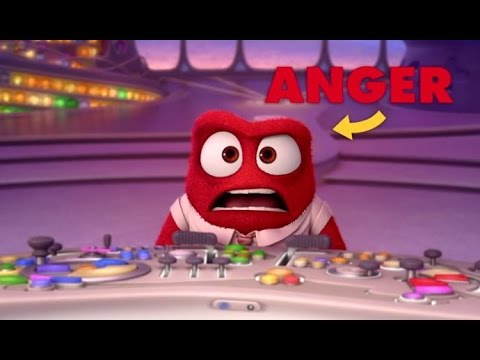
emotions en 30 segundos
- Emotions are internal feelings like joy or fear.
- They involve the mind, the body, and outward behavior.
- Commonly used in plural to describe a person's state.
- Essential for communication, survival, and social bonding.
- Biological Root
- The limbic system, particularly the amygdala, plays a crucial role in processing emotions like fear and pleasure.
It is important to acknowledge your emotions rather than suppressing them, as they provide valuable information about your needs.
- Primary vs. Secondary
- Primary emotions are immediate reactions (e.g., fear), while secondary emotions are feelings about those reactions (e.g., feeling ashamed of being afraid).
The movie was so powerful that it stirred deep emotions in the entire audience.
Children often lack the vocabulary to describe the complex emotions they feel during a move.
Artists use color and light to evoke specific emotions in their viewers.
He struggled to keep his emotions in check during the heated debate.
- Cultural Nuance
- Some cultures prioritize 'emotional restraint,' while others value 'emotional expressiveness' as a sign of honesty.
- Verb Pairing
- Common verbs: show, hide, manage, process, trigger, regulate.
After the accident, he went through a wide range of emotions, from shock to profound relief.
- Common Adjectives
- Intense, overwhelming, complex, volatile, suppressed, fleeting.
The politician appealed to the emotions of the crowd rather than their logic.
It's difficult to describe the emotions you feel when you see your child graduate.
She has always been very open about her emotions, which makes her very relatable.
The therapist helped him identify the underlying emotions behind his anger.
- Prepositional Use
- 'A display of emotions,' 'in touch with your emotions,' 'struggling with emotions.'
- In Media
- News anchors often report on the 'high emotions' found at protest sites or during sporting events.
The documentary captures the raw emotions of families reunited after years apart.
- In Literature
- Poets often describe emotions as physical forces, like tides, storms, or fires.
During the trial, the victim's emotions were clearly visible to the jury.
The coach told the players to leave their emotions off the field and focus on the game plan.
Social media platforms are designed to trigger strong emotions to keep users engaged.
Music has a unique ability to bypass the logical mind and speak directly to our emotions.
- Academic Context
- Neuroscience studies how the brain's chemical signals translate into the complex experiences we call emotions.
- Singular vs. Plural
- Use 'emotion' as an abstract concept (e.g., 'The power of emotion'). Use 'emotions' when referring to specific instances or a variety of states (e.g., 'She felt many emotions').
Incorrect: He showed much emotion during the movie. Correct: He showed a lot of emotion (abstract) or He showed many emotions (specific).
- Collocation Errors
- Avoid saying 'make emotions.' Instead, use 'trigger emotions' or 'evoke emotions.'
Incorrect: I am in a sad emotion. Correct: I am in a sad mood or I am feeling the emotion of sadness.
Incorrect: She has no emotions for the news. Correct: She had no reaction to the news or She felt no emotion regarding the news.
Incorrect: The emotions are hard. Correct: Dealing with emotions is hard.
Incorrect: He is an emotion person. Correct: He is an emotional person.
- Word Order
- We say 'mixed emotions,' not 'emotions mixed.'
- Feelings vs. Emotions
- Feelings are the conscious experience; emotions are the biological state. Feelings are often more personal and less intense.
His sentiments regarding the new policy were echoed by most of his colleagues.
- Mood vs. Emotion
- An emotion is a reaction to a specific event (e.g., joy at a gift). A mood is a general state of being (e.g., being cheerful all morning).
She spoke with such passion that everyone in the room was moved to tears.
The patient exhibited a very restricted affect, making it hard to tell how he was feeling.
The vibe (slang) of the party was very energetic and happy.
He has a very calm disposition, rarely showing any signs of stress.
- Temperament
- This refers to a person's permanent emotional nature (e.g., 'a fiery temperament').
How Formal Is It?
Dato curioso
For a long time, the word 'passion' was used instead of 'emotion.' The shift to 'emotion' happened as science began to study feelings as biological movements within the body.
Guía de pronunciación
- Pronouncing the 't' in 'tions' as a hard 't' instead of 'sh'.
- Putting the stress on the first syllable.
- Forgetting the 'z' sound at the end for the plural.
- Confusing the 'o' sound with 'ah'.
- Making the 'e' sound too long like 'ee'.
Nivel de dificultad
The word itself is common, but the contexts can be complex.
Requires knowledge of specific collocations and prepositions.
Easy to pronounce but requires nuance to use correctly.
Commonly heard in media and daily life.
Qué aprender después
Requisitos previos
Aprende después
Avanzado
Gramática que debes saber
Adjective order
She felt strong, conflicting emotions (Size/Quality + Type).
Pluralization of abstract nouns
We use 'emotions' to refer to the variety of feelings.
Prepositional phrases
He was overcome with emotion (with + noun).
Gerunds as subjects
Managing emotions is a key life skill.
Transitive verbs
The music evoked (verb) emotions (object).
Ejemplos por nivel
I have many emotions today.
I feel many things.
Plural noun.
Happy is a good emotion.
Happiness is a positive feeling.
Used as a complement.
He shows his emotions.
He lets people see how he feels.
Direct object of 'shows'.
Do you feel any emotions?
Are you feeling anything?
Question form.
Sadness is a hard emotion.
Being sad is difficult.
Subject complement.
We learn about emotions.
We study feelings.
Object of preposition 'about'.
She has strong emotions.
She feels things very much.
Adjective + noun.
Emotions are natural.
Feelings are normal.
Subject of the sentence.
It is difficult to describe my emotions.
I find it hard to say how I feel.
Infinitive phrase.
The movie was full of emotions.
The film made people feel many things.
Prepositional phrase 'full of'.
He tries to hide his emotions.
He doesn't want people to see his feelings.
Verb 'hide' + object.
She felt a sudden surge of emotions.
She suddenly felt many things strongly.
Noun phrase 'surge of'.
Music can change your emotions.
Songs can make you feel different.
Modal verb 'can'.
We talked about our emotions.
We had a conversation about our feelings.
Past tense verb.
Negative emotions can be painful.
Bad feelings can hurt.
Adjective 'negative'.
He is very open about his emotions.
He tells people how he feels easily.
Adjective 'open' + 'about'.
I have mixed emotions about moving to a new city.
I feel both happy and sad about moving.
Collocation 'mixed emotions'.
She struggled to keep her emotions in check.
She tried hard to control her feelings.
Idiom 'in check'.
The song evokes powerful emotions in the listeners.
The music brings out strong feelings.
Verb 'evokes'.
He lacks the ability to process his emotions.
He can't understand or deal with his feelings.
Infinitive 'to process'.
Emotional intelligence involves managing your emotions.
EQ means knowing how to handle your feelings.
Gerund 'managing'.
The tragedy triggered a wave of emotions.
The bad event caused many feelings to happen.
Metaphor 'wave of'.
Children need to learn how to express their emotions.
Kids should learn to say how they feel.
How to + infinitive.
She was overcome by emotions during the speech.
She felt so much that she couldn't speak.
Passive voice 'overcome by'.
The psychologist analyzed the patient's suppressed emotions.
The doctor looked at feelings the patient kept hidden.
Adjective 'suppressed'.
The film explores the complex emotions of a soldier.
The movie looks at the many feelings a soldier has.
Verb 'explores'.
He was a man of volatile emotions, prone to outbursts.
His feelings changed quickly and he often got angry.
Adjective 'volatile'.
The advertisement appeals to the consumer's emotions.
The ad tries to make the buyer feel something.
Verb 'appeals to'.
She tried to distance herself from her emotions to stay objective.
She ignored her feelings to be fair.
Reflexive pronoun 'herself'.
The conflict stirred up deep-seated emotions within the family.
The fight brought back old, strong feelings.
Phrasal verb 'stirred up'.
Art is often a medium for conveying raw emotions.
Art is a way to show very strong, honest feelings.
Gerund 'conveying'.
He found it hard to reconcile his conflicting emotions.
He couldn't make his different feelings work together.
Verb 'reconcile'.
The novel masterfully depicts the shifting emotions of the protagonist.
The book shows how the main character's feelings change.
Adverb 'masterfully'.
Emotional contagion can occur when one person's emotions influence others.
Feelings can spread from one person to another.
Compound noun 'Emotional contagion'.
The stoic philosophy emphasizes the regulation of emotions through reason.
Stoicism says we should use logic to control feelings.
Noun 'regulation'.
Her poetry is characterized by an intense emotional resonance.
Her poems make people feel things very deeply.
Noun phrase 'emotional resonance'.
The trial was fraught with high emotions and public outcry.
The court case was full of strong feelings and anger.
Adjective 'fraught with'.
He argued that emotions are essential to rational decision-making.
He said feelings are needed to make good choices.
That-clause.
The therapist helped her navigate the turbulent emotions of grief.
The doctor helped her through the messy feelings of loss.
Adjective 'turbulent'.
Cultural norms dictate the appropriate display of emotions in public.
Culture tells us how we should show feelings to others.
Verb 'dictate'.
The symphony was a visceral exploration of human emotions.
The music was a deep, physical look at feelings.
Adjective 'visceral'.
He examined the phenomenological aspects of aesthetic emotions.
He studied how we experience feelings about art.
Adjective 'phenomenological'.
The political landscape was shaped by the subtle manipulation of collective emotions.
Politics was changed by controlling how everyone felt.
Compound noun 'collective emotions'.
Her memoir provides a poignant account of the myriad emotions of exile.
Her life story tells the many sad feelings of being sent away.
Adjective 'myriad'.
The study delved into the neurobiological substrates of basic emotions.
The research looked at the brain parts that cause feelings.
Scientific terminology 'neurobiological substrates'.
He spoke of the sublime, an emotion that transcends ordinary experience.
He talked about a feeling that is bigger than normal life.
Relative clause 'that transcends'.
The artist sought to capture the ephemeral nature of human emotions.
The painter tried to show how feelings don't last long.
Adjective 'ephemeral'.
The discourse on emotions has evolved significantly since the Enlightenment.
How we talk about feelings has changed a lot since the 1700s.
Noun 'discourse'.
Colocaciones comunes
Frases Comunes
— Being aware of and understanding how you feel.
He is very in touch with his emotions.
— Feeling many different things very quickly and intensely.
The wedding was a whirlwind of emotions.
— Feeling so much that you cannot act or speak normally.
He was overcome with emotion when he won the award.
— To cause people to start feeling strong things.
The old photos stirred up many emotions.
— To stay calm and not let your feelings take over.
You need to keep your emotions in check during the meeting.
— Showing how you feel outwardly.
It was a rare display of emotion from the stoic man.
— To think about and deal with your feelings in a healthy way.
Therapy helps people process their emotions.
— To cause a specific feeling to happen suddenly.
Smells can often trigger powerful emotions.
— To keep your feelings inside and not talk about them.
It's not good to bottle up your emotions.
Se confunde a menudo con
Feelings are the conscious experience; emotions are the biological response.
Moods last longer and are less intense than emotions.
Sensations are physical (cold, pain); emotions are psychological (sad, happy).
Modismos y expresiones
— To show your emotions openly and clearly.
You always know how he feels; he wears his heart on his sleeve.
informal— A situation where your feelings change very quickly from high to low.
The last week has been a roller coaster of emotions.
neutral— Feeling extremely happy and excited.
She was on cloud nine after passing her exam.
informal— Feeling very sad or depressed.
He's been down in the dumps since he lost his dog.
informal— Feeling very angry or upset about something.
Don't get so bent out of shape over a small mistake.
informal— Having both positive and negative emotions about something.
I have mixed feelings about the new house.
neutral— To make someone extremely angry.
The way he treats his staff makes my blood boil.
informal— A feeling in your throat that you want to cry.
I had a lump in my throat during the sad movie.
neutral— Feeling extremely frightened.
I was scared to death when the lights went out.
informal— Feeling so much happiness that you can't contain it.
They were bursting with joy at the news of the baby.
neutralFácil de confundir
Often confused with 'emotive'.
'Emotional' describes a person or state full of feeling. 'Emotive' describes something that causes feeling in others.
He is an emotional man. It was an emotive issue.
Used as a noun in psychology.
As a noun, 'affect' means the outward display of emotion. As a verb, 'affect' means to influence.
His affect was flat. The weather affects my mood.
Similar meaning.
Sentiment is an emotion refined by thought or shared opinion.
Public sentiment was against the war.
Both relate to strong feelings.
Passion is usually more intense and focused on a specific goal or person.
He has a passion for music.
Both relate to feelings.
Temperament is your permanent personality; emotions are temporary states.
She has a calm temperament.
Patrones de oraciones
I feel [emotion].
I feel happy.
It is [adjective] to show emotions.
It is good to show emotions.
I have mixed emotions about [noun/gerund].
I have mixed emotions about leaving.
The [noun] triggered a wave of emotions.
The song triggered a wave of emotions.
He struggled to reconcile his [adjective] emotions.
He struggled to reconcile his conflicting emotions.
The work explores the [adjective] nature of emotions.
The work explores the ephemeral nature of emotions.
She was overcome with emotion when [clause].
She was overcome with emotion when she saw the puppy.
It's a matter of [noun] over emotion.
It's a matter of logic over emotion.
Familia de palabras
Sustantivos
Verbos
Adjetivos
Relacionado
Cómo usarlo
Very high in both spoken and written English.
-
I am in a sad emotion.
→
I am in a sad mood / I am feeling sad.
We don't usually say we are 'in' an emotion. We 'feel' an emotion or are 'in' a mood.
-
He has a lot of emotion.
→
He has a lot of emotions / He is very emotional.
While 'emotion' can be abstract, 'emotions' is usually preferred when talking about a person's feelings.
-
The movie made me many emotions.
→
The movie evoked many emotions in me.
We don't 'make' emotions; things 'evoke,' 'trigger,' or 'cause' them.
-
I have emotions for you.
→
I have feelings for you.
In a romantic context, we almost always use 'feelings' rather than 'emotions.'
-
She is an emotive person.
→
She is an emotional person.
'Emotive' means something that *causes* emotion in others (like an emotive speech). 'Emotional' describes the person themselves.
Consejos
Use specific words
Instead of saying 'he had many emotions,' try to name them. Say 'he felt a mix of anxiety and excitement.' This makes your writing much more professional and clear.
Plural is safer
When talking about the general concept of feelings, always use the plural 'emotions.' Using the singular 'emotion' usually refers to a specific, singular instance or the abstract concept.
Collocations matter
Learn common pairs like 'strong emotions,' 'mixed emotions,' and 'raw emotions.' Using these will make you sound much more like a native speaker.
Be sensitive
Remember that different cultures have different rules for showing emotions. What is considered 'honest' in one culture might be considered 'rude' or 'weak' in another.
Show, don't tell
Instead of writing 'She was emotional,' describe her physical state. 'Her hands were shaking and her eyes were filled with tears.' This is more evocative.
Listen for tone
Emotions are often conveyed more through the *way* someone speaks than the actual words they use. Pay attention to pitch and speed.
Emotions vs Moods
Remember that emotions are short (seconds or minutes) and moods are long (hours or days). Use the words correctly to show your high level of English.
Heart on sleeve
Use the idiom 'wear your heart on your sleeve' to describe someone who is very open about their emotions. It's a very common and positive expression.
Affective
In academic writing, you might see the word 'affective' (e.g., 'affective disorders'). This is just the formal adjective for things related to emotions.
Daily check-in
Every day, try to name three emotions you felt. This will help you memorize the specific vocabulary for different feelings.
Memorízalo
Mnemotecnia
Think of 'E-motions' as 'Energy in Motion.' Emotions are energy moving through your body.
Asociación visual
Imagine a colorful weather map inside a human head, with storms for anger and sun for joy.
Word Web
Desafío
Try to name three different emotions you felt today and write down what caused them.
Origen de la palabra
The word 'emotion' comes from the French word 'émotion,' which in turn comes from the Latin 'emovere.' The Latin root is composed of 'e-' (out) and 'movere' (to move).
Significado original: Originally, in the 16th century, it referred to a physical moving or migration. By the 17th century, it began to refer to social or political agitation, and finally, it moved to describe a mental 'agitation' or feeling.
Indo-European (Latin branch).Contexto cultural
Be careful when discussing 'negative' emotions; in some cultures, admitting to feeling 'angry' or 'depressed' can carry a social stigma.
Generally, English speakers value 'emotional intelligence' but still maintain some level of 'stiff upper lip' (especially in the UK).
Practica en la vida real
Contextos reales
Therapy/Counseling
- How does that make you feel?
- Process your emotions
- Identify the trigger
- Emotional regulation
Art/Music
- Evokes a sense of...
- Raw emotion
- Stirring performance
- Expressive style
Workplace
- Emotional intelligence
- Manage the team's morale
- Keep a cool head
- Professional conduct
Relationships
- Share your feelings
- Emotional support
- Mixed signals
- In touch with emotions
Sports
- Play with passion
- Control your nerves
- High-stakes game
- Emotional victory
Inicios de conversación
"What kind of emotions do you usually feel when you listen to your favorite music?"
"Do you think it's better to show your emotions or keep them hidden?"
"Which movie has stirred the strongest emotions in you recently?"
"How do you manage your emotions when you are under a lot of stress?"
"Do you believe that animals experience the same emotions as humans?"
Temas para diario
Write about a time when you had mixed emotions about a big change in your life.
Describe the different emotions you feel throughout a typical Monday.
How do you think your culture influences the way you express your emotions?
Write a letter to your younger self about how to handle difficult emotions.
If your emotions were colors, which colors would represent joy, anger, and sadness for you?
Preguntas frecuentes
10 preguntasIn psychology, an emotion is a physical, biological response to a stimulus (like your heart racing when you are scared). A feeling is your conscious awareness of that physical state. However, in daily English, people use them as synonyms.
Technically yes, but it sounds very unnatural. It is much better to say 'I have a feeling' or 'I am feeling [specific emotion].' 'Emotions' is usually used in the plural or as an abstract concept.
According to psychologist Paul Ekman, the six universal emotions are happiness, sadness, fear, disgust, anger, and surprise. These are recognized by people in every culture around the world.
No, not at all. While it can sometimes mean someone is crying or unstable, it also means someone is passionate, expressive, and in touch with their feelings. It depends on the context.
You use it when you feel two different things at once. For example: 'I have mixed emotions about graduating; I'm happy to finish but sad to leave my friends.'
Emotional intelligence, or EQ, is the ability to identify, understand, and manage your own emotions, as well as recognize and influence the emotions of others.
Yes, it is countable. You can say 'one emotion' or 'many emotions.' However, we most frequently use it in the plural form.
The most direct opposite is 'emotionless.' Other words include 'stoic,' 'unemotional,' or 'detached.'
This is a metaphor. It suggests that emotions are like sediment at the bottom of a lake that gets moved around and becomes visible when something disturbs the water.
In psychology, emotions themselves are neither right nor wrong; they are just responses. However, the way we *act* on our emotions can be appropriate or inappropriate.
Ponte a prueba 180 preguntas
Write three emotions you know.
Well written! Good try! Check the sample answer below.
How do you feel today? Use the word 'emotions'.
Well written! Good try! Check the sample answer below.
Describe a time you had mixed emotions.
Well written! Good try! Check the sample answer below.
Why is emotional intelligence important in a job?
Well written! Good try! Check the sample answer below.
Compare 'emotions' and 'moods'.
Well written! Good try! Check the sample answer below.
What makes you happy?
Well written! Good try! Check the sample answer below.
Do you hide your emotions? Why?
Well written! Good try! Check the sample answer below.
How does music affect your emotions?
Well written! Good try! Check the sample answer below.
Describe a 'roller coaster of emotions' you experienced.
Well written! Good try! Check the sample answer below.
Discuss the role of emotions in decision-making.
Well written! Good try! Check the sample answer below.
What is your favorite emotion?
Well written! Good try! Check the sample answer below.
Write a sentence using 'strong emotions'.
Well written! Good try! Check the sample answer below.
What triggers your emotions?
Well written! Good try! Check the sample answer below.
How do you 'process' difficult emotions?
Well written! Good try! Check the sample answer below.
Explain the term 'emotional labor'.
Well written! Good try! Check the sample answer below.
Is anger a good emotion?
Well written! Good try! Check the sample answer below.
Who do you talk to about your emotions?
Well written! Good try! Check the sample answer below.
What does 'wearing your heart on your sleeve' mean?
Well written! Good try! Check the sample answer below.
Write about a 'display of emotion' you saw recently.
Well written! Good try! Check the sample answer below.
How do cultural norms affect emotional expression?
Well written! Good try! Check the sample answer below.
Say: 'I feel many emotions.'
Read this aloud:
Dijiste:
Speech recognition is not supported in your browser. Try Chrome or Edge.
Say: 'It is hard to talk about emotions.'
Read this aloud:
Dijiste:
Speech recognition is not supported in your browser. Try Chrome or Edge.
Say: 'I have mixed emotions about this.'
Read this aloud:
Dijiste:
Speech recognition is not supported in your browser. Try Chrome or Edge.
Say: 'She was overcome with emotion.'
Read this aloud:
Dijiste:
Speech recognition is not supported in your browser. Try Chrome or Edge.
Say: 'Emotional intelligence is a key leadership skill.'
Read this aloud:
Dijiste:
Speech recognition is not supported in your browser. Try Chrome or Edge.
Name three emotions.
Read this aloud:
Dijiste:
Speech recognition is not supported in your browser. Try Chrome or Edge.
Ask someone: 'How are your emotions today?'
Read this aloud:
Dijiste:
Speech recognition is not supported in your browser. Try Chrome or Edge.
Explain 'mixed emotions' to a friend.
Read this aloud:
Dijiste:
Speech recognition is not supported in your browser. Try Chrome or Edge.
Describe a movie using the word 'emotions'.
Read this aloud:
Dijiste:
Speech recognition is not supported in your browser. Try Chrome or Edge.
Discuss why some people hide their emotions.
Read this aloud:
Dijiste:
Speech recognition is not supported in your browser. Try Chrome or Edge.
Say: 'Happy is an emotion.'
Read this aloud:
Dijiste:
Speech recognition is not supported in your browser. Try Chrome or Edge.
Say: 'I show my emotions.'
Read this aloud:
Dijiste:
Speech recognition is not supported in your browser. Try Chrome or Edge.
Say: 'Music triggers my emotions.'
Read this aloud:
Dijiste:
Speech recognition is not supported in your browser. Try Chrome or Edge.
Say: 'He wears his heart on his sleeve.'
Read this aloud:
Dijiste:
Speech recognition is not supported in your browser. Try Chrome or Edge.
Say: 'The poem has deep emotional resonance.'
Read this aloud:
Dijiste:
Speech recognition is not supported in your browser. Try Chrome or Edge.
Is 'sad' an emotion?
Read this aloud:
Dijiste:
Speech recognition is not supported in your browser. Try Chrome or Edge.
Do you like talking about emotions?
Read this aloud:
Dijiste:
Speech recognition is not supported in your browser. Try Chrome or Edge.
What is a 'roller coaster of emotions'?
Read this aloud:
Dijiste:
Speech recognition is not supported in your browser. Try Chrome or Edge.
How do you control your emotions?
Read this aloud:
Dijiste:
Speech recognition is not supported in your browser. Try Chrome or Edge.
What is 'affect' in psychology?
Read this aloud:
Dijiste:
Speech recognition is not supported in your browser. Try Chrome or Edge.
Listen and write the emotion: 'I am so happy!'
Listen and write the word: 'She has many emotions.'
Listen and write the phrase: 'I have mixed emotions.'
Listen and write the phrase: 'Overcome with emotion.'
Listen and write the phrase: 'Emotional intelligence.'
Listen: 'Sadness is an emotion.' What is the noun?
Listen: 'Hide your emotions.' What is the verb?
Listen: 'The music evoked emotions.' What did the music do?
Listen: 'A whirlwind of emotions.' Is it calm?
Listen: 'Raw emotions.' What kind of emotions?
Listen: 'Happy, sad, angry.' Are these emotions?
Listen: 'Strong emotions.' What is the adjective?
Listen: 'In touch with emotions.' Are they aware?
Listen: 'Bottle up emotions.' Are they talking?
Listen: 'Restricted affect.' Do they show feeling?
/ 180 correct
Perfect score!
Summary
Emotions are more than just 'feelings'; they are complex biological and psychological responses to our environment that influence how we think and act. For example, feeling the emotion of fear can save your life by making you run away from danger.
- Emotions are internal feelings like joy or fear.
- They involve the mind, the body, and outward behavior.
- Commonly used in plural to describe a person's state.
- Essential for communication, survival, and social bonding.
Use specific words
Instead of saying 'he had many emotions,' try to name them. Say 'he felt a mix of anxiety and excitement.' This makes your writing much more professional and clear.
Plural is safer
When talking about the general concept of feelings, always use the plural 'emotions.' Using the singular 'emotion' usually refers to a specific, singular instance or the abstract concept.
Collocations matter
Learn common pairs like 'strong emotions,' 'mixed emotions,' and 'raw emotions.' Using these will make you sound much more like a native speaker.
Be sensitive
Remember that different cultures have different rules for showing emotions. What is considered 'honest' in one culture might be considered 'rude' or 'weak' in another.