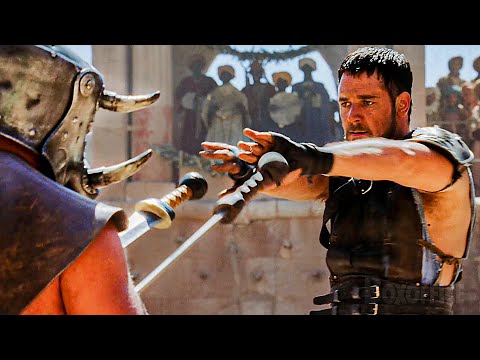
marcus en 30 segundos
- Marcus is a traditional masculine given name with deep roots in ancient Latin and Roman history.
- The name is etymologically linked to Mars, the Roman god of war, symbolizing strength and courage.
- It has been borne by famous historical figures, including emperors, philosophers, and renowned orators.
- Marcus remains a popular and recognizable name globally, with many linguistic variants like Mark and Marco.
The name Marcus is a classic masculine given name that finds its deepest roots in the ancient Latin language of the Roman Empire. Etymologically, it is widely believed to be derived from Mars, the Roman god of war, which immediately imbues the name with connotations of strength, resilience, and martial prowess. In the context of Roman naming conventions, Marcus was one of the few praenomina (given names) used by the Roman nobility and commoners alike, maintaining its popularity for over two millennia. When people use the name Marcus today, they are often participating in a long-standing tradition of naming that spans across Western civilization, from the marble halls of the Roman Senate to modern-day households in Europe, the Americas, and beyond.
- Historical Significance
- Marcus was the name of several of Rome's most influential figures, including Marcus Aurelius, the philosopher-emperor whose 'Meditations' continue to guide Stoic thought today, and Marcus Tullius Cicero, whose oratory shaped the Latin language and Western rhetoric.
The historian noted that Marcus was a name synonymous with Roman civic duty and leadership.
In modern usage, Marcus is perceived as a name that is both traditional and contemporary. It lacks the trendiness of modern invented names, instead offering a sense of stability and historical continuity. It is frequently chosen by parents who desire a name that is easily recognizable across different languages—such as its variants Mark, Marco, or Marek—yet retains its original Latin dignity. The name is often associated with individuals who are perceived as reliable, intelligent, and grounded. Because of its biblical connection through Saint Mark (whose name is the English derivative of Marcus), it also carries a degree of religious weight in Christian contexts, though it is widely used in secular environments as well.
- Cultural Variations
- While Marcus is the Latin original, the name has evolved into Marco in Italian and Spanish, Marc in French, and Marek in West Slavic languages, showing its vast geographical reach.
During the graduation ceremony, Marcus received the award for excellence in classical studies.
Furthermore, the name Marcus appears frequently in literature and popular culture. From the loyal friend in Shakespeare's plays to modern protagonists in contemporary novels, the name serves as a versatile identifier. It is a name that transcends social class, being equally at home in a royal court or a suburban neighborhood. Its phonetic simplicity—two syllables with a strong 'k' sound—makes it easy to pronounce and remember, contributing to its enduring global appeal. In professional settings, a person named Marcus might find that their name carries an implicit expectation of professionalism and traditional values, reflecting the long shadow cast by the name's illustrious Roman ancestors.
The CEO, Marcus Thompson, delivered a keynote speech on the importance of ethical leadership.
- Symbolism
- The association with Mars links the name to themes of protection, courage, and the changing of seasons, as Mars was originally an agricultural deity before becoming a god of war.
Young Marcus looked up at the statue of his namesake in the museum.
In conclusion, Marcus is more than just a name; it is a linguistic artifact that connects the modern world to the ancient Mediterranean. Whether chosen for its historical resonance, its religious ties, or simply its pleasant sound, it remains a steadfast choice in the lexicon of names. Its usage today continues to honor the legacy of those who bore it in the past, while providing a strong identity for those who carry it into the future. It is a name that commands respect without being overly pretentious, making it a perennial favorite among diverse populations worldwide.
When the teacher called out for Marcus, three different students turned their heads.
Using the name Marcus in a sentence requires an understanding of its role as a proper noun. As such, it must always be capitalized, regardless of its position in the sentence. It functions primarily as a subject or an object, identifying a specific male individual. Because it is a name, it does not typically take an article (like 'a' or 'the') unless you are referring to a specific person among several people with that name, or using it in a more metaphorical sense. For example, one might say, 'The Marcus I know is very kind,' to distinguish him from other people named Marcus. In most cases, however, it stands alone as a direct identifier of a person.
- Subject Position
- Marcus decided to pursue a career in architecture after visiting Rome. (Here, Marcus is the person performing the action of deciding.)
Yesterday, Marcus finished his first marathon in under four hours.
When using Marcus in the possessive form, the standard rule for singular nouns ending in 's' applies. In modern English, both 'Marcus's' and 'Marcus'' are acceptable, though 'Marcus's' is often preferred in formal writing to reflect the pronunciation (MAR-kus-iz). For instance, 'Marcus's book' or 'Marcus' car.' This possessive form is essential when attributing ownership or qualities to an individual named Marcus. Furthermore, Marcus can be used in apposition to provide more detail about a person, such as in the sentence, 'My neighbor, Marcus, is an excellent gardener.' This structure helps clarify who the person is within the context of the conversation.
- Object Position
- I saw Marcus at the grocery store earlier this morning. (In this sentence, Marcus is the person being seen.)
Please give this document to Marcus when he arrives at the office.
In historical or academic writing, Marcus is often used as part of a full name to denote specific historical figures. In these contexts, the name acts as a marker of identity that connects the reader to a specific era. For example, 'Marcus Aurelius wrote extensively on the nature of virtue.' Here, the name is not just a label but a reference to a body of work and a historical legacy. When writing about such figures, it is important to maintain the full name upon first mention to ensure clarity, after which the single name Marcus may be used if the context remains clear. This practice respects the formal conventions of historical biography and academic discourse.
The teachings of Marcus Aurelius remain highly influential in modern psychology.
- Vocative Use
- 'Marcus, could you please help me with this heavy box?' (The name is used here to address the person directly.)
'Good morning, Marcus,' the barista said as he handed over the coffee.
Finally, the name Marcus can also appear in compound forms or as part of brand names and titles. While less common than its use as a personal name, these instances still follow the rules of proper nouns. For example, a company might be named 'Marcus & Associates.' In such cases, the name Marcus serves as the primary identifier for the business entity. Regardless of the context, the name Marcus consistently functions as a specific, identifiable noun that carries with it a wealth of historical and cultural associations, making it a versatile and powerful word in the English language.
The law firm of Marcus and Miller is known for its expertise in corporate law.
The name Marcus is heard in a wide variety of social, academic, and professional environments. In daily life, you are most likely to hear it during introductions, in classrooms, or in workplaces where individuals bear the name. It is a common name in many English-speaking countries, as well as in countries where Latin-derived names are prevalent. In a classroom setting, a teacher might call out 'Marcus' during attendance, or a student might refer to a classmate by that name. In a professional environment, you might hear it during a meeting or see it in an email signature, representing a colleague or a client.
- Academic Settings
- In history or philosophy lectures, the name Marcus is frequently mentioned in reference to Marcus Aurelius or Marcus Cicero, highlighting their contributions to Western thought.
The professor explained how Marcus Aurelius balanced his duties as an emperor with his Stoic beliefs.
Beyond personal interactions, the name Marcus is a staple in media and entertainment. You will hear it in movies, television shows, and plays, often given to characters who are meant to appear strong, reliable, or perhaps even a bit traditional. For instance, in historical dramas set in ancient Rome, 'Marcus' is an ubiquitous name among the cast. In modern settings, characters named Marcus might be portrayed as athletes, professionals, or loyal friends. This frequent appearance in media reinforces the name's familiarity and helps maintain its status as a recognizable and respected name across different generations and demographics.
- Sports and Athletics
- Many famous athletes bear the name Marcus, leading to its frequent mention in sports broadcasts, news articles, and fan discussions.
The commentator shouted as Marcus Rashford scored a spectacular goal in the final minutes.
In addition to these contexts, the name Marcus is often heard in religious settings, particularly within Christian denominations that honor Saint Mark. During church services, readings from the Gospel of Mark might lead to discussions about the life and teachings of the evangelist, whose name is the English form of Marcus. This religious connection provides another layer of meaning and frequency to the name, especially in communities where biblical names are favored. Whether in a sacred space or a secular one, the name Marcus carries a sense of presence and history that makes it stand out in conversation.
The priest began the sermon by quoting a passage from the Gospel of Marcus.
- Public Spaces
- You might hear the name called out in public places like parks, airports, or shopping malls, as it remains a popular choice for children and adults alike.
'Wait for me, Marcus!' a young girl cried out as she ran across the playground.
Finally, the name Marcus is frequently encountered in literature and historical texts. Students of Latin will often come across the name in their translations, as it was one of the most common names in ancient Rome. This historical prevalence ensures that the name Marcus is not just a modern label but a bridge to the past. Whether you are reading a classic work of literature, watching a modern sports match, or simply meeting a new person, the name Marcus is a word you are likely to encounter frequently, each time carrying with it a small piece of its long and storied history.
In the novel, Marcus is portrayed as a visionary leader who seeks to unite his people.
While the name Marcus is relatively straightforward, there are several common mistakes that people make when spelling, pronouncing, or using it in various contexts. One of the most frequent errors is misspelling the name as 'Markus.' While 'Markus' is a valid spelling in German, Scandinavian, and some other European languages, 'Marcus' is the standard spelling in English and Latin. Using the 'k' instead of the 'c' can sometimes be seen as a mistake if the individual specifically spells their name with a 'c.' It is always best to check the preferred spelling of the person you are addressing to avoid this minor but common error.
- Spelling Confusion
- Confusing 'Marcus' with 'Markus' or 'Marcos' is common due to the phonetic similarity between these variants across different languages.
The clerk accidentally wrote Markus on the name tag, but the student's name was actually Marcus.
Another common mistake involves the possessive form of the name. As mentioned earlier, because Marcus ends in an 's,' there is often confusion about whether to add just an apostrophe or an apostrophe and another 's.' While both 'Marcus'' and 'Marcus's' are technically correct in different style guides, 'Marcus's' is generally preferred in modern English to match the spoken pronunciation. Some people mistakenly write 'Marcus' without any apostrophe when they mean to show possession, which is a grammatical error. For example, writing 'Marcus book' instead of 'Marcus's book' is incorrect and can lead to confusion about the relationship between the name and the noun.
- Pronunciation Errors
- In some non-English speaking regions, the 'c' in Marcus might be mispronounced as a soft 's' or a 'ch' sound, though the correct Latin and English pronunciation uses a hard 'k' sound.
The announcer struggled with the pronunciation of Marcus, accidentally saying 'Mar-sus' instead of 'Mar-kus'.
In historical contexts, a common mistake is to confuse different individuals named Marcus. Because the name was so common in ancient Rome, history students often mix up Marcus Aurelius (the emperor) with Marcus Brutus (the assassin of Caesar) or Marcus Antonius (Mark Antony). It is crucial to use the full name or provide enough context to distinguish which Marcus is being discussed. Failing to do so can lead to significant historical inaccuracies and misunderstandings. Similarly, in modern contexts, assuming that every 'Mark' is a 'Marcus' or vice versa is a mistake, as they are distinct names despite their shared origin.
In his essay, the student confused Marcus Brutus with Marcus Aurelius, leading to a confusing argument about Stoicism.
- Capitalization Errors
- As a proper noun, Marcus must always be capitalized. Failing to capitalize it is a common mistake in informal writing or quick messaging.
The editor pointed out that marcus should be capitalized throughout the entire manuscript.
Finally, some people mistakenly use Marcus as a surname rather than a given name. While Marcus can occasionally be a last name, it is overwhelmingly used as a first name. Using it incorrectly in a formal address (such as calling someone 'Mr. Marcus' when Marcus is their first name) can be seen as a breach of etiquette. Understanding the typical role of the name as a given name helps in navigating social interactions more smoothly. By being mindful of these common pitfalls—spelling, possession, historical context, and capitalization—you can use the name Marcus accurately and effectively in any situation.
The receptionist politely corrected the visitor, explaining that Marcus was the manager's first name, not his last.
The name Marcus belongs to a large family of names that share the same Latin root. Exploring these similar words and alternatives can provide a deeper understanding of the name's linguistic reach and cultural variations. The most direct English alternative is 'Mark,' which is the shortened, anglicized version of Marcus. While Mark is extremely common and often used interchangeably with Marcus in informal contexts, Marcus retains a more formal and classical feel. Other variants include 'Marco' in Italian and Spanish, 'Marc' in French and Catalan, and 'Markus' in German and Scandinavian languages. Each of these names carries the same core meaning but reflects the phonetic and orthographic traditions of its respective language.
- Comparison: Marcus vs. Mark
- Marcus is often perceived as more formal, traditional, and historically grounded, whereas Mark is seen as more modern, casual, and concise.
While his birth certificate says Marcus, most of his friends simply call him Mark.
In addition to direct linguistic variants, there are names that are semantically similar or share a similar 'vibe.' Names like 'Marcel' or 'Marcello' also derive from the same root (Mars) but have evolved through different paths, often carrying a more continental or artistic connotation. Names like 'Marius' or 'Martin' are also related to Mars, though they are distinct names with their own histories. For those looking for an alternative to Marcus that still feels classical, names like 'Julian,' 'Adrian,' or 'Lucius' might be considered, as they all share the same Roman heritage and phonetic elegance. These names evoke a similar sense of history and tradition without being the exact same name.
- Comparison: Marcus vs. Marco
- Marco often carries a more Mediterranean or international flair, while Marcus is firmly rooted in the classical Latin tradition.
The traveler introduced himself as Marco, though his passport listed his name as Marcus.
For those interested in the feminine counterparts of the name, 'Marcia' and 'Marcella' are the most common options. These names share the same etymological root and historical weight as Marcus but are adapted for female individuals. In some cultures, 'Marcie' or 'Marcy' are used as diminutive forms. Understanding these feminine versions can be helpful when looking for related names within a family or literary context. Furthermore, the name 'Markus' (with a 'k') is an important alternative to be aware of, especially in Northern European contexts, where it is the standard spelling. Recognizing these variations allows for a more nuanced understanding of how the name Marcus functions globally.
The siblings were named Marcus and Marcia, honoring their family's Roman ancestry.
- Comparison: Marcus vs. Marius
- While both are Roman names, Marius is a distinct name with a different historical lineage, though both are associated with the god Mars.
The play featured two rival generals, Marcus and Marius, vying for control of the city.
In summary, while Marcus is a powerful and enduring name on its own, it is part of a rich tapestry of related names and alternatives. Whether you prefer the concise 'Mark,' the international 'Marco,' or the feminine 'Marcia,' each variant offers a slightly different nuance while maintaining the core strength and history of the original Latin name. By exploring these alternatives, you can better appreciate the versatility and lasting impact of the name Marcus in the modern world. Whether in literature, history, or daily life, these related names continue to carry the legacy of the Roman god of war into the present day.
In the genealogy report, the name Marcus appeared in every generation for over two hundred years.
How Formal Is It?
Dato curioso
In ancient Rome, there were only about 15 to 20 common given names for men, and Marcus was consistently one of the top three most popular choices for centuries.
Guía de pronunciación
- Pronouncing the 'c' as an 's' (Marsus).
- Over-emphasizing the second syllable (Mar-CUS).
- Using a soft 'a' sound like in 'cat'.
- Adding an extra vowel sound at the end (Marcus-ee).
- Pronouncing the 'u' as a long 'oo' sound (Mar-koos).
Nivel de dificultad
Very easy to recognize as a name.
Easy, but remember the 'c' instead of 'k'.
Simple two-syllable pronunciation.
Distinct and easy to hear.
Qué aprender después
Requisitos previos
Aprende después
Avanzado
Gramática que debes saber
Capitalization of Proper Nouns
Always write Marcus with a capital 'M'.
Possessive of Singular Nouns ending in S
Marcus's book or Marcus' book.
Use of Articles with Names
Usually no article: 'Marcus is here.' Not 'The Marcus is here.'
Apposition
My friend, Marcus, is a doctor.
Vocative Comma
Hello, Marcus.
Ejemplos por nivel
Hello, my name is Marcus.
Bonjour, je m'appelle Marcus.
Proper noun, used as a subject.
Marcus is my friend.
Marcus est mon ami.
Proper noun, used as a subject.
This is Marcus.
C'est Marcus.
Proper noun, used as a complement.
Marcus has a dog.
Marcus a un chien.
Proper noun, used as a subject.
I like Marcus.
J'aime Marcus.
Proper noun, used as an object.
Where is Marcus?
Où est Marcus ?
Proper noun, used in a question.
Marcus is tall.
Marcus est grand.
Proper noun, used as a subject.
See Marcus run.
Regarde Marcus courir.
Proper noun, used as an object.
Marcus is eating an apple.
Marcus mange une pomme.
Present continuous tense.
Marcus's car is blue.
La voiture de Marcus est bleue.
Possessive form with 's.
I saw Marcus at the park yesterday.
J'ai vu Marcus au parc hier.
Past simple tense.
Marcus and Sarah are going to the cinema.
Marcus et Sarah vont au cinéma.
Compound subject.
Marcus lives in a big house.
Marcus habite dans une grande maison.
Present simple tense.
Does Marcus like pizza?
Est-ce que Marcus aime la pizza ?
Interrogative sentence.
Marcus is a very good student.
Marcus est un très bon étudiant.
Subject-verb-complement structure.
I will call Marcus later.
J'appellerai Marcus plus tard.
Future tense with 'will'.
Marcus has been working here for five years.
Marcus travaille ici depuis cinq ans.
Present perfect continuous.
If Marcus arrives early, we can start the meeting.
Si Marcus arrive tôt, nous pouvons commencer la réunion.
First conditional.
Marcus, who is a doctor, helped the injured man.
Marcus, qui est médecin, a aidé l'homme blessé.
Relative clause.
I haven't seen Marcus since last Christmas.
Je n'ai pas vu Marcus depuis Noël dernier.
Present perfect with 'since'.
Marcus is known for his incredible cooking skills.
Marcus est connu pour ses incroyables talents de cuisinier.
Passive voice.
We are planning a surprise party for Marcus.
Nous organisons une fête surprise pour Marcus.
Present continuous for future plans.
Marcus decided to move to Italy to learn the language.
Marcus a décidé de s'installer en Italie pour apprendre la langue.
Infinitive of purpose.
Marcus's opinion is highly valued by the team.
L'avis de Marcus est très apprécié par l'équipe.
Possessive form as subject.
Marcus Aurelius is often cited as a model of Stoic leadership.
Marc Aurèle est souvent cité comme un modèle de leadership stoïcien.
Historical reference.
Despite the rain, Marcus insisted on finishing the hike.
Malgré la pluie, Marcus a insisté pour terminer la randonnée.
Concessive clause with 'despite'.
Marcus was the first person to volunteer for the project.
Marcus a été la première personne à se porter volontaire pour le projet.
Ordinal number with infinitive.
The novel's protagonist, Marcus, undergoes a significant transformation.
Le protagoniste du roman, Marcus, subit une transformation significative.
Appositive phrase.
Marcus's contribution to the field of science was revolutionary.
La contribution de Marcus au domaine de la science a été révolutionnaire.
Possessive form with abstract noun.
Had Marcus known about the delay, he would have taken the train.
Si Marcus avait été au courant du retard, il aurait pris le train.
Third conditional with inversion.
Marcus is a name that carries a lot of historical weight.
Marcus est un nom qui porte beaucoup de poids historique.
Relative clause defining a noun.
Everyone was impressed by how Marcus handled the difficult situation.
Tout le monde a été impressionné par la façon dont Marcus a géré la situation difficile.
Noun clause as object of preposition.
The etymology of Marcus reveals its deep connection to Roman mythology.
L'étymologie de Marcus révèle son lien profond avec la mythologie romaine.
Academic subject matter.
Marcus's oratorical skills were reminiscent of the great Cicero.
Les talents d'orateur de Marcus rappelaient ceux du grand Cicéron.
Comparative adjective phrase.
The legacy of Marcus Aurelius continues to resonate in modern philosophy.
L'héritage de Marc Aurèle continue de résonner dans la philosophie moderne.
Present simple for enduring truths.
Marcus's nuanced approach to the problem saved the company millions.
L'approche nuancée de Marcus au problème a permis à l'entreprise d'économiser des millions.
Attributive adjective usage.
It was Marcus who ultimately brokered the peace treaty.
C'est Marcus qui a finalement négocié le traité de paix.
Cleft sentence for emphasis.
The character of Marcus in the play serves as a foil to the protagonist.
Le personnage de Marcus dans la pièce sert de repoussoir au protagoniste.
Literary terminology.
Marcus's unwavering commitment to justice earned him widespread respect.
L'engagement indéfectible de Marcus envers la justice lui a valu un respect généralisé.
Gerund phrase as subject.
Throughout the ages, the name Marcus has maintained its classical allure.
À travers les âges, le nom Marcus a conservé son allure classique.
Present perfect for historical continuity.
The prosopographical study of the name Marcus in the late Republic is exhaustive.
L'étude prosopographique du nom Marcus à la fin de la République est exhaustive.
Highly specialized vocabulary.
Marcus's philosophical ruminations offer a window into the Stoic mind.
Les ruminations philosophiques de Marcus offrent une fenêtre sur l'esprit stoïcien.
Metaphorical language.
The multifaceted nature of Marcus's character makes him a compelling subject for biography.
La nature multiforme du personnage de Marcus en fait un sujet fascinant pour une biographie.
Complex noun phrase.
In the annals of history, few names are as ubiquitous as Marcus.
Dans les annales de l'histoire, peu de noms sont aussi omniprésents que Marcus.
Inverted sentence structure for literary effect.
Marcus's rhetorical flourishes were calculated to sway the most skeptical of audiences.
Les envolées rhétoriques de Marcus étaient calculées pour influencer les auditoires les plus sceptiques.
Passive voice with infinitive of purpose.
The enduring popularity of Marcus as a given name is a testament to its timeless appeal.
La popularité durable de Marcus en tant que prénom est un témoignage de son attrait intemporel.
Abstract noun as complement.
Marcus's stoicism in the face of adversity was nothing short of legendary.
Le stoïcisme de Marcus face à l'adversité n'était rien de moins que légendaire.
Idiomatic expression 'nothing short of'.
The subtle linguistic shifts from Marcus to its modern derivatives are fascinating to trace.
Les subtils changements linguistiques de Marcus à ses dérivés modernes sont fascinants à retracer.
Gerund as object of infinitive.
Sinónimos
Antónimos
Colocaciones comunes
Frases Comunes
— Suggesting that Marcus has the information or authority needed.
If you need the keys, just ask Marcus.
— A phrase used when Marcus does something typical of his personality.
He forgot his umbrella again; that's classic Marcus.
— A direct instruction to contact the person named Marcus.
Please call Marcus and tell him we are running late.
— Attributing a statement or piece of information to Marcus.
Marcus said the meeting was moved to three o'clock.
— An instruction to delay an action until Marcus arrives.
We should wait for Marcus before we start eating.
— Indicating that it is now the time for Marcus to act.
It's Marcus's turn to wash the dishes tonight.
— A common question asking for the location of the person.
Where's Marcus? I haven't seen him all day.
— A simple expression of gratitude directed at Marcus.
Thanks, Marcus, for helping me with my homework.
— Suggesting a conversation with Marcus to resolve an issue.
You should talk to Marcus about your concerns.
Se confunde a menudo con
The German/Scandinavian spelling variant.
The Spanish/Portuguese spelling variant.
A different Roman name with a similar sound.
Modismos y expresiones
— A person who stands out for their strength or leadership, referencing the Roman ideal.
In the corporate world, he is truly a Marcus among men.
Literary— A special or unique way that Marcus does things, similar to 'the Midas touch'.
Everything he organizes has that special Marcus touch.
Informal— To be exceptionally wise, calm, and philosophical in difficult times.
She was a Marcus Aurelius during the crisis, keeping everyone calm.
Academic/Literary— A situation where progress is stalled because one key person is missing.
We're just sitting here waiting for Marcus to make a decision.
Informal— A decision that is difficult but necessary, often with historical weight.
It was Marcus's choice to leave the company for a better opportunity.
Neutral— A humorous way to refer to Marcus's personal opinion as if it were absolute truth.
According to the gospel of Marcus, this is the best pizza in town.
Informal/Humorous— A very large or significant problem that requires a lot of strength to solve.
We've got a Marcus-sized problem on our hands with this new project.
Informal— A playful reference to a rule or habit that Marcus always follows.
It's Marcus's law: if there's coffee, he will find it.
Informal— Doing things in a traditional, thorough, or perhaps slightly old-fashioned manner.
He doesn't like shortcuts; he prefers doing things the Marcus way.
Neutral— A situation where Marcus is caught between two conflicting parties.
Marcus was in the middle of the argument between his two best friends.
InformalFácil de confundir
It is the short form of Marcus.
Marcus is the full, formal Latin version, while Mark is the common English version.
His name is Marcus, but we call him Mark.
It is the Italian/Spanish version.
Marco is used in different linguistic contexts than Marcus.
Marco is from Italy, but Marcus is from England.
It is the Slavic version.
Marek is specific to Central and Eastern Europe.
Marek is a very common name in Prague.
It sounds similar and has the same root.
Marcel is a distinct name, often French, meaning 'little Marcus'.
Marcel and Marcus are cousins.
Starts with the same letter and has a similar length.
Maurice comes from a different root meaning 'Moorish'.
Maurice and Marcus are both traditional names.
Patrones de oraciones
I am [Name].
I am Marcus.
[Name] is [Verb-ing].
Marcus is running.
[Name] has been [Verb-ing].
Marcus has been studying.
It was [Name] who [Verb-ed].
It was Marcus who called.
[Name]'s [Noun] is [Adjective].
Marcus's leadership is inspiring.
The [Noun] of [Name] [Verb]s.
The legacy of Marcus endures.
This is [Name].
This is Marcus.
If [Name] [Verb]s, then...
If Marcus comes, then we can go.
Familia de palabras
Sustantivos
Adjetivos
Relacionado
Cómo usarlo
Common
-
Markus
→
Marcus
In English, the standard spelling uses a 'c'.
-
marcus
→
Marcus
Names must always start with a capital letter.
-
Marcus book
→
Marcus's book
You need an apostrophe to show that the book belongs to Marcus.
-
The Marcus is here.
→
Marcus is here.
Do not use 'the' before a person's name in most cases.
-
Marcus Aurelius was a Greek.
→
Marcus Aurelius was a Roman.
Historical accuracy: Marcus is a quintessentially Roman name.
Consejos
C or K?
In English, always use a 'C' unless the person specifically tells you they spell it with a 'K'.
Roman Roots
Remember the name's connection to Rome to help you remember its formal and strong feel.
Capitalization
As a proper noun, never forget to capitalize the 'M' in Marcus.
Asking for Preference
If you meet a Marcus, it's polite to ask if they prefer to be called Marcus or Mark.
Mars Connection
Think of the planet Mars to remember the name's origin and meaning of strength.
Stress the First
Always put the emphasis on the 'MAR' part of the name.
Character Names
When writing, use Marcus for characters you want to seem reliable or traditional.
International Variants
Be aware of Marco, Marc, and Markus when traveling or working internationally.
Saint Mark
Remember the biblical connection if you are in a religious or historical context.
Practice Writing
Write the name Marcus ten times to get used to the 'c' and 's' combination.
Memorízalo
Mnemotecnia
Think of 'MARS' and 'US'. Marcus is like 'Mars among us'—a strong, warrior-like name for a person.
Asociación visual
Imagine a Roman soldier named Marcus standing tall in front of a large 'M' shaped shield.
Word Web
Desafío
Try to find three famous people named Marcus in history and write a sentence about each one.
Origen de la palabra
The name Marcus is of ancient Roman origin, serving as one of the most common praenomina (given names) in Latin. It is widely believed to be derived from the name of the Roman god Mars, the deity of war and agriculture. This connection suggests that the name originally meant 'dedicated to Mars' or 'warlike.'
Significado original: Dedicated to Mars; Warlike.
Indo-European > Italic > Latin.Contexto cultural
The name is generally considered neutral and is used across many different ethnic and social groups.
In English-speaking countries, Marcus is seen as a solid, traditional name that is less common than 'Mark' but more formal.
Practica en la vida real
Contextos reales
Introductions
- My name is Marcus.
- This is Marcus.
- Nice to meet you, Marcus.
- Have you met Marcus?
History Class
- Marcus Aurelius was an emperor.
- The writings of Marcus Cicero.
- The Roman praenomen Marcus.
- Marcus Brutus was involved.
Sports
- Marcus scores!
- Pass it to Marcus.
- Marcus is the team captain.
- A great play by Marcus.
Workplace
- Marcus is in a meeting.
- Email Marcus about the report.
- Marcus will lead the project.
- Ask Marcus for approval.
Family
- Uncle Marcus is visiting.
- Marcus's birthday is tomorrow.
- Little Marcus is growing fast.
- Tell Marcus dinner is ready.
Inicios de conversación
"Have you ever met anyone named Marcus before?"
"What do you think of the name Marcus? Does it sound strong to you?"
"Do you know any famous people from history named Marcus?"
"Is the name Marcus common in your home country?"
"If you had a son, would you consider naming him Marcus?"
Temas para diario
Write about a person named Marcus you know or have heard of.
Imagine you are Marcus Aurelius for a day. What would you write in your journal?
Describe a character named Marcus for a story you are writing.
Why do you think some names like Marcus stay popular for thousands of years?
Write a short dialogue between Marcus and a friend at a coffee shop.
Preguntas frecuentes
10 preguntasYes, Marcus is a very common name in many parts of the world, especially in English-speaking and European countries. It has been popular for centuries due to its classical roots.
The name Marcus is derived from the Roman god Mars. It generally means 'warlike' or 'dedicated to Mars,' reflecting strength and courage.
In modern English, you can spell it as 'Marcus's' or 'Marcus'.' 'Marcus's' is more common and reflects the pronunciation 'MAR-kus-iz'.
Mark is the English derivative of the Latin name Marcus. While they refer to the same name family, Marcus is the full, more formal version.
Marcus Aurelius, the Roman Emperor and Stoic philosopher, is arguably the most famous person with this name in history.
Marcus is traditionally a masculine name. The feminine versions are Marcia or Marcella.
Yes, through Saint Mark, who wrote one of the four Gospels. Mark is the English form of the Latin Marcus.
The most common nickname for Marcus is Mark. Some people might also use Marc or Marc-y.
While primarily a first name, Marcus can occasionally be found as a surname, though it is much less common.
In classical Latin, it is pronounced similarly to the English version, but with a more distinct 'u' sound: 'MAR-koos'.
Ponte a prueba 200 preguntas
Write a sentence using the name Marcus as a subject.
Well written! Good try! Check the sample answer below.
Write a sentence using the possessive form of Marcus.
Well written! Good try! Check the sample answer below.
Describe a person named Marcus in three sentences.
Well written! Good try! Check the sample answer below.
Write a short dialogue between Marcus and his friend Sarah.
Well written! Good try! Check the sample answer below.
Explain the historical importance of Marcus Aurelius.
Well written! Good try! Check the sample answer below.
Write a sentence using Marcus as an object.
Well written! Good try! Check the sample answer below.
Create a character profile for a fictional character named Marcus.
Well written! Good try! Check the sample answer below.
Write a sentence using a variant of the name Marcus.
Well written! Good try! Check the sample answer below.
Write a sentence about Marcus Rashford.
Well written! Good try! Check the sample answer below.
Write a sentence using Marcus in a question.
Well written! Good try! Check the sample answer below.
Write a sentence about the etymology of Marcus.
Well written! Good try! Check the sample answer below.
Write a sentence using Marcus in an appositive phrase.
Well written! Good try! Check the sample answer below.
Write a sentence using the name Marcus in a formal context.
Well written! Good try! Check the sample answer below.
Write a sentence about a book written by a Marcus.
Well written! Good try! Check the sample answer below.
Write a sentence using Marcus and another name in a compound subject.
Well written! Good try! Check the sample answer below.
Write a sentence using Marcus in the future tense.
Well written! Good try! Check the sample answer below.
Write a sentence using Marcus in the past perfect tense.
Well written! Good try! Check the sample answer below.
Write a sentence using Marcus in a conditional sentence.
Well written! Good try! Check the sample answer below.
Write a sentence about the popularity of the name Marcus.
Well written! Good try! Check the sample answer below.
Write a sentence using Marcus in a list of three people.
Well written! Good try! Check the sample answer below.
Say the name 'Marcus' out loud.
Read this aloud:
Dijiste:
Speech recognition is not supported in your browser. Try Chrome or Edge.
Introduce yourself as Marcus.
Read this aloud:
Dijiste:
Speech recognition is not supported in your browser. Try Chrome or Edge.
Ask if someone has seen Marcus.
Read this aloud:
Dijiste:
Speech recognition is not supported in your browser. Try Chrome or Edge.
Tell someone that Marcus is your friend.
Read this aloud:
Dijiste:
Speech recognition is not supported in your browser. Try Chrome or Edge.
Pronounce the possessive 'Marcus's'.
Read this aloud:
Dijiste:
Speech recognition is not supported in your browser. Try Chrome or Edge.
Say 'Marcus Aurelius was a Roman emperor.'
Read this aloud:
Dijiste:
Speech recognition is not supported in your browser. Try Chrome or Edge.
Introduce Marcus to another person.
Read this aloud:
Dijiste:
Speech recognition is not supported in your browser. Try Chrome or Edge.
Ask Marcus how he is doing.
Read this aloud:
Dijiste:
Speech recognition is not supported in your browser. Try Chrome or Edge.
Say 'Marcus is a very strong name.'
Read this aloud:
Dijiste:
Speech recognition is not supported in your browser. Try Chrome or Edge.
Tell Marcus to wait for you.
Read this aloud:
Dijiste:
Speech recognition is not supported in your browser. Try Chrome or Edge.
Say 'Marcus lives in London.'
Read this aloud:
Dijiste:
Speech recognition is not supported in your browser. Try Chrome or Edge.
Ask Marcus for his help.
Read this aloud:
Dijiste:
Speech recognition is not supported in your browser. Try Chrome or Edge.
Say 'I saw Marcus at the park.'
Read this aloud:
Dijiste:
Speech recognition is not supported in your browser. Try Chrome or Edge.
Pronounce the variants: Marco, Marc, Markus.
Read this aloud:
Dijiste:
Speech recognition is not supported in your browser. Try Chrome or Edge.
Say 'Marcus's car is blue.'
Read this aloud:
Dijiste:
Speech recognition is not supported in your browser. Try Chrome or Edge.
Tell someone that Marcus is a teacher.
Read this aloud:
Dijiste:
Speech recognition is not supported in your browser. Try Chrome or Edge.
Say 'Marcus and I are going to the cinema.'
Read this aloud:
Dijiste:
Speech recognition is not supported in your browser. Try Chrome or Edge.
Ask Marcus what he wants to eat.
Read this aloud:
Dijiste:
Speech recognition is not supported in your browser. Try Chrome or Edge.
Say 'Marcus is a Latin name.'
Read this aloud:
Dijiste:
Speech recognition is not supported in your browser. Try Chrome or Edge.
Say 'Thank you, Marcus.'
Read this aloud:
Dijiste:
Speech recognition is not supported in your browser. Try Chrome or Edge.
Listen to the name and write it down: 'Marcus'.
Listen and identify the name: 'Is Marcus here?'
Listen and write the possessive: 'That is Marcus's book.'
Listen and identify the person: 'Marcus is a doctor.'
Listen and write the sentence: 'Marcus Aurelius was wise.'
Listen and identify the variant: 'Marco is from Italy.'
Listen and identify the name: 'I saw Marcus yesterday.'
Listen and write the name: 'Marcus Rashford scored.'
Listen and identify the name: 'Where is Marcus?'
Listen and write the sentence: 'Marcus is my brother.'
Listen and identify the name: 'Marcus and Sarah are here.'
Listen and write the name: 'Saint Marcus'.
Listen and identify the name: 'Call Marcus later.'
Listen and write the name: 'Marcus Cicero'.
Listen and identify the name: 'Marcus is tall.'
/ 200 correct
Perfect score!
Summary
Marcus is a timeless masculine name of Latin origin that conveys strength and historical depth. For example, 'Marcus Aurelius was a famous Roman emperor known for his wisdom and leadership.'
- Marcus is a traditional masculine given name with deep roots in ancient Latin and Roman history.
- The name is etymologically linked to Mars, the Roman god of war, symbolizing strength and courage.
- It has been borne by famous historical figures, including emperors, philosophers, and renowned orators.
- Marcus remains a popular and recognizable name globally, with many linguistic variants like Mark and Marco.
C or K?
In English, always use a 'C' unless the person specifically tells you they spell it with a 'K'.
Roman Roots
Remember the name's connection to Rome to help you remember its formal and strong feel.
Capitalization
As a proper noun, never forget to capitalize the 'M' in Marcus.
Asking for Preference
If you meet a Marcus, it's polite to ask if they prefer to be called Marcus or Mark.