









potatoes en 30 segundos
- Potatoes are versatile, starchy tubers that serve as a global staple food, providing essential carbohydrates and nutrients to billions of people across various cultures.
- They can be prepared in numerous ways, including boiling, mashing, roasting, and frying, making them a fundamental ingredient in both home cooking and professional culinary arts.
- Historically significant, potatoes have influenced global demographics and economy, most notably during the 18th-century population boom and the tragic 19th-century Irish Potato Famine.
- The word also appears in common English idioms like 'couch potato' and 'small potatoes,' reflecting its deep integration into everyday language and metaphorical thought.
The term potatoes refers to the edible, starchy tubers of the plant Solanum tuberosum, a perennial in the nightshade family. Originating in the Andes region of South America, specifically in modern-day Peru and Bolivia, potatoes have grown to become the world's fourth-largest food crop, following maize, wheat, and rice. When people use the word potatoes, they are typically referring to the versatile vegetable that serves as a primary source of carbohydrates for billions of people. The word is used in daily life across almost every culture, appearing in contexts ranging from home cooking and fast food to high-end culinary arts and agricultural economics. In a literal sense, potatoes are categorized by their texture—waxy, starchy, or all-purpose—and their skin color, which can range from white and yellow to red and purple. Beyond the physical vegetable, the word permeates the English language through various metaphors and idiomatic expressions, often symbolizing something common, basic, or even a person's physical state. For instance, the term 'meat and potatoes' describes the fundamental or most important part of something, highlighting how central this vegetable is to the human diet and psyche.
- Culinary Versatility
- Potatoes can be transformed into an incredible array of dishes. They are boiled for salads, mashed with butter and milk for a creamy side, roasted until crispy for Sunday dinners, or sliced and deep-fried to create the ubiquitous French fry. Their ability to absorb flavors makes them a favorite in stews and curries.
The chef decided to serve roasted potatoes seasoned with rosemary and sea salt alongside the grilled lamb.
Historically, potatoes played a crucial role in the population boom of Europe during the 18th and 19th centuries because they provide more calories per acre than grain crops. However, this reliance also led to tragedy, most notably the Irish Potato Famine in the 1840s, when a blight destroyed the crop, leading to mass starvation and emigration. This historical context adds a layer of depth to the word, reminding us of the vegetable's power to sustain or devastate entire nations. In modern usage, you will hear the word in grocery stores ('A five-pound bag of potatoes, please'), in restaurants ('Would you like fries or baked potatoes?'), and in nutritional discussions regarding glycemic index and complex carbohydrates. The word is also used scientifically when discussing botany or food security. Despite its humble appearance, the potato is a complex subject of study in genetics, as scientists work to develop varieties that are resistant to pests and climate change.
- Nutritional Profile
- Potatoes are often unfairly maligned as 'empty carbs,' but they are actually rich in Vitamin C, Vitamin B6, and potassium. Most of the fiber is found in the skin, so eating them unpeeled is highly recommended for health benefits.
For a healthy lunch, I often bake two large potatoes and top them with Greek yogurt and fresh chives.
In social contexts, the word appears in slang. A 'couch potato' is someone who spends a lot of time sitting on a sofa watching television, implying a lack of physical activity. This usage highlights the potato's round, stationary shape. In gaming and technology, a 'potato' can refer to a low-specification computer or a camera that produces poor-quality images, suggesting that the hardware is as simple or 'dumb' as a vegetable. Furthermore, the phrase 'small potatoes' refers to something insignificant or unimportant compared to something else. These metaphorical uses show how the word has branched out from the kitchen into the very fabric of how we describe human behavior and technological performance. Whether you are talking about global food security, a simple family dinner, or someone's lazy habits, the word potatoes is an essential part of the English lexicon, carrying weight in history, science, and daily conversation.
Stop being such a couch potato and come outside for a walk with the dog!
- Storage Tips
- Never store potatoes in the refrigerator, as the cold temperature converts their starch into sugar, changing their taste and texture. Instead, keep them in a cool, dark, and well-ventilated place.
The farmer harvested over five hundred pounds of potatoes from his small garden plot this autumn.
We need to buy more potatoes if we are going to make enough potato salad for the entire neighborhood picnic.
Using the word potatoes correctly involves understanding its grammatical properties as a plural count noun. While the singular form is 'potato,' the plural adds an 'es,' which is a common point of confusion for learners. In a sentence, potatoes often function as the direct object of culinary verbs. For example, 'She is peeling the potatoes.' Here, the action is being performed directly on the vegetable. It can also serve as the subject of a sentence, especially when describing their state or origin: 'Potatoes grow underground.' This simple sentence conveys a biological fact using the word as a general category. Because potatoes are a staple food, they are frequently used with quantifiers like 'some,' 'many,' 'a few,' or specific weights like 'kilograms' and 'pounds.' For instance, 'I bought five kilograms of potatoes' provides a clear measurement of the quantity. Understanding these basic structures is the first step toward using the word naturally in English conversation.
- As a Direct Object
- In culinary contexts, potatoes usually follow verbs like boil, mash, fry, roast, or bake. Example: 'Please mash the potatoes until they are smooth and creamy.'
The recipe requires you to dice the potatoes into small, even cubes before adding them to the boiling water.
When discussing varieties, the word is often preceded by descriptive adjectives. You might hear 'sweet potatoes,' 'red potatoes,' 'new potatoes,' or 'fingerling potatoes.' These modifiers help specify exactly which type of tuber is being discussed, which is crucial in cooking where different types have different properties. For example, 'New potatoes are excellent for salads because they hold their shape well after boiling.' In this case, the adjective 'new' changes the context of how the potatoes should be used. Furthermore, the word is often part of compound nouns or adjective-noun pairings that describe specific dishes, such as 'mashed potatoes,' 'baked potatoes,' or 'scalloped potatoes.' In these instances, the first word describes the method of preparation, and 'potatoes' remains the core noun. This pattern is extremely common in menus and recipes, making it a vital structure for anyone navigating an English-speaking culinary environment.
- In Comparisons
- Potatoes are often used in comparative structures to discuss price or nutritional value. Example: 'Potatoes are generally cheaper than pasta in this region.'
Compared to white potatoes, sweet potatoes contain more vitamin A and have a lower glycemic index.
In more advanced usage, potatoes can be used in metaphorical sentences. Consider the phrase 'to drop someone like a hot potato.' This means to abandon someone or something quickly because they are causing trouble or are difficult to handle. Example: 'When the scandal broke, the company dropped the celebrity like a hot potato.' Here, the word is not about food at all, but about the speed and urgency of an action. Similarly, 'small potatoes' can be used in a sentence to downplay the importance of an issue: 'The fine he had to pay was small potatoes compared to the profit he made.' By using the word in these idiomatic ways, a speaker can convey complex social and economic ideas using a very simple, everyday object as a reference point. This versatility is why mastering the use of 'potatoes' in various sentence structures is so beneficial for learners at all levels.
The issue of the broken fence is small potatoes when you consider that the entire roof needs to be replaced.
- Idiomatic Usage
- Using 'potatoes' in idioms requires careful attention to the surrounding words. 'Hot potato' usually refers to a controversial issue that no one wants to deal with.
The new tax law became a political hot potatoes that neither party wanted to touch during the election year.
I prefer my potatoes roasted with a bit of garlic and olive oil rather than boiled.
The word potatoes is ubiquitous, meaning it is heard almost everywhere in English-speaking environments. The most common place is undoubtedly the kitchen or the dining table. Parents might ask their children, 'Finish your potatoes before you have dessert,' or a cook might shout, 'Are the potatoes ready yet?' In these domestic settings, the word is functional and direct. Moving outside the home, you will hear it frequently in restaurants. Servers will often ask, 'Would you like your potatoes mashed, baked, or as fries?' This question is a standard part of the dining experience in many Western countries, where potatoes are the default side dish for meat and fish. In fast-food outlets, the word is often shortened or replaced by 'fries,' but the root vegetable remains the topic of conversation. Hearing the word in these contexts reinforces its status as a fundamental part of the modern diet.
- In the Supermarket
- You will hear shoppers and staff discussing 'bags of potatoes,' 'organic potatoes,' or 'baking potatoes.' It is often heard in the produce aisle near other root vegetables like carrots and onions.
Excuse me, do you have any Maris Piper potatoes in stock today?
Beyond the culinary world, you will hear 'potatoes' in educational and historical settings. Teachers discussing the Industrial Revolution or the history of the Americas will inevitably mention potatoes. They might talk about how the introduction of potatoes to Europe changed the continent's demographics or discuss the biological impact of the potato blight. In these contexts, the word takes on a more serious, academic tone. You might also hear it in news reports concerning agriculture and the economy. For example, a news anchor might say, 'Potato prices have surged due to a poor harvest this season.' Here, the word is used to discuss market trends and food security. This variety of contexts—from the casual dinner table to the formal newsroom—demonstrates how deeply the potato is integrated into various aspects of human life and language.
- In Pop Culture
- The word appears in famous movie lines (like Samwise Gamgee's 'Po-tay-toes!' in Lord of the Rings) and in songs. These references make the word feel familiar and even nostalgic to many speakers.
'Boil 'em, mash 'em, stick 'em in a stew!' is a famous quote about potatoes from a popular fantasy film.
Finally, you will hear the word in social commentary and humor. The term 'couch potato' is a staple of sitcoms and stand-up comedy, used to poke fun at laziness. You might hear a comedian say, 'I've reached peak couch potato status; I haven't left this sofa in three days.' In the gaming community, 'potato' is a common insult for someone's computer hardware or their playing skill. 'My computer is a total potato; it can't even run this game on low settings.' This metaphorical use is particularly common among younger generations and in online spaces. Whether it's being used to describe a literal vegetable, a historical event, an economic commodity, or a lazy person, the word potatoes is a constant presence in the English-speaking world, adaptable to almost any situation or register of speech.
The internet connection here is so slow, it feels like it's being powered by a couple of potatoes.
- In Science and Health
- Nutritionists and doctors often discuss 'potatoes' when talking about carbohydrates and blood sugar levels, often advising on the best ways to prepare them for health.
The documentary explained how potatoes were first brought to Europe by Spanish explorers in the 16th century.
I can't believe how many different kinds of potatoes they have at this farmers' market!
One of the most frequent mistakes made with the word potatoes is its spelling. Many learners, and even native speakers, often forget the 'e' in the plural form, writing 'potatos' instead of 'potatoes.' This is a classic spelling trap in English. The rule is that for most words ending in 'o' preceded by a consonant, you add 'es' to make them plural (like heroes, tomatoes, and echoes). Remembering this rule can save you from a very common error. Another mistake involves the pronunciation of the plural 's.' It should be pronounced as a /z/ sound, not a sharp /s/. So, it's /pəˈteɪtoʊz/. Mispronouncing this can make your speech sound slightly unnatural, though it rarely leads to a misunderstanding. Paying attention to these small details in spelling and sound will significantly improve your accuracy when using this word.
- Spelling Error
- Incorrect: 'I need to buy three potatos.' Correct: 'I need to buy three potatoes.' Always include the 'e' before the 's' in the plural form.
He wrote 'potatos' on the grocery list, but his teacher corrected it to potatoes during the spelling bee.
Another common area of confusion is the distinction between 'potatoes' and 'sweet potatoes.' While they share a name and are both tubers, they belong to entirely different plant families. Potatoes are part of the nightshade family (Solanaceae), while sweet potatoes are part of the morning glory family (Convolvulaceae). In culinary terms, they behave differently; sweet potatoes are much sweeter and have a different texture when cooked. Using them interchangeably in recipes can lead to disappointing results. For example, you cannot easily make traditional crispy French fries out of sweet potatoes without different techniques. Furthermore, learners often confuse 'potatoes' with other starchy vegetables like 'yams.' In the United States, the terms are often used interchangeably in supermarkets, but true yams are a different, more fibrous vegetable found primarily in Africa and Asia. Knowing these botanical and culinary differences will help you use the word more precisely.
- Countability Confusion
- While 'potatoes' is a count noun, when they are mashed, they are often treated as an uncountable mass. You would say 'I want some mashed potato' (singular/uncountable) or 'I want some mashed potatoes' (plural).
She asked for a serving of mashed potatoes, but the waiter brought her a whole baked potato instead.
A final mistake involves the misuse of idioms. For instance, some people might say 'small potato' instead of 'small potatoes.' The idiom is almost always used in the plural form to indicate that something is insignificant. Saying 'That's a small potato' sounds slightly off to a native speaker's ear. Similarly, the 'hot potato' idiom is usually singular: 'The issue was a hot potato.' If you say 'The issues were hot potatoes,' it's grammatically correct but less common as a fixed expression. Additionally, learners sometimes over-apply the 'potato' label to any round root vegetable, such as turnips or rutabagas. While they may look similar when peeled and chopped, their flavors are vastly different. Being aware of these linguistic and categorical nuances will help you avoid common pitfalls and speak about this staple food with the confidence of a native speaker.
Don't worry about the cost of the napkins; that's small potatoes compared to the venue rental.
- Article Usage
- Avoid saying 'I like the potatoes' if you mean you like potatoes in general. Use the zero article: 'I like potatoes.' Use 'the' only when referring to specific ones on your plate.
I usually eat potatoes with every meal because they are so filling and cheap.
The potatoes in this stew are still a bit hard; they need to cook for ten more minutes.
While potatoes is the standard term, there are several synonyms and related words that can be used depending on the context and the desired level of formality. The most common informal alternative is 'spuds.' This term is widely used in the UK, Ireland, and parts of the US. It has a friendly, down-to-earth feel and is often used by farmers or in casual conversation about cooking. For example, 'We're having some spuds with the roast tonight.' Another informal term is 'taters,' which is more common in Southern American English or in rural dialects. While 'taters' might sound a bit old-fashioned or overly casual in a professional setting, it's a useful word to know if you are consuming American media or traveling in the South. Understanding these variations allows you to adapt your language to the social environment you are in.
- Spuds vs. Potatoes
- 'Spuds' is highly informal and often implies a sense of hearty, simple food. 'Potatoes' is the neutral, standard term suitable for all contexts.
Pass me those spuds, would you? They look perfectly roasted.
In a more technical or botanical context, you might encounter the term 'tubers.' While all potatoes are tubers, not all tubers are potatoes (for example, dahlias and yams also have tubers). Using the word 'tubers' shifts the focus from the culinary to the biological. You might see this in a gardening book or a scientific article: 'The plant stores energy in its underground tubers.' Another related term is 'root vegetable.' This is a broader category that includes potatoes along with carrots, beets, and parsnips. If you are at a restaurant and want to avoid repeating the word 'potatoes,' you might say, 'I'd like a side of roasted root vegetables.' This sounds a bit more sophisticated and implies a variety of ingredients. These alternatives help you vary your vocabulary and speak with more precision.
- Tubers vs. Root Vegetables
- Technically, potatoes are stem tubers, not roots, but in common parlance, they are almost always grouped with root vegetables because they grow underground.
The biologist explained that tubers like the potato are essential for the plant's survival during the winter months.
When discussing specific dishes, the word 'potatoes' is often replaced by the name of the dish itself. Instead of saying 'fried potatoes,' people usually say 'fries' (US) or 'chips' (UK). Instead of 'thinly sliced fried potatoes,' they say 'chips' (US) or 'crisps' (UK). These specific terms are much more common in daily life than the general word 'potatoes.' If you go to a fast-food restaurant and ask for 'fried potatoes,' they will know what you mean, but it will sound slightly strange. Using the specific culinary terms shows a higher level of fluency. Additionally, you might hear 'hash browns' or 'home fries' in a breakfast context. Each of these terms refers to a specific way of preparing potatoes, and using them correctly helps you communicate your preferences more clearly. By mastering these synonyms and specific terms, you can navigate the world of English-speaking food culture with ease.
I'll have the burger with a side of fries and a large soda, please.
- Yams vs. Sweet Potatoes
- In North America, 'yam' is often used for sweet potatoes, but they are different. True yams are starchier and less sweet than the orange-fleshed sweet potatoes common in the US.
For Thanksgiving, my grandmother always makes a casserole with sweet potatoes and marshmallows.
The farmers' market had a beautiful display of purple potatoes that looked like gems.
How Formal Is It?
"The agricultural report indicates a surplus of potatoes this quarter."
"We need to buy some potatoes for the stew."
"Pass the spuds, I'm starving!"
"Do you want some yummy mashed potatoes?"
"My old laptop is such a potato; it takes forever to turn on."
Dato curioso
Potatoes were the first vegetable to be grown in space! In 1995, potato plants were taken aboard the Space Shuttle Columbia to test the feasibility of growing food during long-term space missions. This highlights their incredible resilience and nutritional value.
Guía de pronunciación
- Pronouncing the first 'o' too clearly (it should be a schwa /ə/).
- Forgetting the /z/ sound at the end and using a sharp /s/.
- Stress on the first syllable (PO-tatoes) which is incorrect.
- Confusing the pronunciation with 'tomatoes' (which has regional variations like /təˈmɑː.təʊz/ in the UK).
- Missing the long 'ay' sound in the middle.
Nivel de dificultad
The word is very common and easy to recognize in text.
The 'es' plural ending is a common spelling mistake for learners.
Pronunciation is straightforward, though the middle 't' can vary.
Easily understood in most contexts due to its frequency.
Qué aprender después
Requisitos previos
Aprende después
Avanzado
Gramática que debes saber
Plural of words ending in -o
Potato -> Potatoes, Tomato -> Tomatoes.
Zero article for general nouns
Potatoes are good for you (General) vs. The potatoes are hot (Specific).
Countable vs. Uncountable usage
I have two potatoes (Countable) vs. I'd like some mashed potato (Uncountable mass).
Adjective placement
Roasted potatoes, not potatoes roasted (unless in a complex clause).
Compound nouns
Potato salad, potato soup, potato peeler.
Ejemplos por nivel
I eat potatoes for dinner.
Je mange des pommes de terre pour le dîner.
Use 'potatoes' (plural) when talking about them as a general food.
The potatoes are in the bag.
Les pommes de terre sont dans le sac.
The verb 'are' is used because 'potatoes' is plural.
Do you like potatoes?
Aimes-tu les pommes de terre ?
This is a simple present question.
I have three potatoes.
J'ai trois pommes de terre.
Countable nouns like potatoes take a number.
These potatoes are very small.
Ces pommes de terre sont très petites.
'These' is the plural demonstrative adjective.
She buys potatoes every week.
Elle achète des pommes de terre chaque semaine.
Third person singular 'buys' with plural 'potatoes'.
Potatoes are brown and white.
Les pommes de terre sont brunes et blanches.
General statement using the zero article.
My mom cooks potatoes.
Ma mère cuisine des pommes de terre.
Simple subject-verb-object structure.
You need to peel the potatoes before boiling them.
Tu dois éplucher les pommes de terre avant de les faire bouillir.
'The' refers to specific potatoes for a recipe.
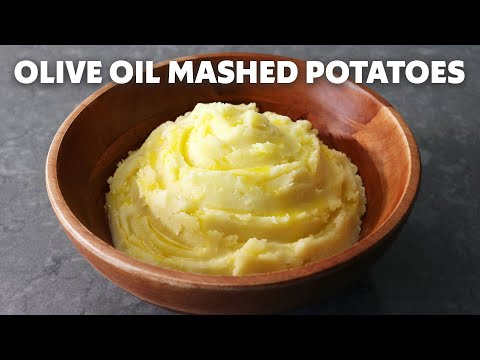
I prefer mashed potatoes with lots of butter.
Je préfère la purée de pommes de terre avec beaucoup de beurre.
'Mashed potatoes' is a common compound noun.
Are there any potatoes left in the cupboard?
Reste-t-il des pommes de terre dans le placard ?
'Any' is used in questions with plural count nouns.
We are growing potatoes in our garden this year.
Nous cultivons des pommes de terre dans notre jardin cette année.
Present continuous tense 'are growing'.
He ate a large plate of fried potatoes.
Il a mangé une grande assiette de pommes de terre frites.
'Fried' acts as an adjective describing the potatoes.
Can you help me chop these potatoes into cubes?
Peux-tu m'aider à couper ces pommes de terre en dés ?
'Chop... into' is a useful phrasal structure.
Potatoes are a good source of energy.
Les pommes de terre sont une bonne source d'énergie.
Abstract noun 'energy' following the plural subject.
I forgot to buy potatoes at the supermarket.
J'ai oublié d'acheter des pommes de terre au supermarché.
Infinitive 'to buy' after the verb 'forgot'.
In many European countries, potatoes are considered a staple food.
Dans de nombreux pays européens, les pommes de terre sont considérées comme un aliment de base.
Passive voice 'are considered'.
If you bake the potatoes in their skins, they retain more vitamins.
Si vous faites cuire les pommes de terre avec leur peau, elles conservent plus de vitamines.
First conditional structure.
My brother has become a bit of a couch potato lately.
Mon frère est devenu un peu un 'couch potato' ces derniers temps.
Idiomatic use of 'couch potato'.
There are hundreds of different varieties of potatoes available worldwide.
Il existe des centaines de variétés différentes de pommes de terre disponibles dans le monde entier.
'Varieties of potatoes' uses the plural for both nouns.
I usually roast potatoes with rosemary and garlic for Sunday lunch.
D'habitude, je fais rôtir des pommes de terre avec du romarin et de l'ail pour le déjeuner du dimanche.
Adverb of frequency 'usually' with the simple present.
The price of potatoes has gone up significantly this month.
Le prix des pommes de terre a considérablement augmenté ce mois-ci.
Present perfect 'has gone up' to show a recent change.
She suggested making a potato salad for the barbecue.
Elle a suggéré de faire une salade de pommes de terre pour le barbecue.
Gerund 'making' after the verb 'suggested'.
Potatoes should be stored in a cool, dark place to prevent sprouting.
Les pommes de terre doivent être conservées dans un endroit frais et sombre pour éviter qu'elles ne germent.
Modal verb 'should' followed by passive 'be stored'.
The Irish Potato Famine was caused by a devastating blight that destroyed the crops.
La famine irlandaise a été causée par un mildiou dévastateur qui a détruit les récoltes.
Historical reference using specific terminology like 'blight'.
The government decided to drop the controversial policy like a hot potato.
Le gouvernement a décidé d'abandonner la politique controversée comme une patate chaude.
Idiomatic use of 'hot potato' in a political context.
While the loss of the contract was disappointing, it was small potatoes compared to our annual turnover.
Bien que la perte du contrat ait été décevante, c'était peu de chose par rapport à notre chiffre d'affaires annuel.
Idiomatic use of 'small potatoes' for comparison.
Potatoes are often criticized for their high glycemic index, which can affect blood sugar levels.
Les pommes de terre sont souvent critiquées pour leur indice glycémique élevé, qui peut affecter la glycémie.
Scientific terminology 'glycemic index'.
The versatility of potatoes makes them an essential ingredient in global cuisine.
La polyvalence des pommes de terre en fait un ingrédient essentiel de la cuisine mondiale.
Abstract noun 'versatility' as the subject.
Farmers are experimenting with new methods to grow potatoes more sustainably.
Les agriculteurs expérimentent de nouvelles méthodes pour cultiver les pommes de terre de manière plus durable.
Adverb 'sustainably' modifying the verb 'grow'.
Despite being a simple vegetable, potatoes have a complex genetic structure.
Bien qu'elles soient un légume simple, les pommes de terre ont une structure génétique complexe.
Concession clause starting with 'Despite'.
The chef demonstrated how to make a classic French potato gratin.
Le chef a montré comment faire un gratin de pommes de terre français classique.
Specific culinary term 'gratin'.
The socio-economic impact of potatoes on 18th-century Europe cannot be overstated.
L'impact socio-économique des pommes de terre sur l'Europe du XVIIIe siècle ne saurait être surestimé.
Formal academic tone with compound adjectives.
The candidate's failure to answer the question made it a political hot potato during the debate.
L'incapacité du candidat à répondre à la question en a fait un sujet politique brûlant pendant le débat.
Extended metaphor in a formal context.
In the grand scheme of the company's merger, these minor expenses are merely small potatoes.
Dans l'ensemble de la fusion de l'entreprise, ces dépenses mineures ne sont que des broutilles.
Idiomatic use within a complex business context.
The genetic diversity of wild potatoes in the Andes is a vital resource for future food security.
La diversité génétique des pommes de terre sauvages dans les Andes est une ressource vitale pour la sécurité alimentaire future.
Precise scientific vocabulary 'genetic diversity'.
Potatoes served as a catalyst for demographic shifts, allowing for a more robust labor force.
Les pommes de terre ont servi de catalyseur aux changements démographiques, permettant une main-d'œuvre plus robuste.
Metaphorical use of 'catalyst' in a historical context.
The artist used the humble potato as a symbol of the working class's struggle and resilience.
L'artiste a utilisé l'humble pomme de terre comme symbole de la lutte et de la résilience de la classe ouvrière.
Symbolic and literary analysis.
Culinary historians argue about the exact route potatoes took from the New World to the Old.
Les historiens de l'art culinaire débattent de l'itinéraire exact emprunté par les pommes de terre du Nouveau Monde vers l'Ancien.
Noun phrase 'Culinary historians' as the subject.
The texture of these potatoes is remarkably waxy, making them ideal for this particular salad.
La texture de ces pommes de terre est remarquablement cireuse, ce qui les rend idéales pour cette salade particulière.
Technical culinary adjective 'waxy'.
The pervasive nature of potatoes in global diets underscores their unparalleled utility as a caloric bedrock.
La nature omniprésente des pommes de terre dans les régimes alimentaires mondiaux souligne leur utilité inégalée en tant que socle calorique.
Highly formal, sophisticated vocabulary ('pervasive', 'underscores', 'bedrock').
One might posit that the potato's unassuming exterior belies its profound influence on human civilization.
On pourrait avancer que l'extérieur modeste de la pomme de terre dément son influence profonde sur la civilisation humaine.
Use of 'one might posit' and 'belies' for a high-level academic tone.
The intricate interplay between potato monoculture and ecological vulnerability was laid bare during the 19th-century crisis.
L'interaction complexe entre la monoculture de la pomme de terre et la vulnérabilité écologique a été mise à nu lors de la crise du XIXe siècle.
Complex noun phrases and passive construction 'was laid bare'.
In the realm of digital disparagement, the term 'potato' has evolved into a versatile signifier of technological inadequacy.
Dans le domaine du dénigrement numérique, le terme 'potato' est devenu un signifiant polyvalent de l'insuffisance technologique.
Linguistic analysis of slang evolution.
The chef's deconstructed take on 'meat and potatoes' challenged traditional notions of comfort food.
La version déconstruite du 'viande et pommes de terre' du chef a remis en question les notions traditionnelles de 'comfort food'.
Culinary critique terminology 'deconstructed take'.
To relegate the potato to a mere side dish is to ignore its central role in the narrative of human survival.
Reléguer la pomme de terre au rang de simple accompagnement, c'est ignorer son rôle central dans le récit de la survie humaine.
Infinitive phrases used as subject and complement for rhetorical effect.
The molecular gastronomy of the potato reveals a fascinating world of starch retrogradation and enzymatic browning.
La gastronomie moléculaire de la pomme de terre révèle un monde fascinant de rétrogradation de l'amidon et de brunissement enzymatique.
Highly specialized scientific terminology.
The sheer resilience of the potato in diverse climates is a testament to its evolutionary success.
La résilience pure et simple de la pomme de terre dans divers climats témoigne de son succès évolutif.
Use of 'testament to' and 'evolutionary success'.
Colocaciones comunes
Frases Comunes
— Refers to the most basic or fundamental aspects of something. It can also describe a person with simple tastes.
The meat and potatoes of the proposal is the budget section.
— A person who spends a lot of time sitting or lying down, usually watching television. It implies laziness.
Don't be such a couch potato; go outside and play!
— A controversial or difficult issue that people want to avoid dealing with. It is often 'passed' from person to person.
The new tax law became a political hot potato.
— Something that is insignificant or unimportant, especially when compared to something else.
My problems are small potatoes compared to what they are going through.
— To abandon someone or something very quickly because they are causing trouble or are no longer useful.
When the company started losing money, they dropped the project like a hot potato.
— Used to say that a difference between two things is very small or unimportant. It comes from a famous song.
You say it's a mistake, I say it's a disaster. Potato, potahto.
— Something that is all substance but lacks any interesting or attractive features. Less common than 'meat and potatoes'.
His lecture was all meat and no potatoes; very informative but quite boring.
— A rare simile meaning very clean or smooth. It emphasizes the brightness of a freshly peeled potato.
After the scrub, the floor was as clean as a peeled potato.
— A modern variation of 'couch potato' referring to someone who spends too much time on the computer.
Ever since he got that new game, he's become a total mouse potato.
— A silly or stupid person. Also refers to the famous toy 'Mr. Potato Head'.
Stop acting like a potato head and focus on your work.
Se confunde a menudo con
They rhyme and are both nightshades, but tomatoes are red fruits and potatoes are brown tubers.
They are different plants entirely, though both are tubers. Sweet potatoes are orange and sweet.
Often used interchangeably with sweet potatoes in the US, but true yams are a different, starchier vegetable.
Modismos y expresiones
— A situation or issue that is difficult to handle and which people try to pass on to others. It is often used in politics.
The issue of immigration is a hot potato for the current government.
neutral— Something that is not important or does not involve much money. It is used for comparison.
A thousand dollars is small potatoes to a billionaire.
informal— A lazy person who spends most of their time watching TV. It is a very common informal insult.
He's turned into a real couch potato since he lost his job.
informal— The most basic and important parts of something. It can also refer to simple, traditional food.
Let's get down to the meat and potatoes of the meeting.
neutral— To stop associating with someone immediately, usually because they have become a liability.
His friends dropped him like a hot potato when he was accused of theft.
informal— An expression used to indicate that two things are essentially the same, despite minor differences in naming or detail.
Whether we call it a 'fee' or a 'tax', it's potato, potahto to the taxpayers.
informal— Someone who spends an excessive amount of time at a computer. A digital-age version of the couch potato.
My son is a total mouse potato; he's always on his PC.
informal/slang— To speak in a way that is difficult to understand, as if one's mouth is full. Often used to describe certain accents.
He speaks as if he has a hot potato in his mouth.
informal— Something that is no longer interesting or relevant. Much less common than 'hot potato'.
That old news story is a cold potato now; nobody cares.
informal— A traditional children's counting rhyme used to choose someone for a game. It represents simplicity and childhood.
They used 'one potato, two potato' to decide who would be 'it' in tag.
child-friendlyFácil de confundir
Singular vs. Plural
Potato refers to one single tuber; potatoes refers to more than one. The plural requires an 'e'.
I have one potato and three potatoes.
Similar sound
Pottage is an old word for a thick soup or stew, which might contain potatoes but is not the same thing.
The peasants ate a simple pottage for dinner.
Similar spelling
Potable means safe to drink. It has nothing to do with potatoes.
Is the water from this stream potable?
Similar sound
Patois refers to a regional dialect. It is pronounced 'pat-wa'.
He spoke in the local patois.
Similar sound
Patella is the medical term for the kneecap.
He injured his patella during the football match.
Patrones de oraciones
I like [potatoes].
I like potatoes.
Can I have some [potatoes]?
Can I have some potatoes?
[Potatoes] are usually [adjective].
Potatoes are usually boiled.
Despite [fact], [potatoes] are [description].
Despite being high in starch, potatoes are very nutritious.
The [noun] of [potatoes] is [adjective].
The historical significance of potatoes is immense.
One might argue that [potatoes] [verb] [concept].
One might argue that potatoes revolutionized European agriculture.
The [potatoes] are [color].
The potatoes are brown.
He is [verb-ing] [potatoes].
He is peeling potatoes.
Familia de palabras
Sustantivos
Verbos
Adjetivos
Relacionado
Cómo usarlo
Extremely high in daily conversation, culinary writing, and agricultural news.
-
I bought five potatos.
→
I bought five potatoes.
The plural of potato must include an 'e' before the 's'. This is a standard rule for most English words ending in a consonant followed by 'o'.
-
I like the potatoes.
→
I like potatoes.
When speaking about something in general, English uses the zero article. 'The potatoes' refers to a specific group of potatoes, not the food in general.
-
This problem is a small potato.
→
This problem is small potatoes.
The idiom 'small potatoes' is almost always used in the plural form, even if you are referring to a single problem or issue.
-
I'm going to make some mashed potato.
→
I'm going to make some mashed potatoes.
While 'mashed potato' is sometimes used as an uncountable mass, the plural 'mashed potatoes' is much more common and standard in English.
-
He dropped the project like hot potato.
→
He dropped the project like a hot potato.
The idiom 'like a hot potato' requires the indefinite article 'a' to be grammatically correct and sound natural.
Consejos
The 'E' Rule
Always remember to add an 'e' before the 's' when writing the plural 'potatoes.' Think of it as 'potato' + 'es.' This is one of the most common spelling errors in English, so mastering it will make your writing look much more professional.
Crispy Roasties
To get the crispiest roast potatoes, parboil them for about 10 minutes first, then shake them in the pot to roughen the edges before putting them in hot oil in the oven. The rough edges create more surface area for the oil to crisp up.
Keep the Skin
Most of the fiber and many of the vitamins in potatoes are located in or just under the skin. Whenever possible, scrub the potatoes clean and cook them with the skin on. This is not only healthier but also adds a nice texture to many dishes.
Regional Slang
If you are in the UK or Ireland, try using the word 'spuds' in casual settings. It will make you sound much more like a local. However, stick to 'potatoes' in formal situations or when writing.
Darkness is Key
Exposure to light causes potatoes to produce chlorophyll and solanine, which turns them green and makes them bitter or even toxic. Always store your potatoes in a dark place, like a thick paper bag or a dark cupboard.
Zero Article
When talking about potatoes as a general category of food, don't use 'the.' Say 'I like potatoes' or 'Potatoes are versatile.' Use 'the' only when you are talking about specific potatoes, like 'The potatoes on my plate are cold.'
Using 'Hot Potato'
Use the phrase 'hot potato' when discussing a problem that nobody wants to take responsibility for. It's a great way to add color to your business or political English. Example: 'The budget cuts are a real hot potato for the manager.'
The Flap T
In American English, the 't' in 'potatoes' is often pronounced as a quick 'd' sound. This is called a 'flap T.' Practicing this will help you sound more natural when speaking with Americans. It sounds like 'po-DAY-toes.'
Starchy vs. Waxy
Learn the difference between starchy potatoes (like Russets) and waxy potatoes (like Red Bliss). Starchy ones are best for mashing and frying because they are fluffy, while waxy ones are best for salads and stews because they hold their shape.
Couch Potato Context
Be careful when calling someone a 'couch potato.' While it's often used jokingly among friends, it can be seen as a criticism of someone's lifestyle. Use it only in informal, friendly contexts where you know the person won't be offended.
Memorízalo
Mnemotecnia
To remember the spelling of 'potatoes,' think of the phrase: 'Potatoes Eat Some' (P-O-T-A-T-O-E-S). This helps you remember to include the 'e' before the 's.'
Asociación visual
Imagine a potato wearing a large 'E' as a hat. This 'E' is only there when there are many potatoes (plural), helping you remember the spelling 'potatoes.'
Word Web
Desafío
Try to name five different ways to cook potatoes and three idioms that use the word 'potato' or 'potatoes' without looking at your notes.
Origen de la palabra
The word comes from the Spanish 'patata,' which itself was a hybrid of the Taino word 'batata' (meaning sweet potato) and the Quechua word 'papa' (meaning potato). It entered the English language in the mid-16th century. The confusion between sweet potatoes and regular potatoes was present from the very beginning of their introduction to Europe.
Significado original: The original Taino word 'batata' referred specifically to the sweet potato, but as the Spanish encountered the white potato in the Andes, the names merged.
Romance (via Spanish) from Indigenous American languages (Taino and Quechua).Contexto cultural
Be mindful when discussing the Irish Potato Famine, as it is a tragic and sensitive historical event. Avoid making light of it.
In the UK and US, potatoes are the most common side dish. In the UK, 'chips' are thick-cut fries, while in the US, 'chips' are thin, crunchy snacks.
Practica en la vida real
Contextos reales
Cooking and Recipes
- peel the potatoes
- boil until tender
- mash with butter
- roast in the oven
Grocery Shopping
- a bag of potatoes
- price per kilo
- organic potatoes
- baking potatoes
Dining Out
- side of potatoes
- mashed or fried?
- loaded potato skins
- potato soup
Gardening/Farming
- plant the potatoes
- harvest the crop
- potato blight
- hilling potatoes
Informal Insults
- stop being a couch potato
- your computer is a potato
- you potato head
- small potatoes
Inicios de conversación
"What is your favorite way to eat potatoes? I personally love them roasted with garlic."
"Do you think potatoes are healthier than rice or pasta? It's a common debate."
"Have you ever tried growing potatoes in your own garden? It's surprisingly easy."
"What do you call 'fries' in your country? In the UK, they call them 'chips'."
"Are potatoes a staple part of the diet in your home country?"
Temas para diario
Describe a memorable meal you had that featured potatoes. Why was it special?
Write about the pros and cons of being a 'couch potato' for a weekend.
If you could only eat one type of potato dish for the rest of your life, what would it be and why?
Research and write a short paragraph about the history of the potato in your region.
How do you feel about the use of 'potato' as an insult for technology? Is it fair?
Preguntas frecuentes
10 preguntasThe correct spelling for the plural is 'potatoes.' In English, most words ending in 'o' preceded by a consonant add 'es' to become plural. Examples include tomatoes, heroes, and volcanoes. Forgetting the 'e' is a very common mistake even for native speakers.
Yes, potatoes are healthy when prepared properly. they are rich in Vitamin C, Vitamin B6, and potassium. However, they have a high glycemic index, which can cause blood sugar spikes. To get the most nutrients, it is best to eat them with the skin on and avoid deep-frying them.
A 'couch potato' is an idiom used to describe a person who is very lazy and spends a lot of time sitting on a sofa watching television. The term compares the person to a stationary, round potato. It is generally used as a mild, informal insult.
You should avoid eating potatoes that have turned green. The green color indicates the presence of chlorophyll, but it also means there is a high level of solanine, a toxic compound that can cause illness if consumed in large amounts. If a potato has small green spots, you can peel them off, but if it's mostly green, throw it away.
In American English, 'chips' are thin, crunchy snacks in a bag, while 'fries' are hot, deep-fried strips of potato. In British English, 'chips' are the hot, thick-cut fried potatoes (like in fish and chips), and the thin, crunchy snacks are called 'crisps.' This is a major point of difference between the two dialects.
The term 'spud' originally referred to a small spade or digging tool used to harvest potatoes. Over time, the name of the tool became a slang term for the vegetable itself. It is now a very common informal word for potatoes in the UK, Ireland, and Australia.
Potatoes should be stored in a cool, dark, and dry place, such as a pantry or a cellar. Do not store them in the refrigerator, as the cold will turn their starch into sugar, making them taste sweet and turn brown when cooked. Also, keep them away from onions, as onions release gases that make potatoes sprout faster.
The idiom 'small potatoes' refers to something that is unimportant, insignificant, or involves very little money compared to something else. For example, 'The cost of the paint is small potatoes compared to the cost of the whole renovation.' It is almost always used in the plural form.
No, sweet potatoes are a completely different species from regular potatoes. While both are tubers that grow underground, regular potatoes are part of the nightshade family, and sweet potatoes are part of the morning glory family. They have different nutritional profiles and culinary uses.
In politics, a 'hot potato' is a controversial issue that is very difficult to handle. Politicians often try to 'pass the hot potato' to someone else to avoid taking the blame or making a difficult decision. It's a metaphor for a potato that is too hot to hold in your hands.
Ponte a prueba 180 preguntas
Write a short paragraph describing your favorite potato dish and how to make it.
Well written! Good try! Check the sample answer below.
Explain the meaning of the idiom 'couch potato' and give an example of how to use it.
Well written! Good try! Check the sample answer below.
Compare and contrast white potatoes and sweet potatoes in terms of taste and nutrition.
Well written! Good try! Check the sample answer below.
Write a formal email to a grocery store manager complaining about the quality of the potatoes you bought.
Well written! Good try! Check the sample answer below.
Discuss the historical impact of the potato on European population growth.
Well written! Good try! Check the sample answer below.
Write five sentences using the word 'potatoes' in different culinary contexts.
Well written! Good try! Check the sample answer below.
Describe a time when you had to deal with a 'hot potato' at work or school.
Well written! Good try! Check the sample answer below.
Write a short story about a character who is a 'couch potato' but decides to change their life.
Well written! Good try! Check the sample answer below.
Argue for or against the statement: 'Potatoes are the most important vegetable in the world.'
Well written! Good try! Check the sample answer below.
Create a menu for a restaurant where every dish must contain potatoes.
Well written! Good try! Check the sample answer below.
Write a poem about the humble potato.
Well written! Good try! Check the sample answer below.
Explain the difference between 'chips' and 'fries' in British and American English.
Well written! Good try! Check the sample answer below.
Write a dialogue between two people arguing about the best way to cook potatoes.
Well written! Good try! Check the sample answer below.
Describe the nutritional benefits of eating potatoes with the skin on.
Well written! Good try! Check the sample answer below.
Summarize the causes and effects of the Irish Potato Famine.
Well written! Good try! Check the sample answer below.
Write a review of a bag of potato chips you recently tried.
Well written! Good try! Check the sample answer below.
Discuss how the potato has been used as a symbol in art or literature.
Well written! Good try! Check the sample answer below.
Write a short guide on how to store potatoes to keep them fresh.
Well written! Good try! Check the sample answer below.
Explain the idiom 'small potatoes' with three different examples.
Well written! Good try! Check the sample answer below.
Describe the process of growing potatoes from planting to harvest.
Well written! Good try! Check the sample answer below.
Describe your favorite way to cook potatoes and why you like it.
Read this aloud:
Dijiste:
Speech recognition is not supported in your browser. Try Chrome or Edge.
Talk about a time you felt like a 'couch potato.' What did you do?
Read this aloud:
Dijiste:
Speech recognition is not supported in your browser. Try Chrome or Edge.
Explain the importance of potatoes in your country's diet.
Read this aloud:
Dijiste:
Speech recognition is not supported in your browser. Try Chrome or Edge.
Discuss the pros and cons of eating potatoes as a primary source of carbohydrates.
Read this aloud:
Dijiste:
Speech recognition is not supported in your browser. Try Chrome or Edge.
Debate the historical significance of the potato with a partner.
Read this aloud:
Dijiste:
Speech recognition is not supported in your browser. Try Chrome or Edge.
Roleplay ordering a meal at a restaurant that includes different types of potatoes.
Read this aloud:
Dijiste:
Speech recognition is not supported in your browser. Try Chrome or Edge.
Give a short presentation on how to grow potatoes in a home garden.
Read this aloud:
Dijiste:
Speech recognition is not supported in your browser. Try Chrome or Edge.
Tell a story about a 'hot potato' situation you witnessed.
Read this aloud:
Dijiste:
Speech recognition is not supported in your browser. Try Chrome or Edge.
Explain the difference between 'small potatoes' and 'meat and potatoes' to a friend.
Read this aloud:
Dijiste:
Speech recognition is not supported in your browser. Try Chrome or Edge.
Discuss the environmental impact of large-scale potato farming.
Read this aloud:
Dijiste:
Speech recognition is not supported in your browser. Try Chrome or Edge.
Practice pronouncing 'potatoes' with both UK and US accents.
Read this aloud:
Dijiste:
Speech recognition is not supported in your browser. Try Chrome or Edge.
Describe the appearance and texture of a raw potato versus a cooked one.
Read this aloud:
Dijiste:
Speech recognition is not supported in your browser. Try Chrome or Edge.
Talk about the different varieties of potatoes you can find at your local market.
Read this aloud:
Dijiste:
Speech recognition is not supported in your browser. Try Chrome or Edge.
Discuss why some people consider potatoes to be 'unhealthy' and whether you agree.
Read this aloud:
Dijiste:
Speech recognition is not supported in your browser. Try Chrome or Edge.
Describe a traditional holiday meal in your family that includes potatoes.
Read this aloud:
Dijiste:
Speech recognition is not supported in your browser. Try Chrome or Edge.
Explain the concept of 'food security' using the potato as an example.
Read this aloud:
Dijiste:
Speech recognition is not supported in your browser. Try Chrome or Edge.
Talk about the use of potatoes in making non-food items like starch or alcohol.
Read this aloud:
Dijiste:
Speech recognition is not supported in your browser. Try Chrome or Edge.
Discuss the cultural stereotypes associated with being a 'couch potato'.
Read this aloud:
Dijiste:
Speech recognition is not supported in your browser. Try Chrome or Edge.
Describe the most unusual potato dish you have ever eaten.
Read this aloud:
Dijiste:
Speech recognition is not supported in your browser. Try Chrome or Edge.
Summarize the journey of the potato from South America to the rest of the world.
Read this aloud:
Dijiste:
Speech recognition is not supported in your browser. Try Chrome or Edge.
Listen to a recipe for mashed potatoes and list the ingredients mentioned.
Listen to a news report about potato prices and identify the reason for the price increase.
Listen to a conversation where someone uses the idiom 'hot potato' and explain the context.
Listen to a historical lecture about the Irish Potato Famine and take notes on the key dates.
Listen to a podcast about sustainable farming and identify the challenges of growing potatoes.
Listen to a waiter describing the potato options and choose which one sounds best to you.
Listen to a child's counting rhyme 'one potato, two potato' and repeat it.
Listen to a nutritionist talk about the glycemic index of potatoes and summarize their advice.
Listen to a comedian's joke about being a couch potato and explain why it is funny.
Listen to a description of different potato varieties and match them to their best uses.
Listen to an interview with a potato farmer and identify the tools they use.
Listen to a scientific explanation of starch retrogradation in potatoes.
Listen to a dialogue about grocery shopping and list how many potatoes they need to buy.
Listen to a cooking show segment on making the perfect French fries.
Listen to a discussion on the etymology of the word 'potato'.
/ 180 correct
Perfect score!
Summary
Potatoes are a fundamental, starchy vegetable used globally as a staple food. Their culinary versatility is unmatched, appearing in dishes ranging from simple fries to complex gratins. Beyond the kitchen, they carry significant historical weight and are a common source of English idioms.
- Potatoes are versatile, starchy tubers that serve as a global staple food, providing essential carbohydrates and nutrients to billions of people across various cultures.
- They can be prepared in numerous ways, including boiling, mashing, roasting, and frying, making them a fundamental ingredient in both home cooking and professional culinary arts.
- Historically significant, potatoes have influenced global demographics and economy, most notably during the 18th-century population boom and the tragic 19th-century Irish Potato Famine.
- The word also appears in common English idioms like 'couch potato' and 'small potatoes,' reflecting its deep integration into everyday language and metaphorical thought.
The 'E' Rule
Always remember to add an 'e' before the 's' when writing the plural 'potatoes.' Think of it as 'potato' + 'es.' This is one of the most common spelling errors in English, so mastering it will make your writing look much more professional.
Crispy Roasties
To get the crispiest roast potatoes, parboil them for about 10 minutes first, then shake them in the pot to roughen the edges before putting them in hot oil in the oven. The rough edges create more surface area for the oil to crisp up.
Keep the Skin
Most of the fiber and many of the vitamins in potatoes are located in or just under the skin. Whenever possible, scrub the potatoes clean and cook them with the skin on. This is not only healthier but also adds a nice texture to many dishes.
Regional Slang
If you are in the UK or Ireland, try using the word 'spuds' in casual settings. It will make you sound much more like a local. However, stick to 'potatoes' in formal situations or when writing.
Contenido relacionado
Aprende en contexto
Más palabras de Food
additive
B2Un aditivo es una sustancia que se añade a algo para mejorar sus cualidades.
additives
B2Los aditivos son sustancias que se añaden a los alimentos para mantener su frescura o mejorar su sabor.
almond
B2Tiene unos hermosos ojos almendrados.
annatto
B1El achiote (annatto) es un colorante natural derivado de las semillas del árbol de achiote. Se usa para dar color y sabor a platos tradicionales.
appetite
C1El apetito es el deseo natural de comer. También puede significar un fuerte deseo por algo más, como el conocimiento.
appetizer
C1Un aperitivo es una pequeña porción de comida que se sirve antes del plato principal.
appetizing
B2Se ve o huele muy bien, dando ganas de comer. / El olor del pan recién horneado era muy apetitoso.
apple
C1El diseño fue ejecutado 'apple', con una claridad refrescante.
apples
A1Las manzanas son frutas redondas y comestibles.
apricot
C1El atardecer pintó el cielo de un suave tono albaricoque.

