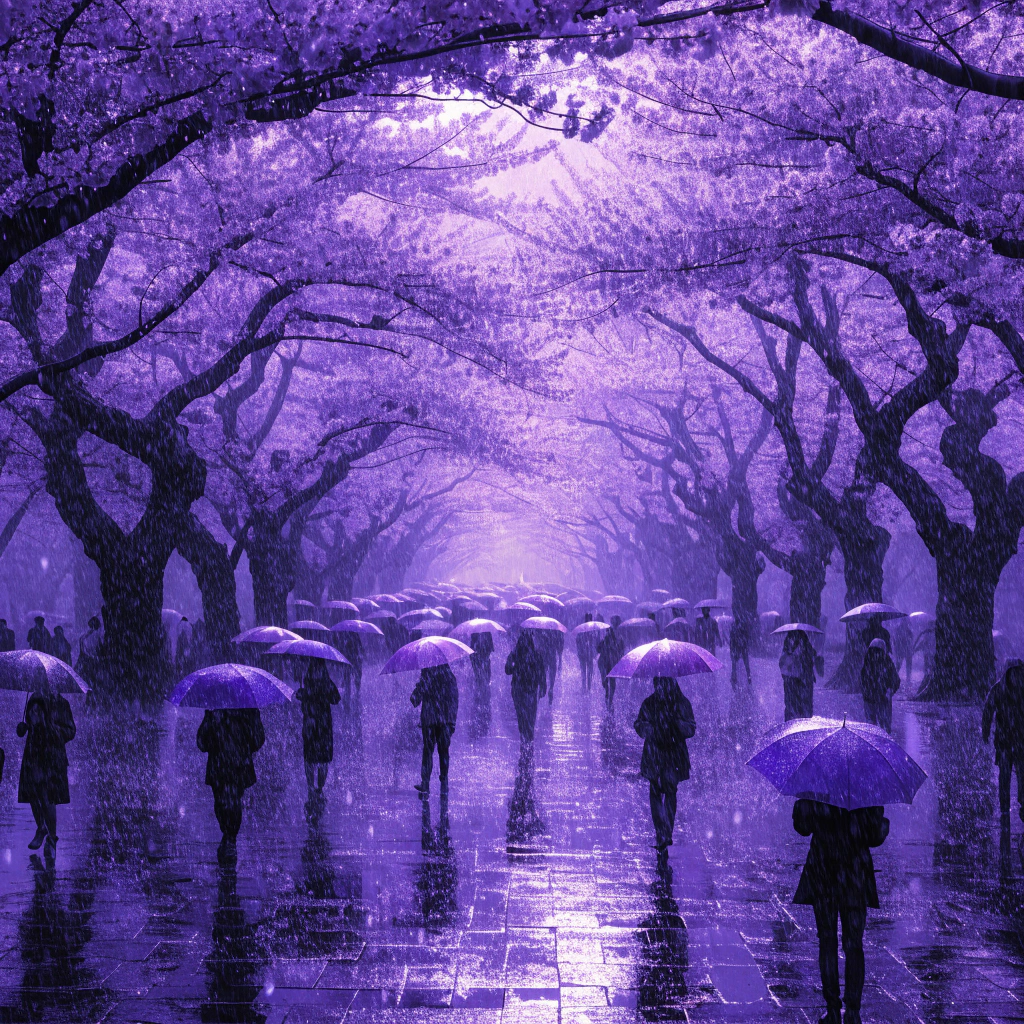
La Fête des Fleurs de Jinhae en Corée
La fête de Jinhae Gunhangje est en Corée du Sud. C'est une très grande fête au printemps. Beaucoup de personnes viennent ici pour la voir. Elles voient de belles fleurs de cerisier. Il y a 360 000 arbres avec des fleurs roses. C'est très joli dans la ville de Jinhae.
Cette fête a une histoire importante. Elle commence en 1952. Au début, c'était une cérémonie pour l'Amiral Yi Sun-sin. Il était un grand héros pour la Corée. Il a défendu le pays. Aujourd'hui, la fête célèbre le printemps et aussi l'histoire militaire. C'est une très belle tradition chaque année.
Point grammaire
Structure: « C'est » pour présenter
"C'est une très grande fête au printemps."
On utilise « C'est » pour présenter une chose ou une personne. Après « C'est », on met souvent un nom ou un adjectif. Par exemple, « C'est une fête » ou « C'est joli ».
Structure: « Il y a » pour indiquer l'existence
"Il y a 360 000 arbres avec des fleurs roses."
On utilise « Il y a » pour dire qu'une chose existe ou qu'elle est présente. Cela signifie 'there is' ou 'there are' en anglais. Par exemple, « Il y a des fleurs » signifie 'There are flowers'.
Teste ta compréhension
10 questions · A1 Débutant · 1 aperçu gratuit
Teste ce que tu as appris dans cet article. Réponds à toutes les questions pour gagner des XP !
Où se trouve la fête de Jinhae Gunhangje ?
Tu veux terminer le quiz ?
9 questions supplémentaires t'attendent. Inscris-toi gratuitement pour débloquer le quiz complet et gagner des XP !
S'inscrire gratuitementTu as dj un compte ? Connexion
Bien joué !
Continue à pratiquer !
Déjà terminé — pas de XP supplémentaire
Inscris-toi pour gagner des XPDétail des questions
Où se trouve la fête de Jinhae Gunhangje ?
Ta réponse:
Bonne réponse: En Corée du Sud
La fête de Jinhae est pour les fleurs de cerisier et l'histoire.
Ta réponse:
Bonne réponse: Vrai
Que signifie le mot "printemps" ?
Ta réponse:
Bonne réponse: La saison après l'hiver
Il y a 360 000 _____ avec des fleurs roses.
Ta réponse:
Bonne réponse: arbres
Le Festival de Jinhae Gunhangje : Fleurs et Histoire en Corée du Sud
Le festival de Jinhae Gunhangje est un grand événement en Corée du Sud. Chaque année, des millions de visiteurs viennent dans la ville de Jinhae pour voir les belles fleurs de cerisier. C'est le plus célèbre festival de printemps du pays.
À Jinhae, il y a environ 360 000 cerisiers. Les gens aiment beaucoup se promener sous les arbres fleuris et prendre de jolies photos. C'est une expérience magnifique pour toute la famille. Mais le festival n'a pas toujours été seulement une fête des fleurs.
Au début, en 1952, le festival a commencé comme un mémorial. Il a été créé pour honorer l'amiral Yi Sun-sin. Cet amiral était un héros militaire très important qui a défendu la Corée contre des envahisseurs. Aujourd'hui, le festival est devenu une grande célébration du printemps et de l'histoire militaire. C'est une belle occasion de découvrir la culture coréenne et la nature au même temps.
Point grammaire
Structure: Le Passé Composé
"Le festival a commencé comme un mémorial."
Le passé composé est utilisé pour parler d'actions passées qui sont terminées. On le forme avec l'auxiliaire 'avoir' ou 'être' au présent, suivi du participe passé du verbe.
Structure: Il y a / C'est
"À Jinhae, il y a environ 360 000 cerisiers. C'est le plus célèbre festival de printemps du pays."
'Il y a' sert à indiquer la présence de quelque chose ou à parler d'une quantité. 'C'est' sert à identifier ou à décrire quelque chose ou quelqu'un.
Teste ta compréhension
11 questions · A2 mentaire · 1 aperçu gratuit
Teste ce que tu as appris dans cet article. Réponds à toutes les questions pour gagner des XP !
Pour quoi le festival de Jinhae Gunhangje est-il le plus célèbre aujourd'hui ?
Tu veux terminer le quiz ?
10 questions supplémentaires t'attendent. Inscris-toi gratuitement pour débloquer le quiz complet et gagner des XP !
S'inscrire gratuitementTu as dj un compte ? Connexion
Bien joué !
Continue à pratiquer !
Déjà terminé — pas de XP supplémentaire
Inscris-toi pour gagner des XPDétail des questions
Pour quoi le festival de Jinhae Gunhangje est-il le plus célèbre aujourd'hui ?
Ta réponse:
Bonne réponse: Pour ses belles fleurs de cerisier
Le festival a toujours été une fête des fleurs depuis le début.
Ta réponse:
Bonne réponse: Faux
Que signifie le mot 'amiral' ?
Ta réponse:
Bonne réponse: Un officier important dans la marine
Le festival de Jinhae Gunhangje est un grand _______ en Corée du Sud.
Ta réponse:
Bonne réponse: événement
En quelle année le festival a-t-il commencé comme un mémorial ?
Ta réponse:
Bonne réponse: 1952
Le Festival Jinhae Gunhangje : Entre Fleurs de Cerisier et Histoire
Le Festival Jinhae Gunhangje est l'événement printanier le plus important de Corée du Sud. Chaque année, des millions de visiteurs sont attirés par cette magnifique ville navale du sud, Jinhae. Aujourd'hui, il est mondialement célèbre pour ses 360 000 cerisiers en fleurs, qui transforment la ville en un spectacle rose et blanc éblouissant. C'est une expérience visuelle que beaucoup considèrent comme inoubliable.
Cependant, l'histoire de ce festival est plus profonde que ses fleurs. Il a commencé en 1952 comme un service commémoratif pour l'Amiral Yi Sun-sin. Cet Amiral était un héros naval coréen qui a défendu son pays contre les envahisseurs japonais pendant la dynastie Joseon. Son courage et ses stratégies militaires ont marqué l'histoire de la Corée.
Au fil des décennies, le festival a évolué. Il est devenu une grande célébration du printemps et du patrimoine militaire, où l'on honore non seulement la nature mais aussi l'histoire. Des défilés militaires, des reconstitutions historiques et des spectacles culturels sont souvent organisés. Les visiteurs peuvent aussi goûter à la cuisine locale et acheter des souvenirs uniques.
Les endroits les plus emblématiques pour admirer les cerisiers sont le ruisseau Yeojwacheon et la voie ferrée Gyeonghwa. Ces lieux offrent des paysages spectaculaires, particulièrement lorsque les pétales des fleurs tombent, créant une "pluie de cerisiers". Le festival Jinhae Gunhangje est vraiment une occasion unique de découvrir la culture coréenne, sa riche histoire et la beauté spectaculaire de ses cerisiers en fleurs.
Point grammaire
Structure: La voix passive
"des millions de visiteurs sont attirés par cette magnifique ville navale"
La voix passive est utilisée pour mettre l'accent sur l'action ou l'objet de l'action, plutôt que sur celui qui fait l'action. Elle se forme avec l'auxiliaire 'être' au temps approprié et le participe passé du verbe, accordé avec le sujet.
Structure: La proposition subordonnée relative avec "qui"
"un héros naval coréen qui a défendu son pays"
La proposition subordonnée relative avec 'qui' est utilisée pour donner des informations supplémentaires sur un nom (l'antécédent). 'Qui' est le sujet du verbe dans la proposition relative et est invariable.
Teste ta compréhension
11 questions · B1 Intermédiaire · 1 aperçu gratuit
Teste ce que tu as appris dans cet article. Réponds à toutes les questions pour gagner des XP !
Pour quelle raison principale le Festival Jinhae Gunhangje est-il célèbre aujourd'hui ?
Tu veux terminer le quiz ?
10 questions supplémentaires t'attendent. Inscris-toi gratuitement pour débloquer le quiz complet et gagner des XP !
S'inscrire gratuitementTu as dj un compte ? Connexion
Bien joué !
Continue à pratiquer !
Déjà terminé — pas de XP supplémentaire
Inscris-toi pour gagner des XPDétail des questions
Pour quelle raison principale le Festival Jinhae Gunhangje est-il célèbre aujourd'hui ?
Ta réponse:
Bonne réponse: Ses cerisiers en fleurs
Le festival a commencé comme une célébration du printemps.
Ta réponse:
Bonne réponse: Faux
Que signifie le mot "patrimoine" dans le contexte de l'article ?
Ta réponse:
Bonne réponse: L'ensemble de l'histoire et des traditions d'un lieu
Le festival a commencé en 1952 comme un service _________ pour l'Amiral Yi Sun-sin.
Ta réponse:
Bonne réponse: commémoratif
Qui était l'Amiral Yi Sun-sin ?
Ta réponse:
Bonne réponse: Un héros naval coréen
The Pink Bloom of History: Exploring the Jinhae Gunhangje Festival
Every spring, the southern naval city of Jinhae undergoes a breathtaking transformation as over 360,000 cherry blossom trees burst into bloom. This spectacular display, known as the Jinhae Gunhangje Festival, has established itself as South Korea’s premier spring event, drawing millions of domestic and international visitors. While the delicate pink petals are undoubtedly the primary draw, the festival’s origins are deeply rooted in a significant historical context that distinguishes it from other floral celebrations.
The festival was inaugurated in 1952, not as a tourist attraction, but as a solemn memorial service for Admiral Yi Sun-sin. Renowned as Korea’s greatest naval hero, the Admiral is celebrated for his strategic brilliance in defeating Japanese invaders during the Joseon Dynasty. Consequently, the event serves as a poignant reminder of national resilience. Over the decades, the festival has evolved from a small-scale military ceremony into a massive ten-day extravaganza that harmoniously blends military heritage with the ephemeral beauty of nature.
Among the numerous scenic spots, the Yeojwacheon Stream stands out as a particularly iconic location. Here, cherry blossoms form a natural canopy over the water, creating a romantic atmosphere that has been featured in countless films. Furthermore, Gyeonghwa Station offers a unique spectacle where trains pass through a tunnel of blossoms, providing a nostalgic aesthetic that photographers find irresistible. These sites are not merely picturesque; they represent the successful integration of urban infrastructure and environmental preservation.
From a cultural perspective, the festival’s growth illustrates the power of heritage tourism. By maintaining the military parade and the naval band performances, Jinhae ensures that visitors do not lose sight of the city's identity. Despite the logistical challenges posed by such a massive influx of tourists, the local government has managed to enhance the visitor experience through improved transportation and sustainable management practices.
In conclusion, the Jinhae Gunhangje Festival is more than just a seasonal photo opportunity. It is a multifaceted celebration that honors a legendary hero while embracing the transient beauty of spring. For those seeking a deeper understanding of Korean culture, the festival offers an unparalleled synthesis of history, patriotism, and natural splendor.
Point grammaire
Structure: Present Perfect Passive
"Here, cherry blossoms form a natural canopy over the water, creating a romantic atmosphere that has been featured in countless films."
This pattern is used to describe an action that happened at an unspecified time in the past and has relevance to the present. It is formed using 'has/have + been + past participle'.
Structure: Reduced Relative Clause
"Renowned as Korea’s greatest naval hero, the Admiral is celebrated for his strategic brilliance."
This is a past participle phrase acting as an adjective. It simplifies the sentence by removing the relative pronoun and the verb 'to be' (e.g., 'Who is renowned').
Structure: Concessive Clause with 'Despite'
"Despite the logistical challenges posed by such a massive influx of tourists, the local government has managed to enhance the visitor experience."
The word 'despite' is a preposition used to introduce a contrast. It must be followed by a noun phrase or a gerund, not a full clause with a subject and verb.
Teste ta compréhension
11 questions · B2 Intermédiaire supérieur · 1 aperçu gratuit
Teste ce que tu as appris dans cet article. Réponds à toutes les questions pour gagner des XP !
What was the original purpose of the Jinhae Gunhangje Festival in 1952?
Tu veux terminer le quiz ?
10 questions supplémentaires t'attendent. Inscris-toi gratuitement pour débloquer le quiz complet et gagner des XP !
S'inscrire gratuitementTu as dj un compte ? Connexion
Bien joué !
Continue à pratiquer !
Déjà terminé — pas de XP supplémentaire
Inscris-toi pour gagner des XPDétail des questions
What was the original purpose of the Jinhae Gunhangje Festival in 1952?
Ta réponse:
Bonne réponse: As a memorial for Admiral Yi Sun-sin
The festival has remained a small-scale military ceremony since its inception.
Ta réponse:
Bonne réponse: Faux
What does 'ephemeral' mean in the context of the cherry blossoms?
Ta réponse:
Bonne réponse: Lasting for a very short time
The festival's _____ are deeply rooted in a significant historical context.
Ta réponse:
Bonne réponse: origins
Which location is specifically mentioned for having a 'tunnel of blossoms' created by passing trains?
Ta réponse:
Bonne réponse: Gyeonghwa Station
Ephemeral Splendour and Maritime Heritage: The Multi-Layered Legacy of Jinhae Gunhangje
The Jinhae Gunhangje Festival, South Korea’s preeminent vernal celebration, represents a sophisticated intersection of botanical wonder and nationalistic reverence. While the casual observer might be forgiven for perceiving the event as merely a photogenic spectacle, the festival’s genesis is rooted in a far more somber historical narrative. It was in 1952, amidst the reconstruction of a nation, that the inaugural memorial service for Admiral Yi Sun-sin was held. Seldom does a modern metropolitan event manage to oscillate so seamlessly between the celebration of life’s fragility and the veneration of military fortitude.
Central to the festival’s allure is the sheer scale of its arboricultural display. With approximately 360,000 King Cherry trees reaching peak bloom, the city is transformed into a pastel-hued labyrinth. It is at the Yeojwacheon Stream where this aesthetic reaches its zenith. Here, the juxtaposition of the 'Romance Bridge' against the cascading blossoms creates an almost ethereal atmosphere. However, the burgeoning popularity of such sites has necessitated a meticulous approach to urban management, as the influx of millions of tourists risks overwhelming the local infrastructure. The preservation of historical integrity remains a paramount concern for local authorities who must balance tourism with the sanctity of the memorial sites.
Beyond the visual splendour lies the poignant legacy of Admiral Yi Sun-sin, the Joseon Dynasty’s naval mastermind. His strategic prowess, particularly during the Imjin War, remains a cornerstone of Korean identity. The opening of the Jinhae Naval Academy and the Naval Base Command during the festival provides a rare glimpse into the inner workings of South Korea’s maritime defense. It is through these guided tours that visitors can witness replicas of the Geobukseon, or ‘Turtle Ships,’ which were instrumental in the Admiral's victories. This integration of active military sites into a public celebration underscores the enduring relevance of maritime security in the region.
Nevertheless, critics argue that the burgeoning commercialization of the Gunhangje risks diluting its historical gravitas. As street food stalls and souvenir vendors proliferate, the solemnity of the naval tributes can occasionally feel inundated by consumerist fervor. Yet, perhaps this tension is reflective of modern Korea itself—a nation that honors its rigorous history while embracing a vibrant, contemporary culture. The transience of the cherry blossoms serves as a poignant metaphor for this balance; their brief existence reminds visitors that beauty, much like peace, requires constant vigilance and appreciation. The nominalization of historical memory into a public festival allows for a collective re-engagement with the past, ensuring that the sacrifices of previous generations are not obscured by the ephemeral beauty of the blossoms.
Point grammaire
Structure: Negative Inversion
"Seldom does a modern metropolitan event manage to oscillate so seamlessly between the celebration of life’s fragility and the veneration of military fortitude."
This structure places a negative or restrictive adverb at the start for emphasis. It requires the auxiliary verb to come before the subject, creating a formal and dramatic tone.
Structure: Cleft Sentences
"It is at the Yeojwacheon Stream where this aesthetic reaches its zenith."
Cleft sentences are used to focus on a specific piece of information. By starting with 'It is...', the writer highlights the location as the most important element of the statement.
Structure: Nominalization
"The preservation of historical integrity remains a paramount concern for local authorities."
Nominalization involves turning verbs (preserve) into nouns (preservation). This is a hallmark of C1 writing as it allows for more abstract, objective, and dense information delivery.
Teste ta compréhension
12 questions · C1 Avancé · 1 aperçu gratuit
Teste ce que tu as appris dans cet article. Réponds à toutes les questions pour gagner des XP !
What was the primary reason for the festival's inception in 1952?
Tu veux terminer le quiz ?
11 questions supplémentaires t'attendent. Inscris-toi gratuitement pour débloquer le quiz complet et gagner des XP !
S'inscrire gratuitementTu as dj un compte ? Connexion
Bien joué !
Continue à pratiquer !
Déjà terminé — pas de XP supplémentaire
Inscris-toi pour gagner des XPDétail des questions
What was the primary reason for the festival's inception in 1952?
Ta réponse:
Bonne réponse: To honor the naval hero Admiral Yi Sun-sin
The festival is entirely focused on botanical displays and lacks historical significance.
Ta réponse:
Bonne réponse: Faux
Which word best describes the 'brief and passing' nature of the cherry blossoms?
Ta réponse:
Bonne réponse: Ephemeral
The authorities manage the urban infrastructure _____ to handle millions of tourists.
Ta réponse:
Bonne réponse: meticulously
According to the article, what does the 'Turtle Ship' represent?
Ta réponse:
Bonne réponse: A historical naval replica instrumental in past victories
Critics are concerned that commercial growth might weaken the festival's historical seriousness.
Ta réponse:
Bonne réponse: Vrai
The Vernal Convergence: Ephemerality and Valor at the Jinhae Gunhangje
The Jinhae Gunhangje Festival, South Korea’s preeminent vernal celebration, presents a profound ontological paradox: the juxtaposition of the ephemeral cherry blossom with the enduring legacy of naval valor. While the casual observer might be forgiven for perceiving the event as a mere aesthetic indulgence, a more rigorous analysis reveals a complex tapestry of historical commemoration and national identity. Established in 1952, ostensibly to honor the indomitable Admiral Yi Sun-sin, the festival has evolved from a somber panegyric into a multifaceted cultural phenomenon. Had the initial memorial not been instituted during the tribulations of the mid-20th century, the city might never have burgeoned into the floral citadel it is today.
At the heart of Jinhae’s transformation lies a myriad of over 360,000 cherry trees, whose annual efflorescence blankets the city in a delicate, chromatic mist. The Yeojwa Stream, perhaps the most quintessential location for blossom viewing, serves as a poignant reminder of transience. Here, the 'Romance Bridge' facilitates a sensory immersion that borders on the sublime. Yet, it is imperative that the visitor perceive the festival not merely as a spectacle of nature, but as a confluence of historical threads. Seldom has a botanical event been so inextricably linked to naval history. The city, which serves as a strategic bastion for the Republic of Korea Navy, opens the doors of its naval academy and headquarters, allowing a rare glimpse into the impregnable structures of military life.
The gravitas of the festival is most palpable during the Victory Parade, a martial display that echoes the triumphs of the Joseon Dynasty. Admiral Yi Sun-sin, whose strategic genius repelled invaders centuries ago, remains the spiritual lodestar of the proceedings. Through scholarly lenses, the festival can be viewed as an exercise in collective memory, where the fragility of the 'sakura' (cherry blossom) is repurposed to symbolize the resilience of the Korean spirit. Should one venture beyond the crowded paths of Gyeonghwa Station, where trains once cut through tunnels of petals, the vestige of the city’s colonial past and its subsequent liberation becomes increasingly apparent.
Furthermore, the economic implications—often termed the 'pink economy'—underscore the festival's role in contemporary urban vitality. Millions of visitors descend upon the southern coast, seeking a brief respite from the rigors of metropolitan life. This mass migration necessitates a sophisticated infrastructure of hospitality and logistics, reflecting South Korea's prowess in managing large-scale cultural tourism. Academic hedging is required, however, when discussing the environmental impact of such a massive influx; the tension between ecological preservation and commercial exploitation remains a subject of ongoing debate among local stakeholders.
In conclusion, the Jinhae Gunhangje is far more than a seasonal curiosity. It is a sophisticated synthesis of the martial and the floral, the historical and the contemporary. By honoring the memory of Admiral Yi Sun-sin amidst a sea of falling petals, Jinhae offers a meditation on the nature of legacy. It suggests that while individual lives and blossoms are inherently ephemeral, the values of courage and cultural continuity are, by contrast, perennial. To experience the festival at its peak is to witness a nation reconciling its turbulent history with its aspirations for a harmonious future.
Point grammaire
Structure: Subjunctive Mood
"Yet, it is imperative that the visitor perceive the festival not merely as a spectacle of nature..."
The subjunctive 'perceive' (without -s) is used after adjectives of urgency or importance like 'imperative'. This formal structure emphasizes the necessity of the action.
Structure: Negative Inversion
"Seldom has a botanical event been so inextricably linked to naval history."
When a sentence starts with a negative adverb like 'seldom', the auxiliary verb 'has' comes before the subject 'a botanical event' to provide rhetorical emphasis.
Structure: Conditional Inversion
"Should one venture beyond the crowded paths of Gyeonghwa Station, the vestige of the city’s colonial past becomes apparent."
The word 'Should' replaces 'If' in a first conditional structure to sound more formal and academic. It suggests a hypothetical but possible scenario.
Teste ta compréhension
12 questions · C2 Maîtrise · 1 aperçu gratuit
Teste ce que tu as appris dans cet article. Réponds à toutes les questions pour gagner des XP !
What was the original impetus for the Jinhae Gunhangje Festival in 1952?
Tu veux terminer le quiz ?
11 questions supplémentaires t'attendent. Inscris-toi gratuitement pour débloquer le quiz complet et gagner des XP !
S'inscrire gratuitementTu as dj un compte ? Connexion
Bien joué !
Continue à pratiquer !
Déjà terminé — pas de XP supplémentaire
Inscris-toi pour gagner des XPDétail des questions
What was the original impetus for the Jinhae Gunhangje Festival in 1952?
Ta réponse:
Bonne réponse: A memorial service for Admiral Yi Sun-sin
The article suggests that the festival's naval and floral elements are contradictory and cannot be reconciled.
Ta réponse:
Bonne réponse: Faux
Which word is used to describe the dignity and seriousness of the Victory Parade?
Ta réponse:
Bonne réponse: Gravitas
The festival presents a profound ontological _____, balancing life and death.
Ta réponse:
Bonne réponse: paradox
What does the author imply by the term 'pink economy'?
Ta réponse:
Bonne réponse: The financial benefits derived from spring tourism
The Jinhae Naval Academy is typically inaccessible to the public except during the festival.
Ta réponse:
Bonne réponse: Vrai

