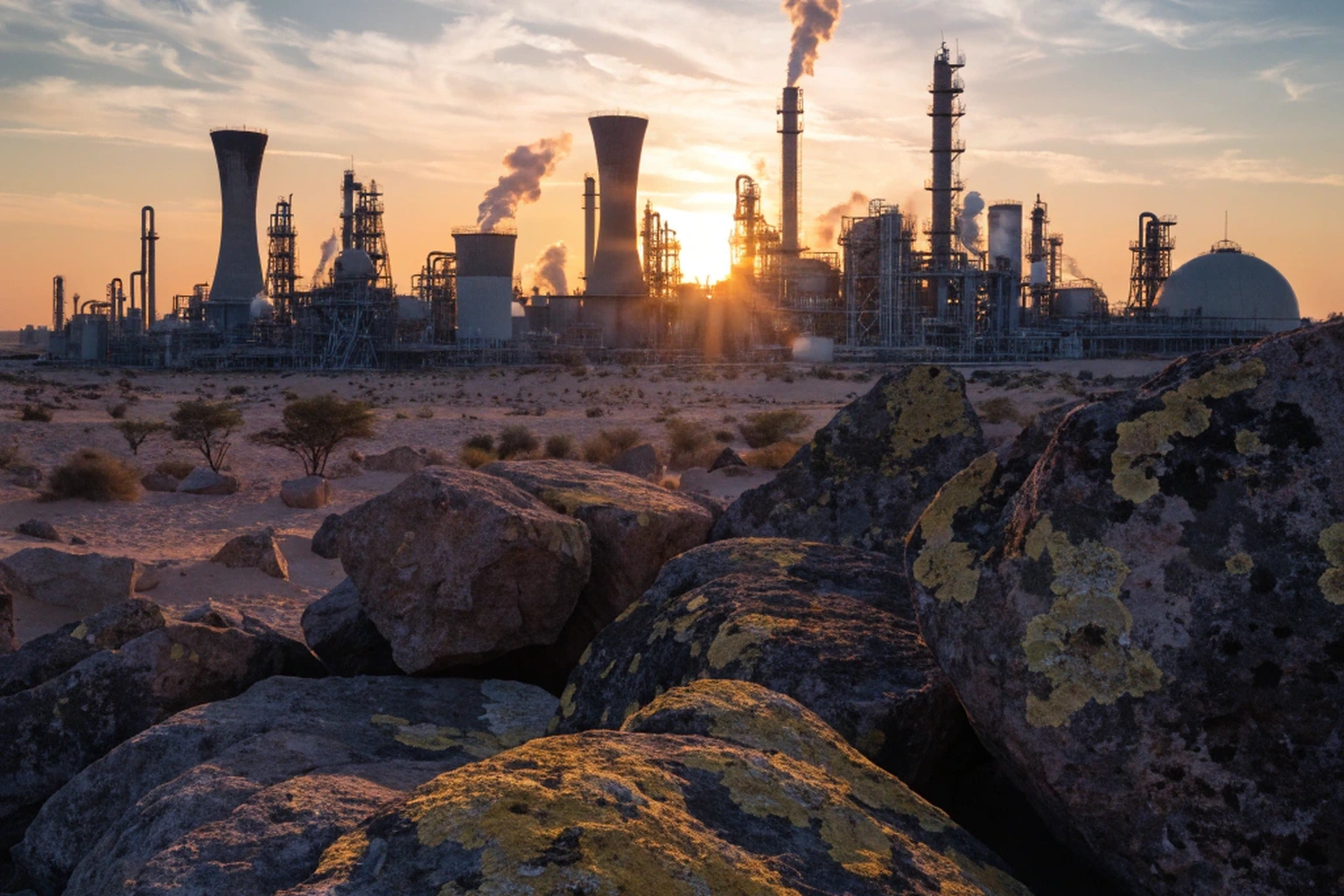
The UAE: Oil and Big Cities
The United Arab Emirates (UAE) is a country in the desert. It has a lot of oil. Oil is very important for the UAE. It is a type of energy.
People get the oil from under the ground. The UAE sells the oil to other countries. This makes a lot of money for the UAE.
With this money, the UAE can build big cities. Cities like Dubai and Abu Dhabi are new and modern. The money from oil helps the country grow. It builds schools and hospitals too.
Point grammaire
Structure: Le Présent Simple
"It has a lot of oil."
On utilise le présent simple pour des faits qui sont toujours vrais. Pour 'he', 'she' ou 'it', on ajoute un 's' à la fin du verbe.
Structure: a lot of + Nom
"This makes a lot of money for the UAE."
On utilise 'a lot of' pour parler d'une grande quantité ou d'un grand nombre de choses. Tu peux l'utiliser pour ce que tu peux compter (comme 'cities') et ce que tu ne peux pas compter (comme 'money').
Teste ta compréhension
10 questions · A1 Débutant · 1 aperçu gratuit
Teste ce que tu as appris dans cet article. Réponds à toutes les questions pour gagner des XP !
Qu'est-ce qui est très important pour les Émirats arabes unis ?
Tu veux terminer le quiz ?
9 questions supplémentaires t'attendent. Inscris-toi gratuitement pour débloquer le quiz complet et gagner des XP !
S'inscrire gratuitementTu as dj un compte ? Connexion
Bien joué !
Continue à pratiquer !
Déjà terminé — pas de XP supplémentaire
Inscris-toi pour gagner des XPDétail des questions
Qu'est-ce qui est très important pour les Émirats arabes unis ?
Ta réponse:
Bonne réponse: le pétrole
Les Émirats arabes unis sont un pays situé dans les montagnes.
Ta réponse:
Bonne réponse: Faux
Que signifie 'build' ?
Ta réponse:
Bonne réponse: fabriquer quelque chose, comme une ville
L'argent du pétrole aide le pays à _____.
Ta réponse:
Bonne réponse: grow
L'or noir et la transformation des Émirats
Avant les années 1960, les Émirats arabes unis étaient composés de petits villages côtiers. L'économie locale était simple : les habitants pêchaient ou cherchaient des perles dans la mer. Mais en 1958, la découverte du pétrole a tout transformé. Ce pétrole est rapidement devenu « l'or noir » du désert.
Grâce à l'argent du pétrole, le pays a construit des infrastructures incroyables. Les villes sont devenues plus grandes et plus modernes que les anciennes cités. À Abu Dhabi, les premières exportations ont commencé en 1962. Depuis ce moment, le pays est devenu une puissance économique mondiale.
Aujourd'hui, les Émirats utilisent cette richesse pour développer le transport et l'éducation. Les routes sont plus rapides et les bâtiments sont plus hauts qu'avant. Cependant, le pays regarde aussi vers l'avenir. Ils investissent maintenant dans l'énergie solaire parce qu'ils veulent protéger l'environnement. Le passage d'une économie de perles à une économie d'énergie moderne est une histoire fascinante.
Point grammaire
Structure: Le comparatif de supériorité
"Les villes sont devenues plus grandes et plus modernes que les anciennes cités."
On utilise 'plus + adjectif + que' pour comparer deux choses. Cela montre qu'une chose a une qualité supérieure à une autre.
Structure: Le passé composé avec avoir
"la découverte du pétrole a tout transformé."
On utilise l'auxiliaire 'avoir' au présent et le participe passé du verbe pour parler d'une action terminée dans le passé.
Teste ta compréhension
11 questions · A2 mentaire · 1 aperçu gratuit
Teste ce que tu as appris dans cet article. Réponds à toutes les questions pour gagner des XP !
Que faisaient les gens avant la découverte du pétrole ?
Tu veux terminer le quiz ?
10 questions supplémentaires t'attendent. Inscris-toi gratuitement pour débloquer le quiz complet et gagner des XP !
S'inscrire gratuitementTu as dj un compte ? Connexion
Bien joué !
Continue à pratiquer !
Déjà terminé — pas de XP supplémentaire
Inscris-toi pour gagner des XPDétail des questions
Que faisaient les gens avant la découverte du pétrole ?
Ta réponse:
Bonne réponse: Ils cherchaient des perles dans la mer.
La première exportation de pétrole à Abu Dhabi a commencé en 1962.
Ta réponse:
Bonne réponse: Vrai
Que signifie l'expression « or noir » ?
Ta réponse:
Bonne réponse: Le pétrole.
Les Émirats utilisent l'_____ du pétrole pour construire des routes.
Ta réponse:
Bonne réponse: argent
Pourquoi le pays investit-il dans l'énergie solaire ?
Ta réponse:
Bonne réponse: Pour protéger l'environnement.
Black Gold: The Energy of the UAE
Before the 1960s, the area that is now the United Arab Emirates was very different. Most people lived in small coastal towns and worked in fishing or pearl diving. Life was simple, but it was also physically difficult. Everything changed when huge amounts of oil, which is often called "black gold," were discovered beneath the desert sands. This discovery has transformed the nation from a quiet region into a modern economic power.
The first commercial oil was exported from Abu Dhabi in 1962. Since that historic moment, the revenue from the hydrocarbon energy sector has been used to build world-class infrastructure. High-speed highways, international airports, and amazing skyscrapers have been constructed across the seven emirates. The Abu Dhabi National Oil Company (ADNOC) plays a central role in this industry. It manages the production of oil and gas and is recognized as one of the leading energy companies in the world.
Today, the UAE is a major player in the global energy market. The country produces millions of barrels of oil every day. Although the government has invested in renewable energy sources like solar power recently, oil and gas remain vital to the economy. Advanced technology has been developed to extract these resources safely and efficiently.
Many engineers and scientists, who come from all over the world, work in the UAE's energy sector. They ensure that production continues without problems. This industry provides thousands of jobs and supports local businesses. The story of oil in the UAE is impressive. It shows how a single natural resource has created opportunities and improved the quality of life for everyone who lives there.
Point grammaire
Structure: Voix Passive
"High-speed highways, international airports, and amazing skyscrapers have been constructed across the seven emirates."
On utilise la voix passive lorsque l'action est plus importante que la personne qui l'accomplit. Ici, 'have been constructed' (ont été construits) met l'accent sur les bâtiments, pas sur les ouvriers qui les ont construits.
Structure: Propositions Relatives
"Everything changed when huge amounts of oil, which is often called 'black gold,' were discovered beneath the desert sands."
Les propositions relatives donnent des informations supplémentaires sur un nom. La phrase 'which is often called 'black gold'' (qui est souvent appelé 'l'or noir') décrit le pétrole sans commencer une nouvelle phrase.
Teste ta compréhension
10 questions · B1 Intermédiaire · 1 aperçu gratuit
Teste ce que tu as appris dans cet article. Réponds à toutes les questions pour gagner des XP !
Quelle était la principale activité économique aux EAU avant la découverte du pétrole ?
Tu veux terminer le quiz ?
9 questions supplémentaires t'attendent. Inscris-toi gratuitement pour débloquer le quiz complet et gagner des XP !
S'inscrire gratuitementTu as dj un compte ? Connexion
Bien joué !
Continue à pratiquer !
Déjà terminé — pas de XP supplémentaire
Inscris-toi pour gagner des XPDétail des questions
Quelle était la principale activité économique aux EAU avant la découverte du pétrole ?
Ta réponse:
Bonne réponse: La pêche aux perles et la pêche
Les EAU ont exporté leur première cargaison de pétrole commercial en 1962.
Ta réponse:
Bonne réponse: Vrai
Que signifie 'revenue' ?
Ta réponse:
Bonne réponse: L'argent reçu par une entreprise ou un gouvernement
Le pétrole et le gaz restent _____ pour l'économie, malgré les investissements dans l'énergie solaire.
Ta réponse:
Bonne réponse: vital
From Pearls to Petroleum: The UAE's Hydrocarbon Journey
The transformation of the United Arab Emirates from a quiet coastal region dependent on pearl diving into a global economic powerhouse is a remarkable narrative of development. This rapid metamorphosis is inextricably linked to the discovery of vast hydrocarbon reserves in the late 1950s. Before the first commercial shipments of crude oil departed from Abu Dhabi’s shores in 1962, the local economy was modest and reliant on maritime trade and fishing. The environment was harsh, and resources were scarce. However, the unearthing of "black gold" beneath the desert sands provided the unprecedented capital required to construct world-class infrastructure. This wealth facilitated the creation of modern cities where skyscrapers now pierce the clouds, replacing the traditional palm-frond houses of the past.
Consequently, the energy sector has become the backbone of the UAE's economy. The substantial revenue generated from oil and gas exports has allowed the government to invest heavily in high-speed transportation networks, futuristic skylines, and advanced educational institutions. Although the nation is currently diversifying its economy into sectors such as tourism, aviation, and finance, hydrocarbons remain a pivotal component of its financial stability. State-owned entities, such as the Abu Dhabi National Oil Company (ADNOC), play a crucial role in managing these resources efficiently. They ensure that production meets global demand while simultaneously fueling domestic growth.
Furthermore, the UAE has strategically positioned itself as a reliable and innovative supplier in the global energy market. By utilizing cutting-edge technology, the country has maximized the extraction of resources while attempting to minimize environmental impact. For instance, digitalization and artificial intelligence are now employed to optimize reservoir management. It is worth noting that despite the global shift towards renewable energy, the demand for petrochemicals continues to rise for use in plastics, pharmaceuticals, and manufacturing. Therefore, the UAE is investing in downstream industries to produce refined products, rather than simply exporting raw crude oil, adding value to their natural resources.
Looking ahead, the sector faces the complex challenge of balancing traditional energy production with modern climate goals. The leadership has demonstrated a strong commitment to reducing carbon intensity. By implementing carbon capture technologies, the UAE aims to maintain its status as a leading energy exporter while adhering to international environmental standards. In conclusion, while the pearl divers of the past have been replaced by petroleum engineers, the spirit of resilience and innovation remains the driving force behind the nation's prosperity.
Point grammaire
Structure: Discourse Markers
"Consequently, the energy sector has become the backbone of the UAE's economy."
Discourse markers like 'Consequently', 'However', and 'Furthermore' are used to connect ideas logically. They help structure the text and guide the reader through arguments.
Structure: Passive Voice
"This rapid metamorphosis is inextricably linked to the discovery of vast hydrocarbon reserves."
The passive voice is often used in academic and formal writing when the focus is on the action or the object, rather than the person doing the action.
Structure: Preposition + Gerund
"The leadership has demonstrated a strong commitment to reducing carbon intensity."
After certain prepositions (like 'to' in the phrase 'commitment to'), verbs must be in the gerund (-ing) form.
Teste ta compréhension
11 questions · B2 Intermédiaire supérieur · 1 aperçu gratuit
Teste ce que tu as appris dans cet article. Réponds à toutes les questions pour gagner des XP !
What was the primary economic activity in the region before the discovery of oil?
Tu veux terminer le quiz ?
10 questions supplémentaires t'attendent. Inscris-toi gratuitement pour débloquer le quiz complet et gagner des XP !
S'inscrire gratuitementTu as dj un compte ? Connexion
Bien joué !
Continue à pratiquer !
Déjà terminé — pas de XP supplémentaire
Inscris-toi pour gagner des XPDétail des questions
What was the primary economic activity in the region before the discovery of oil?
Ta réponse:
Bonne réponse: Pearl diving and fishing
The UAE relies solely on exporting raw crude oil and does not invest in refined products.
Ta réponse:
Bonne réponse: Faux
Which word means 'never having happened or existed in the past'?
Ta réponse:
Bonne réponse: Unprecedented
The energy sector has become the _____ of the UAE's economy.
Ta réponse:
Bonne réponse: backbone
What is the primary role of ADNOC mentioned in the text?
Ta réponse:
Bonne réponse: To manage hydrocarbon resources efficiently
L'Épopée des Hydrocarbures : Le Destin Métamorphosé des Émirats Arabes Unis
L'histoire contemporaine des Émirats arabes unis s'apparente à une odyssée économique dont le point de bascule fut, sans conteste, la découverte de l'or noir. Avant que les premiers gisements ne fussent exploités commercialement à la fin des années 1950, la région n'était qu'une constellation de bourgades côtières vivant au rythme ancestral de la pêche perlière, de la navigation et du commerce maritime. C’est la mise en service des premiers terminaux pétroliers d'Abou Dabi en 1962 qui a scellé le passage définitif d’une économie de subsistance à une puissance géopolitique de premier plan.
L'abondance des ressources en hydrocarbures a permis une transformation structurelle d'une rapidité inouïe, modifiant radicalement le paysage désertique. Non seulement les revenus pétroliers ont-ils financé des infrastructures de classe mondiale et des réseaux de transport ultra-modernes, mais ils ont également favorisé l'émergence d'un État-providence sophistiqué. Toutefois, une analyse critique de ce modèle révèle une dépendance structurelle que les autorités fédérales s'efforcent désormais de nuancer par des politiques de diversification audacieuses.
Nonobstant la richesse générée par l'ADNOC, la compagnie nationale, le pays s'est engagé dans une véritable course contre la montre pour s'affranchir de la rente pétrolière. Si le pétrole demeure, à l'heure actuelle, le pilier central de la croissance, l'investissement massif dans les énergies renouvelables et les technologies de pointe témoigne d'une volonté farouche de pérenniser la prospérité nationale au-delà de l'ère des fossiles. À cet égard, le développement de projets tels que Masdar City illustre parfaitement cette transition paradigmatique : passer d'un simple exportateur de brut à un précurseur de l'innovation énergétique globale.
Inextricablement liée à la richesse de son sous-sol, la destinée des Émirats se joue désormais dans sa capacité à anticiper l'obsolescence programmée des énergies carbonées. La gestion de cette manne financière, loin d'être un long fleuve tranquille, exige une agilité stratégique constante face aux fluctuations du marché mondial. En somme, le secteur des hydrocarbures n'est plus une fin en soi, mais le levier indispensable vers une économie de la connaissance et de la durabilité.
Point grammaire
Structure: La mise en relief (Cleft Sentence)
"C’est la mise en service des premiers terminaux pétroliers d'Abou Dabi en 1962 qui a scellé le passage définitif..."
Utilisé pour insister sur un élément précis de la phrase. On utilise la structure 'C'est... qui/que' pour focaliser l'attention sur le sujet ou l'objet.
Structure: L'inversion du sujet après certains adverbes
"Non seulement les revenus pétroliers ont-ils financé des infrastructures..."
Dans un style soutenu, après l'adverbe 'Non seulement', on inverse le sujet et le verbe auxiliaire pour donner un ton plus formel et rhétorique.
Structure: La nominalisation
"L'abondance des ressources en hydrocarbures a permis une transformation structurelle..."
L'utilisation de noms (abondance, transformation) au lieu de verbes permet de densifier l'information et d'adopter un style journalistique ou académique propre au niveau C1.
Teste ta compréhension
12 questions · C1 Avancé · 1 aperçu gratuit
Teste ce que tu as appris dans cet article. Réponds à toutes les questions pour gagner des XP !
Quelle était l'activité économique principale de la région avant la découverte du pétrole ?
Tu veux terminer le quiz ?
11 questions supplémentaires t'attendent. Inscris-toi gratuitement pour débloquer le quiz complet et gagner des XP !
S'inscrire gratuitementTu as dj un compte ? Connexion
Bien joué !
Continue à pratiquer !
Déjà terminé — pas de XP supplémentaire
Inscris-toi pour gagner des XPDétail des questions
Quelle était l'activité économique principale de la région avant la découverte du pétrole ?
Ta réponse:
Bonne réponse: La pêche perlière et le commerce maritime
Les Émirats arabes unis cherchent activement à réduire leur dépendance aux revenus pétroliers.
Ta réponse:
Bonne réponse: Vrai
Que signifie le mot 'manne' dans le contexte de l'article ?
Ta réponse:
Bonne réponse: Une ressource financière providentielle
Le pays s'est engagé dans une course contre la montre pour _____ de la rente pétrolière.
Ta réponse:
Bonne réponse: s'affranchir
Quel projet est cité comme exemple de la transition vers les énergies renouvelables ?
Ta réponse:
Bonne réponse: Masdar City
Le premier terminal pétrolier d'Abou Dabi a été mis en service en 1950.
Ta réponse:
Bonne réponse: Faux
The Black Gold Paradigm: Analyzing the UAE's Hydrocarbon Metamorphosis
The United Arab Emirates’ metamorphosis from a constellation of quiet coastal enclaves to a global economic powerhouse is inextricably linked to the fortuitous discovery of oil in the late 1950s. Before the inaugural commercial shipments departed Abu Dhabi’s shores in 1962, the region’s economy was predicated heavily on pearl diving, fishing, and maritime trade—industries that were modest in scale and vulnerable to external shocks. The unearthing of 'black gold' beneath the desert sands provided the unprecedented capital requisite to construct world-class infrastructure, high-speed transportation networks, and futuristic metropolises that defy the arid climate. Yet, the narrative of the UAE is not merely one of serendipitous resource extraction; rather, it is a testament to strategic foresight and the astute management of finite endowments.
It is imperative that one acknowledge the duality of the hydrocarbon sector in the Emirates. On one hand, it serves as the ubiquitous bedrock of the national economy, underwriting the generous social welfare systems and ambitious construction projects for which the nation is renowned. The Abu Dhabi National Oil Company (ADNOC), a state-owned titan, exemplifies this hegemony, orchestrating the extraction and refinement processes with clinical precision. However, the leadership has long recognized the precipitous risks associated with reliance on a solitary, volatile commodity. The vicissitudes of the global oil market, characterized by boom-and-bust cycles, have necessitated a paradigm shift towards economic diversification. Consequently, oil revenues are not merely consumed but are meticulously channeled into sovereign wealth funds, ensuring intergenerational equity and shielding the domestic economy from external volatility.
Furthermore, the UAE’s contemporary approach to energy is increasingly characterized by a profound paradox: a major hydrocarbon producer aggressively pursuing sustainability. It is vital that the nation prepare for a post-oil future, a sentiment unequivocally echoed in the government’s 'Energy Strategy 2050'. This strategy aims to ameliorate the carbon footprint of the energy sector by integrating renewable sources, such as solar and nuclear power, into the energy mix. The Barakah Nuclear Energy Plant and the expansive Mohammed bin Rashid Al Maktoum Solar Park stand as monumental evidence of this commitment. Had the leadership not prioritized this transition, the nation might have found itself vulnerable to the shifting global consensus on climate change and the inevitable erosion of fossil fuel dominance.
Moreover, the hydrocarbon sector has catalyzed the development of ancillary industries, fostering a nascent knowledge-based economy. The complex engineering required for offshore drilling and petrochemical processing has spurred innovation in technology and logistics. This technical expertise is now being exported, positioning the UAE not just as a supplier of raw materials, but as a hub of energy-related intellectual property. The integration of artificial intelligence and digitization within the energy sector further underscores this modernization, enhancing efficiency and safety standards to levels previously unimagined. Thus, the oil sector acts as a fulcrum, leveraging traditional assets to lift new, technologically advanced sectors.
Ultimately, the chronicle of the UAE’s hydrocarbon sector is one of profound transformation and strategic adaptation. While the initial catalyst was undoubtedly geological luck, the sustained success of the nation is attributable to prudent governance. As the world transitions towards greener alternatives, the UAE stands at a crossroads, balancing its hydrocarbon heritage with a sustainable future. It remains to be seen how effectively the nation can navigate this complex terrain, but if history is any indicator, the Emirates will continue to evolve, leveraging its black gold to forge a future that is as resilient as it is prosperous.
Point grammaire
Structure: Conditionnel inversé (troisième type)
"Had the leadership not prioritized this transition, the nation might have found itself vulnerable to the shifting global consensus."
Cette structure omet 'if' (si) et inverse le sujet et le verbe auxiliaire ('Had the leadership') pour créer un ton plus formel et littéraire. Elle exprime une situation hypothétique passée et sa conséquence potentielle.
Structure: Subjonctif mandatif
"It is imperative that one acknowledge the duality of the hydrocarbon sector in the Emirates."
Le mode subjonctif utilise la forme de base du verbe ('acknowledge') après des adjectifs exprimant l'importance ou la nécessité (impératif, vital, essentiel). Il souligne l'urgence de l'action.
Structure: Phrase clivée
"It is the ubiquitous bedrock of the national economy that underwrites the generous social welfare systems."
Cette structure ('C'est X que Y') est utilisée pour mettre l'accent sur une partie spécifique de la phrase (le socle de l'économie), la soulignant comme le facteur le plus important.
Teste ta compréhension
12 questions · C2 Maîtrise · 1 aperçu gratuit
Teste ce que tu as appris dans cet article. Réponds à toutes les questions pour gagner des XP !
Selon l'article, comment les EAU atténuent-ils les risques liés à la volatilité du marché pétrolier ?
Tu veux terminer le quiz ?
11 questions supplémentaires t'attendent. Inscris-toi gratuitement pour débloquer le quiz complet et gagner des XP !
S'inscrire gratuitementTu as dj un compte ? Connexion
Bien joué !
Continue à pratiquer !
Déjà terminé — pas de XP supplémentaire
Inscris-toi pour gagner des XPDétail des questions
Selon l'article, comment les EAU atténuent-ils les risques liés à la volatilité du marché pétrolier ?
Ta réponse:
Bonne réponse: En canalisant les revenus vers des fonds souverains et en diversifiant l'économie.
L'article suggère que le succès économique des EAU est uniquement dû à la chance géologique.
Ta réponse:
Bonne réponse: Faux
Quel mot décrit le mieux les 'vicissitudes' du marché mondial ?
Ta réponse:
Bonne réponse: Fluctuations
La 'Stratégie Énergétique 2050' vise à _____ l'empreinte carbone du secteur de l'énergie.
Ta réponse:
Bonne réponse: ameliorate
Quel rôle l'article attribue-t-il au secteur des hydrocarbures par rapport à l'économie de la connaissance ?
Ta réponse:
Bonne réponse: Il catalyse le développement d'industries auxiliaires et d'une expertise technique.
La centrale nucléaire de Barakah est citée comme preuve de l'engagement des EAU en faveur du développement durable.
Ta réponse:
Bonne réponse: Vrai

