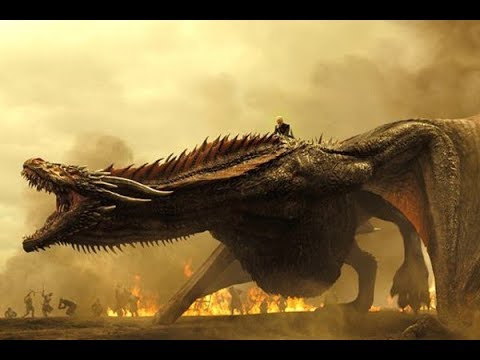
conquest en 30 secondes
- Conquest primarily means taking control of a territory or people through military force, a central theme in world history and the formation of many modern nations.
- Metaphorically, it describes overcoming a significant challenge, such as a fear, a difficult mountain peak, or a complex scientific problem, emphasizing the effort involved.
- In a social context, it can refer to winning someone's affection, though this usage is often viewed as outdated or cynical in modern interpersonal relationships.
- The word is a noun; its verb form is 'conquer.' It is often used with the preposition 'of' to indicate the target of the successful effort.
The word conquest is a powerful noun that describes the act of gaining control over something or someone, typically through significant effort, strategy, or physical force. While its roots are deeply embedded in military history, its modern application has expanded into psychological, romantic, and professional realms. When we speak of a conquest, we are not just talking about a simple win; we are describing a process of overcoming resistance and establishing dominance or mastery. This could be a king seizing a neighboring land, an athlete overcoming a personal record, or a scientist finally understanding a complex biological process. The term carries a weight of finality and achievement that simpler words like 'victory' often lack.
- Military Context
- Historically, a conquest refers to the subjugation of a territory by an invading army. This involves the displacement of existing power structures and the implementation of new laws and governance. The Norman Conquest of 1066 is perhaps the most famous example in English history, fundamentally altering the language and culture of Britain.
The Roman conquest of Gaul changed the course of European history forever.
In a more metaphorical sense, conquest is used to describe the successful navigation of a difficult challenge. If you have a fear of heights and you finally go skydiving, you have achieved a conquest over your phobia. This usage emphasizes the internal struggle and the eventual triumph of the will. It is also frequently used in the context of romantic pursuits, though this can sometimes carry a slightly predatory or outdated connotation, suggesting that winning someone's affection is a game or a battle to be won.
- Romantic Context
- In literature and older social contexts, a 'conquest' might refer to a person whose heart has been won. For example, 'He boasted of his many conquests,' implies he successfully courted many people. In modern times, this can sound a bit cynical.
Climbing Mount Everest was the ultimate conquest for the seasoned mountaineer.
Furthermore, the word is used in business and technology to describe market dominance. When a company enters a new country and successfully displaces local competitors, it is often described as a market conquest. This highlights the strategic planning and aggressive execution required to succeed in a competitive environment. The term suggests a total takeover rather than just a minor gain in market share.
The tech giant's conquest of the smartphone market left little room for smaller players.
- Personal Growth
- Conquest can also refer to the mastery of a skill. Learning a difficult language like Mandarin might be seen as a linguistic conquest for a native English speaker, representing months of hard work and dedication.
Her conquest of the piano concerto was the result of years of practice.
In summary, 'conquest' is a versatile word that spans from the bloody battlefields of history to the quiet triumphs of the human spirit. It denotes a significant achievement that involves overcoming substantial obstacles. Whether it is a physical territory, a person's affection, a market, or a personal fear, a conquest implies a definitive and hard-won success that changes the status quo. It is a word of power, ambition, and ultimate resolution.
The astronaut spoke of the conquest of space as the next great leap for humanity.
Using the word conquest correctly requires an understanding of its grammatical role as a noun and its semantic weight. It is most frequently used with the preposition 'of' to indicate what has been conquered. For example, 'the conquest of space' or 'the conquest of the Aztecs.' It can also be used as a countable noun when referring to specific instances or people. Understanding the collocations—words that naturally go together with 'conquest'—will help you sound more like a native speaker.
- As a Subject
- When 'conquest' is the subject of a sentence, it often drives the action or describes a historical event. 'The conquest brought about massive social changes.' Here, the noun itself is the agent of change.
The conquest of the mountain took three days of grueling climbing.
When used as an object, it usually follows verbs like 'achieve,' 'complete,' 'lead,' or 'celebrate.' You might say, 'The general led the conquest of the northern territories.' In this structure, the focus is on the person or entity performing the action. It is also common to see it used with adjectives that describe the nature of the effort, such as 'rapid,' 'bloody,' 'peaceful,' or 'difficult.'
- Metaphorical Usage
- In non-military settings, 'conquest' often appears in phrases like 'conquest of nature' or 'conquest of disease.' These phrases highlight human ingenuity and the struggle against natural limitations.
Modern medicine's conquest of smallpox is one of humanity's greatest achievements.
Another common way to use 'conquest' is to refer to a person who has been 'won over.' This is often used in a romantic or social sense, sometimes with a touch of irony or humor. For example, 'He introduced his latest conquest to the group.' In this context, 'conquest' functions as a person-noun, referring to the individual themselves rather than the act of winning them over.
She was not just another conquest to him; he truly cared for her.
- Adjective Pairings
- Common adjectives used with conquest include: 'imperial,' 'territorial,' 'spiritual,' 'intellectual,' and 'easy.' Each of these changes the domain of the struggle significantly.
The conquest of the new market required a complete rebranding of the product line.
In academic writing, you will often see 'conquest' used to discuss the effects of colonization. It is a central term in history, sociology, and political science. When writing about these topics, it is important to distinguish between the physical conquest (the military action) and the cultural conquest (the imposition of language, religion, and customs).
Historians debate whether the conquest was driven more by gold or by religious zeal.
Finally, consider the emotional tone of the word. 'Conquest' is rarely neutral. It carries connotations of power, struggle, and often, the suffering of the conquered. Even in positive contexts, like the 'conquest of a disease,' it implies a fierce battle. Use it when you want to evoke this sense of intense struggle and definitive outcome.
The team's conquest of the championship was a testament to their resilience.
You are likely to encounter the word conquest in a variety of specific environments, ranging from educational settings to entertainment. Because it is a word that deals with power and achievement, it is a favorite in narratives that involve high stakes. Understanding these contexts will help you recognize the nuance the speaker or writer intends to convey.
- History Class and Documentaries
- This is the most common place to hear the word. Teachers and narrators use it to describe the expansion of empires. You'll hear about the Spanish conquest of the Americas, the Mongol conquests, or the Islamic conquests. In this context, it is a technical historical term.
The documentary detailed the brutal conquest of the Inca Empire by Pizarro.
In the world of video games, particularly strategy games like 'Civilization,' 'Total War,' or 'Age of Empires,' 'conquest' is a core gameplay mechanic. Players often have a 'conquest victory' condition, where they must defeat all other players through military force. Here, the word is associated with planning, resource management, and tactical execution.
- Literature and Fantasy
- Epic fantasy novels like 'Game of Thrones' or 'The Lord of the Rings' frequently use the word to describe the ambitions of kings and villains. It adds a sense of grandeur and historical weight to the story's events.
Aegon the Conqueror's conquest of the Seven Kingdoms is a central legend in the series.
You will also hear 'conquest' in scientific and motivational contexts. Scientists might talk about the 'conquest of space' or the 'conquest of the deep sea,' referring to the human drive to explore and understand the unknown. Motivational speakers might use it to describe 'the conquest of self,' encouraging people to master their own impulses and fears to achieve their goals.
The conquest of polio was a milestone in 20th-century public health.
- Sports Journalism
- While less common than 'victory' or 'win,' sports writers use 'conquest' to describe a particularly dominant performance or a win against a long-standing rival. It suggests that the winning team didn't just win; they completely overwhelmed their opponent.
The underdog's conquest of the defending champions shocked the sporting world.
Finally, in the business world, 'conquest' is used in marketing and sales. 'Conquest sales' refer to sales made to customers who previously bought from a competitor. It is a 'conquest' because you have successfully 'captured' a customer from the enemy camp. This usage is very common in the automotive industry.
The dealership's new campaign focused on conquest marketing to attract rival brand owners.
In all these contexts, the word 'conquest' maintains its core meaning of overcoming resistance and achieving a significant, often total, victory. Whether it's on a battlefield, a game board, a mountain peak, or a sales floor, the word evokes a sense of struggle and ultimate triumph.
Even though conquest is a relatively straightforward noun, learners often make specific errors in its usage, particularly regarding its tone, prepositions, and confusion with related words. Avoiding these mistakes will make your English sound more precise and natural.
- Confusing 'Conquest' with 'Victory'
- While they are similar, they are not always interchangeable. A 'victory' can be small or temporary (e.g., winning a single game). A 'conquest' implies a more permanent and total takeover or the overcoming of a major obstacle. You wouldn't say 'The conquest of the coin toss,' but you would say 'The conquest of the Everest.'
Incorrect: He celebrated his conquest in the 100-meter dash. (Better: victory)
Another common error is using the wrong preposition. The most natural preposition to follow 'conquest' is 'of.' Learners sometimes use 'over' or 'against,' which, while sometimes understandable, are less common. 'The conquest of the city' is standard; 'The conquest over the city' sounds slightly awkward, though 'victory over' is perfectly fine. This is a subtle but important distinction.
- Tone and Sensitivity
- Using 'conquest' in a romantic context can be risky. If you say someone is your 'latest conquest,' it can sound like you view people as objects to be won rather than individuals to be respected. In modern social settings, this can come across as arrogant or sexist. It's often better to use words like 'partner' or 'relationship' unless you are being intentionally ironic.
Be careful: Referring to a person as a conquest can be seen as very offensive in many cultures.
Learners also sometimes confuse the noun 'conquest' with the verb 'conquer.' Remember that 'conquest' is the thing or the event, while 'conquer' is the action. You cannot 'conquest a country'; you 'conquer a country' or 'achieve the conquest of a country.' This grammatical distinction is vital for clear communication.
Incorrect: Napoleon conquested much of Europe. (Correct: conquered)
- Misusing the Plural
- While 'conquests' is a valid word, it is usually used to refer to a series of military victories or, as mentioned, a series of romantic successes. Using it to describe multiple small wins in a single project might feel like overkill. Reserve the plural for truly significant, separate events.
The king's many conquests expanded the empire to the sea.
Finally, avoid using 'conquest' for purely accidental successes. A conquest requires intent and effort. If you find a twenty-dollar bill on the ground, that is a 'lucky find,' not a 'conquest.' The word implies a goal that was pursued and eventually captured through skill or force.
Incorrect: My conquest of the lottery made me rich. (Better: win)
To truly master the word conquest, it is helpful to compare it with its synonyms and related terms. Each of these words has a slightly different flavor and is appropriate in different situations. Choosing the right one will make your writing more precise and evocative.
- Conquest vs. Victory
- 'Victory' is the most general term. It simply means winning. 'Conquest' is more specific; it implies not just winning, but taking control or mastery over the opponent or the challenge. You have a victory in a game, but a conquest of a territory.
The general's conquest was more than a mere victory; it was the end of the enemy's sovereignty.
'Subjugation' is another related word, but it is much more negative. It focuses on the act of bringing someone under total, often cruel, control. While a conquest can lead to subjugation, 'conquest' often focuses on the achiever's success, whereas 'subjugation' focuses on the victim's loss of freedom.
- Conquest vs. Mastery
- 'Mastery' is often used for skills or internal struggles. While you can say 'conquest of a language,' 'mastery of a language' is more common and sounds more positive. 'Mastery' implies a deep, thorough understanding, while 'conquest' implies the struggle to get there.
Her conquest of the difficult subject eventually led to complete mastery.
'Acquisition' is a more neutral, often business-oriented term. If a company buys another company, it's an 'acquisition.' If it aggressively takes over a market, it might be called a 'conquest.' 'Acquisition' sounds professional and legal; 'conquest' sounds aggressive and powerful.
The firm's conquest of the industry was achieved through several strategic acquisitions.
- Conquest vs. Triumph
- A 'triumph' is a great success or victory. It often implies a public celebration. While a conquest is a triumph, not all triumphs are conquests. A triumph can be a beautiful performance, whereas a conquest usually involves a struggle against an opponent or obstacle.
The conquest of the disease was a triumph for the entire scientific community.
In summary, choose 'conquest' when you want to emphasize the power dynamic, the difficulty of the struggle, and the totality of the result. Use 'victory' for general winning, 'mastery' for skills, 'subjugation' for oppression, and 'triumph' for celebratory success. Understanding these nuances will help you use 'conquest' with the appropriate impact.
The explorer's conquest of the unknown territory was a historic feat.
How Formal Is It?
Le savais-tu ?
The term 'The Conquest' (with a capital C) almost always refers to the Norman Conquest of England in 1066. This event was so significant that it became the definitive meaning of the word in English history.
Guide de prononciation
- Pronouncing the 'n' as a standard 'n' instead of a velar 'ng' sound (/ŋ/).
- Putting the stress on the second syllable (con-QUEST).
- Pronouncing the 'qu' as a 'k' sound instead of 'kw'.
- Making the 'o' in the first syllable too long (like 'cone').
- Dropping the 't' at the end of the word.
Niveau de difficulté
Common in history and literature, usually easy to understand from context.
Requires careful use of prepositions and awareness of tone.
Pronunciation of the 'qu' and stress placement can be tricky.
Clear phonetic profile, though can be confused with 'conquer' in fast speech.
Quoi apprendre ensuite
Prérequis
Apprends ensuite
Avancé
Grammaire à connaître
Noun vs. Verb
Use 'conquest' as a noun (The conquest was successful) and 'conquer' as a verb (They conquered the city).
Preposition 'Of'
The standard pattern is 'conquest of [object]'. Example: 'The conquest of the peak'.
Countability
'Conquest' can be countable (He had many conquests) or uncountable (Conquest is a theme in history).
Adjective Placement
Adjectives usually come before 'conquest' to describe it. Example: 'A bloody conquest'.
Possessive Usage
You can use possessive nouns or pronouns with conquest. Example: 'Napoleon's conquest' or 'His conquest'.
Exemples par niveau
The king made a great conquest of the new land.
Le roi a fait une grande conquête de la nouvelle terre.
Noun phrase: 'conquest of the new land'.
Learning to read was a small conquest for the child.
Apprendre à lire était une petite conquête pour l'enfant.
Metaphorical use for a personal achievement.
The story is about a conquest in a far-off country.
L'histoire parle d'une conquête dans un pays lointain.
Used as a general noun.
His conquest of the game made him very happy.
Sa conquête du jeu l'a rendu très heureux.
Informal use for winning a game.
They celebrated the conquest of the mountain.
Ils ont célébré la conquête de la montagne.
Refers to reaching the summit.
Is this a conquest or just a small win?
Est-ce une conquête ou juste une petite victoire ?
Question form comparing two nouns.
The conquest of the island took a long time.
La conquête de l'île a pris beaucoup de temps.
Subject of the sentence.
She felt like a queen after her conquest.
Elle se sentait comme une reine après sa conquête.
Used with a possessive adjective 'her'.
The Roman conquest of Britain changed the country.
La conquête romaine de la Bretagne a changé le pays.
Historical proper noun usage.
His conquest of the difficult exam was a big surprise.
Sa conquête de l'examen difficile a été une grande surprise.
Metaphorical use for academic success.
The explorer wrote about his conquest of the jungle.
L'explorateur a écrit sur sa conquête de la jungle.
Focus on overcoming natural obstacles.
The conquest of the city happened many years ago.
La conquête de la ville a eu lieu il y a de nombreuses années.
Passive context (happened).
He was proud of his conquest over his fear of dogs.
Il était fier de sa conquête de sa peur des chiens.
Preposition 'over' used with a psychological barrier.
The book tells the tale of a heroic conquest.
Le livre raconte l'histoire d'une conquête héroïque.
Adjective 'heroic' modifying 'conquest'.
Their conquest of the market was very fast.
Leur conquête du marché a été très rapide.
Business context.
The general led the conquest of the northern lands.
Le général a mené la conquête des terres du nord.
Verb 'led' with 'conquest' as the object.
The conquest of space began with the launch of Sputnik.
La conquête de l'espace a commencé avec le lancement de Spoutnik.
Standard phrase for scientific exploration.
She viewed the promotion as a personal conquest.
Elle considérait la promotion comme une conquête personnelle.
Metaphorical use for career advancement.
The Norman Conquest of 1066 is a key date in history.
La conquête normande de 1066 est une date clé de l'histoire.
Proper historical event name.
The conquest of smallpox was a major medical victory.
La conquête de la variole a été une victoire médicale majeure.
Scientific context for eradicating a disease.
He spoke of his romantic conquests with a bit of pride.
Il parlait de ses conquêtes amoureuses avec un peu de fierté.
Plural usage in a social context.
The conquest of the mountain required great physical effort.
La conquête de la montagne a nécessité un grand effort physique.
Emphasizes the difficulty of the task.
The company's conquest of the tech industry was complete.
La conquête de l'industrie technologique par l'entreprise était totale.
Describes total market dominance.
The film explores the brutal reality of territorial conquest.
Le film explore la réalité brutale de la conquête territoriale.
Adjective 'territorial' specifies the type.
The rapid conquest of the region surprised military analysts.
La conquête rapide de la région a surpris les analystes militaires.
Adjective 'rapid' and noun 'analysts'.
The conquest of the deep sea remains a challenge for science.
La conquête des abysses reste un défi pour la science.
Abstract scientific goal.
Historians study the social effects of the Spanish conquest.
Les historiens étudient les effets sociaux de la conquête espagnole.
Academic context.
His conquest of the piano concerto was the result of years of practice.
Sa conquête du concerto pour piano était le résultat d'années de pratique.
Mastery of a difficult artistic work.
The novel depicts the conquest of a young woman's heart.
Le roman dépeint la conquête du cœur d'une jeune femme.
Literary/Romantic metaphor.
The conquest of new markets is essential for the company's growth.
La conquête de nouveaux marchés est essentielle à la croissance de l'entreprise.
Economic/Strategic usage.
The conquest of Everest has become almost routine for some.
La conquête de l'Everest est devenue presque routinière pour certains.
Refers to a well-known difficult feat.
The spiritual conquest of the population was a goal of the mission.
La conquête spirituelle de la population était un objectif de la mission.
Refers to religious conversion.
The conquest of nature through technology has led to unforeseen consequences.
La conquête de la nature par la technologie a entraîné des conséquences imprévues.
Philosophical/Environmental context.
The linguistic conquest of the empire was achieved by making the conqueror's tongue mandatory.
La conquête linguistique de l'empire a été réalisée en rendant obligatoire la langue du conquérant.
Sociolinguistic term.
The author critiques the idea of romantic conquest as inherently predatory.
L'auteur critique l'idée de conquête amoureuse comme étant intrinsèquement prédatrice.
Literary criticism.
The conquest of the atom opened up both incredible power and terrible danger.
La conquête de l'atome a ouvert à la fois une puissance incroyable et un danger terrible.
Scientific/Historical metaphor.
The documentary examines the psychological conquest of the prisoners.
Le documentaire examine la conquête psychologique des prisonniers.
Refers to breaking someone's will.
The market conquest was facilitated by a series of hostile takeovers.
La conquête du marché a été facilitée par une série d'offres publiques d'achat hostiles.
Corporate/Financial context.
Her conquest of the legal system's complexities made her a top lawyer.
Sa conquête des complexités du système juridique a fait d'elle une avocate de premier plan.
Mastery of a complex system.
The conquest of the air changed the way humans perceive distance.
La conquête de l'air a changé la façon dont les humains perçoivent la distance.
Refers to the invention of flight.
The conquest of the sublime in 18th-century art reflected a new relationship with the wild.
La conquête du sublime dans l'art du XVIIIe siècle reflétait une nouvelle relation avec le sauvage.
Art historical/Philosophical context.
The sheer scale of the territorial conquest necessitated a complex administrative overhaul.
L'ampleur même de la conquête territoriale a nécessité une refonte administrative complexe.
Formal academic tone.
The conquest of the self, as advocated by the Stoics, is a lifelong endeavor.
La conquête de soi, telle que préconisée par les stoïciens, est une entreprise de toute une vie.
Philosophical concept.
The film portrays the cultural conquest as a slow erosion of indigenous identity.
Le film dépeint la conquête culturelle comme une lente érosion de l'identité indigène.
Sociological critique.
The conquest of the digital landscape by a few corporations raises significant ethical concerns.
La conquête du paysage numérique par quelques entreprises soulève d'importantes préoccupations éthiques.
Contemporary social commentary.
His conquest of the mathematical proof was hailed as a stroke of genius.
Sa conquête de la preuve mathématique a été saluée comme un coup de génie.
Intellectual achievement.
The conquest of the narrative by the state is a hallmark of totalitarian regimes.
La conquête du récit par l'État est une caractéristique des régimes totalitaires.
Political science terminology.
The conquest of the deep space remains the ultimate frontier for human ambition.
La conquête de l'espace profond reste l'ultime frontière de l'ambition humaine.
Grand, visionary tone.
Synonymes
Antonymes
Collocations courantes
Phrases Courantes
— The 11th-century invasion and occupation of England by an army of Normans, Bretons, Flemish, and French soldiers led by Duke William II of Normandy.
The Norman Conquest changed the English language forever.
— A person whose affection someone has recently won.
He introduced his new conquest to his friends at the party.
— The development of aviation and the ability of humans to fly.
The Wright brothers' flight marked the beginning of the conquest of the air.
— The act of gaining control over one's own desires, fears, and impulses.
Meditation can be a path toward the conquest of the self.
— The first successful climb to the summit of Mount Everest.
The conquest of Everest in 1953 was a global sensation.
— The act of taking over land that belongs to another country or group.
The era of territorial conquest in Europe ended after World War II.
— Successfully dominating a particular area of business or trade.
The company's conquest of the market was due to its innovative technology.
— The successful eradication or control of a widespread illness.
The conquest of polio is one of the 20th century's greatest triumphs.
— The process where one language replaces another, often due to political power.
The linguistic conquest of the region led to the loss of many local dialects.
— A victory or achievement that was reached with very little effort.
Winning the first round was an easy conquest for the champion.
Souvent confondu avec
Victory is just winning; conquest is winning and taking control.
Conquer is the verb (the action); conquest is the noun (the event or result).
Acquisition is more neutral and business-like; conquest is more aggressive.
Expressions idiomatiques
— To win someone's love or admiration, often through charm or effort.
She made a conquest of the entire audience with her performance.
literary/slightly dated— Winning someone's deep affection or love.
The story is about the slow conquest of the heart of a lonely man.
romantic— Gaining mastery over a difficult intellectual concept or changing someone's opinion.
The philosopher's work was a true conquest of the mind.
academic— To stop trying because you are satisfied with your past successes.
After winning the award, he didn't rest on his conquests but started a new project.
neutral— Successfully overcoming something that makes you afraid.
Public speaking was his greatest challenge, but he achieved the conquest of fear.
motivational— A victory or achievement so great that it will be remembered for a very long time.
The exploration of Mars will be a conquest for the ages.
grand/rhetorical— The last and most important victory in a series of struggles.
Winning the championship was the final conquest of his long career.
neutral— Humanity's success in controlling or harnessing natural forces.
Building the bridge was hailed as another conquest of nature.
philosophical— Exploring and understanding things that were previously mysterious.
Science is a continuous conquest of the unknown.
inspirational— To be the most recent person someone has successfully courted (often used cynically).
She didn't want to be just another of his latest conquests.
informal/cynicalFacile à confondre
They are different parts of speech from the same root.
'Conquer' is a verb meaning to defeat or overcome. 'Conquest' is a noun meaning the act of conquering or the thing that has been conquered. You use 'conquer' for the action and 'conquest' for the concept or the event.
He tried to conquer his fear (verb), and his eventual conquest of it was inspiring (noun).
Both mean winning.
'Victory' is a general term for winning a struggle or competition. 'Conquest' implies a more complete and permanent takeover, often involving territory or total mastery. A victory can be small, but a conquest is usually significant.
The team had a victory in the game, but the empire achieved a conquest of the continent.
Both describe great success.
'Triumph' emphasizes the emotion of joy and the public celebration of a success. 'Conquest' focuses more on the power dynamic and the act of gaining control. You can have a triumph in an artistic performance, but not a conquest.
Her performance was a triumph, while the general's campaign was a conquest.
Both involve taking control.
'Subjugation' is a much harsher term that focuses on the oppression and lack of freedom of the people who were defeated. 'Conquest' is more neutral and can even be positive (e.g., conquest of a disease).
The conquest of the region was followed by the brutal subjugation of its people.
Both mean getting something.
'Acquisition' is a formal, often legal or business term for getting property or knowledge. 'Conquest' implies a struggle or a fight to get it. You 'acquire' a house, but you 'conquest' a market.
The acquisition of the new company was part of their market conquest strategy.
Structures de phrases
The [Person]'s conquest of [Place].
The king's conquest of the land.
It was a [Adjective] conquest.
It was a big conquest.
The conquest of [Thing] took [Time].
The conquest of the mountain took three days.
[Person] led the conquest of [Place].
The general led the conquest of the city.
The [Type] conquest resulted in [Consequence].
The linguistic conquest resulted in the loss of the local tongue.
Viewing [Action] as a conquest.
Viewing the promotion as a personal conquest.
The conquest of [Abstract Concept] is [Description].
The conquest of the self is a lifelong journey.
A conquest for [Group/Time].
A conquest for the ages.
Famille de mots
Noms
Verbes
Adjectifs
Apparenté
Comment l'utiliser
Common in history, science, and literature; less common in daily casual speech.
-
He conquested the mountain.
→
He conquered the mountain.
'Conquest' is a noun, not a verb. You must use the verb 'conquer' for the action.
-
The conquest over the city was fast.
→
The conquest of the city was fast.
While 'victory over' is common, 'conquest' is almost always followed by the preposition 'of'.
-
I had a conquest in the tennis match.
→
I had a victory in the tennis match.
'Conquest' is too strong for a simple sports game; it implies taking total control or ownership.
-
She is my latest conquest.
→
She is my new partner.
Using 'conquest' for people can be seen as very offensive or objectifying in modern English.
-
The conquest of the lottery was lucky.
→
The lottery win was lucky.
A 'conquest' requires effort and strategy, not just luck. You don't 'conquest' something by chance.
Astuces
Use 'of' for the target
Always follow 'conquest' with 'of' when you want to name what was conquered. For example, 'the conquest of the mountain' or 'the conquest of the market.' This is the most natural-sounding pattern.
Distinguish from 'victory'
Use 'conquest' when there is a sense of permanent control or a very high level of difficulty. Use 'victory' for more general or temporary wins, like a single sports match or a board game.
Don't use as a verb
Remember that 'conquest' is a noun. If you need an action word, use 'conquer.' You can say 'The conquest was hard' but you must say 'They conquered the enemy.' Mixing these up is a common error.
Be careful in romance
Using 'conquest' to describe a person you are dating can sound arrogant or objectifying. Use it only if you are sure the listener understands you are being ironic or if you are writing in an older literary style.
Historical sensitivity
When writing about history, remember that 'conquest' often implies suffering for the people who were conquered. Use it as a technical term, but be aware of the power dynamics it describes.
Pair with strong adjectives
Conquest often goes well with adjectives like 'bloody,' 'rapid,' 'imperial,' 'personal,' or 'intellectual.' These help to clarify what kind of struggle you are talking about.
Market dominance
In a business context, use 'conquest' to describe a company that has completely taken over a new market or displaced its competitors. It sounds more powerful than just 'growth' or 'expansion.'
Overcoming fears
Use 'conquest' to describe a major personal breakthrough. For example, 'His conquest of his fear of flying changed his life.' It emphasizes that the fear was a major obstacle that required effort to beat.
Human achievement
In science, 'conquest' is a great word for the eradication of a disease or the mastery of a new technology. It frames the achievement as a victory for all of humanity over a natural challenge.
Avoid overusing
Because 'conquest' is such a strong word, using it too often can make your writing sound overly dramatic. Save it for truly significant events or achievements to maintain its impact.
Mémorise-le
Moyen mnémotechnique
Think of a 'CON' (confidence) 'QUEST' (a long journey). To achieve a CONQUEST, you need a lot of confidence to finish your quest.
Association visuelle
Imagine a knight planting a flag on top of a high mountain. The flag represents the 'conquest' of the peak.
Word Web
Défi
Try to use 'conquest' in three different ways today: once for a historical fact, once for a personal goal you reached, and once for a difficult skill you are learning.
Origine du mot
The word 'conquest' comes from the Old French word 'conqueste,' which was derived from the Vulgar Latin 'conquaerere.' The Latin root is composed of 'com-' (an intensive prefix) and 'quaerere' (to seek, search for, or procure). This suggests that a conquest is the result of an intensive search or pursuit that ends in acquisition.
Sens originel : In its earliest usage, it meant the act of acquiring or getting something, not necessarily through force. It eventually evolved to specifically mean the acquisition of territory through military victory.
Indo-European (Latin branch via French).Contexte culturel
Be aware that using 'conquest' in relation to colonial history can be a sensitive topic, as it often involves the suffering of conquered peoples. In romantic contexts, it can be perceived as objectifying.
In the UK, 'The Conquest' is a primary historical reference point (1066). In the US, 'conquest' is often used in the context of the 'conquest of the West' (frontier history).
Pratique dans la vie réelle
Contextes réels
History
- The Spanish conquest
- Era of conquest
- Wars of conquest
- Conquest and colonization
Personal Achievement
- A personal conquest
- Conquest of a fear
- Conquest of a skill
- Ultimate conquest
Science and Exploration
- Conquest of space
- Conquest of disease
- Conquest of the air
- Scientific conquest
Business
- Market conquest
- Conquest sales
- Conquest marketing
- Competitive conquest
Romance
- Romantic conquest
- Conquest of the heart
- Latest conquest
- Make a conquest
Amorces de conversation
"What do you think was the most significant conquest in human history?"
"Do you believe the conquest of space is worth the high cost?"
"Have you ever had a personal conquest that you are particularly proud of?"
"How does the meaning of 'conquest' change when we talk about nature versus people?"
"Is it possible to have a 'peaceful conquest' in the modern business world?"
Sujets d'écriture
Write about a time you achieved a personal conquest over a fear or a difficult challenge. What steps did you take?
Reflect on the impact of the Norman Conquest on the English language. How would English be different today without it?
Do you think the term 'conquest' is still appropriate to use in romantic contexts? Why or why not?
Describe a scientific conquest that you believe has changed the world for the better.
Imagine you are an explorer in the future. Describe your conquest of a new planet.
Questions fréquentes
10 questionsNo, it is not always negative. While it has a violent history in military contexts, it is often used positively in science (conquest of disease) and personal growth (conquest of fear). In these cases, it signifies a great and beneficial achievement. However, when used about people or cultures, it often carries negative connotations of force and loss of freedom.
'Conquest' is a noun that refers to the completed act or the result of winning control. 'Conquering' is the gerund or present participle of the verb 'conquer,' which focuses on the ongoing process of taking control. For example, 'The conquest of the city' (it's done) vs. 'The conquering of the city' (it's happening now).
You can, but it sounds very dramatic and strong. It's more common to use 'victory' or 'win.' If you use 'conquest,' you are implying that the win was incredibly dominant or that it was a very difficult, long-term goal. For example, 'The team's conquest of the championship' sounds more significant than just 'winning the game.'
In romance, a 'conquest' is someone whose love or attention you have won. For example, 'She was his latest conquest.' However, be careful! In modern English, this can sound like you are treating people like trophies or objects. It is often better to use more respectful words like 'partner' or 'date' unless you are being ironic.
It refers to the human effort to explore and travel through outer space. It's called a 'conquest' because space is a very difficult and dangerous environment to master. The term highlights the bravery, technology, and effort required to reach the moon or other planets.
Yes, 'conquest' is generally considered a formal or semi-formal word. You will see it often in history books, academic papers, and serious journalism. In casual conversation, people are more likely to use simpler words like 'win' or 'success,' unless they are talking about something very significant.
The Norman Conquest was the invasion of England in 1066 by William the Conqueror from Normandy (now part of France). It is one of the most important events in English history because it changed the ruling class, the laws, and the English language itself.
No, 'conquest' is only a noun. The verb form is 'conquer.' You cannot say 'He conquested the land.' You must say 'He conquered the land' or 'He achieved the conquest of the land.' This is a very common mistake for English learners.
In business, especially the car industry, 'conquest sales' are sales made to customers who previously bought from a different brand. It's called a 'conquest' because the company has successfully 'captured' a customer from a competitor.
It is a philosophical and psychological idea about mastering your own emotions, fears, and bad habits. Instead of trying to control other people or the world, you focus on controlling yourself. It is considered a very high level of personal achievement.
Teste-toi 200 questions
Describe a personal conquest you have achieved in your life. What was the challenge, and how did you overcome it?
Well written! Good try! Check the sample answer below.
Write a short paragraph about a historical conquest you know about. What were the consequences of this event?
Well written! Good try! Check the sample answer below.
Explain the difference between a 'victory' and a 'conquest' using your own examples.
Well written! Good try! Check the sample answer below.
Do you think the 'conquest of space' is important for humanity? Why or why not?
Well written! Good try! Check the sample answer below.
Discuss the ethical implications of 'territorial conquest' in the modern world.
Well written! Good try! Check the sample answer below.
Write a story about a knight's conquest of a magical castle.
Well written! Good try! Check the sample answer below.
How can a company achieve a 'market conquest'? Describe a strategy they might use.
Well written! Good try! Check the sample answer below.
Reflect on the idea of 'conquest of the self.' Is it possible to truly master oneself?
Well written! Good try! Check the sample answer below.
Describe the 'conquest of a disease' and how it impacts society.
Well written! Good try! Check the sample answer below.
Write a dialogue between two people discussing their 'romantic conquests.' (Use a respectful or ironic tone).
Well written! Good try! Check the sample answer below.
What does 'linguistic conquest' mean to you? Have you seen examples of it?
Well written! Good try! Check the sample answer below.
Write a poem about the conquest of a high mountain peak.
Well written! Good try! Check the sample answer below.
Discuss the role of technology in the 'conquest of nature.'
Well written! Good try! Check the sample answer below.
Imagine a future conquest of another planet. What would the challenges be?
Well written! Good try! Check the sample answer below.
How does the Norman Conquest still affect the English language today?
Well written! Good try! Check the sample answer below.
Is 'conquest' a word that should be used in the 21st century? Why or why not?
Well written! Good try! Check the sample answer below.
Describe an 'intellectual conquest' you have experienced in school or work.
Well written! Good try! Check the sample answer below.
Write a news report about a major business conquest.
Well written! Good try! Check the sample answer below.
What are the dangers of a 'spiritual conquest' of a population?
Well written! Good try! Check the sample answer below.
Summarize the main points of the 'conquest of Everest' story.
Well written! Good try! Check the sample answer below.
Tell a partner about a time you felt you achieved a 'conquest' over a difficult task.
Read this aloud:
Tu as dit :
Speech recognition is not supported in your browser. Try Chrome or Edge.
Discuss with a group: Is the 'conquest of space' the most important goal for science today?
Read this aloud:
Tu as dit :
Speech recognition is not supported in your browser. Try Chrome or Edge.
Explain the meaning of the 'Norman Conquest' to someone who doesn't know history.
Read this aloud:
Tu as dit :
Speech recognition is not supported in your browser. Try Chrome or Edge.
Role-play a business meeting where you plan a 'market conquest' strategy.
Read this aloud:
Tu as dit :
Speech recognition is not supported in your browser. Try Chrome or Edge.
Give a short speech about the 'conquest of fear.'
Read this aloud:
Tu as dit :
Speech recognition is not supported in your browser. Try Chrome or Edge.
Debate: Is 'conquest' a word that should be used in romantic relationships?
Read this aloud:
Tu as dit :
Speech recognition is not supported in your browser. Try Chrome or Edge.
Describe the 'conquest of a mountain' using as many descriptive adjectives as possible.
Read this aloud:
Tu as dit :
Speech recognition is not supported in your browser. Try Chrome or Edge.
Talk about a 'scientific conquest' that you think is very important.
Read this aloud:
Tu as dit :
Speech recognition is not supported in your browser. Try Chrome or Edge.
How would you describe the 'conquest of the digital world' to an older person?
Read this aloud:
Tu as dit :
Speech recognition is not supported in your browser. Try Chrome or Edge.
What are the pros and cons of 'territorial conquest' in history?
Read this aloud:
Tu as dit :
Speech recognition is not supported in your browser. Try Chrome or Edge.
Explain the concept of 'conquest of the self' to a friend.
Read this aloud:
Tu as dit :
Speech recognition is not supported in your browser. Try Chrome or Edge.
Tell a story about a 'heroic conquest' from a book or movie.
Read this aloud:
Tu as dit :
Speech recognition is not supported in your browser. Try Chrome or Edge.
Discuss the 'linguistic conquest' of your own country or region.
Read this aloud:
Tu as dit :
Speech recognition is not supported in your browser. Try Chrome or Edge.
What does 'market conquest' look like in the smartphone industry?
Read this aloud:
Tu as dit :
Speech recognition is not supported in your browser. Try Chrome or Edge.
Describe the 'conquest of the air' and how it changed the world.
Read this aloud:
Tu as dit :
Speech recognition is not supported in your browser. Try Chrome or Edge.
How do you feel about the word 'conquest'? Does it sound positive or negative to you?
Read this aloud:
Tu as dit :
Speech recognition is not supported in your browser. Try Chrome or Edge.
Talk about a 'personal conquest' you hope to achieve in the next year.
Read this aloud:
Tu as dit :
Speech recognition is not supported in your browser. Try Chrome or Edge.
What is the most difficult 'conquest' a person can make?
Read this aloud:
Tu as dit :
Speech recognition is not supported in your browser. Try Chrome or Edge.
How has the 'conquest of nature' affected the environment?
Read this aloud:
Tu as dit :
Speech recognition is not supported in your browser. Try Chrome or Edge.
Summarize the 'conquest of Everest' in two minutes.
Read this aloud:
Tu as dit :
Speech recognition is not supported in your browser. Try Chrome or Edge.
Listen for the word 'conquest' in a history podcast. What event are they talking about?
In a news report about a tech company, how is 'conquest' used?
Listen to a motivational speaker. What 'conquest' are they encouraging?
In a documentary about space, what does the narrator say about the 'conquest of the moon'?
Listen to a discussion about colonial history. How is the word 'conquest' critiqued?
In a romantic movie, a character mentions their 'conquests.' What is the tone of the scene?
Listen to a scientist talk about the 'conquest of cancer.' What progress have they made?
In a business presentation, what is meant by 'conquest sales targets'?
Listen to a poem about a mountain. How is the 'conquest' described?
In a lecture on linguistics, what is 'linguistic conquest'?
Listen to a story about a king. What was his first conquest?
In a sports commentary, why is the win called a 'conquest'?
Listen to a philosopher talk about 'conquest of the self.' What is the first step?
In a travel guide, what is the 'conquest of the peak'?
Listen to a debate about the environment. How is 'conquest of nature' used?
/ 200 correct
Perfect score!
Summary
The word 'conquest' signifies a definitive and hard-won victory that results in control or mastery. Whether used literally for military takeovers or metaphorically for personal achievements, it emphasizes the struggle and the totality of the success. Example: 'The conquest of polio was a landmark achievement for global health.'
- Conquest primarily means taking control of a territory or people through military force, a central theme in world history and the formation of many modern nations.
- Metaphorically, it describes overcoming a significant challenge, such as a fear, a difficult mountain peak, or a complex scientific problem, emphasizing the effort involved.
- In a social context, it can refer to winning someone's affection, though this usage is often viewed as outdated or cynical in modern interpersonal relationships.
- The word is a noun; its verb form is 'conquer.' It is often used with the preposition 'of' to indicate the target of the successful effort.
Use 'of' for the target
Always follow 'conquest' with 'of' when you want to name what was conquered. For example, 'the conquest of the mountain' or 'the conquest of the market.' This is the most natural-sounding pattern.
Distinguish from 'victory'
Use 'conquest' when there is a sense of permanent control or a very high level of difficulty. Use 'victory' for more general or temporary wins, like a single sports match or a board game.
Don't use as a verb
Remember that 'conquest' is a noun. If you need an action word, use 'conquer.' You can say 'The conquest was hard' but you must say 'They conquered the enemy.' Mixing these up is a common error.
Be careful in romance
Using 'conquest' to describe a person you are dating can sound arrogant or objectifying. Use it only if you are sure the listener understands you are being ironic or if you are writing in an older literary style.