









cymothoa en 30 secondes
- A genus of marine parasitic isopods famous for replacing fish tongues.
- Commonly known as the 'tongue-eating louse' due to its unique behavior.
- Functions as a mechanical replacement for the host's atrophied tongue.
- A key example of specialized host-parasite co-evolution in marine biology.
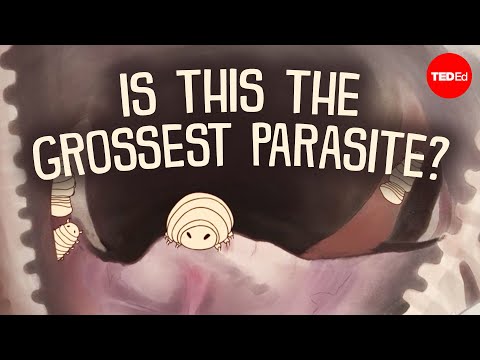
The term cymothoa refers to a specific genus of marine isopods that are classified within the family Cymothoidae. These creatures are not merely simple crustaceans; they represent one of the most fascinating and, to some, horrifying examples of specialized parasitism in the natural world. When people use this word, they are usually discussing marine biology, ecology, or the bizarre mechanisms of evolution. The most famous species within this genus is Cymothoa exigua, commonly known as the 'tongue-eating louse.' This organism has gained significant notoriety in popular science and digital media due to its unique life cycle. It enters a fish's body through the gills, attaches itself to the base of the fish's tongue, and proceeds to extract blood from the organ. Over time, the lack of blood flow causes the fish's tongue to atrophy and eventually fall off. The cymothoa then attaches itself to the remaining muscular stub, effectively replacing the fish's tongue with its own body. Remarkably, the fish is able to use the parasite as a functional tongue without any further apparent harm to its overall health, other than the loss of the original organ.
- Biological Classification
- Cymothoa belongs to the order Isopoda, making them distant relatives of the common woodlouse found in gardens, though they have adapted for a strictly aquatic and parasitic lifestyle.
The researcher spent years documenting the symbiotic-like relationship between the snapper fish and the cymothoa that had taken up residence in its mouth.
In scientific discourse, the word is used with precision to describe the genus. However, in more casual or literary contexts, 'cymothoa' might be used as a metaphor for an invasive presence that replaces a vital part of a host system. It is a word that evokes themes of replacement, biological ingenuity, and the darker side of nature's adaptations. Marine biologists use the term when surveying fish populations, as the presence of cymothoa can indicate specific environmental conditions or the health of a particular ecosystem. Because these parasites are host-specific, meaning certain species of cymothoa only target certain species of fish, they are excellent subjects for studying co-evolution. The relationship is so specialized that the parasite's body shape often mirrors the space it occupies within the host's oral cavity.
- Ecological Niche
- These organisms function as ectoparasites, meaning they live on the outside of the host's internal tissues, specifically targeting the buccal cavity.
Finding a cymothoa in a commercial fish catch can be a startling experience for those unfamiliar with marine parasitology.
The word is also frequently encountered in 'weird nature' documentaries or internet trivia lists. It serves as a prime example of 'functional replacement' in biology. Unlike many parasites that simply drain energy from their host, the cymothoa provides a mechanical service—acting as a tongue—to ensure the host remains alive and capable of feeding, which in turn ensures the parasite's own survival. This level of biological integration is rare and provides a rich area for research into immunology and tissue compatibility. When discussing the cymothoa, one often touches upon the fine line between parasitism and mutualism, although the initial destruction of the host's tongue firmly categorizes it as a parasite. The term is essential for anyone studying the diversity of life in the oceans, particularly those interested in the complex interactions between different species.
The evolutionary trajectory of the cymothoa suggests a highly refined method of host exploitation that minimizes lethality.
- Morphological Adaptation
- The legs of the cymothoa are equipped with strong hooks to maintain a firm grip within the turbulent environment of a fish's mouth.
Biologists are intrigued by how the cymothoa avoids the host's immune response while being so intimately attached.
Ultimately, the word cymothoa is a gateway into understanding the sheer variety of survival strategies on Earth. It challenges our perceptions of what is 'normal' in nature and highlights the intricate, often bizarre, ways that life forms have adapted to their environments. Whether used in a classroom, a laboratory, or a casual conversation about the wonders of the sea, it carries a weight of scientific curiosity and evolutionary wonder. It is a term that reminds us that the ocean still holds many secrets, some of which are as strange as any science fiction. By studying the cymothoa, we gain insights into the limits of biological plasticity and the complex dance of life and death that occurs beneath the waves every day.
The discovery of a new cymothoa species in the deep Atlantic provided new data on isopod distribution.
Using the word cymothoa correctly requires an understanding of its noun form and its specific biological context. It is primarily used as a singular or plural noun to refer to the genus or an individual member of that genus. Because it is a scientific name, it often appears in academic writing, but it can also be used in descriptive prose to add a layer of biological realism or to create a sense of unease. When constructing sentences, it is important to distinguish between the genus itself and the specific behavior it is known for. For instance, one might say, 'The cymothoa is a parasite,' or 'Several cymothoa were found in the catch.' In formal writing, the genus name should be italicized and capitalized (Cymothoa), while in general discussion, it is often treated as a common noun.
- Subject-Verb Agreement
- When referring to the genus as a whole, use singular verbs: 'Cymothoa represents a unique evolutionary path.' When referring to multiple individuals, use plural verbs: 'These cymothoa are difficult to remove.'
The marine biologist identified the specimen as a cymothoa after examining its hooked appendages.
In descriptive writing, you can use 'cymothoa' to create vivid imagery. For example, 'The fish's mouth harbored a pale, segmented cymothoa, its eyes glinting in the flashlight's beam.' Here, the word acts as the focal point of the sentence, emphasizing the parasitic nature of the creature. You can also use it in comparative structures: 'The way the corporate raider replaced the CEO was reminiscent of a cymothoa replacing a fish's tongue.' This metaphorical use is powerful because it draws on the specific, well-known behavior of the organism to illustrate a point about replacement and exploitation. It is a sophisticated way to enhance your vocabulary and provide deep, albeit slightly unsettling, analogies.
- Adjectival Use
- While 'cymothoa' is a noun, you can use it attributively to modify other nouns: 'The cymothoa infestation was widespread in the snapper population.'
Upon closer inspection, the 'tongue' of the fish moved independently, revealing itself to be a cymothoa.
When discussing the life cycle of the organism, the word often appears alongside verbs like 'infest,' 'parasitize,' 'atrophy,' and 'replace.' For example, 'Once the cymothoa has successfully parasitized the host, the process of tongue replacement begins.' This sentence uses the word as the subject of a complex biological process. In academic papers, you might see it in the context of distribution: 'The prevalence of cymothoa in the Gulf of California has been increasing due to rising water temperatures.' Here, the word is used to quantify a biological phenomenon. It is also common to see it in the possessive form: 'The cymothoa's ability to mimic a host organ is a marvel of evolutionary biology.'
The presence of a cymothoa can significantly impact the growth rate of juvenile fish.
- Pluralization
- The plural can be 'cymothoa' or 'cymothoas', though 'cymothoas' is more common in non-technical English.
During the dissection, the students were surprised to find a cymothoa firmly lodged in the fish's mouth.
In summary, using 'cymothoa' involves placing it within a context that respects its scientific origins while allowing for its evocative potential. Whether you are writing a technical report on marine life or a creative piece that uses nature's oddities as a backdrop, the word provides a specific and accurate way to refer to this unique parasite. It is a word that demands attention and usually requires a bit of explanation, making it a great tool for engaging readers who are interested in the more unusual aspects of the natural world. By mastering its use, you can speak and write with more authority on topics ranging from oceanography to evolutionary theory.
Few parasites are as visually striking or as functionally integrated as the cymothoa.
The word cymothoa is not a common household term, but it appears frequently in specific environments. If you are a student of marine biology or zoology, you will encounter it in textbooks, lectures, and laboratory manuals. It is a staple example used by professors to illustrate the concept of parasitism and host-parasite co-evolution. In these academic settings, the word is spoken with a focus on its taxonomic significance and its physiological impact on host species. You might hear a lecturer say, 'Today we will examine the life cycle of the Cymothoa and its role in marine ecosystems.' Here, the word is a technical label for a subject of study.
- Scientific Documentaries
- Narrators in nature documentaries often use the word when highlighting the 'strange but true' aspects of the ocean. It provides a 'wow' factor for viewers.
'Deep in the tropical waters, the cymothoa waits for its host,' the narrator whispered as the camera zoomed in on a fish.
Another place you will hear this word is in the commercial fishing industry, particularly among those who process fish. While they might not always use the scientific name, more educated fishers and quality control inspectors are aware of 'cymothoa' as a potential contaminant or a sign of certain water conditions. In a fish market, you might hear an inspector mention that a batch of snapper has a high incidence of cymothoa, which could affect its marketability. In this context, the word is used practically to identify a physical presence that needs to be managed. It is less about the wonder of evolution and more about the reality of food safety and quality.
- Online Science Communities
- On platforms like Reddit or Twitter, science enthusiasts often share images of cymothoa, leading to viral discussions about the 'tongue-eating louse.'
The viral tweet featured a photo of a fish with a cymothoa staring back from its mouth, sparking thousands of comments.
In the world of scuba diving and underwater photography, 'cymothoa' is a word that represents a 'prize' find. Divers often look for fish with these parasites to capture unique and striking images. You might hear a diver at a resort say, 'I finally found a snapper with a cymothoa today; the photo is incredible!' In this community, the word is associated with the thrill of discovery and the appreciation of the ocean's biodiversity. It is a mark of an observant and knowledgeable diver. Similarly, in aquarium circles, though rare, the word might come up if a wild-caught fish is found to have brought a 'hitchhiker' along, leading to discussions on how to safely remove it.
The dive master pointed out the cymothoa during the safety briefing, warning us not to be alarmed if we saw one.
- Museum Exhibits
- Curators use the term to educate the public about the complexities of marine life and the various forms of symbiosis.
The museum's 'Strange Seas' exhibit featured a life-sized model of a cymothoa to show its detailed anatomy.
Finally, you will hear the word in the context of evolutionary biology discussions, where it serves as a case study for 'organ replacement.' Scientists debating the limits of adaptation and the definition of a 'functional organ' frequently cite the cymothoa. In these high-level discussions, the word is used to challenge traditional biological categories. Whether it's in a high-tech lab, a muddy fish market, or a dark movie theater, 'cymothoa' is a word that signals something out of the ordinary, something that forces us to look closer at the natural world and reconsider our understanding of life and survival.
The podcast host explained how the cymothoa is one of the few parasites that doesn't eventually kill its host.
One of the most common mistakes people make with the word cymothoa is misclassifying the organism. Because it is often called a 'louse,' many people assume it is an insect. However, insects are primarily terrestrial and have six legs, while the cymothoa is a crustacean with many more legs and is strictly aquatic. Using the word in a way that implies it is a bug or a beetle is a scientific inaccuracy. Another frequent error is the assumption that the cymothoa is always harmful to humans. While they look intimidating, they are generally harmless to people, although they can give a painful nip if handled carelessly. Referring to them as a 'threat to swimmers' would be an exaggeration and a misuse of the word's ecological context.
- Spelling and Capitalization
- A common mistake is forgetting that 'Cymothoa' is a genus name. In scientific writing, it must be capitalized and italicized. Writing 'cymothoa exigua' without capitalization is a formal error.
Incorrect: The cymothoa is a type of sea beetle that eats tongues.
Another mistake involves the 'tongue-eating' behavior itself. People often think that *all* species of cymothoa eat tongues. In reality, the genus contains many species, and while many are parasitic, not all of them follow the exact 'tongue-replacement' strategy of Cymothoa exigua. Some might attach to the gills or the body surface of the fish. Using 'cymothoa' as a synonym for 'tongue-eater' is a generalization that ignores the diversity of the genus. Furthermore, there is a common misconception that the parasite 'steals' the fish's food. While it does consume some of the host's blood or mucus, its primary role after replacement is mechanical, not competitive for the fish's actual meals.
- Confusion with Other Isopods
- People often confuse cymothoa with the 'Giant Isopod' (Bathynomus). While related, they are very different in size and lifestyle.
Correct: The Cymothoa is a parasitic crustacean, unlike the scavenging Giant Isopod.
In terms of grammar, a common mistake is treating 'cymothoa' as an adjective rather than a noun. You shouldn't say 'That fish is very cymothoa.' Instead, you should say 'That fish has a cymothoa infestation' or 'That fish is parasitized by a cymothoa.' Additionally, because the word is somewhat obscure, people often mispronounce it. The 'c' is hard (like a 'k'), and the 'th' is soft. Mispronouncing it as 'sy-mo-tho-a' with a soft 's' sound is a common error among those who have only read the word and never heard it spoken. Getting the pronunciation right is key to sounding knowledgeable in scientific circles.
Misuse: 'I saw a cymothoa fish at the aquarium.' (The fish isn't a cymothoa; it *has* one.)
- Plurality Confusion
- Using 'cymothoas' is acceptable in casual speech, but 'cymothoa' is often used as both singular and plural in technical literature.
The paper discussed the distribution of various cymothoa across the Pacific shelf.
Lastly, don't confuse the cymothoa with other parasites like leeches or tapeworms. While they all share a parasitic lifestyle, their biology and methods of interaction with their hosts are vastly different. A cymothoa is a highly specialized crustacean, and its 'organ replacement' strategy is its defining feature. Confusing it with a simple blood-sucker misses the unique biological complexity that the word 'cymothoa' represents. By avoiding these common pitfalls, you can use the word accurately and effectively in both scientific and general contexts, ensuring that your communication is both precise and informative.
The student's essay was corrected for calling the cymothoa an 'endoparasite' when it is actually an 'ectoparasite'.
When discussing the cymothoa, it is helpful to know other words that describe similar organisms or concepts. The most direct alternative is the common name 'tongue-eating louse.' This is more accessible for general audiences and immediately conveys the creature's most famous trait. However, it is less precise than 'cymothoa' because it only describes one behavior of one species. Another related term is 'isopod,' which is the broader order to which cymothoa belongs. All cymothoa are isopods, but not all isopods are cymothoa. Using 'isopod' is like saying 'bird' instead of 'eagle'—it is correct but less specific. If you want to talk about the lifestyle of the cymothoa, you might use words like 'parasite,' 'ectoparasite,' or 'symbiont' (though the latter is debated).
- Cymothoa vs. Anilocra
- Anilocra is another genus of parasitic isopods. While Cymothoa usually inhabits the mouth, Anilocra often attaches to the outside of the fish, near the eyes or on the flanks.
While the cymothoa hides within the host, the Anilocra is visible on the fish's exterior.
In a broader biological sense, you might compare the cymothoa to other 'functional replacement' parasites. For instance, some species of fungi replace the brains of ants to control their behavior. While the mechanism is different, the concept of a parasite taking over a host's function is a shared theme. In literature or metaphor, alternatives to 'cymothoa' could include 'usurper,' 'mimic,' or 'doppelgänger.' These words capture the essence of the cymothoa's behavior—replacing something original with a deceptive but functional substitute. However, these are figurative and should not be used in a scientific context. If you are looking for a more general scientific term, 'crustacean parasite' is a solid, descriptive alternative.
- Cymothoa vs. Gnathiid
- Gnathiids are also parasitic isopods, but they are much smaller and only parasitic during their larval stage, whereas cymothoa are parasitic as adults.
The cymothoa remains with its host for life, unlike the transient gnathiid larvae.
Another term often associated with cymothoa is 'protandric hermaphrodite.' This describes the reproductive strategy of many cymothoa species, where they start life as males and later become females. While not a synonym for the organism itself, it is a key descriptor of its biology. If you are discussing the impact on the host, you might use 'atrophy' (the wasting away of the tongue) or 'necrosis' (the death of the tissue). These words provide the clinical detail that explains *how* the cymothoa does what it does. In a more casual setting, you might hear people refer to them as 'sea bugs' or 'fish lice,' though as mentioned before, these are technically inaccurate.
The cymothoa's life cycle as a protandric hermaphrodite ensures that a single host can eventually support a breeding pair.
- Cymothoa vs. Bopyrid
- Bopyrids are isopods that parasitize shrimp and crabs, often causing a visible bulge in the host's carapace, whereas cymothoa specialize in fish.
Unlike the cymothoa, which targets the mouth, bopyrids target the branchial chamber of crustaceans.
In conclusion, while 'cymothoa' is a unique and highly specific term, it exists within a rich network of related biological and descriptive words. Understanding these alternatives allows you to tailor your language to your audience, whether you need the precision of a scientist or the descriptive power of a storyteller. By knowing the difference between a cymothoa and an anilocra, or between an isopod and an insect, you demonstrate a deep and accurate understanding of the natural world. This vocabulary enrichment not only helps you describe the 'tongue-eating louse' but also broadens your ability to discuss the complex and fascinating world of marine parasitology.
The study of cymothoa provides a fascinating look into the diversity of parasitic strategies in the ocean.
How Formal Is It?
Le savais-tu ?
Despite being named after a beautiful sea nymph, the organism is famous for its grotesque parasitic behavior. This is a common irony in biological naming.
Guide de prononciation
- Pronouncing the 'c' as 's' (it should be 's' but some might think it's 'k').
- Putting the stress on the first syllable.
- Pronouncing the 'th' as a 't'.
- Confusing the 'oa' ending with 'ia'.
- Making the 'y' sound like 'ee' instead of 'ai'.
Niveau de difficulté
The word itself is rare and usually appears in complex scientific texts.
Requires knowledge of scientific nomenclature and specific biological processes.
Pronunciation is tricky but the concept is easy to explain once understood.
Might be confused with other scientific terms if not heard clearly.
Quoi apprendre ensuite
Prérequis
Apprends ensuite
Avancé
Grammaire à connaître
Scientific Genus Capitalization
Always capitalize *Cymothoa* but not the species *exigua*.
Italicization of Latin Names
In formal writing, use *Cymothoa* in italics.
Using 'as' for function
The cymothoa functions *as* a tongue.
Passive voice for biological processes
The tongue *is replaced* by the parasite.
Compound adjectives with hyphens
A *tongue-eating* louse.
Exemples par niveau
The cymothoa is a small sea animal.
The cymothoa is a small sea animal.
Simple subject-verb-object structure.
A fish has a cymothoa in its mouth.
A fish has a cymothoa in its mouth.
Use of 'has' for possession.
The cymothoa lives in the ocean.
The cymothoa lives in the ocean.
Present simple tense for a fact.
I see a picture of a cymothoa.
I see a picture of a cymothoa.
First-person present tense.
The cymothoa is white.
The cymothoa is white.
Simple adjective use.
Is the cymothoa a bug?
Is the cymothoa a bug?
Simple question form.
The cymothoa has many legs.
The cymothoa has many legs.
Describing physical features.
Fish do not like the cymothoa.
Fish do not like the cymothoa.
Negative present simple.
The cymothoa is a parasite that lives on fish.
The cymothoa is a parasite that lives on fish.
Use of a relative clause 'that lives on fish'.
It enters the fish through the gills.
It enters the fish through the gills.
Prepositional phrase 'through the gills'.
The cymothoa replaces the fish's tongue.
The cymothoa replaces the fish's tongue.
Possessive 'fish's'.
Scientists study the cymothoa in the sea.
Scientists study the cymothoa in the sea.
Plural subject with present simple.
The cymothoa is not an insect; it is a crustacean.
The cymothoa is not an insect; it is a crustacean.
Compound sentence with a semicolon.
Can the fish still eat with a cymothoa?
Can the fish still eat with a cymothoa?
Question with the modal verb 'can'.
The cymothoa uses hooks to stay in place.
The cymothoa uses hooks to stay in place.
Infinitive of purpose 'to stay'.
You can find cymothoa in tropical waters.
You can find cymothoa in tropical waters.
General 'you' for facts.
The cymothoa is famous for being a 'tongue-eating' parasite.
The cymothoa is famous for being a 'tongue-eating' parasite.
Gerund phrase 'for being'.
After the tongue falls off, the cymothoa attaches to the stub.
After the tongue falls off, the cymothoa attaches to the stub.
Subordinate clause starting with 'After'.
It is interesting how the cymothoa functions as a tongue.
It is interesting how the cymothoa functions as a tongue.
Noun clause 'how the cymothoa functions'.
Many people are surprised when they see a cymothoa for the first time.
Many people are surprised when they see a cymothoa for the first time.
Passive voice 'are surprised'.
The cymothoa doesn't usually kill the fish it inhabits.
The cymothoa doesn't usually kill the fish it inhabits.
Relative clause with 'that' omitted.
Researchers have discovered several species of cymothoa.
Researchers have discovered several species of cymothoa.
Present perfect tense.
The cymothoa's body is shaped to fit inside the fish's mouth.
The cymothoa's body is shaped to fit inside the fish's mouth.
Passive voice 'is shaped'.
If a fish has a cymothoa, it might grow more slowly.
If a fish has a cymothoa, it might grow more slowly.
First conditional with 'might'.
The cymothoa genus provides a unique example of organ replacement in nature.
The cymothoa genus provides a unique example of organ replacement in nature.
Noun phrase as a subject.
By consuming the host's blood, the cymothoa causes the tongue to atrophy.
By consuming the host's blood, the cymothoa causes the tongue to atrophy.
Prepositional phrase with a gerund 'By consuming'.
The cymothoa is often mistaken for an insect due to its segmented appearance.
The cymothoa is often mistaken for an insect due to its segmented appearance.
Passive voice 'is mistaken for'.
While parasitic, the cymothoa does not significantly shorten the host's lifespan.
While parasitic, the cymothoa does not significantly shorten the host's lifespan.
Concessive clause starting with 'While'.
The life cycle of the cymothoa involves a change from male to female.
The life cycle of the cymothoa involves a change from male to female.
Subject-verb-object with a complex noun phrase.
Fishermen sometimes find cymothoa when they are cleaning their catch.
Fishermen sometimes find cymothoa when they are cleaning their catch.
Adverb of frequency 'sometimes'.
The cymothoa's presence can be an indicator of the health of the local fish population.
The cymothoa's presence can be an indicator of the health of the local fish population.
Modal verb 'can' for possibility.
Most species of cymothoa are found in warmer, tropical waters.
Most species of cymothoa are found in warmer, tropical waters.
Passive voice 'are found'.
The evolutionary adaptation of the cymothoa is a testament to the ingenuity of natural selection.
The evolutionary adaptation of the cymothoa is a testament to the ingenuity of natural selection.
Complex noun phrase as subject.
Cymothoa exigua is the only known parasite to functionally replace a host organ.
Cymothoa exigua is the only known parasite to functionally replace a host organ.
Infinitive phrase 'to functionally replace'.
The physiological impact of the cymothoa on the host fish is relatively minimal after the initial attachment.
The physiological impact of the cymothoa on the host fish is relatively minimal after the initial attachment.
Adverbial phrase 'relatively minimal'.
The genus Cymothoa exhibits protandric hermaphroditism, where individuals mature as males before becoming females.
The genus Cymothoa exhibits protandric hermaphroditism, where individuals mature as males before becoming females.
Non-defining relative clause with 'where'.
Despite their unsettling appearance, cymothoa are fascinating subjects for marine biologists.
Despite their unsettling appearance, cymothoa are fascinating subjects for marine biologists.
Prepositional phrase 'Despite their unsettling appearance'.
The distribution of cymothoa species is often limited by the availability of specific host fish.
The distribution of cymothoa species is often limited by the availability of specific host fish.
Passive voice with 'is often limited by'.
The cymothoa's hooked pereopods are perfectly adapted for gripping the host's oral tissues.
The cymothoa's hooked pereopods are perfectly adapted for gripping the host's oral tissues.
Adverb-adjective combination 'perfectly adapted'.
Understanding the cymothoa's role in the ecosystem requires a multi-disciplinary approach.
Understanding the cymothoa's role in the ecosystem requires a multi-disciplinary approach.
Gerund phrase as a subject.
The symbiotic-like integration of the cymothoa into the host's physiology challenges traditional definitions of parasitism.
The symbiotic-like integration of the cymothoa into the host's physiology challenges traditional definitions of parasitism.
Complex subject with hyphenated adjective.
The morphological specialization of Cymothoa species is a direct result of millions of years of co-evolutionary pressure.
The morphological specialization of Cymothoa species is a direct result of millions of years of co-evolutionary pressure.
Noun phrase 'co-evolutionary pressure'.
Ischemia, induced by the cymothoa's feeding, is the primary mechanism behind the host's lingual atrophy.
Ischemia, induced by the cymothoa's feeding, is the primary mechanism behind the host's lingual atrophy.
Appositive phrase 'induced by the cymothoa's feeding'.
The genus Cymothoa represents a pinnacle of niche exploitation within the crustacean subphylum.
The genus Cymothoa represents a pinnacle of niche exploitation within the crustacean subphylum.
Formal academic tone.
The prevalence of cymothoa in certain regions may be exacerbated by anthropogenic factors such as overfishing.
The prevalence of cymothoa in certain regions may be exacerbated by anthropogenic factors such as overfishing.
Passive voice with modal 'may be exacerbated'.
The cymothoa's ability to evade the host's immune system while maintaining permanent attachment is a subject of ongoing research.
The cymothoa's ability to evade the host's immune system while maintaining permanent attachment is a subject of ongoing research.
Complex subject with an infinitive and a gerund.
Taxonomic revisions within the Cymothoidae family often rely on the minute morphological differences between cymothoa species.
Taxonomic revisions within the Cymothoidae family often rely on the minute morphological differences between cymothoa species.
Use of 'minute' as an adjective meaning small.
The discovery of cymothoa in fossilized remains would provide invaluable insights into the history of marine parasitism.
The discovery of cymothoa in fossilized remains would provide invaluable insights into the history of marine parasitism.
Second conditional with 'would'.
Synonymes
Antonymes
Collocations courantes
Phrases Courantes
— A phrase used to describe the parasite's most famous behavior.
The tongue-eating cymothoa is a marvel of evolution.
— Used to describe a fish that has the parasite.
The snapper was parasitized by a large cymothoa.
— A common way to report the discovery of the parasite.
The student found a cymothoa during the dissection.
— Refers to the relationship between the parasite and the fish.
The interaction between the cymothoa and host is complex.
— Refers to the various types within the genus.
There are over 50 known species of cymothoa.
— Refers to the internal anatomy of the parasite.
Scientists looked inside the cymothoa to study its digestive system.
— Refers to its ecological or biological function.
The role of cymothoa in the ecosystem is still being studied.
— Describes the typical location of the parasite.
You can see the cymothoa in the mouth if you look closely.
— Refers to the impact on the host fish.
The effect of cymothoa on fish growth is significant.
— Refers to the scientific research on the genus.
The study of cymothoa has revealed much about parasitism.
Souvent confondu avec
Another parasitic isopod, but it usually attaches to the outside of the fish.
The giant isopod; it's a scavenger and much larger than the cymothoa.
Often refers to copepods that affect salmon, which are different from the cymothoa isopod.
Expressions idiomatiques
— Used metaphorically to describe someone who replaces a vital part of a system while exploiting it.
He moved into the company and, like a cymothoa, replaced the original management.
literary/metaphorical— A term sometimes used to describe functional replacement in non-biological contexts.
The new software had a cymothoa effect on the old operating system.
informal/technical— Refers to something that is a functional but unnatural substitute.
His apologies were the tongue of a cymothoa—functional but heartless.
literary— Refers to any relationship where the parasite replaces a host function.
The consultant practiced cymothoa-style parasitism on the firm.
informal— Used to describe something that is even more invasive than the parasite.
That virus is more than a cymothoa; it destroys the whole host.
informal— Describes something invasive that is not immediately visible.
The corruption was hidden like a cymothoa in the government.
literary— Refers to a very firm, inescapable hold.
The debt had him in the cymothoa's grip.
literary— An idiom derived from the cymothoa's behavior, meaning to speak for someone else while exploiting them.
The lawyer was acting as the tongue for the silent partner.
informal— A situation where you get a functional replacement but lose your original self.
Joining that cult was a cymothoa's bargain.
literary— Describes a cold, unblinking, or unsettling gaze.
The security camera was staring like a cymothoa from the corner.
informalFacile à confondre
Cymothoa is a type of isopod.
Isopod is the broad order (like 'mammal'), while Cymothoa is the specific genus (like 'lion').
All cymothoa are isopods, but your garden woodlouse is also an isopod.
Both are related to crabs.
Crustacean is a very large group including crabs, lobsters, and shrimp.
The cymothoa is a parasitic crustacean.
Cymothoa is a parasite.
Parasite is a lifestyle, not a specific animal name.
The cymothoa is a famous example of a parasite.
Because it helps the fish eat.
Symbionts usually benefit the host, while parasites harm them (even if just a little).
The cymothoa is a parasite, not a true symbiont.
Commonly called a 'tongue-eating louse'.
True lice are insects; cymothoa are crustaceans.
Don't let the name fool you; the cymothoa is not a real louse.
Structures de phrases
The [animal] is [adjective].
The cymothoa is white.
It lives in [place].
It lives in a fish's mouth.
It is known for [verb-ing].
It is known for replacing the tongue.
Because of [noun], the [subject] [verb].
Because of the cymothoa, the tongue atrophies.
Despite [noun], the [subject] remains [adjective].
Despite the infestation, the fish remains healthy.
The [noun] of [noun] is a [noun] of [noun].
The morphology of Cymothoa is a marvel of evolution.
Not only does it [verb], but it also [verb].
Not only does it feed on blood, but it also replaces the organ.
Should the [subject] [verb], the [result] would [verb].
Should the cymothoa die, the fish would struggle to feed.
Famille de mots
Noms
Adjectifs
Apparenté
Comment l'utiliser
Very low in general English; high in marine biology and 'weird news' circles.
-
Calling it an insect.
→
Calling it a crustacean or isopod.
Insects have 6 legs and live on land; cymothoa have many legs and live in water.
-
Thinking it eats the fish's food.
→
Knowing it drinks blood and mucus.
It doesn't steal the fish's meals; it feeds on the fish itself.
-
Spelling it 'Symothoa'.
→
Cymothoa.
The word starts with a 'C', even though it sounds like an 'S'.
-
Saying it kills the fish.
→
Understanding it's a non-lethal parasite.
The fish usually survives and functions normally with the parasite.
-
Using it as an adjective.
→
Using it as a noun.
You can't say 'a cymothoa fish'; say 'a fish with a cymothoa'.
Astuces
Scientific Accuracy
Always remember that Cymothoa is a genus, so capitalize it when referring to the group.
The 'C' Sound
The 'C' in Cymothoa is pronounced like an 'S', similar to 'cylinder'.
Marine Only
Use this word when talking about the ocean; you won't find these in your backyard pond.
Isopod vs. Louse
Using 'isopod' is more scientifically accurate than 'louse'.
Organ Replacement
This is the only animal known to replace a host's organ functionally.
Metaphorical Use
Use it as a metaphor for something that replaces a vital part of a system.
Mental Image
Picture a 'tongue with eyes' to remember what it does.
Ectoparasite
Remember it's an ectoparasite because it's on the 'outside' of the internal tissue.
Ice Breaker
It's a great 'gross fact' to share at parties to get a conversation going.
Related Terms
Learn 'atrophy' and 'buccal' alongside 'cymothoa' for a complete set.
Mémorise-le
Moyen mnémotechnique
Think of 'See My Tongue' (Cy-Mo-Thoa). The parasite says 'See my tongue' because it has replaced the fish's tongue.
Association visuelle
Imagine a fish opening its mouth to speak, but instead of a tongue, a small white crab-like creature is sitting there looking out.
Word Web
Défi
Try to explain the life cycle of the cymothoa to a friend using the words 'atrophy', 'functional replacement', and 'isopod'.
Origine du mot
The name 'Cymothoa' is derived from Greek mythology. Cymothoe (Kymothoe) was one of the Nereids, or sea nymphs, whose name means 'running wave'.
Sens originel : The original Greek 'kyma' means 'wave' and 'thoos' means 'swift'.
Greek (via Latin biological nomenclature).Contexte culturel
Some people may find images or descriptions of the cymothoa distressing (trypophobia or general disgust).
Often referred to as the 'tongue-eating louse' in popular media like National Geographic or Discovery Channel.
Pratique dans la vie réelle
Contextes réels
Marine Biology Lab
- Examine the cymothoa specimen.
- Note the attachment site.
- Identify the species.
- Check for lingual atrophy.
Nature Documentary
- The bizarre world of the cymothoa.
- A functional replacement.
- Nature's most unusual parasite.
- The tongue-eating louse in action.
Fish Market / Fishing
- Is that a louse in its mouth?
- Clean out the cymothoa.
- Common in this catch.
- Doesn't hurt the meat.
Evolutionary Biology Lecture
- Co-evolutionary strategies.
- Niche specialization in Cymothoa.
- The mechanics of organ replacement.
- Evolutionary benefits for the parasite.
Horror Movie Discussion
- Inspired by the cymothoa.
- Biological horror tropes.
- The parasite in 'The Bay'.
- Creepy crawlies of the sea.
Amorces de conversation
"Have you ever heard of the cymothoa, the parasite that replaces a fish's tongue?"
"I saw a fascinating video about cymothoa today; their life cycle is incredible."
"Do you think the cymothoa is a parasite or a symbiont since it helps the fish eat?"
"If you found a cymothoa in your fish at a restaurant, what would you do?"
"The cymothoa is such a great example of how weird evolution can get, don't you think?"
Sujets d'écriture
Describe the first time you learned about the cymothoa and your reaction to its behavior.
Write a short story from the perspective of a cymothoa finding its first host.
Discuss the ethical implications of using 'biological horror' like the cymothoa in movies.
How does the existence of the cymothoa change your perspective on the 'balance of nature'?
Imagine a world where parasites like the cymothoa were used in human medicine. What would that look like?
Questions fréquentes
10 questionsGenerally, no. They are not interested in humans and only parasitize fish. However, if you pick one up, it might give you a small, painful nip with its sharp legs or mouthparts. They are not poisonous or venomous.
Usually, they do not. The cymothoa wants its host to stay alive so it can continue to have a home and food. While the fish loses its tongue, it can still use the parasite to eat and can live a full life.
They enter as tiny larvae through the fish's gills. Once inside, they move to the mouth and attach themselves to the tongue.
No, but they have a cool trick. They are protandric hermaphrodites. They start as males, and if there is no female in the fish's mouth, one of the males will turn into a female and grow much larger.
Yes, the fish is still edible. You just need to remove the parasite. In some cultures, it's quite common to find them while preparing fresh fish.
Most species of the genus Cymothoa are marine (saltwater), but there are other related cymothoid isopods that live in freshwater.
Most are about 1 to 3 centimeters long, depending on the species and the size of the host fish's mouth.
The cymothoa bites the base of the tongue and drinks the blood. This stops the blood from reaching the rest of the tongue, causing the tissue to die and fall away.
Not really. The movie is a horror story. In real life, cymothoa don't grow that big, they don't eat people, and they don't cause massive outbreaks like in the film.
You can see them in natural history museums, in scientific videos online, or sometimes if you go fishing in tropical waters like the Gulf of California.
Teste-toi 200 questions
Describe the process of how a cymothoa replaces a fish's tongue.
Well written! Good try! Check the sample answer below.
Explain why the cymothoa is considered a parasite and not a mutualist.
Well written! Good try! Check the sample answer below.
Write a short paragraph about the cultural impact of the cymothoa.
Well written! Good try! Check the sample answer below.
Compare the cymothoa to another parasite you know.
Well written! Good try! Check the sample answer below.
Discuss the evolutionary advantages of organ replacement for a parasite.
Well written! Good try! Check the sample answer below.
Imagine you are a marine biologist. Write a lab report entry about finding a cymothoa.
Well written! Good try! Check the sample answer below.
Write a child-friendly explanation of what a cymothoa is.
Well written! Good try! Check the sample answer below.
How does the cymothoa change its sex? Explain the process.
Well written! Good try! Check the sample answer below.
What are the physical characteristics of a cymothoa?
Well written! Good try! Check the sample answer below.
Discuss the importance of host-specificity in cymothoa species.
Well written! Good try! Check the sample answer below.
Write a story about a fish and its cymothoa 'tongue'.
Well written! Good try! Check the sample answer below.
Explain the etymology of the word 'Cymothoa'.
Well written! Good try! Check the sample answer below.
Why is the cymothoa often called a 'louse'?
Well written! Good try! Check the sample answer below.
What is the role of the cymothoa in the marine ecosystem?
Well written! Good try! Check the sample answer below.
Describe the appearance of a cymothoa in detail.
Well written! Good try! Check the sample answer below.
How does the cymothoa avoid killing its host?
Well written! Good try! Check the sample answer below.
Discuss the relationship between water temperature and cymothoa distribution.
Well written! Good try! Check the sample answer below.
What are some common misconceptions about the cymothoa?
Well written! Good try! Check the sample answer below.
Write a dialogue between two fishermen who find a cymothoa.
Well written! Good try! Check the sample answer below.
Explain the term 'functional replacement' using the cymothoa as an example.
Well written! Good try! Check the sample answer below.
Explain what a cymothoa is to a partner.
Read this aloud:
Tu as dit :
Speech recognition is not supported in your browser. Try Chrome or Edge.
Discuss the pros and cons of being a parasite like the cymothoa.
Read this aloud:
Tu as dit :
Speech recognition is not supported in your browser. Try Chrome or Edge.
Practice saying 'Cymothoa exigua' five times quickly.
Read this aloud:
Tu as dit :
Speech recognition is not supported in your browser. Try Chrome or Edge.
Describe the appearance of a cymothoa using only your words.
Read this aloud:
Tu as dit :
Speech recognition is not supported in your browser. Try Chrome or Edge.
Debate whether the cymothoa should be called a 'louse'.
Read this aloud:
Tu as dit :
Speech recognition is not supported in your browser. Try Chrome or Edge.
Tell a story about a fish that has a cymothoa.
Read this aloud:
Tu as dit :
Speech recognition is not supported in your browser. Try Chrome or Edge.
Explain the concept of 'functional replacement' out loud.
Read this aloud:
Tu as dit :
Speech recognition is not supported in your browser. Try Chrome or Edge.
How would you react if you found a cymothoa in your food?
Read this aloud:
Tu as dit :
Speech recognition is not supported in your browser. Try Chrome or Edge.
Discuss the movie 'The Bay' and its use of the cymothoa.
Read this aloud:
Tu as dit :
Speech recognition is not supported in your browser. Try Chrome or Edge.
Explain the etymology of Cymothoa to a friend.
Read this aloud:
Tu as dit :
Speech recognition is not supported in your browser. Try Chrome or Edge.
Describe the life cycle of the cymothoa from larva to adult.
Read this aloud:
Tu as dit :
Speech recognition is not supported in your browser. Try Chrome or Edge.
What are the differences between an insect and a cymothoa?
Read this aloud:
Tu as dit :
Speech recognition is not supported in your browser. Try Chrome or Edge.
Why do scientists study the cymothoa?
Read this aloud:
Tu as dit :
Speech recognition is not supported in your browser. Try Chrome or Edge.
Give a short presentation on marine parasites.
Read this aloud:
Tu as dit :
Speech recognition is not supported in your browser. Try Chrome or Edge.
Use the word 'cymothoa' in three different sentences.
Read this aloud:
Tu as dit :
Speech recognition is not supported in your browser. Try Chrome or Edge.
Discuss the importance of biodiversity in the ocean.
Read this aloud:
Tu as dit :
Speech recognition is not supported in your browser. Try Chrome or Edge.
Explain 'protandric hermaphroditism' in simple terms.
Read this aloud:
Tu as dit :
Speech recognition is not supported in your browser. Try Chrome or Edge.
What is the most interesting fact you learned about cymothoa?
Read this aloud:
Tu as dit :
Speech recognition is not supported in your browser. Try Chrome or Edge.
How does the cymothoa stay inside the fish's mouth?
Read this aloud:
Tu as dit :
Speech recognition is not supported in your browser. Try Chrome or Edge.
Would you want to be a marine biologist? Why or why not?
Read this aloud:
Tu as dit :
Speech recognition is not supported in your browser. Try Chrome or Edge.
Listen to a description of a cymothoa and draw it.
Identify the word 'cymothoa' in a recording of a science lecture.
Listen to a story about a fish and answer: where was the parasite?
Listen to the pronunciation and repeat it correctly.
Listen to a list of animals and clap when you hear 'cymothoa'.
Listen to a podcast clip about 'The Bay' and summarize it.
Listen to a scientist talk about 'isopods' and 'cymothoa'.
Listen to a fisherman's story and identify the common name used.
Listen to a description of 'atrophy' and relate it to cymothoa.
Listen to the Greek origin of the word and write it down.
Listen to a child explain cymothoa and correct any mistakes.
Listen to a news report about a 'tongue-eating louse' discovery.
Listen to the differences between cymothoa and anilocra.
Listen to a poem about the sea and find the word 'cymothoa'.
Listen to a lecture on 'functional replacement' and take notes.
/ 200 correct
Perfect score!
Summary
The cymothoa is a remarkable parasite that doesn't just feed on its host but functionally replaces a lost organ, allowing the host to survive and continue providing a home for the parasite. For example, <i>Cymothoa exigua</i> is the only known creature to replace a host's organ functionally.
- A genus of marine parasitic isopods famous for replacing fish tongues.
- Commonly known as the 'tongue-eating louse' due to its unique behavior.
- Functions as a mechanical replacement for the host's atrophied tongue.
- A key example of specialized host-parasite co-evolution in marine biology.
Scientific Accuracy
Always remember that Cymothoa is a genus, so capitalize it when referring to the group.
The 'C' Sound
The 'C' in Cymothoa is pronounced like an 'S', similar to 'cylinder'.
Marine Only
Use this word when talking about the ocean; you won't find these in your backyard pond.
Isopod vs. Louse
Using 'isopod' is more scientifically accurate than 'louse'.
Exemple
Researchers observed a Cymothoa specimen inside the mouth of a red snapper.
Contenu associé
Voir dans les vidéos
Plus de mots sur Animals
lice
B1Les poux sont de petits insectes parasites qui vivent sur la peau ou dans les cheveux.
mice
B1Les souris sont de petits rongeurs. C'est le pluriel irrégulier du mot 'souris'.
penguins
B1Les manchots sont des oiseaux marins incapables de voler qui vivent dans l'hémisphère sud.
bedbugs
B1Les punaises de lit sont de petits insectes parasites qui se nourrissent de sang humain. Elles sont particulièrement difficiles à éradiquer une fois installées.
bedbug
B1Une punaise de lit est un petit insecte brun qui vit dans les matelas et pique les gens la nuit.
goose
B1Une oie est un grand oiseau aquatique au long cou.
dogs
A1Les chiens sont des animaux domestiques très populaires.
octopus
B1Un poulpe est un animal marin au corps mou et à huit bras.
breeding
B2L'élevage sélectif a permis d'améliorer la résistance des cultures.
den
B1Une tanière (pour un animal) ou un petit salon confortable (dans une maison).

