









knowledge en 30 secondes
- Knowledge is an uncountable noun referring to the understanding and facts gained through learning or experience.
- It is used in phrases like 'knowledge of' or 'knowledge about' to specify a subject or field.
- Commonly paired with verbs like 'gain,' 'acquire,' and 'share,' it represents both theoretical and practical understanding.
- The word is essential in academic, professional, and daily contexts to describe a person's expertise or awareness.
Knowledge is a fundamental concept in human experience, representing the cumulative result of learning, observation, and reasoning. At its core, knowledge is not merely the possession of facts; it is the integrated understanding of how those facts relate to the world around us. When we speak of knowledge, we are often referring to the 'justified true belief'—a philosophical definition that suggests for something to be knowledge, it must be true, you must believe it, and you must have a valid reason for that belief. In everyday life, knowledge is the bridge between seeing something and understanding how it works. It is the difference between seeing a car and knowing how to drive it, or seeing a cloud and knowing that rain is imminent.
- General Awareness
- This refers to basic familiarity with a topic. For example, having a general knowledge of history means you know the major events without necessarily being an expert in every detail.
- Technical Expertise
- This involves deep, specialized understanding of a specific field, such as medical knowledge or engineering knowledge, which requires years of study and practice.
People use the word 'knowledge' in various contexts, ranging from casual conversations about hobbies to formal academic discourse. In a professional setting, 'knowledge management' refers to how organizations capture and share information to improve efficiency. In a personal context, we might talk about 'first-hand knowledge,' which is knowledge gained through direct personal experience rather than through books or hearsay. The word implies a level of certainty and authority; to say you have knowledge of a subject suggests that you are a reliable source of information regarding it.
She has extensive knowledge of ancient civilizations, having spent years excavating sites in Egypt.
The acquisition of knowledge is often seen as a lifelong journey. It begins in childhood with basic linguistic and social knowledge and expands through formal education and life experiences. In the digital age, the accessibility of knowledge has shifted dramatically. While knowledge was once stored primarily in libraries and the minds of scholars, it is now readily available at our fingertips. However, this has also introduced the challenge of discerning 'true knowledge' from misinformation. Therefore, the modern use of the word often carries an implicit need for verification and critical thinking.
Furthermore, knowledge can be categorized into 'explicit knowledge' and 'tacit knowledge.' Explicit knowledge is that which can be written down, encoded, and easily shared, like the instructions in a manual. Tacit knowledge, on the other hand, is the intuitive, hard-to-define understanding that comes from experience, such as the ability to 'read' a room during a business meeting or the 'feel' of a musical instrument. Both forms are essential for a comprehensive understanding of any subject. When we say someone is 'knowledgeable,' we are usually praising their possession of both types.
A little knowledge is a dangerous thing; it is better to understand a subject deeply than to have a superficial grasp of it.
In social interactions, sharing knowledge is a form of bonding and community building. Mentorship programs, for example, are built on the transfer of knowledge from an experienced individual to a novice. In this sense, knowledge is a social currency. It empowers individuals to make informed decisions, solve complex problems, and contribute to the progress of society. Without the collective knowledge passed down through generations, each human would have to reinvent the wheel—literally and figuratively. Thus, knowledge is the foundation of human civilization.
Using the word 'knowledge' correctly requires an understanding of its grammatical status as an uncountable (mass) noun. This means we do not say 'knowledges' and we do not use the indefinite article 'a' directly before it unless it is modified by an adjective in specific contexts (though even then, it is rare). Instead, we use 'some knowledge,' 'much knowledge,' or 'a wealth of knowledge.' Mastering its usage involves knowing which verbs and prepositions naturally pair with it to sound like a native speaker.
- Verb Collocations
- Common verbs include 'gain,' 'acquire,' 'possess,' 'share,' and 'demonstrate.' You 'gain knowledge' through study, and you 'demonstrate knowledge' during an exam.
- Prepositional Use
- We usually say 'knowledge of' a subject (e.g., knowledge of physics) or 'knowledge about' a topic (e.g., knowledge about the local area).
When constructing sentences, 'knowledge' often functions as the subject or the object. As a subject: 'Knowledge is power.' As an object: 'He sought knowledge in the great libraries of Europe.' It can also be part of a prepositional phrase that modifies another noun: 'A man of great knowledge.' It is important to remember that because it is uncountable, it takes a singular verb: 'Their knowledge of the situation was limited,' not 'were limited.'
To my knowledge, the meeting has not been rescheduled yet.
The phrase 'to my knowledge' is a very common idiomatic expression used to qualify a statement, meaning 'as far as I know.' This is a useful tool for being precise and avoiding making claims that might be incorrect. Another common structure is 'without someone's knowledge,' which means doing something without that person knowing about it. For example, 'He sold the car without his wife's knowledge.' This highlights the private or exclusive nature that knowledge can sometimes have.
In more formal or academic writing, 'knowledge' is frequently paired with adjectives that specify its depth or scope. You might encounter 'empirical knowledge' (based on observation), 'theoretical knowledge' (based on ideas), or 'procedural knowledge' (knowing how to do something). These qualifiers help to narrow down exactly what kind of understanding is being discussed. In these contexts, the word is often used to establish the credibility of research or the qualifications of a professional.
The professor's knowledge of linguistics is unparalleled in the department.
Finally, consider the use of 'knowledge' in the negative. Saying someone has 'no knowledge' or 'little knowledge' of something is a polite way to describe ignorance or lack of training. In legal contexts, 'guilty knowledge' refers to the awareness that one's actions are illegal. This demonstrates how the word can move from a simple description of learning to a complex legal and moral concept. Whether you are writing a simple email or a complex thesis, 'knowledge' remains a versatile and indispensable noun.
You will encounter the word 'knowledge' in almost every sphere of life, but it resonates most strongly in environments focused on growth, education, and information exchange. In schools and universities, it is the 'holy grail.' Teachers talk about 'imparting knowledge,' and students are assessed on their 'depth of knowledge.' If you listen to a graduation speech, you are almost guaranteed to hear the word used to describe the tools the graduates are taking into the world. It is the language of academia, where the 'pursuit of knowledge' is the primary mission.
- Professional Settings
- In the workplace, you'll hear about 'knowledge workers'—people whose main capital is knowledge, such as software engineers, lawyers, or doctors.
- News and Media
- News anchors often use phrases like 'public knowledge' to describe things everyone knows, or 'privileged knowledge' for information kept secret.
In the world of technology, 'knowledge' has taken on a more technical meaning. You might hear about a 'Knowledge Base'—a centralized repository for information, like an FAQ section on a website. Artificial Intelligence researchers talk about 'knowledge representation,' which is how computers store information about the real world so they can solve complex tasks. In these contexts, 'knowledge' is something that can be digitized, searched, and updated. It is less about human wisdom and more about data structures.
You can find the answer in our online knowledge base.
Socially, 'knowledge' is often used to establish boundaries or levels of intimacy. If someone says, 'I have no knowledge of that,' they might be distancing themselves from a controversial topic or a mistake. In casual conversation, you might hear 'general knowledge' referenced in the context of trivia nights or pub quizzes. Here, the word is associated with fun and curiosity. It’s about the interesting facts we pick up along the way, from the height of Mount Everest to the capital of France.
In literature and film, the 'forbidden knowledge' trope is common—the idea that some things are too dangerous to know. Think of stories like Frankenstein or Dr. Faustus. This reflects a deep-seated human cultural belief that knowledge comes with responsibility and sometimes a heavy price. This adds a layer of weight to the word when it appears in storytelling. It isn't just a noun; it's a plot device that drives characters to their limits.
The whistleblower acted with the knowledge that they might lose their job.
Finally, you will hear the word in legal and investigative contexts. Lawyers will ask about 'prior knowledge' to determine if a defendant knew about a crime before it happened. Detectives seek 'first-hand knowledge' from witnesses. In these settings, the word is tied to truth and evidence. It is the foundation upon which justice is built. Whether it is in a courtroom, a classroom, or a computer lab, the word 'knowledge' is a marker of human capability and the search for truth.
One of the most frequent errors learners of English make with the word 'knowledge' is treating it as a countable noun. Because many other languages have a plural form for knowledge (like 'connaissances' in French or 'conocimientos' in Spanish), students often say 'knowledges.' In English, 'knowledge' is always singular and uncountable. You cannot have 'many knowledges'; you have 'a lot of knowledge' or 'various types of knowledge.' Even when referring to knowledge from many different fields, the word stays singular.
- Incorrect Pluralization
- Incorrect: 'He has many knowledges about cars.' Correct: 'He has a lot of knowledge about cars.'
- Article Misuse
- Incorrect: 'She has a knowledge of music.' Correct: 'She has a good knowledge of music' (with an adjective) or 'She has knowledge of music.'
Another common mistake involves the choice of verb. Learners often use 'make' or 'do' with knowledge, but these are incorrect. You do not 'make knowledge' (unless you are a philosopher talking about the social construction of reality). Instead, you 'gain,' 'acquire,' 'get,' or 'obtain' knowledge. Similarly, you don't 'give knowledge' as often as you 'impart knowledge' or 'share knowledge.' Using the correct verb makes your English sound much more natural and sophisticated.
Incorrect: 'I did some knowledge today.' Correct: 'I gained some knowledge today.'
Confusion between 'knowledge' and 'information' is also prevalent. While they are related, they are not interchangeable. 'Information' is the raw data or facts you receive. 'Knowledge' is the understanding and internalizing of that information. For example, a phone book contains information, but a doctor has knowledge. If you tell someone 'I have the knowledge about the meeting time,' it sounds slightly strange; 'I have the information about the meeting time' is better. Use 'knowledge' for deeper understanding and 'information' for specific facts.
The preposition 'to' is also sometimes misused. People often say 'knowledge to something,' but the correct prepositions are almost always 'of' or 'about.' For instance, 'knowledge of English' or 'knowledge about the project.' Using 'to' is usually a carryover from other verbs like 'related to.' Be careful to stick with 'of' for subjects and 'about' for more general topics. Also, avoid using 'knowledgable' (misspelled) instead of 'knowledgeable'—don't forget that extra 'e' after the 'g'!
Common Error: 'His knowledge in science is great.' Better: 'His knowledge of science is great.'
Finally, watch out for the phrase 'to my knowledge.' Some learners use it to mean 'in my opinion,' but it specifically refers to the facts you are aware of. If you say 'To my knowledge, the movie is bad,' it implies that you have factual evidence or have heard reports that it is bad, rather than just your personal taste. Use 'In my opinion' for feelings and 'To my knowledge' for facts. Avoiding these pitfalls will ensure your use of 'knowledge' is both grammatically correct and contextually appropriate.
While 'knowledge' is a very broad term, there are many synonyms that can provide more precision depending on the context. Choosing the right alternative can help you convey exactly what kind of understanding you mean. For example, if you are talking about the result of deep thinking and experience, 'wisdom' might be a better choice. If you are talking about specific facts, 'information' is more suitable. Understanding these nuances is key to advanced English proficiency.
- Wisdom vs. Knowledge
- Knowledge is knowing that a tomato is a fruit; wisdom is not putting it in a fruit salad. Wisdom implies good judgment and the ability to apply knowledge correctly.
- Expertise vs. Knowledge
- Expertise is specialized, high-level knowledge in a particular field. You might have knowledge of cooking, but a Michelin-star chef has expertise.
Other alternatives include 'understanding,' which emphasizes the ability to grasp the meaning or cause of something. 'Awareness' is another useful word, referring to having knowledge of a situation or fact but perhaps not in great depth. For instance, 'environmental awareness' means knowing about the issues facing the planet. 'Intelligence,' while related, refers more to the capacity to learn and apply knowledge rather than the knowledge itself. You use your intelligence to gain knowledge.
Her insight into the problem helped us find a solution quickly.
'Insight' is a particularly powerful alternative. It suggests a deep, intuitive understanding of a complex issue—the 'aha!' moment. In a business context, you might hear about 'market insights.' Another formal term is 'erudition,' which describes extensive knowledge acquired mainly from books. If someone is 'erudite,' they are deeply learned. In a more practical sense, 'know-how' is a great informal alternative for procedural knowledge, as in 'technical know-how.'
In academic writing, you might use 'cognition' to refer to the mental action or process of acquiring knowledge. Or 'lore,' which refers to a body of traditions and knowledge on a subject or held by a particular group, typically passed on by word of mouth (e.g., 'folklore'). Each of these words carries a specific 'flavor' that 'knowledge' lacks. By varying your vocabulary, you can make your descriptions more vivid and accurate.
The old sailor possessed a vast amount of maritime lore.
Finally, consider 'literacy.' While it originally meant the ability to read and write, it is now used to describe knowledge in specific areas, such as 'digital literacy' or 'financial literacy.' This suggests a functional, necessary level of knowledge for modern life. By understanding these synonyms—from the high-brow 'erudition' to the practical 'know-how'—you can navigate the English language with much greater flexibility and nuance.
How Formal Is It?
Le savais-tu ?
The 'k' in knowledge was actually pronounced in Old English and early Middle English! Over time, English speakers found it difficult to pronounce 'kn' at the start of words, so the 'k' became silent, but we kept the spelling.
Guide de prononciation
- Pronouncing the initial 'k' (it must be silent).
- Pronouncing the 'o' like 'know' (it should be short /ɒ/ or /ɑː/).
- Ending the word with a hard 'g' instead of a soft 'j' sound.
- Stressing the second syllable.
- Adding an 's' to make it plural (it is uncountable).
Niveau de difficulté
The word is easy to recognize but can appear in very complex academic texts.
Learners often struggle with its uncountable nature and silent 'k'.
The pronunciation of the silent 'k' and the short 'o' can be tricky for beginners.
It is a very common word, so it is usually easy to hear in context.
Quoi apprendre ensuite
Prérequis
Apprends ensuite
Avancé
Grammaire à connaître
Uncountable Nouns
Knowledge is (not are) important.
Silent Letters
The 'k' in knowledge is silent, like in 'knee' and 'knife'.
Prepositional Phrases
Use 'of' or 'about' after knowledge.
Adjective Placement
Adjectives go before knowledge (e.g., 'extensive knowledge').
Articles with Uncountable Nouns
Don't say 'a knowledge' unless modified (e.g., 'a good knowledge').
Exemples par niveau
I have some knowledge of English.
I know a little bit of English.
Knowledge is uncountable here.
He has good knowledge of cars.
He knows a lot about cars.
Used with the preposition 'of'.
She wants to gain more knowledge.
She wants to learn more.
Gain is a common verb with knowledge.
Books are full of knowledge.
Books have a lot of information.
Knowledge is the object of the preposition 'of'.
My knowledge of math is basic.
I only know simple math.
Basic is a common adjective for knowledge.
Do you have any knowledge of this city?
Do you know anything about this city?
Used in a question with 'any'.
Knowledge helps us every day.
Knowing things is useful daily.
Knowledge is the subject of the sentence.
He shares his knowledge with us.
He tells us what he knows.
Share is a positive verb used with knowledge.
To my knowledge, the store is closed.
As far as I know, the store isn't open.
Idiomatic phrase: 'To my knowledge'.
She has a limited knowledge of the topic.
She doesn't know much about it.
Limited is a common adjective.
He acquired his knowledge through practice.
He learned by doing it.
Acquire is more formal than 'get'.
It is common knowledge that the Earth is round.
Everyone knows the Earth is round.
Phrase: 'Common knowledge'.
They left without my knowledge.
They left and I didn't know.
Phrase: 'Without someone's knowledge'.
He is a man of great knowledge.
He is a very smart and learned man.
Formal structure: 'Man of...'
We need to test your knowledge.
We need to see how much you know.
Test is often used as a verb here.
I have no knowledge of that event.
I don't know anything about that event.
No knowledge = total ignorance.
She has extensive knowledge of the local history.
She knows a great deal about the history of this place.
Extensive suggests a wide range.
The course will help you expand your knowledge.
The classes will help you learn more.
Expand is a common verb in educational contexts.
He demonstrated his knowledge during the interview.
He showed what he knew when they talked to him.
Demonstrate is a formal verb.
Knowledge of a second language is a great asset.
Knowing another language is very useful.
Knowledge of + [Subject].
I did it to the best of my knowledge.
I did it as well as I could with what I knew.
Idiom: 'To the best of my knowledge'.
The internet is a vast source of knowledge.
You can find almost anything on the internet.
Source of knowledge is a common collocation.
He lacks the necessary knowledge for the job.
He doesn't know enough to do the job.
Lacks knowledge is the opposite of having it.
Scientific knowledge has advanced rapidly.
What we know about science has grown fast.
Scientific modifies the type of knowledge.
Practical knowledge is often as important as theory.
Knowing how to do things is as good as book learning.
Practical vs theoretical is a key distinction.
She has a thirst for knowledge that never ends.
She always wants to learn more.
Metaphor: 'Thirst for knowledge'.
The company values knowledge sharing among employees.
The business likes it when workers teach each other.
Knowledge sharing is a compound noun phrase.
His knowledge of the legal system is impressive.
He knows a lot about laws and courts.
Impressive describes the quality of knowledge.
The project requires specialized knowledge of coding.
You need to know a lot about a specific type of programming.
Specialized means it's not general.
It's public knowledge that they are getting married.
Everyone knows about their wedding.
Public knowledge means it's not a secret.
She has first-hand knowledge of the situation.
She was there and saw it herself.
First-hand means direct experience.
Knowledge is not just about facts, but about understanding.
Knowing things isn't just data; it's seeing the big picture.
Contrasts facts with understanding.
The study aims to bridge the gap in our knowledge.
The research wants to find out what we don't know yet.
Metaphor: 'Bridge the gap in knowledge'.
Her erudition and breadth of knowledge are remarkable.
She is very learned and knows about many different things.
Erudition is a high-level synonym.
Tacit knowledge is difficult to transfer to others.
Skills you just 'know' are hard to teach in words.
Tacit is a technical term in epistemology.
The whistleblower had prior knowledge of the fraud.
The person knew about the crime before it was public.
Prior knowledge is common in legal contexts.
Our current knowledge of the universe is still limited.
We still don't know everything about space.
Current knowledge refers to the present state of science.
He spoke with the authority of someone with deep knowledge.
He sounded like an expert because he knows so much.
Authority and knowledge are often linked.
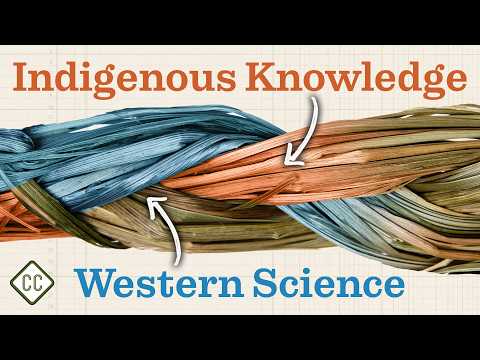
The preservation of indigenous knowledge is crucial.
Keeping the wisdom of native peoples is very important.
Indigenous knowledge is a specific academic term.
The pursuit of knowledge should be a lifelong goal.
Always trying to learn should be a life aim.
Pursuit of knowledge is a classic formal phrase.
The democratization of knowledge has transformed society.
Making information available to everyone changed the world.
Democratization refers to making it accessible.
His claims were based on anecdotal evidence rather than empirical knowledge.
He used stories instead of facts from experiments.
Empirical knowledge is based on observation/experiment.
The sheer volume of human knowledge is doubling every few years.
The total amount of things people know is growing very fast.
Volume of knowledge refers to quantity.
She possessed an esoteric knowledge of medieval alchemy.
She knew secret things about old science that few people know.
Esoteric means intended for or likely to be understood by only a small number of people.
The philosopher questioned the very foundations of our knowledge.
The thinker asked if the basic things we think we know are true.
Foundations of knowledge is a philosophical concept.
Knowledge and power are inextricably linked in modern politics.
Knowing things and having power always go together now.
Inextricably linked means they cannot be separated.
The loss of such knowledge would be a tragedy for humanity.
It would be terrible if we forgot these things.
Loss of knowledge refers to forgetting or destruction.
One must distinguish between superficial information and profound knowledge.
You have to see the difference between simple facts and deep understanding.
Profound means deep and significant.
Antonymes
Collocations courantes
Phrases Courantes
— As far as I know; used to qualify a statement.
To my knowledge, the flight is on time.
— A large amount of information or understanding.
Our grandmother has a wealth of knowledge about gardening.
— Doing something without telling that person.
He entered the building without the guard's knowledge.
— Very detailed and thorough understanding.
The job requires in-depth knowledge of accounting.
— Information gained from direct experience.
She has first-hand knowledge of the war zone.
— The act of trying to learn and understand more.
He dedicated his life to the pursuit of knowledge.
— Knowing a little about many different things.
A liberal arts education provides broad knowledge.
— Knowledge you already have before learning something new.
The teacher checked our prior knowledge of fractions.
— Knowledge that is specific to a certain field.
Nuclear physics requires highly specialized knowledge.
— Having only a small amount of information can lead to overconfidence.
He tried to fix the wiring himself, proving that a little knowledge is a dangerous thing.
Souvent confondu avec
Information is just facts; knowledge is understanding those facts.
Know-how is specifically practical skill; knowledge can be theoretical.
Intelligence is the ability to learn; knowledge is what has been learned.
Expressions idiomatiques
— The more you know, the more you can control or achieve.
Learn as much as you can; knowledge is power.
General— Having inside information that others do not have.
Ask Sarah; she's in the know about the office changes.
Informal— Used to say that something is true as far as you are aware.
To the best of my knowledge, no one else has applied.
Neutral/Formal— To withhold knowledge or information from someone.
They kept the staff in the dark about the merger.
Informal— To ask someone knowledgeable for their ideas or information.
I'd like to pick your brain about the marketing plan.
Informal— To have complete and total knowledge of something.
He knows the city's subway system inside out.
Informal— A person or source that provides a lot of information.
Our professor is a real fountain of knowledge.
Metaphorical— To have perfect knowledge of someone's thoughts or feelings.
I've known him for years; I can read him like a book.
Informal— Something that is known by everyone.
It's common knowledge that they don't get along.
Neutral— Information that is considered dangerous or taboo to know.
The secret files were treated as forbidden knowledge.
LiteraryFacile à confondre
Both relate to knowing things.
Knowledge is having information. Wisdom is knowing how to use that information to make good choices. You can have knowledge without wisdom.
He has the knowledge to build a bomb, but the wisdom not to.
Both are about information.
Data is raw numbers or symbols. Knowledge is the interpretation and understanding of what that data means in a context.
The computer has the data, but the scientist has the knowledge.
Both mean knowing something exists.
Awareness is simply being conscious of a fact. Knowledge implies a deeper understanding or familiarity with the details.
I have an awareness of the news, but no deep knowledge of the details.
Both mean knowing a lot.
Expertise is restricted to a specific professional or technical field. Knowledge is a more general term for any kind of learning.
She has expertise in tax law, but general knowledge of many subjects.
Both relate to ability.
Skill is the physical or mental ability to do something. Knowledge is the information required to do it. You need knowledge to develop a skill.
I have the knowledge of how to swim, but I don't have the skill yet.
Structures de phrases
I have knowledge of [Subject].
I have knowledge of cooking.
To my knowledge, [Sentence].
To my knowledge, he is at home.
[Person] gained knowledge from [Source].
She gained knowledge from the library.
The [Noun] requires [Adjective] knowledge.
The job requires specialized knowledge.
It is common knowledge that [Fact].
It is common knowledge that the Earth is round.
The [Noun] is based on [Adjective] knowledge.
The theory is based on empirical knowledge.
Expand your knowledge of [Subject].
Expand your knowledge of history.
He has a basic knowledge of [Subject].
He has a basic knowledge of French.
Famille de mots
Noms
Verbes
Adjectifs
Apparenté
Comment l'utiliser
Very High. It is in the top 1000 most common words in English.
-
I have many knowledges.
→
I have a lot of knowledge.
Knowledge is uncountable and cannot be pluralized.
-
He has a knowledge of music.
→
He has a good knowledge of music.
We usually only use 'a' with knowledge if there is an adjective modifying it.
-
I want to make more knowledge.
→
I want to gain more knowledge.
We 'gain,' 'acquire,' or 'get' knowledge, we don't 'make' it.
-
To my knowledge, he is a nice guy.
→
In my opinion, he is a nice guy.
'To my knowledge' is for facts, not personal feelings or opinions.
-
His knowledge in science is great.
→
His knowledge of science is great.
The standard preposition to use with a subject is 'of'.
Astuces
Never Pluralize
Never add an 's' to knowledge. Even if you are talking about many different subjects, it is always 'knowledge'. This is a very common mistake for non-native speakers.
Silent K
The 'k' is silent. Practice saying 'now-ledge' to get used to the sound. It sounds just like the word 'now' but with a short 'o' sound.
Use 'Knowledgeable'
Instead of saying 'He has a lot of knowledge,' try saying 'He is very knowledgeable.' It sounds more natural and professional in many contexts.
Gain vs. Make
Always use 'gain' or 'acquire' with knowledge. Never say 'make knowledge'. You can also use 'get' in informal situations.
To My Knowledge
Use this phrase when you want to be polite and cautious. It shows you are sharing what you know without claiming to be 100% certain.
Academic Tone
In essays, use 'extensive knowledge' or 'in-depth knowledge' to describe research or expertise. It adds weight to your writing.
Knowledge vs. Info
Use 'information' for simple facts (like a phone number) and 'knowledge' for understanding (like how to perform surgery).
Word Family
Learn 'acknowledge' (verb) alongside 'knowledge'. To acknowledge something means to accept that it is true or that it exists.
Knowledge is Power
This is a great idiom to use in motivational speeches or when discussing the importance of education.
The 'DGE' Ending
Remember the 'd' before the 'g' in knowledge. It follows the same pattern as 'bridge,' 'judge,' and 'edge'.
Mémorise-le
Moyen mnémotechnique
Think of a 'KNOW-LEDGE'. You stand on the 'ledge' of a mountain to see the whole world. Knowledge is what you see and understand from that high place.
Association visuelle
Imagine a giant library inside a human head. Each book represents a different piece of knowledge stored in the brain.
Word Web
Défi
Try to use the phrase 'to my knowledge' at least three times in your conversations today to describe things you are pretty sure about.
Origine du mot
The word 'knowledge' comes from the Middle English 'knouleche,' which is a combination of 'knowen' (to know) and the suffix '-leche' (meaning state or condition).
Sens originel : It originally referred to the fact of knowing a person or a thing, or the state of being aware of a fact.
Germanic (Old English roots 'cnāwan').Contexte culturel
Be careful when using 'knowledge' to describe religious or cultural beliefs; some may prefer the word 'faith' or 'tradition' depending on the context.
In English-speaking countries, 'general knowledge' is a very popular part of social culture, often seen in pub quizzes and trivia games.
Pratique dans la vie réelle
Contextes réels
Education
- Acquire knowledge
- Test your knowledge
- Impart knowledge
- Knowledge acquisition
Workplace
- Knowledge worker
- Professional knowledge
- Knowledge transfer
- Specialized knowledge
Legal/Official
- Prior knowledge
- Without my knowledge
- Public knowledge
- To the best of my knowledge
Daily Life
- General knowledge
- Common knowledge
- Basic knowledge
- Knowledge of the area
Technology
- Knowledge base
- Knowledge management
- Representation of knowledge
- Domain knowledge
Amorces de conversation
"What is one subject you have a lot of knowledge about?"
"Do you think general knowledge is more important than specialized knowledge?"
"How do you usually gain new knowledge in your free time?"
"Is there any knowledge that you think is dangerous for people to have?"
"Who is the most knowledgeable person you know?"
Sujets d'écriture
Write about a time you gained valuable knowledge through a mistake.
Does having more knowledge make a person happier? Why or why not?
If you could have instant knowledge of any one subject, what would it be?
Describe the difference between having information and having knowledge.
Reflect on how your knowledge of the world has changed since you were a child.
Questions fréquentes
10 questionsNo, 'knowledge' is an uncountable (mass) noun. You should never say 'knowledges'. If you want to talk about different types, say 'areas of knowledge' or 'types of knowledge'. Example: 'He has knowledge in many areas.'
Generally, no. However, you can use 'a' if there is an adjective before 'knowledge', such as 'a good knowledge of' or 'a deep knowledge of'. Example: 'She has a good knowledge of German.' Even then, it is often better to omit 'a'.
'Knowledge of' is usually used for subjects, skills, or specific facts (e.g., knowledge of math, knowledge of the truth). 'Knowledge about' is used for more general topics or situations (e.g., knowledge about the company, knowledge about what happened).
You don't! The 'k' is completely silent. The word starts with the 'n' sound. It rhymes with 'college'.
It is a neutral word. It can be used in very casual conversation ('I have no knowledge of that') or in very formal academic writing ('The pursuit of knowledge is noble').
'Common knowledge' refers to something that almost everyone knows and is not a secret. Example: 'It is common knowledge that Paris is the capital of France.'
It is a phrase used to say 'as far as I know.' It means that based on the information you have, something is true, but you might not know everything. Example: 'To my knowledge, the office is closed today.'
A 'knowledge base' is a collection of information, usually stored on a computer or website, that people can use to find answers to questions or solve problems.
Tacit knowledge is knowledge that is difficult to explain in words or write down, like how to ride a bike or how to lead a team. It is gained through experience.
The most direct opposite is 'ignorance,' which means a lack of knowledge. Other opposites could be 'misinformation' (wrong knowledge) or 'inexperience'.
Teste-toi 200 questions
Write a sentence using the phrase 'to my knowledge'.
Well written! Good try! Check the sample answer below.
Describe a subject you have extensive knowledge of.
Well written! Good try! Check the sample answer below.
Explain the difference between information and knowledge in your own words.
Well written! Good try! Check the sample answer below.
Write a short paragraph about how you gain knowledge.
Well written! Good try! Check the sample answer below.
Use the word 'knowledgeable' in a sentence about a teacher.
Well written! Good try! Check the sample answer below.
What does 'knowledge is power' mean to you?
Well written! Good try! Check the sample answer below.
Write a formal sentence for a resume mentioning your knowledge of a skill.
Well written! Good try! Check the sample answer below.
Describe a time you did something without someone's knowledge.
Well written! Good try! Check the sample answer below.
Why is 'general knowledge' important in life?
Well written! Good try! Check the sample answer below.
Write a sentence using 'thirst for knowledge'.
Well written! Good try! Check the sample answer below.
How can a person expand their knowledge of a new culture?
Well written! Good try! Check the sample answer below.
Write a sentence using 'prior knowledge'.
Well written! Good try! Check the sample answer below.
What are the benefits of sharing knowledge in a team?
Well written! Good try! Check the sample answer below.
Compare 'theoretical knowledge' and 'practical knowledge' with examples.
Well written! Good try! Check the sample answer below.
Write a sentence using 'first-hand knowledge'.
Well written! Good try! Check the sample answer below.
Is there such a thing as 'forbidden knowledge'? Explain.
Well written! Good try! Check the sample answer below.
Write a sentence using 'common knowledge'.
Well written! Good try! Check the sample answer below.
Describe a person you consider a 'fountain of knowledge'.
Well written! Good try! Check the sample answer below.
How does the internet change how we acquire knowledge?
Well written! Good try! Check the sample answer below.
Write a dialogue between two people where one person is 'in the know'.
Well written! Good try! Check the sample answer below.
Say the word 'knowledge' out loud. Focus on the silent 'k'.
Read this aloud:
Tu as dit :
Speech recognition is not supported in your browser. Try Chrome or Edge.
Talk for 30 seconds about something you have a lot of knowledge about.
Read this aloud:
Tu as dit :
Speech recognition is not supported in your browser. Try Chrome or Edge.
Explain the phrase 'to my knowledge' to a friend.
Read this aloud:
Tu as dit :
Speech recognition is not supported in your browser. Try Chrome or Edge.
How do you gain knowledge? Give three examples.
Read this aloud:
Tu as dit :
Speech recognition is not supported in your browser. Try Chrome or Edge.
Is school the only place to get knowledge? Why or why not?
Read this aloud:
Tu as dit :
Speech recognition is not supported in your browser. Try Chrome or Edge.
Describe a knowledgeable person you admire.
Read this aloud:
Tu as dit :
Speech recognition is not supported in your browser. Try Chrome or Edge.
Use 'knowledgeable' and 'expertise' in a sentence.
Read this aloud:
Tu as dit :
Speech recognition is not supported in your browser. Try Chrome or Edge.
What is the difference between facts and knowledge? Speak for 1 minute.
Read this aloud:
Tu as dit :
Speech recognition is not supported in your browser. Try Chrome or Edge.
Tell a short story about a time you had 'first-hand knowledge' of something.
Read this aloud:
Tu as dit :
Speech recognition is not supported in your browser. Try Chrome or Edge.
Do you think 'knowledge is power'? Why?
Read this aloud:
Tu as dit :
Speech recognition is not supported in your browser. Try Chrome or Edge.
Practice saying: 'To the best of my knowledge, the meeting is at ten.'
Read this aloud:
Tu as dit :
Speech recognition is not supported in your browser. Try Chrome or Edge.
Explain 'common knowledge' with an example.
Read this aloud:
Tu as dit :
Speech recognition is not supported in your browser. Try Chrome or Edge.
Discuss: 'Is too much knowledge a bad thing?'
Read this aloud:
Tu as dit :
Speech recognition is not supported in your browser. Try Chrome or Edge.
What is 'general knowledge'? Give five examples of facts.
Read this aloud:
Tu as dit :
Speech recognition is not supported in your browser. Try Chrome or Edge.
How do you share your knowledge with others?
Read this aloud:
Tu as dit :
Speech recognition is not supported in your browser. Try Chrome or Edge.
Say: 'She acquired extensive knowledge through her research.'
Read this aloud:
Tu as dit :
Speech recognition is not supported in your browser. Try Chrome or Edge.
Describe 'tacit knowledge' in your own words.
Read this aloud:
Tu as dit :
Speech recognition is not supported in your browser. Try Chrome or Edge.
What is 'prior knowledge' in a classroom setting?
Read this aloud:
Tu as dit :
Speech recognition is not supported in your browser. Try Chrome or Edge.
Discuss the 'pursuit of knowledge' in modern times.
Read this aloud:
Tu as dit :
Speech recognition is not supported in your browser. Try Chrome or Edge.
Pronounce: 'knowledge,' 'college,' 'acknowledge.'
Read this aloud:
Tu as dit :
Speech recognition is not supported in your browser. Try Chrome or Edge.
Listen for the word 'knowledge' in a news clip. What was the topic?
Identify if the speaker said 'knowledge' or 'knowledges' (Hint: it should always be knowledge).
Listen to a talk about AI. How is 'knowledge' used in that context?
In the phrase 'to my knowledge,' does the speaker sound certain or cautious?
Listen for the silent 'k'. Does the speaker pronounce it?
Listen to a teacher. What kind of knowledge are they asking for?
Can you hear the difference between 'knowledge of' and 'knowledge about'?
Listen for the word 'knowledgeable'. Who is being described?
Listen for 'common knowledge'. What is the fact mentioned?
Listen to a business meeting. Is 'knowledge sharing' mentioned?
Identify the stress: is it KNOWledge or knowLEDGE?
Listen for 'without my knowledge'. What happened?
Listen to a science podcast. What 'empirical knowledge' is discussed?
Listen for the rhyme: does it sound like 'college'?
Listen for 'thirst for knowledge'. Describe the person's character.
/ 200 correct
Perfect score!
Summary
Knowledge is the power of understanding. It is an uncountable noun (never say 'knowledges') that describes everything you have learned. Example: 'Her knowledge of biology helped her win the science fair.'
- Knowledge is an uncountable noun referring to the understanding and facts gained through learning or experience.
- It is used in phrases like 'knowledge of' or 'knowledge about' to specify a subject or field.
- Commonly paired with verbs like 'gain,' 'acquire,' and 'share,' it represents both theoretical and practical understanding.
- The word is essential in academic, professional, and daily contexts to describe a person's expertise or awareness.
Never Pluralize
Never add an 's' to knowledge. Even if you are talking about many different subjects, it is always 'knowledge'. This is a very common mistake for non-native speakers.
Silent K
The 'k' is silent. Practice saying 'now-ledge' to get used to the sound. It sounds just like the word 'now' but with a short 'o' sound.
Use 'Knowledgeable'
Instead of saying 'He has a lot of knowledge,' try saying 'He is very knowledgeable.' It sounds more natural and professional in many contexts.
Gain vs. Make
Always use 'gain' or 'acquire' with knowledge. Never say 'make knowledge'. You can also use 'get' in informal situations.
Exemple
She has a lot of knowledge about gardening and plants.
Contenu associé


Apprendre en contexte
Ce mot dans d'autres langues
Expressions liées
Plus de mots sur Education
training
B1Le processus d'apprentissage des compétences nécessaires pour un travail ou une activité spécifique.
evaluate
C2Évaluer signifie déterminer la valeur ou l'importance de quelque chose. Les experts doivent évaluer les risques avant de prendre une décision.
subjects
B1Les matières que l'on étudie à l'école.
grade
A1Une note scolaire ou un niveau d'étude. Cela peut aussi désigner la qualité d'un produit ou une pente.
studies
B1Les études font référence au travail académique ou à la recherche. 'Elle fait ses études à Paris.'
honor
A1L'honneur est un sentiment de grand respect ou de fierté. À l'école, c'est souvent un prix spécial pour un bon travail.
accreditation
B2L'accréditation est la reconnaissance formelle de la qualité d'une institution par un organisme officiel.
guidance
B2L'étudiant a sollicité les conseils de son professeur pour son projet de recherche.
chemistry
A1La chimie est la science qui étudie la composition et les réactions de la matière.
scishow
B1SciShow est une marque de médias éducatifs populaire qui produit des vidéos expliquant des concepts scientifiques.

