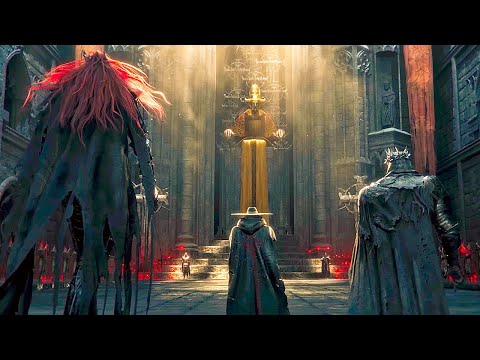
legions en 30 secondes
- Legions refers to a very large number of people or things, often organized or acting as a unified group.
- The word originates from the primary military units of ancient Rome, which consisted of thousands of soldiers.
- In modern English, it is frequently used to describe massive fanbases, political movements, or large quantities of objects.
- It is a formal and dramatic word that emphasizes scale, power, and collective identity.
The word legions is a powerful noun that carries both historical weight and modern hyperbolic flair. At its core, it refers to a vast, almost uncountable number of people or things. When you use this word today, you are usually emphasizing the sheer scale of a group, suggesting that they are not just numerous, but also organized, determined, or unified in some way. Historically, the term is inseparable from the Roman Empire. A Roman legion was the fundamental backbone of their military might, consisting of between 3,000 and 6,000 heavy infantry soldiers. Therefore, when we speak of 'legions of supporters' today, we are subtly invoking the image of an unstoppable, disciplined army marching toward a common goal.
- Historical Context
- In ancient Rome, a legion was the largest unit of the army. To be part of a legion was a mark of status, as only Roman citizens could serve in them. This historical grounding gives the word a sense of authority and ancient strength that words like 'crowds' or 'groups' simply lack.
- Metaphorical Usage
- In modern English, we use 'legions' to describe anything that exists in great quantities. You might hear about legions of fans waiting outside a concert hall, legions of insects descending on a crop, or even legions of problems facing a new government. It implies a force that is difficult to manage or count.
The tech giant faced legions of angry users after the controversial update was released.
People use this word when they want to sound more formal, dramatic, or literary. It is a favorite in journalism, historical non-fiction, and epic fantasy literature. If you say 'there were many people,' it is a simple observation. If you say 'there were legions,' you are painting a picture of a massive, formidable presence. It is also frequently used in religious or supernatural contexts, most notably in the New Testament where a possessed man says, 'My name is Legion, for we are many,' referring to a multitude of demons.
Throughout the summer, legions of tourists descend upon the small coastal village, tripling its population.
- The 'Of' Construction
- The word is almost always followed by the preposition 'of' and a plural noun. Common pairings include 'legions of fans,' 'legions of followers,' 'legions of soldiers,' and 'legions of critics.'
The legendary general led his legions across the frozen Alps in a daring winter campaign.
In the fantasy novel, the dark lord summoned legions of undead warriors to storm the castle gates.
- Register and Tone
- The word sits comfortably in the 'formal' to 'literary' register. You wouldn't typically use it in a casual text message about a few friends, but you would use it in a speech or a formal essay to describe a massive movement.
The author has legions of devoted readers who pre-order every book months in advance.
Using legions correctly requires an understanding of its plural nature and its typical syntactic patterns. Because it is a plural noun, it always takes a plural verb (e.g., 'The legions were' rather than 'The legions was'). It is most frequently used as part of a noun phrase followed by 'of' and another plural noun. This structure serves to quantify the second noun with a sense of immense scale. For example, 'legions of volunteers' suggests a massive, organized effort. It can also stand alone when the context of a military unit or a previously mentioned group is clear.
- Subject Position
- When 'legions' is the subject, it emphasizes the agency of the large group. Example: 'Legions of fans flocked to the stadium.' Here, the focus is on the action of the massive crowd.
- Object Position
- As an object, it often follows verbs of command, creation, or observation. Example: 'The emperor commanded his legions to advance.' or 'The scandal created legions of critics overnight.'
Despite the harsh weather, legions of protesters remained in the square for three days.
In descriptive writing, 'legions' can be modified by adjectives to further specify the nature of the group. Common adjectives include 'vast,' 'mighty,' 'angry,' 'loyal,' or 'invisible.' For instance, 'invisible legions' might refer to bacteria or digital bots. The word is also useful in comparative contexts, where you might compare the 'legions' of one entity against the 'handful' of another to highlight a disparity in power or support.
The new policy was met with legions of complaints from small business owners.
- Historical Usage
- When writing about ancient history, 'legions' refers specifically to the Roman units. In this case, you might specify the number: 'The Tenth and Twelfth legions were stationed in Gaul.'
Scientists have discovered legions of previously unknown species in the deep ocean trenches.
The pop star's legions of social media followers ensure that every post goes viral within minutes.
While you might not hear legions in a casual conversation at a coffee shop, it is a staple in various professional and creative domains. In the world of **entertainment and pop culture**, 'legions' is the go-to word for describing a massive fanbase. Music journalists often write about the 'legions of fans' that follow bands like BTS or Taylor Swift. In **fantasy and science fiction**, the word is ubiquitous. Whether it's the 'legions of Orcs' in *The Lord of the Rings* or the 'Imperial legions' in *Star Wars*, the word evokes a sense of epic scale and military discipline that fits these genres perfectly.
In **political and social commentary**, 'legions' is used to describe large movements or voting blocs. A political analyst might speak of 'legions of disillusioned voters' or 'legions of activists' working on a campaign. This usage suggests that these people are not just individuals but a collective force to be reckoned with. Similarly, in **business and technology**, you might hear about 'legions of developers' working on a new software platform or 'legions of bots' influencing social media trends. Here, the word highlights the sheer volume of effort or automated activity involved.
The documentary explored how the Roman legions managed to maintain control over such a vast and diverse empire.
**Historical documentaries and literature** are perhaps the most common places to encounter the word in its literal sense. Narrators will describe the movements of the Roman legions across Europe and North Africa, detailing their tactics and organization. In **religious contexts**, specifically within Christianity, the word 'Legion' (often capitalized) refers to a group of demons, as mentioned in the Gospels. This has led to the word being used in horror movies and gothic literature to describe a terrifying multitude of malevolent spirits.
Every spring, legions of birdwatchers travel to the wetlands to witness the annual migration.
Finally, in **sports journalism**, particularly in the UK and Europe, 'legions' is often used to describe the traveling supporters of a major football club. 'The club's legions of supporters traveled across the continent to witness the final,' is a common type of sentence. It conveys the loyalty and the sheer number of fans who are willing to travel long distances for their team.
One of the most frequent mistakes learners make with legions is confusing it with the word **'legend'**. While they sound somewhat similar, their meanings are entirely different. A 'legend' is a famous story or a very famous person, whereas 'legions' refers to a large number of people. You might have 'legions of fans' who think you are a 'legend,' but you cannot have 'a legend of fans' unless you are referring to a mythical story about them.
- Mistake: Confusion with 'Legend'
- Incorrect: 'The singer has a legend of followers.'
Correct: 'The singer has legions of followers.' - Mistake: Singular vs. Plural Verb
- Incorrect: 'The legions of fans was waiting outside.'
Correct: 'The legions of fans were waiting outside.' (Because 'legions' is plural, the verb must also be plural.)
It is a common error to use legions when you only mean a small group of ten or twenty people.
Another common issue is **overuse or inappropriate register**. Using 'legions' to describe a small group of friends at a dinner party sounds sarcastic or overly dramatic. It is a word reserved for truly massive numbers. Additionally, some writers forget the 'of' in the common construction. Saying 'There were legions fans' is grammatically incorrect; it must be 'legions of fans.' Lastly, be careful with the word **'legionnaire'**. A legionnaire is a member of a legion (specifically the French Foreign Legion in modern times), while 'legions' refers to the groups themselves.
Don't confuse legions with 'lesions,' which are areas of injured or diseased tissue in the body.
Finally, there is the confusion between the **adjective 'legion'** and the **noun 'legions'**. As an adjective, 'legion' means 'numerous' (e.g., 'The problems were legion'). In this case, it doesn't take an 's' even if the subject is plural. However, as a noun, you must use 'legions' to refer to multiple large groups or to use the common 'legions of' construction.
If you find yourself overusing legions, there are several excellent alternatives, each with its own nuance. **'Multitudes'** is perhaps the closest synonym, suggesting a great number of people, often with a slightly poetic or biblical feel. **'Hordes'** is another common alternative, but it carries a more negative, chaotic, or uncivilized connotation—think 'hordes of barbarians' or 'hordes of zombies.' **'Armies'** can be used metaphorically to suggest organization and purpose, similar to 'legions,' but it is more literal.
- Legions vs. Multitudes
- 'Legions' implies organization and strength. 'Multitudes' simply implies a very large, perhaps disorganized, number of people.
- Legions vs. Hordes
- 'Legions' sounds disciplined and powerful. 'Hordes' sounds messy, frightening, and overwhelming in a chaotic way.
- Legions vs. Myriad
- 'Myriad' is often used as an adjective meaning 'countless' (e.g., myriad stars). 'Legions' is a noun referring to the groups themselves.
While 'throngs' describes a dense crowd, legions suggests a group that is spread out but united in purpose.
Other words to consider include **'throngs'** (dense crowds), **'swarms'** (usually for insects or people moving like insects), and **'masses'** (the general population or a large, indistinct quantity). If you want to be more technical, you might use **'myriads'** (though this is less common as a plural noun today). For a more modern, tech-savvy alternative, you might use **'armies of bots'** or **'clusters.'** Choosing the right word depends on whether you want to emphasize the group's discipline (legions), their chaos (hordes), their density (throngs), or their sheer number (multitudes).
The CEO was backed by legions of lawyers, making the legal battle nearly impossible for the small plaintiff.
How Formal Is It?
Le savais-tu ?
In the early Roman Republic, the 'legio' was the entire army of the state. As Rome grew, they needed more units, so they created multiple 'legiones,' which is why we use the plural today.
Guide de prononciation
- Pronouncing the 'g' as a hard 'g' (like 'get'). It should be a soft 'j' sound.
- Confusing the pronunciation with 'legend' (LEH-jund).
- Making the 'e' sound too short; it should be a long 'ee' sound.
- Forgetting the 'z' sound at the end of the plural form.
- Adding an extra syllable (e.g., lee-gee-ons).
Niveau de difficulté
Common in literature and news, but requires historical context to fully appreciate.
Requires careful use of the 'legions of' construction and plural agreement.
Useful for emphasis, but can sound overly dramatic if used incorrectly.
Easy to recognize in context, though sometimes confused with 'legend'.
Quoi apprendre ensuite
Prérequis
Apprends ensuite
Avancé
Grammaire à connaître
Collective Nouns and Plurality
Legions is always plural; therefore, the verb must agree. 'The legions are coming.'
Prepositional Phrases as Quantifiers
Using 'legions of' functions similarly to 'a lot of' but with more emphasis.
Articles with Proper Names
When referring to specific historical units, use 'the' (e.g., 'The Ninth Legion').
Adjectival Use of Nouns
The word 'legion' can be used as an adjective meaning 'numerous' (e.g., 'Her fans are legion').
Possessive Modifiers
You can use possessives to show ownership of the group (e.g., 'The band's legions').
Exemples par niveau
Legions of fans love the singer.
Des légions de fans adorent le chanteur.
Uses 'legions of' + plural noun.
The Roman legions were very strong.
Les légions romaines étaient très fortes.
Historical use as a plural noun.
There are legions of stars in the sky.
Il y a des légions d'étoiles dans le ciel.
Metaphorical use for objects.
Legions of ants lived in the garden.
Des légions de fourmis vivaient dans le jardin.
Used for insects.
He has legions of friends on the internet.
Il a des légions d'amis sur internet.
Informal but hyperbolic usage.
The legions marched to the city.
Les légions ont marché vers la ville.
Simple past tense.
Legions of kids play this game.
Des légions d'enfants jouent à ce jeu.
Common 'legions of' pattern.
She saw legions of birds flying south.
Elle a vu des légions d'oiseaux voler vers le sud.
Descriptive plural.
Legions of tourists visit Paris every year.
Des légions de touristes visitent Paris chaque année.
Plural subject with a plural verb.
The movie showed legions of soldiers in battle.
Le film montrait des légions de soldats au combat.
Direct object of the verb 'showed'.
Legions of angry customers called the office.
Des légions de clients en colère ont appelé le bureau.
Adjective 'angry' modifies the noun phrase.
In the story, legions of monsters attacked the castle.
Dans l'histoire, des légions de monstres ont attaqué le château.
Fantasy context.
The museum has information about Roman legions.
Le musée contient des informations sur les légions romaines.
Historical context.
Legions of workers built the Great Wall.
Des légions d'ouvriers ont construit la Grande Muraille.
Emphasizing the scale of labor.
The pop star is followed by legions of teenagers.
La star de la pop est suivie par des légions d'adolescents.
Passive voice construction.
We saw legions of fish in the clear water.
Nous avons vu des légions de poissons dans l'eau claire.
Collective noun usage.
Legions of volunteers helped after the flood.
Des légions de bénévoles ont aidé après l'inondation.
Suggests organized community effort.
The author's legions of readers waited for the new book.
Les légions de lecteurs de l'auteur attendaient le nouveau livre.
Possessive 'author's' modifies the group.
History books describe how the legions conquered Europe.
Les livres d'histoire décrivent comment les légions ont conquis l'Europe.
Literal historical reference.
The tech company has legions of programmers in India.
L'entreprise technologique dispose de légions de programmeurs en Inde.
Modern business context.
Legions of critics hated the new movie.
Des légions de critiques ont détesté le nouveau film.
Hyperbolic use for negative feedback.
The general led his legions into the valley.
Le général a mené ses légions dans la vallée.
Possessive 'his' indicates command.
Legions of fans were disappointed by the concert cancellation.
Des légions de fans ont été déçues par l'annulation du concert.
Plural verb 'were' follows 'legions'.
The garden was overrun by legions of weeds.
Le jardin était envahi par des légions de mauvaises herbes.
Metaphorical use for plants.
The dictator relied on legions of secret police to maintain order.
Le dictateur s'appuyait sur des légions de police secrète pour maintenir l'ordre.
Implies a large, oppressive organization.
Legions of protesters gathered outside the embassy to demand change.
Des légions de manifestants se sont rassemblées devant l'ambassade pour exiger du changement.
Focuses on the collective power of the group.
The scientist discovered legions of microscopic organisms in the soil sample.
Le scientifique a découvert des légions d'organismes microscopiques dans l'échantillon de sol.
Scientific/descriptive context.
Legions of fans descended on the city for the championship game.
Des légions de fans ont déferlé sur la ville pour le match de championnat.
Verb 'descended on' is a common collocation.
The Roman legions were known for their strict discipline and engineering skills.
Les légions romaines étaient connues pour leur discipline stricte et leurs compétences en ingénierie.
Describes attributes of the historical units.
The new software was tested by legions of beta users before its release.
Le nouveau logiciel a été testé par des légions d'utilisateurs bêta avant sa sortie.
Technical/professional context.
Legions of insects swarmed the fields, destroying the entire crop.
Des légions d'insectes ont envahi les champs, détruisant toute la récolte.
Uses 'swarmed' to show movement.
The actor has legions of devoted followers who defend him online.
L'acteur a des légions de fidèles qui le défendent en ligne.
Modern digital context.
The fallen empire left behind legions of unemployed soldiers with no clear future.
L'empire déchu a laissé derrière lui des légions de soldats au chômage sans avenir clair.
Social/political nuance.
Legions of bureaucrats managed the complex logistics of the wartime economy.
Des légions de bureaucrates géraient la logistique complexe de l'économie de guerre.
Suggests a vast, faceless administrative force.
The philosophical text argues that we are surrounded by legions of invisible influences.
Le texte philosophique soutient que nous sommes entourés de légions d'influences invisibles.
Abstract/metaphorical usage.
Legions of fans mourned the passing of the legendary musician.
Des légions de fans ont pleuré la disparition du musicien légendaire.
Emotional/collective context.
The general's decision to divide his legions proved to be a fatal strategic error.
La décision du général de diviser ses légions s'est avérée être une erreur stratégique fatale.
Historical/military analysis.
The internet has created legions of 'armchair experts' who debate every topic.
Internet a créé des légions d'« experts de salon » qui débattent de tous les sujets.
Idiomatic/sarcastic usage.
Legions of migrants braved the dangerous crossing in search of a better life.
Des légions de migrants ont bravé la traversée dangereuse à la recherche d'une vie meilleure.
Serious/journalistic tone.
The ancient ruins were once home to the elite legions of the emperor.
Les ruines antiques abritaient autrefois les légions d'élite de l'empereur.
Evocative historical description.
The poem evokes the image of legions of lost souls wandering the underworld.
Le poème évoque l'image de légions d'âmes perdues errant dans les enfers.
Literary/mythological context.
Legions of lobbyists descend upon the capital whenever new tax laws are proposed.
Des légions de lobbyistes déferlent sur la capitale chaque fois que de nouvelles lois fiscales sont proposées.
Political cynicism/nuance.
The sheer scale of the data required legions of servers to process it in real-time.
L'ampleur des données a nécessité des légions de serveurs pour les traiter en temps réel.
Technological hyperbole.
He felt as though legions of eyes were watching his every move from the shadows.
Il avait l'impression que des légions d'yeux observaient ses moindres faits et gestes depuis l'ombre.
Psychological/horror element.
The historian analyzed how the Roman legions functioned as agents of cultural assimilation.
L'historien a analysé comment les légions romaines fonctionnaient comme agents d'assimilation culturelle.
Academic/sociological analysis.
Legions of critics have attempted to deconstruct the artist's enigmatic final work.
Des légions de critiques ont tenté de déconstruire l'œuvre finale énigmatique de l'artiste.
Intellectual/discursive context.
The company’s downfall was accelerated by legions of lawsuits from disgruntled investors.
La chute de l'entreprise a été accélérée par des légions de poursuites judiciaires de la part d'investisseurs mécontents.
Legal/corporate context.
In the biblical narrative, the possessed man claimed his name was Legion.
Dans le récit biblique, l'homme possédé affirmait que son nom était Légion.
Theological/allusive usage.
Synonymes
Antonymes
Collocations courantes
Phrases Courantes
— Used to say that there are a very large number of people or things of a particular kind. It is a biblical allusion.
The reasons for the project's failure are many; indeed, their name is legion.
— To have control over a very large and powerful group of people.
The CEO commands legions of employees across five continents.
— To call upon a large group of supporters or workers for help.
The activist summoned legions of protesters to the city center.
— To be the head of a massive movement or organization.
She led the legions of fans into the stadium.
— To become part of a very large group of people doing the same thing.
Thousands of young people are joining the legions of digital nomads.
— To act in unison with a large, organized group.
The workers decided to march with the legions of strikers.
— To confront a massive number of opponents or problems.
The small company had to face the legions of corporate lawyers.
— To motivate a very large number of people.
The athlete's story inspired legions of young people to take up sports.
— A poetic way to describe a large group of forgotten or marginalized people.
The charity works to help the legions of the lost living on the streets.
— A specific historical reference to the Roman military units.
The emperor's legions were stationed along the northern border.
Souvent confondu avec
A legend is a story or a famous person. Legions are large groups of people.
A lesion is a medical term for damaged tissue or a wound.
A region is a geographical area, not a group of people.
Expressions idiomatiques
— A phrase used to indicate that there are many of something, often with a negative or overwhelming connotation.
When asked about his mistakes, he replied, 'My name is Legion, for they are many.'
literary/biblical— A specific title or award, most famously the 'Légion d'honneur' in France.
The scientist was awarded the Legion of Honor for his contributions to medicine.
formal— Refers to the French Foreign Legion, a unique military unit for foreign recruits.
He ran away to join the Foreign Legion after his business failed.
neutral— A paradoxical phrase describing someone who has the strength or impact of a whole army.
The activist was a legion of one, fighting tirelessly for the cause.
rhetorical— A dramatic phrase for people who are doomed or in a terrible situation.
The soldiers felt like the legions of the damned as they retreated through the snow.
literary— A specific organization for U.S. military veterans.
My grandfather is a proud member of the American Legion.
neutral— Refers to a vast number of thoughts, worries, or imaginary figures.
He struggled against the legions of the mind that kept him awake at night.
poetic— Moving in very large, organized groups.
The protesters were marching in legions through the capital.
descriptive— A play on 'the lion's share,' implying a massive portion belonging to a large group.
The legions of fans took the legion's share of the available tickets.
informal/creative— Extremely strict and rigorous discipline, like that of a Roman soldier.
The coach demanded legionary discipline from his players.
formalFacile à confondre
Both mean a large group.
A legion is organized and disciplined. A horde is chaotic and often perceived as savage or threatening.
The Roman legions faced a horde of barbarians.
Both mean a large number.
Multitude is more general and often refers to a disorganized crowd. Legions implies a collective force.
A multitude of people stood in the square, but the legions of soldiers kept them back.
Both refer to large numbers.
Myriad is often an adjective meaning 'countless.' Legions is a noun referring to the groups themselves.
There are myriad stars, but only a few legions of constellations.
Both describe crowds.
A throng is specifically a dense, packed crowd. Legions refers to the total number, regardless of density.
A throng of fans pushed toward the stage, representing just a fraction of the singer's legions.
Both are military units.
A battalion is much smaller than a legion (usually 300-1,000 men).
The general sent a single battalion to scout, while the legions remained in camp.
Structures de phrases
Legions of [noun] are [adjective].
Legions of fans are happy.
There are legions of [noun] in the [place].
There are legions of fish in the sea.
The [noun] has legions of [noun].
The singer has legions of followers.
Legions of [noun] [verb] to [action].
Legions of tourists travel to see the tower.
Despite the [noun], legions of [noun] continued to [verb].
Despite the rain, legions of protesters continued to march.
The [noun] was met with legions of [noun], suggesting a [noun].
The policy was met with legions of complaints, suggesting a deep divide.
He led his legions across the [place].
He led his legions across the desert.
The [noun] is home to legions of [noun].
The forest is home to legions of rare birds.
Famille de mots
Noms
Adjectifs
Apparenté
Comment l'utiliser
Common in specific domains (history, entertainment, news).
-
Using 'legions' as a singular noun with 'is'.
→
The legions of fans are waiting.
Since 'legions' is the plural form, it requires a plural verb.
-
Confusing 'legions' with 'legends'.
→
He has legions of followers.
A legend is a story; legions are groups of people.
-
Saying 'legions fans' instead of 'legions of fans'.
→
There were legions of fans.
The preposition 'of' is necessary to connect the quantifier to the noun.
-
Using 'legions' for a small, countable group.
→
A small group of ten people arrived.
'Legions' implies thousands or vast, uncountable numbers.
-
Spelling it 'leigons'.
→
legions
The 'e' comes before the 'g', and there is no 'i' before the 'g'.
Astuces
Use for Emphasis
Save 'legions' for when you really want to stress that a group is huge. Using it for a small group makes it lose its power.
Check Verb Agreement
Remember that 'legions' is plural. Always use 'were' or 'are' instead of 'was' or 'is' when 'legions' is the subject.
Historical Flavor
Use 'legions' when you want to give your writing a slightly epic or historical feel. It sounds more grand than 'crowds'.
Pair with 'Of'
The most natural way to use the word is in the 'legions of [noun]' pattern. It helps the flow of the sentence.
Know Your Audience
In a business setting, 'legions' might sound a bit dramatic. 'A large number' or 'a vast workforce' might be safer, but 'legions' works well in marketing.
Soft 'G'
Remember the spelling has a 'g' but it sounds like a 'j'. Don't let the spelling confuse your pronunciation.
Legions vs. Hordes
Use 'legions' for groups you respect or that are organized. Use 'hordes' for groups that are messy or scary.
Think of Rome
If you forget what it means, just think of the Roman army. That image will always lead you back to the correct meaning.
Personification
You can personify things by giving them 'legions.' For example, 'legions of doubts' makes the doubts feel like an attacking army.
Social Media Context
It's a perfect word for describing viral trends or massive online communities.
Mémorise-le
Moyen mnémotechnique
Think of 'LEG'ions. You need a lot of LEGS to move a LEGION of people. Imagine thousands of legs marching together.
Association visuelle
Picture a bird's-eye view of a Roman army camp—perfectly square, with thousands of identical soldiers in red tunics. That is a legion.
Word Web
Défi
Try to use 'legions' in a sentence about your favorite hobby. For example: 'There are legions of people who enjoy baking bread at home.'
Origine du mot
The word comes from the Latin 'legio,' which is derived from the verb 'legere,' meaning 'to choose' or 'to gather.' This reflects how the early Roman legions were formed by selecting citizens for military service.
Sens originel : A body of soldiers chosen from the Roman people.
It passed from Latin into Old French as 'legion' before entering Middle English in the 14th century.Contexte culturel
Generally a neutral term, but can sound aggressive if used to describe a group of people you disagree with (e.g., 'legions of enemies').
In English-speaking countries, 'legions' is a common hyperbolic term in sports and music journalism.
Pratique dans la vie réelle
Contextes réels
History
- Roman legions
- stationed legions
- marching legions
- the fall of the legions
Fandom
- legions of fans
- devoted legions
- legions of followers
- loyal legions
Politics
- legions of supporters
- legions of protesters
- legions of voters
- legions of activists
Nature
- legions of insects
- legions of bacteria
- legions of ants
- legions of birds
Business
- legions of workers
- legions of lawyers
- legions of developers
- legions of consultants
Amorces de conversation
"Did you know that a single Roman legion could have up to 6,000 soldiers?"
"Why do you think some celebrities have such massive legions of fans?"
"If you could lead legions of people to solve one world problem, what would it be?"
"Have you ever seen legions of birds migrating during the spring?"
"Do you think 'legions' is a better word than 'crowds' for describing a protest?"
Sujets d'écriture
Describe a time you felt overwhelmed by a 'legion' of tasks or problems.
Write a short story about a general leading his legions into an unknown land.
Reflect on the power of 'legions of fans' in modern digital culture.
If you were a Roman soldier in one of the legions, what would your daily life be like?
Discuss the difference between 'hordes' and 'legions' in your own words.
Questions fréquentes
10 questionsNo, 'legion' can be singular when referring to one specific group (e.g., 'The Roman Legion'). However, when used to mean 'a vast number,' it is almost always plural: 'legions of fans.' As an adjective, it is also singular: 'The problems were legion.'
Historically, a Roman legion consisted of between 3,000 and 6,000 heavy infantry soldiers, along with cavalry and support staff. The number varied depending on the time period of the Roman Empire.
Yes! You can use it for animals (legions of ants), objects (legions of stars), or even abstract concepts (legions of worries). It simply emphasizes a very large, overwhelming number.
A 'legion' is the group or unit itself. A 'legionnaire' is an individual member of that group. For example, 'The legion was made up of five thousand legionnaires.'
It is generally neutral but depends on context. 'Legions of fans' is positive, while 'legions of demons' or 'legions of critics' is negative. It primarily emphasizes scale.
In the New Testament, a man possessed by demons says, 'My name is Legion, for we are many.' This used the Roman military term to show that he was controlled by a vast number of spirits.
Yes, you can. 'A legion of fans' is grammatically correct and means one massive group. 'Legions of fans' is more common and emphasizes the overwhelming nature of the number.
Yes, it is considered more formal or literary than saying 'lots of' or 'many.' It is a great word for essays, speeches, and creative writing.
It is an idiom meaning that there are a very large number of something. It's a way of saying 'there are too many to count' or 'they are everywhere.'
Not necessarily. While the word has military roots, in modern usage, 'legions of fans' are not literally fighting; they are just numerous and devoted.
Teste-toi 180 questions
Write a sentence using 'legions of fans' to describe a famous person.
Well written! Good try! Check the sample answer below.
Write a short paragraph about the Roman legions.
Well written! Good try! Check the sample answer below.
Use 'legions' metaphorically to describe a problem.
Well written! Good try! Check the sample answer below.
Compare 'legions' and 'hordes' in two sentences.
Well written! Good try! Check the sample answer below.
Write a sentence using 'legions of insects'.
Well written! Good try! Check the sample answer below.
Describe a protest using the word 'legions'.
Well written! Good try! Check the sample answer below.
Use 'legions' in a sentence about technology.
Well written! Good try! Check the sample answer below.
Write a sentence about 'legions of stars'.
Well written! Good try! Check the sample answer below.
Use the phrase 'their name is legion' in a sentence.
Well written! Good try! Check the sample answer below.
Write a sentence about 'legions of tourists'.
Well written! Good try! Check the sample answer below.
Use 'legions' to describe a collection of books.
Well written! Good try! Check the sample answer below.
Write a sentence about 'legions of followers'.
Well written! Good try! Check the sample answer below.
Describe a historical battle using 'legions'.
Well written! Good try! Check the sample answer below.
Use 'legions' to describe a feeling of being watched.
Well written! Good try! Check the sample answer below.
Write a sentence about 'legions of volunteers'.
Well written! Good try! Check the sample answer below.
Use 'legions' in a sentence about a sports team.
Well written! Good try! Check the sample answer below.
Write a sentence about 'legions of birds'.
Well written! Good try! Check the sample answer below.
Use 'legions' to describe a large amount of data.
Well written! Good try! Check the sample answer below.
Write a sentence about 'legions of critics'.
Well written! Good try! Check the sample answer below.
Use 'legions' in a sentence about a fantasy world.
Well written! Good try! Check the sample answer below.
Pronounce the word 'legions' correctly.
Read this aloud:
Tu as dit :
Speech recognition is not supported in your browser. Try Chrome or Edge.
Describe your favorite band's fanbase using 'legions'.
Read this aloud:
Tu as dit :
Speech recognition is not supported in your browser. Try Chrome or Edge.
Explain the difference between 'legions' and 'hordes' out loud.
Read this aloud:
Tu as dit :
Speech recognition is not supported in your browser. Try Chrome or Edge.
Use 'legions' in a sentence about a busy place you've visited.
Read this aloud:
Tu as dit :
Speech recognition is not supported in your browser. Try Chrome or Edge.
Give a short speech about the importance of 'legions of volunteers'.
Read this aloud:
Tu as dit :
Speech recognition is not supported in your browser. Try Chrome or Edge.
Talk about a historical event involving 'legions'.
Read this aloud:
Tu as dit :
Speech recognition is not supported in your browser. Try Chrome or Edge.
Use 'legions' to describe a large amount of something in your house.
Read this aloud:
Tu as dit :
Speech recognition is not supported in your browser. Try Chrome or Edge.
Explain why 'legions' is a formal word.
Read this aloud:
Tu as dit :
Speech recognition is not supported in your browser. Try Chrome or Edge.
Describe a scene from a movie using 'legions'.
Read this aloud:
Tu as dit :
Speech recognition is not supported in your browser. Try Chrome or Edge.
Use 'legions' in a sentence about social media.
Read this aloud:
Tu as dit :
Speech recognition is not supported in your browser. Try Chrome or Edge.
Discuss the pros and cons of having 'legions of fans'.
Read this aloud:
Tu as dit :
Speech recognition is not supported in your browser. Try Chrome or Edge.
Use 'legions' to describe a natural phenomenon.
Read this aloud:
Tu as dit :
Speech recognition is not supported in your browser. Try Chrome or Edge.
Explain the idiom 'their name is legion'.
Read this aloud:
Tu as dit :
Speech recognition is not supported in your browser. Try Chrome or Edge.
Use 'legions' in a sentence about a protest.
Read this aloud:
Tu as dit :
Speech recognition is not supported in your browser. Try Chrome or Edge.
Describe a massive library using 'legions'.
Read this aloud:
Tu as dit :
Speech recognition is not supported in your browser. Try Chrome or Edge.
Use 'legions' to describe a difficult situation.
Read this aloud:
Tu as dit :
Speech recognition is not supported in your browser. Try Chrome or Edge.
Talk about the 'Foreign Legion'.
Read this aloud:
Tu as dit :
Speech recognition is not supported in your browser. Try Chrome or Edge.
Use 'legions' in a sentence about a sports stadium.
Read this aloud:
Tu as dit :
Speech recognition is not supported in your browser. Try Chrome or Edge.
Explain the etymology of 'legions' briefly.
Read this aloud:
Tu as dit :
Speech recognition is not supported in your browser. Try Chrome or Edge.
Use 'legions' to describe a group of animals.
Read this aloud:
Tu as dit :
Speech recognition is not supported in your browser. Try Chrome or Edge.
Listen to the sentence: 'The legions of fans were disappointed.' What was the fans' emotion?
Listen for the number of syllables in 'legions'.
Listen to a description of a Roman army and identify the word 'legions'.
Listen to a news report about a protest. How many people are implied by 'legions'?
Listen to a song lyric: 'Legions of the night.' What does it suggest?
Listen to a podcast about history. What unit is being discussed?
Listen to a sentence with 'legions' and 'legend'. Which one refers to the group?
Listen to the stress in the word. Is it on the first or second syllable?
Listen to a sentence about 'legions of bacteria'. What is the context?
Listen to the phrase 'My name is Legion'. What is the source?
Listen to 'legions of followers'. What platform is likely being discussed?
Listen to 'legions of critics'. Is the reception positive or negative?
Listen to a sentence about 'legions of volunteers'. What are they doing?
Listen to 'legions of tourists'. What season is it likely to be?
Listen to 'legions of stars'. Where is the speaker?
/ 180 correct
Perfect score!
Summary
The word 'legions' is a powerful way to describe a vast multitude. Whether you are talking about the historical Roman military or modern 'legions of fans,' the word always implies a group that is too large to ignore and often highly organized. Example: 'The company faced legions of critics after the scandal.'
- Legions refers to a very large number of people or things, often organized or acting as a unified group.
- The word originates from the primary military units of ancient Rome, which consisted of thousands of soldiers.
- In modern English, it is frequently used to describe massive fanbases, political movements, or large quantities of objects.
- It is a formal and dramatic word that emphasizes scale, power, and collective identity.
Use for Emphasis
Save 'legions' for when you really want to stress that a group is huge. Using it for a small group makes it lose its power.
Check Verb Agreement
Remember that 'legions' is plural. Always use 'were' or 'are' instead of 'was' or 'is' when 'legions' is the subject.
Historical Flavor
Use 'legions' when you want to give your writing a slightly epic or historical feel. It sounds more grand than 'crowds'.
Pair with 'Of'
The most natural way to use the word is in the 'legions of [noun]' pattern. It helps the flow of the sentence.