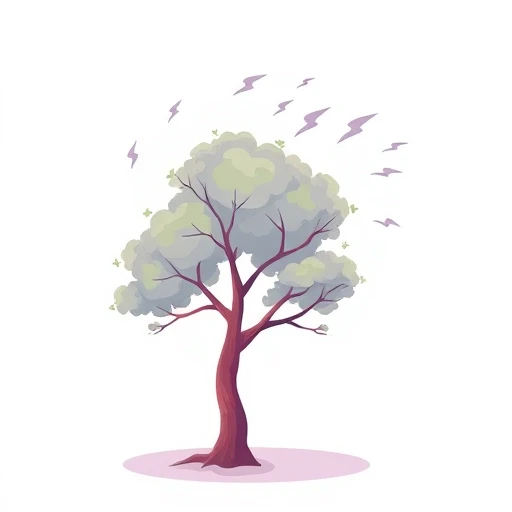
揺れたり震えたりしたって en 30 secondes
- Means 'even if it shakes/trembles.'
- Colloquial and rhythmic expression.
- Used for physical and emotional instability.
- Shows resilience or indifference to shaking.
The phrase 揺れたり震えたりしたって (yuretari furuetari shitatte) is a complex, colloquial Japanese expression that combines multiple grammatical layers to convey a sense of resilience or inevitability in the face of physical or emotional instability. At its core, it describes actions like swaying, shaking, or trembling, but the addition of the conditional particle tte transforms it into a concessive clause meaning 'even if' or 'no matter if.' This specific phrasing is often found in emotional contexts, such as song lyrics, dramatic dialogue, or personal resolutions where someone is asserting their determination despite being afraid or facing an unstable situation like an earthquake or intense cold.
- Grammatical Breakdown
- The phrase consists of the verbs 揺れる (yureru - to sway/shake) and 震える (furueru - to shiver/tremble) in their representative '-tari' forms, followed by the past tense of 'suru' (shita) and the colloquial concessive particle 'tte'.
- Nuance of 'Tari'
- The '-tari... -tari' structure implies that these are just examples of the types of movement occurring. It suggests a chaotic or repetitive state of motion.
たとえ地面が揺れたり震えたりしたって、私はあなたのそばを離れません。
In a literal sense, this phrase might describe an earthquake where buildings are swaying (yureru) and the ground is vibrating (furueru). However, in a metaphorical sense, it often refers to the human heart or body. 'Yureru' can mean to waver in decision-making, while 'furueru' can mean to tremble with fear or excitement. By saying 'shitatte,' the speaker is creating a hypothetical scenario: 'Even if I find myself in a state where I am wavering or trembling...' This is a powerful way to express that one's core resolve remains unchanged regardless of external or internal disturbances.
心が揺れたり震えたりしたって、決めた道を進むしかない。
- Usage Context: Natural Disasters
- Commonly used when discussing preparedness for earthquakes, emphasizing that even if things start shaking, one must stay calm.
Furthermore, the use of 'shitatte' carries a slightly defiant or dismissive tone toward the difficulty. It’s like saying, 'So what if it shakes?' This makes it a favorite in shonen manga or J-pop lyrics where the protagonist is facing overwhelming odds. It encapsulates the Japanese spirit of 'gaman' (endurance) and 'fudoushin' (immovable mind). When you use this phrase, you aren't just describing movement; you are describing your reaction—or lack thereof—to that movement. It is a phrase of strength and stoicism.
怖くて膝が揺れたり震えたりしたって、一歩前に踏み出すんだ。
Using 揺れたり震えたりしたって requires an understanding of the '-tari' form and the 'tte' particle's conditional function. This phrase usually functions as a subordinate clause that sets up a contrast with the main clause. The main clause often contains a negative verb (e.g., 'won't stop,' 'won't fall') or a strong statement of intent. Because 'tte' is highly colloquial, this phrase is best suited for spoken Japanese, casual writing, or creative works rather than formal business reports.
- Pattern 1: Physical Resilience
- Describing a physical object or person remaining stable despite shaking. Example: 'Even if the boat sways and trembles, the cargo won't fall.'
この建物は頑丈だから、少しくらい揺れたり震えたりしたって壊れないよ。
When applying this to people, 'yureru' often refers to the whole body or a large movement, while 'furueru' refers to smaller, faster vibrations like shivering from cold or trembling from fear. Combining them covers the entire spectrum of involuntary movement. In sentences, you can replace 'shitatte' with 'shitemo' to increase formality, but you lose the gritty, conversational edge that 'tte' provides.
- Pattern 2: Emotional Steadfastness
- Using the phrase to describe emotional or mental states. Example: 'Even if my confidence wavers or I tremble with anxiety...'
本番で手が揺れたり震えたりしたって、練習の成果を信じるだけだ。
Another important aspect is the 'representative' nature of '-tari'. It implies that shaking and trembling are just two examples of what might happen. There might be other things—like sweating, stuttering, or falling—but the speaker chooses these two to represent the general state of instability. This makes the phrase more evocative than simply saying 'even if it moves.' It paints a picture of a dynamic, difficult situation.
飛行機が揺れたり震えたりしたって、安全だってわかっていれば怖くない。
- Pattern 3: Hypothetical Scenarios
- Using 'tatoe' (even if) at the beginning of the sentence to emphasize the hypothetical nature.
Finally, notice the rhythm of the phrase. The repetition of 'tari' creates a bouncy, rhythmic flow that mimics the very shaking it describes. This is why it is so effective in spoken storytelling. When you say it, you are almost performing the instability before resolving it with the finality of the main clause.
You are most likely to encounter 揺れたり震えたりしたって in media that focuses on high-stakes emotions or physical danger. Because Japan is an earthquake-prone country, the vocabulary of shaking is omnipresent. You'll hear it in disaster drills, but in a more formal version. The 'shitatte' version is what you'll hear in a movie when a character is trying to reassure someone during a tremor.
- Anime and Manga
- In action or survival genres, characters often use this phrase to show their 'guts' (konjou). It’s a classic line for a hero standing their ground while the earth literally falls apart around them.
「世界が揺れたり震えたりしたって、俺は逃げねえ!」
In J-pop music, this phrase is a staple for lyrics about overcoming hardship. The contrast between the physical sensation of trembling (fear) and the grammatical 'even if' (resolve) creates a powerful emotional arc within a single line. It’s used to describe the fragility of the human heart and the strength required to keep going. If you listen to ballads or 'cheer-up' songs (ouenka), keep an ear out for 'yuretari' and 'furuetari'.
In daily life, you might hear a parent saying this to a child who is scared of a turbulent plane ride or a small earthquake. It serves as a comforting, albeit slightly tough, way to say 'It's okay if it shakes; nothing bad will happen.' The use of 'shitatte' makes the parent sound approachable and reassuring rather than clinical.
「大丈夫だよ。ちょっと揺れたり震えたりしたって、すぐ収まるから。」
- Social Media
- On platforms like X (Twitter), users often post this phrase during minor earthquakes to express that they are fine or to jokingly comment on the shaking.
Lastly, in the world of sports, coaches might use this to describe the pressure of a big game. 'Even if your legs tremble (furuetari) or your focus wavers (yuretari), keep your eyes on the goal.' It's a versatile phrase that bridges the gap between physical reality and psychological state.
One of the most common mistakes learners make with 揺れたり震えたりしたって is confusing the two verbs. While they both translate to 'shaking' in English, they are not interchangeable. Yureru is for larger, often rhythmic swaying (like a pendulum, a boat, or a building in an earthquake). Furueru is for smaller, rapid vibrations (like a person shivering, a phone vibrating, or hands trembling). Using 'yureru' for a shivering person sounds like they are physically rocking back and forth like a swing.
- Mistake 1: Forgetting 'Suru'
- Learners often say 'yuretari furuetari tte', omitting the 'shita'. The '-tari' form must be anchored by a verb, usually 'suru'. Without 'shita', the sentence is grammatically incomplete and confusing.
❌ 揺れたり震えたりって... (Incorrect)
✅ 揺れたり震えたりしたって... (Correct)
Another mistake is the misinterpretation of 'tte'. In this context, 'tte' is a contraction of 'to itte mo' or 'shita to shite mo' (even if). Some learners confuse it with the quotation 'tte' (he said that...). If you interpret it as a quote, the sentence won't make sense. Context is key: if it's followed by a statement of resilience, it's the 'even if' meaning.
Wait, there's more! The '-tari' form implies a list of actions. While you can use it with just one verb (e.g., 'yuretari shitatte'), it sounds much more natural and 'Japanese' to pair it with a second related verb, like 'furuetari'. Using it in isolation can sometimes feel like an unfinished thought. Also, ensure the tense of the main clause matches your intent. 'Shitatte' sets up a hypothetical or future condition, so the main clause should reflect that.
- Mistake 2: Overusing in Formal Writing
- Avoid using 'shitatte' in academic essays or business emails. It is strictly for speech or casual writing. In formal documents, use 'yure tari furue tari shite mo' or 'yure ya furue ga atte mo'.
❌ (In a report) 地震で揺れたり震えたりしたって、損害はありません。
✅ (In a report) 地震により揺れや振動が生じても、損害は発生しません。
Finally, be careful with the 'shita' part. Even though 'shita' is the past tense form, in this grammatical structure, it doesn't necessarily mean the shaking happened in the past. It's part of the conditional 'even if it *were* to shake'. This 'past form for hypothetical' is a common feature of Japanese grammar (like 'tara' or 'tari') that often trips up English speakers.
If you find 揺れたり震えたりしたって too long or too casual, there are several alternatives depending on the context and the level of formality you want to achieve. Understanding these nuances will help you sound more like a native speaker and allow you to tailor your speech to your audience.
- 1. 揺れても震えても (Yurete mo furuete mo)
- This is the standard, neutral way to say 'even if it shakes and trembles.' It is less rhythmic than the '-tari' version and doesn't imply the 'and so on' nuance, but it's very clear and safe for most situations.
- 2. ガタガタしたって (Gatagata shitatte)
- Uses the onomatopoeia 'gatagata' (rattling). This is much more descriptive of the sound and physical sensation of something like a window or a loose shelf shaking. It's very casual.
窓がガタガタしたって、鍵がかかっていれば大丈夫。
For more formal contexts, you might use nouns instead of verbs. For example, 'shindou ga atte mo' (even if there is vibration) or 'yure ga hageshikute mo' (even if the shaking is intense). These are common in technical manuals or official announcements. On the other end of the spectrum, if you want to emphasize the 'wavering' of the heart, you might use 'mayottari nayandari shitatte' (even if I get lost or worry).
- 3. たとえ~でも (Tatoe... demo)
- Adding 'tatoe' at the beginning of the phrase makes it more dramatic and literary. It's like saying 'Even if—by some chance—it were to shake...'
Another colloquial alternative to 'shitatte' is 'shita tokoro de'. However, 'shita tokoro de' has a more pessimistic nuance, often implying 'even if it happens, it's useless' or 'it won't matter anyway.' Use 'shitatte' when you want to show strength or resilience, and 'shita tokoro de' when you want to express futility.
今さら揺れたり震えたりしたところで、もう遅い。
How Formal Is It?
Le savais-tu ?
The '-tari' form used here originates from the classical 'tari' (to be), but evolved into a suffix for listing actions in the Muromachi period.
Guide de prononciation
- Pronouncing 'r' like an English 'r' instead of a Japanese flap.
- Missing the small 'tsu' (pause) in 'shitatte'.
- Over-emphasizing the 'u' in 'yureru'.
- Pronouncing 'tte' as two distinct syllables 'te-te'.
- Failing to devoice the 'i' in 'shitatte'.
Niveau de difficulté
Kanji for yureru and furueru are common but require study. Grammar is mid-level.
Combining -tari and -shitatte correctly requires good grasp of verb conjugation.
The rhythm is easy to catch, but 'shitatte' can be hard to pronounce quickly.
Often spoken fast in anime or songs, can be hard to parse.
Quoi apprendre ensuite
Prérequis
Apprends ensuite
Avancé
Grammaire à connaître
Representative Form (-tari... -tari suru)
歌ったり踊ったりするのが好きです。
Colloquial Concessive (-tte for -temo)
安くたって買わないよ。
Hypothetical Conditional (-tara/shita-ra)
雨が降ったら行きません。
Volitional Form + と (Even if/No matter)
誰が何と言おうと、私は行きます。
Compound Verbs with -ugoku
心が揺れ動く。
Exemples par niveau
地震で家が揺れたりしました。
The house swayed and such during the earthquake.
Uses basic -tari form to describe actions.
寒くて体が震えたりしました。
My body trembled and such because it was cold.
Furueru is used for shivering.
船が揺れたりしたって、大丈夫です。
Even if the boat sways and such, it's okay.
Simple use of 'shitatte' for 'even if'.
手が震えたりしたって、書きなさい。
Even if your hand trembles and such, please write.
Imperative 'kaki-nasai' with the phrase.
揺れたり震えたりしたって、逃げないで。
Even if it sways or trembles, please don't run away.
Negative request 'nigenai de'.
机が揺れたりしたって、勉強します。
Even if the desk sways, I will study.
Future intent 'shimasu'.
風で木が揺れたりしたって、鳥はいます。
Even if the tree sways in the wind, the birds are there.
Stating a fact in the main clause.
揺れたり震えたりしたって、笑って。
Even if things sway or tremble, please smile.
Request form 'waratte'.
地面が揺れたり震えたりしたって、この家は壊れません。
Even if the ground sways and trembles, this house won't break.
Negative potential/state 'kowaremasen'.
飛行機が揺れたり震えたりしたって、心配いりません。
Even if the plane sways and trembles, there's no need to worry.
Phrase 'shinpai irimasen' (no need to worry).
緊張して声が揺れたり震えたりしたって、最後まで話そう。
Even if your voice wavers or trembles from nerves, let's talk until the end.
Volitional form 'hanasou'.
寒さで足が揺れたり震えたりしたって、歩き続けた。
Even though my legs swayed and trembled from the cold, I kept walking.
Past tense 'aruki-tsuzuketa' showing actual occurrence.
カメラが揺れたり震えたりしたって、写真は撮れます。
Even if the camera sways or trembles, you can take a photo.
Potential form 'toremasu'.
おもちゃが揺れたり震えたりしたって、壊さないでね。
Even if the toy sways or trembles, don't break it, okay?
Casual negative request 'kowasanaide ne'.
橋が揺れたり震えたりしたって、渡らなければならない。
Even if the bridge sways or trembles, we must cross it.
Obligation 'wataranakereba naranai'.
ベッドが揺れたり震えたりしたって、寝ています。
Even if the bed sways or trembles, I am sleeping.
Continuous state 'nete imasu'.
たとえ世界が揺れたり震えたりしたって、君を守るよ。
Even if the world sways and trembles, I will protect you.
Use of 'tatoe' for emphasis.
自信が揺れたり震えたりしたって、決めたことは変えない。
Even if my confidence wavers or trembles, I won't change what I've decided.
Metaphorical use for 'confidence'.
建物が揺れたり震えたりしたって、慌てずに避難してください。
Even if the building sways or trembles, please evacuate without panicking.
Adverbial 'awatezu ni' (without panicking).
怒りで体が揺れたり震えたりしたって、手を出してはいけない。
Even if your body sways or trembles with anger, you must not use your hands (hit).
Prohibition 'te o dashite wa ikenai'.
船酔いで視界が揺れたり震えたりしたって、仕事は続く。
Even if my vision sways and trembles from seasickness, the work continues.
Noun 'shikai' (vision/field of view).
多少揺れたり震えたりしたって、このネジは外れません。
Even if it sways or trembles somewhat, this screw won't come out.
Adverb 'tashou' (somewhat/to some extent).
心が揺れたり震えたりしたって、それが生きている証拠だ。
Even if your heart wavers or trembles, that's proof that you're alive.
Noun phrase 'ikite iru shouko' (proof of living).
地面が揺れたり震えたりしたって、僕たちの絆は切れない。
Even if the ground sways or trembles, our bond won't break.
Metaphorical 'kizuna' (bond).
土台が揺れたり震えたりしたって、信念だけは揺るがない。
Even if the foundation sways or trembles, my beliefs alone will not waver.
Contrast between 'yuretari' and 'yuruganai' (unwavering).
恐怖で膝が揺れたり震えたりしたって、一歩前へ踏み出す勇気が必要だ。
Even if your knees sway or tremble with fear, the courage to take a step forward is necessary.
Complex noun phrase as subject.
画面が揺れたり震えたりしたって、その迫力は伝わってくる。
Even if the screen sways or trembles, the intensity (of the film) comes through.
Verb 'tsutawatte kuru' (to be conveyed/come through).
政治の情勢が揺れたり震えたりしたって、我々の生活は守らねばならない。
Even if the political situation sways or trembles, we must protect our way of life.
Formal obligation 'mamoraneba naranai'.
機械が揺れたり震えたりしたって、精度に影響はないとメーカーは言っている。
The manufacturer says that even if the machine sways or trembles, there is no effect on precision.
Reported speech with 'to itte iru'.
期待と不安で胸が揺れたり震えたりしたって、明日はやってくる。
Even if your chest (heart) sways or trembles with expectation and anxiety, tomorrow will come.
Poetic use of 'mune' (chest/heart).
足場が揺れたり震えたりしたって、プロなら冷静に対処すべきだ。
Even if the scaffolding sways or trembles, a professional should handle it calmly.
Should/Ought to 'subeki da'.
歴史の荒波に揺れたり震えたりしたって、真実は一つだ。
Even if swayed or trembled by the rough waves of history, the truth is one.
Metaphorical 'aranami' (rough waves).
存在の根幹が揺れたり震えたりしたって、自己を見失ってはならない。
Even if the very core of your existence sways or trembles, you must not lose sight of yourself.
Abstract noun 'konkan' (root/basis).
経済の指標が揺れたり震えたりしたって、実体経済の強さは変わらない。
Even if economic indicators sway or tremble, the strength of the real economy remains unchanged.
Technical term 'jittai keizai' (real economy).
虚像と実像の間で心が揺れたり震えたりしたって、最後は直感に従うべきだ。
Even if the heart wavers or trembles between the false image and the real image, one should follow intuition in the end.
Philosophical contrast 'kyozou' vs 'jitsuzou'.
大地が揺れたり震えたりしたって、この大樹は千年も立ち続けてきたのだ。
Even if the earth sways or trembles, this great tree has continued to stand for a thousand years.
Explanatory 'no da' for emphasis.
運命の悪戯に翻弄され、揺れたり震えたりしたって、絶望するにはまだ早い。
Even if you are toyed with by the pranks of fate and find yourself swaying or trembling, it's too early to despair.
Passive 'honrou sare' (being toyed with).
論理が揺れたり震えたりしたって、感情が真実を語ることもある。
Even if logic sways or trembles, emotions sometimes speak the truth.
Main clause 'koto mo aru' (sometimes happens).
時代の価値観が揺れたり震えたりしたって、普遍的な美しさは損なわれない。
Even if the values of the era sway or tremble, universal beauty is not impaired.
Passive 'sononawarenai' (not impaired/damaged).
たとえ死の淵で魂が揺れたり震えたりしたって、尊厳だけは保ちたい。
Even if my soul sways or trembles at the brink of death, I want to maintain my dignity at least.
Literary 'shi no fuchi' (brink of death).
宇宙の摂理そのものが揺れたり震えたりしたって、この愛は不変であると誓おう。
Even if the providence of the universe itself were to sway or tremble, let us swear that this love is immutable.
Grandios 'uchuu no setsuri' (providence of the universe).
権力の座が揺れたり震えたりしたって、民衆の怒りは収まる気配がない。
Even if the seat of power sways or trembles, there is no sign of the people's anger subsiding.
Phrase 'keihai ga nai' (no sign of).
言語の壁の前で思考が揺れたり震えたりしたって、意思疎通の核心は言葉を超えたところにある。
Even if thought sways or trembles before the wall of language, the core of communication lies beyond words.
Complex subject 'ishisotsuu no kakushin'.
自我の境界が揺れたり震えたりしたって、他者との共鳴は可能だ。
Even if the boundaries of the ego sway or tremble, resonance with others is possible.
Abstract 'jiga no kyoukai' (ego boundaries).
文明の灯が揺れたり震えたりしたって、人類はまた新しい火を灯すだろう。
Even if the lamp of civilization sways or trembles, humanity will likely light a new fire again.
Conjectural 'darou'.
伝統の重みが揺れたり震えたりしたって、革新の芽を摘んではならない。
Even if the weight of tradition sways or trembles, the buds of innovation must not be plucked.
Metaphorical 'me o tsumu' (to nip in the bud).
因果の鎖が揺れたり震えたりしたって、我々は自らの意志で未来を切り拓く。
Even if the chains of causality sway or tremble, we will carve out the future with our own will.
Idiom 'mirai o kiri-hiraku' (carve out the future).
静寂の中で記憶が揺れたり震えたりしたって、過去は書き換えられない事実として鎮座している。
Even if memories sway or tremble in the silence, the past sits enthroned as an unrewriteable fact.
Personification 'chinza shite iru' (to be enshrined/sit enthroned).
Synonymes
Antonymes
Collocations courantes
Phrases Courantes
— It doesn't matter if it shakes or trembles. Shows total acceptance.
結果がどうあれ、揺れたり震えたりしたって構わない。
— I'm fine even if it shakes or trembles. Shows toughness.
こんな揺れ、揺れたり震えたりしたって平気だよ。
— Even if it shakes or trembles, it's useless. Shows futility.
いくら揺れたり震えたりしたって、この壁は開かない。
— It has nothing to do with it, even if it shakes. Shows irrelevance.
外が揺れたり震えたりしたって、私には関係ない。
— It's okay even if it shakes or trembles. Permissive.
少しぐらい揺れたり震えたりしたっていいじゃないか。
— It wouldn't be strange if it shook or trembled.
この状況なら、揺れたり震えたりしたって不思議じゃない。
— It can't be helped even if it shakes or trembles.
地震なんだから、揺れたり震えたりしたって仕方ないよ。
— It's safe even if it shakes or trembles.
耐震構造だから、揺れたり震えたりしたって大丈夫。
— I believe (in you/it) even if things get shaky.
心が揺れたり震えたりしたって、君を信じてる。
— It won't stop even if it shakes or trembles.
この列車は揺れたり震えたりしたって止まらない。
Souvent confondu avec
Sometimes 'tte' just means 'he said that...'. Context determines if it's 'even if'.
Confusing 'shitatte' with 'shita kara' (because it shook).
Confusing 'shitatte' with 'shita toki' (when it shook).
Expressions idiomatiques
— To be indecisive or emotionally moved. The core of the phrase's emotional use.
彼の言葉に心が揺れた。
Common— To tremble with excitement before a challenge (lit. 'warrior's trembling').
試合を前に武者震いがした。
Idiomatic— To shudder with fear, cold, or excitement.
その恐ろしい光景に身震いした。
Standard— To tremble in small, rapid increments.
怒りで小刻みに震えている。
Descriptive— The earth rumbling and shaking (more formal/literary).
火山が爆発し、大地が鳴動した。
Literary— To be like a willow in the wind (swaying but not breaking).
彼は批判されても柳に風と受け流した。
Idiomatic— To be flighty or so excited/nervous that one can't settle down (lit. 'feet don't touch the ground').
合格発表の前で、地に足がつかない。
Idiomatic— To be chilled to the bone with fear (often accompanied by trembling).
事故になりそうで肝を冷やした。
Idiomatic— Teeth chattering (trembling so much your teeth don't meet).
あまりの寒さに歯の根が合わない。
Idiomatic— To be in sweaty-palmed suspense (often involves trembling hands).
手に汗握る熱戦だった。
IdiomaticFacile à confondre
Both mean shake.
Yureru is for large swaying (like a boat). Furueru is for small trembling (like a person).
ブランコが揺れる (Swing sways) vs 手が震える (Hand trembles).
Both mean shake.
Furueru is often involuntary and fast. Yureru can be slow and rhythmic.
寒さで震える (Shiver with cold).
Relates to vibration.
Hibiku is for sound echoing or a vibration being felt through something.
声が響く (Voice echoes).
General word for move.
Ugoku is any movement. Yureru/Furueru are specific types of shaking.
車が動く (Car moves).
Sounds similar to some shaking words.
Sawagu is to make noise or a fuss, not physical shaking.
子供が騒ぐ (Children make a fuss).
Structures de phrases
[Verb 1]たり [Verb 2]たり する
泣いたり笑ったりする。
[Verb-ta]って [Main Clause]
雨が降ったって行く。
揺れたり震えたりしたって [Negative Verb]
揺れたり震えたりしたって倒れない。
たとえ [Phrase] したって
たとえ揺れたり震えたりしたって諦めない。
[Body Part]が 揺れたり震えたりしたって
膝が揺れたり震えたりしたって進む。
[Abstract Noun]が 揺れたり震えたりしたって
信念が揺れたり震えたりしたって。
揺れたり震えたりしたって [Noun]だ
揺れたり震えたりしたって人間だ。
揺れたり震えたりしたって [Formal Negative]
揺れたり震えたりしたって、揺るぎはいたしません。
Famille de mots
Noms
Verbes
Adjectifs
Apparenté
Comment l'utiliser
Common in lyrics, anime, and casual conversation about earthquakes/nerves.
-
揺れたり震えたりって (Yuretari furuetari tte)
→
揺れたり震えたりしたって (Yuretari furuetari shitatte)
You must include the verb 'suru' (in its 'shita' form) after the '-tari' listing. Without it, the sentence is grammatically broken.
-
Using 'yureru' for shivering from cold.
→
Using 'furueru' for shivering from cold.
'Yureru' is for swaying. If you say your body is 'yureru' from cold, it sounds like you are rocking back and forth like a swing.
-
Using 'shitatte' in a business email.
→
Using 'shitemo' or 'shoujimashitemo'.
'Shitatte' is highly colloquial and sounds unprofessional in a formal written context.
-
Confusing 'tte' with the quote marker.
→
Recognizing 'tte' as 'even if' based on context.
If the sentence doesn't involve someone speaking, 'tte' after a 'ta-form' verb usually means 'even if'.
-
揺れたり震えたりするって (Yuretari furuetari suru tte)
→
揺れたり震えたりしたって (Yuretari furuetari shitatte)
For the 'even if' meaning, 'tte' attaches to the past tense 'shita', not the dictionary form 'suru'. 'Suru tte' would mean 'I heard that it shakes...'.
Astuces
Don't forget the 'shita'!
Always remember that '-tari' needs a 'suru' verb to follow it. In this conditional form, it must be 'shita' before the 'tte'. Saying 'yuretari furuetari tte' is a common mistake for beginners.
Rhythm Matters
The 'tari... tari' structure is inherently rhythmic. Use it when you want to emphasize that multiple things are happening or to make your speech sound more lively and natural.
Casual vs. Formal
Save 'shitatte' for people you are close to. If you are talking to a teacher or a stranger, stick to 'shitemo' to avoid sounding too rough or overly familiar.
Yureru vs. Furueru
Remember: Yureru = Big/Slow (like a boat). Furueru = Small/Fast (like a shiver). Using them together covers all bases of 'shaking'.
Earthquake Context
In Japan, this phrase is often associated with earthquakes. Using it can show that you understand the physical reality of living in Japan and the resilience required.
Heart and Mind
Don't be afraid to use this phrase for emotions. It's a very common way to describe feeling torn or nervous but remaining determined.
Song Lyrics
Look for this phrase in J-Pop. It's a great way to hear how the rhythm of 'tari' is used to build emotional tension in music.
Creative Writing
Use this phrase in dialogue to make a character sound more 'real' and less like a textbook. It adds immediate flavor to their personality.
The Shaking Dog
Imagine a dog in a shaking house. The house 'yureru' (sways) and the dog 'furueru' (shivers). 'Shitatte' (even if) it happens, the dog stays brave!
The Small 'Tsu'
Make sure to emphasize the pause in 'shitatte'. That double 't' is crucial for the word to be understood correctly as a conditional.
Mémorise-le
Moyen mnémotechnique
Imagine a **YUR**t (yureru) swaying in the wind while a **FUR**ry (furueru) dog shivers inside. Even if they do that (**shitatte**), the yurt stays up!
Association visuelle
Visualize a sturdy lighthouse in a storm. The waves make it sway (yureru) and the wind makes the glass tremble (furueru), but the light never goes out.
Word Web
Défi
Try to say the phrase five times fast, focusing on the 'tari' rhythm. Then, write a sentence about your favorite hobby using this phrase.
Origine du mot
The phrase is a combination of native Japanese (Yamato kotoba) verbs 'yureru' and 'furueru'. 'Yureru' comes from the root 'yura', which mimics swaying motion. 'Furueru' is related to 'furu' (to shake/wave).
Sens originel : To sway and tremble as a series of representative actions.
JaponicContexte culturel
Be careful when using this during an actual severe earthquake; it might sound too casual or dismissive of genuine danger.
In English, we might say 'Come hell or high water' or 'Shake, rattle, and roll,' but those don't quite capture the 'even if' nuance of this Japanese phrase.
Pratique dans la vie réelle
Contextes réels
Earthquake Safety
- 揺れたり震えたりしたって、机の下に隠れて。
- 慌てないで。
- 火を消して。
- 出口を確保して。
Encouraging a Friend
- 心が揺れたり震えたりしたって、君ならできる。
- 自分を信じて。
- 最後まで諦めないで。
- 私がついてるよ。
Discussing a Movie
- カメラが揺れたり震えたりしたって、迫力があったね。
- リアリティがある。
- 酔いそうになった。
- 演出がすごい。
Winter Weather
- 寒さで揺れたり震えたりしたって、外で遊ぶぞ。
- 風邪引かないでね。
- 厚着していこう。
- 雪が降ってきた。
Public Speaking
- 声が揺れたり震えたりしたって、伝えたいことは伝わる。
- 深呼吸して。
- ゆっくり話そう。
- 堂々としていて。
Amorces de conversation
"もし地震で家が揺れたり震えたりしたって、一番に何を持って逃げる?"
"緊張で手が揺れたり震えたりしたって、やり遂げた経験はある?"
"寒い日に体が揺れたり震えたりしたって、外に行かなきゃいけない時はどうする?"
"心が揺れたり震えたりしたって、絶対に譲れない信念ってある?"
"飛行機が揺れたり震えたりしたって、平気で寝ていられるタイプ?"
Sujets d'écriture
今日、心が揺れたり震えたりした瞬間はありましたか?それはなぜですか?
「揺れたり震えたりしたって大丈夫」と思えるために、普段から準備していることは?
将来、困難に直面して心が揺れたり震えたりしたって、守り抜きたい夢について書いてください。
あなたが一番「揺れたり震えたりした」と感じた過去の出来事を詳しく描写してください。
もし世界中が揺れたり震えたりしたって、あなたの隣にいてほしい人は誰ですか?
Questions fréquentes
10 questionsYes, in meaning, they are the same ('even if'). However, 'shitatte' is much more casual and colloquial. You would use 'shitemo' in a polite conversation with your boss, but 'shitatte' with your friends or in a song.
You can (e.g., 'yuretari shitatte'), but it often feels like you are leaving something out. Japanese speakers prefer to pair related verbs like 'yureru' and 'furueru' to give a more complete picture of the action.
This is a feature of Japanese grammar. The 'ta-form' is used to set up a condition. It doesn't mean the action happened in the past; it means 'once the action has occurred' or 'in the event that it occurs'.
For a phone, 'furueru' or 'vibe (baibu) suru' is more common. 'Yuretari furuetari shitatte' sounds a bit too dramatic for a phone unless you're being funny.
'Yureru' is intransitive (something shakes on its own), while 'yurasu' is transitive (you shake something). In this phrase, 'yureru' is used because the shaking is usually something happening to the environment or body.
Almost never. In business, you would use 'shindou ya yure ga hassei shite mo' (even if vibrations or shaking occur). 'Shitatte' is too informal for professional settings.
No. 'Tte' can also be a quotation marker (he said...), a subject marker (as for...), or a way to define something (the thing called...). You have to look at the whole sentence to be sure.
It is written as 揺れたり震えたりしたって. Both 揺 and 震 are Jōyō Kanji taught in elementary and junior high school.
Yes! 'Kokoro ga yuretari shitatte' is a very common way to say 'even if my heart/mind wavers.' It’s very poetic.
The opposite would be something like 'zutto antei shite iru' (always being stable) or 'bikuto mo shinai' (not budging at all).
Teste-toi 200 questions
Translate: 'Even if the ground shakes and trembles, I am not afraid.'
Well written! Good try! Check the sample answer below.
Translate: 'Even if my heart wavers, I will do it.'
Well written! Good try! Check the sample answer below.
Use 'yuretari furuetari shitatte' in a sentence about a boat.
Well written! Good try! Check the sample answer below.
Translate: 'Even if the world shakes, our bond won't break.'
Well written! Good try! Check the sample answer below.
Write a sentence about being nervous before a speech.
Well written! Good try! Check the sample answer below.
Translate: 'Even if the building shakes a bit, it won't break.'
Well written! Good try! Check the sample answer below.
Translate: 'Even if my hands tremble, I will write the letter.'
Well written! Good try! Check the sample answer below.
Use 'tatoe' with the phrase.
Well written! Good try! Check the sample answer below.
Write a sentence about a sturdy bridge.
Well written! Good try! Check the sample answer below.
Translate: 'Even if the political situation is unstable...'
Well written! Good try! Check the sample answer below.
Translate: 'Even if my knees shake with fear...'
Well written! Good try! Check the sample answer below.
Write a poetic sentence about the soul.
Well written! Good try! Check the sample answer below.
Translate: 'Even if the screen shakes, the intensity is there.'
Well written! Good try! Check the sample answer below.
Write a sentence about a cold winter day.
Well written! Good try! Check the sample answer below.
Translate: 'Even if the machine vibrates...'
Well written! Good try! Check the sample answer below.
Use 'shitatte' to show indifference.
Well written! Good try! Check the sample answer below.
Translate: 'Even if your confidence wavers...'
Well written! Good try! Check the sample answer below.
Write a sentence about a bumpy plane ride.
Well written! Good try! Check the sample answer below.
Translate: 'Even if the earth trembles...'
Well written! Good try! Check the sample answer below.
Write a sentence about a rattling window.
Well written! Good try! Check the sample answer below.
Say '揺れたり震えたりしたって' five times quickly.
Read this aloud:
Tu as dit :
Speech recognition is not supported in your browser. Try Chrome or Edge.
Explain the difference between 'yureru' and 'furueru' in Japanese.
Read this aloud:
Tu as dit :
Speech recognition is not supported in your browser. Try Chrome or Edge.
Sentence: 'Even if the ground shakes, I'm okay.' (Casual)
Read this aloud:
Tu as dit :
Speech recognition is not supported in your browser. Try Chrome or Edge.
Describe a time you were nervous using this phrase.
Read this aloud:
Tu as dit :
Speech recognition is not supported in your browser. Try Chrome or Edge.
Read this line with emotion: 'たとえ世界が揺れたり震えたりしたって、君を守る!'
Read this aloud:
Tu as dit :
Speech recognition is not supported in your browser. Try Chrome or Edge.
How would you say 'even if it shakes' to your boss?
Read this aloud:
Tu as dit :
Speech recognition is not supported in your browser. Try Chrome or Edge.
Make a sentence about a cold day.
Read this aloud:
Tu as dit :
Speech recognition is not supported in your browser. Try Chrome or Edge.
Make a sentence about an earthquake.
Read this aloud:
Tu as dit :
Speech recognition is not supported in your browser. Try Chrome or Edge.
Make a sentence about your heart wavering.
Read this aloud:
Tu as dit :
Speech recognition is not supported in your browser. Try Chrome or Edge.
Pronounce 'shitatte' correctly with the small 'tsu'.
Read this aloud:
Tu as dit :
Speech recognition is not supported in your browser. Try Chrome or Edge.
Explain the '-tari' form to a friend.
Read this aloud:
Tu as dit :
Speech recognition is not supported in your browser. Try Chrome or Edge.
Say: 'It doesn't matter if it shakes.'
Read this aloud:
Tu as dit :
Speech recognition is not supported in your browser. Try Chrome or Edge.
Say: 'Even if my legs tremble, I'll walk.'
Read this aloud:
Tu as dit :
Speech recognition is not supported in your browser. Try Chrome or Edge.
Say: 'Even if the boat sways, it's fine.'
Read this aloud:
Tu as dit :
Speech recognition is not supported in your browser. Try Chrome or Edge.
Say: 'Even if the camera shakes...'
Read this aloud:
Tu as dit :
Speech recognition is not supported in your browser. Try Chrome or Edge.
Say: 'Even if the building shakes, it's safe.'
Read this aloud:
Tu as dit :
Speech recognition is not supported in your browser. Try Chrome or Edge.
Say: 'Even if my voice trembles...'
Read this aloud:
Tu as dit :
Speech recognition is not supported in your browser. Try Chrome or Edge.
Say: 'Even if the world shakes...'
Read this aloud:
Tu as dit :
Speech recognition is not supported in your browser. Try Chrome or Edge.
Say: 'Even if the screen shakes...'
Read this aloud:
Tu as dit :
Speech recognition is not supported in your browser. Try Chrome or Edge.
Say: 'Even if the ground trembles...'
Read this aloud:
Tu as dit :
Speech recognition is not supported in your browser. Try Chrome or Edge.
Listen to the phrase: '揺れたり震えたりしたって'. What is the final particle?
Listen: '心が揺れたり震えたりしたって、僕は君のそばにいる。' Where will the speaker be?
Listen: '多少揺れたり震えたりしたって、壊れないから大丈夫。' Is it going to break?
Listen: 'たとえ世界が揺れたり震えたりしたって、逃げないよ。' Is the speaker running?
Listen: '緊張で声が揺れたり震えたりしたって、伝えたい。' What does the speaker want to do?
Listen: '寒さで体が揺れたり震えたりしたって、頑張る。' Why is the body shaking?
Listen: '地震で家が揺れたり震えたりしたって、慌てないで。' What should you not do?
Listen: '船が揺れたり震えたりしたって、船酔いはしない。' Does the speaker get seasick?
Listen: '手が揺れたり震えたりしたって、書き続ける。' What is the person doing?
Listen: '膝が揺れたり震えたりしたって、一歩前へ。' Where are they going?
Listen: '画面が揺れたり震えたりしたって、迫力がある。' Is the movie powerful?
Listen: '土台が揺れたり震えたりしたって、信念は揺るがない。' What is unwavering?
Listen: '情勢が揺れたり震えたりしたって、生活は守る。' What will be protected?
Listen: '歴史が揺れたり震えたりしたって、真実は一つ。' What is the truth?
Listen: '宇宙が揺れたり震えたりしたって、愛は不変だ。' Is the love changing?
/ 200 correct
Perfect score!
Summary
This phrase is a powerful, casual way to express 'Even if things get shaky, I'm staying firm.' It uses 'yureru' for swaying and 'furueru' for trembling, covering all types of movement. Example: 'Sekai ga yuretari furuetari shitatte, ore wa nigenai!' (Even if the world shakes, I won't run!)
- Means 'even if it shakes/trembles.'
- Colloquial and rhythmic expression.
- Used for physical and emotional instability.
- Shows resilience or indifference to shaking.
Don't forget the 'shita'!
Always remember that '-tari' needs a 'suru' verb to follow it. In this conditional form, it must be 'shita' before the 'tte'. Saying 'yuretari furuetari tte' is a common mistake for beginners.
Rhythm Matters
The 'tari... tari' structure is inherently rhythmic. Use it when you want to emphasize that multiple things are happening or to make your speech sound more lively and natural.
Casual vs. Formal
Save 'shitatte' for people you are close to. If you are talking to a teacher or a stranger, stick to 'shitemo' to avoid sounding too rough or overly familiar.
Yureru vs. Furueru
Remember: Yureru = Big/Slow (like a boat). Furueru = Small/Fast (like a shiver). Using them together covers all bases of 'shaking'.