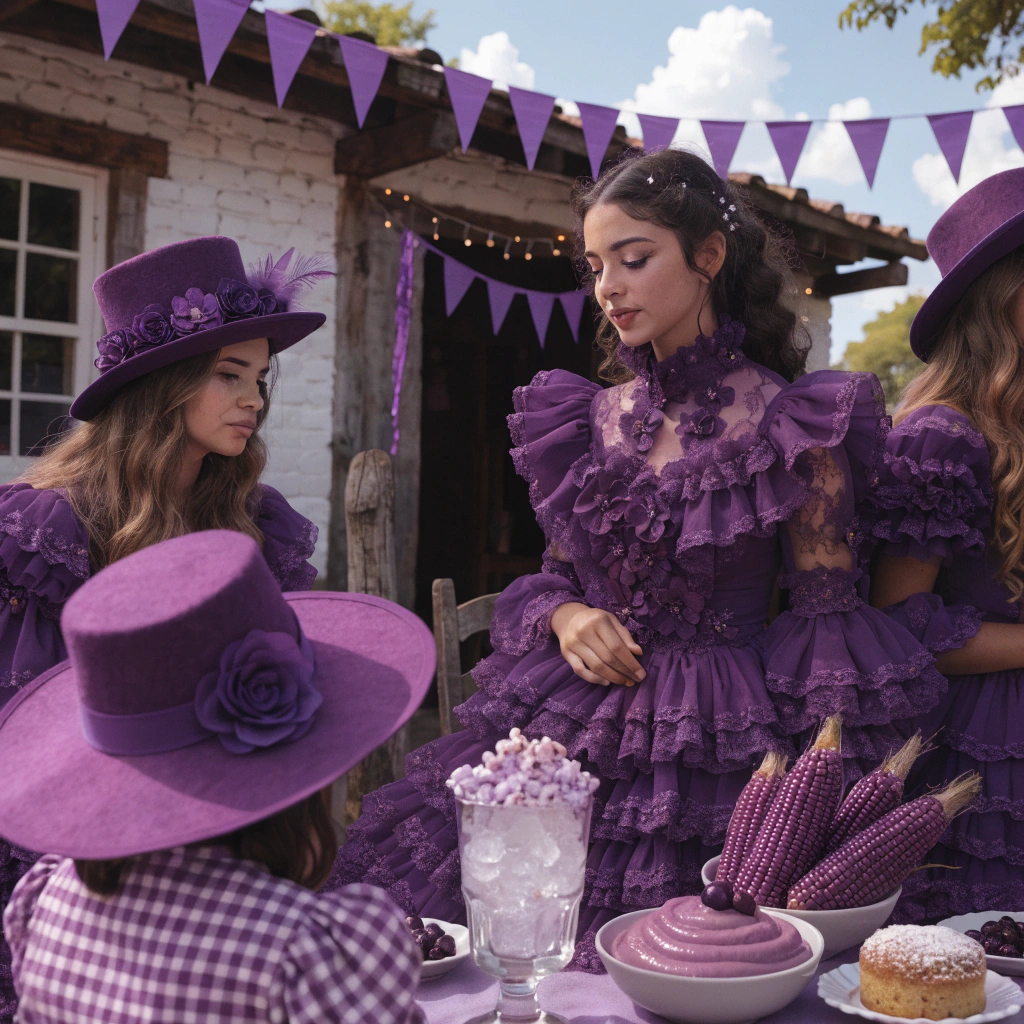
ब्राजील का जून त्योहार: फेस्टा जूनिना
ब्राजील में एक बहुत खास त्योहार है। इसका नाम 'फेस्टा जूनिना' है। यह त्योहार जून महीने में आता है। लोग इसे बहुत पसंद करते हैं।
इस त्योहार में लोग फसल का जश्न मनाते हैं। वे तीन संतों का सम्मान भी करते हैं। यह एक रंगीन और खुशियों भरा त्योहार है। पुरुष चेक शर्ट और टोपी पहनते हैं। महिलाएँ सुंदर कपड़े पहनती हैं और चोटी बनाती हैं।
लोग एक साथ नाचते हैं और पारंपरिक गीत गाते हैं। वे स्वादिष्ट पारंपरिक खाना भी खाते हैं। यह ब्राजील की ग्रामीण संस्कृति को दिखाता है। फेस्टा जूनिना ब्राजील का एक बहुत प्यारा त्योहार है।
व्याकरण स्पॉटलाइट
पैटर्न: प्रेजेंट सिंपल: 'ते हैं'/'ती हैं' क्रिया
"लोग फसल का जश्न मनाते हैं।"
यह क्रिया का रूप बताता है कि कोई काम नियमित रूप से या सामान्य तौर पर होता है। जब कर्ता पुल्लिंग और बहुवचन होता है, तो क्रिया के अंत में 'ते हैं' आता है। अगर कर्ता स्त्रीलिंग और बहुवचन होता, तो 'ती हैं' आता।
पैटर्न: कारक चिन्ह: 'में'
"यह त्योहार जून महीने में आता है।"
'में' एक कारक चिन्ह है जो 'अंदर' या 'के दौरान' का अर्थ देता है। यह बताता है कि कोई चीज़ कहाँ या कब होती है। यहाँ, यह 'जून महीने के अंदर' का अर्थ दे रहा है।
अपनी समझ जाँचें
10 सवाल · A1 शुरुआती · 1 मुफ्त प्रीव्यू
इस लेख से आपने जो सीखा उसकी जाँच करें। सभी सवालों के जवाब दें और XP कमाएँ!
फेस्टा जूनिना कहाँ का त्योहार है?
क्या आप क्विज़ समाप्त करना चाहते हैं?
9 और सवाल आपका इंतज़ार कर रहे हैं। पूरा क्विज़ अनलॉक करने और XP कमाने के लिए मुफ्त साइन अप करें!
मुफ़्त साइन अप करोपहले से अकाउंट है? साइन इन करो
बहुत बढ़िया!
अभ्यास जारी रखें!
पहले से पूर्ण — कोई अतिरिक्त XP नहीं
XP कमाने के लिए साइन अप करोसवालों का विवरण
फेस्टा जूनिना कहाँ का त्योहार है?
आपका जवाब:
सही जवाब: ब्राजील
यह त्योहार दिसंबर महीने में होता है।
आपका जवाब:
सही जवाब: गलत
'संत' का क्या मतलब है?
आपका जवाब:
सही जवाब: एक पवित्र व्यक्ति
पुरुष चेक शर्ट और _______ पहनते हैं।
आपका जवाब:
सही जवाब: टोपी
ब्राजील का प्यारा त्योहार: फेस्टा जूनिना
ब्राजील में एक बहुत खास और प्यारा त्योहार है, जिसका नाम 'फेस्टा जूनिना' है। यह त्योहार जून के पूरे महीने में मनाया जाता है। ब्राजील के लोग इस त्योहार को कार्निवल से भी ज़्यादा पसंद करते हैं।
फेस्टा जूनिना सर्दियों की कटाई का जश्न मनाता है। यह तीन कैथोलिक संतों को भी सम्मान देता है: संत एंथोनी, संत जॉन द बैपटिस्ट और संत पीटर। यह त्योहार ग्रामीण जीवन और खुशी के बारे में है।
इस त्योहार में लोग पुराने ग्रामीण कपड़े पहनते हैं। आदमी चेक वाली कमीज और घास की टोपी पहनते हैं। वे अक्सर अपने चेहरे पर नकली मूँछें भी बनाते हैं। औरतें रंगीन कपड़े, चोटी और चेहरे पर बिंदी या नकली झाइयाँ लगाती हैं।
फेस्टा जूनिना में हर जगह बहुत रंग और संगीत होता है। लोग पारंपरिक लोक नृत्य करते हैं, गाना गाते हैं और खास स्थानीय खाना खाते हैं। जैसे मकई के व्यंजन और गर्म पेय। यह ब्राजील की 'कैपिरा संस्कृति' का एक सुंदर और जीवंत हिस्सा है। यह एक साथ आने और खुशी मनाने का समय है।
व्याकरण स्पॉटलाइट
पैटर्न: सामान्य वर्तमान काल (Simple Present Tense)
"ब्राजील के लोग इस त्योहार को कार्निवल से भी ज़्यादा पसंद करते हैं।"
यह क्रिया का रूप है जो बताता है कि कोई काम रोज़ होता है, या एक सामान्य सच्चाई है। इसमें क्रिया के साथ 'ता है', 'ती है' या 'ते हैं' लगता है। यह आदत या सामान्य स्थिति को दर्शाता है।
पैटर्न: पोस्टपोज़िशन 'में' और 'पर' (Postpositions 'mein' and 'par')
"यह त्योहार जून के पूरे महीने में मनाया जाता है। औरतें चेहरे पर बिंदी या नकली झाइयाँ लगाती हैं।"
'में' का मतलब 'अंदर' या 'in' होता है। यह समय या जगह के लिए इस्तेमाल होता है। 'पर' का मतलब 'ऊपर' या 'on' होता है। यह भी जगह या किसी सतह के लिए इस्तेमाल होता है।
अपनी समझ जाँचें
11 सवाल · A2 बिगिनर · 1 मुफ्त प्रीव्यू
इस लेख से आपने जो सीखा उसकी जाँच करें। सभी सवालों के जवाब दें और XP कमाएँ!
फेस्टा जूनिना कहाँ मनाया जाता है?
क्या आप क्विज़ समाप्त करना चाहते हैं?
10 और सवाल आपका इंतज़ार कर रहे हैं। पूरा क्विज़ अनलॉक करने और XP कमाने के लिए मुफ्त साइन अप करें!
मुफ़्त साइन अप करोपहले से अकाउंट है? साइन इन करो
बहुत बढ़िया!
अभ्यास जारी रखें!
पहले से पूर्ण — कोई अतिरिक्त XP नहीं
XP कमाने के लिए साइन अप करोसवालों का विवरण
फेस्टा जूनिना कहाँ मनाया जाता है?
आपका जवाब:
सही जवाब: ब्राजील
फेस्टा जूनिना जुलाई के महीने में मनाया जाता है।
आपका जवाब:
सही जवाब: गलत
'त्योहार' का क्या मतलब है?
आपका जवाब:
सही जवाब: उत्सव
फेस्टा जूनिना सर्दियों की ______ का जश्न मनाता है।
आपका जवाब:
सही जवाब: कटाई
आदमी फेस्टा जूनिना में कैसे कपड़े पहनते हैं?
आपका जवाब:
सही जवाब: चेक वाली कमीज और टोपी
ब्राजील का दिल: फेस्टा जूनिना, एक प्यारा शीतकालीन फसल त्योहार
ब्राजील, अपने रंगीन कार्निवल के लिए दुनिया भर में प्रसिद्ध है। लेकिन, बहुत से ब्राज़ीलियाई लोगों का मानना है कि 'फेस्टा जूनिना' (जून का त्योहार) देश की सबसे प्यारी परंपरा है। यह त्योहार जून के पूरे महीने में उत्साह के साथ मनाया जाता है। यह शीतकालीन फसल का जश्न मनाता है और तीन कैथोलिक संतों को सम्मान देता है: सेंट एंथोनी, सेंट जॉन द बैपटिस्ट और सेंट पीटर। यह एक ऐसा समय है जब पूरा देश खुशी और उल्लास में डूब जाता है।
यह त्योहार ग्रामीण संस्कृति की एक रंगीन अभिव्यक्ति है, जिसे पुर्तगाली में 'कल्टुरा कापीरा' कहा जाता है। इसमें ग्रामीण जीवन की पुरानी यादें ताजा की जाती हैं और लोग अपने पारंपरिक रीति-रिवाजों का आनंद लेते हैं। त्योहार के दौरान, पुरुष प्लेड शर्ट और स्ट्रॉ हैट पहनते हैं, जबकि महिलाएँ चोटी बनाती हैं और अपने चेहरों पर नकली झाइयाँ पेंट करती हैं। यह सब मिलकर एक खास ग्रामीण शैली को दर्शाता है, जो देखने में बहुत सुंदर लगती है।
फेस्टा जूनिना के खास पकवान मकई से बने होते हैं, जैसे कि कॉर्न केक, कॉर्न सूप और पॉपकॉर्न। मूंगफली से बने व्यंजन और अन्य मीठे व्यंजन जैसे पाम-शुगर कैंडी भी बहुत लोकप्रिय हैं। इन व्यंजनों का स्वाद त्योहार की खुशी को और बढ़ा देता है। लोग पारंपरिक संगीत पर 'क्वाड्रिला' नामक वर्ग नृत्य करते हैं, जो एक प्रकार का लोक नृत्य है और इसमें सभी उम्र के लोग भाग लेते हैं।
रात में बड़े-बड़े अलाव जलाए जाते हैं और रंग-बिरंगी आतिशबाजी भी होती है, जिससे आसमान जगमगा उठता है। यह माहौल बहुत ही खुशनुमा और जादुई बन जाता है। जिन लोगों ने इस त्योहार का अनुभव किया है, वे जानते हैं कि यह ब्राजील की आत्मा का एक महत्वपूर्ण हिस्सा है। यह त्योहार केवल एक पार्टी नहीं है, बल्कि यह ब्राजील की ग्रामीण जड़ों और सामुदायिक भावना का प्रतीक है। हर शहर और गाँव में अपनी अनूठी फेस्टा जूनिना होती है, लेकिन सभी जगह खुशी और उल्लास एक जैसा होता है। यह एक ऐसा मौका है जब परिवार और दोस्त एक साथ मिलकर जश्न मनाते हैं।
व्याकरण स्पॉटलाइट
पैटर्न: कर्मवाच्य (Passive Voice)
"यह त्योहार जून के पूरे महीने में उत्साह के साथ मनाया जाता है।"
कर्मवाच्य का उपयोग तब किया जाता है जब क्रिया का महत्व कर्ता से अधिक होता है या कर्ता अज्ञात होता है। इसे 'जाना' क्रिया के साथ मुख्य क्रिया के भूतकालिक कृदंत रूप (जैसे 'मनाया') का प्रयोग करके बनाया जाता है।
पैटर्न: संबंधवाचक सर्वनाम (Relative Clause)
"जो एक प्रकार का लोक नृत्य है और इसमें सभी उम्र के लोग भाग लेते हैं।"
संबंधवाचक सर्वनाम (जैसे 'जो', 'जिस') का उपयोग दो वाक्यों को जोड़ने और एक संज्ञा के बारे में अधिक जानकारी देने के लिए किया जाता है। यह एक उपवाक्य बनाता है जो मुख्य वाक्य में किसी शब्द से संबंधित होता है।
अपनी समझ जाँचें
11 सवाल · B1 मध्यम · 1 मुफ्त प्रीव्यू
इस लेख से आपने जो सीखा उसकी जाँच करें। सभी सवालों के जवाब दें और XP कमाएँ!
फेस्टा जूनिना ब्राजील में कब मनाया जाता है?
क्या आप क्विज़ समाप्त करना चाहते हैं?
10 और सवाल आपका इंतज़ार कर रहे हैं। पूरा क्विज़ अनलॉक करने और XP कमाने के लिए मुफ्त साइन अप करें!
मुफ़्त साइन अप करोपहले से अकाउंट है? साइन इन करो
बहुत बढ़िया!
अभ्यास जारी रखें!
पहले से पूर्ण — कोई अतिरिक्त XP नहीं
XP कमाने के लिए साइन अप करोसवालों का विवरण
फेस्टा जूनिना ब्राजील में कब मनाया जाता है?
आपका जवाब:
सही जवाब: जून
फेस्टा जूनिना तीन कैथोलिक संतों को सम्मान देता है।
आपका जवाब:
सही जवाब: सही
'फसल' का क्या अर्थ है?
आपका जवाब:
सही जवाब: खेती से प्राप्त उत्पाद
फेस्टा जूनिना में पुरुष प्लेड शर्ट और _____ पहनते हैं।
आपका जवाब:
सही जवाब: स्ट्रॉ हैट
'कल्टुरा कापीरा' किस संस्कृति को दर्शाता है?
आपका जवाब:
सही जवाब: ग्रामीण
Festa Junina: Brazil’s Beloved Winter Harvest Festival
While Carnival undoubtedly remains Brazil’s most famous international spectacle, many locals would argue that 'Festa Junina' is the nation’s most cherished tradition. This winter harvest festival, celebrated throughout the month of June, offers a profound insight into the country’s rural heritage and religious history. Unlike the urban glamour of Carnival, Festa Junina is a colorful explosion of rural nostalgia, often referred to as 'cultura caipira.' It is a time when Brazilians, regardless of their background, embrace a stylized version of country life to commemorate three significant Catholic saints: Saint Anthony, Saint John the Baptist, and Saint Peter.
The historical origins of the festival can be traced back to the Portuguese colonial period. Over the centuries, these European traditions merged with indigenous and African influences, resulting in a unique cultural phenomenon. One of the most prominent features of the celebration is the 'quadrilha,' a folk dance inspired by 18th-century French court dances. Participants perform elaborate choreographed movements while dressed in traditional rural attire. Men typically wear plaid shirts and straw hats, while women wear vibrant, multi-colored dresses adorned with ribbons and lace. This visual spectacle is not merely for entertainment; it serves to reinforce a sense of community and shared history.
Gastronomy plays a pivotal role in the festivities, with a heavy emphasis on the winter harvest. Since June marks the corn harvest in many parts of Brazil, corn-based delicacies are prepared in abundance. Traditional dishes such as 'pamonha' (a sweet corn cake) and 'canjica' (a corn-based pudding) are consumed with great enthusiasm. The aroma of these foods, combined with the warmth of traditional bonfires, creates an atmosphere of comfort and celebration. Despite the modern shift toward urbanization, these culinary practices ensure that the festival’s rural roots remain intact.
Furthermore, the festival serves as a vital bridge between the country’s colonial past and its modern identity. It provides an opportunity for Brazilians to celebrate their authenticity and resist the homogenizing effects of globalization. By participating in these age-old rituals, younger generations are taught to value their cultural heritage. In conclusion, Festa Junina is much more than a simple harvest festival; it is a profound expression of the Brazilian soul, blending religious devotion, historical memory, and a deep-seated love for the rural way of life.
व्याकरण स्पॉटलाइट
पैटर्न: Passive Voice
"Corn-based delicacies are prepared in abundance."
The passive voice is used here to focus on the food (the object) rather than who is preparing it. It is formed using the verb 'to be' followed by the past participle.
पैटर्न: Non-defining Relative Clause
"This winter harvest festival, celebrated throughout the month of June, offers a profound insight..."
This clause provides extra information about the subject. It is separated by commas and can be removed without changing the core meaning of the sentence.
पैटर्न: Discourse Markers for Addition
"Furthermore, the festival serves as a vital bridge between the country’s colonial past and its modern identity."
Discourse markers like 'Furthermore' are used in formal writing to introduce a new point that supports the previous argument.
अपनी समझ जाँचें
11 सवाल · B2 अपर इंटरमीडिएट · 1 मुफ्त प्रीव्यू
इस लेख से आपने जो सीखा उसकी जाँच करें। सभी सवालों के जवाब दें और XP कमाएँ!
What is the primary focus of the Festa Junina celebrations?
क्या आप क्विज़ समाप्त करना चाहते हैं?
10 और सवाल आपका इंतज़ार कर रहे हैं। पूरा क्विज़ अनलॉक करने और XP कमाने के लिए मुफ्त साइन अप करें!
मुफ़्त साइन अप करोपहले से अकाउंट है? साइन इन करो
बहुत बढ़िया!
अभ्यास जारी रखें!
पहले से पूर्ण — कोई अतिरिक्त XP नहीं
XP कमाने के लिए साइन अप करोसवालों का विवरण
What is the primary focus of the Festa Junina celebrations?
आपका जवाब:
सही जवाब: The winter harvest and Catholic saints
The 'quadrilha' dance was originally inspired by 18th-century French court dances.
आपका जवाब:
सही जवाब: सही
What does 'vibrant' mean in the context of the article?
आपका जवाब:
सही जवाब: Bright, striking, and full of energy
Festa Junina is often referred to as 'cultura _____,' representing rural nostalgia.
आपका जवाब:
सही जवाब: caipira
Which crop is most central to the culinary traditions of the festival?
आपका जवाब:
सही जवाब: Corn
Rural Nostalgia and Sacred Rites: Deconstructing the Cultural Tapestry of Festa Junina
While the global gaze often remains transfixed by the neon spectacle of Carnival, many Brazilians would posit that the true soul of the nation resides within the rustic embrace of Festa Junina. Held throughout the month of June, these festivities represent a sophisticated amalgamation of European hagiography and indigenous harvest rituals. Nominally a celebration of three Catholic saints—Anthony, John the Baptist, and Peter—the festival serves as a poignant vessel for 'cultura caipira,' a stylized rural nostalgia that romanticizes Brazil's agrarian past. Rarely is the depth of this cultural phenomenon fully appreciated by the casual observer, who might see only the checkered shirts and straw hats without grasping the socio-historical undercurrents at play.
It is through the lens of this rural archetype that the festival reveals its true essence. Participants don costumes that are deliberate caricatures of country folk, complete with painted-on freckles and gap-toothed smiles. This performative 'caipira' identity is not merely a costume; it is a vestigial link to a pre-industrial era. The centerpiece of the event is often the 'quadrilha,' a folk dance derived from the 19th-century French 'quadrille.' The adaptation of this aristocratic European dance into a satirical portrayal of rural weddings demonstrates the unique cultural syncretism that defines Brazilian identity. The juxtaposition of sacred devotion and profane revelry creates a social space where hierarchies are temporarily suspended.
Seldom does one find a celebration so deeply entrenched in the agrarian calendar. The timing of Festa Junina coincides with the winter harvest, particularly that of maize. Consequently, the gastronomy of the festival is an olfactory journey through corn-based delicacies—from the sweet 'canjica' to the savory 'pamonha.' The consumption of these dishes is a communal act, reinforcing social bonds within the neighborhood or 'arraial.' However, the burgeoning commercialization of these festivities has sparked a nuanced debate regarding cultural authenticity. In major urban centers, the raw, pastoral charm of the traditional bonfire is frequently replaced by sponsored stages and polished performances.
Furthermore, the preservation of these customs serves as a bulwark against the homogenizing forces of globalization. While critics argue that the festival has become a commodified version of its former self, proponents suggest that its evolution is inevitable. The persistent popularity of Festa Junina, even among the cosmopolitan elite, underscores a collective yearning for a simpler, more communal existence. Ultimately, it is the enduring relevance of these traditions that allows Brazilians to navigate the complexities of modernity while remaining anchored in their historical narrative. Whether viewed as a religious obligation or a secular party, Festa Junina remains a quintessential expression of the Brazilian spirit.
व्याकरण स्पॉटलाइट
पैटर्न: Negative Inversion
"Rarely is the depth of this cultural phenomenon fully appreciated by the casual observer."
When a negative or restrictive adverbial (like 'Rarely' or 'Seldom') starts a sentence, the auxiliary verb and subject are inverted. This emphasizes the rarity or limitation of the action and is typical of formal C1-level writing.
पैटर्न: Cleft Sentences
"It is through the lens of this rural archetype that the festival reveals its true essence."
Cleft sentences use 'It is/was... that' to focus on a specific part of the information. Here, it emphasizes 'the lens of this rural archetype' as the primary means of understanding the festival.
पैटर्न: Nominalisation
"The adaptation of this aristocratic European dance into a satirical portrayal of rural weddings demonstrates the unique cultural syncretism."
Nominalization involves turning verbs (adapt, portray) into nouns (adaptation, portrayal). This allows for more complex ideas to be packed into the subject of a sentence, creating a more academic and advanced tone.
अपनी समझ जाँचें
12 सवाल · C1 उन्नत · 1 मुफ्त प्रीव्यू
इस लेख से आपने जो सीखा उसकी जाँच करें। सभी सवालों के जवाब दें और XP कमाएँ!
What does the author suggest about the relationship between Carnival and Festa Junina?
क्या आप क्विज़ समाप्त करना चाहते हैं?
11 और सवाल आपका इंतज़ार कर रहे हैं। पूरा क्विज़ अनलॉक करने और XP कमाने के लिए मुफ्त साइन अप करें!
मुफ़्त साइन अप करोपहले से अकाउंट है? साइन इन करो
बहुत बढ़िया!
अभ्यास जारी रखें!
पहले से पूर्ण — कोई अतिरिक्त XP नहीं
XP कमाने के लिए साइन अप करोसवालों का विवरण
What does the author suggest about the relationship between Carnival and Festa Junina?
आपका जवाब:
सही जवाब: Festa Junina is arguably more representative of the national soul.
The 'quadrilha' dance is an original indigenous ritual that existed before European arrival.
आपका जवाब:
सही जवाब: गलत
What does 'entrenched' mean in the context of the article?
आपका जवाब:
सही जवाब: Deeply established and resistant to change
The author notes that the festival's gastronomy is an olfactory journey through _____-based delicacies.
आपका जवाब:
सही जवाब: corn
What is the primary tension mentioned regarding the modern celebration of Festa Junina?
आपका जवाब:
सही जवाब: Commercialization versus cultural authenticity
The 'caipira' identity used in the festival is described as a deliberate caricature of rural life.
आपका जवाब:
सही जवाब: सही
Agrarian Nostalgia and the Syncretic Tapestry: An Analytical Deconstruction of Brazil’s Festa Junina
While the global imaginary often perceives Brazilian cultural identity through the exuberant, albeit somewhat reductive, lens of Carnival, a more nuanced excavation of the nation's sociological landscape reveals the profound ubiquity of the Festa Junina. This winter solstice celebration, ostensibly rooted in the veneration of Catholic saints—Anthony, John, and Peter—serves as a complex nexus where agrarian nostalgia converges with post-colonial syncretism. To understand the Festa Junina is to engage with the 'cultura caipira,' a vernacular construct that oscillates between a romanticized pastoral ideal and a satirical subversion of rural hardship. It is arguably the case that this festival, rather than the more internationally recognized Carnival, provides the most authentic window into the collective Brazilian psyche.
Should one venture into the hinterlands or the burgeoning metropolises during June, the visual landscape undergoes a radical transformation. The 'quadrilha,' a folk dance derived from the 19th-century French 'quadrille,' epitomizes this cultural pastiche. It is not merely a dance but a semiotic performance of social roles, where participants don stylized rural attire—plaid shirts, straw hats, and painted-on freckles—to enact a mock wedding. This performance is a vestigial remnant of the European courtly tradition, transposed onto the Brazilian soil and infused with local rhythms. It is imperative that the observer recognize the 'caipira' archetype not as a static historical relic, but as a dynamic identity that facilitates a collective reclamation of the rural past.
Furthermore, the culinary dimensions of the festival underscore the primacy of the harvest. Corn, the quintessential staple of the winter harvest, is transmuted into a dizzying array of delicacies: pamonha, canjica, and bolo de milho. These communal feasts do more than merely satiate hunger; they reinforce a sense of social reciprocity and communal solidarity. The bonfire, a central motif, functions as both a literal source of warmth in the southern winter and a symbolic beacon of spiritual purification. Some scholars contend that the bonfire’s persistence is a testament to the pre-Christian, pagan origins of the solstice celebrations, which were subsequently assimilated into the Catholic liturgical calendar, demonstrating the inherent syncretism of the region.
Despite the encroaching hegemony of globalized pop culture, the Festa Junina has resisted becoming an ossified museum piece. Instead, it has evolved, incorporating contemporary musical genres like 'sertanejo universitário' while maintaining its core symbolic framework. This adaptability suggests that the festival provides an essential psychological anchor for a population navigating the rapid transitions of late modernity. The ephemeral nature of the festivities—the transient glow of the lanterns and the fading scent of woodsmoke—belies the enduring impact of this tradition. In essence, the Festa Junina is a living palimpsest, where layers of history, faith, and agrarian lore are perpetually rewritten and celebrated, ensuring its continued relevance in the 21st century.
व्याकरण स्पॉटलाइट
पैटर्न: Inverted Conditional (Should)
"Should one venture into the hinterlands or the burgeoning metropolises during June, the visual landscape undergoes a radical transformation."
This structure is used in formal English to replace 'If' in first conditional sentences. It emphasizes the hypothetical nature of the condition and is common in academic or literary prose.
पैटर्न: The Subjunctive Mood
"It is imperative that the observer recognize the 'caipira' archetype not as a static historical relic..."
The subjunctive is used after verbs or adjectives of necessity or importance. Note that the base form of the verb ('recognize') is used regardless of the subject.
पैटर्न: Complex Nominalization
"The ephemeral nature of the festivities—the transient glow of the lanterns and the fading scent of woodsmoke—belies the enduring impact of this tradition on the Brazilian psyche."
Nominalization turns verbs or adjectives into nouns (e.g., 'ephemeral' to 'ephemeral nature'). This allows for the dense packing of information and is a hallmark of C2-level analytical writing.
अपनी समझ जाँचें
12 सवाल · C2 महारत · 1 मुफ्त प्रीव्यू
इस लेख से आपने जो सीखा उसकी जाँच करें। सभी सवालों के जवाब दें और XP कमाएँ!
What is the primary thesis regarding the Festa Junina's cultural significance?
क्या आप क्विज़ समाप्त करना चाहते हैं?
11 और सवाल आपका इंतज़ार कर रहे हैं। पूरा क्विज़ अनलॉक करने और XP कमाने के लिए मुफ्त साइन अप करें!
मुफ़्त साइन अप करोपहले से अकाउंट है? साइन इन करो
बहुत बढ़िया!
अभ्यास जारी रखें!
पहले से पूर्ण — कोई अतिरिक्त XP नहीं
XP कमाने के लिए साइन अप करोसवालों का विवरण
What is the primary thesis regarding the Festa Junina's cultural significance?
आपका जवाब:
सही जवाब: It serves as a more profound reflection of the Brazilian psyche than Carnival.
The article suggests that Carnival is the only significant lens through which to view Brazilian identity.
आपका जवाब:
सही जवाब: गलत
Which word describes the merging of different religious or cultural beliefs?
आपका जवाब:
सही जवाब: Syncretism
The author describes the festival as a living _____, where historical layers are perpetually rewritten.
आपका जवाब:
सही जवाब: palimpsest
According to the text, the 'quadrilha' dance is an example of:
आपका जवाब:
सही जवाब: A cultural pastiche derived from French courtly traditions.
The bonfire's origins are exclusively linked to the Catholic liturgical calendar according to all scholars.
आपका जवाब:
सही जवाब: गलत

